Surface Combustion

Heat Treat 2025 Set To Bring Industry Leaders to Detroit

Heat Treat 2025, the 33rd Heat Treating Society Conference and Exhibition, will take place October 21–23, 2025, in Detroit, Michigan, bringing together professionals, researchers, and suppliers from across the industry. In this guest column, Benjamin T. Bernard, president of Heat Treat Society and VP of International Sales at Surface Combustion, discusses what attendees can expect — from an expansive exhibit floor and technical program to new introductory coursework and student competitions.

This insightful piece was first released in Heat Treat Today’s September 2025 Annual People of Heat Treat print edition.


Preparations are in full swing for the 33rd Heat Treating Society Conference and Exhibition, taking place October 21–23, 2025, in Detroit, Michigan. Organized by the ASM Heat Treating Society, the event remains a key gathering for professionals working in thermal processing and heat treating technologies.

This year, Heat Treat 2025 will once again be co-located with three major events: the International Materials, Applications, and Technologies (IMAT) Conference & Expo and ASM’s Annual Meeting; the 12th International Conference on Residual Stresses (ICRS-12); and the AGMA Motion + Power Technology Expo (MPTE). Together, these events deliver unmatched value, offering attendees access to expanded technical content, broader networking opportunities, and a combined exhibit floor of more than 600 companies.

Two keynote speakers have already been confirmed, representing both industrial and academic leadership. Dr. Sridhar Seetharaman, CEO of EPIXC, Professor at Arizona State University, and Joint Affiliate at the National Renewable Energy Laboratory (NREL), and Justin Persinger, Senior Manufacturing Engineer of Manufacturing Process Analysis at General Motors, will share insights from their respective sectors.

The technical program will cover a wide array of important topics, including atmosphere technology, microstructural development, green/low-carbon processes, residual stress, quenching, surface engineering, vacuum processing, and simulation and modeling. The conference continues to emphasize the integration of cutting-edge research with real-world industrial applications.

New in 2025, the Heat Treating Society is launching Heat Treat 101: An Introductory Course on the Fundamentals of Heat Treating. This foundational course is designed for those new to the field or those seeking a refresher on the basics. Topics include principles of steel heat treating, heat treating of aluminum alloys, heat treatment furnace design and operation, and an introduction to the metallography of heat-treated components. Attendees will gain essential insight into materials behavior and processing techniques used across the industry. The course is open to all registered attendees of IMAT 2025, ICRS 2025, and Heat Treat 2025.

Student engagement continues to be a focus. The Fluxtrol Student Research Competition provides an opportunity for students to present research to panels of industry professionals, while the HTS Strong Bar Competition challenges them to optimize heat treatment for strength and ductility. These initiatives help foster the next generation of heat-treating experts.

The event also features several opportunities for community building, such as the Women in Manufacturing and Engineering Breakfast, co-hosted by HTS, ASM International, and AGMA. Open to all attendees, this popular event highlights and celebrates the contributions of women in the field. Other networking highlights include the ASM Leadership Luncheon, the Awards Dinner, and the Evening Networking Event at the Waterview Loft.

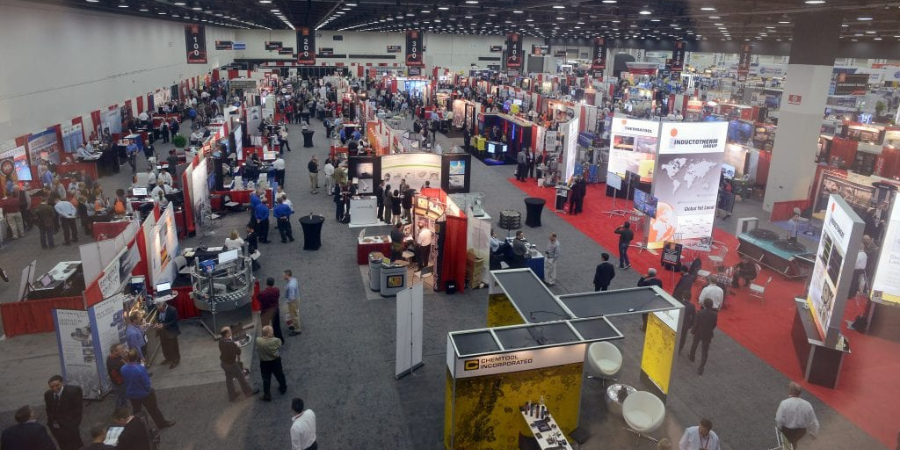
The exhibit hall will showcase more than 600 companies through the co-located conferences. Activities on the show floor include a VIP industry tour, Solutions Center presentations, a Welcome Reception, and dedicated programming for students and early-career professionals. With its rich technical content, strong industry partnerships, and inclusive community events, Heat Treat 2025 promises to be a must-attend event. To register and learn more, visit heattreatevent.org.

About The Author:

Benjamin T. Bernard
Heat Treat Society President and VP of International Sales
Surface Combustion

For more information: Contact Heat Treat 2025 at heattreatevent.org.

Heat Treat 2025 Set To Bring Industry Leaders to Detroit Read More »

Join the Companies Shaping Heat Treat’s Future at the Furnaces North America 2026

Furnaces North America (FNA) 2026 isn’t just where heat treat professionals gather — it’s where the industry’s leading suppliers, innovators, and technology experts come together to share what’s next.

With registration now open, hear what this key event sponsor has to say about why FNA remains the premier event for the heat treating community.


“If heat treating and thermal processing is a part of your business, this is a place you need to be. Even if you’re not in the market today for a piece of equipment or retrofitting something, it’s where the foundation for those things are built.”
Ben Gasbarre, Executive VP of Sales/Marketing, Gasbarre Thermal Processing Systems


Why do industry leaders keep coming back to FNA?

  • 35+ technical sessions covering the latest trends, technology, and best practices
  • 150+ suppliers showcasing cutting-edge equipment and services in one dynamic trade show floor
  • High-energy networking opportunities with peers and industry leaders from around the world
  • Insightful discussions on new equipment, emerging tech, and industry challenges

Who should attend?

Heat treating professionals at every level — from company leaders and department managers to engineers, operators, technical directors, and quality personnel.

When and where?

October 12–14, 2026 at the Indiana Convention Center, 100 South Capital Ave., Indianapolis, IN

Whether you’re looking for new technology, strategic partnerships, or practical solutions to today’s challenges, FNA 2026 brings the people and ideas shaping the future of heat treating together under one roof.

Join the Companies Shaping Heat Treat’s Future at the Furnaces North America 2026 Read More »

Flame and Fire: History of the Industrial Gas Industry

Jim Roberts of U.S. Ignition entertains readers in a Combustion Corner editorial about how the industrial gas industry evolved from its humble beginnings in the early 1900s into a precision-driven force that transformed combustion technology and modern manufacturing.

This editorial was first released in Heat Treat Today’s November 2025 Annual Vacuum Heat Treating print edition.


Let’s think about how young the industrial gas industry really is.

A Short Pipeline in Time

The first real industrial usage was way back in the 1800s somewhere. But there was no infrastructure, no supply other than bottled gas for industrial applications. The gas industry, as far as we recognize it, did not really take off until somewhere around the early 1920s when the first welded pipeline was installed. Then, as usage increased, it became apparent that safety was going to be a concern. The addition of mercaptan (rotten egg smell) was not until the late 1930s.

With the growth of commercial and residential usage, the demand for gaseous fuels grew by 50 times the original market size anticipated between 1910 and 1970! What does that demand look like? Today there are over 3 million miles of gas distribution lines connected to 300,000 miles of big transmission pipelines in the U.S. alone. All that growth in a span of 100 years, essentially. That means the transmission pipeline system in the U.S. could stretch around the planet 12 times!

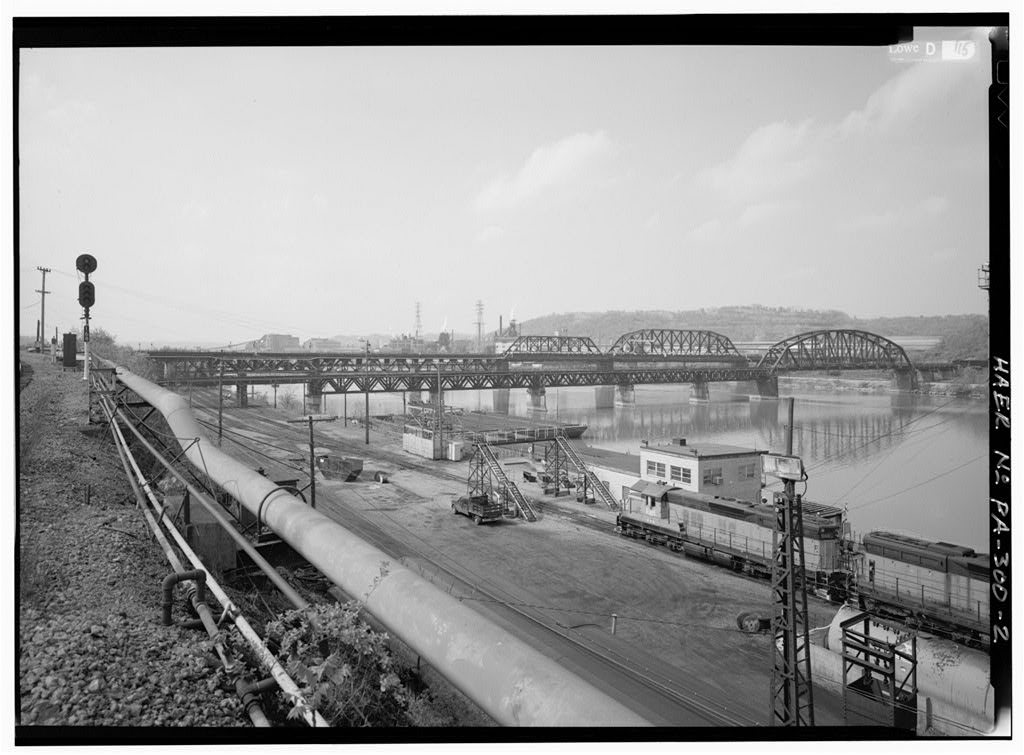
USS coke gas pipeline in the foreground with the Conrail Port Perry Bridge spanning the Monongahela River, Port Perry, Allegheny County, PA (Lowe, 1994)
Source: Library of Congress Prints and Photographs Division

Most of that construction occurred during the post-war 1940s to 1960s timeline. That’s one busy industry! And it dragged all the thermally based markets and industries along with it. Now, we have come to accept the availability of natural gas as so commonplace that we cannot imagine life without it.

Responding with Precision

So, now you ask yourselves, “Why this history lesson, Jim?” Well, because we are supposed to be learning about combustion and the era of major combustion advancements — and if I would quit veering off into side topics we might actually get there. But it is all interconnected.

If you recall the story of the heat treater with the bedpost burners (October 2025 edition), he had no inspiration to improve efficiency or performance because those darn bedposts would burn gas just fine. So, what changed? Firstly, the world had been through a couple of military conflicts during this rise of the gas industry. And sadly, sometimes the best technological advances occur in times of conflict; engineering becomes more precise. All of a sudden, instead of hammering out horseshoes for the cavalry, we were heat treating gun barrels and crankshafts for airplanes. We needed to be more than precise — actually, we had to be perfect. So, we stepped away from the old heat treatment ways and developed systems that we could control to within a couple of degrees.

As a result, burners became specialized. Each process became unique and precise. Instead of pack carburizing components, a company called Surface Combustion developed a piece of equipment called an Endothermic generator. This device made carbon-based atmosphere out of natural gas or propane- and nickel-based catalysts. All of a sudden, we could do very precise non-scale covered heat treating. And the burners from companies like North American Combustion, Eclipse Combustion, Maxon, Hauck, Pyronics, Selas, W.B. Combustion, and on and on, all scrambled to develop the specific types of burners that the heat treaters and iron and steel makers needed.

Another important milestone hit around 1963: the Government got involved (gasp!). The Clean Air Act of 1963 essentially said we needed to burn our fuels cleanly and not spit smoke into the air. Those laws got reviewed again in 1970, 1977, and again in the updated Clean Air Act of 1990 with some of the biggest revisions.

With all of these changes, we had several drivers for innovation in the combustion world. Again, precision became a must. Heat treating became a very standards-driven industry. Metallurgists roamed the planet inventing both new materials and the processes to achieve them. Gas companies themselves became huge drivers of innovation and developed think tanks, like the GRI (Gas Research Institute), where people learned and laboratories hummed with development projects investigated in conjunction with burner and furnace companies. Academia became involved with industry in the form of organizations like The Center for Heat Treating Excellence (CHTE) and the Metal Treating Institute (MTI). Suddenly, the industry was more than just blacksmiths.

We’ll talk about how burner companies became design specialists and system efficiency experts and what that meant to various burner styles in next month’s offering.

References

Lowe, Jet. 1994. Panorama of Industry (Conrail Port Perry Bridge, Spanning Monongahela River, Port Perry, Allegheny County, PA). Historic American Engineering Record, HAER PA,2-POPER,1-2. Library of Congress Prints and Photographs Division.

About The Author:

Jim Roberts
President
US Ignition

Jim Roberts president at U.S. Ignition, began his 45-year career in the burner and heat recovery industry focused on heat treating specifically in 1979. He worked for and helped start up WB Combustion in Hales Corners, Wisconsin. In 1985 he joined Eclipse Engineering in Rockford, IL, specializing in heat treating-related combustion equipment/burners. Inducted into the American Gas Association’s Hall of Flame for service in training gas company field managers, Jim is a former president of MTI and has contributed to countless seminars on fuel reduction and combustion-related practices.

For more information: Contact Jim Roberts at jim@usignition.com.

Flame and Fire: History of the Industrial Gas Industry Read More »

This Week in Heat Treat Social Media

Welcome to Heat Treat Today’s This Week in Heat Treat Social Media. We’re looking at a 3D-printed railway station, human rocket rides, a kids summer camp with heat treatment training, and more!

As you know, there is so much content available on the web that it’s next to impossible to sift through all of the articles and posts that flood our inboxes and notifications on a daily basis. So, Heat Treat Today is here to bring you the latest in compelling, inspiring, and entertaining heat treat news from the different social media venues that you’ve just got to see and read! If you have content that everyone has to see, please send the link to editor@heattreattoday.com.


1. You Can Have Your Railway and Print It Too

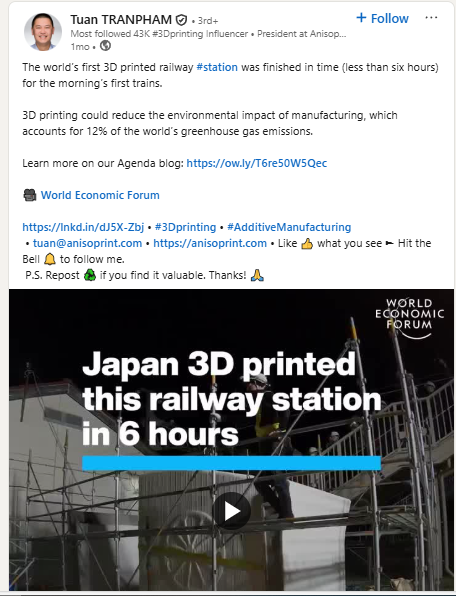
The world’s first 3D-printed railway station was completed. Additive manufacturing has come a long way, but we are still stunned by its speed! Finished in fewer than six hours, the folks at Anisoprint got it done.

2. Stainless Steel Gets a Haircut

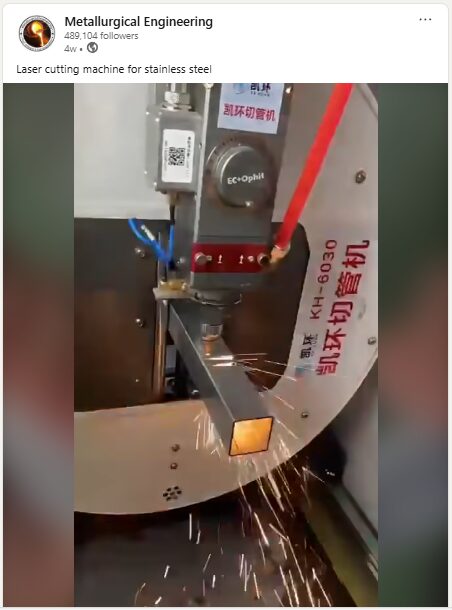
We can’t always articulate why a video is so engaging to watch. This laser-cutting video by Metallurgical Engineering is immensely satisfying. Cozy up with a bag of popcorn and watch the sparks fly!

3. Human Passenger Rocket Flights Are Ongoing

Pluto Aerospace has completed its second successful flight with paid passengers on its Dash prototype, a low-cost hypersonic testbed. Turn on Elton John’s Rocket Man and be inspired to join in the fun.

4. Where High Temp Insulation and Mona Lisa Kiss

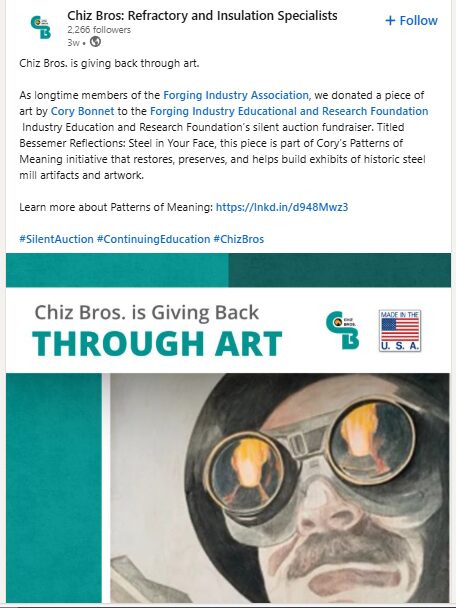
Chiz Bros is donating a beautiful piece of art called Bessemer Reflections: Steel in Your Face. That image fittingly reminds us that metal work is both science and craft.

5. Heat Treatment Gets a Taste of Dijon

Dijon, France that is. Our European representative, Hamilton Pearman, recently attended the A3TS Annual Conference and Heat Treatments and Surface Engineering Show! A shout out to all of our materials science and thermal processing buffs who also attended!

6. The Summer Camp You Always Wanted

Did you know that Forging Industry Educational and Research Foundation puts on a Forge the Future Summer Camp? You know how we at Heat Treat Today love our Heat Treat Kids, and now we can’t wait to send them off to get their little toes wet in heat treatment.

7. Don’t Slip Past This Leak Detection Resource

From history, to big picture, and practical tips, this Heat Treat Radio has everything you need to stay well-informed.

8. The Furnace is Always On At Heat Treat Today

You might think that furnaces and fire would cause enough sweat for our team. But no. They chase it… and win!

Have a great weekend!


This Week in Heat Treat Social Media Read More »

Furnaces North America (FNA) Registration Announced

HTD Size-PR Logo

Renowned for its dynamic trade show environment, FNA 2024 brings together the foremost experts, suppliers, decision makers, and buyers from around the globe. This year’s event is set to continue the tradition of offering an engaging technical conference alongside the bustling trade show floor.

The excitement takes off on the first day of the trade show with a unique gaming opportunity. During the Day 1 Trade Show Floor Reception, one lucky attendee will be selected to participate in a thrilling game at the heart of the expo, standing a chance to win $500, $1,000, or a staggering $100,000!

With exhibit booths in high demand and an anticipated sellout, prospective exhibitors are urged not to hesitate in securing their spots. Registration for attendees will open on May 1, 2024.

Mark your calendars and prepare to be a part of the industry’s most awaited event. Stay tuned for more details and visit www.FurnacesNorthAmerica.com for the latest updates.

Furnaces North America 2024 is excited to unveil its lineup of Title Sponsors for the upcoming trade show and technical conference, scheduled for October 14-16, 2024. Produced by the Metal Treating Institute in collaboration with Heat Treat Today, the event will be hosted in Columbus, OH — a hub of manufacturing innovation.

The roster of Title Sponsors includes:

  • Can-Eng Furnaces
  • McLaughlin Furnace Group
  • Super Systems
  • Surface Combustion
  • Wirco
  • GeoCorp
  • Gasbarre Thermal Processing Systems
  • RoMan Manufacturing

Corporate Sponsors are:

  • Aerospace Testing and Pyrometry
  • Honeywell
  • Williams Industrial Service

Furnaces North America (FNA) Registration Announced Read More »

Endings . . . People We Lost

HTD Size-PR LogoBeginnings and endings often come together. As we begin a new year this month, we want to pause to remember a few lives that came to an end. Although the following are by no means the only important endings, Heat Treat Today would like to honor the memory of the following individuals who left their mark in the heat treating world.

This article first appeared in Heat Treat Today's December 2022 Medical and Energy print edition. Feel free to contact Bethany Leone at bethany@heattreattoday.com if you have a question, comment, or any editorial contribution you’d like to submit.


William “Bill” Cleary
Surface Combustion
(1960–2022)

Bill Cleary joined Surface Combustion directly after graduating college and remained with the company through the next 36 years. Working as a mechanical engineer and later as senior sales engineer, Bill was a constant presence at Surface Combustion — always the first person to help and listen.


Roger Joseph Fabian
Lindberg & Bodycote
(1940–2022)

Roger Fabian received his B.S. in metallurgical engineering in 1962 and his MBA in 1980 from Rensselaer Polytechnic Institute. He began his career with Lindberg Corporation in 1962 as a plant manager at Lindberg’s Boston Division, and in 1964 transferred to the Berlin Division, where he was named chief metallurgist and quality control manager. He was promoted to division manager at Berlin in 1979 and named vice president of Lindberg Heat Treating Company in 1992. When Lindberg was purchased by Bodycote Thermal Processing in 2001, Roger was named Eastern Region sales manager and finally retired in 2010 after 48 years. Roger had many professional accomplishments, including president of ASM International, president of the ASM Heat Treating Society (an affi liate society of ASM International), and was a long-time member of both societies. He also served as a president for the Metal Treating Institute (MTI), and as chairman of the ASM Technical Programming Board. He was instrumental in the development of the Center for Heat Treating Excellence (CHTE) at Worcester Polytechnical Institute and served as director-at-large and industrial liaison. He was known to be always a gentleman and a friend.


Klaus Hemsath
Surface Combustion
(1935–2022)

Klaus Hemsath and his family emigrated from Germany in 1967 to begin work at Surface Combustion. To this day, Klaus has over 60 patents to his name in the United States. Among his many accomplishments in the heat treating industry, Klaus founded Indugas, Inc. and wrote several books on climate change. Klaus will be greatly missed by his son, Mark Hemsath (Nitrex), as well as all others in the heat treating industry who knew him.


David Soderberg
County Heat Treat
(1951–2022)

With over 45 years of experience in metallurgy, Dave Soderberg had a vast knowledge of nitriding, aluminum solution aging, stress relieving, and other heat treating processes. His expertise especially honed in on aerospace heat treating, where he was appointed the designated supplier quality representative by GE Aerospace Engineering Group. Dave was a skilled metallurgist, able to develop heat treatments according to custom specifications.


Jon K. Tabor
Allied Mineral Products
(1933–2022)

After a 65-year career in refractories, Jon Tabor joined Allied Mineral Products in 1970 and helped to build it to the multi-national corporation it is today. Some of John’s accomplishments at Allied were transforming it into an employee-owned company and establishing a manufacturing presence in several countries, including China, South Africa, the Netherlands, and Brazil.

Endings . . . People We Lost Read More »

Watervliet Arsenal to Receive New Ion Nitriding System

HTD Size-PR LogoWatervliet Arsenal will receive a new ion nitriding thermal processing furnace system with full controls. It will be fully installed and commissioned in a horizontal configuration.

Ben Bernard
Vice President of Marketing
Surface Combustion

This is the second ion nitriding furnace supplied from Surface® Combustion, to Watervliet Arsenal; the first was originally over 40 years ago. They awarded a contract to Surface so they could again bring their processing capability in-house. Adding control to the supply chain for product was one of the many reasons they acquired an ion nitriding thermal processing furnace system for their plant. This configuration best suits the facility and Watervliet Arsenal's processing needs, and will also include process development.

Surface has always placed a high value on customer relationships and believes that an equipment purchase is the beginning of something much more than a finite transaction. In fact, they have been working with the Watervliet Arsenal location for over 40 years.

"It is always great to see customers coming back to Surface," said Ben Bernard, vice president of Marketing at Surface, "because they appreciate our incredible product lines as well as our engineering capabilities and long standing relationships."

(Image source: Surface Combustion)

Watervliet Arsenal to Receive New Ion Nitriding System Read More »

New Additions to the 2020-2021 IHEA Board of Directors and Officers

Scott Bishop, incoming president of IHEA (source: IHEA)

Jeff Valuck, incoming VP of IHEA (source: IHEA)

The Industrial Heating Equipment Association (IHEA) recently announced its 2020 – 2021 Board of Directors and Executive Officers. The new executive officers are Scott Bishop of Alabama Power Company as president, Jeff Valuck of Surface Combustion as vice president, and Brian Kelly of Honeywell Thermal Solutions as treasurer. Outgoing president Michael Stowe of Advanced Energy assumes the role of president emeritus.

Brian Kelly, incoming treasurer for IHEA (source: IHEA)

IHEA also welcomes new board member Alberto Cantu of Nutec Bickley. Alberto has been involved with IHEA since 2011 and participates on the Safety Standards and Codes Committee.

Alberto Cantu, incoming board member of IHEA (source: IHEA)

IHEA President Scott Bishop, who is highly involved in IHEA’s Infrared Division, says, “It is an honor to serve as IHEA’s president for the 2020-2021 term.  I look forward to continuing the great work IHEA has done for more than 90 years.  Also, during this unprecedented time I would like to encourage our members to be proactive in finding ways to better serve our industry and make an impact.” Bishop has served as IRED chairman, presented at numerous workshops and seminars, and provided key support in the recent revision of the Infrared Process Heating Handbook for Industrial Applications. 

Michael Stowe, outgoing president of IHEA (source: IHEA)

“I am very excited about this new role,” Cantu states. “I think it will be a great opportunity to connect with colleagues in the industry and help move it forward,”


New Additions to the 2020-2021 IHEA Board of Directors and Officers Read More »

Heat Treat Line Expanded at Ontario Facility

A family-owned commercial heat treating company recently expanded the capabilities of its Ontario-based facility with the purchase of two batch furnaces.

Cambridge Heat Treating, located in Cambridge, Ontario, purchased two new Allcase® Batch Integral Quench Furnaces in addition to two used Allcase furnaces to be used in the same line, along with a previously purchased 30”x30”x48” Allcase with top cool.

Surface Combustion, headquartered in Maumee, Ohio, commissioned the new furnaces. which are all serviced by Surface’s charge car, Uni-DRAW® Batch Tempering Furnaces, washers, and RX® Endothermic Atmosphere Gas Generator.  The 36”x48”x36” batch heat treat line expands Cambridge’s capacity for carbonitriding, carburizing, neutral hardening, and has added ferritic nitrocarburizing (FNC) and normalizing capacity with the atmosphere top cool chambers on the two new Allcases.

“We could not be happier with our Surface purchases,” said Peter Robbins, owner of Cambridge Heat Treating. “Their robust equipment is built for longevity, and we appreciate that they are easy to operate and maintain. Surface’s Aftermarket parts department ensures that we always have the necessary parts for maintenance in a timely manner, and their customer service department is always available for a telephone or service call.”


Heat Treat Line Expanded at Ontario Facility Read More »

BIQ Furnace Repeat Order Expands Line at North Carolina Heat Treat Facility

A thermal processing equipment manufacturer based in Maumee, Ohio, recently supplied a batch integral quench furnace for a metal treating company in Raleigh, North Carolina, that services the automotive, aerospace and defense sectors, as well as general manufacturing.

East Carolina Metal Treating’s (ECMT) purchase of the Allcase® Batch Integral Quench Furnace from Surface® Combustion Inc. is a repeat order. Identical to the previously commissioned Allcase furnace, the new equipment is configured to process 36” wide by 48” long by 36” high workloads that weigh up to 4,000 lbs. In addition, Surface has supplied two air cool stations, a scissors lift table, and two stationary load tables that integrate with an existing IQ line.

The new Allcase works seamlessly with ECMT’s existing charge car, tempers, and washer, following the incorporation of a purchaser specified controls system to match the existing UPC controls on the initial order, and features a Vertical Radiant Tube Heating System with direct spark ignition and flame monitoring, recuperated burners and plunge cooling. A maintenance platform with access stairs allows for fast and easy maintenance. An integrated Top Cool Chamber was provided to further expand process applications, a hallmark of the Allcase furnace which was invented for the greatest range of thermal processing; all case-hardening and non-case hardening applications under controlled atmospheres.

“As always our team did a great job but a special shout out to the Surface Combustion and UPC Teams involved in this project. This was our first project with Surface and their reputation holds true as expected,” said Jamie Ramm, president of ECMT.

BIQ Furnace Repeat Order Expands Line at North Carolina Heat Treat Facility Read More »