3D Printing

Aluminum Alloy Powder Developed for Automotive 3D Printing

A Canadian additive manufacturing powder producer, in partnership with McGill University in Montreal, has announced the results of a research project on its aluminum alloy powders. Extensive testing undertaken by the university has revealed that the Equispheres’ powders are suitable for sintering with binder jet 3D printing technology. Equispheres claims that the combination of binder jet 3D printing with aluminum alloy powder can have a significant impact on the automotive industry. 

Dr. Mathieu Brochu, Associate Professor at McGill

“We are excited to begin work with Equispheres’ binder jet printing partners in the next phase to fully understand all aspects related to sintering of complex shape components and the fundamental relations with new specialized binder agents,” said Dr. Mathieu Brochu, Associate Professor at McGill and Canada Research Chair in Pulse Processing of Nanostructured Materials.

Equispheres has developed a method of powder atomization that creates spherical metal powders. On the strength of its proprietary technology, Equispheres has previously received a $5 million investment from American global aerospace and defense company Lockheed Martin. The company also received an $8 million investment from early stage and SME financing bank BDC Capital, due to its focus on the environmental advantages of 3D printing.

Currently, Equispheres is collaborating with key partners to develop specialized binder agents that are required for aluminum and for specific automotive applications.

Photo Credit: Equispheres

Aluminum Alloy Powder Developed for Automotive 3D Printing Read More »

HRL Laboratories Registers New 3D-Printed Aluminum Alloy

Aluminum Association Creates Registration System for Additive Alloys Beginning with HRL’s First-Ever 3D-Printed High-Strength Aluminum

HRL Laboratories, LLC, is commercializing its additively manufactured (3D-printed) high-strength aluminum, which has obtained the first ever registration of an additive alloy from the Aluminum Association. HRL will be granted registration number 7A77.50 for the aluminum powder used to additively manufacture the alloy, and number 7A77.60L for the printed alloy.

The Aluminum Association oversees alloy registration and product standards used throughout industry. The association’s new additive alloy registration system was launched in February 2019 in response to a growing number of additively manufactured alloys. The first to be registered was HRL Laboratories’ high-strength aluminum, the first alloy of its kind to be printable. (This breakthrough discovery was published in the journal Nature in September 2017.)

“Essentially, this will connect us to this particular alloy composition forever,” said Hunter Martin, the lead scientist on the HRL team that created the alloy. “These alloy numbers will always be trackable back to HRL, like a DNA signature. When I first contacted the Aluminum Association about registering our alloy, they did not have a way to register alloys printed from powders, so they decided to create a new system for registration of additively manufactured materials – a first in the materials space.”

Zak Eckel, another HRL team member said, “We’re in the process of commercializing this material, which is already in high demand. As we scale up to commercial levels, AA registration validates our product. Companies who want the powder for their 3D printers can ask for its specific number, and it becomes a true commercial alloy.”

As the aluminum industry’s leading voice in the United States, the Aluminum Association provides global standards, statistics, and expert knowledge to manufacturers and policy makers. Alloy and temper designations, chemical composition limits, and registered properties in North America adhere to those standards. The association also provides business intelligence, sustainability research, and industry expertise and is committed to environmental considerations while advancing aluminum as the sustainable material of choice around the world.

HRL Laboratories Registers New 3D-Printed Aluminum Alloy Read More »

UPS Launching On-Demand 3D Printing Manufacturing Network

UPS will launch a distributed, on-demand manufacturing network that links its global logistics network with 3D printers at The UPS Store in more than 60 locations around the U.S. and Fast Radius’ On Demand Production Platform and 3D printing factory in Louisville, Kentucky. The integration into one additive manufacturing and logistics solution this summer will make 3D printing accessible to more potential users, enabling them to realize the convenience and cost-savings this technology offers.

Further strengthening UPS’s distributed, on-demand manufacturing offering, SAP today announced an agreement with UPS to create an end-to-end industrial solution. SAP’s extended supply chain solutions will be integrated with UPS’s on-demand manufacturing solution and global logistics network to simplify the industrial manufacturing process from digitization, certification, order-to-manufacturing and delivery.SAP made its announcement at the SAPPHIRE NOW conference.

“UPS is a leader in bringing industrial-strength 3D printing to reality. By building this disruptive technology into our supply chain models, we also bring new value to our manufacturing customers of all sizes,” said Stan Deans, president, UPS Global Distribution & Logistics. “Additive manufacturing technology is still developing rapidly so ‘manufacturing as a service’ is a smart approach for many companies.”

Customers will visit the Fast Radius website (formerly CloudDDM) to place their 3D printing orders, which will be directed to the optimal manufacturing or The UPS Store location based on speed, geography, and the product quality the customer requires. Orders can be shipped as early as same day. While participating The UPS Store locations are all in the U.S., companies globally could utilize the network and place orders.

By integrating SAP’s extended supply chain software with the UPS additive manufacturing solution and logistics network, manufacturing companies of all sizes will be able to access on-demand industrial manufacturing with the touch of a button. SAP customers will be able to digitize and simplify the production part approval process through SAP and their orders can be seamlessly routed to UPS for production and delivery.

The on-demand network created will benefit customers of all sizes:

  • Manufacturers wanting to reduce inventory for slow-moving parts
  • Manufacturers with short production runs where the cost to create the mold or tooling could make these orders too expensive for traditional manufacturing
  • Manufacturers and retailers of custom/semi-custom goods as additive manufacturing allows cost-effective customization of goods
  • Industrial designers and engineers who want high quality rapid prototypes delivered as fast as one day
  • Entrepreneurs, start-ups and manufacturers who don’t currently have access to 3D printers or have limited capital and time and will use 3D printing for rapid prototyping and manufacturing of initial production runs

“Fast Radius plans to continue enhancing its production platform and to globally expand its manufacturing capabilities in 3D printing (plastics and metals), CNC machining and rapid injection molding,”said Rick Smith, co-founder and CEO of Fast Radius.  “With this distributed, on-demand manufacturing network, UPS customers will be able to get their products to market faster and more cost-effectively because parts can be produced exactly in the quantity they need and when they need them. The potential of on-demand manufacturing is here today.”

The UPS Store was the the first nationwide retailer to offer 3D printing services in-store. “Connecting all The UPS Store locations into a larger network provides more opportunity for new customers to access our printers and gives customers added flexibility to match their requirements with the appropriate UPS location,” said Daniel Remba, Small Business Technology Leader for The UPS Store, Inc.

For more information about 3D printing at UPS, please visit www.ups.com/3Dprinting.  UPS is a minority investor in Fast Radius through the UPS Strategic Enterprise Fund (SEF).  The UPS SEF is a corporate venture capital group that focuses on developing critical partnerships and acquiring knowledge returns from its investments in information technology companies and emerging market-spaces.


UPS Launching On-Demand 3D Printing Manufacturing Network Read More »

3D Printing, Ultrasonic Milling Medical Orthopedic Devices

BOTW-50w  Source:  Today’s Medical Developments

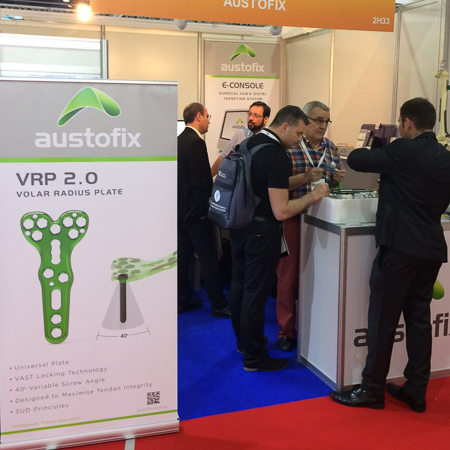
“Our Austofix product design engineers, working with IPAS, were able to innovate within a flexible design and manufacturing process. This environment was key to our ability to take the prototype to market within such a short timeframe,” he said. “There are key components of the plate manufactured using 3D printing, this enabled us to create a complex design without the costs associated with traditional manufacturing. It also enabled us to bring the device to market quickly.”

Austofix has a number of products including a range of stainless steel and titanium surgical nails, which it exports to the Middle East and China.”

Read More:  3D Printing, Ultrasonic Milling Medical Orthopedic Devices

3D Printing, Ultrasonic Milling Medical Orthopedic Devices Read More »

GE Oil & Gas to Use Robotics and 3D Printing in Talamona

BOTW-50w  Source:  Today’s Energy Solutions

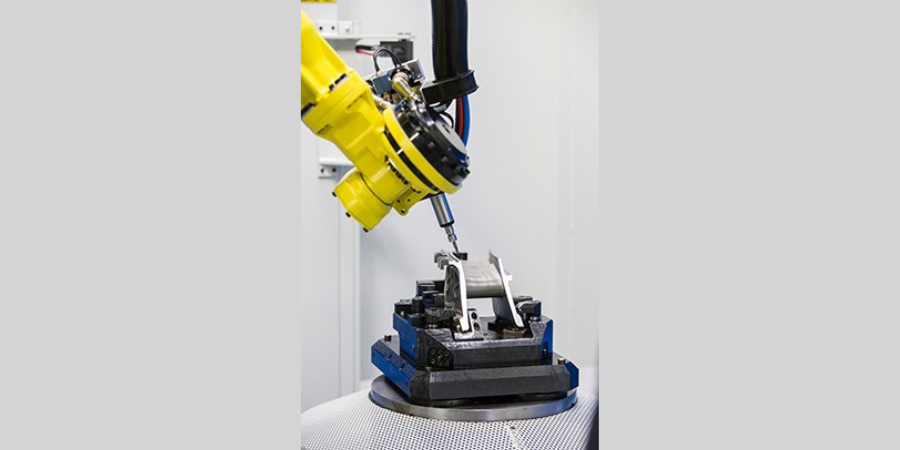
A new nozzle production line is the first completely automated line for GE Oil & Gas, and a new additive manufacturing line will use laser technology to 3D print end burners for gas turbine combustion chambers at the Talamona, Italy plant. These new advanced manufacturing lines establishes this site as a center of excellence for the oil and gas industry.

Read More:  GE Oil & Gas to Use Robotics and 3D Printing in Talamona


GE Oil & Gas to Use Robotics and 3D Printing in Talamona Read More »

Skip to content