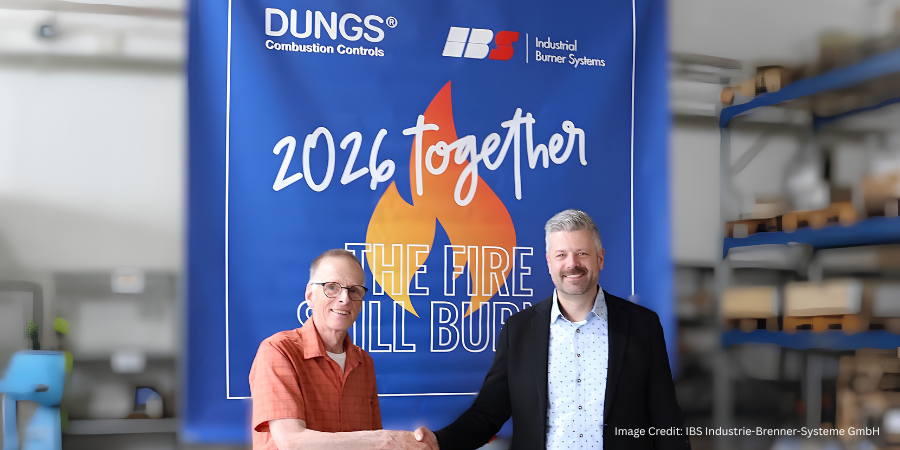
An acquisition is expanding an industrial combustion technology portfolio to include complete burner systems for thermal processing applications, bringing combustion controls, fuel management, and burner technologies together under one supplier.
DUNGS, a combustion technology supplier with U.S. operations in Blaine, Minnesota, has acquired IBS Industrie-Brenner-Systeme GmbH, a German manufacturer of industrial burner systems headquartered in Hagen, Germany. The addition expands DUNGS’ offering beyond combustion controls, gas trains, and safety components to include complete industrial burner systems for high- and low-temperature process applications.
IBS brings more than five decades of experience developing, manufacturing, and servicing industrial burners used in thermal processing applications across a range of industries. The acquisition combines that burner design and application experience with DUNGS’ existing combustion controls and fuel management capabilities.
Daniel Dungs Chief Sales Officer DUNGS
“Our aim is to accompany our [clients] on the journey from component to system, from the individual valve to the complete burner system,” said Daniel Dungs, chief sales officer of DUNGS. “In this way, we take the complexity off our [clients’] hands and deliver engineered solutions so that they can focus on their process rather than the technology behind it.”
IBS will continue operating in its current form following the acquisition, with the IBS brand, product names, and existing points of contact remaining in place. Beginning the third quarter of 2026, IBS burner solutions will be offered through DUNGS’ global sales network.
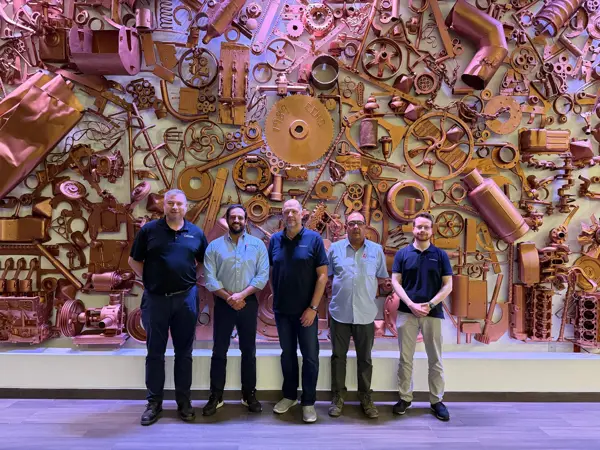
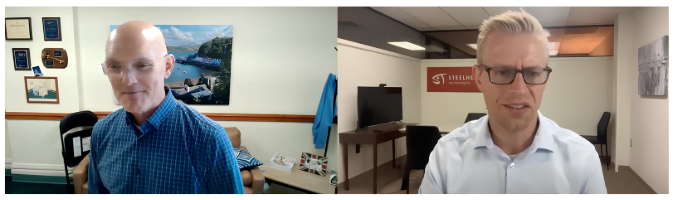
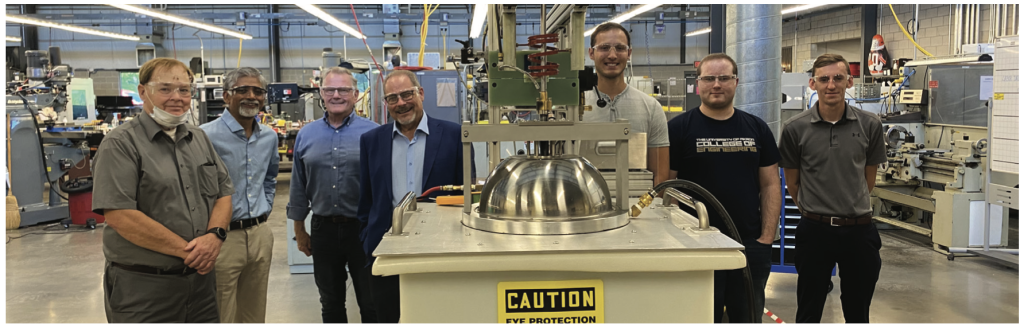
Press release is available in its original form here. Additional information provided by Industrial Burner Systems here. Main image shows Bernard Machovsy of IBS (left) and Daniel Dungs of DUNGS (right). Image Credit: IBS Industrie-Brenner-Systeme GmbH
Heat TreatToday offers News Chatter, a feature highlighting representative moves, transactions, and kudos from around the industry. Enjoy these 41 news items, including U.S. Steel’s investment in new quench-and-temper capacity, Steelhead Technologies’ acquisition of Visual Shop and Bluestreak, Bluewater Thermal Solutions’ third consecutive Nadcap Merit Accreditation, and more!
Equipment
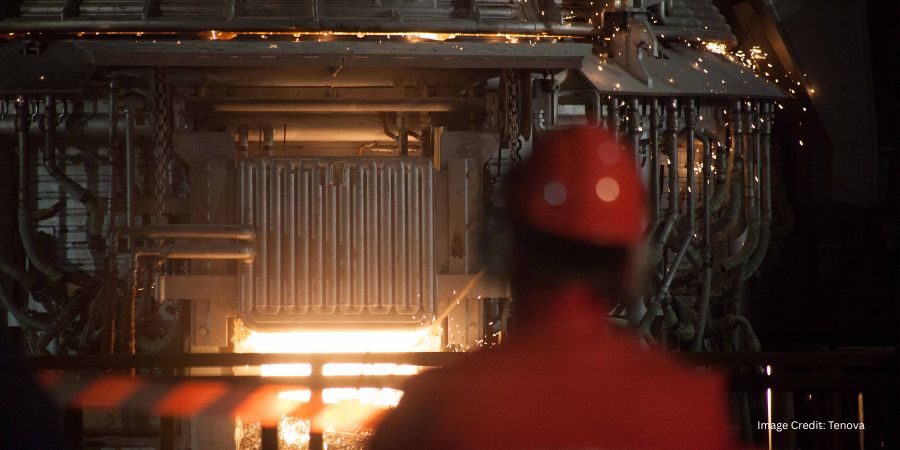
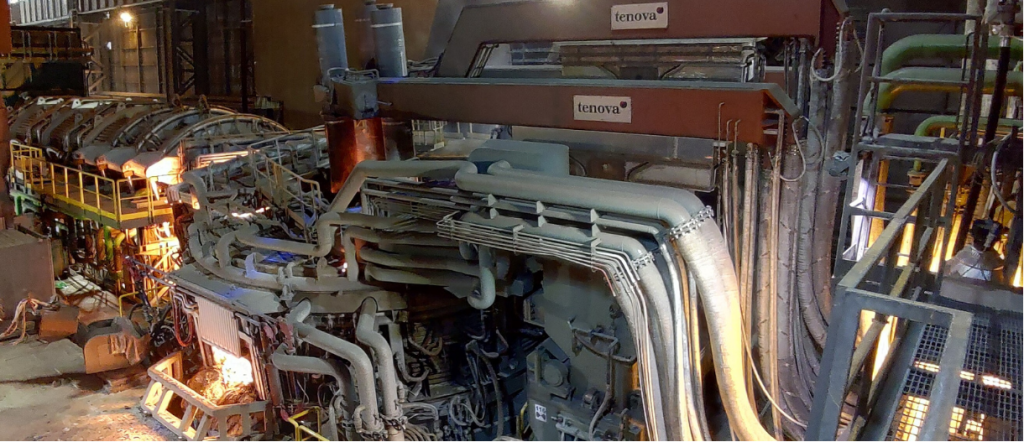
1. Tenaris will modernize the electric arc furnace at its Koppel, Pennsylvania, steel mill with engineering and equipment from Tenova Inc., part of a broader investment to improve productivity, reliability, and safety. The upgrade strengthens a critical steelmaking process, supporting more efficient and competitive North American steel production.
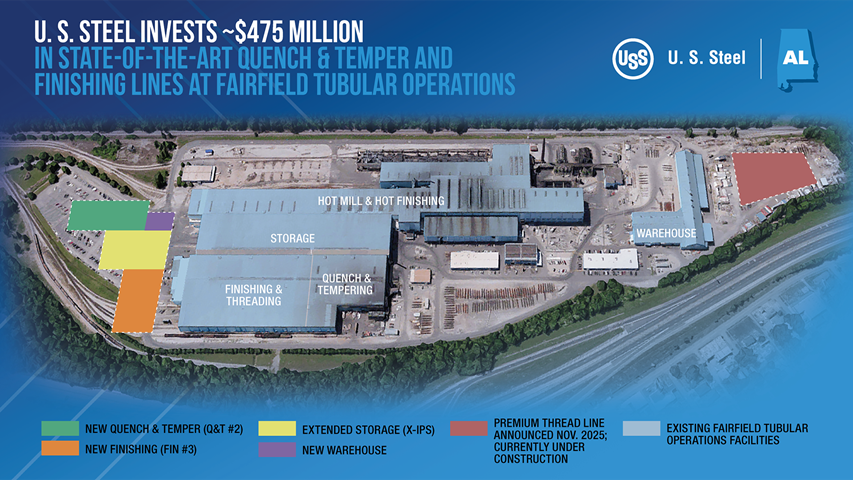
2. U.S. Steel is investing $475 million to add a new quench-and-temper line at its Fairfield Tubular Operations in Alabama, expanding heat treating capacity for seamless tubular products used in the oil and gas industry. The project will increase production capacity, improve traceability, and strengthen the domestic supply of high-performance steel products.
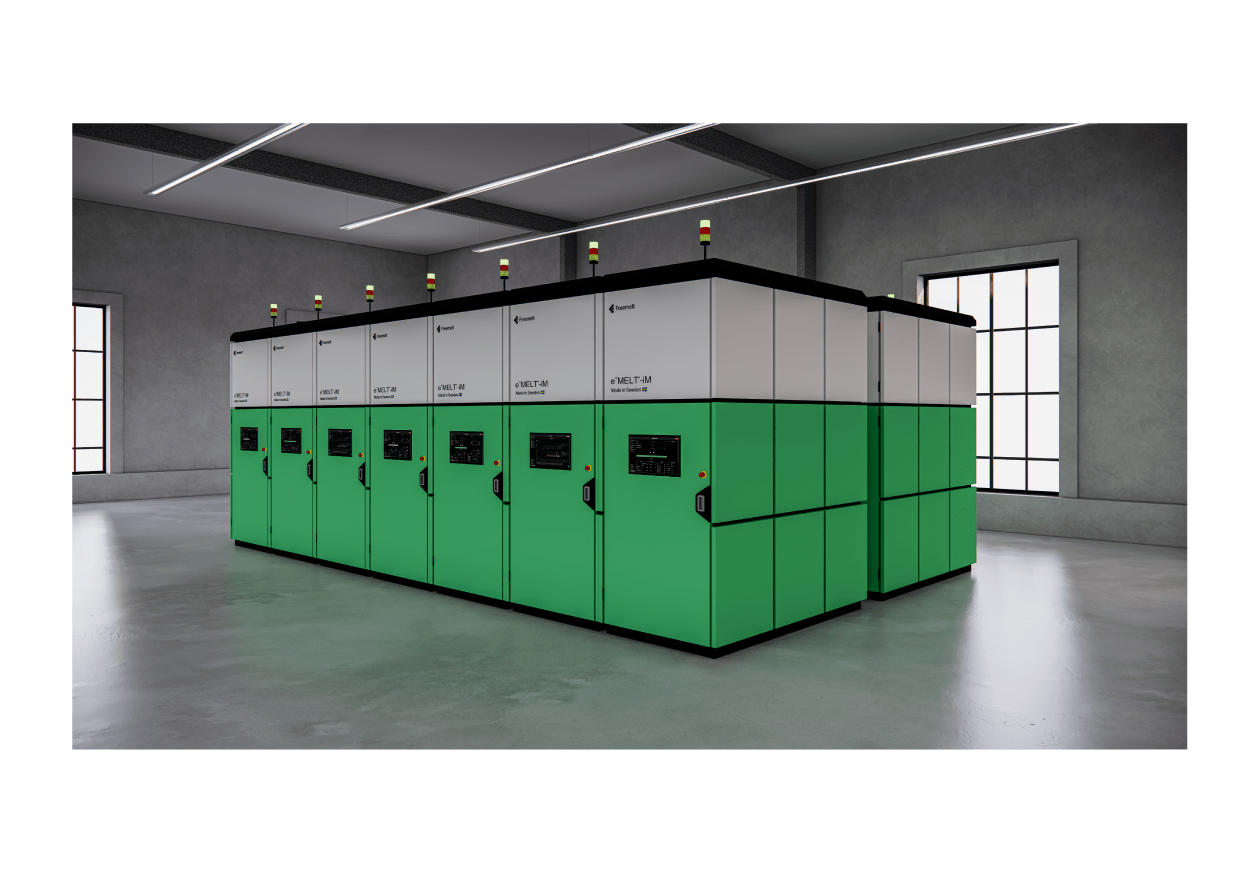
3. Intalus has ordered two electron beam powder bed fusion (EB-PBF) systems from Freemelt to expand its metal additive manufacturing capabilities and support application development for titanium and other advanced materials. The investment strengthens U.S. additive manufacturing capacity while advancing production of high-performance components for medical and future industrial applications.
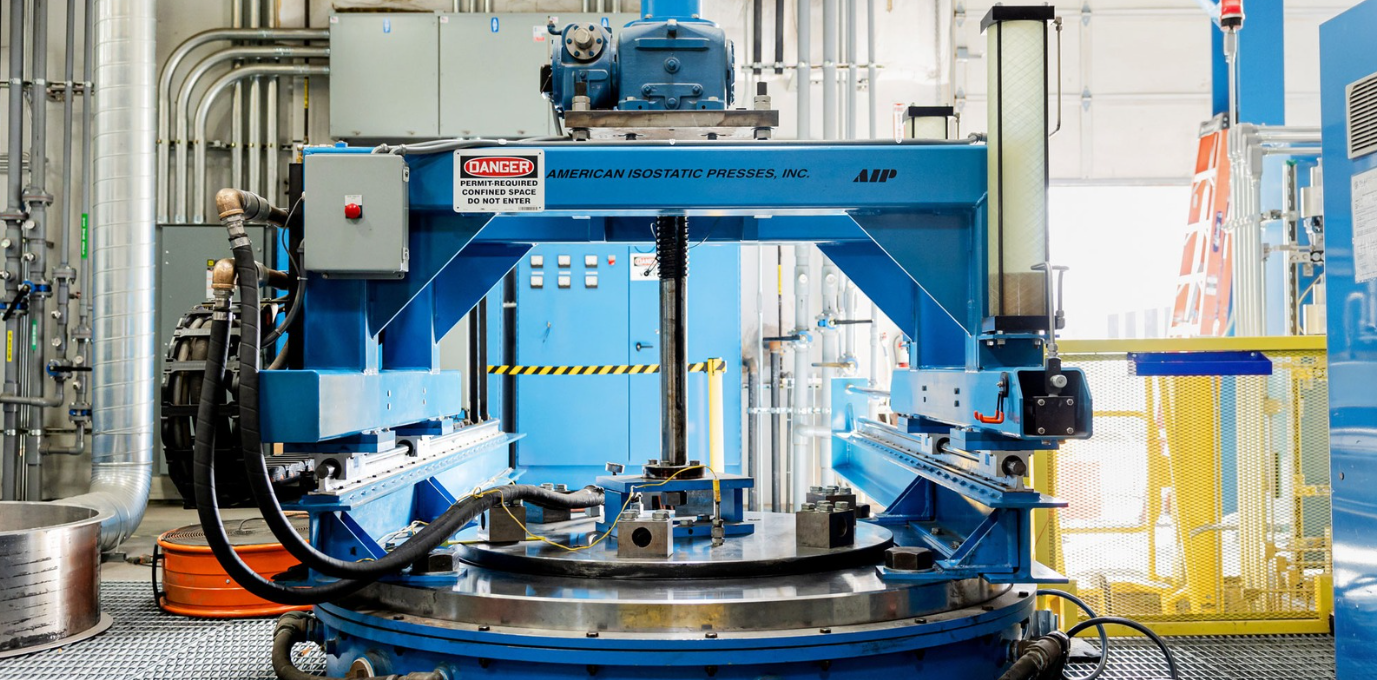
4. Kittyhawk Inc. has placed a purchase order for a new HIP vessel at its facility in Garden Grove, California. The planned investment is intended to expand processing capacity for commercial aerospace, space, defense, and other industries that rely on HIP technology to improve material performance and component integrity.
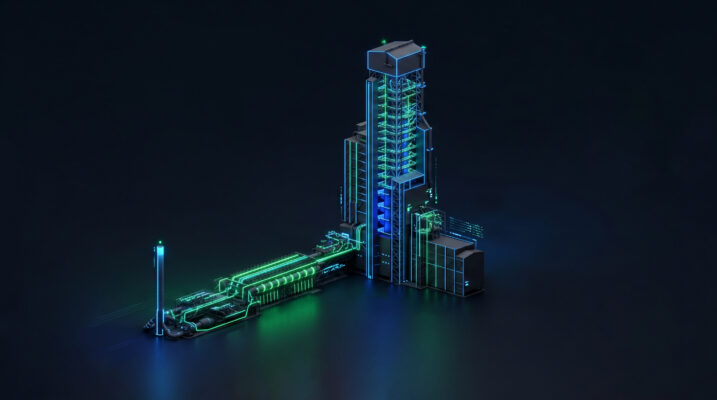
5. A new direct reduced iron (DRI) facility planned for U.S. Steel’s Arkansas-based steelmaking facility, Big River Steel Works, in Osceola, Arkansas, is expected to strengthen domestic steelmaking capabilities by linking iron ore production, ironmaking, and electric arc furnace (EAF) steel production within a single U.S.-based supply chain. The facility will produce hot direct reduced iron (HDRI) and hot briquetted iron (HBI) for use in downstream steel melting operations, supporting domestic steel production with a U.S.-based source of metallic feedstock.
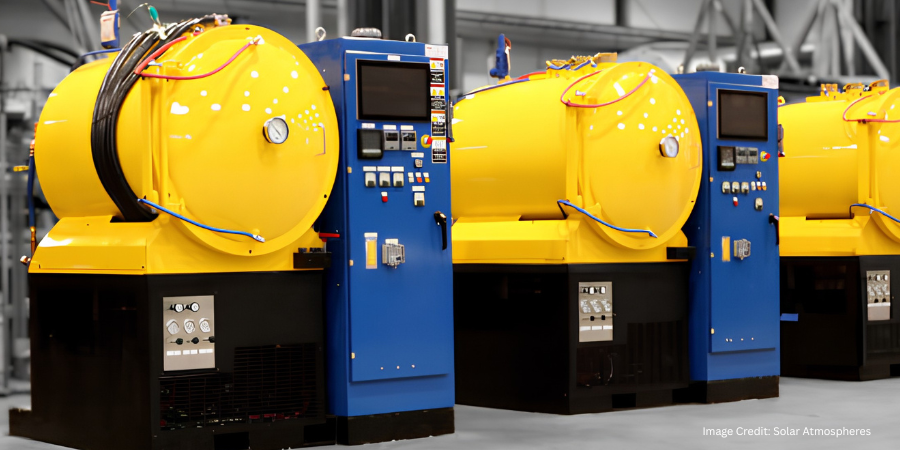
6. Solar Atmospheres is preparing to expand vacuum heat treating capacity in the Northeastern United States as construction progresses on its newest facility in Berlin, Connecticut. The 28,000-square-foot operation remains on schedule to begin serving clients in the fourth quarter of 2026.
7. Outokumpu Stainless USA will upgrade its secondary metallurgy operations with a new 180-ton twin ladle furnace from Primetals Technologies at its Calvert, Alabama, facility. The project will add electrical heating capacity following argon oxygen decarburization processing, improving operational flexibility and supporting stainless steel production.
8. Bodycote is expanding its hot isostatic pressing (HIP) and thermal processing capabilities to support growing demand from the aerospace and defense sectors. The expansion adds HIP equipment and powder metallurgy capabilities designed to increase processing capacity for critical, high-performance components.
9. Hybar LLC has commissioned SMS group to supply the technology and equipment for a second steel rebar mini mill in Arkansas, a project that will double Hybar’s annual rebar production capacity to approximately 1.3 million tons. The expansion strengthens domestic electric arc furnace steelmaking capacity while increasing the supply of reinforcing steel for U.S. infrastructure and construction markets.
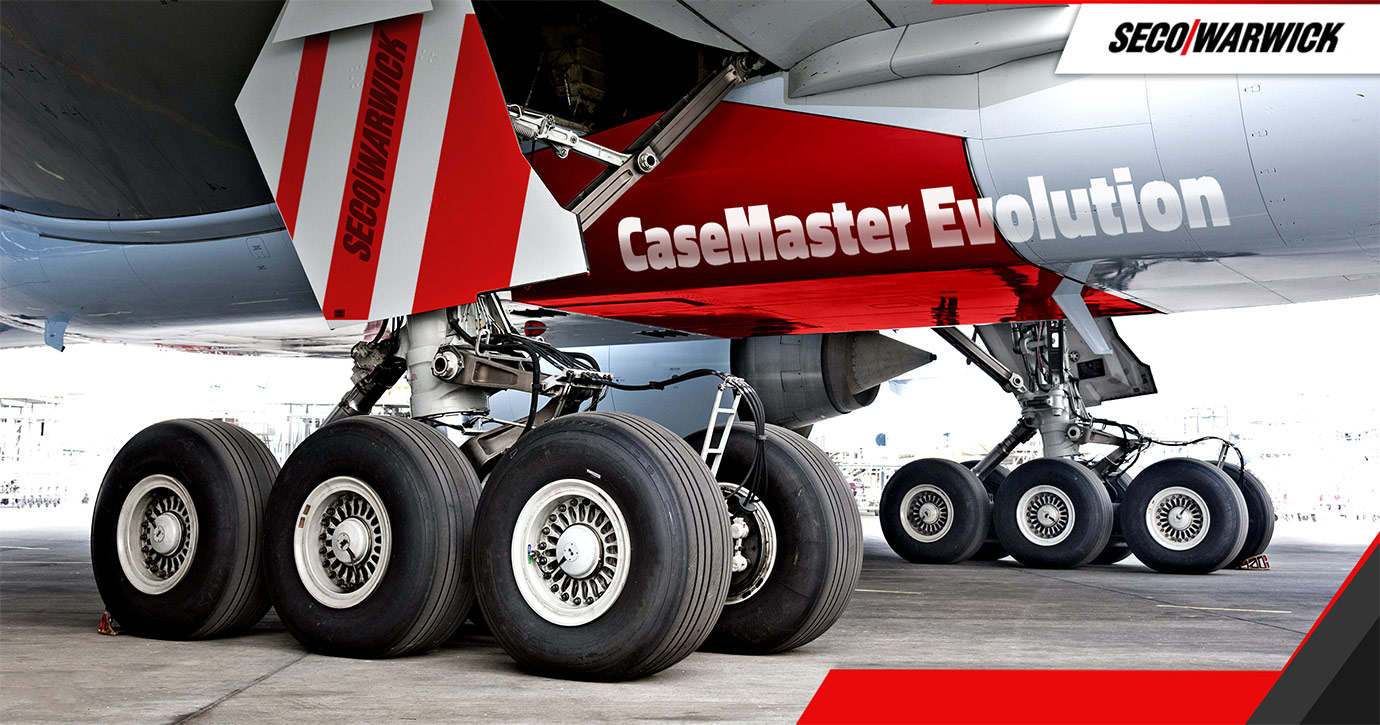
10. A Polish aerospace manufacturer has expanded its heat treatment capacity with a fourth dual-chamber CaseMaster Evolution vacuum furnace from SECO/WARWICK to support production of critical aircraft landing gear components. The investment strengthens the global aerospace supply chain by increasing capacity, process repeatability, and energy-efficient heat treating for flight-critical hardware.
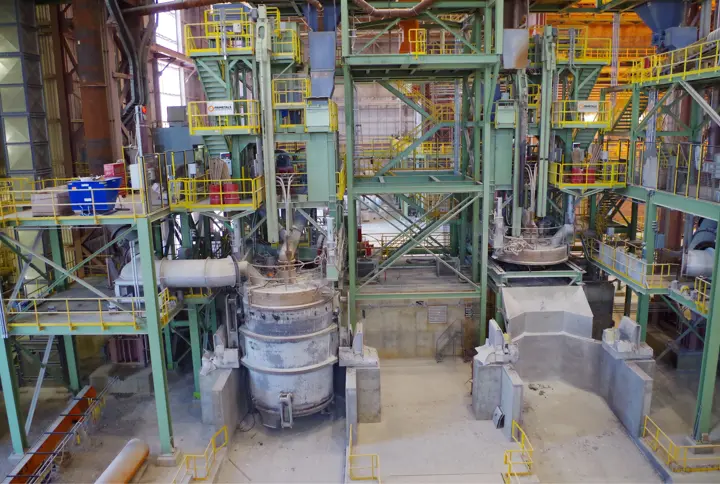
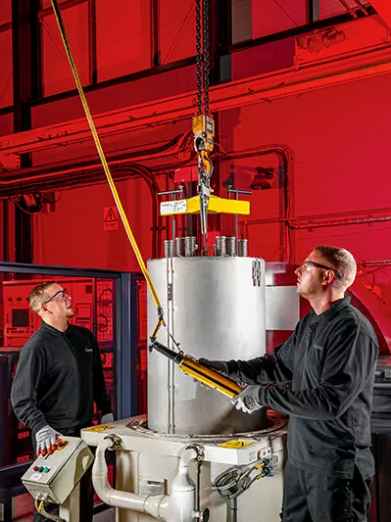
11. Castings Technology has expanded its titanium casting capabilities with the installation of a new vacuum arc remelting (VAR) consumable casting furnace from Retech, as it relocates to a larger manufacturing facility. The investment increases capacity for aerospace castings while strengthening the supply of high-integrity titanium components for critical aerospace applications.
12. Mexican steel producer Talleres y Aceros S.A. de C.V. (TYASA) has awarded Primetals Technologies a contract to supply a twin vacuum degassing (VD) plant for its steelmaking facility in Ixtaczoquitlán, Mexico. The plant is scheduled to begin operation in October 2027.
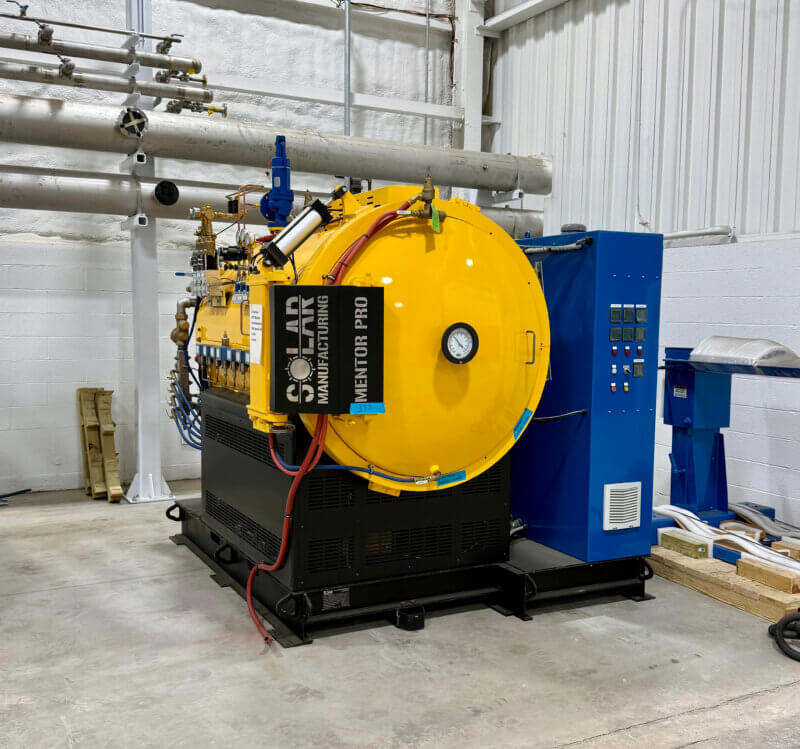
13. AGF DEFCOM, a metal additive manufacturing company, has expanded its vacuum heat treating capacity with the addition of a second Mentor Pro furnace from Solar Manufacturing, increasing throughput for thermal processing operations while reducing scheduling constraints. The investment is expected to support growing production requirements and improve turnaround times for clients requiring vacuum heat treatment of additively manufactured components.
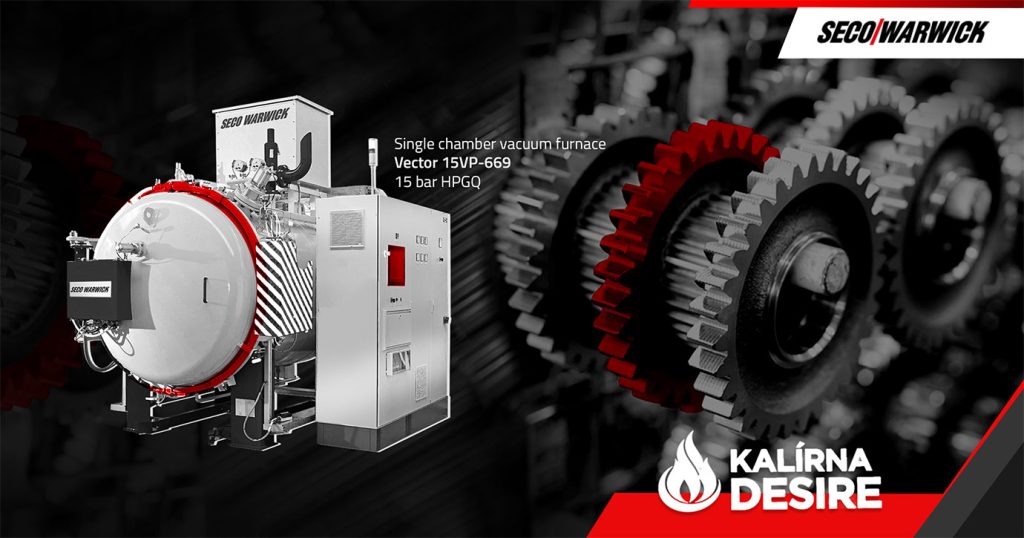
14. Kalírna Desire has launched a new commercial vacuum hardening operation using a SECO/WARWICK vacuum furnace, establishing the Czech Republic’s first local vacuum heat treating capability. The investment expands commercial heat treating capacity, giving nearby manufacturers access to shorter lead times and advanced vacuum hardening services.
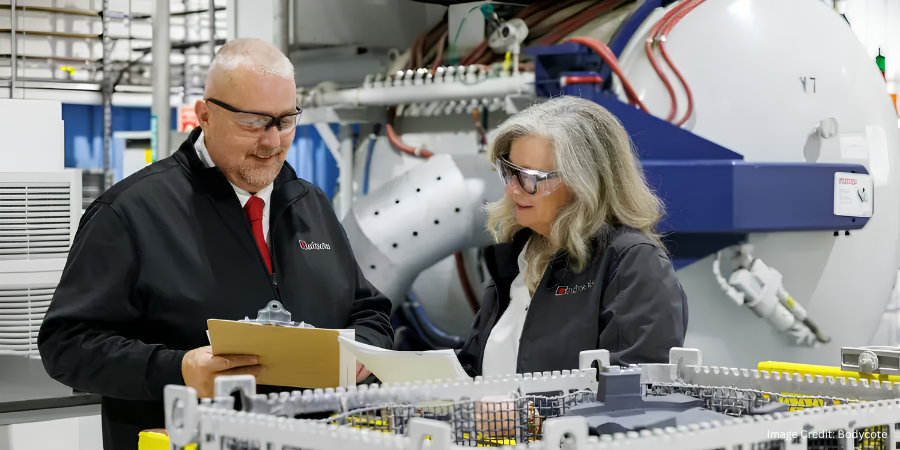
15. Bodycote is investing several million dollars to expand vacuum heat treatment, hot isostatic pressing (HIP), and powder metallurgy capabilities across its U.S. East Coast facilities, including new equipment and upgraded processing capacity. The expansion strengthens thermal processing support for aerospace and defense manufacturers by increasing capacity for critical, high-performance metal components.
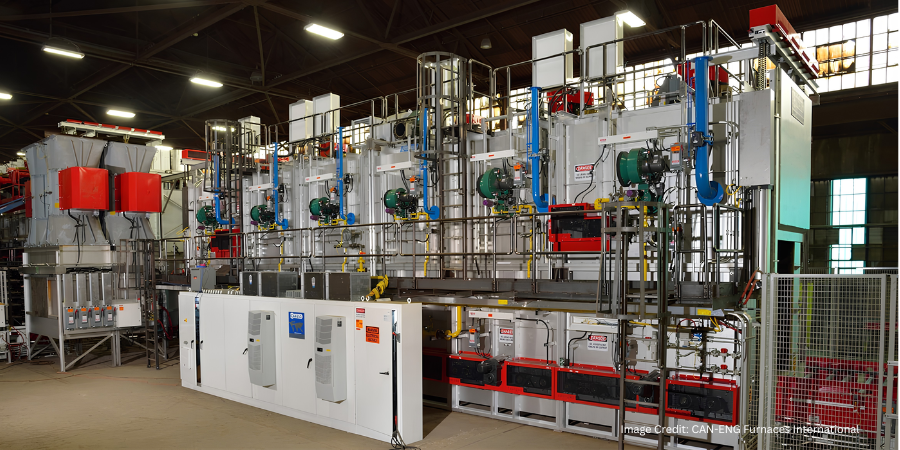
16. CAN-ENG Furnaces International has been awarded a contract to supply a continuous aluminum T6 heat treatment system that combines solution heat treatment, rapid quenching, and artificial aging to replace an aging production line. The new system will increase productivity, improve metallurgical consistency, and enhance energy efficiency for aluminum casting operations.
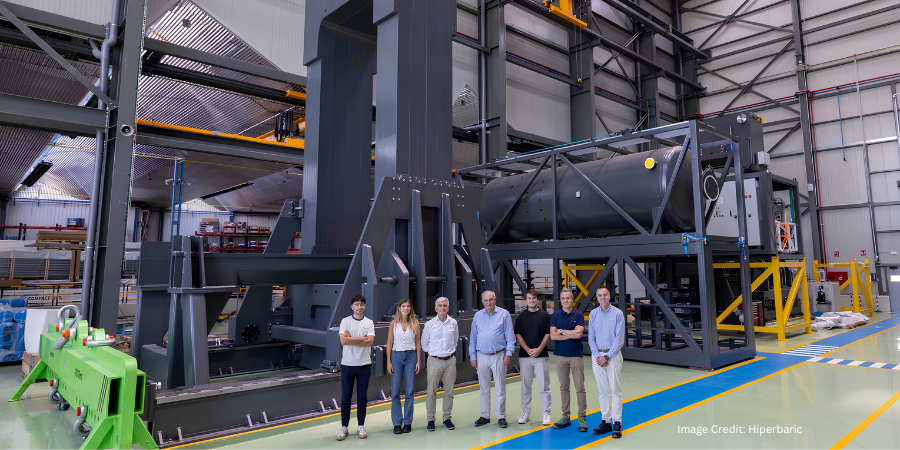
17. TTT Group is expanding its thermal processing capabilities with the addition of hot isostatic pressing (HIP) technology from Hiperbaric. The investment establishes a new business unit that will provide HIP processing for aerospace, oil and gas, and other industrial applications.
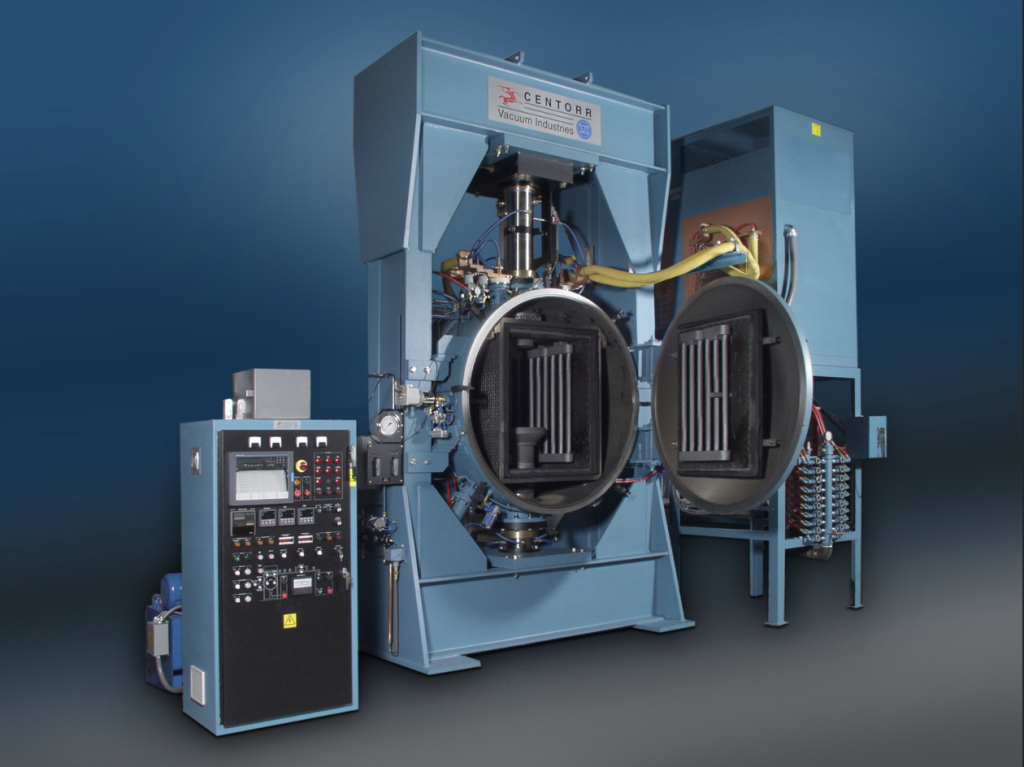
18. Centorr Vacuum Industries has secured multiple orders for high-temperature vacuum furnace systems supporting applications ranging from titanium heat treating and powder metallurgy to advanced ceramics and carbon materials. The demand reflects continued investment in strategic manufacturing sectors, including aerospace, defense, energy, and advanced materials, that rely on specialized thermal processing technologies.
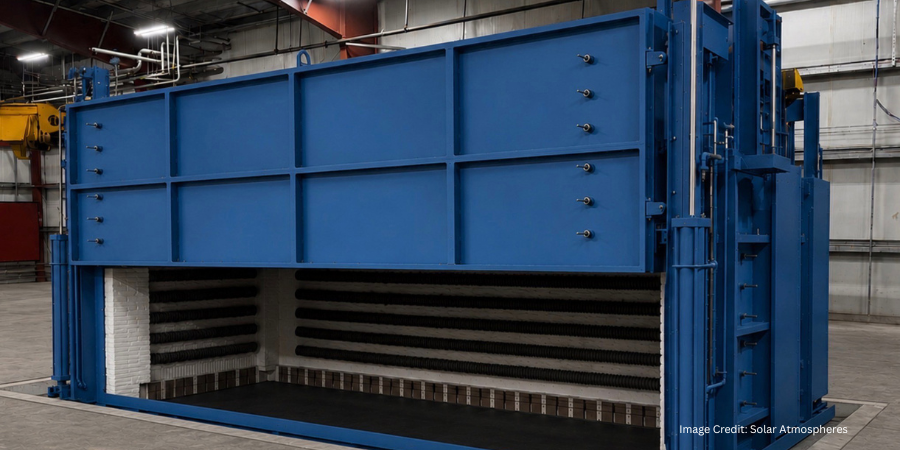
19. Solar Atmospheres is preparing to commission a titanium solution heat treating system that will expand processing capacity for large titanium bars, forgings, and other components used in aerospace, defense, and industrial applications. The system combines a drop bottom furnace with an 11,000-gallon recirculating water quench tank designed to rapidly cool large workloads and achieve consistent metallurgical properties.
20. Tenova, a global industrial furnace and metals technology supplier with North American operations, will supply the electric arc furnace for the transformation of Hüttenwerke Krupp Mannesmann (HKM) in Duisburg, Germany. The furnace, designed with a production capacity of 2.5 million tons per year, will be Germany’s largest electric arc furnace and will become the technological center of the plant’s transition under its new owner, Salzgitter AG.
21. Godrej Aerospace, part of the Godrej Enterprises Group, has ordered a SECO/WARWICK vacuum furnace to bring critical brazing and heat treatment of nickel, titanium, and stainless steel aerospace alloys in-house. The investment strengthens aerospace manufacturing capabilities by reducing supply chain dependence while expanding advanced vacuum heat treating capacity in India.
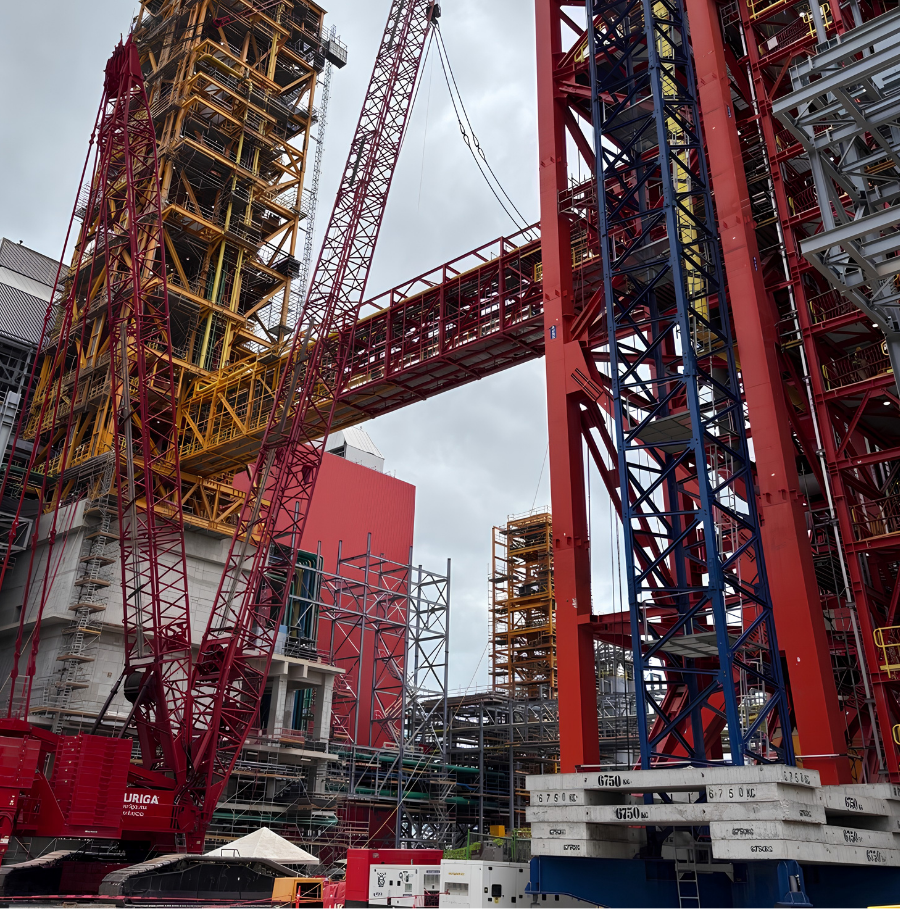
22. NEMO Industries has selected Tenova HYL to supply direct reduction iron (DRI) technology for a planned U.S. pig iron plant designed to produce low-carbon granulated pig iron. The project advances domestic ironmaking capacity while supporting a more sustainable supply of raw material for electric arc furnace steel production.
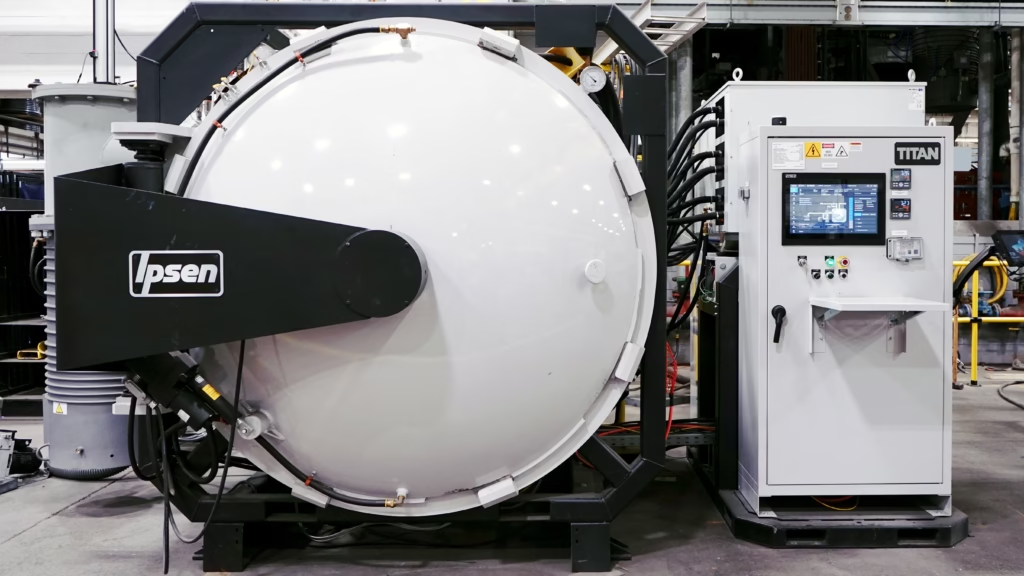
23. Ipsen has launched ICON, a new control platform for its vacuum furnaces that combines the company’s CompuVac and VacuProf systems into a single interface. The platform is designed to provide a more streamlined user experience while supporting furnace operation, production monitoring, and maintenance activities from one system.
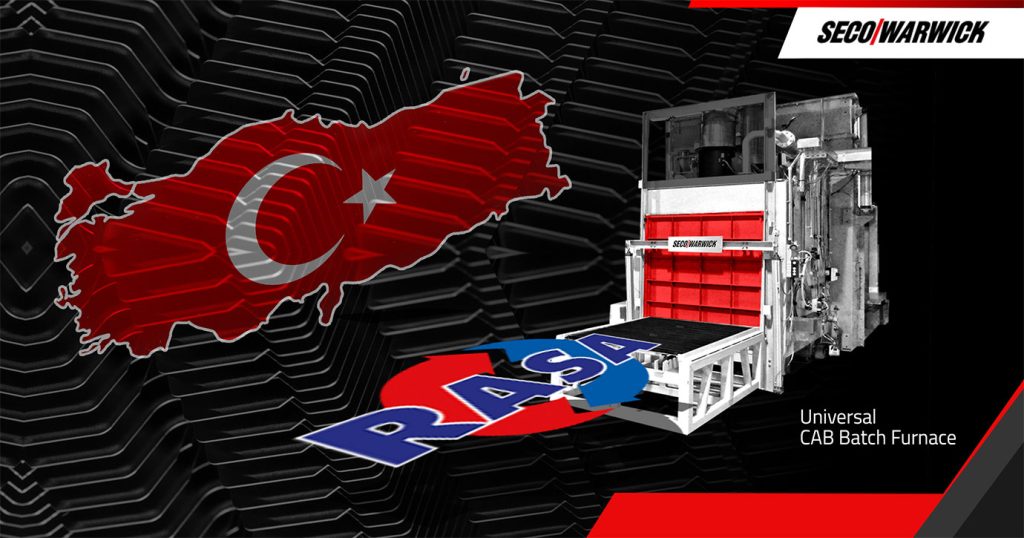
24. RASA ALÜMİNYUM has ordered a universal controlled atmosphere brazing (CAB) batch furnace with vacuum purging from SECO/WARWICK to expand heat exchanger production at its new manufacturing facility in Turkey. The investment will increase production capacity, improve brazing efficiency, and provide a scalable platform for future growth in industrial cooling and heat exchanger manufacturing.
Steel mill modernization in Koppel, PAIllustration of U.S. Steel’s planned expansionFreemelt’s e-MELT®-iM
Kittyhawk’s new HIP vessel in Garden GroveBig River Steel MIDREX plant modelVacuum furnace for Solar Atmospheres’ Connecticut expansionOutokumpu’s Alabama expansionThermal processing capabilities expansion at BodycotePolish aerospace manufacturer strengthening heat treat capacity with fourth SECO/WARWICK vacuum furnaceA new VAR installation from RetechOngoing collaboration between TYASA and Primetals TechnologiesThe second Mentor Pro furnace at AGF DEFCOMVector 15VP-669 from SECO/WARWICKColleagues at Bodycote’s Greenville facility discussing production planningAluminum roller hearth heat treatment systemMembers of Hiperbaric and TTT standing in front of a HIP 107 unit under constructionAn example of a vacuum hot press furnace available sold by CentorrA drop bottom furnace at the Solar Atmospheres’s Hermitage facilityLargest electric arc furnace (EAR) for HKM’s transformation SECO/WARWICK vacuum furnace for aerospace businessThe NEW DRI technology from Tenova HYLIpsen’s newly launched control platform, ICONUniversal CAB batch furnace for RASA ALÜMİNYUM’s Turkish facility
Company & Personnel
25. DSH Technologies has consolidated its debinding and sintering operations with sister company Elnik Systems in North Carolina, bringing thermal processing services and furnace expertise together under one roof. The move is expected to streamline support for metal injection molding and additive manufacturing customers while strengthening technical collaboration between the companies.
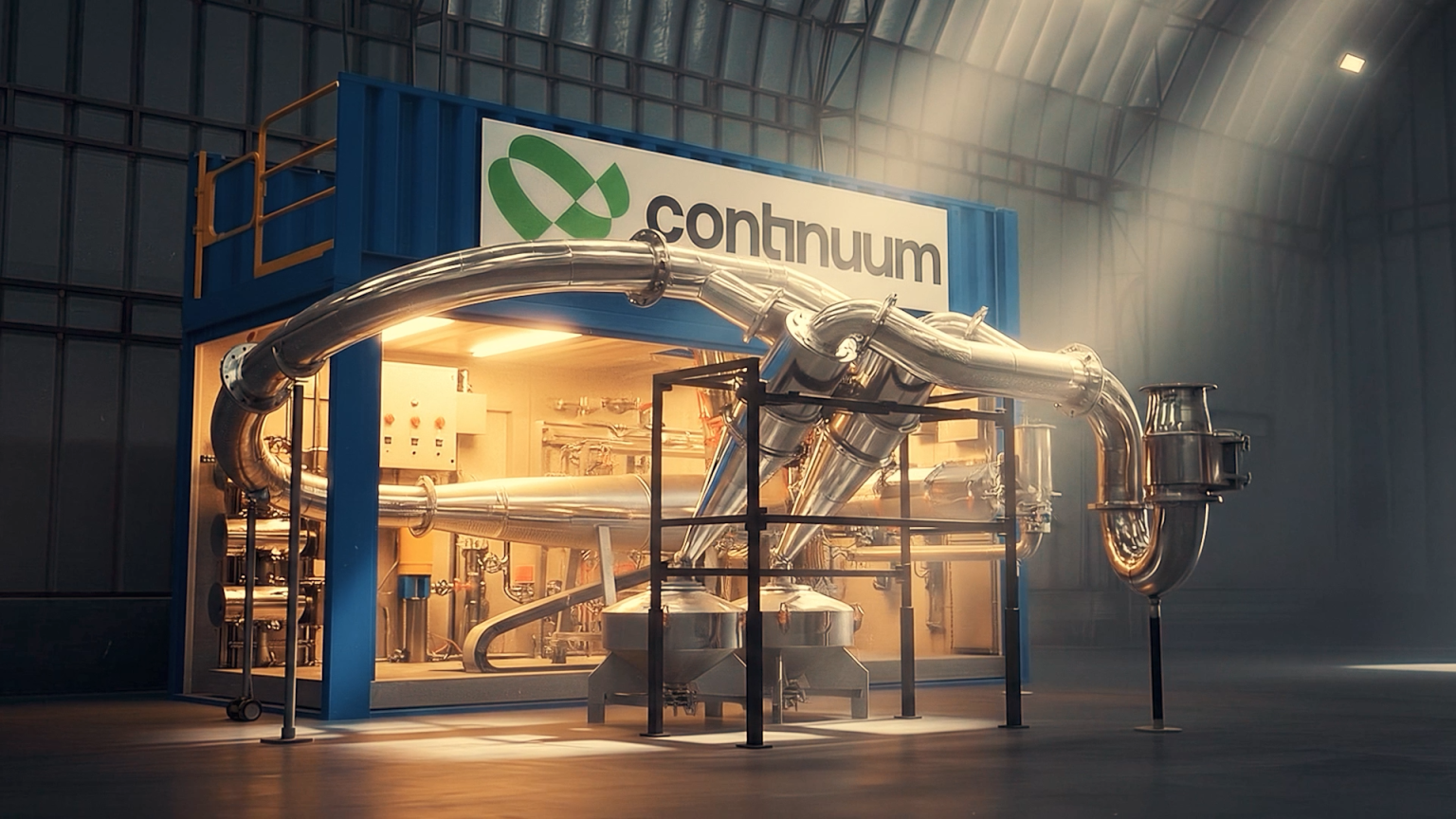
26. Continuum Powders has launched its Custom Foundry Runtime (CFR) program, giving manufacturers access to small-batch specialty alloy production using its melting and plasma gas atomization platform. The initiative is designed to accelerate alloy development and qualification for powder metallurgy and advanced manufacturing applications across aerospace, defense, medical, and energy industries.
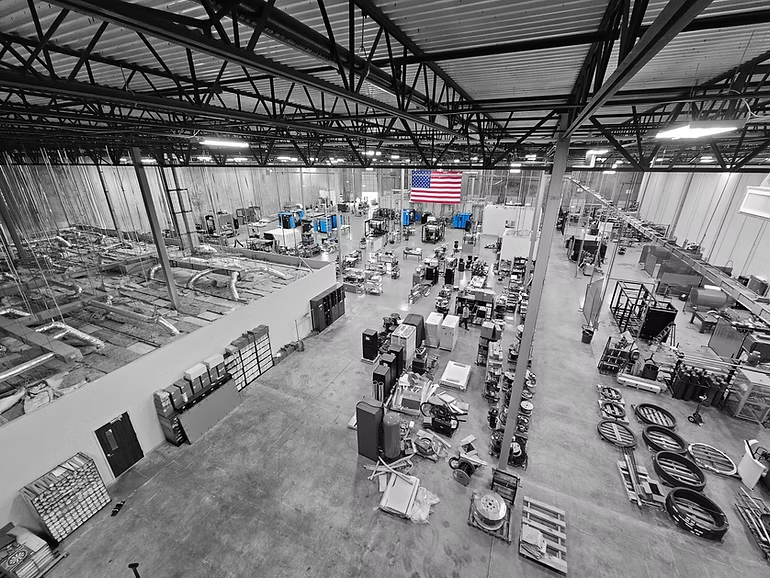
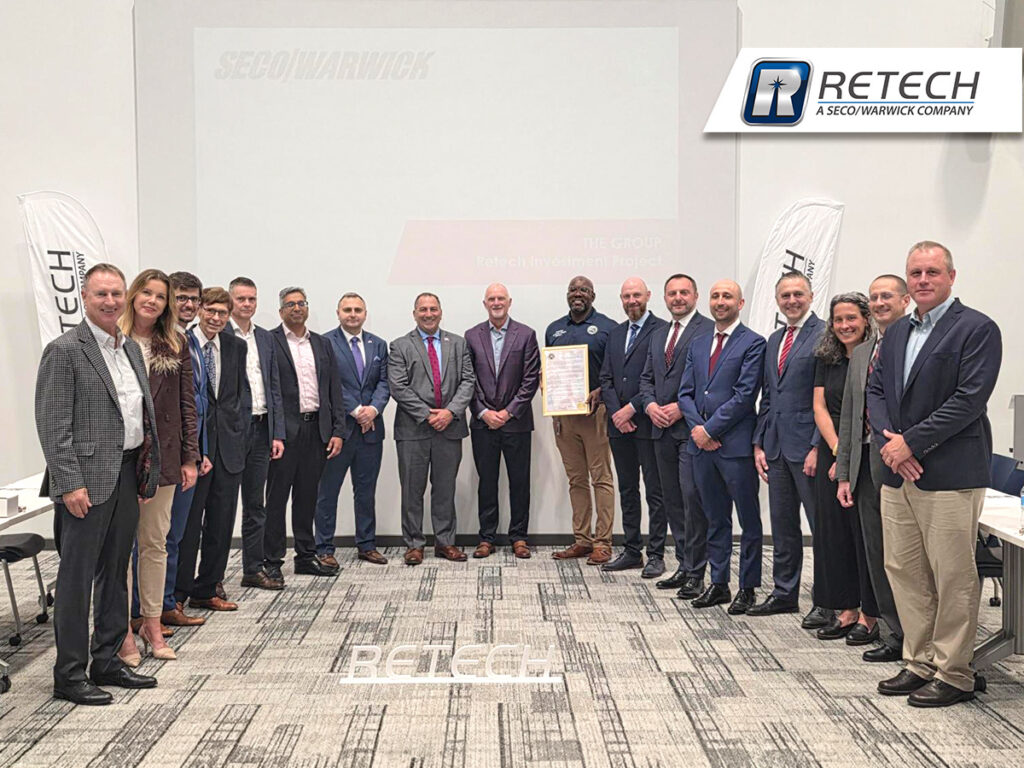
27. SECO/WARWICK and Retech have completed a strategic investment project at Retech’s Buffalo, New York, facility, expanding plasma gas atomization and advanced materials processing capabilities. The investment strengthens U.S. infrastructure for aerospace, defense, energy, medical, and other industries that rely on high-performance metal powders and advanced metallurgical technologies.
28. The U.S. Department of War has suspended the Phase II rollout of the Cybersecurity Maturity Model Certification (CMMC) program, delaying mandatory third-party cybersecurity audits while continuing existing self-assessment requirements. The pause gives manufacturers and defense suppliers additional time to prepare for compliance as the Department reviews the program to reduce barriers while maintaining cybersecurity standards.
29. IperionX has been awarded up to $6.6 million in U.S. Department of War funding to expand titanium manufacturing at its Virginia campus, with Phase II funding expected to support manufacturing capacity and capital equipment purchases. The investment strengthens the domestic supply of titanium products for defense, aerospace, and other critical industries.
30. Steelhead Technologies, a software provider serving the heat treating and metal finishing industries, has acquired Visual Shop by CSI and Bluestreak, bringing together three providers of manufacturing execution, quality management, and job shop management software for North American heat treaters and metal finishers. The acquisition expands its software offering while retaining the industry expertise developed by each organization.
31. The Metal Treating Institute (MTI) announced the formation of its ERP Task Force as its Summer Board Meeting on July 21. The member-led group was established following Steelhead Technologies’ acquisitions of Cornerstone Systems, Inc., provider of Visual Shop by CSI, and Throughput Consulting, Inc., provider of Bluestreak and Bright AM. MTI said the acquisitions have prompted heat treaters to evaluate their long-term ERP strategies and better understand their options within the changing software landscape.
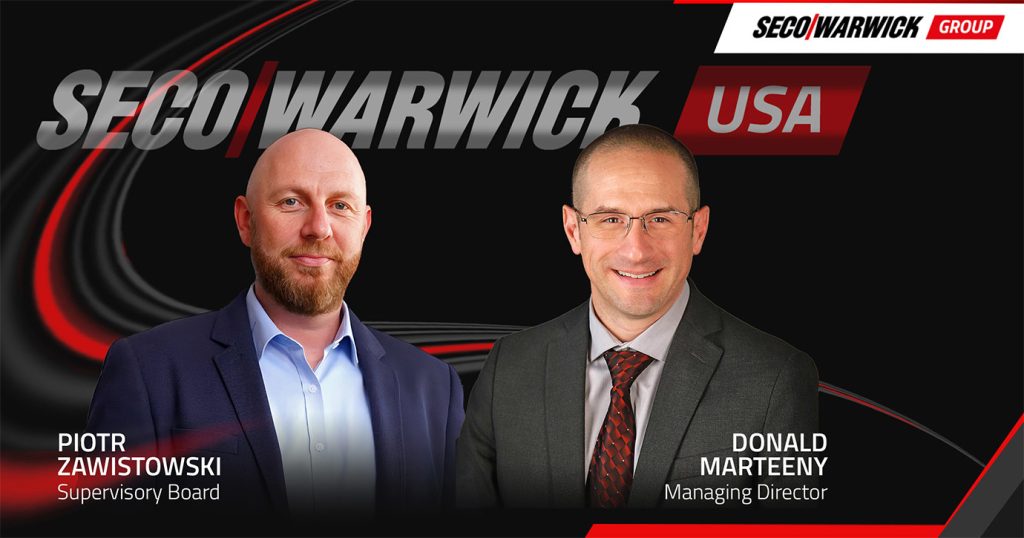
32. SECO/WARWICK USA has appointed Donald Marteeny as managing director, while former U.S. leader Piotr Zawistowski transitions to the SECO/WARWICK Group Supervisory Board to support North American strategy and sales. The leadership changes follow the consolidation of the company’s U.S. operations and are intended to strengthen coordination, operational efficiency, and heat treatment and vacuum metallurgy capabilities across its Meadville and Buffalo facilities.
33. AFC-Holcroft has promoted Jason Crook to general manager of Operations for Aichelin Americas, expanding his oversight to engineering across AFC-Holcroft, GM-Entreprises, and Nitrex Montreal. The appointment supports the continued integration of the three companies, strengthening collaboration, technical consistency, and heat treating capabilities across the organization.
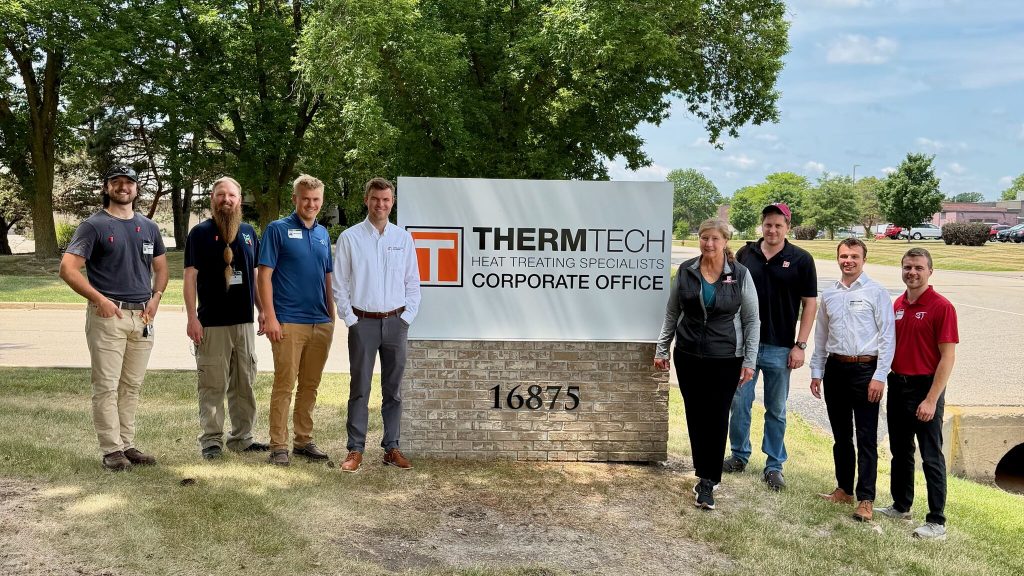
34. ThermTech has partnered with Steelhead Technologies to implement an AI-powered heat treating platform integrating MES, QMS, ERP, financial, and customer service functions. ThermTech’s engineering team will also collaborate with Steelhead to develop specialized capabilities aimed at improving quality, responsiveness, and digital integration for commercial heat treating operations.
35. United Process Controls (UPC) has promoted Bill Ulrich to technical sales manager, where he will help lead strategic sales initiatives, customer engagement, and business development across the company’s thermal processing portfolio. The promotion reinforces UPC’s investment in technical leadership to better support manufacturers with process optimization, automation, and customer service.
36. Solar Atmospheres has appointed Ava Conolly as a metallurgical/R&D engineer, joining the company’s research and development team with a background in chemical engineering, materials science, and metallurgy. Conolly will support process optimization, metallurgical analysis, and R&D initiatives aimed at advancing the commercial heat treater’s thermal processing capabilities.
37. Super Systems Inc. (SSi) has appointed Steven Christopher as vice president of Business Development, expanding his responsibilities across North America while he continues to lead West Coast operations. In the new role, Christopher will connect customer needs with SSi’s engineering and R&D teams while identifying market opportunities and guiding the development of thermal processing products and services.
Consolidated debinding and sintering operations at the Pineville, North Carolina facilityContinuum Powders’ Custom Foundry RuntimeCommemoration of the expansion of Retech’s capabilities
The logos of Steelhead, CSI and Bluestreak/Bright AMLeadership transition at SECO/WARWICKThermTech and Steelhead staffBill Ulrich, newly promoted technical sales manager for UPCAva Conolly, newly appointed metallurgical/R&D engineerSteven Christopher, newly appointed vice president of Business Development
Kudos
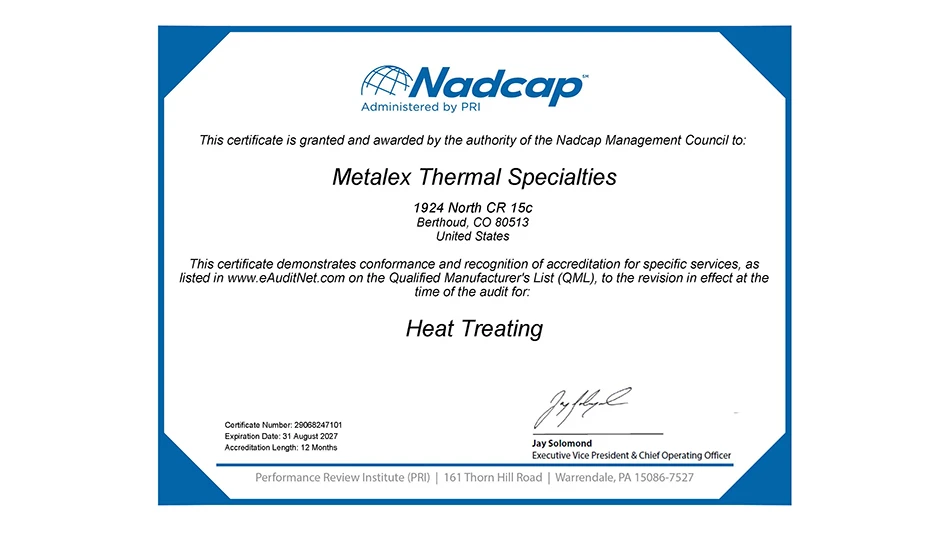
38. Metalex Thermal Specialties has earned Nadcap accreditation for heat treating following investments in its equipment, quality systems, process controls, and workforce. The accreditation strengthens the commercial heat treater’s ability to serve aerospace and defense manufacturers requiring rigorous quality and special-process standards.
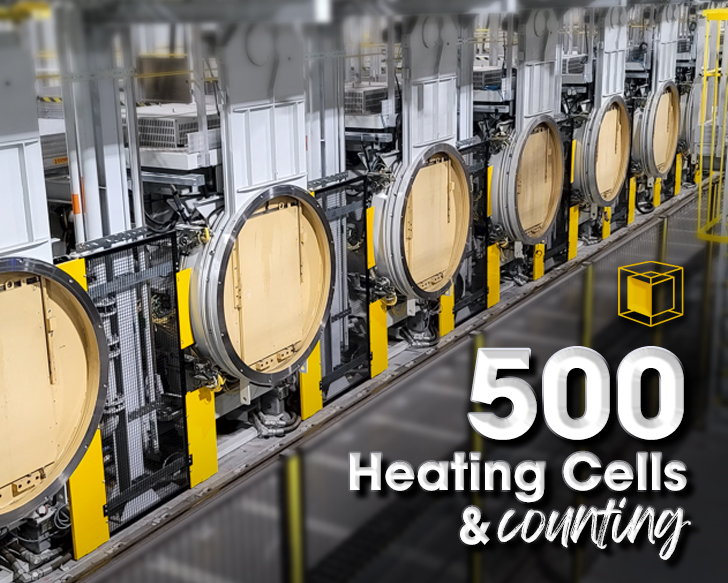
39. ECM USA has commissioned its 500th heating cell in North America, marking a milestone across furnace installations supporting processes including low-pressure carburizing, nitriding, brazing, sintering, and quenching. The milestone reflects continued investment by commercial and captive heat treaters in vacuum furnace technology, automation, and integrated thermal processing systems.
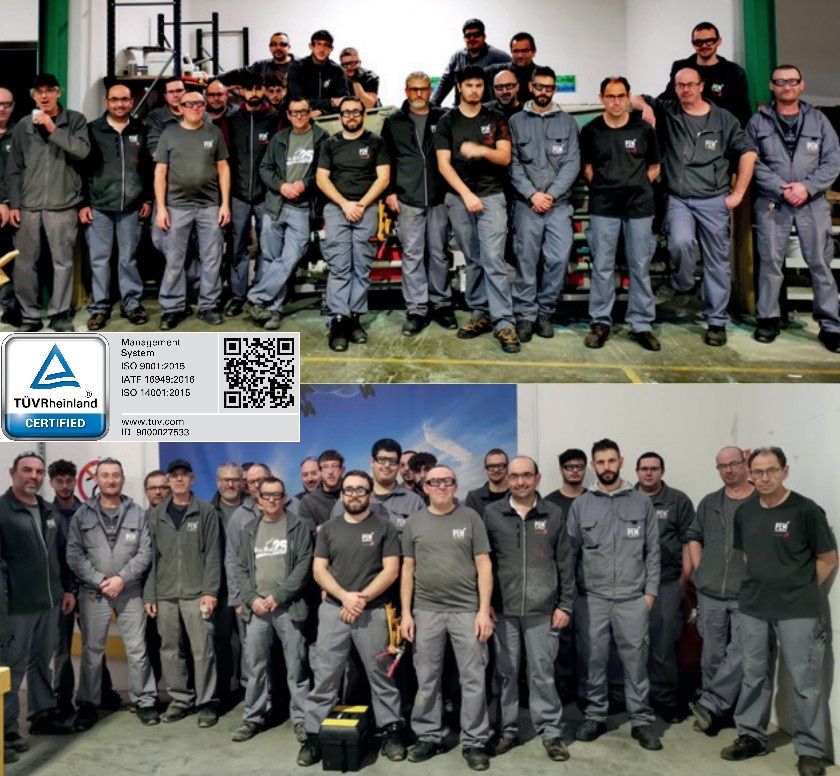
40. Aalberts surface technologies’ AST-PEM operation has achieved ISO 14001 certification following a successful audit, recognizing its environmental management practices. The certification supports continued improvements in environmental performance and sustainable practices within its reel-to-reel surface treatment operations.
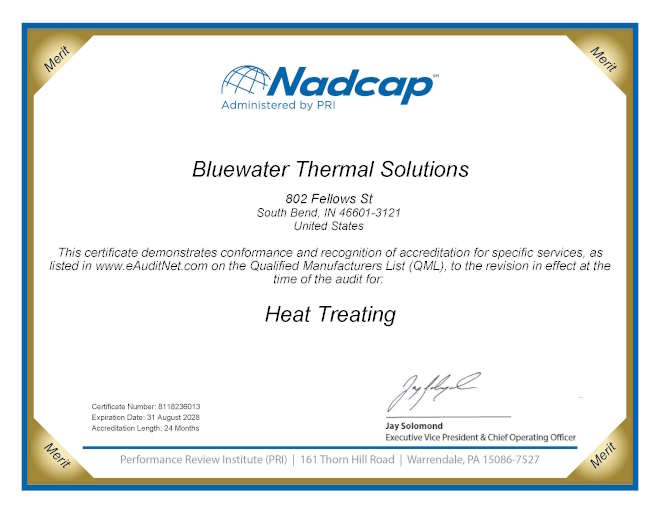
41. Bluewater Thermal Solutions’ South Bend, Indiana, facility has earned Nadcap Merit Accreditation for the third consecutive audit cycle, maintaining its 24-month accreditation status for heat treating and materials testing. The achievement reinforces the commercial heat treater’s ability to provide compliant, repeatable thermal processing for critical aerospace applications.
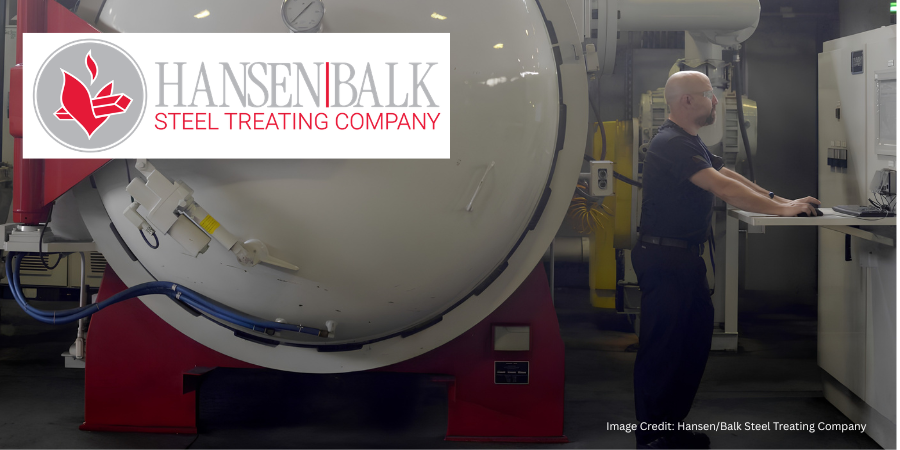
For seven decades, a family-owned heat treater in Grand Rapids, Michigan, has stood as a model of innovative craftsmanship and quality stewardship. Established in 1955 by Danish immigrant Jens Hansen, the company began as the J. Hansen Steel Treating Company, serving the tool and die shops that powered West Michigan’s post-war manufacturing boom. From its modest start with two muffle furnaces, two tempering furnaces, and a flame hardening unit, the company’s foundation was built on technical know-how and hands-on commitment to every job.
Image Credit: Hansen/Balk Steel Treating Company
A young college student named James (Jim) Balk joined the company part-time that same year — an opportunity that grew into a lifetime career. By 1973, Jim and his wife, Shirley, purchased the business and renamed it Hansen/Balk Steel Treating. Two years later, they invested in their first vacuum furnace and vacuum tempering system, helping the company stay ahead of a rapidly modernizing tool and die market. Continued growth led to a move to its current facility in 1980, where the business still operates today under the leadership of the second and third generations of the Balk family.
Through these transitions, the company’s values have remained unchanged: a commitment to high-quality heat treating, responsiveness to client needs, and a deep dedication to employees and community. Today, the heat treater is a trusted partner to industries ranging from aerospace and automotive to medical, defense, mining, and heavy equipment manufacturing.
As a Nadcap- and MedAccred-certified and AS9100-registered commercial heat treater, Hansen/Balk Steel Treating offers a wide range of services that make it a true one-stop shop for metal processing. Capabilities include vacuum hardening and tempering with high-pressure quenching up to 15 bar, as well as gas and ion nitriding, carburizing, martempering, and normalizing. Additional specialties, such as cryogenic treatment, flame hardening, and induction processing, enable the company to meet diverse and complex client requirements across North America.
Both vacuum and atmosphere processing are central to its operations, providing the flexibility to handle jobs of nearly any size and specification. The company’s fleet of trucks serves clients in the Midwest, ensuring fast turnaround and dependable delivery, an essential advantage in time-sensitive industries.
What makes the company truly stand out, however, is the expertise behind the furnaces. With 14 retirees each bringing more than 40 years of service and several multi-generational employees, the operation exemplifies the stability and prowess that define the best of American manufacturing. That dedication extends beyond the shop floor, supporting numerous charitable initiatives throughout West Michigan and maintaining a strong connection to the local community.
Over the years, the company has been recognized with industry honors, including the Metal Treating Institute’s (MTI) Master Craftsman, aka Commercial Heat Treater of the Year, award in 2000, and has been a proud member of MTI since 1979 with two YES graduates.
Among the many projects that mark its history, one stands out from recent years. During the COVID-19 pandemic, the team worked with a local mold builder to rapidly heat treat components for ventilator production. It was a defining moment that reflected both technical capability and a spirit of service.
Looking ahead, the company plans to continue reinvesting in the latest heat treating equipment and technology while refining its quality systems. With 70 years of experience, it remains focused on what has always defined its success: precision, responsiveness, and a culture of care that turns clients into long-term partners.
For more information:
Hansen/Balk Steel Treating Company
1230 Monroe Ave. NW Grand Rapids, Michigan 49505
info@hansenbalk.com www.hansenbalk.com
Main image: 12-bar vacuum furnace | Image Credit: Hansen/Balk Steel Treating Company
In this episode of Heat TreatRadio, host Doug Glenn sits down with Jeff Halonen, CEO and co-founder of Steelhead Technologies, to discuss the company’s recent acquisitions of Visual Shop and Bluestreak. Halonen explains what brought the deals together, what the acquisitions mean for current users, and how Steelhead Technologies plans to integrate the platforms and their heat treat-specific capabilities. The conversation also explores the company’s broader investment in technology, AI, and the future of software for commercial heat treaters.
Below, you can watch the video, listen to the podcast by clicking on the audio play button, or read an edited transcript.
The following transcript has been edited for your reading enjoyment.
Introduction (00:05)
Doug Glenn: Well, welcome everyone to another episode of Heat TreatRadio. I’m your host, Doug Glenn, the founder and publisher of Heat TreatToday.
Today I have the great privilege of speaking with Steelhead Technologies CEO, Jeffrey Halonen. We’re going to be talking with Jeff about his company’s recent acquisition of two competitors in the commercial heat treating sector of our market.
At Heat TreatToday, our primary market is not commercial heat treaters. It’s an important sector, but it’s about 15% of our total circulation. Most of the rest of it is in the captive market. But today, we’re going to be talking about this commercial market, and it should be a special interest to anyone in that commercial heat treating market, especially if you are a current user of Bluestreak or Visual Shop, or of course, a Steelhead Technologies product.
First, can you tell us about yourself and Steelhead Technologies?
Host of Heat TreatRadio Doug Glenn (left) and CEO and co-founder of Steelhead Technologies Jeff Halonen (right)
Jeff Halonen: Thanks for having me, Doug. I appreciate the differentiation between captive and commercial heat treaters. For commercial heat treaters, their products can by anything that flies, goes into space, data centers, computers, etc. So, I think that commercial heat treaters find themselves in one of the most important seats in manufacturing because of the pace of iteration. If you think about it, if you’re doing brake rotors, and it’s the same brake rotor for 40 years, you’re going to bring that in-house. It makes sense to buy the oven.
But if you’re changing your designs every six months, which is what happens in aerospace and data centers, etc., then commercial is the clear path.
My name is Jeff Halonen. I’m a mechanical engineer. My career started at General Motors. I got into some heat treating, but it was super mild compared to what everyone gets into, as in body structures — there’s a lot of thermal management components to assembling a vehicle.
I’m one of the co-founders of Steelhead, and we are a technology partner for job shops. We serve primarily commercial heat treaters, but also metal finishers, platers, powder coaters, Nadcap, wet paint, thermal spray, and also some fabrication shops as well. Our customers may have as low as three people, but typically it’s 20 to 300 people, somewhere in that range where they’re big enough to have a lot of problems, and then they’re also a job shop. Parts are coming in, phone calls, high-volume, fast-paced. These aren’t $10,000 invoices, $20,000 invoices — they are smaller, a few hundred or thousand dollars, and there’s high volumes of them.
Everyone is dealing with the problems of labor turnover and other challenges. It’s a very nerve-wracking business. The revenue volatility is kind of extreme a lot of times, and your visibility and your control over that revenue volatility is not high. There’re ways you can diversify, but there’s challenges.
We have a core philosophy that job shops are actually ideally suited to leverage technology to the hilt to compensate for all of these challenges.
It’s almost like you’re in an environment where the facts change every hour, every day. This means that knowing what’s going on and making decisions quickly becomes even more important. It’s like the F-35 fighter jets that have those goggles with all the quick stats. Why? Because in a dog fight, the faster you make decisions and have data, the better off you are. Whereas if you’re canoeing across a lake, you don’t really need a lot of real-time KPIs.
We’re huge on technology, and we work with job shops all day long.
The Product (03:53)
Doug Glenn: Are you an ERP (enterprise resource planning) system or how would you classify your product?
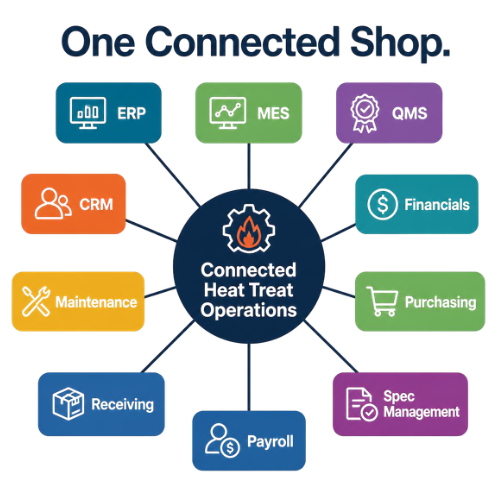
Jeff Halonen: We’re all in one, to the extent we can be. That includes ERP, financials, native accounting, MES (manufacturing execution system), spec management, QMS (quality management system), quality management, CRM (customer relations management), timesheet, payroll integration, maintenance, purchasing, receiving, etc.
We have found that smaller businesses do not like to jump into 20 different software programs because you’re shoveling data all over the place. Even something like purchasing — how is that related to maintenance? Well, you had to replace a motor, and then you had to purchase a motor, then you had to receive it, but it went to one of four buildings. You don’t know where it’s at. The magic is in the connectivity of everything, and then if adding AI on top of that, you’re a fully connected business.
The Acquisition Timeline (04:42)
Doug Glenn: So, enterprise-wide, top to bottom.
Now the big news is this acquisition that just recently took place, and that’s what we want to talk about today. First off, let’s just get some facts about the acquisition. When did it happen?
Jeff Halonen: Yeah, so there’s a separate story and arc and strategy of how it made sense for all parties with both of them. As far as timing, Bluestreak was a couple weeks ago, and then Visual Shop was three or four weeks before that.
The timing is relatively coincidental — it just happened. The conversations just so happened to move in parallel. Timing-wise, there’s no explicit link between the two acquisitions, other than the fact that they both picked up steam around the same time as each other.
Doug Glenn: That’s right. Can you describe the companies involved?
Jeff Halonen: Visual Shop is a Cornerstone Systems product out of Illinois. They’ve been around — they’re essentially the pioneers in heat treating and metal finishing, as far as having a commercially off-the-shelf product available with support and service for heat treaters.
And then Bluestreak out of Wisconsin, which is really similar in terms of focus, but Bluestreak’s a much more modern system, cloud-based offering. Both companies have a huge disposition towards high service, which is something we’re really happy to see as we kind of bring the companies together.
Our number one core value is customer obsession, and we understand that it’s not just software. If your business is completely static, you have 10 employees, and it’s just the same business for 20 years; you don’t need a ton of service. But most of these shops are growing and adding capabilities, and that’s a common ethos across the two of them.
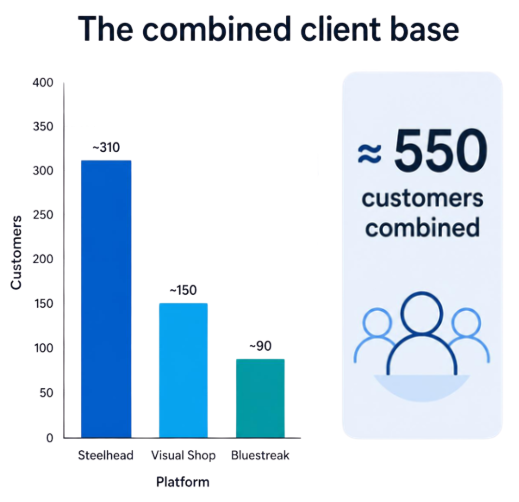
Visual Shop has about 150 enterprises on the software today, and Bluestreak has about 90. Half of Visual Shop customers are commercial heat treaters, and 60% of Bluestreak are commercial heat treaters.
Doug Glenn: The other percentages that are not commercial heat treaters are outside the heat treat industry. Still probably job shops, but outside the heat treat industry.
Jeff Halonen: Correct. Highly tangential. The same parts are going in and out of heat treaters to blasting shops, copper plating shops, etc. It’s typically metal finishing for the remainder.
The Acquisition Arc (07:35)
Doug Glenn: You mentioned earlier about the arc of each acquisition, the timeline, and the reasoning. Can you tell us about the arc of each of those acquisitions?
Visual Shop
Jeff Halonen: With Visual Shop — this product was launched around 1992. It hit a point where continuing to improve essentially requires a complete rebuild. The position of the business, and the financial position of both Steelhead and Visual Shop, is that it’s a very affordable product.
It was the lowest cost product available for job shops, which was great, but the result of that was that there were not a lot of resources to invest in building the product and accelerating development. So, it was just at a juncture where there’s either a tremendous amount of investment — many, many millions of dollars — to start from scratch, essentially, on a brand-new product, or do we provide as it kind of gets towards the end of life, a structured transition over to a more modern system where there’s a definitive path. There’s someone you can call. Obviously, there are many paths that every shop can take, but it provides a smooth transition.
Now the entire Visual Shop team is now part of team Steelhead. Nothing changes for Visual Shop customers — they still call Visual Shop. It’s the same product, the same service. But now there’s a path for migration there.
Bluestreak
On the Bluestreak side, the company was actually growing. Bluestreak is a great product. It has great retention numbers, approximately 97% gross dollar retention, which is a common metric in software — that’s exceptional. So Bluestreak’s clients are loyal. They love the product. Todd and the rest of the Bluestreak team have built an incredible product for heat treating.
The product captures a lot of the nuance around specifications, certifications, and oven compliance, like blocking and tackling. That’s one thing we’ve come to appreciate over the years — you can have flashy AI tools, but shops cannot focus on the upside, on the growth, unless the fundamentals of how they run their business are rock solid.
They need to feel that they’re on rock-solid concrete. If they cannot create a certification, if Battelle Helicopter calls us and asks for documentation of something and they are not confident it can be provided — if they are not confident in the accuracy of instruction provided to operators or the ability to process parts correctly — the company cannot even focus on the nice upside of technology.
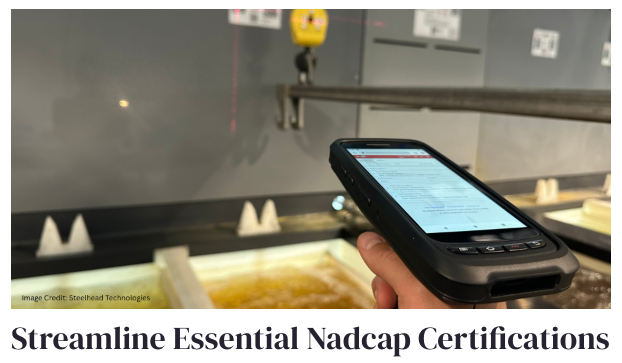
Related Reading: Click on the image above to see how digital tools can streamline Nadcap certification management and reduce manual data entry for heat treat operations.
All that to say, the partnership with Bluestreak is a really exciting one for Steelhead to be able to build absolutely bulletproof heat treating technology. Todd (Wenzel) and our engineering team — the Steelhead engineering and product team — are in close contact, and there are things that Bluestreak has built that are on its fourth generation. They have been working with heat treaters for many, many years. So, we’re working very closely as a single team to provide all the features that Bluestreak has developed over the years that are great for heat treaters and pulling those into Steelhead.
Bluestreak is a QMS and MES, and then Steelhead is the broader platform, including ERP and finance. We also have an MES, but they’re more specialized on the heat treating. We are kind of integrating and combining features and products to get a great rock-solid foundation in place.
Like doctors say, first do no harm, and then press the gas on AI. I was just at a shop yesterday, a large heat treater. When I walked into the office, there were employees doing invoicing, and it looked like 1997. Hey, the machine works, right? There were some profitability challenges that they were working to address, but for other business functions, that’s where it gets really exciting.
Some may wonder if they can even look at AI. Everyone is in a margin-pressed environment. Everyone has costs. If you look at the overhead it takes to run your shop, and you can reduce that meaningfully by tens of percent, that goes straight to the bottom line. Now you can go buy those $3 million ovens that you love to buy, or you can walk to the trade show with a little more swagger because you got a little extra net margin at the end of the day to invest back in the business instead of dumping that into processing paperwork.
Related Reading: How could AI connect heat treat data, tools, and operators? Click on the image above to learn more about the emerging role of AI and Model Context Protocol in thermal processing.
We have a couple AI products out today, AI order entry and AI analytics, to get your team to where you can literally chat with your business — have an AI agent that’s like a CFO or a quality manager — so your team can spend time solving the problems instead of digging through charts.
The exciting part is that’s these are the first of 10–15 AI products on our roadmap. But none of that works unless you have a rock-solid foundation.
Doug Glenn: Need to have the foundation.
Jeff Halonen: That is the number one priority. What we found is if we sit here and talk about AI, that’s fine. But how can I do furnace calibrations? How can I create this certification? What’s my operator’s experience going to be? And you know what — they’re right. They’re absolutely correct to focus on that. We’re taking the order of operations very seriously, but it’s still very exciting.
Acquisition vs. Competition (12:44)
Doug Glenn: Two more questions on the acquisition itself. Why buy as opposed to just competing them out of the market?
Jeff Halonen: Yeah, it’s a good question. I’ll take them separately because it is different for both of them. With Visual Shop, the product works. The business operates. It’s fairly common for us to meet with shops that have more financial challenges that are running on that system. That’s like an invisible, parasitic tax. But what they do see is, a) it works, and b) it’s a very low cost. You’ll have businesses doing $20 million in revenue, spending $6,000.
I know our products are a little more premium offering, and we would like to bring the absolute best we can bring. Even globally, as far as what businesses pay for technology, Visual Shop is a very low price. There’re a couple reasons this acquisition makes sense.
For one, it’s actually good for the customers. Visual Shop’s customer base and revenue have been decreasing. They had about $1.2 million in revenue and about 150 customers, and those numbers have been decreasing for about four years.
It just gets to a point where there’s just no good options. And with those options, the timelines are really compressed.
So, in many ways, we’ve extended the timeline and increased the stability that’s available. There were also many mental hurdles with the Visual Shop side. We’ve had many people send us all-caps emails saying, “Thank you for buying Visual Shop.” It would be from the lieutenants — the quality manager, the production manager, the general manager — because they suffer. They are the system. It’s like their nights and weekends, and their stress levels — that is the system.
Sometimes you have a situation where the finance decision is, “Hey, this low-cost system will work, so therefore take no action.” But they’re not seeing all the costs that are kind of hidden there. So that’s where this acquisition makes a lot of sense. It provides a stable path, but also a bit of an impetus for folks to reevaluate next-generation or modern options.
Steelhead has attracted a bit of investment. We are growing quite aggressively. I would say we’re pushing the limits of what technology can do for job shops, and that’s resulted in a lot of exciting growth. But the thing I’ve been pushing with our team is humility. Especially with commercial heat treating, there’s a tremendous amount of nuance. The vocabulary alone will humble you if you haven’t been in that environment for a while.
The messaging to our team was, “Hey, we need to approach this with humility.” That’s where the Bluestreak partnership is exciting, because it’s different from Visual Shop in the sense that Bluestreak was growing and in a good spot profitability-wise.
Todd was looking at retirement options as well — there were some time dimensions there. This acquisition wasn’t as acute as Visual Shop, as far as continuity plans for customers and creating predictability.
The reason why the Bluestreak deal made sense is because we believe heat treaters are a critical portion of the manufacturing ecosystem. There are all these oil tankers trying to get out to the open sea, all the fabrication shops, the space launches. I think they’re going from 110 space launches a year to 220. They’re literally doubling space launches from 2026 to 2027. And then you have all these startups, and that’s great. You have 500 oil tankers here, but now it’s got to get through this. That’s the role of commercial heat treating. It’s others too — anodizing, plating, and others — but heat treating is certainly a part of that constriction if you look at the manufacturing picture.
That’s why it made sense to combine Bluestreak’s rock solid understanding of how you run a heat treating shop reliably. This is how you pass your Nadcap audits every time. Then incorporate the larger business platform to try and boost the margin and growth opportunity and get on offense.
The Bluestreak product progress has been slowing over the last several years. We believe there’s an opportunity to step on the gas in terms of what technology can deliver. That’s where that partnership makes sense.
It puts us in a position to have a bulletproof offering. Here’s the source code for Bluestreak, here’s the source code for Steelhead, and here’s the developers that made both of them work together to make sure we’re putting the absolute best product in the hands of heat treaters.
The Financial Investment (18:17)
Doug Glenn: One last question about just the acquisition itself. Can you talk about the financial aspect of the acquisition?
Jeff Halonen: I’m one of six co-founders of the company. We bootstrapped it for a year. I’m an ex-automotive engineer from Michigan. We did get to a point where we realized that if we want to grow, we may have to pursue financial backing, and we did. We pursued venture capital.
For the first four years, we were venture-backed. Venture is a very aggressive type of investor. There’s a lot to read about there. They do serve a great role in society. There are not a lot of people that would give $2.5 million to a guy with a PDF who’s hollering at a webcam saying, “We’re going to go do this thing.” They have some downsides, too.
Last November, we transitioned to having four venture capitalists as part of the company. We’re down to one now. Then a growth equity firm stepped in called Mainsail. They have around 30 ERPs in their portfolio. This is what they do all day long. It was an $84 million investment that they made, and part of that was relieving the venture capitalists of their seat at the table. Part of that investment was operating capital to invest in growth. It’s right in the name, growth capital.
I’ve had shops ask me what their intentions are as investors. That’s a rock-solid question. Growth equity is a variant of private equity. They are looking for a financial outcome five years out on the horizon. However, ask yourself what leads to that outcome. This is capitalism, and just like every commercial heat treater in the world — if you provide a great product to your customer on time, you have a financial outcome.
A world where there’s a misalignment of incentives, specifically, almost doesn’t exist. If Mainsail is looking for a return on their investment five years from now, the next financial sponsor, whoever it is, will be looking at one number first and foremost, and that’s retention — gross retention.
We’re an ERP. We have one-year contracts with our customers. That’s a very modest contract length in the ERP world. That means our customers can choose a different path every single year. If we aren’t retaining customers, then we’re also not the cheapest. Every year customers have to say, “It’s still worth it.” That puts an immense onus on us to deliver.
So, the only path for us is to succeed and to provide a successful outcome for the financial sponsors — who, by the way, are financing a ton of development R&D, many millions of dollars of development going into heat treating.
There’s a lot of positivity here for everyone. There’s a ton of alignment here, and retention of customers is number one, and the only way we can retain customers is to provide unbelievable value year after year.
If we aren’t improving their margins and we aren’t helping them grow, then it’s going to be tough sledding for us. But that’s what we look towards every day. That’s why customer obsession is our number one core value. It’s really the only path forward.
The Clients (21:45)
Doug Glenn: I did want to talk about customers too, because I’ve heard a couple of different things just in talking with some people in the industry about the recent activity here. Will Cornerstone customers and Bluestreak customers be impacted essentially the same?
I’ve heard that Cornerstone customers are essentially going to have to abandon their system, more or less, but Bluestreak customers will be able to maintain their system. Can you tell us how it’s going to impact each of those two different clienteles?
Jeff Halonen: There’s some aspects that are the same for both. The first is that within the product portfolio now, we have Steelhead, Bluestreak, and Visual Shop, all under the Steelhead umbrella. All proactive R&D investment in technology is going into the Steelhead platform. We’ve already invested millions of dollars into heat treat technology in the Steelhead platform.
The CMMC Phase II rollout has been paused, but cybersecurity requirements remain. Click the link above to learn more about what the latest developments mean for captive and commercial heat treaters.
The architecture is very modern and advanced. The platform will actually have a FedRAMP-moderate-equivalent version available early next year. We’re targeting January of next year, which means if you’re CMMC, it’s extremely easy just to switch to the FedRAMP cloud product, and the burden of becoming CMMC Level 2 goes away.
Out of the three products, all new R&D, all the AI products, will be invested into Steelhead. However, we also want to make sure there’s business continuity for all the shops using the Visual Shop and Bluestreak product. All Visual Shop and Bluestreak customers are Steelhead customers. Customer success is number one priority. For Visual Shop, right now nothing has changed. You have the same product, call the same exact team. There’s no change at all.
However, we’re targeting the end of 2027 for the end of life on Visual Shop. Many Visual Shop customers have perpetual licenses, meaning they’ve been using it for free, essentially unsupported, into perpetuity. There are quite a few shops that have been doing that already for a long time. There are a few that are on subscription, but the vast majority are perpetual, which means its support. It’s the ability to pick up the phone and make a call, not like, “I have access to software,” and the software just went away the next day.
We are targeting the end of 2027 for Visual Shop. For Bluestreak, that timeline is extended beyond that. But the same — all new R&D is going into the Steelhead product, and the functionality that customers know and love inside of Bluestreak is being invested into the Bluestreak product, and that timeline’s out into 2028 for end of life on that one.
The Cost (24:29)
Doug Glenn: Is there a substantial cost differential, I assume, between what you guys will be charging Cornerstone customers and what they are/were paying?
Jeff Halonen: I’m happy to address this question. I just can’t stress enough — if you go out there and just say, “I’m not going to buy Steelhead, I’m going to go buy some other software,” you will not find another Visual Shop price. Ultimately, that did contribute to the outcome. As such, there will be a significant jump in price on the Visual Shop side.
What we’ve found, though, is that if you look at the cost of operating your business on Visual Shop — not just the dollars you pay for Visual Shop — you actually see a cost reduction for Steelhead. Steelhead is actually cheaper than running Visual Shop almost every time. But it requires you to consider counting the cost of the three employees doing order entry and the two employees doing invoicing. You have to consider the real cost of running Visual Shop. You have to count the whiteboard, the walking around. There’s the real price, and it’s a pretty big price jump.
Also, you benefit from the technology and the AI tools. We just released two AI tools in the last couple of months. Ultimately, it is a shift of saying, “Hey, I believe in technology, I believe technology can help drive my business,” versus saying, “I just need a system to do packing slips and invoices, and it should be as close to $0 as possible, and I don’t care about it getting better, and I don’t think AI applies to my business.”
That’s the mentality of some shops and that’s fine. But the reality is that it’s impossible for us economically to provide the same level of service. We’re on site all the time. I was on site yesterday. We’re on airplanes all the time. I’m out of Detroit, Minnesota, Texas, California, Pennsylvania, etc.
It’s not just a bunch of software, and you figure it out. It’s software, plus help getting it launched and implemented. When we have a new tool, we can provide that help. It’s very much a symbiotic relationship.
We specialize in the ERP and technology on the change management side. Our customers specialize in their business, and each business is different, so they’re teaching us, “Hey, this is how our business works; this is the requirements we have.” And we’re saying, “Okay, this is how we can use our technology to achieve that outcome.”
For Bluestreak, it’s similar. The gap is much smaller though. Bluestreak is directionally towards Steelhead pricing, but there’s still a gap there from Bluestreak to Steelhead. There are some efficiencies to be gained to close that gap, but it’s more about really leaning into leveraging technology for your business.
Companies also have to consider what they are paying for accounting software. What are you using for ERP? How are you running all these other ancillary systems surrounding your MES, QMS? It’s essentially an expansion of the footprint as well, which offsets a lot of the cost. There’s efficiency gain there, then there’s also access to the entire AI investment and much more modern product.
The Impact (27:48)
Doug Glenn: I have two more questions. We talked about the impact on customers. What is the impact to Steelhead Technologies? You’ve substantially increased the number of customers, and therefore the need for customer support. What type of changes are being made inside of Steelhead to meet that — the number of phone calls coming in, the number of emails coming in, and other challenges?
Jeff Halonen: Steelhead has around 310 customers, Visual Shop has around 150 customers, and then Bluestreak has around 90. In total, around 550 customers. In 2025, we successfully deployed around 95 accounts, meaning completed the handoff. They’re in support, steady state. There’s obviously always continuous improvement, but the surgery is done. They’re running completely flat out. The growth has continued to accelerate since then. I don’t know what the number is going to be this year, but I wouldn’t be surprised if it got closer to double that.
We have around 120 folks on the Steelhead team, and the Visual Shop and Bluestreak support is unchanged. It’s still there. There’s roughly eight and nine folks on the Visual Shop and Bluestreak teams, respectively — not only supporting the continued use of Visual Shop and Bluestreak products, but then during any integration, or if you do choose to essentially upgrade to Steelhead product, you now have an opportunity where both vendors are same vendor. Like with migrating data, and other aspects like that.
Steelhead’s investing a tremendous amount in automation because we have access to database structure on both sides. We have access to source code on both sides. We have access to engineering on both sides. So, the data you have in Visual Shop, the data you have in Bluestreak, can be mapped over at a much more efficient and granular manner than otherwise would be.
We are also growing our team. So, shoot us a note. We have a career page on our website.
We have a fairly substantially staffed team, and there’s some healthy growth going on there. If we’re in a position where we’re not 100% confident that it’s going to be successful for our customer, we’re going to use the calendar to our advantage and make sure we’re not overscheduling or overburdening, to a point that’s detrimental to the customer.
When we look at a customer or a partnership, 10 to 15 years is our ideal case scenario. Rushing to start a project when we’re not ready to capitalize on it, to save a couple of months, a couple of weeks or something like that, is just not smart. It’s very shortsighted, and we seek to avoid that.
The Message (31:00)
Doug Glenn: One last question for you. One of the advantages of doing this interview is that you can send out a main message. What message would you like to communicate to current customers of Steelhead, of course, and customers of Cornerstone and Bluestreak?
Secondly, what message do you want to give to the untapped market — the companies that you don’t have right now that you’d like to reach?
Jeff Halonen: We don’t serve injection-mold job shops; we don’t serve machining job shops. There’s a lot of job shops we don’t serve, because we understand that the nuance and the depth and detail matters. So, serving heat treating, as an example, was not just like whim, right? It’s a very intentional move, but the message is very simple: investment. Steelhead has historically invested a ton into technology for job shops, and these acquisitions represent another very material investment.
They would only make sense if you planned to continue investing. As you pay attention to the news and you see AI in every other headline, you may wonder what you are going to do about AI. We use AI a lot internally, and what we found is if you just go buy a bunch of random software and try to patch AI on top of everything, it’s okay for one-off little errands. Everyone can do that. You’re going to get five or ten percent more efficient by using AI in a one-off, à la carte method.
But to truly leverage AI — which equates to a new material that’s 90% cheaper or 40 times stronger — you have to bake it into the bones of your business, into the operating system of your business.
That’s what we’re really excited to continue investing in. One fear that job shops might have is about leveraging AI. There’s this new superpower that’s out there, and it’s tough just to be on your own and bolt it all together yourself.
It’s actually quite complex to leverage it to its maximum. What we’re looking to provide to job shops is a turnkey product and service. Someone that literally comes on site, helps your operators adopt the system, configured just to your industry, and then bolts a ton of AI on top of it. It’s got your finance, your inventory, your certifications, your operator training, your scheduling — everything in one and then bolts AI on top of it.
Our mission is that job shops in the United States of America have technology that puts them actually at the front. We want these job shops to be some of the most profitable manufacturers. If you’re a job shop, go look at your biggest customer, with 12,000 employees, and 2,000 employees. Good luck. They will change, but they’re going to move so slowly. Our vision is that you wake up some day and look around and think, “I have the best setup on the planet. I’m actually way ahead of all my peers in terms of larger technology.”
We want to make that super easy, so we view ourselves as a technology partner on that, and that’s what we’re focusing on. A key takeaway is investment in technology, and this is emblematic of us doubling, tripling, quadrupling down on investing and being the absolute best technology partner we can and the same for our customers. If you’re an existing Steelhead customer, same thing. We have our foot on the gas, and we’re really excited to be the best technology partner we can be.
Doug Glenn: Super. Alright, Jeff, thank you very much. Appreciate your time. Anything we can do to be helpful to you guys, let us know.
Jeff Halonen: Excellent. Thank you, Doug. And thank you for everything that you guys do as well.
About the Guest
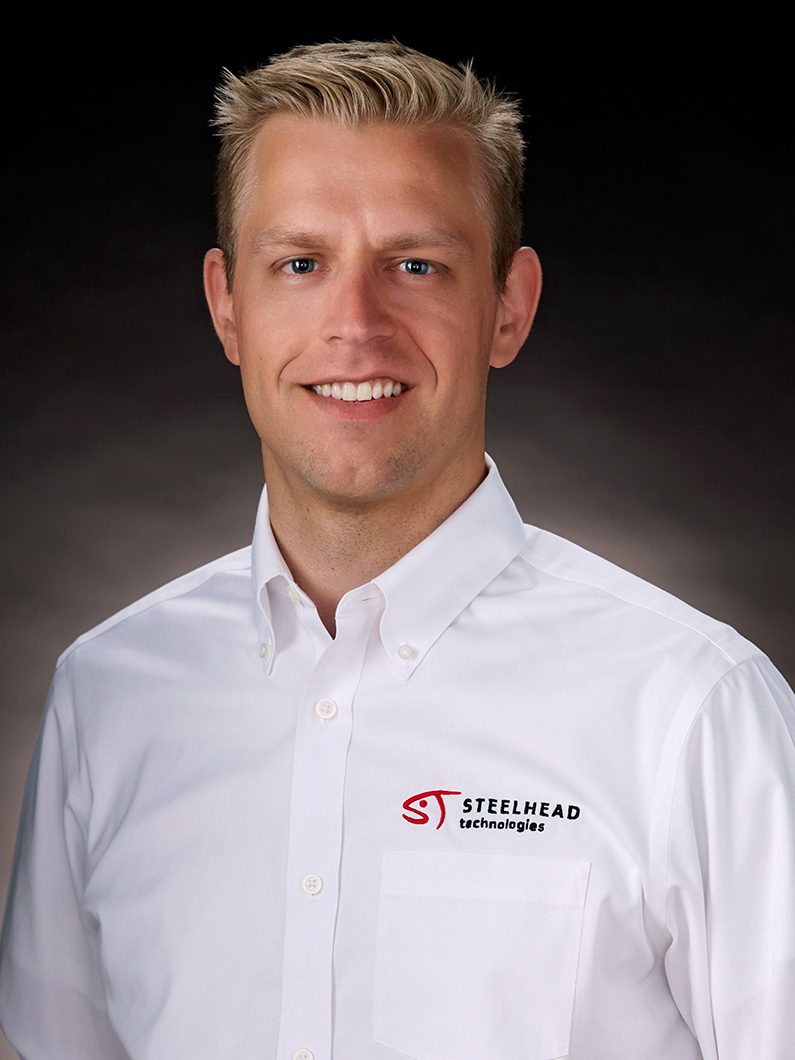
Jeff Halonen CEO and Co-Founder Steelhead Technologies
Jeff Halonen is the CEO and co-founder of Steelhead Technologies. Before Steelhead, Jeff worked as a mechanical engineer at General Motors, gaining experience with complex manufacturing systems and large-scale production environments. Throughout his career, Jeff has walked countless job shop floors around the country, listening firsthand to owners, managers, and production teams as they work to solve bottlenecks, improve profitability, and achieve sustainable growth.
This exposure has shaped the vision for Steelhead: to provide practical, modern tools that streamline operations, reduce overhead, and help shops get ahead. Jeff pushes an aggressive AI roadmap to enable shops to double revenue without adding a single front-office headcount. His conviction is that the right technology partner can make job shops some of the most profitable manufacturers in the country.
Jeff lives in southeast Michigan with his wife and four sons. Outside of work, he hunts, fishes, and frequents the local farmers market.
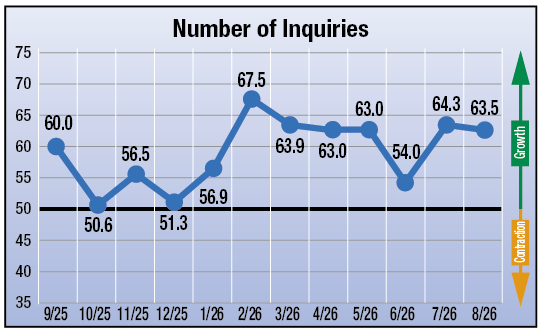
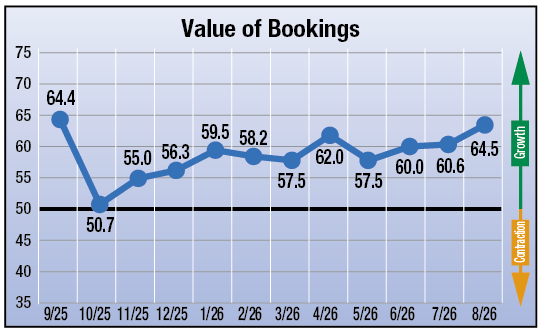
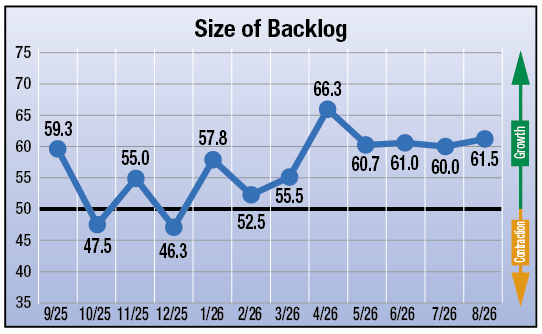
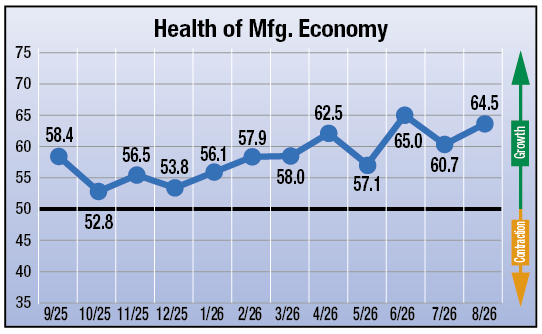
Heat Treat Today has gathered the four heat treat industry-specific economic indicators for August 2026. The results suggest continued growth across the heat treat industry, with suppliers anticipating healthy business conditions as the industry moves toward the latter part of the summer.
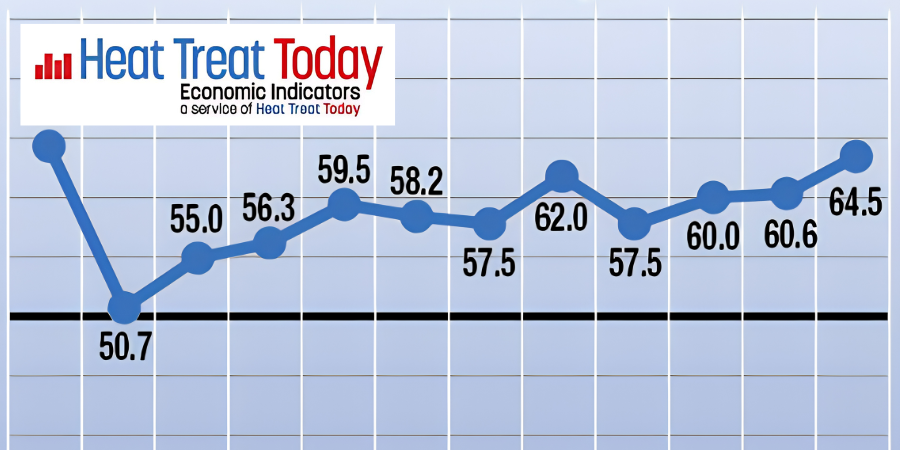
August’s data reinforces expectations of continued expansion, with all four indicators remaining well above the growth threshold. Inquiries are projected at 63.5 (from 64.3 in July), indicating continued client activity despite a slight moderation. Bookings are expected to strengthen to 64.5 (up from 60.6 in July), while the Backlog index is forecast to increase to 61.5 (up slightly from 60.0 in July). Meanwhile, the Health of the Manufacturing Economy index is projected at 64.5 (up from 60.7 in July), reflecting growing confidence in broader manufacturing conditions.
August’s indicators suggest suppliers continue to anticipate favorable business conditions in the month ahead. The improvement in bookings and backlog points to sustained demand and a healthy pipeline of work, while inquiries remain at a level consistent with continued expansion. A stronger outlook for the broader manufacturing economy further reinforces expectations that heat treaters will continue to benefit from stable market conditions as the second half of the year progresses.
The results from this month’s survey (August) are as follows: numbers above 50 indicate growth, numbers below 50 indicate contraction, and the number 50 indicates no change:
Anticipated change in Number of Inquiries from July to August: 63.5
Anticipated change in Value of Bookings from July to August: 64.5
Anticipated change in Size of Backlog from July to August: 61.5
Anticipated change in Health of the Manufacturing Economy from July to August: 64.5
Data for August 2026
The four index numbers are reported monthly by Heat Treat Today and made available on the website.
Heat TreatToday’sEconomic Indicatorsmeasure and report on four heat treat industry indices. Each month, approximately 800 individuals who classify themselves as suppliers to the North American heat treat industry receive the survey. Above are the results. Data collection began in June 2023. If you would like to participate in the monthly survey, please click here to subscribe.
A new industry task force will provide heat treating companies with educational resources and peer guidance as they evaluate enterprise resource planning (ERP) systems amid recent consolidation among software providers serving the industry. The initiative is intended to help companies assess shop management systems based on their individual operational requirements rather than recommend a particular software platform.
The Metal Treating Institute (MTI) announced the formation of its ERP Task Force as its Summer Board Meeting on July 21. The member-led group was established following Steelhead Technologies’ acquisitions of Cornerstone Systems, Inc., provider of Visual Shop by CSI, and Throughput Consulting, Inc., provider of Bluestreak and Bright AM. MTI said the acquisitions have prompted heat treaters to evaluate their long-term ERP strategies and better understand their options within the changing software landscape.
ERP systems can support production scheduling, inventory, client orders, quality documentation, accounting, compliance, and reporting across heat treating operations. Selecting, implementing, or transitioning between systems can affect productivity, operational efficiency, customer service, and profitability. The task force will include member companies with ERP implementation experience and heat treating industry expertise.
“Technology is transforming every aspect of our industry, and ERP systems are becoming increasingly critical to operating efficient, data-driven businesses,” said Deidra Minerd, operations manager at Euclid Heat Treating and 2026 president of MTI. “The recent acquisition of Visual Shop and Bluestreak has created understandable questions throughout our membership.”
“Rather than allowing companies to navigate these decisions alone, MTI is bringing Members together to learn from one another, share experiences, access options and make better-informed decisions,” Minerd added.
Tom Morrison, CEO of MTI, emphasized that the task force will remain vendor-neutral.
“The ERP Task Force is not intended to recommend one software platform over another,” Morrison said. “Instead, its mission is to provide unbiased education and practical guidance so Members can evaluate the solutions that best align with their individual business needs, growth objectives, and operational requirements.”
The task force will begin providing educational resources, peer discussions, and additional programming over the coming months. MTI said it will communicate additional details to its membership as the initiative develops.
Press release is available in its original form here.
Nitriding offers a unique combination of surface hardness, wear resistance, fatigue performance, and dimensional stability, making it a preferred thermochemical treatment for a wide range of industrial components. Readers will learn about the key benefits of nitriding, as well as the strengths and limitations of gas, plasma, and salt bath processes. In this Technical Tuesday installment, the aim of this guide by Daniel H. Herring, aka The Heat Treat Doctor®, and Dr. Edward Roliński, a senior scientist and recognized authority on plasma and ion nitriding, is to help engineers and heat treaters evaluate which nitriding technology best aligns with material requirements, case depth targets, and performance objectives.
This informative piece was first released inHeat Treat Today’sAugust 2026 Annual Automotive Heat Treating print edition.
Why Choose Nitriding?
Nitriding is a unique process that offers design engineers the ability to both predict and control the outcome of the heat treating process. The key advantage is that it significantly increases surface hardness, wear resistance, and fatigue life of component parts while minimizing dimensional change due to the low temperature nature of the process.
#1 Minimal Post-Processing
Nitriding can be used on a variety of component parts and metal forming tools made of steel or cast irons for applications in which wear, fatigue, or corrosion resistance is an important consideration. Steels, stainless steels, tool steels, powder metallurgy parts, and many other materials can be nitrided.
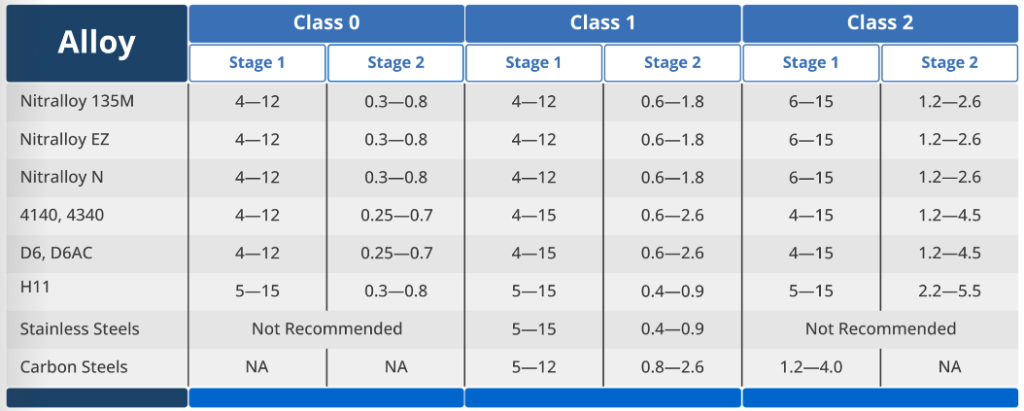
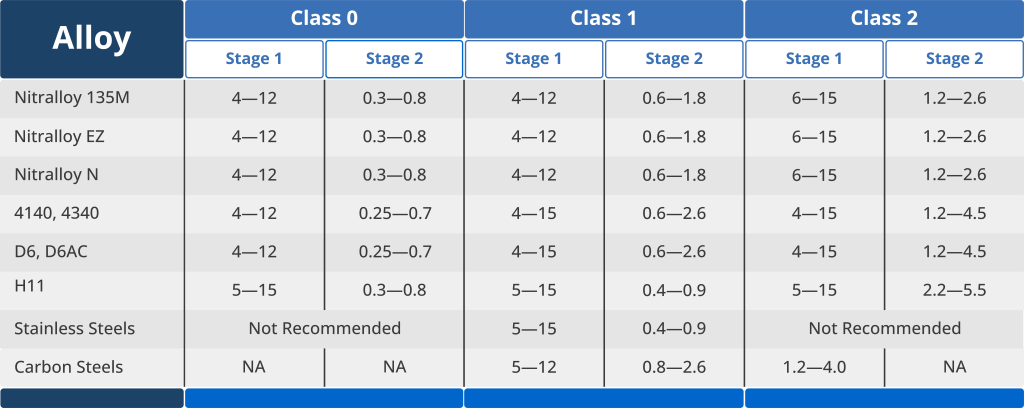
Table A. Recommended Ranges of Nitriding Potential (SAE International Aerospace Material Standard AMS 2759/10), latest revision Notes: 1. Class 0: No white layer permitted on the surface of a nitrided part. 2. Class 1: 0.0127 mm (0.0005 inches) maximum white layer, 15% porosity or less. 3. Class 2: 0.0254 mm (0.001 inches) maximum white layer, 10%–50% porosity of the thickness of the white layer.
Dimensional change in nitriding is primarily governed by composition, tempering temperatures, time/temperature of nitriding, relative thickness of case/core, shape of the part, and areas masked off to prevent nitriding. The amount of growth is typically constant for identical parts nitrided in different batches by a fixed processing cycle. Most parts are nitrided in a two- or three-stage process and not ground after nitriding (Table A). This affords them excellent dimensional stability (Herring 2011). Once the amount of growth for a particular part has been established, allowances can be made during final machining (prior to nitriding) to ensure repeatable results.
By contrast, heat treating processes such as hardening or carburizing are performed at higher temperatures and result in dimensional and/or shape changes often requiring post-heat treat manufacturing steps (Roliński 2014). As such, the nitriding process has become an ever more popular choice.
#2 Case Depth Control
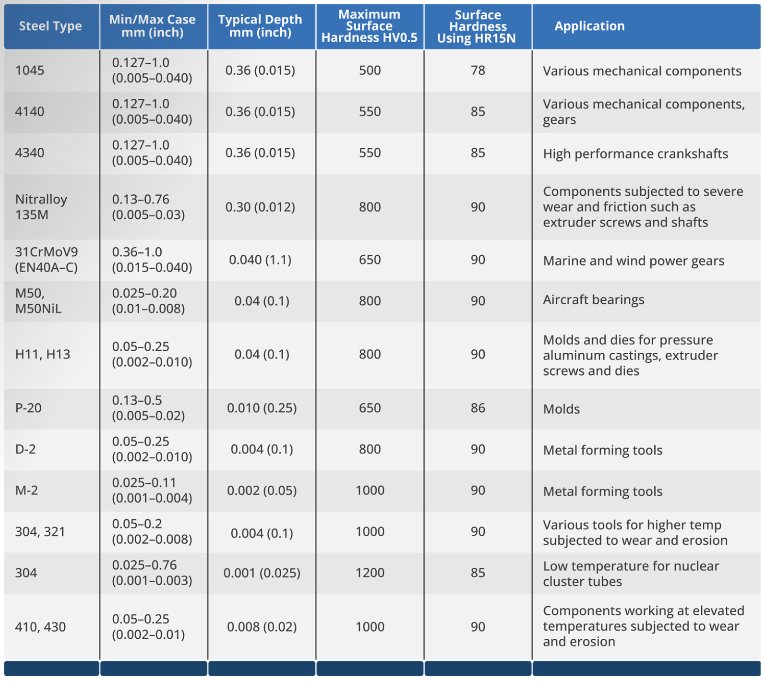
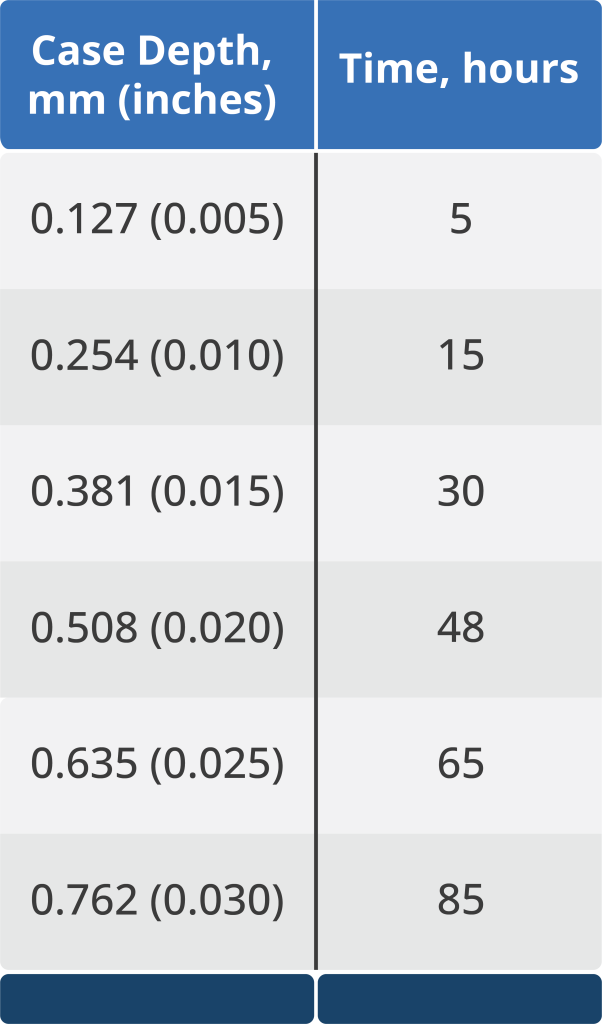
Nitriding as a thermochemical process is capable of producing a variety of case depths, an attribute affected by temperature, time, and nitriding potential (if there is not a compound zone formed). Caution should be used when stating a required case depth since a number of definitions for total case depth are in use. For this article, authors will use Table B to show how case depths are typically total case depths (core hardness + 50 HV0.5) that vary by material.
Table B. Typical Case Depths and Case Depth Ranges for Steels
For example, on an M2 tool steel, the case depth might vary between 25–100 µm (0.001”–0.004”). By contrast, 4140 or Nitralloy® can produce case depths in ranging from 100–500 µm (0.004–0.020”), with 305–380 µm (0.012–0.015”) being typical. For low/medium carbon steels and powder metal, white layer thickness may vary from 5µm–25 µm (0.0002”–0.001”) and is the overriding consideration.
#3 Enhancing Tribological Properties
Nitriding enhances various key tribological properties related to friction, wear resistance, lubrication interaction, and texture. These include improvement in sliding motion and reduced energy losses; wear characteristics involving resistance to adhesion, abrasion, fatigue, and corrosion; and lubrication, especially as it relates to load-carrying capacity, surface roughness, and surface texture/hardness.
#4 Nitriding Applications
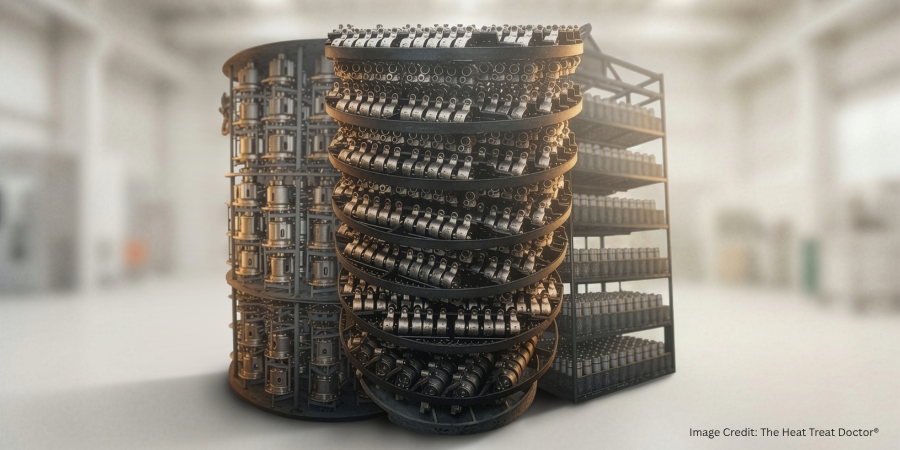
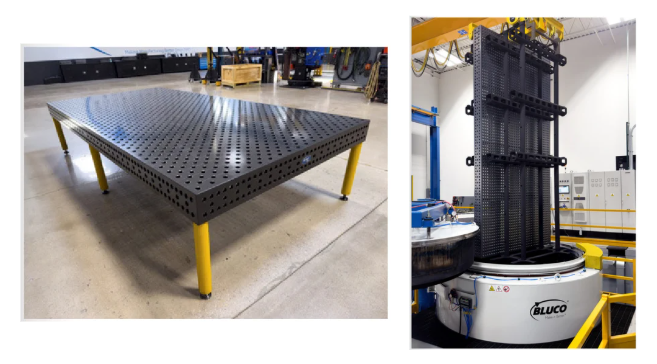
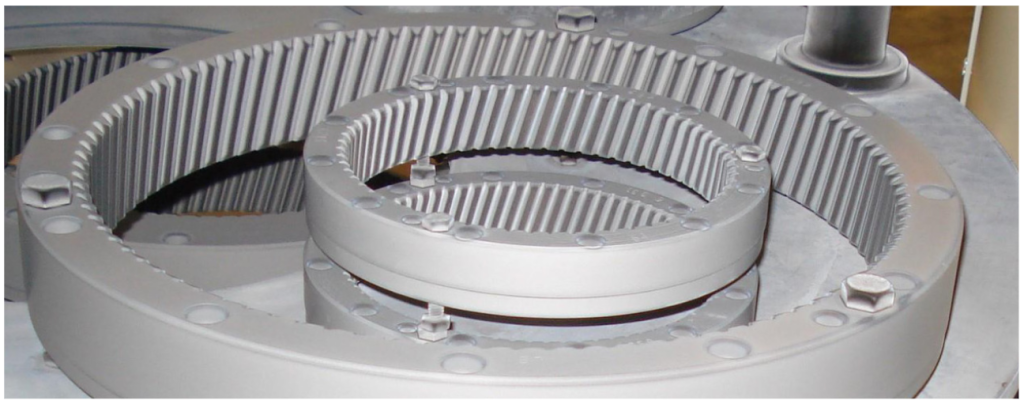
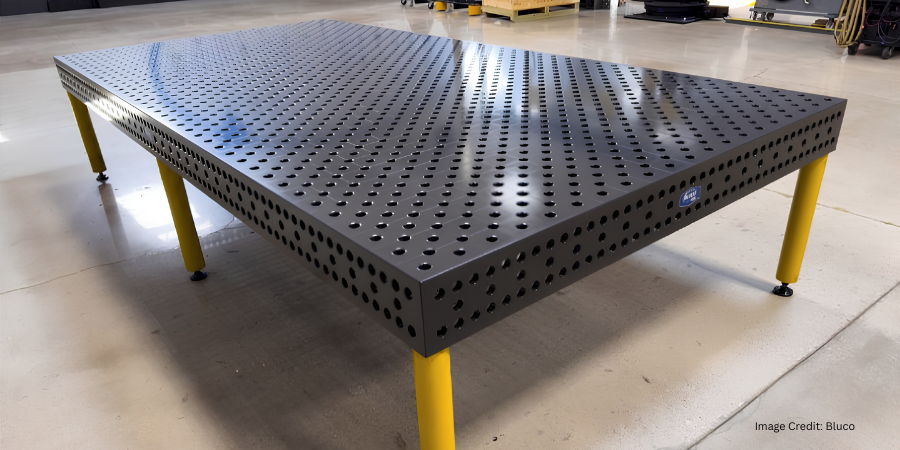
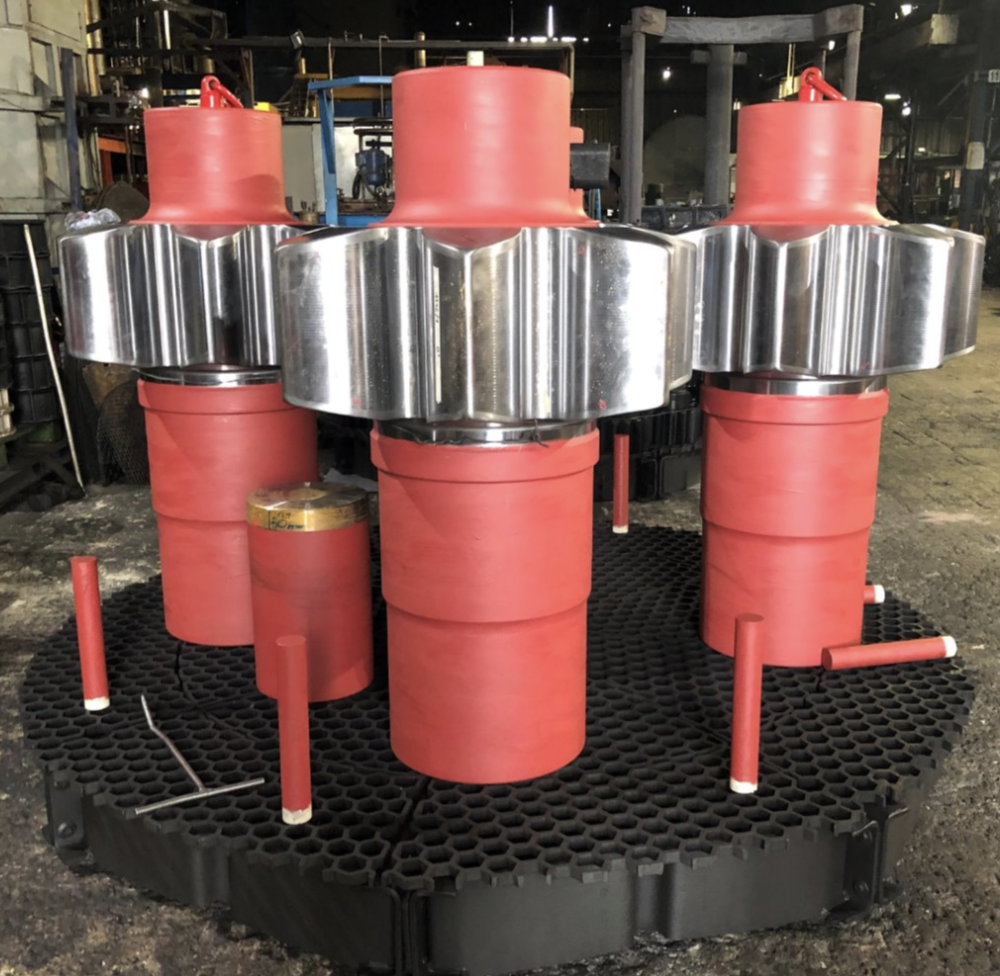
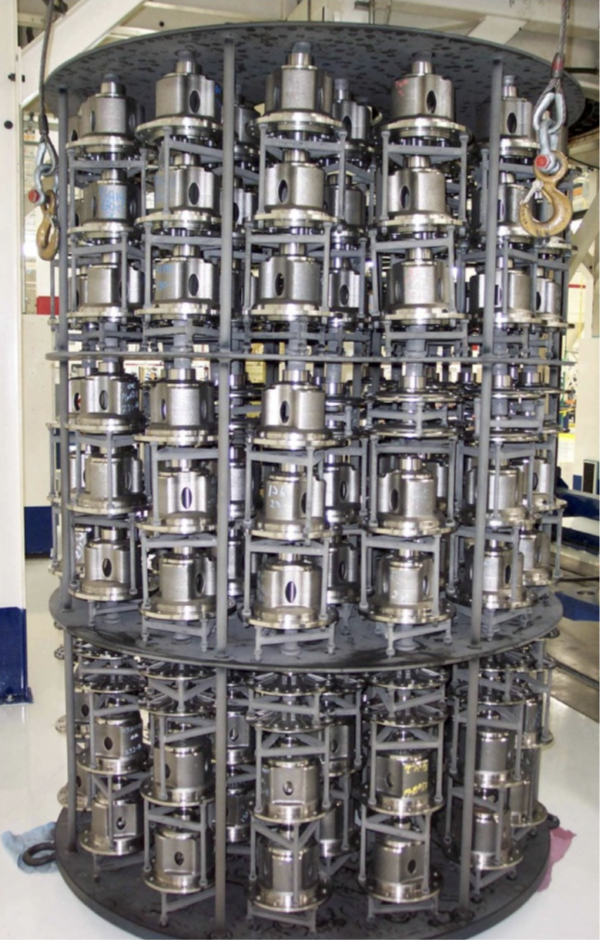
The nitriding process can be used for surface hardening of both very small and very large parts (see lead image above and Figure 1). Typical examples are gears and shafts, stamping dies, piston rods, springs, pump housings, and welding tables. Dies are typically made of cast iron or tool steels, while gears and other powertrain components are made of alloy steels. All applications require precise control of the compound zone (i.e., white layer) thickness. If selective nitriding is required, areas are masked using a stop-off paint, or in plasma processes, mechanical masking is an option.
Figure 1. (a) A Bluco DD2040 modular welding table (double density hole pattern, 2m x 4m x 0.2m) after completion of gas nitriding heat treat cycle and post-processing; (b) A Bluco HD2040 modular welding table (high density hole pattern, 2m x 4m x 0.2m) being removed fro ma pit furnace following a gas nitriding heat treat cycle | Image Credit: BlucoFigure 2. Typical nitrided surface appearance | Image Credit: Heat Treat Doctor®
Once finished, nitrided surfaces are typically smooth and grayish in appearance (Figure 2). If a “shiny” or “bright” surface or one of extremely low roughness is required, polishing methods can be used (e.g., superfinishing). The surface has high hardness, and is under residual compressive stress, which is critical in increasing bending fatigue and rolling contact fatigue (RCF) properties.
Gas, Plasma, Salt Bath
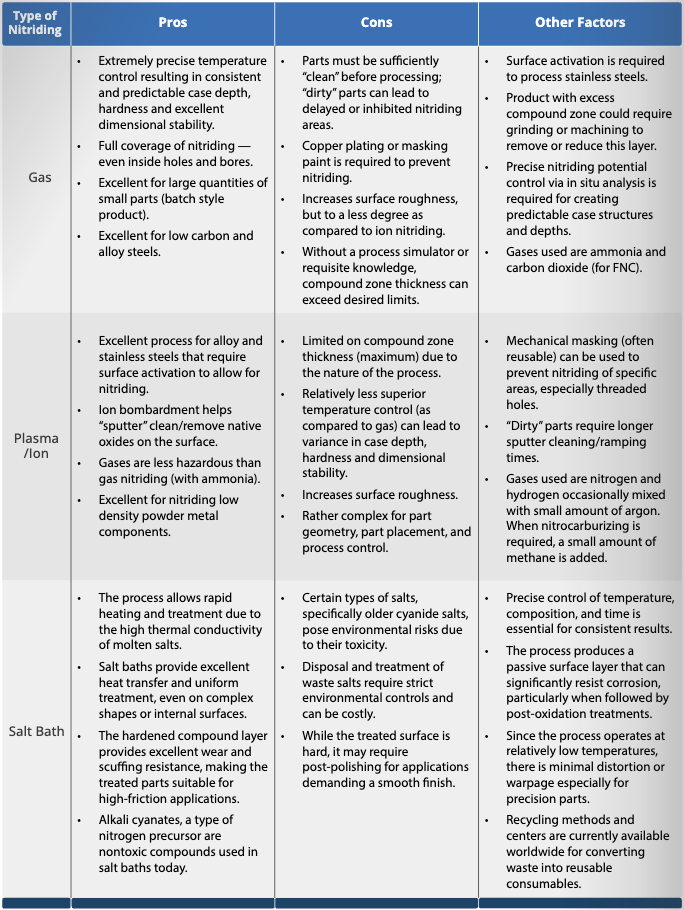
Table C. Comparison of Gas, Plasma/Ion, and Salt Bath Processes (Hemsath 2019)
There are three types of nitriding, each with their own strengths and limitations: gas, plasma/ion, and salt bath. Table C highlights these differences for immediate comparison. For a further breakdown of each process’s strengths, the authors have written unique articles exploring the three processes in greater depth, available on www.heattreattoday.com under each of the names:
Nitriding is a key technology to achieve heat treated results that modern manufacturing expects. But between gas, plasma, and salt bath, there are pros and cons to whichever method is chosen. Engineers need to assess what material needs and process outcomes are most significant to the outcome in order to select the right technology.
References
Boßlet, Jochim. n.d. Melonite®/QPQ Process Brochure. HEF Durferrit.
Hemsath, Mark K., and Daniel H. Herring. 2019. “Nitriding—Growth and Tribological Benefits for Surface Engineering.” In Heat Treating Progress 2019 Conference Proceedings. Materials Park, OH: ASM International.
Herring, Daniel H. 2011. “Principles of Gas Nitriding, Parts 1–4.” Industrial Heating, April–May.
Herring, Daniel H. 2013. “Masking Techniques, Part One.” Industrial Heating, April.
Herring, Daniel H. 2020. “An Overview of Nitriding—Technology and Tribological Benefits.” Industrial Heating, March.
Mittemeijer, Eric J., and Marcel A. J. Somers, eds. 2026. Thermochemical Surface Engineering of Steels. Elsevier.
Pye, David. 2003. Practical Nitriding and Ferritic Nitrocarburizing. Materials Park, OH: ASM International.
Resnick, Michael. n.d. “Private Correspondence.” HEF Durferrit USA. https://www.hefusa.net/salt_bath_nitriding_liquid_nitriding/overview.html
Roliński, E. 1987. “Effect of Plasma Nitriding Temperature on Surface Properties of Stainless Steel.” Surface Engineering 3: 35–40.
Roliński, E. 2004. “Ion Nitriding and Nitrocarburizing of Sintered PM Parts.” Industrial Heating, October: 33–35.
Roliński, E. 2005. “When and Why Ion Nitriding/Nitrocarburizing Makes Good Sense.” Industrial Heating, August: 67–72.
Roliński, E. 2005. “Negative Effects of Reactive Sputtering in Industrial Plasma Nitriding.” Journal of Materials Engineering and Performance 14 (3): 343–350.
Roliński, E. 2014. “Plasma Assisted Nitriding and Nitrocarburizing of Steel and Other Ferrous Alloys.” In Thermochemical Surface Engineering of Steels, chap. 11, edited by E. J. Mittemeijer and M. A. J. Somers, 413–449. Cambridge, UK: Woodhead Publishing.
Roliński, Edward. 2024. “Practical Aspects of Sputtering and Its Role in Industrial Plasma Nitriding.” ASM Handbook Online Update, Vol. 5: Surface Engineering. Materials Park, OH: ASM International.
Roliński, E., J. Arner, and G. Sharp. 2005. “Negative Effects of Reactive Sputtering in Industrial Plasma Nitriding.” Journal of Materials Engineering and Performance 14 (3): 343–350.
Roliński, E., G. Sharp, and A. Konieczny. 2006. “Plasma Nitriding Automotive Stamping Dies.” Heat Treating Progress 6 (5): 19–23.
Roliński, E., and G. Sharp. 2004. “Ion Nitriding and Nitrocarburizing of Sintered PM Parts.” Industrial Heating, October: 33–35.
Roliński, E., and G. Sharp. 2005. “When and Why Ion Nitriding/Nitrocarburizing Makes Good Sense.” Industrial Heating, August: 67–72.
Roliński, E., and G. Sharp. 2017. “Controlling Plasma Nitriding.” Materials Performance and Characterization 6 (4): 698–716.
Roliński, E., J. Ludeman, J. McCain, V. Popovski, and M. Woods. 2021. “Nitriding Mechanisms of Ferrous Powder Metal Products in Gas, Salt, and Plasma Methods.” In Proceedings of PowderMet2021/AMPM2021/Tungsten2021, 330–337.
SAE International. n.d. AMS 2759/10Aerospace Material Standard (latest revision).
Senatorski, J., J. Tacikowski, E. Roliński, and S. Lampman. 2017. “Tribology of Nitrided and Nitrocarburized Steels.” In ASM Handbook, Vol. 18: Friction, Lubrication, and Wear Technology, edited by George E. Totten, 638–652. Materials Park, OH: ASM International.
Spies, H. J., and A. Dalke. 2014. “Case Structure and Properties of Nitrided Steels.” In Comprehensive Materials Processing, edited by G. Krauss, Vol. 12, 439–488. Oxford, UK: Elsevier.
Winter, K. M., and J. Kalucki. 2013. “Gas Nitriding and Gas Nitrocarburizing of Steels.” In ASM Handbook, Vol. 4A: Steel Treating—Fundamentals and Processes, edited by Jon I. Dossett and George E. Totten, 647–679. Materials Park, OH: ASM International.
About The Authors
Dan Herring (The Heat Treat Doctor®) The HERRING GROUP, Inc.
Dan Herring, who is most well known as The Heat Treat Doctor®, has been in the industry for over 50 years. He spent the first 25 years in heat treating prior to launching his consulting business, The HERRING GROUP in 1995. His vast experience in the field includes materials science, engineering, metallurgy, equipment design, process and application specialist, and new product research. He is the author of six books and over 1000 technical articles.
Dr. Edward Rolinski, affectionately known as “Doctor Glow,” is a distinguished senior scientist having spearheaded research on plasma/ion nitriding since the 1970s. He holds advanced degrees in manufacturing technology and metallurgy, including a PhD and Doctor of Science. His focus has been on plasma nitriding processes, especially involving titanium alloys and powder metallurgy. Over his career, Dr. Rolinski authored numerous influential technical chapters and articles, including for ASTM International and the ASM Handbook, and is a prolific contributor to industry publications. After decades of leadership and innovation in surface engineering and heat treating, he is now a consultant in the heat treating industry.
In the second of the two-part series, the Advanced Rapid Quench Jominy Tester application for automotive underbody parts is examined. In this article, Dr. Gopal Nadkarni, an associate professor of mechanical engineering at the University of Akron, explains how automotive manufacturers can integrate this little-used test methodology following existing industry practices. It also makes the case for updating the ASTM A255 Jominy test method to measure enhanced hardenability under modern industrial quenching conditions.
This informative piece was first released in Heat Treat Today’sAugust 2026 Annual Automotive Heat Treating print edition.
Introduction
In “The Jominy and Rapid Quench, Part 1: An American Story” (see Heat Treat Today: Induction Heat Treating, April 2026), the Jominy test adopted in the 1940s was shown to revolutionize how complex metallurgical phenomena in most steels during cooling could be understood using a simplified method of cooling a 4-inch bar of steel from one end. Since then, the ASTM A255: Standard Test Method for Determining Hardenability of Steel (Jominy test) has become the dominant form of characterizing steel behavior under multiple cooling conditions (ASTM International 2020).
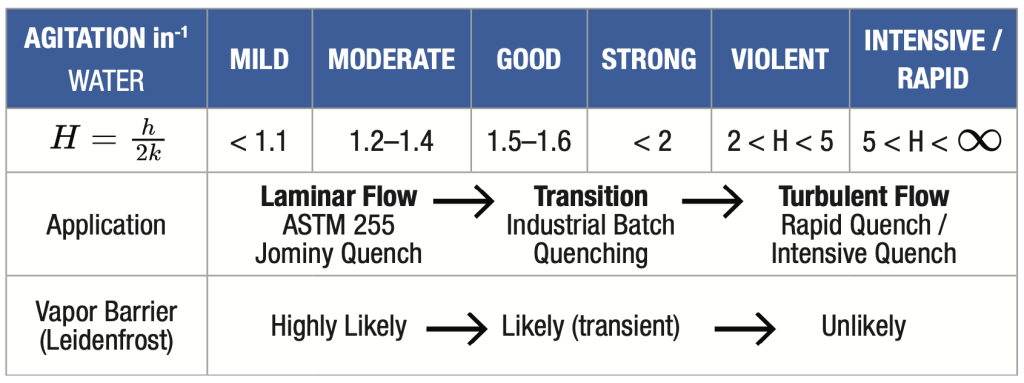
Figure 1. Grossman H values for quenching in water shows the gap between ASTM A255 and current industrial quench practices (modified from Liscic 2010) | Image Credit: Gopal Nadkarni
When the Jominy test was developed, quenching technology relied primarily on relatively mild water agitation (Figure 1). Industrial heat treatment has evolved dramatically since then. These advances raise an important question: Does the traditional Jominy test still represent the cooling conditions experienced by modern industrial components?
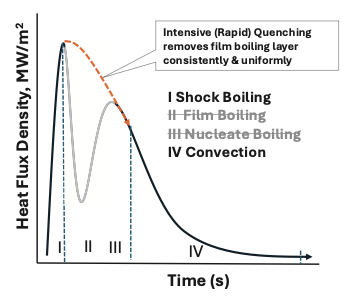
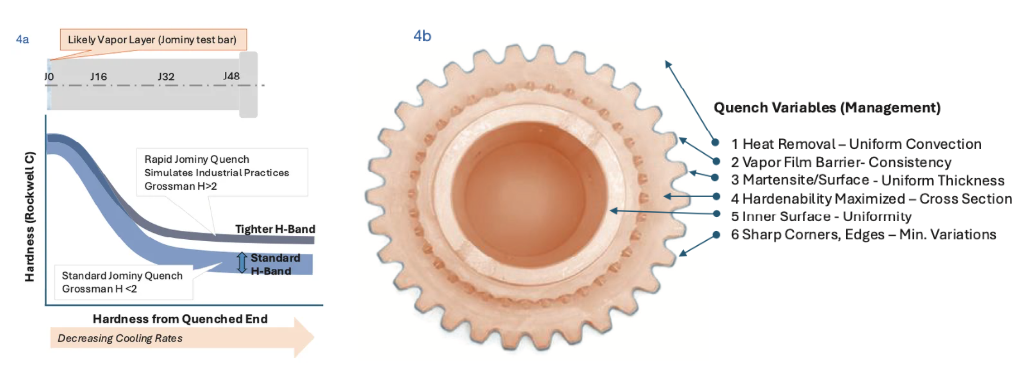
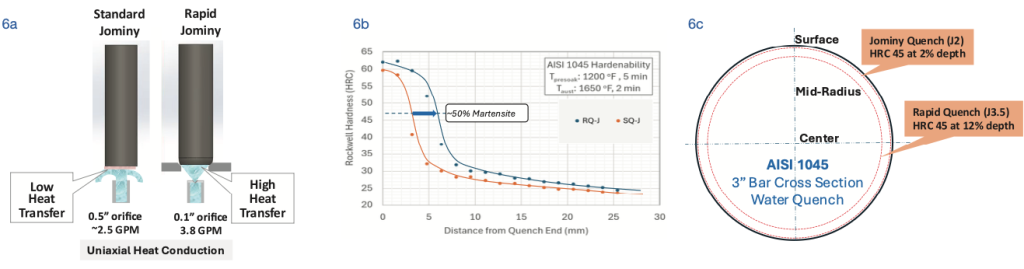
The answer is both yes and no. The conventional Jominy test remains an outstanding comparative tool because of its simplicity, reproducibility, and enormous historical database (Chandler 1994). However, improved understanding of quench heat transfer — specifically, the laminar umbrella flow underneath rapidly quenched Jominy test ends hides a “film boiling layer” that impedes heat transfer in the first critical seconds of quenching — suggests that the standard unintentionally limits the maximum cooling rate during the first critical seconds of quenching. Consequently, the hardenability curves engineers have relied upon for decades may not fully represent the hardening potential of steels subjected to today’s rapid or intensive quenching processes.
This article proposes extending the Jominy test’s usefulness through a modified methodology that better reproduces modern industrial quenching conditions while preserving the standardization that has made ASTM A255 indispensable.
Intensive Quenching for Industrial/Automotive Parts
Figure 2. Schematic of heat transfer experienced by quenched parts during cooling with and without the vapor barrier (i.e., Leidenfrost layer) (Modified from Kobasko, et al. 2010)
If methods existed to consistently remove the vapor barrier during the first few seconds of quenching, engineers could increase heat transfer substantially (Figure 2) to maximize hardenability. Dr. Nikolai Kobasko and Dr. Michael Aronov have worked at this theory for the last three decades, demonstrating significant material processing benefits with intensive (or rapid) quench practices. Other scientists have also teamed up with heat treaters in the U.S. to demonstrate commercial adoption of industrial parts (Totten, et al. 2024).
Today, intensive quench practices are being seriously assessed by several automotive manufacturers as a way to not only maximize hardenability, but also to control distortion after quenching, impart beneficial compressive stresses below the surface, and reduce spotty hardness, as well as lower cost and improve sustainability practices by employing lower alloy steels.
Automotive Designs Require Updated Tests
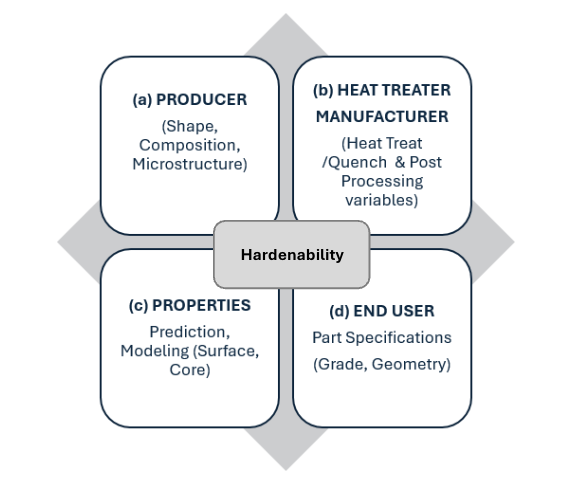
Figure 3. The part production cycle requires a deep understanding of the supply chain variables.
The automotive part production cycle is complex and requires close coordination across multiple stakeholders to achieve desired property outcomes (Figure 3). Designers often rely on “real test” data as input to finite element models to predict critical mechanical properties that correlate with structural life for fatigue, wear, or fracture resistance, with most of these parts being heat treated. They also lean on the correlating structure properties for required parts using the universal ASTM A255 Jominy test as a reference. While this serves as a unique fingerprint for the alloy used, it is by no means an ideal representation of hardenability because chemistry variations that result in a large H-band (Figure 4a).
This approach also falls short because Jominy cooling rates do not reflect real-world quenching, which can be seen as enhanced hardenability under industrial conditions (Figure 4b). Heat treaters use high-velocity forced convective flow to create violent agitation, improve quench consistency, increase hardness, and break up the film boiling layer. However, complex parts like gears pose an issue: it is difficult to guarantee uniformity of instantaneous cooling rates and may only break up parts of the persistent vapor layer (Figure 4b). The result is uneven heat transfer and spotty hardness across the part.
Figure 4. Hardenability is dependent on steel chemistry and microstructure management for the same heat of alloy (a) and uniform quench processing management between batch to batch (b) | Image Credit: Gopal Nadkarni
Automotive part designers need consistent hardness to ensure reliable service and accurate life predictions, but industrial quench conditions do not ensure 100% removal of the vapor barrier. To ensure performance, automotive designers specify higher alloy steels than necessary. In addition, engineering drawings often specify suboptimal surface hardness (suboptimal hardenability) to stay within hardenability realities of accepted heat treatments. Increased costs are often necessary if parts do not hit design targets and require secondary processing (e.g., tempering, carburizing, carbonitriding).
Overcoming Slow Automotive Adoption
Despite excellent data over the past two decades (Kobasko, et al. 2010; Totten, et al. 2024) showing the usefulness of rapid quench technology in maximizing hardenability for bar/plate steels, the paradox is that the technology has been slow to be adopted. We can learn lessons on adopting new steel/processing technologies from the flat steel side used for body-in-white/chassis, where the entire supply chain came together (Auto/Steel Partnership) in 1987 and produced significant lightweighting programs like the 1994 ULSAB (UltraLight Steel Autobody).
If automotive OEMs desire to use the benefits of enhanced hardenability, they must work with the supply chain and standardization bodies (ASTM) to promote widespread adoption. This would allow performance and productivity gains to be adopted at scale quickly.
Intensive quenching has seen limited adoption in mass-produced automotive parts because engineers lack standardized material data that comes after industrial adoption. Therefore, their confidence in process repeatability at scale is not in place. Past experience with promising technologies like austempered ductile iron (ADI) reinforced caution around safety-critical components, especially when processing risks remain difficult to validate. As a result, rapid quenching faces less of a technology adoption challenge than a technology translation challenge: the industry must reduce perceived risk through shared standards, comparable data, and coordinated supply chain validation.
Figure 5. The standard Jominy test is universally used across the supplychain because of its usefulness in specification, standardization, andease of use. The proposed rapid Jominy test could be easily adapted toextend the overall usefulness to measure enhanced hardenability anddevelop new alloy chemistries. | Image Credit: Gopal Nadkarni
The good news is that we have standard methods characterizing hardenability that are well-established and reliable for thousands of grades of steel. For rapid quenching to be acceptable, we need to reduce risk and increase accountability across the supply chain. One way is to extend the current ASTM A225 standard Jominy test used by all (Figure 5) and use proven strategies that flat steel producers used to implement ultrahigh strength designs in steel.
From Theory to Practice: Removing the Vapor Blanket in the ASTM Jominy Test
In short, rapid quenching uses high-pressure, high-velocity water impingement to disrupt the vapor film almost immediately. This allows the surface to transition quickly into nucleate boiling and forced convection, dramatically increasing heat transfer.
The Jominy test can track the improved hardenability results, if we can make a slight modification to the ASTM 255 test bar design. The modified Jominy test’s critical feature is a flat, tapered configuration versus the traditional flat end face (Figure 6a), and it ensures that the standard uniaxial quench condition is imposed when the bar is sealed in an enclosed chamber. This refinement improves flow control for consistent and repeatable results, therefore providing better alignment with standardized quench conditions used in industry. Another test bar version with a bar end was developed through a university-industry collaborative venture that is useful to measure enhanced compressive stresses (Funk 2021).
The modified bar has been proven to be a close twin of the standard 1-inch diameter bar. The current setup uses a high-pressure nozzle to break up the vapor layer similar to industrial quench conditions and is noticeably different from the laminar flow (H < 1.4) used in the ASTM A225 test. The flow conditions (velocities > 40 m/s, pressures > 120 kPa) have been optimized to ensure that the persistent vapor barrier never forms, achieving high heat transfer rates (H > 5) from the start of quenching till the end of the cooling period.
Figure 6. (a) Schematic of modified Jominy bar to achieve rapid quenching; (b) example AISI 1045 data developed with new tester; and (c) enhanced hardenability due to rapid quenching is estimated to produce ~50% martensite (45 HRC) deeper in a 3-inch diameter bar | Image Credit: Gopal Nadkarni
As a result, current low alloy automotive grades can be quickly analyzed and compared for properties as well as depth of hardening to published hardenability curves, allowing a useful screening tool for adoption.
If heat treaters and steelmakers want to cater to automotive clients who want to reap the benefits of rapid quenching, they need to understand whether their grades are suitable. The simplest approach is to use the rapid quench methodology that has been described here for low alloy steels of interest. This will ensure that true and maximized hardenability data can be used by design engineers to optimize automotive steel parts.
In a recent research study (Nadkarni, et al. 2025), both standard hardenability and true (enhanced) hardenability curves were developed for a benchmark AISI 1045 grade (Figure 6b). The 50% martensite line (45 HRC) is clearly deeper, indicating a significant increase in hardenability, with corresponding Jominy (J in 1/16″) distances moving from J2 to J3.5 (from 3.2 mm to 5.5 mm). An example of how the data can be used practically for a sample 3-inch bar shows that depth of hardening to HRC45 is likely to be significantly higher in rapidly quenched steels (Figure 6c).
The increased hardenability results shown for the benchmark AISI 1045 have been replicated for a wide variety of steels including AISI 1020, AISI 8620, AISI 6150, M50, and tool steels like H13. However, we need to be cautious about extrapolating the results to steels where significant retained austenite can form under enhanced quench conditions.
The significance of adopting such a practice into a new or modified ASTM standard will have global implications. Standardized adoption of advancing technology will support automotive manufacturers in optimizing the performance of their current steel compositions through more controlled distortion and reduced variability in material properties.
Acknowledgements
Figure 7. The integrated Jominy Rapid Quench Tester developed at Induction Tooling Inc. for student training and research (Funk 2021). Students at the University of Akron standing with research leadership: Dr. Gopal Nadkarni, University of Akron (second from the left); Bill Stuehr, Induction Tooling, Inc. (third from left); and Joe Powell, Integrated Heat Treating Solutions, Inc. (fourth from left).
ASTM International. 2020. Standard Test Methods for Determining Hardenability of Steel. ASTM A255-20a. West Conshohocken, PA: ASTM International. https://doi.org/10.1520/A0255-20A.
Chandler, Harry, ed. 1994. Heat Treater’s Guide: Practices and Procedures for Irons and Steels. Materials Park, OH: ASM International.
Kobasko, N. I., M. A. Aronov, J. A. Powell, and G. E. Totten. 2010. Intensive Quenching Systems: Engineering and Design. West Conshohocken, PA: ASTM International.
Nadkarni, Gopal. 2026. “The Jominy and Rapid Quench Part 1: An American Story.” Heat Treat Today 9, no. 4 (April): 25–27.
Nadkarni, Gopal, Nafi Bhuiyan, Saikishan Suryanarayanan, and Ryan Souders. 2025. “The Relevance of the Standard Jominy Test for Rapid/Intensive Quenching.” Paper presented at the Heat Treat 2025 Conference & Exposition, Huntington Place, Detroit, MI, October 21–23.
Totten, George E., Rosa Simencio Otero, Xinmin Luo, and Lauralice C. F. Canale, eds. 2024. ASM Handbook, Volume 4F: Quenchants and Quenching Technology. Materials Park, OH: ASM International. https://doi.org/10.31399/asm.hb.v04F.9781627084505.
About The Author:
Dr. Gopal Nadkarni Associate Professor of Mechanical Engineering University of Akron
Dr. Gopal Nadkarni is an Associate Professor of Mechanical Engineering at the University of Akron and manages its Manufacturing Graduate Certificate Program. He brings extensive industry and innovation experience, having held previous leadership roles at industry and in technology ventures, with research and teaching focused on manufacturing, materials, and product design.
To contribute to ongoing industry-academia research regarding this topic, please contact Professor Gopal Nadkarni.
Among today’s nitriding technologies, gas nitriding remains the most widely used process for enhancing surface hardness, wear resistance, and fatigue performance while preserving dimensional stability. In this Technical Tuesday installment, Daniel H. Herring, aka “The Heat Treat Doctor®,” and Dr. Edward Rolinski, a senior scientist and recognized authority on plasma and ion nitriding, explain where gas nitriding excels, its process advantages and limitations, and the applications best suited for the technology.
If you’re looking for a broader introduction, watch for the upcoming print feature, “Nitriding Selection Guide: Gas, Plasma, or Salt Bath?” for an overview of nitriding, its key benefits, and a side-by-side of the three primary nitriding processes.
Gas nitriding represents 60–70% of all nitriding processes. The main benefit of gas nitriding, specifically when compared to plasma nitriding, is its ability to harden the entire surface of the component. Masking can be done by copper plating or painting with a nitriding-specific stop-off paint (Figure 1). Modern gas nitriding processes also allow treating of stainless steel, where PVC and other chemicals are used for surface pre-activation. Maintenance increases when these activating agents are used.
Figure 1. Large steel pinions being prepared for nitriding | Image Credit: NitrexFigure 2. Typical small parts and loading arrangements for gas nitriding (Herring 2011)
Case depths are typically total case depths (core hardness + 50 HV0.5) and vary by material (see Table B in Herring et al. 2026). Caution should be used when stating a required case depth as a number of definitions for total case depth are in use.
Another benefit of using gas nitriding is its ability to form a thick compound zone up to 0.025 mm (0.001 inches). The process can enhance the corrosion resistance of steels, particularly combined with post-oxidation. Also, gas nitriding is an excellent way to improve tribological properties of the treated components (Senatorski et al. 2017). Modern controls allow for automatic process adjustment over the length of the cycle and control of the nitriding atmosphere based on nitriding potential (Kn value) or ammonia dissociation rate (Herring 2020; Winter and Kalucki 2013). This allows for precise growth of the compound zone type and thickness, tight case depth ranges, and repeatability.
Dimensional change in nitrided parts, typically very small, is governed largely by composition, tempering temperatures, time/temperature of nitriding, relative thickness of case/core, shape of the part, and areas masked off to prevent nitriding. The amount of growth is usually constant for identical parts nitrided in different batches by a fixed processing cycle. After the amount of growth for a particular part has been determined experimentally, allowance for it can be made prior to nitriding during final machining prior to nitriding.
Table A. Single Stage Gas Nitriding Case Depth Time at 525°C (975°F) (Herring 2011)
Sharp corners or edges should be avoided on parts to be nitrided, because the projections formed at sharp corners receive higher nitrogen concentration and are susceptible to brittleness and chipping. These sharp edges nitride through the section and are without support from a soft ductile core.
In the single stage process, a temperature range of 500°C–540°C (925°F–1005°F) is typical, and process times range from 1 to 100 hours (Table A). The dissociation rate of ammonia is held in the range of 15% to 30%. The process produces a brittle, nitrogen-rich white layer at the surface comprised of various iron nitrides (Fe2-3N, Fe4N). One advantage of this thick white layer is that it will provide longer component service life in abrasive and adhesive wear applications.
Most parts, however, are nitrided in a two- or even three-stage process and not ground after nitriding (Table C). This affords them excellent dimensional stability (Herring 2011). Case depth is affected by temperature (Figure 3), time (Figure 4), nitriding potential (if there is not a compound zone formed), and how the total case depth is defined.
Table B. Recommended Ranges of Nitriding Potential (SAE International Aerospace Material Standard AMS 2759/10)
Figure 3. Gas nitriding case depth versus time for 4140 steels at 538ºC (1000ºF) (Adapted from Stange Electronik GmbH Data) Figure 4. Effect of temperature on formation of 0.51 mm (0.020 inches) case depth during nitriding 4140 steel (Adapted from Stange Electronik GmbH Data)
References
Herring, Daniel H. 2011. “Principles of Gas Nitriding, Parts 1–4.” Industrial Heating, April–May.
Herring, Daniel H. 2020. “An Overview of Nitriding—Technology and Tribological Benefits.” Industrial Heating, March.
Herring, Daniel H. and Edward Roliński. 2026. “Nitriding Selection Guide: Gas, Plasma, or Salt Bath?” Heat Teat Today, August.
SAE International. n.d. AMS 2759/10 Aerospace Material Standard (latest revision).
Senatorski, J., J. Tacikowski, E. Roliński, and S. Lampman. 2017. “Tribology of Nitrided and Nitrocarburized Steels.” In ASM Handbook, Vol. 18: Friction, Lubrication, and Wear Technology, edited by George E. Totten, 638–652. Materials Park, OH: ASM International.
Winter, K. M., and J. Kalucki. 2013. “Gas Nitriding and Gas Nitrocarburizing of Steels.” In ASM Handbook, Vol. 4A: Steel Treating—Fundamentals and Processes, edited by Jon I. Dossett and George E. Totten, 647–679. Materials Park, OH: ASM International.
About The Authors
Dan Herring (The Heat Treat Doctor®) The HERRING GROUP, Inc.
Dan Herring, who is most well known as The Heat Treat Doctor®, has been in the industry for over 50 years. He spent the first 25 years in heat treating prior to launching his consulting business, The HERRING GROUP in 1995. His vast experience in the field includes materials science, engineering, metallurgy, equipment design, process and application specialist, and new product research. He is the author of six books and over 1000 technical articles.
Dr. Edward Rolinski, affectionately known as “Doctor Glow,” is a distinguished senior scientist having spearheaded research on plasma/ion nitriding since the 1970s. He holds advanced degrees in manufacturing technology and metallurgy, including a PhD and Doctor of Science. His focus has been on plasma nitriding processes, especially involving titanium alloys and powder metallurgy. Over his career, Dr. Rolinski authored numerous influential technical chapters and articles, including for ASTM International and the ASM Handbook, and is a prolific contributor to industry publications. After decades of leadership and innovation in surface engineering and heat treating, he is now a consultant in the heat treating industry.