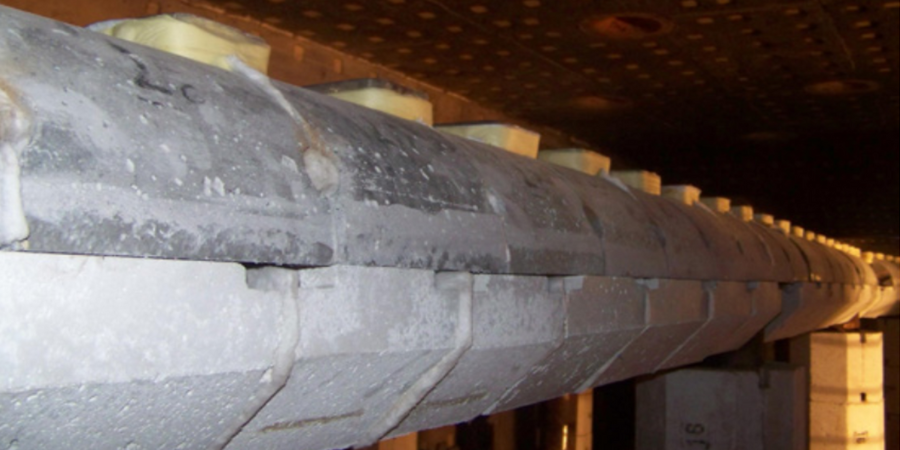
Walking Beam Furnace Energy Savings: New Skid Pipe Insulation Concept
Source: Heat Processing On-Line
Walking Beam Furnace Energy Savings: New Skid Pipe Insulation Concept Read More »
Source: Heat Processing On-Line
Walking Beam Furnace Energy Savings: New Skid Pipe Insulation Concept Read More »
Source: MoldMaking Technology
“The process of building conformal cooling inserts can be generally broken up into four steps: 1) simulating the molding process, 2) insert design and optimization, 3) 3D direct metal laser melting, and 4) post processing. Simulation software in the first step allows tool designers to visualize flow capabilities and thermal properties that can cause mold deformation prior to actual production. Cavity block or core block inserts then can be designed with conformal water lines in place, based on simulation results. The layer-by-layer 3D-printing that comes next not only can be completed in a number of materials that match conventional tool steels, but the resulting built-in channels will exhibit outstanding geometric flexibility. Post-processing tasks include stress relief and heat treatment, using EDM to machine the part from its platform base, polishing the part surface, adding water lines, and inspection.”
Read More: Reshaping Moldmaking by Lou Young
Heat Treatment Used in Building Conformal Cooling Inserts Read More »
Moldmaking Technology – July 2016
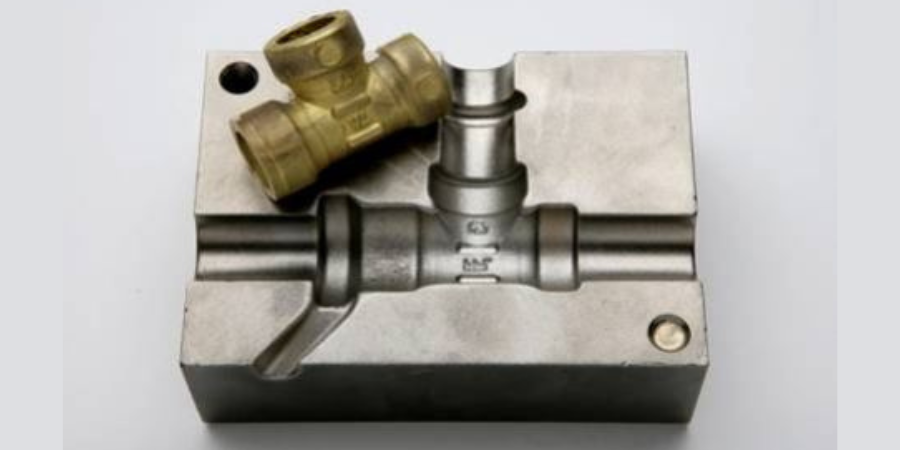
“When it comes to steel selection, the standard grades and heat-treat cycles might need to be changed depending on the selected PVD coating. The moldmaker must ensure that the application temperature of the PVD process is lower than the heat-treatment cycle temperature that is used on the steel.
…..too often the customers allow the steel and heat treatment to determine the coating that can be considered. ”
Read More: PVD Coatings and Tool Steel Selection by Mark Falkingham
PVD Coatings and Tool Steel Selection Read More »
Steel Dynamics, Inc. (NASDAQ-GS: STLD) today announced that it has entered into a definitive agreement to acquire 100% of Vulcan Threaded Products, Inc. (“Vulcan”). Established in 1978, Vulcan is based outside of Birmingham, Alabama and is the nation’s largest manufacturer and supplier of threaded rod products, and also produces cold drawn and heat treated bar. Steel Dynamics plans to purchase Vulcan for $126 million, inclusive of $42 million in working capital, which is subject to typical post-closing adjustments. The purchase price will be paid in cash from available funds. The transaction is expected to be immediately accretive to 2016 earnings and cash flow per share.
“During 2015, we identified the pursuit of higher-margin downstream business opportunities that utilize our steel products in their manufacturing processes, as one of our target growth objectives,” stated Mark D. Millett, President and Chief Executive Officer. “A strategy intended to reduce volatility during both strong and weak market cycles, given steel raw material supply optionality. During weak steel demand environments these businesses could purchase steel internally from our own mills, thus increasing SDI’s steel mill utilization. As a consumer of special-bar-quality products currently produced at our Engineered Bar Products Division, Vulcan depicts this model perfectly and fits well within our core operating strengths.”
Vulcan has a diversified product line, evenly distributed amongst threaded steel rod, cold finished bar processing and heat treated bar. It shipped approximately 89,000 tons of these products during the trailing twelve month period ended March 31, 2016. Historically Vulcan has purchased nearly 20,000 tons of steel from the company’s Engineered Bar Products Division (“EBD”). Based on capabilities, Steel Dynamics believes this internal volume could grow in the near term to between 30,000 and 50,000 tons, or just under ten percent of EBD’s total 2015 shipments.
“Vulcan has been a valued customer of our Engineered Bar Products Division for over a decade. I congratulate Bill and Kent Upton on the creation of a tremendous company and team. We are looking forward to welcoming the employees and customers of Vulcan into the Steel Dynamics family. We are excited to add the quality of Vulcan’s brand and products to our portfolio,” concluded Millett.
The transaction is valued at approximately 5.0 times trailing twelve month March 31, 2016 EBITDA, excluding potential income tax-related benefits. The transaction is subject to customary conditions and receipt of regulatory approvals. Steel Dynamics expects to obtain all necessary regulatory approvals and complete the transaction by August 2016.

Steel Dynamics to Acquire Vulcan Threaded Products to Expand SBQ Finishing Capabilities Read More »
Bodycote, the world’s largest thermal processing services provider, is pleased to announce that its new heat treatment plant in Covington, GA is now open.
The brand new 60,0002ft facility, established to replace the existing Conyers plant, will primarily serve automotive and general industrial customers, offering all of the processes and capabilities which had been offered at the Conyers location as well as the addition of ferritic nitrocarburizing.
At more than double the size of the plant it replaces, the new Covington facility immediately increases the capacity available to serve the Georgia and Florida marketplaces with a wide range of heat treatment processes.
This investment is part of Bodycote’s further expansion in the Southeast USA. Bodycote is committed to offering world-class heat treating services and is investing in improvements as part of an ongoing strategy to provide the best possible capabilities, mix and geographical network to better serve customers.
Bodycote Opens New Georgia Heat Treatment Plant Read More »
International Mold Steel will introduce S-Star-A, a 420 stainless steel in the annealed condition that can be heat-treated to hardness of 50-53 HRC and will be stocked in plate form to 6″ thick. S-Star-PH is a prehardened (30/34 HRC) 420 stainless steel that can also be heated to 50-53 HRC and will be stocked in round bar ranging to 4″ in diameter.
The company also recently added new processing capabilities, including a large plate saw that can cut to 24″ thickness, side milling to 31.5” square and gun drilling to 1 3/4″ in diameter by 84″ long.
Stainless Steel Can Be Heat -Treated to 50 – 53 HRC Read More »
Source: Modern Machine Shop
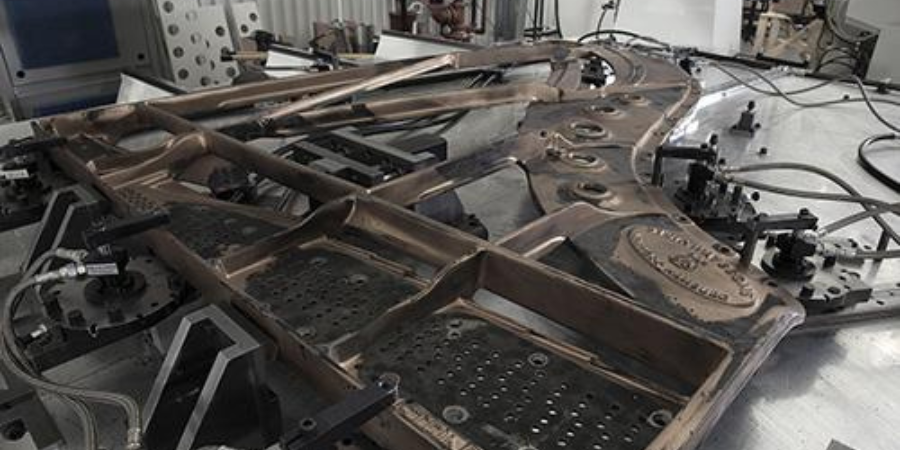
“The company wanted to develop a more streamlined machining method, including integrating a heat-treat process that was currently being performed on secondary equipment. If this could be achieved, it hoped to bring this machining process back to the United States to its foundry location in Springfield, Ohio. This will reduce shipping costs, streamline production, and speed delivery to customers throughout North America.”
Read More: How Steinway Machines Its Pianos by Russ Willcutt
Integrated Heat Treating Used in Making Steinway Pianos Read More »
Source: Modern Machine Shop
“DON’T forget that an attack can occur in a passivating bath if parts are improperly heat treated. High-carbon, high-chromium martensitic grades must be hardened to become corrosion-resistant.”
Read More: How to Passivate Stainless Steel Parts by Terry A. DeBold and James W. Martin
Proper Heat Treating Integral to Producing Quality Stainless Steel Parts Read More »
Source: Total Materia
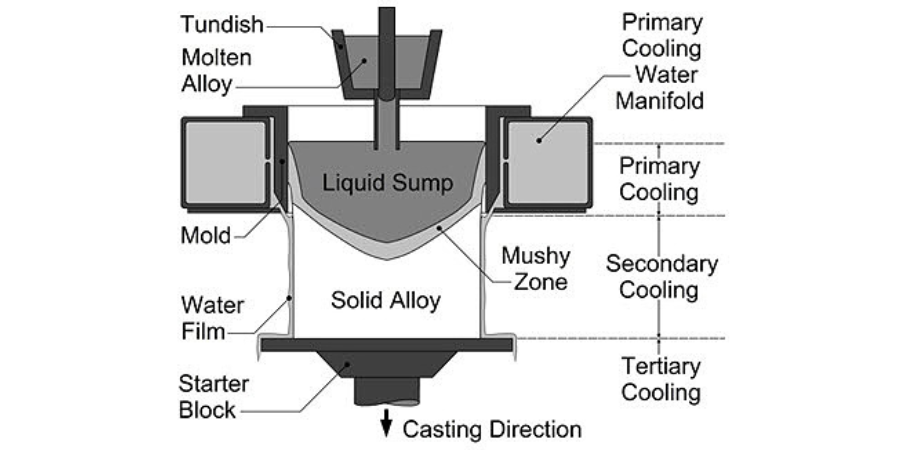
Direct-chill (DC) casting is currently the most common semi-continuous casting practice in non-ferrous metallurgy. The process is characterized by molten metal being fed through a bottomless water cooled mould where it is sufficiently solidified around the outer surface that it takes the shape of the mould and acquires sufficient mechanical strength to contain the molten core at the centre. As the ingot emerges from the mould, water impinges directly from the mould to the ingot surface (direct chill), falls over the cast surface and completes the solidification.
Read More: Direct-Chill Casting
Direct-Chill Casting Read More »
Source: Total Materia
Pulsed electric current sintering (PECS) also known as spark plasma sintering (SPS) or field assisted sintering (FAST) is a relatively new innovative technique for the consolidation of fine or nanocrystalline powders and has received much attention in the recent years because of its many advantages compared with other sintering/bonding methods such as the hot pressing and hot isostatic pressing (HIP) processes.
Read More: Pulsed Electric Current Sintering
Pulsed Electric Current Sintering Read More »