


AEROSPACE HEAT TREAT NEWS

$100M Expansion Targets Engine Component Production Growth

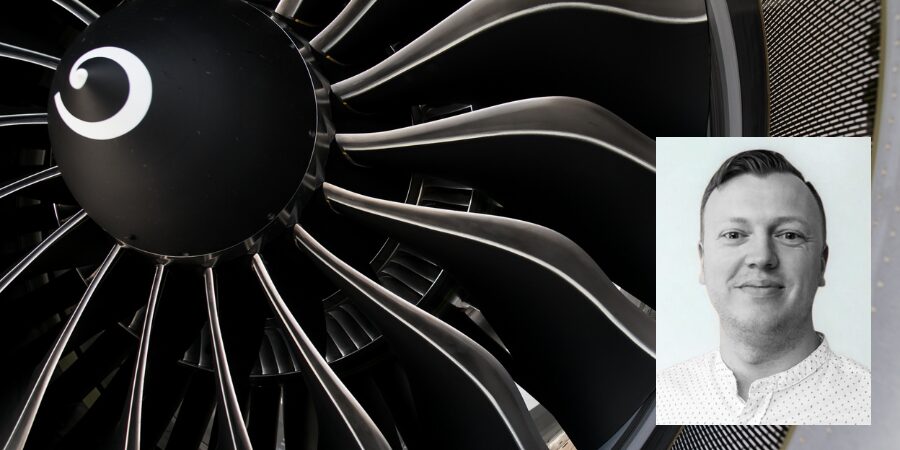
RTX’s Pratt & Whitney, a North American aerospace manufacturer headquartered in East Hartford, Connecticut, is investing $100 million to expand production capacity through advanced manufacturing processes, including heat treatment of forged engine components, to support increased output of commercial and military aircraft engines. The expansion is expected to strengthen supply for aerospace programs and improve throughput of critical engine parts used across global aviation fleets.

The investment will be made at the company’s facility in Rzeszów, Poland, where operations will be expanded to include additional processing capabilities and production capacity. The site supports manufacturing for several engine programs. including GTF™, F135, and F100 platforms, which serve both commercial aviation and defense applications.

Piotr Owsicki
General Manager
Pratt & Whitney Rzeszów

As part of the project, the company plans to add new capabilities focused on processing isothermally forged components, including heat treatment, sonic machining, and inspection operations. This expansion follows and supports the recently announced $200 million investment in a seventh isothermal forging press at Pratt & Whitney’s Columbus Forge facility in Georgia, U.S.

The expansion is intended to address growing global demand for aircraft engines and related components. “This investment reflects our continued commitment to increase production capacity for our [clients] and deliver more, faster,” said Piotr Owsicki, general manager of Pratt & Whitney Rzeszów. The capital project, expected to be fully operational by 2028, will enable a 30% increase in output of critical engine parts such as rotating compressor and turbine disks.

Press release is available in its original form here.

$100M Expansion Targets Engine Component Production Growth Read More »
Custom VIM System Enhances Turbine Blade Production

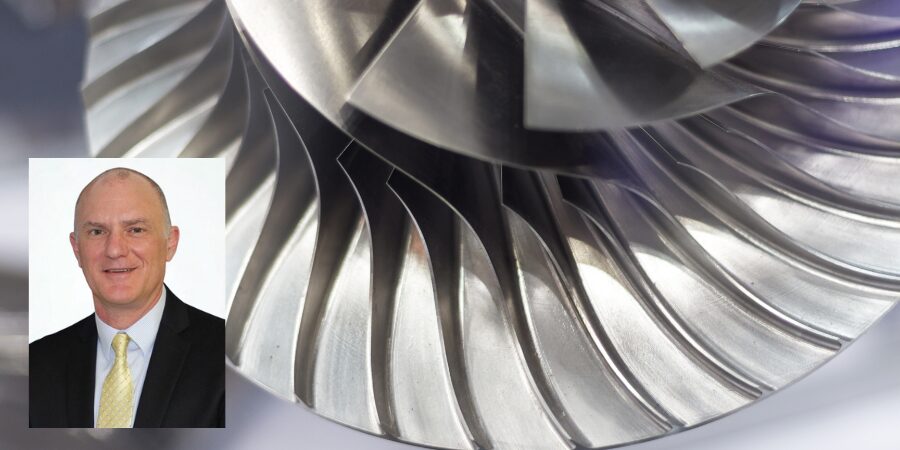
An aircraft engine manufacturer has purchased a custom-built vacuum induction melting (VIM) furnace to support the production of equiaxed (EQ) turbine blade castings for aircraft engines. The furnace enables melting in a controlled vacuum environment, with unique and intuitive control systems that help improve metallurgical consistency.

A tailor-made vacuum induction melting (VIM) furnace | Image Credit: SECO/WARWICK
Earl Good
Managing Director, Retech
Vice President of Vacuum Metallurgy Segment, SECO/WARWICK Group

The system is a two-chamber 50 kg VIM induction furnace supplied by SECO/WARWICK, a global manufacturer of thermal processing equipment with operations in North America. It was engineered as a tailored solution with configuration and technical parameters adapted to the client’s production needs. “The furnace has a non-standard design in which the mold elevator was replaced with a special trolley that moves horizontally on rails. Thanks to this solution, the furnace fits perfectly into the available space without any impact on its performance,” said Earl Good, managing director of RETECH, a company within the SECO/WARWICK Group, and vice president of the Vacuum Metallurgy Segment at SECO/WARWICK Group.

The system includes a control platform for casting processes, temperature control, and comprehensive data acquisition, delivering the repeatability and throughput essential to the aerospace industry. Its two-chamber design and pumping system allow for continuous operation, and the furnace can be equipped with a mold heater to maintain thermal conditions for the casting mold.

The use of VIM furnaces continues across aerospace applications, where vacuum metallurgy supports the aerospace industry’s constantly changing production needs.

Press release is available in its original form here.

Custom VIM System Enhances Turbine Blade Production Read More »

Boeing Adds Vacuum Heat Treat Capacity

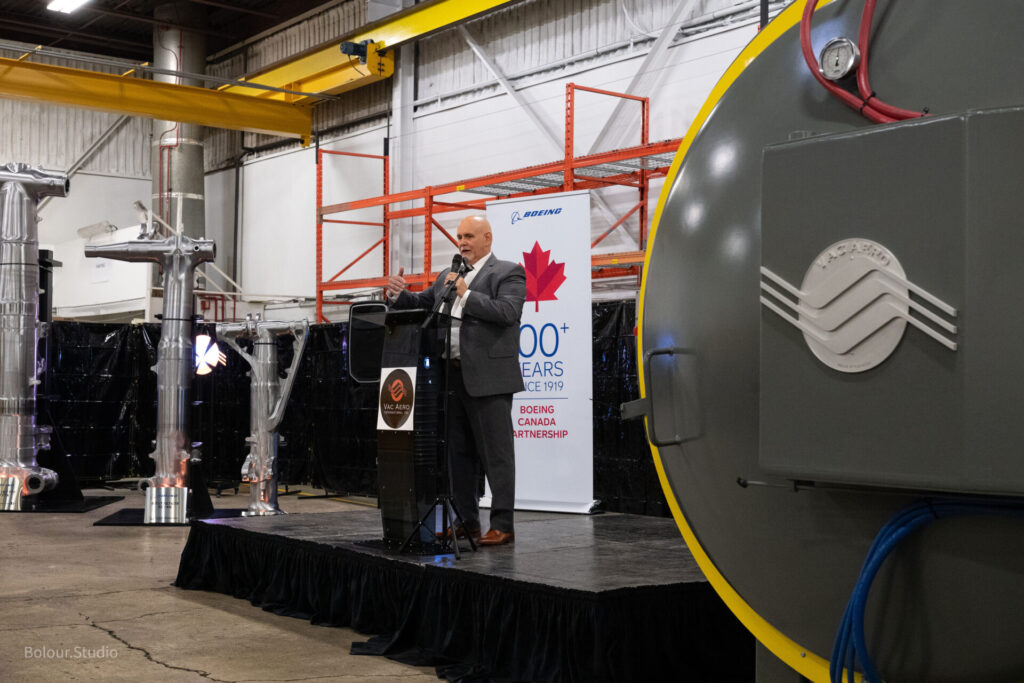
Boeing is adding vacuum furnace capacity at its Tube, Duct and Reservoir Center in Algona, Washington, to expand in-house heat treating capability for aerospace tube and duct assemblies. The investment is intended to address production needs across commercial and defense aerospace programs.

Dave Farmery, president and COO of Vac Aero, speaks at the CP8A Poseidon ITB commitment event on April 2, 2026. | Image Credit: Bolour Studio, courtesy of Boeing
Al Meinzinger
President
Boeing Canada

The investment is part of Boeing’s Industrial and Technological Benefits (ITB) commitments tied to Canada’s CP8A Poseidon aircraft program, which includes a multi-million dollar investment in Vac Aero International to strengthen aerospace manufacturing capabilities in Canada.

“We are pleased to support Vac Aero with the purchase of this new equipment for our Fabrication facility, which serves our commercial programs and select space and defense work,” said Al Meinzinger, president of Boeing Canada. “This ITB investment underscores Boeing’s commitment to Canada following the CP8A Poseidon selection and to modern manufacturing and Canadian small businesses in our global supply chain.”

The expansion includes the installation of two vacuum furnaces for vacuum heat treating and annealing of complex tube and duct assemblies at Boeing’s Algona facility. The furnaces, sized at 60″ x 90″ and 60″ x 60″, will be dedicated assets supporting Boeing’s aerospace manufacturing operations for multiple airplane programs.

The furnaces will be co-located within a single heat treat area, a configuration expected to free up approximately 300 square feet of production space. The equipment is scheduled to be ready for use in April 2027.

Press release is available in its original form here. Additional details provided by Boeing.

Boeing Adds Vacuum Heat Treat Capacity Read More »

Heat Treating Supports Aerospace Components for Artemis II Mission

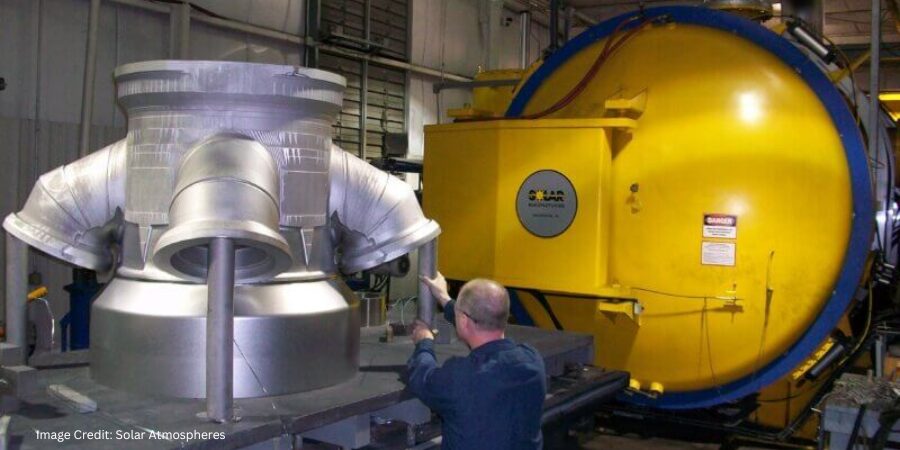
Solar Atmospheres has provided thermal processing services for materials and components used in the Artemis II mission, supporting aerospace applications that require precise control of material properties and performance under extreme conditions.

Image Credit: Solar Atmospheres

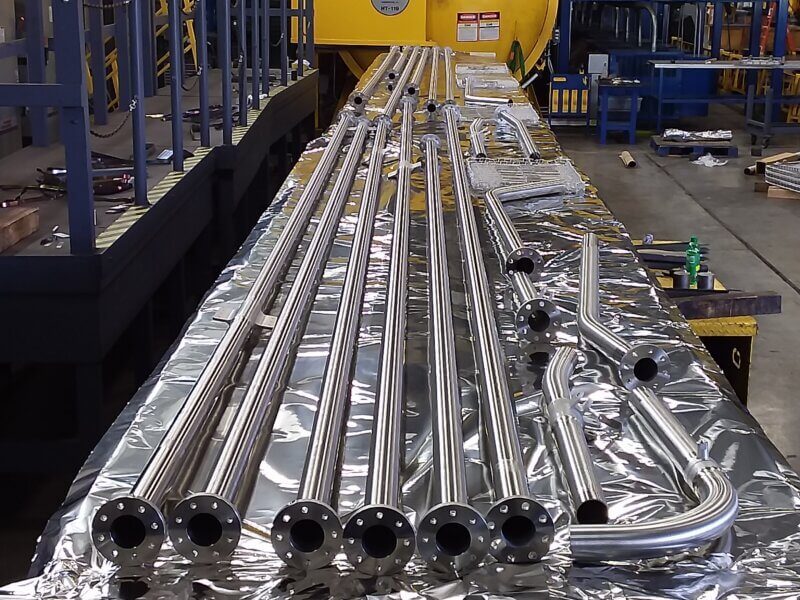
The heat treater specializes in thermal processing of a range of materials, including raw stock, nickel-based tubing, and other aerospace components that play a vital role in bringing next-generation space technology to life.

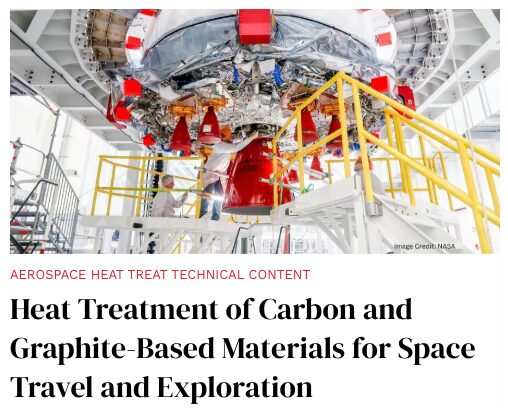
Click on the image above to learn more about high-temperature materials used in space applications.

At the core of some of these components is the 6AI-4V titanium Launch Abort System (LAS), which is a complex safety system. The LAS aboard the Orion spacecraft functions as a rocket capable of outrunning another rocket in an emergency. In the event of a catastrophic launch anomaly, its manifold enables the abort motor to ignite and safely propel the crew module away from the rocket.

Components used in these applications must meet strict requirements for precision and reliability, with little margin for error in performance.

Press release is available in its original form here.

Heat Treating Supports Aerospace Components for Artemis II Mission Read More »

Large-Capacity Nitriding Furnace Enhances Processing Capabilities

Vacu-Braze, a commercial heat treater specializing in vacuum heat treating and brazing, has added a large-capacity nitriding furnace to support processing of oversized components requiring enhanced surface hardness, wear resistance, and fatigue performance.

The furnace features a working chamber of 48″ in diameter and 108″ in depth, more than doubling the company’s current processing volume. It can accommodate larger workloads while meeting AMS2759/6 requirements for aerospace nitriding applications that require strict control of compound layer formation, case depth, and process uniformity.

In addition to conventional gas nitriding, the new furnace enables ferritic nitrocarburizing, providing an additional surface engineering option in many alloy steels. Along with advanced pyrometry and temperature uniformity controls, these features ensure compliance with AMS2750 for critical applications.

With this addition, Vacu-Braze can process a broader range of part sizes while maintaining process control and consistency.

Press release is available in its original form here.

Large-Capacity Nitriding Furnace Enhances Processing Capabilities Read More »

Additional Vacuum Furnace Supports Heat Treatment of Aircraft Engine Blades

An aerospace manufacturer has ordered a vacuum furnace to support heat treatment of high-performance alloys used in aircraft components, including engine blades. The system is designed to provide controlled atmosphere processing and precise temperature uniformity required for materials such as titanium, nickel alloys, and high-temperature steels.

The vacuum furnace was supplied by SECO/WARWICK, a global manufacturer of thermal processing equipment with locations in North America, to a Thai aerospace manufacturer expanding its production capabilities. The order includes a single-chamber Vector® vacuum furnace intended for heat treatment and vacuum brazing applications.

The furnace features a working chamber measuring 900 mm x 900 mm x 1200 mm, enabling the heat treatment of larger components. It is designed to support high vacuum processes while maintaining charge purity, with solutions that limit sublimation of alloying elements and reduce contamination within the hot zone — factors that are important in aerospace component production.

Lukasz Chwiałkowski
Sales Manager
SECO/WARWICK
Source: SECO/WARWICK

“It consists of two Leybold mechanical pumps, a Roots pump, and a diffusion pump. The round heating chamber ensures excellent temperature distribution (±5°C/±9°F), and the cooling system enables rapid gas cooling to a pressure of 6 bar abs. Additionally, the furnace provides precise control of partial pressure of argon and nitrogen, which is crucial for the quality of vacuum and brazing processes,” commented Łukasz Chwiałkowski, sales manager at SECO/WARWICK.

This is the second collaboration between the two companies in Thailand. The client already owns an identical SECO/WARWICK vacuum furnace that supports the production of titanium, high-temperature steel and nickel alloy aircraft engine blades. The addition of a second vacuum is expected to increase production capacity and provide operational flexibility for the aerospace manufacturer’s thermal processing operations.

Press release is available in its original form here.

Additional Vacuum Furnace Supports Heat Treatment of Aircraft Engine Blades Read More »

Fringe Friday: Forging Manufacturer Acquired by Private Equity

We’re celebrating getting to the “fringe” of the weekend with a Heat Treat Fringe Friday installment: a private equity firm in the aerospace supply chain has acquired Forged Solutions Group, a manufacturer of high-specification forgings used in flight-critical engine and structural components. The company’s products, including aeroengine discs and shafts, are the kinds of advanced alloy components that typically move through multiple downstream heat treatment steps before entering service.

While not exactly heat treat, “Fringe Friday” deals with interesting developments in one of our key markets: aerospace, automotive, medical, energy, or general manufacturing.


J.F. Lehman & Company has completed the acquisition of Forged Solutions Group, a manufacturer of high-specification closed-die forgings for aerospace, defense, and space applications. The company produces components including aeroengine discs, shafts, and structural parts from advanced alloys such as titanium, nickel-based superalloys, steel and aluminum before moving through machining and materials testing as part of the production process.

Ben Hatcher
Managing Director
J.F. Lehman & Company

The company supplies components for commercial aerospace and defense platforms through its manufacturing facilities. J.F. Lehman & Company, a private equity firm focused on aerospace, defense, maritime, government, and environmental sectors, completed the acquisition as part of its strategy to invest in companies supporting critical industrial supply chains.

Ben Hatcher, managing director at J.F. Lehman & Company, said, “FSG’s expansive forging capabilities, diverse product portfolio, and meaningful available capacity form a compelling and critical solution to the broader aerospace and defense industry’s production requirements. We are excited to build upon FSG’s differentiated technical capabilities and scaled operational footprint to increase throughput in support of current and next-generation aeroengine and defense platforms.”

Press release is available in its original form here.

Fringe Friday: Forging Manufacturer Acquired by Private Equity Read More »

Heat Treater Acquisition Enhances Integrated Manufacturing Capabilities

G.S. Precision, a precision machining and manufacturing company headquartered in Brattleboro, Vermont, has expanded its global manufacturing platform with the announcement of the acquisition of Lush Heat Treatment Ltd. and Headwater Precision, Inc., strengthening vertical integrated capabilities that support aerospace, defense, and other high-spec industries. The additions broaden the company’s technical scope across machining, coatings, and thermal processing, while extending the company’s geographic footprint in North America and Europe.

James R. Callan
Chief Executive Officer
G.S. Precision

Lush Heat Treatment, based in the United Kingdom, provides vacuum and endothermic heat treating services, as well as brazing services, for clients in the aerospace, defense, space, and nuclear power sectors. These processes support the performance requirements of critical components operating in demanding environments.

Headwater Precision, located in New Hampshire, is a precision manufacturing and advanced coating technologies business serving clients in aerospace defense, semiconductor, and industrial markets.

By bringing these capabilities together, G.S. Precision is positioning its company to offer a more integrated manufacturing approach, combining machining, surface treatment, and heat treating within a single organizational structure.

James R. Callan, chief executive officer of G.S. Precision, said the acquisitions align with the company’s growth strategy, adding capabilities such as advanced coatings and specialized heat treating to better support clients producing mission-critical components.

Press release is available in its original form here.

Heat Treater Acquisition Enhances Integrated Manufacturing Capabilities Read More »

Fringe Friday: Pentagon Awards Additive Manufacturing Contracts to 24 Manufacturers

We’re celebrating getting to the “fringe” of the weekend with a Heat Treat Fringe Friday installment: the U.S. Department of War (formerly Department of Defense) has awarded contracts to two dozen U.S. manufacturers to produce additively manufactured metal and polymer parts for defense programs. The contracts were issued through the Defense Logistics Agency (DLA) as part of the Joint Additive Manufacturing Acceptability (JAMA) IV pilot parts program.

While not exactly heat treat, “Fringe Friday” deals with interesting developments in one of our key markets: aerospace, automotive, medical, energy, or general manufacturing.


The Pentagon has awarded contracts to produce additively manufactured metal and polymer parts for defense programs. The awards, issued through the Defense Logistics Agency as part of the Joint Additive Manufacturing Acceptability (JAMA) IV pilot parts program, allow the Department of Defense to issue task orders to 24 participating manufacturers capable of producing parts using additive manufacturing technologies.

The awards are structured as a firm-fixed-price, indefinite-delivery/indefinite-quantity (IDIQ) contracts with a maximum value of approximately $9.8 million. The contract includes a one-year base period running through February 24, 2027, with four one-year option periods.

The JAMA IV pilot parts program supports the procurement of additively manufactured components for U.S. military clients, including the Army, Navy, Air Force, and Marine Corps. By awarding contracts to multiple manufacturers, the program establishes a pool of suppliers eligible to compete for task orders related to additively manufactured parts.

Companies awarded contracts include AForge; Alloyed; Applied Rapid Technologies; General Electric (Colibrium Additive); Cornerstone Research Group; DMG MORI Federal Services; FasTech; FormAlloy; ITL; KVG; Lightweight Innovations for Tomorrow (LIFT); Malama Kai Technologies; Maritech Machine; Marotta Controls; MRL Materials Resources; MXD USA; NCS Technologies; Nikon AM Synergy; Precision Additive Solutions; Relativity Space; Shepra; Sintavia; Stratasys Direct; and Velo3D.

The contract announcement is available in its original form here.
The RFP for the JAMA IV pilot parts program is available in its original form here.

Fringe Friday: Pentagon Awards Additive Manufacturing Contracts to 24 Manufacturers Read More »

Pratt & Whitney Isothermal Forging Expansion for Jet Engine Parts Production

Pratt & Whitney, an RTX business, is investing $200 million to expand manufacturing at its Columbus, Georgia, site with the addition of a seventh isothermal forging press. The equipment, which will support production of rotating compressor and turbine disks for commercial and military jet engines, is expected to be operational in 2028 and is projected to increase output of these critical components by about 30 percent.

The funding will expand operations at the Columbus Forge facility, where compressor airfoils and high-strength disk components are manufactured for the company’s commercial and military engine platforms. The site is part of the broader Columbus campus that also includes the Columbus Engine Center, where maintenance, repair, and overhaul (MRO) work is performed on engines like the PW1100G-JM, V2500, PW2000, F117, and F100.

Shane Eddy
President
Pratt & Whitney

The latest investment at the Columbus Forge facility follows an 81,000-square-foot GTF MRO expansion at Pratt & Whitney’s Columbus Engine Center, located on the same campus. This expansion added advanced equipment and machinery that aligned with the company’s Industry 4.0 strategy. The facility’s annual capacity increased by more than 25%, adding critical overhaul volume to the GTF MRO network in support of the growing fleet.

The Columbus complex has grown from a small manufacturing facility to a manufacturing and overhaul center that now employs 2,600 people. “Since 2008, we have invested more than $1 billion to continue expanding the footprint and capabilities of our Columbus facility. This latest investment will increase output of critical parts for our growing military and commercial engine programs and underscores our ongoing commitment to ramp industrial capacity to support our [clients],” said Shane Eddy, president of Pratt & Whitney.

Press release is available in its original form here.
Main image shows Pratt & Whitney President Shane Eddy joined with Georgia Governor Brian Kemp and other company, state, and local leaders to celebrate two major expansions of Pratt & Whitney’s Columbus, Georgia facility on February 24, 2026.

Pratt & Whitney Isothermal Forging Expansion for Jet Engine Parts Production Read More »