ASM International recently posted an instructive article on the effect of aging temperature on impact energy and yield strength on AF 1410 steel, complete with a helpful graph displaying maximum and minimum results on both at various temperature ranges.
Steve Metz, Vice President of Sales and Marketing for Applied Products, Inc.
A Michigan-based company that specializes in austempering heat treatment technology recently announced expansion plans that will include a 51,000-square-foot heat treatment plant in Fort Smith, Arkansas.
The new location for Applied Process, Inc., will contain six furnaces and is expected to be fully operational in the 3rd quarter of 2018 to serve their customers in the automotive, agriculture, aerospace, heavy truck, railroad, mining sectors, as well as the military, throughout the Midwest and South. The company’s plants in Livonia, Michigan, and Oshkosh, Wisconsin, will remain in operation, the latter housing the world’s largest integral quench batch austempering furnace which is capable of austempering parts up to 20,000 lbs. in weight.
Rusty Rainbolt, plant manager, Applied Products, Inc., Fort Smith
“The additional capacity in Fort Smith will allow us to continue to offer industry-leading levels of customer service, quality and turn time,” said Steve Metz, Vice President of Sales and Marketing for Applied Process, Inc.. “The new facility will allow us to expand into new markets and serve a broader geographic customer base.”
Rusty Rainbolt, who has been with Applied Process for three years on the sales team, will be plant manager at the Fort Smith site.
A USAF C-69, the military version of the Constellation
In the aerospace industry, heat treating is an essential step in the manufacturing process. Stress reduction on metal parts to improve the strength and fatigue life of aircraft components is critical to ensure parts stand up to the demands and specifications of aerospace applications. Every aircraft we see in the sky today contains precision-made parts and systems that have undergone heat treatment, whether it’s engine brackets, landing gear, bearings, gears and rods, fuselage, frame parts, brakes, or cooling systems.
Sometimes, however, those involved in modern heat treating processes, such as Metlab, based in Wyndmoor, Pennsylvania, and DELTA H Technologies, LLC, located in Carroll, Ohio, also expand their capabilities and apply their expertise to heat treating parts of historic aircraft in order to restore them to their former glory.
Lockheed L1649A “Super Star”
A DELTA H heat treating system is now being used in a project to make a Lockheed Constellation airworthy. The science of heat treating has not changed, therefore, a state of the art heat treating system is fulfilling the requirement to repair damaged antique aircraft and parts. Using the DELTA H heat treating systemto make this aircraft flight-worthy ensures that the aircraft will be in compliance with AMS2750E.
The Lockheed Constellation is an important piece of U.S. aviation history, a plane used for civilian and military transport, as well as a presidential aircraft for U.S. President Dwight D. Eisenhower.
Ryan ST-A (Aerobatic) training aircraft circa. 1934
Classic Metalcraft recently turned to Metlab for the heat treatment of a newly fabricated structural bulkhead for a Ryan ST-A historic aircraft (circa.1934). Ryan Sport Trainers were the aircraft of choice for sport pilots, flying schools, and the military of other countries.
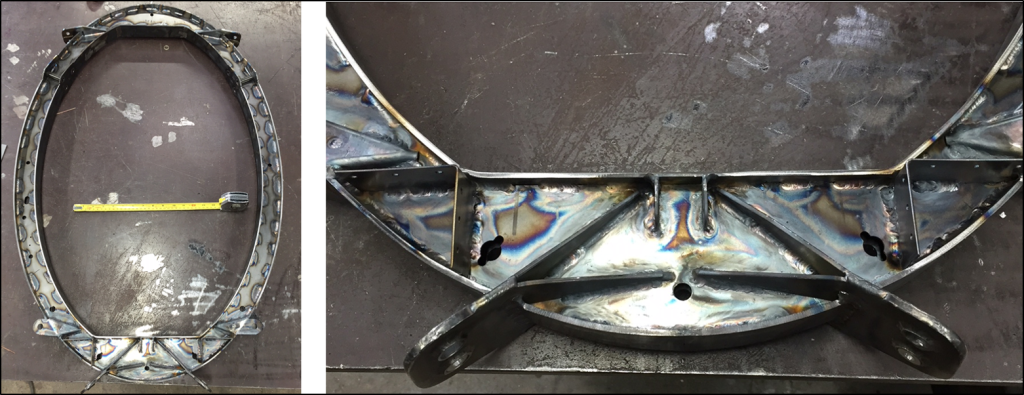
“The most difficult part that needed to be fabricated was the #2 bulkhead,” said David Paqua of Classic Metalcraft. “Not only is it tough to replicate without heavy pressing equipment, but it requires heat treating by a knowledgeable firm to prevent distortion.”
Bulkhead component prior to heat treating
The bulkhead component is a structural piece fabricated with 4130 steel and located just forward of the instrument cluster, where it bears significant stress. Metlab’s heat treating capabilities ensured that the shape integrity of the part was maintained as well as the aerodynamic characteristics of the aircraft.
An international high-technology group and tier-1 supplier of systems and equipment in the aerospace market recently announced a long-term agreement with a leading global provider of heat treatment and specialist thermal processing services.
Heat treater Bodycote also announced that its global network will support the agreement with the Paris-based Safran, operating initially from strategically located facilities in France and Belgium.
Safran is a part of the Safran Group, a French multinational aircraft engine, rocket engine, aerospace-component, defense, and security company. Under the agreement, Bodycote will provide manufacturing services which include thermal spray coatings, electron beam welding, hot isostatic pressing (HIP), heat treatment and others to Safran companies and their key strategic first-tier suppliers, in support of Safran’s civil aerospace programs, including but not limited to CFM LEAP for Safran aircraft engines, helicopter engine programs, and landing gear systems.
Milton Sergio Fernandes de Lima, a researcher at the Brazilian Air Force Command’s Institute for Advanced Studies (IEAv)
Borrowing a process used by the aerospace industry – the heat treatment of sheets of advanced high-strength (AHS) steels, the automotive industry is discovering a way to satisfy the recent, growing demand for high-performance alloys while overcoming their tendency to turn brittle and break during the hot stamping and forming process.
High-strength steels are preferred by automakers and parts suppliers as well as those in the aerospace industry because of their enhanced formability and collision resilience compared to conventional steel grades, and metallurgists have been scrambling to develop techniques that will produce tough and reliable components, display high values for yield and tensile strengths, and meet increasingly tough passenger safety, vehicle performance and fuel economy requirements.
Read Kagan Pittman’s article from Engineering.com linked below to learn more about a process developed by Milton Sergio Fernandes de Lima, a researcher at the Brazilian Air Force Command’s Institute for Advanced Studies (IEAv), that consists of heating sheets of 22MnB5steel prior to and after laser welding to achieve bainitic microstructure, an innovative method of high-temperature laser welding for AHS steel appropriate for automotive and aerospace applications.
The study by M.S. F. Lima, D. Gonzáles and S. Liu, “Microstructure and Mechanical Behavior of Induction Assisted Laser Welded AHS Steels”, published by Welding Journal, can be downloaded from s3.amazonaws.com/WJ-www.aws.org/supplement/WJ_2017_10_s376.pdf.
Image: Heat treatment of advanced high-strength steel provides auto and aerospace industry technique for laser welding at high temperatures (image:Welding Journal)
Leading commercial heat treat company, Paulo, provides an excellent primer on heat treat scale, what causes it, and what to consider when determining whether to remove it or prevent it.
From the article: “Manufacturers and heat treaters each have methods at their disposal to deal with scale problems, but tradeoffs exist that depend a great deal on part makeup, specified heat treatment and what happens next with a given part.”
In honor of Presidents' Day, Heat TreatToday takes a cue from the U.S. penny, where we find embossed on the copper coin the image of one of the two U.S. presidents celebrated on this day, President Abraham Lincoln (16th). The link below will lead you to an article on the basics of heat treating copper and copper alloys; their end products, including wire and cable, sheet, strip, plate, rod, bars, tubing, forgings, castings, and powder metallurgy shapes; and the purposes for heat treating these metals, such as homogenizing, annealing, stress relieving, and precipitation hardening.
15 Quick Heat Treat News Items To Keep You Current
The heat treat industry is one of people transitioning and companies executing business, achieving goals, and receiving acknowledgments. Heat TreatToday offers News Chatter, a feature highlighting representative moves, transactions, and kudos from around the industry.
Personnel and Company Changes and Moves
Roberto Pancaldi, current Tenova Metals chief operating officer, has become the new Tenova Metals CEO, directly reporting to Andrea Lovato, CEO of Tenova.
Roberto Pancaldi, Tenova Metals CO
The Aluminum Federation, the trade body for the UK aluminum industry, has announced that appointment of a new chief executive. Mr. Tom Jones joins the organization from MMC Hardmetal UK, part of the Mitsubishi Materials group, where he was general manager. Tom has more than 35 years experience of working in manufacturing.
The Board of GKN Group plc has announced that Anne Stevens, currently Interim Chief Executive, has agreed to become the Group’s new Chief Executive with immediate effect. It was added that since her appointment, Stevens has taken leadership of an ongoing and wide-ranging internal review of all GKN’s businesses which has culminated in the development of a transformation plan to improve GKN’s performance.
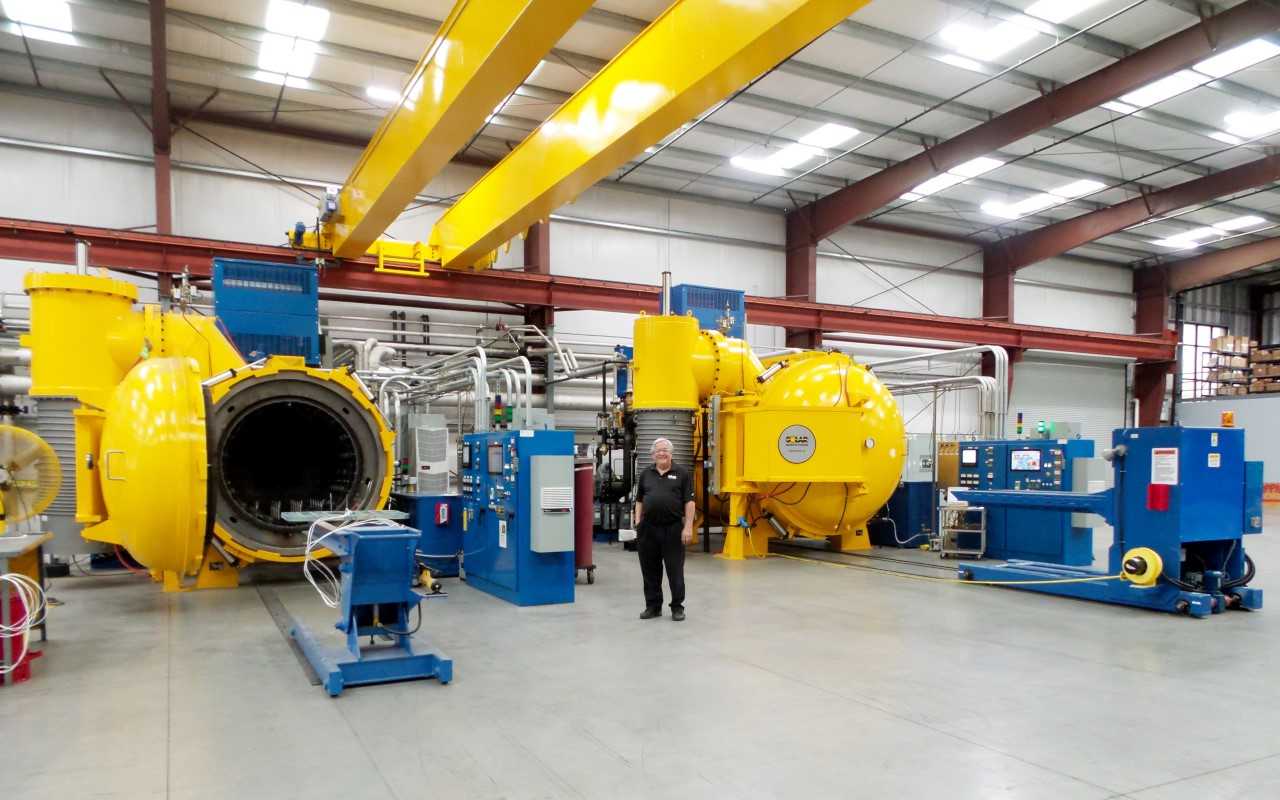
Solar Atmospheres of California's expansion includes installation of 4 new furnaces purchased from Solar Manufacturing, Inc
Solar Atmospheres of California (SCA) announce the completion of its most recent facility expansion. Project expansion began taking shape in July 2016 with groundbreaking for a new 25,000 sq. ft. building. In preparation for the added growth, SCA has procured an additional four vacuum furnaces from sister company Solar Manufacturing (SMI) based in Souderton, Pennsylvania.
Equipment Transactions
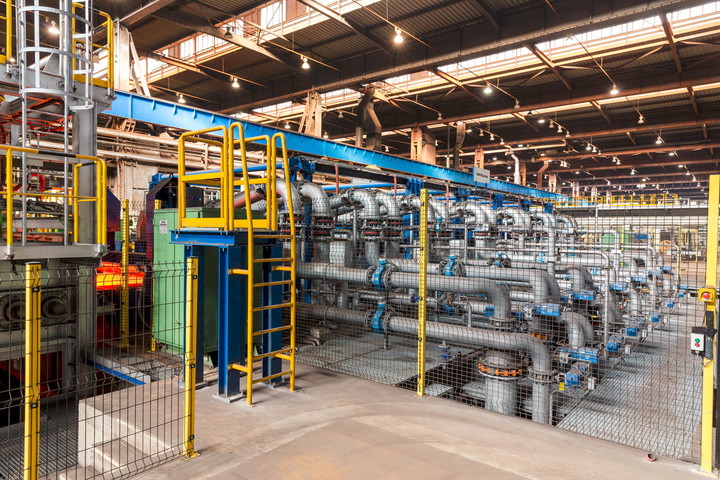
a heat treatment line from SMS group
German metal processor Ilsenburger Grobblech GmbH ordered a new heat treatment line from SMS group. The line, project name "Adjustage II", will be consist of a shot-blaster, two roller hearth furnaces, the MultiFlex-Quench®, a plate leveler, a cleaning and priming line, and a water treatment plant and be capable of processing more than 300,000 tons of heavy plate annually. Commissioning is scheduled to take place early in 2020.
Wisconsin Oven Corporation shipped two electrically heated standard horizontal quench systems to an aluminum manufacturer, each designed to heat 1,000 pounds of aluminum to a 950°F operating temperature with qualified operating temperature ranges of 775°F and 1,075°F.
Grieve recently supplied a 1000°F (538°C) top-loading oven that will be used for curing composite materials in large molds at a manufacturer’s facility. Workspace dimensions measure 168 inches wide x 48 inches deep x 48 inches high, and 120 kW are installed in lncoloy -sheathed tubular heating elements. A 12,500-CFM, 10-HP recirculating blower provides horizontal airflow.
Baker Furnace
Graftech Advanced Graphite Materials in Lawrenceburg, Tennessee, recently divested assets to refractory manufacturer Allied Mineral Products, Inc., located in Columbus, Ohio, and GTRefractory Solutions LLC in Wilmington, Delaware. Allied purchased the intellectual property rights to a collection of refractory cements and pastes, and GT Refractory Solutions acquired assets such as carbon and semi-graphite carbon brick, cement, pastes, porous carbons and graphite powders specialized for use in the steel, ferroalloy and iron industries.
Baker Furnace, Brea, Calif., the west coast division of the Thermal Product Solutions (TPS), moved to a new 40,000 sq-ft manufacturing space facility in 2017, which contributed to record shipments of custom and standard units in a variety of configurations. Among other projects, drop-bottom furnaces, crucible furnaces, car bottom furnaces, and batch ovens will be used for a variety of applications in the heat treating, foundry, composites, and automotive industries.
HBD Industries acquires True Position Technologies LLC
HBD Industries announced the expansion of its Precision Components Platform through the acquisition of True Position Technologies LLC (“True Position”), based in Valencia, California. A leading provider of complex machined components for flight control applications, True Position specializes in manufacturing high specification components that require multiple machining, testing and finishing processes all within extremely tight tolerances.
Accreditations, Certifications, Patents, and More
Conrad Kacsik Instrument Systems, Inc., has been reaccredited for ISO-IEC 17025:2005 by A2LA, a continuous A2LA accreditation since 2000.
Heat treaters Metallurgical Processing Inc., based in New Britain, Connecticut, has been awarded a 24-month Nadcap accreditation after being audited to 10 checklists.
Bodycote HIP now counts nine Nadcap-accredited sites with the recent award to the Surahammar, Sweden, location.
Advanced Heat Treat Corp., which has held Nadcap accreditation since 2013, has been awarded Nadcap Merit status for Heat Treating (Ion Nitriding) at the MidPort location in Waterloo, Iowa. This is the highest accreditation period that can be earned. "We are proud to achieve Merit status for the third time in a row and be granted a 24-month accreditation. We hope our customers take pride in the fact they send their parts to AHT," stated John Ludeman, Director of Metallurgy and Quality Excellence.
Bodycote, the world’s largest provider of heat treatment and specialist thermal processing services, announced that its Surahammar, Sweden, Hot Isostatic Pressing (HIP) location has earned its Nadcap accreditation. The Surahammar site has been producing Powdermet® Near Net Shape (NNS) and Selective Surface Net Shape (SSNS) components for many years, using its long experience of manufacturing complex, high integrity components from powder metal to serve markets such subsea, oil and gas, marine, nuclear, tool steel and automotive. Bodycote HIP now has nine Nadcap-accredited sites.
SAE International, Warrendale, Pa., announces that technical standard AMS2750 – Pyrometry, has received complete recognition by the U.S. Federal Drug Administration Center for Devices and Radiological Health, and it has been added to its list of recognized consensus standards database, List #47.
Heat TreatToday is pleased to join in the announcements of growth and achievement throughout the industry by highlighting them here on our News Chatter page. Please send any information you feel may be of interest to manufacturers with in-house heat treat departments especially in the aerospace, automotive, medical, and energy sectors to the editor at editor@heattreattoday.com.
Aluminium stud meets steel sheet IPH researchers have already succeeded in creating a form-fit connection. Now they want to realize a material bond between the two parts. (Photo: IPH)
Groundbreaking research on a forging process in Hanover, Germany, has taken place in which bulk aluminum parts can be bonded with steel sheets during the forming process, eliminating the usual joining step. This would contribute to a faster and more efficient production of load-optimized components.
The Institute of Welding and Machining (ISAF) of TU Clausthal cooperated with the Institut für Integrierte Produktion Hannover (IPH) gGmbH in releasing their joint research aiming to be the first to combine two lightweight materials and construction approaches to make the process more efficient. The project, known as hybrid compound forging, focused on the challenge of integrating steel and aluminum with a third material to avoid brittle intermetallic phases.
The researchers’ idea is to form and join a steel sheet and a solid aluminum stud in one process step. In the past, the individual parts have been formed first and then joined in a second step, for example using stud welding. The idea of hybrid compound forging is to eliminate the subsequent joining step.
Hybrid compound forging The novel lightweight production process firmly bonds bulk aluminium parts to steel sheets – already during the forming process without an extra joining step. (Photo: IPH)
Since aluminum has a considerably lower melting point than steel, the joint forming process is more complicated. Moreover, the mixing of steel and aluminum creates brittle intermetallic phases, a material bond which is not strong enough and thus unsuitable for car manufacture. For this reason, the researchers employ zinc-plated steel sheets and aluminum studs: Zinc firmly bonds to aluminum as well as to steel without creating brittle phases.
Within the scope of the research project, the researchers are tasked with determining the most suitable process conditions – i.e. optimal temperature, pressure and speed for successfully forming and joining the two parts. They also try to identify the suitability of the novel process with respect to different types of sheet thicknesses and stud shapes and to determine the joining zone’s capacity to withstand load as well as the machinability of the hybrid part after joining. The researchers have already succeeded in combining sheet and bulk metal parts of different materials in one single forming step – but only as a prototypic form-fit connection between steel sheet and aluminum stud. In the current research project “Hybrid Compound Forging”, the researchers are going for a material bond using zinc as filler material which also offers advantages as to contact corrosion in the steel-aluminum material combination.
In the future, hybrid compound forging could be used in the automotive and aerospace industry to produce components, such as longitudinal beams, tail lamp mounts or cargo tie-down rings.
Aluminum sheets and heat treating services are among the categories of upwardly trending activity that Tony Uphoff recently reported on at Thomasnet.com. In addition to how well each area is doing above historical averages, the analysis includes this tidbit: “according to U.S. census data, 96 percent of heat treatment companies employ fewer than 100 workers; 68 percent employ fewer than 20.”