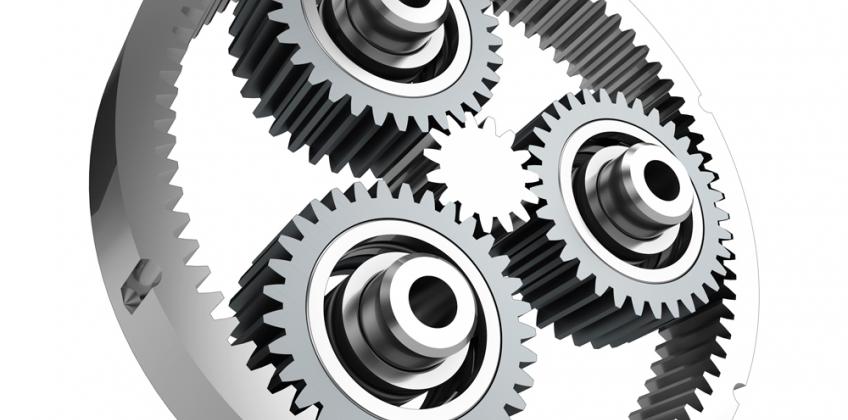



Pierre Rousset and Vincent Lelong from ECM USA compare the significant differences between a conventional furnace and a low pressure carburizing furnace and provide guidelines for heat treaters to consider when determining which to use for metallurgical processing.
LEAX Group, a Swedish manufacturer of advanced components and subsystems for automotive, commercial vehicles, mining, construction, and general industry sectors, has installed a low pressure carburizing (LPC) furnace at their Brinkmann, Germany, facility (LEAX Brinkmann GmbH) to boost the company’s heat treatment processing capabilities. The extensive installation takes about two months and the first hot load is scheduled for December. Along with the addition of a new induction machine at their Falköping, Sweden, facility, this new LPC furnace serves as the centerpiece of the massive MBS project.
LEAX, which is based in Köping, Sweden, operates heat treatment shops in seven of their twelve production sites, including Latvia, Germany, Hungary, Brazil, and China, and focuses on induction hardening and processing and refining approximately 300,000 parts per year. This added LPC hardening furnace brings a process to LEAX’s manufacturing process that has been a mainstay in the automotive industry. The full transition to the MBS project will take up to two years, but “we [will] switch hardening from the older oven to the new,” said Anders G. Larsson, COO/Heat Treatment for LEAX Brinkmann GmbH.
A U.S.-based axle gears manufacturer recently commissioned hardware and software enhancements to add to their existing heat treat cell and automation.
Migration of legacy controls was not economically feasible, and after investigating options to boost equipment functionality, the customer opted to integrate a new PLC that bridges the gap between the heat treat cell and new robotic loading cell. The new control system installed by United Process Controls, Inc., (UPC) provides operators with a quick display of the furnace status, functions, and operational data of three AFC Holcroft carburizing pusher furnaces. Furnaces were similarly adjusted to liaise with the new robotic loader. In addition, material handling data from the registers of the old PLCs was transferred to the new robot cell to help increase the factory information system. UPC was also retained to program and connect the updated furnace controls, including the new conveyor line, and charge cars to the factory information system.
Nitriding and carburizing are the two most common heat treatment practices for surface hardening functional components. The main difference is that in nitriding, nitrogen atoms are made to diffuse into the surface of the parts being processed, whereas in carburizing, carbon is used. There are advantages and disadvantages to both processes.
This excellent blog post by Metlab in the Philadelphia area is a great primer for both processes.
“While some heat treatments are used to soften the material or improve its machinability, most are processed to obtain strengthened or hardened properties. The majority of heat treatments apply to metallic materials and, typically, the techniques include annealing, normalizing, quenching, tempering, precipitation strengthening, surface hardening, and case hardening. Heat treatment is so critically important that we can safely say a part undergoing extensive manufacturing processes such as melting, rolling, forging, and other related machining is of little or no value without the necessary and appropriate heat treatment.”
“Effective case depth is an important factor and goal in gas carburizing, involving complicated procedures in the furnace and requiring precise control of many thermal parameters. Based upon diffusion theory and years of carburizing experience, this paper calculates the effective case depth governed by carburizing temperature, time, carbon content of steel, and carbon potential of atmosphere. In light of this analysis, carburizing factors at various temperatures and carbon potentials for steels with different carbon content were calculated to determine the necessary carburizing cycle time. This methodology provides simple (without computer simulation) and practical guidance of optimized gas carburizing and has been applied to plant production. It shows that measured, effective case depth of gear parts covering most of the industrial application range (0.020 inch to over 0.250 inch) was in good agreement with the calculation.”
Like most other heat treatments, the carburizing and hardening process is known to introduce dimensional changes and gear distortion [4]. If these size and shape changes can be anticipated and controlled, it is possible to eliminate post–heat treatment machining by designing ring gears that would allow for the heat treat change. Such gear manufacturing would significantly reduce cost and machining-to-assembly time, both of which are critical in a commercial environment and large-scale production.