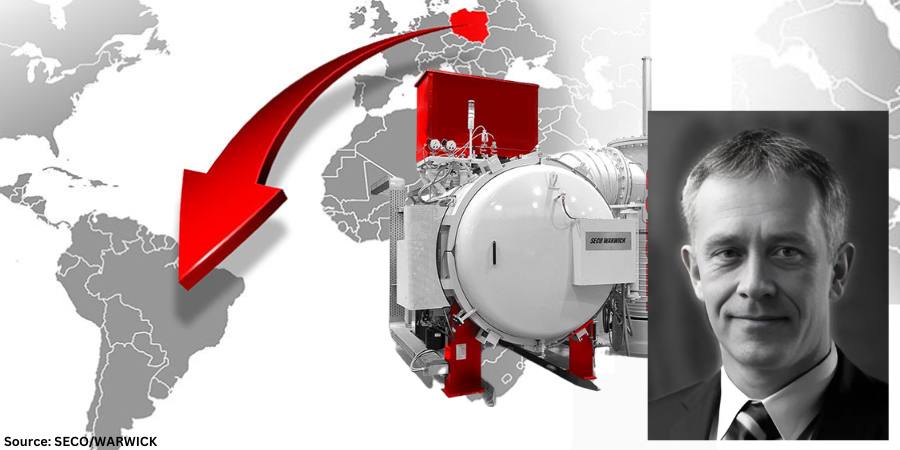


A company that supplies metal injection molded components for the aviation industry has expanded its production capabilities with a vacuum furnace. This solution will increase the capacity to provide hardening process services while meeting aviation standards required by the industry.
Sławomir Woźniak President of the Management Board SECO/WARWICK Group
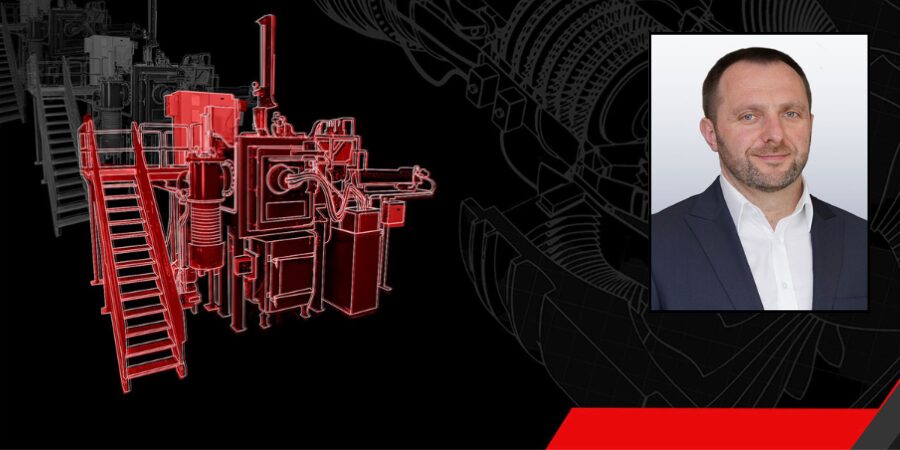
The Vector® vacuum furnace will process materials using an additional argon hydrogen partial pressure system, providing heating at a high level: 2192˚F (1200˚C). This is SECO/WARWICK‘s second collaboration with the company, one of the largest manufacturers offering metal injection molding technology with manufacturing capabilities including vertical integration of finishing technologies such as nickel and trivalent chromium electroplating, vacuum heat treatment and seal hardening, as well as precision grinding and CNC machining with micron tolerances.
“This partner is a global brand which has shown their trust in us for the second time by ordering a vacuum furnace, which we will now be able to service locally and more comprehensively,” said Sławomir Woźniak, president of the management board, SECO/WARWICK Group.
The furnace’s pumping system enables vacuum processes to be carried out in medium and high ranges, thanks to the use of a very good pumping system, and incorporates three process gases: argon, nitrogen, and hydrogen.
Press release is available in its original form here.
A commercial heat treating company recently added new furnaces and process improvements to its operations in order to serve manufacturers in advanced industries, including aerospace and defense. The improvements include a high-temperature oxidation furnace, a fully rebuilt furnace, and the expansion of marquenching capabilities.
Phoenix Heat Treating, based in Phoenix, AZ, has introduced a high-temperature oxidation furnace specifically designed for space components. This equipment has a maximum operating temperature of 1975oF and operates in an air atmosphere, providing the thermal stability and precision needed for the demands of aerospace applications and to serve the evolving needs of the space industry.
A fully rebuilt furnace has been reactivated in the company’s production lineup. This furnace is tailored for processing primary long Inconel 718 and A286 age cycles. With a maximum weight capacity of 2000 lbs., it handles heavy and complex loads with a goal of ensuring consistent and reliable results for critical nickel-based alloy applications and improving efficiency and capacity by increasing the number of Inconel 718 cycles per week.
Marquenching operations are also seeing an upgrade as materials have been ordered to increase load sizes from 25 lbs. per load to 250 lbs. per load. Expected to be complete by mid-February, this enhancement represents a tenfold increase in capacity, allowing Phoenix Heat Treating to achieve faster turnaround times and larger batch processing capabilities.
Additionally, a state-of-the-art freeze/temper unit has been brought online. This equipment is capable of reaching temperatures between -270oF and 200oF and will be a part of the company’s aluminum thermal cycling processes, enabling precise control over temperature profiles for optimal material performance. The new unit’s capacity is roughly double that of the previous maximum reached and will allow Phoenix to handle significantly larger loads and meet growing customer demand.
The press release is available in its original form here.
Loy Instrument, Inc., which supplies process control and combustion solutions for heat treaters in multiple industries, has been acquired by Relevant Industrial, LLC (Relevant), a leading provider of industrial equipment and engineered solutions. This partnership enhances the company’s ability to serve clients in industries such as aerospace, metals, refining, petrochemical, manufacturing and power generation.
John Carte CEO Relevant Industrial LLC
Loy, headquartered in Indianapolis, Indiana, has over 80 years of industry knowledge and a team with more than 900 years of combined experience. This acquisition marks a significant milestone for Relevant, strengthening its position as an industry leader and expanding its geographic footprint into Indiana, Ohio, Kentucky and Michigan.
“Joining Relevant Industrial is an exciting step for Loy Instrument, our employees, and our customers,” said Ken Bradway, president of Loy Instrument, Inc. “Together, we’ll leverage our combined expertise and resources to expand our capabilities and continue delivering exceptional solutions to the industries we serve.”
“The addition of Loy Instrument’s expertise strengthens our ability to tackle complex challenges in combustion and process control, providing even greater value to our customers,” said John Carte, CEO of Relevant Industrial. “We’re excited to welcome this exceptional team into the Relevant family and look forward to driving innovation together.”
The press release is available in its original form here.
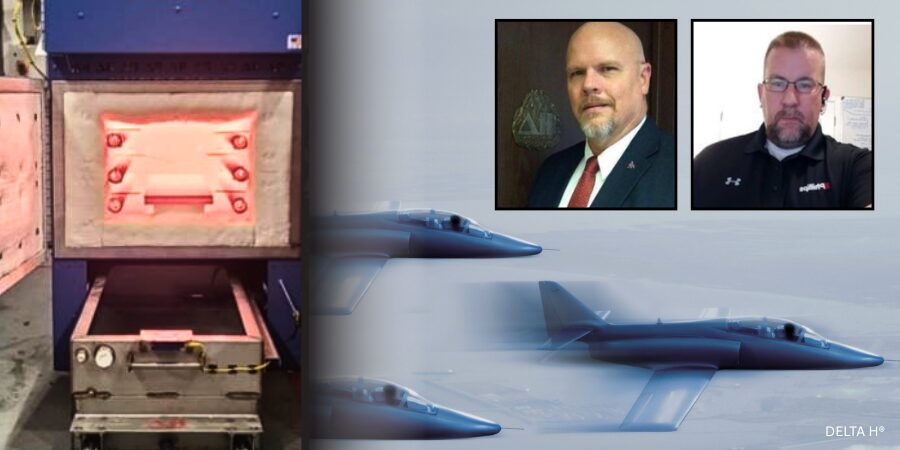
Solar Atmospheres in Souderton, PA, has commissioned two additional 2-bar vacuum furnaces, expanding its capabilities to meet demand in the aerospace and industrial gas turbine sectors. The equipment will allow the company to specialize in hydride/de-hydride processing of titanium, tantalum and niobium.
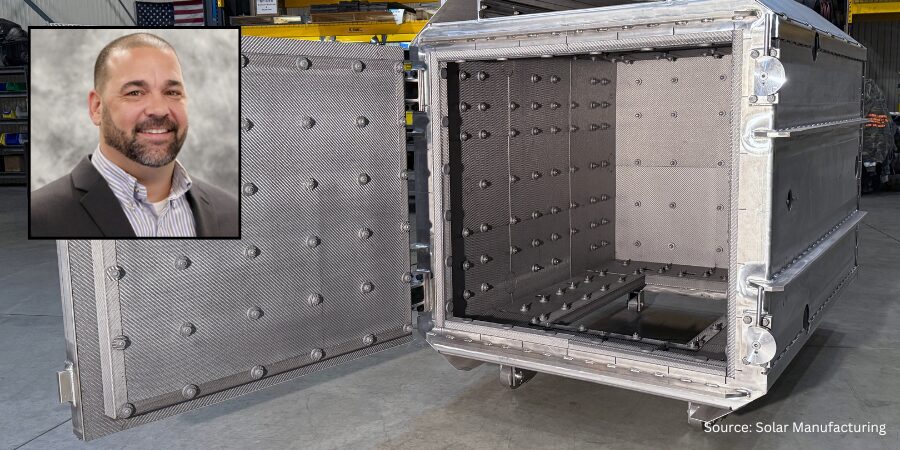
Mike Moyer Vice President of Sales Solar Atmospheres Souderton
These vacuum furnaces, produced by the heat treater’s sister company, Solar Manufacturing, feature large working hot zones (45” x 45” x 72”) and are rated for operations up to 2400°F with a precise temperature uniformity of ±10°F.
“We’re thrilled to add these advanced furnaces to Solar Souderton’s lineup,” said Mike Moyer, vice president of sales, at Solar Atmospheres. “Equipped with Solar Manufacturing’s latest control systems, they ensure efficient, safe operation — meeting our customers’ needs for competitive pricing and fast delivery. This installation reinforces our commitment to consistently high-quality service.”
More Solar Atmospheres News…
Robert Hill, FASM President Solar Atmospheres of Western PA
Solar Atmospheres of Michigan, Inc., announced the completion of its 20,000 square-foot facility expansion, marked by the official receipt of an occupancy permit from Chesterfield Township.
“Next week, we’ll begin the process of moving our Shipping and Receiving Department, along with other essential ancillary equipment, into the newly completed adjoining building,” said Bob Hill, president of Solar Atmospheres of Michigan. “This expansion is a vital step forward, enabling us to optimize workflow, boost production capacity, and further improve the quality of our vacuum heat treating services for our valued clients.”
The expanded facility will allow Solar Atmospheres of Michigan to streamline operations and meet growing customer demands from various industries.
The press releases are available in their original forms here and here.
Aalberts N.V. has reached an agreement to acquire 100% of shares of Paulo Products Company (Paulo), expanding the company’s geographical footprint in the U.S. The acquisition will bolster the Dutch company’s capabilities to provide heat treating, brazing, and metal finishing operations for the North American automotive, aerospace, defense, and energy sectors.
Stéphane Simonetta CEO Aalberts N.V.
Pending regulatory approval, the management team of Paulo, which operates five heat treatment facilities in the USA and one in Mexico, will work with the management of Aalberts Surface Technologies in North America. The transaction is expected to be finalized in the second quarter of 2025 and generate an annual revenue of approximately USD 105 million with 522 employees.
“We are excited about the growth potential in the different end markets and are looking forward to welcoming Paulo’s employees to Aalberts,” said Stéphane Simonetta, CEO of Aalberts N.V. “This strategic acquisition will further enhance our proximity in North America and Mexico as per our ‘thrive 2030’ strategy. Together, our leadership position will enable us to serve our customers with short lead times, high quality and full-service capabilities.”
The press release is available in its original form here.
Taiwan Hodaka Technology, an aerospace and automotive manufacturer, extends its market reach by adding an aluminum aging furnace to its heat treatment capabilities. The furnace, which is designed for aging using T77 technology, will allow the company to meet the highest safety and strength standards.
This is the first transaction between Taiwan Hodaka Technology, which is involved in the design and processing of parts made of aluminum alloys, and SECO/WARWICK. The furnace operates in the temperature range from 176° to 428°F (80° to 220°C) with a temperature uniformity in the last heating phase, of ±47.4°F (3°C) in accordance with the AMS 2750 standard.
“The solution supplied by SECO/WARWICK will allow us to enter a new market segment. We are a partner for many key players in the aviation industry. The T77 aluminum aging furnace will enable us to serve customer requirements even better. At the same time, the new technology will support our commitment to reducing our impact on the environment,” said Dr. Sam Chiang, vice president for R&D at Taiwan Hodaka Technology Co. Ltd.
Tomasz Kaczmarczyk, Sales Manager of the Aluminum Process and CAB Furnaces Teams, SECO/WARWICK
For heat treated alloys (2xxx, 6xxx and 7xxx series), the letter T and one or more digits are used after the alloy series symbol. The first digit is the most important, as it indicates the type of heat treatment applied to the alloy, while the remaining digits (if provided) indicate heat treatment variants or their modifications. The 7000 series of aluminum alloys have the highest strength of all other aluminum alloy series and are commonly used in aviation since they are held to the highest safety and strength standards.
“T7 denotes the process of solution heat treatment and artificial aging to an overaged state to obtain specific properties, e.g. increased corrosion resistance,” said Tomasz Kaczmarczyk, sales manager of the Aluminum Process and CAB Furnaces Team at SECO/WARWICK. “Sometimes, in addition to the digit denoting the standard heat treatment, an additional digit is used to denote modifications to the given treatment or stress relief procedures. For example, for 7xxx alloys, the symbol T77 denotes retrogression and re-aging. The use of this process improves the alloy’s corrosion resistance, which is so crucial in the production of aircraft parts. The applied technology will allow Taiwan Hodaka Technology to produce high-quality profiles used in the aviation industry in accordance with the AMS standard.”
Piotr Skarbiński Vice President of Aluminum and CAB Products Segment SECO/WARWICK
“The furnace on order equipped with electric heating will process 1500 kg of aluminum profiles with a maximum length of 5500 mm. This is a two-zone solution with a total heating power of 420 kW. The solution for aluminum aging, powered by electric heaters, eliminates the problem of CO2 emissions and is in line with the ecological trend increasingly common in heavy industry,” said Piotr Skarbiński, vice president of the CAB and aluminum products segment at SECO/WARWICK.
The furnace will be used at the company’s newly built plant in Taiwan.
The project partner was PEERENERGY, which offers thermal process consulting, project management, and equipment supply for the aerospace, military equipment, and semiconductor industries.
The press release is available in its original form here.
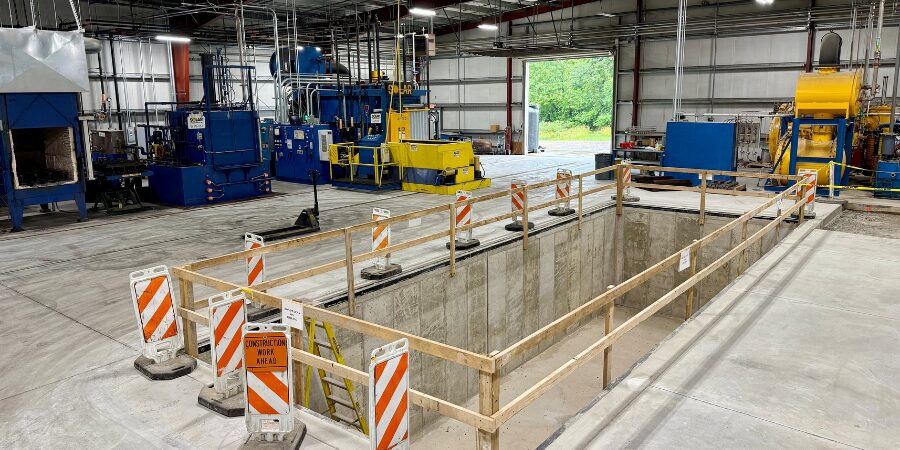
A major North American aerospace manufacturer has placed an order for a seventh vacuum furnace to expand capacity. This furnace is specifically designed for the heat treatment of high-performance engine components and is built to support rigorous production schedules.
Mark Hemsath President Nitrex Turnkey Systems
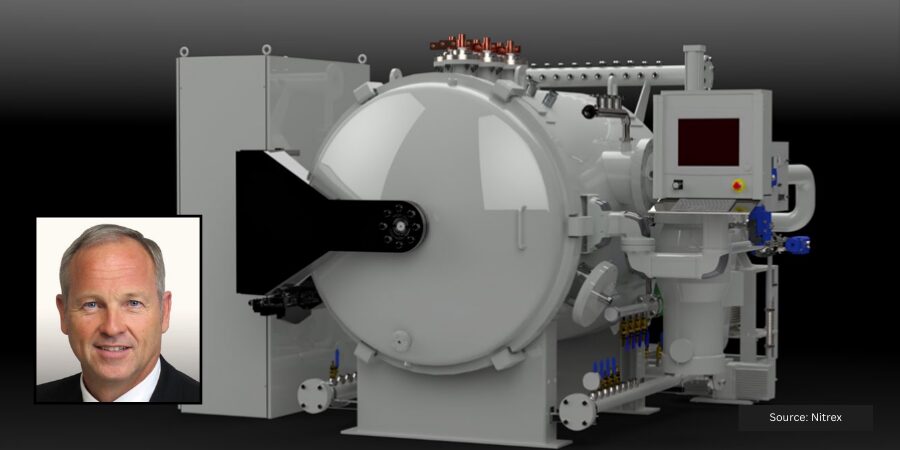
The vertical, large-precision vacuum furnace, built by G-M Enterprises, a Nitrex Vacuum company, is engineered to meet the aerospace company’s growing production needs and its demand for critical engine components. Six VVF series vacuum furnaces have previously been installed for the manufacturer to produce aircraft engine parts across a range of aerospace applications. The latest furnace order includes a 60” x 60” (1,524 mm x 1,524 mm) chamber with bottom loading, capable of handling loads up to 3,000 lbs (1,360 kg).
“The customer’s decision to expand with Nitrex reflects G-M Enterprises’ proven track record in furnace reliability,” said Mark Hemsath, president of Nitrex Turnkey Systems. “Our commitment to quality has anchored this partnership for over three decades.”
Jay Jefsen Regional Sales Manager Nitrex Vacuum
“Our long-standing relationship with this aerospace customer underscores Nitrex’s commitment to providing durable equipment backed by robust technical support,” said Jay Jefsen, regional sales manager for Nitrex Vacuum. “We are proud to contribute to their ongoing success and look forward to supporting their production goals with this latest addition.”
The furnace is scheduled for commissioning in April 2025.
The press release is available in its original form here.
FPM Heat Treating has announced the acquisition of a vacuum furnace, enhancing the company’s capabilities to serve the manufacturing community, especially in the automotive and aerospace sectors. The furnace will meet an increasing demand for a specialized family of parts.
Bob Ferry Vice President of Quality & Engineering FPM Heat Treating
The furnace, fully compliant with NFPA, NADCAP, AMS, CQI-9, and other critical industry standards, has been installed at FPM Heat Treating by Solar Manufacturing. With an operating temperature of up to 2400°F (1315.5°C) and a weight capacity of 5,000 pounds, the furnace processes at specialized heat treatment cycles critical for automotive components as well as precise specifications for applications within consumer products and the military/aerospace sectors.
“We are committed to meeting the growing demands of our clients in the manufacturing community,” said Bob Ferry, vice president of quality and engineering at FPM Heat Treating. “The new Solar furnace enhances our capabilities and enables us to maintain the highest standards of quality and efficiency in our operations.”
Main Image: Adam Jones, Midwest regional sales manager at Solar Manufacturing, viewing the vacuum furnace’s 48” x 48” x 72” deep insulated hot zone
The press release is available in its original form here.
A manufacturer of components for the aviation and energy sectors is expanding its production capabilities with the acquisition of a horizontal vacuum heat treatment furnace. Huake Casting Control (Shanghai) Technology Co., Ltd., will use the equipment to manufacture precision gas turbine components and aircraft parts.
A Vector® horizontal vacuum heat treatment furnace Source: SECO/WARWICK Group
The solution, a member of the Vector® family of furnaces provided by SECO/WARWICK Group, comes with a graphite heating chamber and a 15-bar absolute gas quenching system, can operate at temperatures up to 2550°F (1400°C), and has a maximum gross load weight of 1767 lb (800 kg).
“We were convinced to choose the Vector furnace because of its wide range of heat treatment processes and applications, fast cycles with high pressure gas quenching and low consumption of energy, process gases and other media. Another undoubted advantage is that Vector is environmentally friendly and has low process gas emissions,” said Li Naixu, chairman of Huake Casting Control (Shanghai) Technology Co., Ltd.
“Huake Casting Control Technology has become our customer as the result of the SECO/WARWICK Group’s increasing reputation in Asia. . . . We want to provide partners with solutions which will allow them to grow and achieve their intended goals related to production, quality and profitability,” said Liu Yedong, managing director of SECO/WARWICK China.
The press release is available in its original form here.
U.S. Army Receives T901 Engines for UH-60 Black Hawk Flight Testing
The U.S Army recently received two T901 engines from a global aerospace propulsion, services, and systems provider. The engines have been slated for the Improved Turbine Engine Program’s UH-60 Black Hawk integration and testing.
The T901-GE-900 was developed by GE Aerospace in response to a need from the U.S. Army for increased power and reduced fuel consumption with a design that incorporates 3D-modeling, the use of ceramic matrix composites (CMCs), and 3D-printed (additive) parts. The use of CMCs and additive manufacturing enables the engine to produce more power with less weight.
Amy Gowder President & CEO Defense & Systems GE Aerospace Source: GE Aerospace
“This delivery represents the beginning of a new era and a pivotal moment in our ongoing work with the U.S. Army,” said Amy Gowder, president and CEO, Defense & Systems at GE Aerospace. “The T901 engine will ensure warfighters will have the performance, power, and reliability necessary to maintain a significant advantage on the battlefield.”
This transaction follows the first ever ground run of an aircraft powered by a T901 engine, which took place in April, when a T-901 engine powered Sikorsky’s Future Attack Reconnaissance Aircraft (FARA) prototype, Radar X, gathering data to support the engine’s integration into the service’s UH-60 Blackhawk and AH-64 Apache.
“Our team is immensely proud to announce the latest T901 deliveries to the U.S. Army,” said Tom Champion, director of GE Aerospace’s T901 program. “At every stage, these engines have demonstrated a level of performance that will undoubtedly help meet the demands of military missions for decades to come.”
Source: GE Aerospace
The next-generation rotorcraft engines were unboxed during a ceremony at Sikorsky’s facility in West Palm Beach, Florida.
Photo: GE Aerospace T901 engines unboxed during a ceremony at Sikorsky’s West Palm Beach facility. Source: GE Aerospace
The press release is available in its original form here.