Today’s shared content is provided by the global information partnership between leading European heat treat news provider heatprocessing and the team at Heat TreatToday.
After the slowdowns in industry last year, do you have the travel bug yet? Our European media partner over at heatprocessing has the latest international events at your fingertips. Check out this brief article based on their Diary of events for a run-down of what you can expect.
Evolution and New Trends in Electrothermal Processes
Looking for some R&D in central Europe? With the themes of electrothermal processing and thermprocess, UIE 2021 on September 1st though 3rd will take place in the Czech Republic at the University of West Bohemia. Here is more on the history of the event from the event’s main page:
“The first International UIE Congress took place in La Haye, Netherlands, in 1936. Then, World War II interrupted all scientific meetings in Europe, so that the second Congress took place only in 1947, symbolically at the same place. Since this year, a series of 16 events of this kind were organized worldwide in 3–6-year intervals. The last ones took place in Durban/South Africa 2004, Krakow/Poland 2008, St. Petersburg/Russia 2012 and Hannover/Germany 2017. Now, the Czech committee of Electroheat and the University of West Bohemia organize the XIX International UIE Congress on Electrotechnologies for Material Processing.”
e-SEMINAR 4.1 Heat Treatment & Metallurgy
In this second digital annual industry event, SECO/WARWICK will be hosting a webinar/seminar with lectures and sessions all day on September 30th. If you were at the event last year, you know that the R&D, digitization, and heat treat fundamentals all worked their way into the schedule, and this year looks like it will be no different. Here is an excerpt from the heatprocessing website:
“Seco/Warwick and partners will be sharing their knowledge and experience – worldwide and for free! Acknowledged technology leaders and [professionals] will share their knowledge, expertise and experience online. You can be part of this virtual forum!”
Formnext
At least check out the pictures. While you may not be considering this heat treat solution at this time, this event will be held in a hybrid online-and-in-person way. Headquartered in Frankfurt, Germany, the additive manufacturing event will occur mid-November from the 16th to the 19th. Here is what the event page has to say:
“As the leading industry platform for additive manufacturing and industrial 3D printing, Formnext is the international meeting point for the next generation of intelligent industrial production . . . There's nothing like a live event. That was also your summary at the end of last year. And for us there was no better news. A cure for the virus has been found, vaccination campaigns and testing has picked up speed, and we too are ready for whatever may come.”
Burloak Technologies recently received and commissioned two furnace systems for use in both R&D as well as full-scale additive manufacturing production of aluminum products. Burloak reported that parts initially being processed in the two furnace systems included items for the Canadian Space Agency and revolutionary communications satellites.
The two furnace systems, from DELTA H, include a single-chamber (SCAHT®), fully-automated, horizontal quench, solution heat treating furnace capable of operating from ambient to 1200°F followed by rapid quenching in less than seven (7) seconds – a requirement for processing critical-application aluminum parts. This SCAHT® furnace is also capable of slow quenching geometrically complex AM parts. The systems provide precise duplication of heat treat cycles. Included is a comprehensive data acquisition system in full compliance with AMS2750F - Instrumentation Types A, B, or C and can produce irrefutable, scientifically defensible batch records.
Peter Adams Founder and Chief Innovation Officer Burloak
"DELTA H builds straightforward, easy to use heat treatment ovens that are exceeding our internal and customer quality requirements. Training personnel from operations, maintenance and quality is an easy and painless process. The transparency of the systems will be pleasing to customer, AS9100 and Nadcap auditors," said Peter Adams, Burloak Technologies chief innovation officer and co-founder.
Ellen Conway Merrill Vice President DELTA H TECHNOLOGIES, LLC
Ellen Conway Merrill
"The systems provided to Burloak represent a new chapter in our dedication to the aviation and aerospace industries as well as additive manufacturing in general, explains DELTA H's vice president Ellen Conway Merrill. "It is very humbling to be among the technology providers to such an innovative and pioneering company as Burloak Technologies."
Burloak also commissioned a dual chamber (DCAHT®) aluminum aging oven system.
Global bolt manufacturer Solvera Gawel Technology S.A. (SGT) is expanding their heat treat process line with a contract to purchase an electrical belt conveyor unit (ATE) comprising an electrical mesh belt PTE furnace. The new line will be intended mostly for carbonitriding and hardening processes (under endothermic atmosphere enriched with methane and ammonia) and for washing and tempering of high-quality screws and other hardware manufactured near Rzeszów.
SECO/WARWICK, the parent company of a North American based furnace manufacturer received the order. This ATE is almost identical to the first line they delivered in 2017. An electrical belt conveyor unit is a device that is well-suited for the manufacture of small hardware that requires perfect repeatability, therefore, this is one most often selected by manufacturers of bolts and hardware, and by commercial hardening plants.
Piotr Skarbiński Vice President of the Aluminum Process and CAB Products Segment SECO/WARWICK Group (Source: SECO/WARWICK)
The dynamic growth of this manufacturer of hardware items such as wood, metal and plastic screws and their pursuit of expansion in the Western markets led SGT to expand operations.
“I am very glad about the very dynamic growth of Solvera Gawel Technology and that the company again selected SECO/WARWICK," expressed Piotr Skarbiński, vice president, the Aluminum Process and CAB products segment.
The ATE process line which will be delivered in 2022 to the Solvera Gawel Technology S.A. plant will be adapted for operating with endothermic atmosphere supplied from an external endothermic generator.
No matter what causes poor quality and adds to your waste, scrap, and rework, the result is the same: it ties up resources, wastes time, and costs money. Reducing scrap and rework must be a priority in dealing with your quality control issues.
To drive consistent and sustainable yield, you must create a seamless workflow and understand the role that it plays in throughput, yield, energy, and quality control issues.
In this Technical Tuesday feature written by Bluestreak | Bright AM, learn about common mistakes that lead to quality control issues.
1. Misunderstanding Product Specifications
Information disconnects related to job processing are all too common and problematic. If part-processing specifications aren’t effectively communicated to everyone in the production chain, mistakes canwill happen. Paperwork can get lost or be outdated. Change orders may not be updated and communicated all the way to the individual frontline operator level. Corrective actions might be taken one time, but fail to become part of the standard operating procedures, as sometimes they should be.
Each of these avoidable quality control issues is solvable by creating an integrated end-to-end solution for production control, with everyone using the same database of information in real time.
2. Using Improper Tools
A common problem that will create quality control issues is when the wrong tools or improperly calibrated tools are used, including:
Equipment, furnaces, etc. that are not appropriate for the job
Equipment/machines that do not comply with the appropriate specification requirements
Machines and equipment that are not maintained properly (or timely)
Employees who are not qualified/certified/trained to operate a furnace or piece of equipment
Testing tools that are inadequate
3. Using Manual Processes
Exceptio probat regulam in casibus non exceptis. This Latin phrase translates to, “The exception confirms the rule in cases not excepted.” But you may be more familiar with the colloquialism, “lost in translation.” When you’re doing things manually, it’s easy for critical details to be either overlooked or lost in translation.
Quality control issues are extremely difficult to manage (and document) when you’re doing things via mostly manual processing. Your processing system must allow for capturing the appropriate information throughout the entire work order operation steps.
4. Failing to Plan
Failing to adequately plan out your work or using generic institutional knowledge, rather than your own actual production facility facts and operational data to make decisions, can lead to waste and ineffective decision-making.
Planning should include having an eye on continuous improvement in every department and production work center. Proper prior planning precludes poor performance (the 6 P’s of planning). This cannot be done unless you have the right system in place. One that provides the right information to the right people at the right time and collects the right information (in real time) as the work is being done.
5. Failing to Document
Companies that effectively improve their overall quality, reduce rework, and improve throughput and equipment utilization involve everyone in the production chain to document and evaluate each step in your processes. Bottlenecks and the cause of continuous processing errors cannot be determined and alleviated without properly documenting what actually happens in each step of processing.
It is crucial that you have an effective heat treat-specific manufacturing execution system and quality management system (MES/QMS) implemented in your organization that successfully addresses all five of these more common quality control issues. Also, using electronic job travelers (work orders) will reduce the amount of error-prone paper documents that flow throughout your production facility, while allowing your operators to enter the required information that feeds continuous improvement and verifies/validates compliance adherence. Additionally, outside auditors are always looking for better and meaningful documentation for your various production processes.
How to Tell If Your Quality Control Plan Is Failing
Unacceptable levels of scrap and rework may be two of the most obvious signs, but there are other warning signs that you should look for that indicate that your quality control plan needs work.
These include:
Missed deadlines and budgets
Higher than normal maintenance and/or support costs
Defect related repairs or rework
Failed audits (or too many audit findings)
Customer complaints
Failure to meet customer demands (or compliance with specification requirements)
These are often symptoms of an inefficient quality control and production Process. You’ll need to attack the root cause of the symptom if you expect to effectively change things. Don’t just mask the symptoms with temporary workarounds.
And don’t continue to ‘limp’ along with inadequate production control and quality management systems when, deep down inside, you know your business needs a better software system implemented as soon as possible. When the quality control plan is flawed (or lacks individual operator accountability), your operation ultimately pays the price.
Practice Proactive Quality Control
An integrated quality control/quality assurance system helps you better manage the many service-based heat treating processes for many different types of parts and sets the stage for continuous improvement. If you wait to react until problems become obvious, it’s too late, and you may have already lost a key customer to your competition. Reducing quality control issues requires a proactive approach.
Conclusion
Avoiding quality control issues within the various types of heat treat processes requires a proactive approach. Look for early warning signs, and take steps to make changes before they grow into bigger problems.
It’s essential to look at quality control issues holistically. Examine the entire production process from start to finish, analyzing each step along the way. It can be extremely challenging when you’re doing things manually on spreadsheets or utilizing software that’s been adapted from another industry. That’s because using the wrong software, i.e., ERP/MRP systems where the primary focus is inventory management or other outdated systems, typically requires expensive customizations (if they are even possible) to adequately handle the various heat treating workflow requirements.
About the Author: Bluestreak’s QMS was designed 15 years ago exclusively for the heat treating industry to drive quality control management from the front office directly to the production floor, with additional functionality added monthly, based on heat treat customer feedback. For more information, contact Bluestreak.
We are living in a volatile and ever-changing world right now— on many fronts. And so, when April's Industrial Heating Equipment Association’s (IHEA) Executive EconomicSummary begins, "Be careful what you wish for – you just might get it," it causes one to pause. There have been areas of growth during the early months of 2021, but as the report states, "With growth come the challenges of growth. . ."
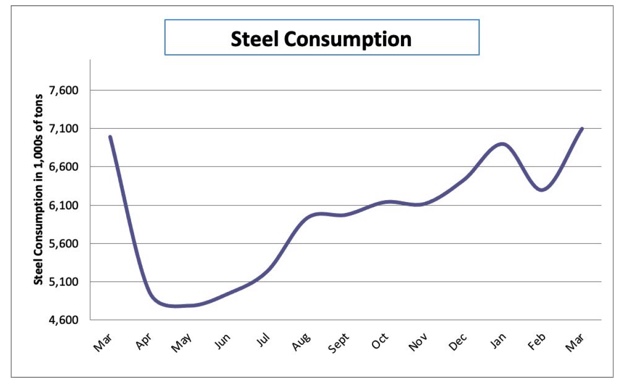
The demand for steel has been spiking and as a result the prices have been trending up as well. (Data courtesy of IHEA)
"Everything in this month’s report points to further growth and that is good except when it isn’t," the summary continues. What can challenge economic growth? Inflation and the three planks of inflation are commodity price hikes, wage hikes, and overall increase in money supply. Because of the growth, "the inflation threats are here to stay for a while." While the time frame isn't known, the two drivers that will contribute to its longevity or brevity are demand and supply. The report explains, "The demand side is pushing inflation for the moment – there is too much for the producers to keep pace with. The suppliers were not ready for this level of demand and remain a little cautious as far as how long that demand holds." It appears that the demand is real and that production will ramp up to meet the demand.
The one potential sticky point may be the money supply driver for inflation mentioned earlier. The economic report continues, "In normal circumstances there is a limit to inflation tolerance that stems from the willingness and ability to pay the higher prices." So, either the consumer has the means to pay the higher price or he deems it too high and will forgo the purchase. But today, with "close to $5.5 trillion in excess savings worldwide. . . the consumer will complain about the higher price, but then they will shrug their collective shoulders and pay anyway because they want the good or service offered and they have the money to pay for it. Those that will be left behind will be those that don’t have the money set aside or lack the ability to increase their personal money supply – the fixed income consumer and the company that is locked into their current pricing structure."
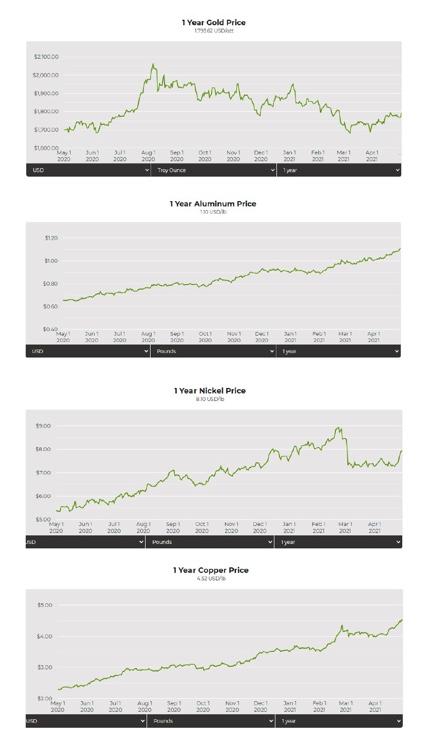
Copper, steel, aluminum and nearly everything else has seen sharp hikes to near record levels. The main reason for the price surge has been demand in excess of what had been predicted coupled with producers remaining on the cautious side. (Data courtesy of IHEA)
The report concludes with the expectation, barring no unexpected crisis, that "inflation pressures will ease by the end of the summer or early fall as the producers catch up with demand. This is the season of hurricanes and storms capable of creating issues that cascade through the markets and there is more fragility in the system than has normally been the case."
Check out the full report to see specific index growth and analysis which is available to IHEA member companies. For membership information, and a full copy of the 12-page report, contact Anne Goyer, executive director of the Industrial Heating Equipment Association (IHEA). Email Anne by clicking here.
“It is not that there is no longer anything to be concerned about as far as the economy is concerned, but the constant worries about whether the impact of the recession would fade seems to be ending. . . . The aggressive recovery predictions that were dismissed a month or so ago are now seen as the most likely.” This optimistic introduction leads February’s Industrial Heating Equipment Association’s (IHEA)Executive EconomicSummary.
There are three factors that account for this enthusiasm, the summary reports. The first is the acceleration of vaccine distribution. “The US is now ranked number five in the world in terms of numbers vaccinated (behind only a few Asian states like Japan and Taiwan).” This has helped to reduce pandemic protocols. The second factor is that consumers have money and are willing to spend it. The summary states, “There is an estimated $6 trillion on the sidelines between consumers, investors and the business community. The consumer alone sits on over $2 trillion.” And finally, the third factor is tied to the money that will be infused into the economy by the $1.9 trillion stimulus/rescue plan.
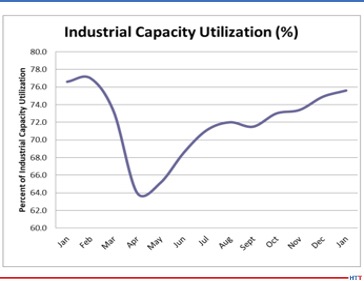
The measurement of capacity utilization is a key indicator for future activity. It basically measures how efficiently a manufacturer is operating – do they have slack capacity in terms of either the machinery or their workforce? At the moment, the capacity numbers are a very long way from provoking inflation.
But, there’s that “what if,” hanging out there. The report cautions, “There is always a caveat when talking economics and that stimulus money is behind some of the trepidation regarding the future of the economic growth pattern. The risk from the stimulus is that it will overheat the economy and trigger a serious burst of inflation. If that surge in prices is dramatic enough, it could provoke the Fed to hike rates and start to put a damper on the growth we are starting to see.”
There are three prime motivators for inflation. The first one, wage inflation, hasn’t been an issue since there are still millions of people out of work. The second motivator, which has been manifesting dramatically is the price of commodities. They have been rising quickly–think oil and lumber prices. The third motivator is the money supply issue which could potentially lead to much angst. “The US economy is about to get hit with nearly $2 trillion just when there is substantial growth underway. This has the potential to set off a cycle of money chasing money. There will be a substantial part of the consumer population that will see some of this money and will be eager to spend it. If there is too much demand and not enough supply the price of things will go up.”
In conclusion, it will be interesting to see the response from the Fed–currently, there doesn’t seem to be a desire to hike rates– as well as the spending of the consumer. Will they continue to spend on services or for long-desired products? Hopefully, there are economic sunny days ahead.
The purchasing managers’ index is fairly volatile at the moment, but the good news is that the numbers have been consistently in the 60s for the last several months and anything over 50 is considered expansionary.
Check out the full report to see specific index growth and analysis which is available to IHEA member companies. For membership information, and a full copy of the 12-page report, contact Anne Goyer, executive director of the Industrial Heating Equipment Association (IHEA). Email Anne by clicking here.
Stay buckled up, folks! The often-mercurial economic adventure continues. November’s Industrial Heating Equipment Association’s (IHEA)Executive Economic Summary addresses the crossroad and the economic forecasts that are trending. The summary begins, “The economy seems to be sitting at another crossroads, and thus far this year there have certainly been many of them. There are basically three forecasts in circulation as far as the coming year is concerned.”
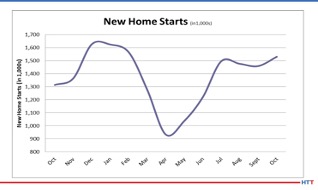
The pandemic shutdown did not affect the construction sector in a significant way, and in many respects, it accelerated demand for homes.
The report defines the three outlooks — the “V,” the “swoosh,” and the “W”– and analyzes which model seems most realistic right now based on real time data, although we know that can change at any moment. The preferred “V”outlook “holds that there will be a rapid rebound in the next quarter or two and this will yield a rebound nearly as quick as the decline. To be honest, the time for the ‘V’ option has largely passed by. We would have had to see some truly dramatic numbers appear by now.”
So, if the “V” is an unlikely option, the summary states the “swoosh” might be the best option: “It asserts that there will be continued real growth in the first quarter of 2021 but tempered a little by continued consumer trepidation and the impact of the continued shutdown. This means that there is not a rapid rebound, but a drawn-out version that starts to look real by the start of Q2.”
The report continues, “The remaining option is the ‘W’ or the double dip recession and that is nobody’s preference. This would be the result of another hard and comprehensive lockdown. It is not likely the entire country would be subject to such a shutdown, but certain states will be affected more than others.”
There is growth, however. As we look specifically at the November indices, all but three of the eleven measured are trending in a positive direction. The summary states, “There are several near universal factors that are driving all of the index readings at this point. The first is a growing level of confidence regarding the performance of the economy in 2021. . . . The second factor stems from the first. That surge of activity will strain capacity in many sectors. . . . and the third is the state of the global economy.”
The major users of steel include construction, vehicle manufacturing, and the oil and gas sector.
Stayed tuned! The end of 2020 and beginning of 2021 promises to be full of excitement.
Check out the full report to see specific index growth and analysis which is available to IHEA member companies. For membership information, and a full copy of the 12-page report, contact Anne Goyer, executive director of the Industrial Heating Equipment Association (IHEA). Email Anne by clicking here.
As the Heat Treat Today staff begins to power down and prepare to celebrate Christmas with our families, we wanted to take a moment to thank you all for extending your kindness, expertise, patience, and trust during this extremely unconventional year. There are many good memories, and we are grateful to have experienced this wild ride with you. We also look forward with hope and anticipation to the new year as we carry those valuable, growth-filled lessons from 2020.
Christmas helps us to focus on the hope, peace, joy, and love of the Good News for all people. Our wish for you today and in the year to come, is beautifully wrapped in the words of author Laura Cave, “Christmas is an invitation to discover Jesus Christ: the Prince of Peace. His life is a gift to you as disarming as a child, an acceptable sacrifice for your sin, and a path to legitimate peace inside and outside with God and with man.”
From the entire Heat Treat Today team, we wish you a very joyous and peace-filled Christmas.
Home heating oil is going for $1.49 per gallon. 525.4 gallons was just pumped into the two, 275-gallon fuel oil tanks in the basement of my 1900’s-era farmhouse. Eleven months ago, when I last filled those tanks, fuel oil was selling for $2.35 per gallon. $1.49 is the lowest price I’ve paid in the 10 years I’ve lived in this drafty old house, and it represents a 36% drop in price.
Let’s put the blame on fracking for the price drop. We can’t really blame COVID – although we can and should blame COVID for nearly everything else that went wrong in 2020, but not the drop in fuel oil prices specifically, and energy prices in general.
My acquaintance and friend, Dr. Mark W. Hendrickson, retired adjunct faculty member, economist, and fellow for economics and social policy with the Institute for Faith and Freedom (www.faithandfreedom.com) at Grove City College (www.gcc.edu), my alma mater, in western Pennsylvania, recently published a short and thought-provoking article about fracking. You can read Dr. Hendrickson’s entire blog post by clicking here (if you’re reading this in digital format – which apparently only roughly 30% of you are), or if you’re reading this in the “old-fashioned” print edition (roughly 70% of you!), I’ll summarize a few of the more salient points below, or you can jump on your computer and Bing or Google “mark hendrickson faith freedom why fracking is a big issue.” It will pop up as one of the first search results. More on this article in just one moment. But first …
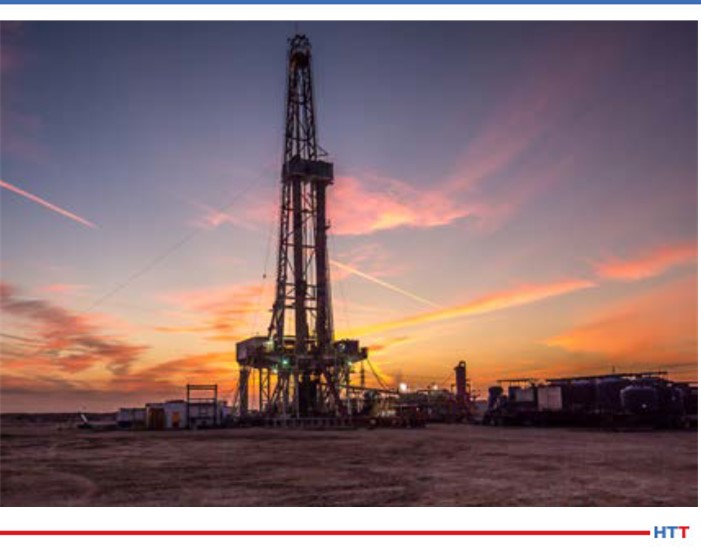
Since this issue covers heat treatments in the energy and medical industries, please notice the article in this issue that deals with heat treating a fracking pump valve seat. The article is an edited version of one of four Heat Treat Radio interviews conducted with Integrated Heat Treating Solutions CEO, Joe Powell. If you’re involved in the oil and gas industry or any other energy related industry, this fracking article will be of interest to you. Joe explains how his company more than doubles the life of a mission-critical valve seat in a down-hole fracking pump by introducing some very, very unique heat treating and quenching processes. (Spoiler: the secret is in the quenching!) Read and enjoy – or if you’d prefer to listen, click here.
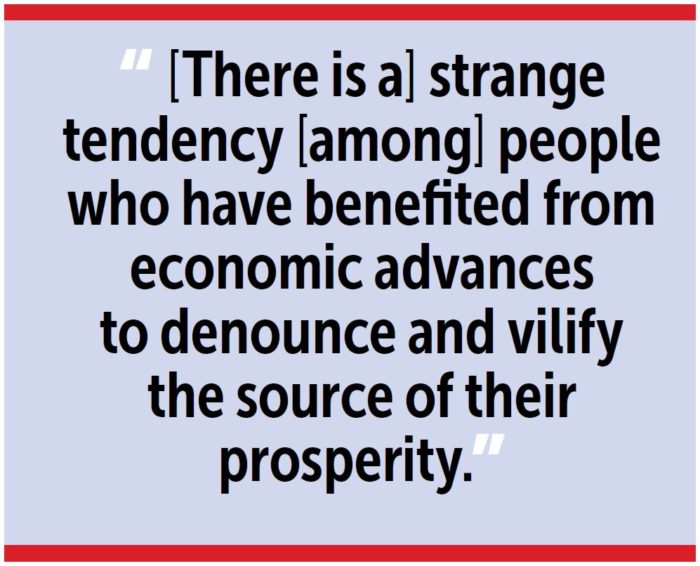
Now, back to Dr. Mark Hendrickson’s blog post on fracking, Why Fracking is a Big Issue. Dr. Hendrickson points out “the strange tendency of many people who have benefited from economic advances to denounce and vilify the source of their prosperity, a sort of ‘bite-the-hand-that-feeds-you’ phenomenon.” The “denouncing and vilifying” of fracking is one good example of this strange psychosis.
Hendrickson continues, “The enormous boost that cheap natural gas gives to the American economy is reason enough to continue with fracking, but there are also important geopolitical, health, and environmental benefits to natural gas.” Geopolitically, fracking has made the US energy independent. In terms of human health and safety, natural gas is “far safer for workers to extract than coal, and burning it causes much less pollution than coal.”
Much more could be said; much more issaid in Hendrickson’s short article. I recommend his article to you.
I like paying $1.49 per gallon for my fuel oil, but I’m not in favor of that price if there is an obvious harm being done to a specific person. Dealing with legitimate environmental, health, and safety issues verifiably caused by fracking is reasonable and good; completely eliminating fracking seems extreme. Long live $1.49 (or less) fuel oil prices for all!
Well, as we approach the end of November 2020 and assess the economic numbers from October, there is still no real clarity to bring a sense of understanding to our crazy year. As the Industrial Heating Equipment Association’s (IHEA)Executive Economic Summary’s October report begins, “To note that there is nothing about this year that could be considered even close to normal or predictable would be the understatement of the year, if not the decade. This was the most unanticipated and bizarre recession experienced in modern history as it was not organic in any sense. It was an imposed recession that resulted from the attempt to deal with the pandemic and all the numbers for the year have been skewed to the extreme.”
However, the reports states, “This month’s indices are far better than they were a month or so ago, but almost every one of these data points demands an explanation before we have an idea what they might be telling us about the economy.” Of the 12 indices examined, nine of them were trending positive and only three were heading downward. Interestingly, though, “that only tells part of the story.”
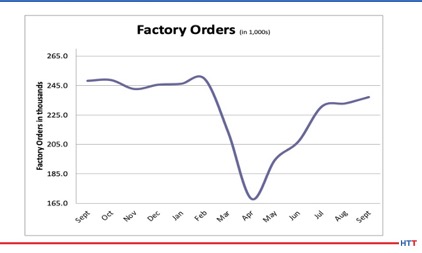
The rebound in demand for factory orders has been a bit more consistent than the demand for durable goods and this reflects some shifts in consumer demand. It has been pointed out that consumers have been shifting their purchasing from services to goods and that has been reflected in a variety of ways.
For example, take the data for housing starts. The summary states, “The index showed a decline, but the news has been full of very positive reports on the state of the housing sector. The index shows both the data on single family homes as well as the multi-family unit and there has been a reduction in interest in the apartment option of late.” Additionally, the demand for both single-family and existing homes has been very robust.
The auto sector has also seen interesting movement. RV sales have “never been stronger and the demand for larger vehicles has been strong as people intend to travel in them.”
“There have been several trends emerging over the last few months and the data in these indices reflect them.” The report continues, “The most obvious and expected has been the shift in consumer interest from service spending to buying goods.” Those sectors that have benefitted the most from the shift have been manufacturers, transportation companies, and importers. “The bulk of these purchases have been online and that has spurred dramatic growth in the parcel delivery sector.”
While the U.S. still doesn’t compete effectively in the production of consumer goods, “there has been an increase in demand for the sophisticated machines the US produces – especially in the realm of robotics and technology.”
Companies are turning to technology and robotics at a faster pace than ever and that boosts machine sales.
In conclusion, the reports shares, “The early indicators as far as the economy is concerned continue to be transportation and the credit environment and, in both cases, there is renewed confidence regarding the future. The unfavorable numbers (such as bankruptcy and collections and disputes) have stabilized.”
Check out the full report to see specific index growth and analysis which is available to IHEA member companies. For membership information, and a full copy of the 12-page report, contact Anne Goyer, executive director of the Industrial Heating Equipment Association (IHEA). Email Anne by clicking here.






 Source: heatprocessing
 Burloak Technologies recently received and commissioned two furnace systems for use in both R&D as well as full-scale additive manufacturing production of aluminum products. Burloak reported that parts initially being processed in the two furnace systems included items for the Canadian Space Agency and revolutionary communications satellites.