Ninety years is a remarkable milestone for any company. In the heat treating industry, where technologies, markets, and client expectations have continually evolved, reaching that anniversary requires more than longevity — it requires adaptability.
For W.H. Kay Company, that adaptability has been the defining characteristic since William Henry Kay founded the company in 1936, during the final years of the Great Depression. What began as a Cleveland-based manufacturer’s representative for Eclipse Combustion Equipment has grown into a company recognized throughout North America for combustion systems, used heat treating equipment, and practical process solutions.
Along the way, W.H. Kay has come to describe itself as “The Elder Statesman of Used Ovens and Treating Furnaces” — a moniker that reflects both the longevity of the business and the used-equipment specialty it developed over decades.
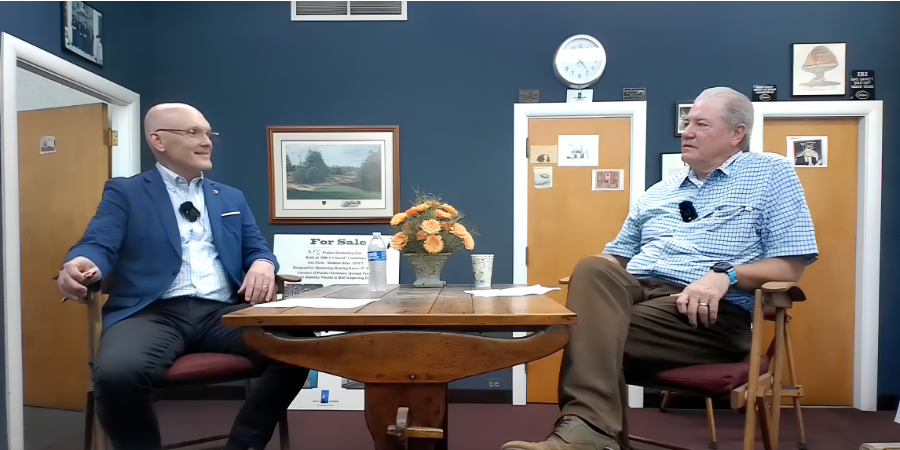
Today, under the leadership of third-generation owner Michael Kay, the company continues to serve commercial heat treaters and manufacturers while maintaining a relationship with Eclipse — now part of Honeywell — that has lasted since the day the company opened its doors.
“It’s amazing,” Kay said. “We’ve represented Eclipse since 1936.”
From Representation to Reinvention
W.H. Kay’s history reflects many of the changes that have shaped industrial thermal processing over the past nine decades.
William Henry Kay, Michael Kay’s grandfather, represented Eclipse Burners and Furnaces throughout northern Ohio. When Eclipse phased out of furnace manufacturing, Michael Kay’s father, Frank, and uncle, Bill, continued serving longtime clients who wanted additional furnaces like the Eclipse equipment they already operated. Using existing furnace prints, W.H. Kay had units fabricated to meet those clients’ needs.
That work eventually opened another avenue for the company as clients purchasing new equipment began asking what to do with their existing furnaces. W.H. Kay started accepting equipment on trade and finding new buyers for it, gradually establishing the used-equipment business that remains a significant part of the company today.
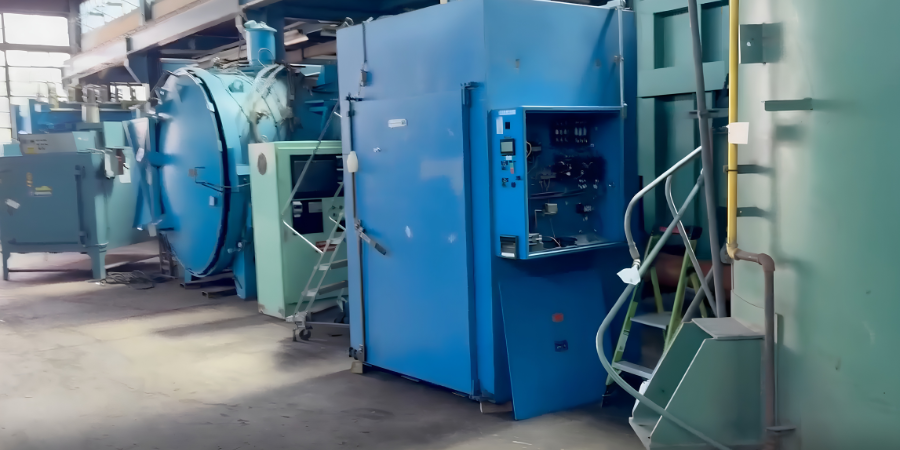
Today, the company’s Solon, Ohio, warehouse houses hundreds of pieces of equipment ranging from tempering ovens and pit furnaces to vacuum furnaces, integral quench systems, atmosphere generators, and ancillary processing equipment.
The Value of Staying Close to the Client
Although W.H. Kay still supplies combustion products and represents JPW Industrial Ovens & Furnaces, Kay believes the company’s success has never been about simply selling products. “If you’re just taking orders, you’re kind of in trouble,” he said. “You’ve got to be proactive.”
That approach extends to how the company works with clients, beginning with an understanding of the application rather than simply supplying the equipment initially requested. A client inquiring about a 1600°F furnace, for example, may actually be operating at only 900°F — a distinction that can point to an entirely different equipment solution. “You’ve got to listen,” he said. “What they’re asking for might not be what they actually need.”
The willingness to listen can remain valuable long after the initial sale. Kay recalled a recent call from a client who had purchased a furnace seven years earlier, and, no longer needing it, approached the company about buying it back. Other clients contact the company when they need something larger or have equipment they no longer use. For W.H. Kay, responding to those changing needs has made used equipment more than an inventory business; it has become another way to provide clients with options.
Providing a used-equipment option does not, in Kay’s experience, come at the expense of new furnace sales. Over his four decades in the industry, he said, clients who intend to purchase new equipment generally do so, while those considering used equipment often have a different set of requirements. “In the course of 40 years, I’ve never seen a used [furnace] take over a new account,” he said. “If people are buying new, they’re buying new. If they’re buying used, they’re buying used.” Instead, he sees used equipment as another way to help clients solve a problem.
If a manufacturer needs an oven immediately rather than waiting several months for a new build, used equipment can provide an option that better fits the client’s timeline. “We could quote him a new one in 16 weeks,” Kay said. “Or we could have one in four days.” With hundreds of pieces of equipment in its Solon warehouse, the company can sometimes match a client’s requirements with a unit already in inventory, providing an alternative when lead time is as important as the equipment itself.
Understanding those circumstances requires more than waiting for an inquiry. It also means getting out of the office and spending time with clients. “You’ve got to get in the flow,” he said.

Whether checking on a furnace sold years earlier or simply stopping in to ask how things are going, those visits help the company stay aware of how clients’ operations and equipment needs are changing. A conversation might reveal a furnace the client no longer uses, a need for something larger, or anther equipment requirement that W.H. Kay can help address.
“My father used to say you can waste a lot of time coming into the office every day,” Kay recalled. “You need to be out with [clients].”
The practice has endured even as industrial sales have changed around it. Kay remembers beginning his career in 1985 carrying a substantial Eclipse product catalog on sales calls, followed by the arrival of fax machines that dramatically shortened the time required to submit and acknowledge orders. Email and the internet have transformed the process again, while the number of salespeople regularly making in-person calls has declined. “In some cases,” he said, “people tell me they haven’t seen a salesperson in six months.”
For W.H. Kay, continuing to make those visits is less about maintaining an old-fashioned sales practice than staying close to the client. The tools of industrial sales may have changed considerably over 90 years, but the company still sees listening, understanding the operation, and building rapport as essential to finding the right solution.
Listening before selling, understanding the application, and building long-term relationships have remained central to the company as the business has weathered changing technologies, shifting markets, and multiple generations of industrial manufacturing.
Creating Your Own Good Luck
W.H. Kay’s nine decades have included more than changes in how equipment is bought and sold. The applications themselves continue to evolve.
Kay has seen growing activity around aluminum heat treatment, including aging and drop-bottom furnace applications, as manufacturers pursue lighter materials. The company has also supplied ovens for composite curing and other lower-temperature processes. Additive manufacturing presents another evolving area; even when parts are produced through 3D printing, Kay noted, thermal processes such as stress relieving can remain necessary.
Through those changes, Kay expects industrial heating and thermal processing to continue finding applications in emerging manufacturing technologies. The greater lesson he draws from more than four decades in the business, however, is less about predicting which technology or market will come next than about remaining engaged enough to respond when it does.
Kay returned to one idea again and again: success isn’t about waiting for opportunities to arrive — it’s about putting yourself where they can happen. Whether checking in on clients, making sales calls, or simply staying engaged with the industry, he believes consistent effort creates its own momentum. The advice he offers today is the same philosophy that has guided his career for more than four decades.

“Create your own good luck,” Kay said. “Keep at it. Get out of the office.”
Ninety years after William Henry Kay founded the company, the equipment, technologies, and methods of doing business have changed considerably, but the philosophy remains much the same: listen to clients, stay engaged, and keep showing up. It continues to guide his company — one client visit, one solution, and one furnace at a time.
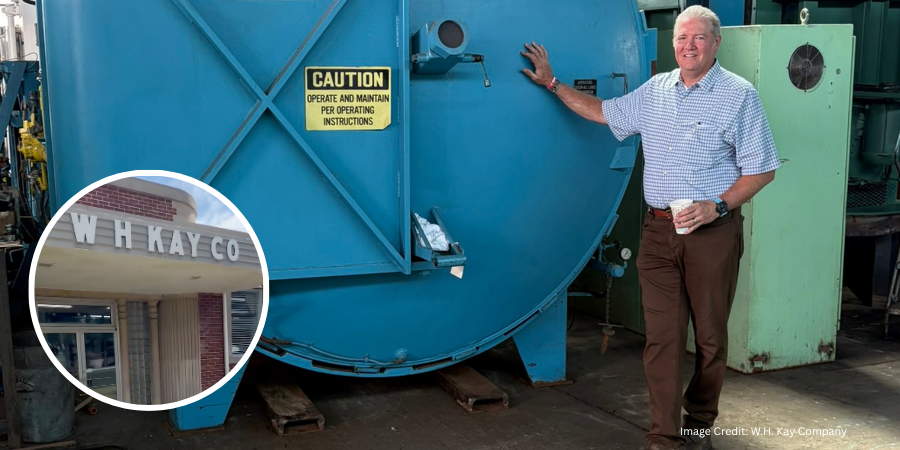
Main image shows Michael Kay posing with a vacuum furnace with a photo inset of the entrance to the W.H. Kay facility. | Image credit: W.H. Kay Company
If you have any comments or queries on this article, let us know at editor@heattreattoday.com.