young metallurgical consulting

Meeting Heat Treat Standards: 10 Tips and Tricks

OCWant a free tip? Check out this read of some of the top 101 Heat Treat Tips that heat treating professionals submitted over the last THREE YEARS. These handy technical words of wisdom will keep your furnaces in optimum operation and keep you in compliance. If you want more, search for "101 heat treat tips" on the website! This selection features 10 tips to meet heat treat industry standards.

Also, in this year's show issue, Heat Treat Today will be sharing Heat Treat Resources you can use when you're at the plant or on the road. Look for the digital edition of the magazine on September 13, 2021 to check it out yourself!


Compliance Issues? Try On-Site Gas Generation

On-site gas generation may help resolve compliance issues. Growth and success in thermal processing may have resulted in you expanding your inventory of reducing atmosphere gases. If you are storing hydrogen or ammonia for Dissociated Ammonia (DA), both of which are classed by the EPA as Highly Hazardous Materials, expanding gas inventory can create compliance issues. It is now possible to create reducing gas atmospheres on a make-it-as-you-use-it basis, minimizing site inventory of hazardous materials and facilitating growth while ensuring HazMat compliance. Modern hydrogen generators can serve small and large flow rates, can load follow, and can make unlimited hydrogen volumes with virtually zero stored HazMat inventory. Hydrogen is the key reducing constituent in both blended hydrogen-nitrogen and DA atmospheres—hydrogen generation (and optionally, nitrogen generation) can be used to provide exactly the atmosphere required but with zero hazardous material storage and at a predictable, economical cost.

(Nel Hydrogen)


Inspection Mistakes That Cost

Rockwell hardness testing requires adherence to strict procedures for accurate results.  Try this exercise to prove the importance of proper test procedures.

  • A certified Rc 54.3 +/- 1 test block was tested three times and the average of the readings was Rc 54 utilizing a flat anvil.  Water was put on the anvil under the test block and the next three readings averaged Rc 52.1.
  • Why is it so important that samples are clean, dry, and properly prepared?
  • If your process test samples are actually one point above the high spec limit but you are reading two points lower, you will ship hard parts that your customer can reject.
  • If your process test samples are one point above the low spec limit but you are reading two points lower, you may reprocess parts that are actually within specification.
  • It is imperative that your personnel are trained in proper sample preparation and hardness testing procedures to maximize your quality results and minimize reprocessing.

(Young Metallurgical Consulting)


Where You Measure Matters

Eugene Gifford Grace (August 27, 1876 – July 7, 1960) was the president of Bethlehem Steel Corporation from 1916 to 1945. He also served as president of the American Iron and Steel Institute and sat on the board of trustees for Lehigh University, of which he was an alumnus. One of his famous quotes is as follows:

“Thousands of engineers can design bridges, calculate strains and stresses, and draw up specifications for machines, but the great engineer is the man who can tell whether the bridge or the machine should be built at all, where it should be built, and when.”

If you check out the additional accomplishments of Mr. Grace, you will see that he was a successful and smart person. Maybe all of us are not capable of reaching such breadth of vision as he articulated above, but as heat treaters, do we simply accept the specification given? Or do we stop to ask if the specification has been properly determined?

With modern computer added stress analysis (FEA), we have at our fingertips a way to move beyond both the “guess and test” and the “copy the historical spec” methods of determining the case depth. Within “guess and test,” of course there are scientific guesses and scientific wild guesses. If you are using a wild guess, chances are that the field is the test lab!
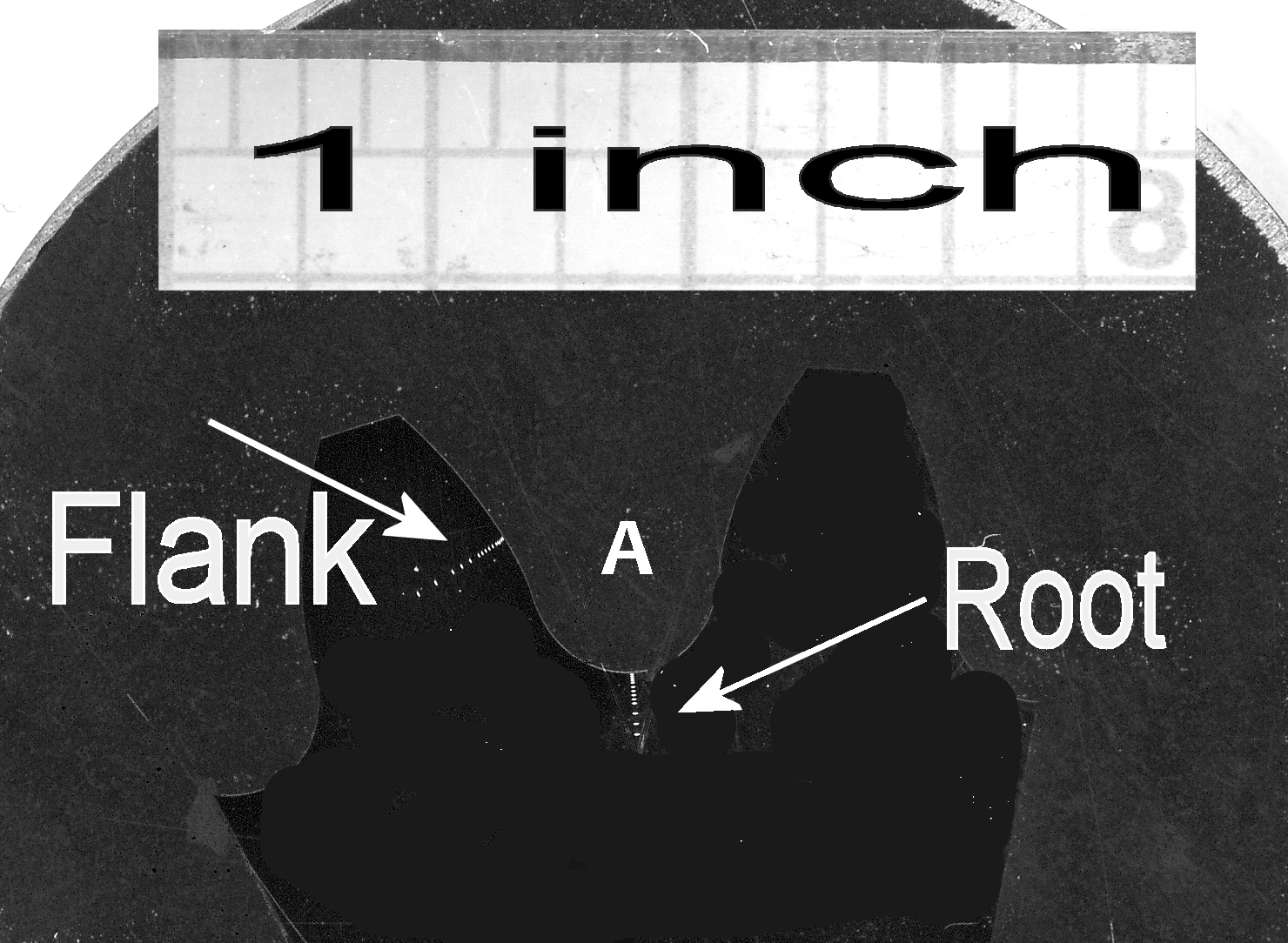
Figure 1. Metallurgical mount holding a cross-section of the steel gear.

Especially for carburized components, deeper case is more time in the furnace, and thus more expensive. I continue to wonder why, if even back in the 1950s, thousands of engineers were available who could calculate stresses and strains and thus set a quantitative foundation for a case depth, in 2019, so few people take advantage of modern technology to optimize the cost of their products.

If you are not ready to take this big step toward design optimization, maybe you would consider always using effective case depth, based on hardness and thus linked to tensile strength, instead of total case depth, which is not linked to any durability or strength criteria.

Figure 1 shows the metallographic cross-section that was used to measure the hardness. Each white pin point is a Knoop 500 gram hardness indentation. The cross-section of the gear was mounted in black epoxy resin. Figures 2 to 4 show the data collected to determine the effective case depths to the common Rockwell C 50 criteria.
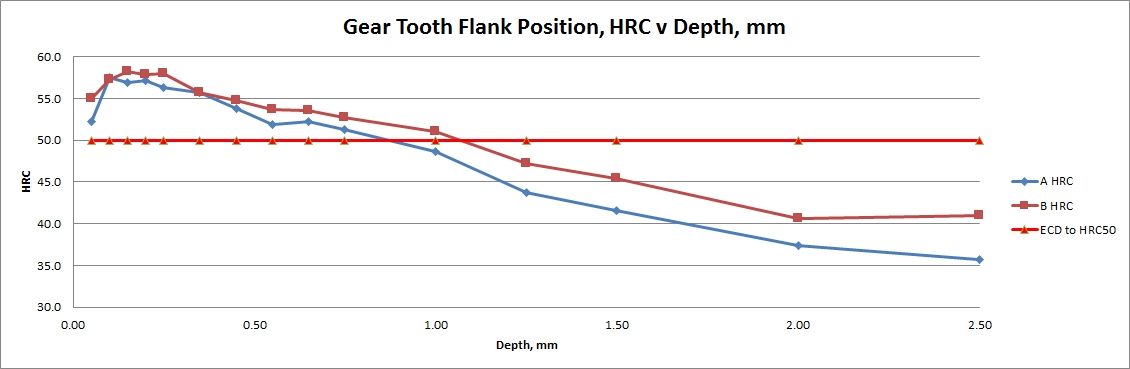
Figure 2. Knoop 500 gram hardness data converted to Rockwell C at the tooth flank.
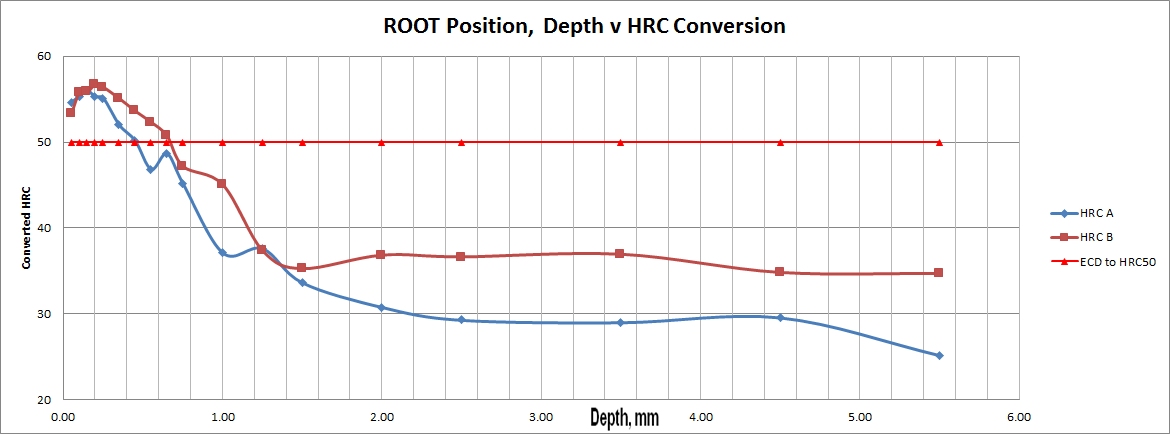
Figure 3. Same data but for Root position.
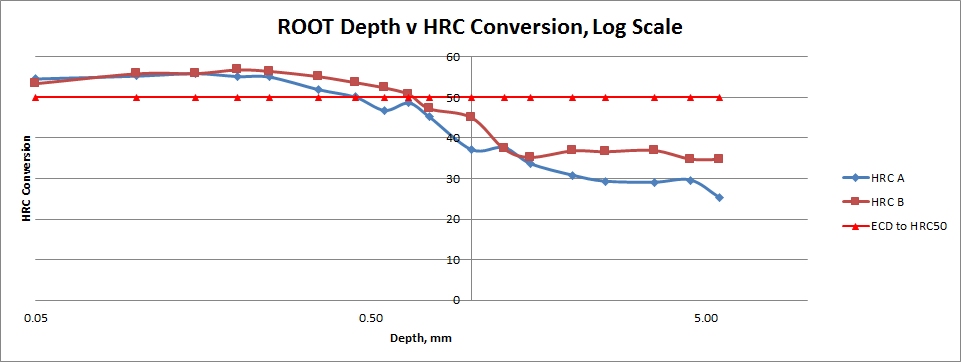
Figure 4. Same data as shown in Figure 3, near surface information easier to see.

The effective case depth is the depth where the hardness dips below HRC50. For Gear Tooth Flank A, that value was 0.85 mm. For another gear from the same lot, it was over 1.08 mm. But for the root areas, between the teeth—the high-stress area, the effective case depths were only 0.45 and 0.65 mm, respectively. Figure 3 shows the same data as Figure 2, but using a logarithmic scale, illustrating what’s going on near the surface layers more clearly.

In any case, there’s a big difference between the two test locations, and this shows the importance of making sure that all relevant features of the component are adequately characterized!

(Aliya Analytical, Inc.)


AMS2750 Is Golden

This standard is gold and unfortunately has a bad rap today because companies feel it’s just added cost into the process. Today’s technology means you can afford AMS2750E compliant controllers and digital recorders for only a few hundred dollars above a standard offer. This investment will be paid back many times over due to the longer lifetime expected with a quality instrument as well as the quality benefits from better drift performance between calibration intervals, redundant recording (in case of record loss), and overall accurate temperature control, leading to less rejects and reduced rework.

(Eurotherm)


Snagged T/C Wire – Avoid It

Try not to use insulated thermocouple wire if you snag the insulation off the outerjacket along the length of the wire. This may cause the inner insulation to fail andcause low temperature readings.

(WS Thermal)


Order SAT Probes All at Once

Place a yearly blanket order for your SAT probes and ask that they are made from the same coil. This will give you the same correction factors and temperature tolerances.

(GeoCorp)


Out of Control Carburizing? Try This 11-Step Test

When your carburizing atmosphere cannot be controlled, perform this test:

  1. Empty the furnace of all work.
  2. Heat to 1700°F (926°C).
  3. Allow endo gas to continue.
  4. Disable the CP setpoint control loop.
  5. Set generator DP to +35°F (1.7°C).
  6. Run a shim test.
  7. The CP should settle out near 0.4% CP.
  8. If CP settles out substantially lower and the CO2 and DP higher, there’s an oxidation leak, either air, water or CO2 from a leaking radiant tube.
  9. If the leak is small the CP loop will compensate, resulting in more enriching gas usage than normal.
  10. Sometimes but not always a leaking radiant tube can be found by isolating each tube.
  11. To try and find a leaking radiant tube, not only the gas must be shut off but combustion air as well.

(AFC-Holcroft)


3 Tips to Meet Temperature Uniformity Surveys

  1. Adjust the burners with some excess air to improve convection.
  2. Make sure that the low fire adjustment is as small as possible. Since low fire will provide very little energy, it will make the furnace pulse more frequently and this will improve heat transfer by convection and radiation.
  3. Increase internal pressure. This will “push” heat to dead zones allowing you to increase your coldest thermocouples (typically near the floor and in the corners of the furnace).

(Nutec Bickley)


CQI-9 Best Practices

Whether you need to meet rigid CQI-9 standards or not, what are the top 3, nay 4 best practices that nearly every in-house heat treat department ought to follow to make sure their pyrometer stuff is together?

Daily furnace atmosphere checks. Use an alternative method to verify your controls and sensors are operating properly and that there are no issue with your furnace or furnace gases.

Daily endothermic generator checks. Using an alternate method to verify your control parameter (dew point typically) or the gas composition is accurate will alleviate furnace control issues caused by bad endothermic gas.

Verify/validate your heat treat process every 2 hours OR make sure process deviations are automatically alarmed. this is a solid practice to ensure your controls and processes are running properly. This practice can help ensure that parts are being heat treated to the proper specification intended.

Conduct periodic system accuracy tests (SATs) per pre-defined timelines in CQI-9. Good pyrometry practices are an essential part of heat treatment. Because of the importance of temperature in heat treatment, ensure timeliness of all pyrometry practices addressing thermocouple usages, system accuracy tests, calibrations, and temperature uniformity surveys.

(Super Systems, Inc.)


Inspection Mistakes That Cost

Rockwell hardness testing requires adherence to strict procedures for accurate results.  Try this exercise to prove the importance of proper test procedures.

  • A certified Rc 54.3 +/- 1 test block was tested three times and the average of the readings was Rc 54 utilizing a flat anvil.  Water was put on the anvil under the test block and the next three readings averaged Rc 52.1.
  • Why is it so important that samples are clean, dry, and properly prepared?
  • If your process test samples are actually one point above the high spec limit but you are reading two points lower, you will ship hard parts that your customer can reject.
  • If your process test samples are one point above the low spec limit but you are reading two points lower, you may reprocess parts that are actually within specification.
  • It is imperative that your personnel are trained in proper sample preparation and hardness testing procedures to maximize your quality results and minimize reprocessing.

(Young Metallurgical Consulting)


Check out these magazines to see where these tips were first featured:



Meeting Heat Treat Standards: 10 Tips and Tricks Read More »
Tips #13 – 23 – 33 – 43

One of the great benefits of a community of heat treaters is the opportunity to challenge old habits and look at new ways of doing things. Heat Treat Today’s 101 Heat Treat Tips is another opportunity to learn the tips, tricks, and hacks from some of the industry’s foremost experts.

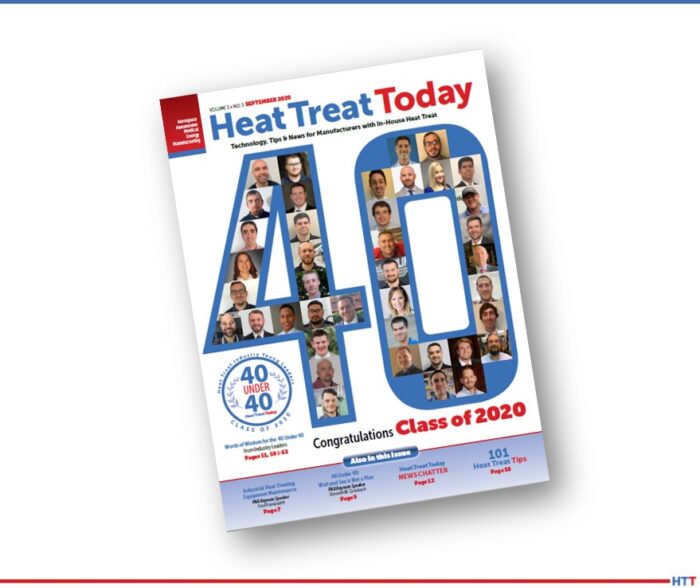
Heat Treat Today’s latest round of 101 Heat Treat Tips is featured in Heat Treat Today 2020 fall issue (also featuring the popular 40 Under 40).

Today’s selection includes four tips from Leybold Vacuum USA, Young Metallurgical Consulting, Dr. Valery Rudnev, and Chiz Bros. Increase output, decrease production costs, hit target temperature, and avoid thermal shock with these four tips.


Heat Treat Tip #13

New Diffusion Pump Technology Increases Production Output

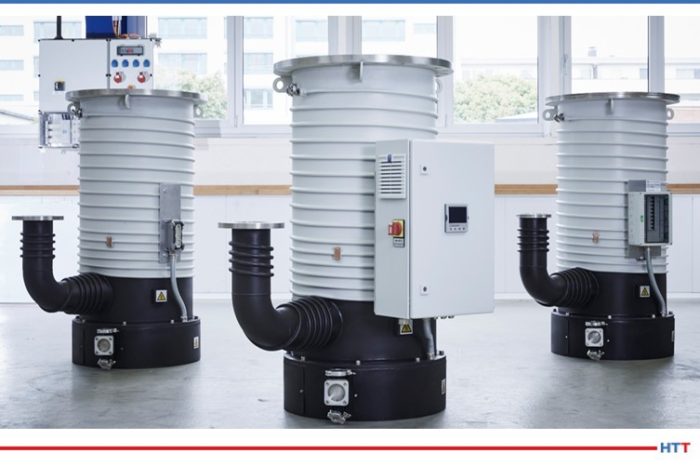
Gain immediate positive net cash flow with a lease to own finance option by upgrading your diffusion pumps with the new immersion heater technology. The new style heater will extend oil life and reduce energy consumption. New heater technology can increase production by eliminating the need of dropping your pump every time you change oil for faster maintenance turn around. Drop in place pump design with improved performance.

NEW-DIJ Diffusion Pumps with smart heater technology by Leybold Vacuum
Source: Leybold Vacuum USA

(Leybold Vacuum USA)


Heat Treat Tip #23

Inspection Mistakes That Cost

Rockwell hardness testing requires adherence to strict procedures for accurate results.  Try this exercise to prove the importance of proper test procedures.

  • A certified Rc 54.3 +/- 1 test block was tested three times and the average of the readings was Rc 54 utilizing a flat anvil.  Water was put on the anvil under the test block and the next three readings averaged Rc 52.1.
  • Why is it so important that samples are clean, dry, and properly prepared?
  • If your process test samples are actually one point above the high spec limit but you are reading two points lower, you will ship hard parts that your customer can reject.
  • If your process test samples are one point above the low spec limit but you are reading two points lower, you may reprocess parts that are actually within specification.
  • It is imperative that your personnel are trained in proper sample preparation and hardness testing procedures to maximize your quality results and minimize reprocessing.

Properly preparing a hardness sample can save time and money.

Source: Young Metallurgical Consulting

(Young Metallurgical Consulting)


Heat Treat Tip #33

Not Able to Hit Target Temperature — What To Do

Situation: Customer had an available 100kW/1kHz inverter and needed to heat 1-in.-diameter carbon steel bar to hot working temperature (2000°F). It was a low production application and cycle time was not critical. However, regardless of the heat time and irrespective of using maximum available output power, it was not possible to reach required target temperature. Actually, after reaching about 1470o°F there was no noticeable temperature rise regardless of increased heat time.

Solution: Severe eddy current cancellation was responsible for a failure to reach target temperature. The use of frequencies 6 kHz and greater can easily help to accomplish the goal. As a simple “rule-of-thumb,” in order to provide an efficient heating and avoid eddy current cancellation in through heating applications (e.g., through hardening or hot working), it is necessary to choose a frequency that will guarantee that the “bar diameter-to-penetration depth” ratio exceeds 3.6 at a target temperature.

(Dr. Valery Rudnev, FASM, Fellow of IFHTSE/Professor Induction/Director Science & Technology, Inductoheat Inc., An Inductotherm Group company)


Heat Treat Tip #43

Brick to Fiber to Avoid Thermal Shock

Thermal shock is a regular issue with hard refractory and brick-lined furnaces due to the constant changes in temperature for batch annealing. Switching an old furnace over to ceramic fiber is an easy process that can save time and money.

(Chiz Bros)


Tips #13 – 23 – 33 – 43 Read More »

Heat Treat Tips: Industrial Gases & Combustion

During the day-to-day operation of heat treat departments, many habits are formed and procedures followed that sometimes are done simply because that’s the way they’ve always been done. One of the great benefits of having a community of heat treaters is to challenge those habits and look at new ways of doing things. Heat Treat Today’s 101 Heat Treat Tips, tips and tricks that come from some of the industry’s foremost experts, were initially published in the FNA 2018 Special Print Edition, as a way to make the benefits of that community available to as many people as possible. This special edition is available in a digital format here.

Today we continue an intermittent series of posts drawn from the 101 tips. The tips for this post can be found in the FNA edition under Industrial Gases and Combustion


Heat Treat Tip #11

Safety Shutoff Valves Can Plug

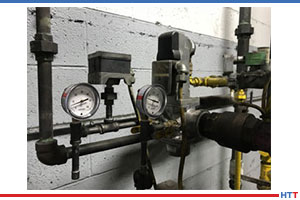
New safety shutoff valves without a manual reset lever contain filter screens that can plug with carbon and reduce endo flow. Monitor inlet and outlet pressure of the valve to prevent atmosphere issues.

Submitted by Young Metallurgical Consulting


Heat Treat Tip #12

Pressure vs. Flow

While it’s very important to have adequate gas and air supply pressures for proper combustion, this alone doesn’t guarantee sufficient flow. Flow is the volume of a fluid that passes a point in a given amount of time. It can be measured in units such as ft3/hr, m3/s, etc. Flow can also be thought of as an area multiplied by a velocity. For example, area can be expressed in ft2, and velocity can be expressed in ft/s. ft2 multiplied by ft/s yields ft3/s, which is a unit of volume flow. An orifice is a device commonly used to measure flow in the combustion industry. The orifice incorporates a plate with a small hole in it. As the fluid passes through the plate, its velocity increases to compensate for the reduction in cross-sectional area in order to maintain constant volume flow.

This creates what we call a pressure drop across the orifice. Total pressure consists of both a static component and a velocity component. When a fluid is at rest, all of its pressure is static. As a fluid starts to flow, it develops a velocity pressure. This velocity pressure increases as, you guessed it, velocity increases. In order to maintain a constant total pressure, the static pressure decreases to compensate. An orifice plate has a static pressure tap located on each side of it. As a fluid passes through an orifice plate, its velocity pressure increases, and its static pressure decreases. Therefore, the static pressure on the downstream side of the orifice plate will be lower than that on the upstream side. It is this static pressure drop or differential that provides us with a direct indication of the flow rate.

When burners are rated by the manufacturer, they are tested in a laboratory environment. The flow of both gas and air are adjusted to precise values as measured by meters. The pressure drops for gas and air are measured and recorded. These values are provided to the customer so that he can duplicate the adjustments in the field. If an obstruction occurs in a pipeline, this will likely reduce the flow rate. Also, settings can and do change over time due to valve drift, ambient temperature changes, etc. Measurement of the static supply pressure alone will not provide any indication of a problem. Therefore, it’s very important to check differential pressures for gas and air periodically in order to ensure proper flow, and hence proper combustion.

Submitted by WS Thermal

Heat Treat Tips: Industrial Gases & Combustion Read More »

Heat Treat Today’s Meet the Consultants: John Young

Heat Treat Today recently unveiled its Heat Treat Consultants page in the October 2018 print edition (available in digital format here) and at FNA in Indianapolis, Indiana. We offer this comprehensive listing of heat treat industry consultants as part of our efforts to help minimize the effects of heat treat “brain drain.” With so many heat treat brains growing older, the expertise that once used to reside inside of manufacturing operations is dwindling. Where, then, do manufacturers with in-house heat treat departments go when they need heat treat answers?

Turn to Heat Treat Today and our comprehensive list of heat treat industry consultants, which we will introduce to you one by one in this occasional feature, “Meet the Consultants”. There is no more comprehensive list of heat treat consultants. Learn more about John Young of Young Metallurgical Consulting, and then click through to the page to read more details about each consultant. We are adding more regularly. Contact them directly, or call us and we’ll introduce you to them. Whether it’s a technical process question, a safety concern, a compliance issue, or a business related question, one of our heat treat consultants will be able to help. If you are a consultant and would like to be listed, please contact Doug Glenn


Name: John Young
Company Name: Young Metallurgical Consulting
Location: West Bloomfield, Michigan, USA
Years In Industry: 30+
Consulting Specialties:

  • Metallurgy, Heat Treating
  • Sample Preparation & Hardness Testing
  • Training, Inspection, Quality Control
  • Leadership & Management

Send an email | Website | Phone: 724-923-8089

Briefly:

John Young says he “was born in a heat treat. My dad was a heat treater, and I would go to the plant on weekends with him when I was about 6 or 7 years old. I  would spend a lot of time raising and lowering the lid on a homo carb and thinking it was great fun. During the summer, I was a maintenance helper in the plant and got all of the dirty cleanup duties.” In 2016, after over thirty years experience in various roles throughout the heat treat industry, John Young launched Young Metallurgical Consulting, which works with in-house heat treat departments to teach the day-to-day processes necessary to manage and improve their area of operation. His purpose is to answer the question, “Now that I have a heat treat furnace, what am I supposed to do with it?” This includes providing training workshops to the new-to-the-industry heat treating employee as well as going beyond the classroom with instruction which he presents as an adjunct professor of metallurgical engineering at Macomb Community College and which he shares with experienced employees in the field. His career has included multiple opportunities to lead and inspire employees toward quality work and service to the customer.

Publications or Significant Accomplishments:

  1. Received B.S Metallurgical Engineering, Michigan Tech University.
  2. Received Master of Business Administration, Michigan State University
  3. Began career as a blast furnace engineer, worked as a quality manager responsible for quality function at a company with 45 heat treat staff, training furnace operators in basic metallurgy and inspection techniques. Became familiar with auto, heavy equipment and auto industries utilizing batch, continuous belt, and shaker hearth furnaces.
  4. Worked in the family heat treat business as Quality Manager and Plant Manager until father died and business was sold.
  5. President of a 25-person heat treat company with complete authority and responsibility. Provided neutral hardening, carbonitriding and deep case carburizing to auto, heavy truck and railroad industries.
  6. Vice-president/general manager at a 50-person operation utilizing four continuous belt furnaces processing 50 MM lb/yr of threaded fasteners to the auto industry. Approved source for induction hardening Taptite fasteners.
  7. Commission sales representative of heat treats, platers, and other secondary sources in maintaining and increasing sales volume.
  8. General manager, directing 25-person operation utilizing rotary retort, continuous belt, and atmosphere annealing furnaces.  Major heat treat source for Tier 1 supplier shipping to worldwide facilities of Big 3 auto manufacturer.
  9. Contributor, Advanced Materials and Processes, Vol. 158, ASM International, 2000
  10. Adjunct Professor of Metallurgical Engineering at Macomb Community College
  11. Founder of Young Metallurgical Consulting, 2016.

Links to Heat Treat Today or Other Online Resources

References available upon request from the Consultant

Heat Treat Today’s Meet the Consultants: John Young Read More »

Effective Furnace Scheduling

 By John Young, Young Metallurgical Consulting

Effective furnace scheduling requires the inclusion of several key elements.

“Customer” Demands:  Manufacturers with in-house heat treat departments have internal customers who, like customers the world over have one thing in common, they want to provide parts to you tomorrow and have them processed and ready yesterday.  These internal customers cause frustration and angst but their work is what pays the bills.

Product & Process Variables:  There are numerous product and furnace process variables all of which must be considered when scheduling.  Common variables include:

  • Material grade and chemistry
  • Atmosphere carbon potential
  • Hardening and tempering furnace temperatures
  • Ammonia addition for carbonitriding and the purge time required when finished
  • Belt speeds
  • Cycle times
  • Variable quench programs

Process changes are necessary but minimizing the degree of variation between consecutive product runs is the goal.  The more significant the change, the longer the gap time required to allow the furnace to stabilize with the new furnace parameters.  Gap time is an unrecoverable cost – wasted time and money.

Sample Furnace Scheduling Sheet


Sample Furnace Scheduling Sheet

Quality issues can also be caused by not allowing sufficient time between significant process parameter changes.  If the proper gap time is not provided, the end of one lot or the beginning of the next may experience quality issues.

Each heat treat department must determine the balance of efficiency and customer service that works best for their operation.

Developing a close working partnership with your internal customers is beneficial for both parties.  Heat treating is typically at or near the end of the manufacturing cycle and all the lead time has been utilized by the previous steps.  Teach them the basics of your operation and explain the ways they can help you provide better service and delivery. By providing as much information as possible about their delivery requirements, you can schedule to meet their demands.

Rush jobs are the nature of the business and will always be with us. They are inevitable but they can be reduced. I know of one customer who provided parts at 3:00 PM and asked for impossible results for the next morning.  After numerous conversations with the heat treat department, the part supplier finally understood the heat treat process and now allows one, two, or even 3 days for results. Encourage part suppliers to give you next week’s Hot List at the end of the current week.

Heat treat scheduling is never easy but it can be improved to help your operation.


About Young Metallurgical Consulting

Young Metallurgical Consulting works with in-house heat treat departments to teach the day-to-day processes necessary to manage and improve their area of operation. In-house heat treaters will learn the aspects of heat treating that are not taught in a classroom and can only be gained through direct, hands-on experience. Contact John Young at john@youngmetallurgicalconsulting.com.

John Young
John Young, Young Metallurgical Consulting


Effective Furnace Scheduling Read More »

Skip to content