



tav

How Important is Vacuum Furnace Technology for SLM?

Source: TAV Vacuum Furnaces

"SLM"? You may have heard of AM -- additive manufacturing -- but how about selective laser melting, SLM? Stay on top of your acronyms with this overview on how vacuum furnaces and SLM, an AM technology, can increase fatigue performance of parts.

In this Technical Tuesday, the author not only shares what this technology can do, but also the results of SLM in laboratory studies and research at the University of Parma.

"When SLM processes are conducted within a vacuum heat process, it is possible to make more detailed components which have more intricate forms. Crucially, this means that they will often perform better than would otherwise be the case when they are in use."

Read more: "How to Obtain the Best Fatigue Performance by Selective Laser Melting"

How Important is Vacuum Furnace Technology for SLM? Read More »

Predictive Maintenance and Saving Money

Source: TAV-The Vacuum Furnace Blog

We hear the term “preventative maintenance” often used in the industry. Setting up procedures in advance to avoid unplanned downtime and other avoidable costs is certainly a hot topic. But this Heat Treat Today Best of the Web feature highlights a maintenance strategy that has become increasingly popular in creating better industrial efficiency: predictive maintenance. Read today’s feature article to learn about what predictive maintenance is, how it is implemented in a vacuum furnace system, and how this strategy saves you money.

An excerpt: “Predictive maintenance (PdM) evaluates the condition of equipment by performing periodic or on-line asset condition monitoring. Most PdM is performed while vacuum furnace is operating normally to minimize disruption of everyday operations. This maintenance strategy leverages the principles of statistical process control.”

Read more: “Save Time and Money with Vacuum Furnace Maintenance [2/2]


(Source: TAV Vacuum Furnace Blog)


Predictive Maintenance and Saving Money Read More »

18 Quick Heat Treat News Chatter Items to Keep You Current

Heat Treat Today offers News Chatter, a feature highlighting representative moves, transactions, and kudos from around the industry.


Equipment Chatter

  1. TAV VACUUM FURNACES SPA sold two horizontal all metal high vacuum heat treatment furnaces to a well-known Chinese heat treater working in the manufacturing industry.
  2. Honeywell announced that Global Control Pte Ltd, a global heating system original equipment manufacturer (OEM), is incorporating Honeywell technologies, including the ControlEdge™ HC900 controller, into its heat treatment solutions to help its customers improve their asset performance, reduce their inventory and lifecycle costs, and save energy.
  3. Grieve Corp. announces 1250°F (667°C) inert atmosphere oven currently used for heat treating firearms components at a customer’s facility.
  4. Tenova, a company specializing in innovative solutions for the metals and mining industries, started up the most productive Electric Arc Furnace in history, a Tenova Consteel® EAF, at Acciaieria Arvedi, Cremona (Italy) on September 17 this year.
  5. ECM Technologies announces the release of a new furnace system which will replace current sealed quench (SQ) or integral quench (IQ) style furnaces.
  6. Hubbard-Hall has completed the first phase of a three-year Digital Initiative Strategy.  This phase focuses on creating a more engaging user experience, with use of Web Chat and On-Demand Portal technologies.
  7. Gasbarre Thermal Processing Systems is pleased to announce the recent commissioning of a Vacuum Oil Quench Furnace, which included 2 BAR gas quench capabilities to an international manufacturer.
  8. Kanthal is adding a 60 kW heater to its range of flow heaters to meet demands for higher power in industries like aluminum and glass.


Personnel Chatter

  1. Hubbard-Hall Inc. welcomes Joshua McClellan as application engineer-cleaning and Becky Cavazuti as customer engagement key accounts manager. These roles are critical in expanding Hubbard-Hall’s services in metal finishing operations and achieving customer’s goals with less cost, complexity, and chemical consumption.

    Group picture with Joshua and Becky from Hubbard-Hall.
  2. Hubbard-Hall Inc. welcomes Fernando Carminholi as Business Development Manager.
  3. Wire Experts Group, the parent company to Pelican Wire of Naples, Florida and Rubadue Wire of Loveland, Colorado has named Trent Dunn as the new WEG Marketing Manager, with overall responsibility for the marketing departments of all business units, including the parent organization.
  4. The Heat Treating Society of ASM International welcomes to the board Steven Ferdon, director engineering technology, Cummins Incorporated. Chuck Faulkner, commercial development manager-heat treatment, Quaker Houghton, and Marc Glasser, director of metallurgical services, Rolled Alloys, were reappointed for a second three-year term.


Company Chatter

  1. Brian Fitzpatrick, District 1 US Congressman, Bucks County, Pa., at the Solar Manufacturing plant.

    Custom Electric Manufacturing was acquired by Sweden-based Kanthal in 2018 and will now go to market under the Kanthal brand. The transition will be effective as of January 1, 2021. View a video with Jon Hartmayer and Victor Strauss about the brand transition.

  2. Brian Fitzpatrick, District 1 US Congressman, Bucks County, PA., toured the Solar Manufacturing plant in Sellersville, PA.
  3. Advanced Heat Treat Corp. (AHT), a recognized leader in heat treat services and metallurgical solutions, announced a new logo for their UltraOx® heat treatment today. The new logo features an ox as the term ‘ox’ is often used as an abbreviation of the term ‘oxide’ – one of the three steps of this protective heat treatment.


Kudos Chatter

  1. Lindsey Newcomb, Marketing Manager at Advanced Heat Treat Corp. (AHT), was recently selected for a “2020 20 under 40 list,” furthering the understanding/awareness of heat treat among the general public.
  2. In August, 2020, Solar Atmospheres of Western Pennsylvania (SAWPA) participated in a Boeing Supplier Assessment. The on-site, preventative engagement resulted in zero findings and Solar, once again, achieving preferred status for Heat Treating, Hardness, and Non-Destructive Liquid Penetrant Testing.
  3. Advanced Heat Treat Corp. recognized in the 2020 Courier Employers of Choice. These honorees demonstrate the diversity of career options in and continued commitment to healthy communities in Cedar Valley, IA.


Heat Treat Today is pleased to join in the announcements of growth and achievement throughout the industry by highlighting them here on our News Chatter page. Please send any information you feel may be of interest to manufacturers with in-house heat treat departments especially in the aerospace, automotive, medical, and energy sectors to editor@heattreattoday.com.


18 Quick Heat Treat News Chatter Items to Keep You Current Read More »

Heat Treating in 3D: The Nature of Debinding

Source: TAV, the Vacuum Furnace Blog

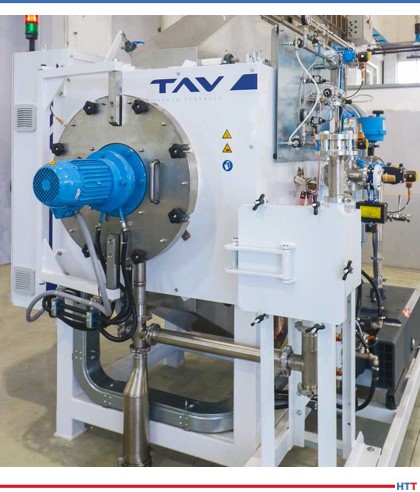
TAV Vacuum Furnace

What is debinding in metal additive manufacturing (AM)? How do you debind after 3D printing? How do you avoid contamination during metal debinding? Heat Treat Today’s Technical Tuesday article features this Best of the Web piece to answer your questions.

There are several changes that have made new technologies of AM and 3D printing increasingly implemented in the heat treating process. Some of these reasons include: falling costs of 3D printers; increasing geometric abilities; constant rate of the costs of production; and a “drastic reduction” in process waste. Read on to learn how to properly “debind” as you implement these new technologies in the heat treatment process.

An excerpt: “The working temperatures in the debinding phase are in the range between 70 °C (158 °F) and the 450 °C (842 °F), corresponding to the melting temperatures of the various organic compounds.”

Read more: “How to Properly Debind Parts Produced by Metal Additive Manufacturing


All images sourced from the original article.

Heat Treating in 3D: The Nature of Debinding Read More »

Heat Treating for Teeth: Applying AM and Heat Treat to Dentistry

Source: TAV, the Vacuum Furnaces Blog

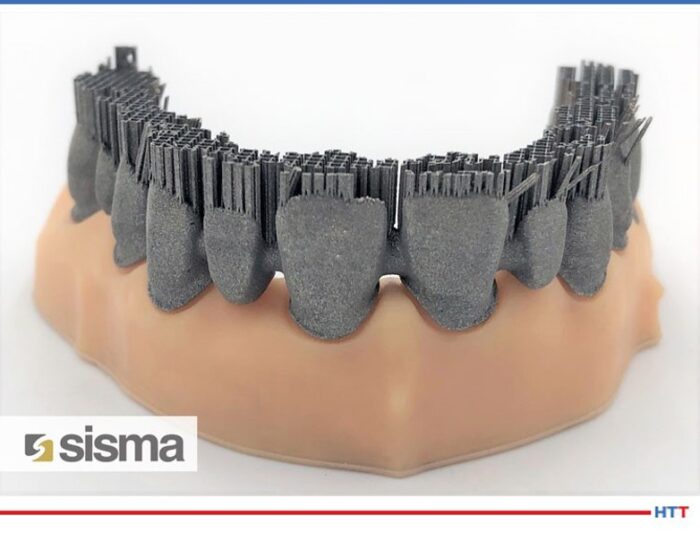
Dental arch after stress relieving vacuum heat treatment
(Photo source: tav-furnaces.com/blog)

"The global dental 3D printing market is expected to grow significantly over the forecast period... Dental 3D printing is a form of modern dentistry and is considered to be wide-spreading in the dental industry. Dental 3D printing involves creating three dimensional solid dental models such as dentures, surgical guides, dental implants, crown, and bridges." From Market Research Future Report: Dental 3D Printing Market

For this Heat Treat Today Technical Tuesday, we are featuring a Best of the Web that highlights cutting edge applications of additive manufacturing (AM). For many in the world of heat treat, AM and 3D are things of the future, oftentimes foreign to the heat treater's processes. What this article reveals is that AM can be utilized in essential and beneficial ways within heat treating.

An excerpt: "...This research and development project managed to optimize the process of making a dental prosthesis using a vacuum furnace. The additive manufacturing allows to create shapes, weights and dimensions customized on different needs and with a precision that has no equal. Strengthened by these peculiarities, the research team worked to further refine and complete the process chain of dental prostheses. Let's see step by step how this process happened."

Read more: "Medical-Dental Applications: 3 Benefits of Vacuum Heat Treatments Applied to 3D Printing"


(Photo source: tav-vacuumfurnaces.com)


Heat Treating for Teeth: Applying AM and Heat Treat to Dentistry Read More »

Vacuum Sintering Heat Treat

Source: TAV, the Vacuum Furnaces Blog

What happens when the binder reaches the primary pump? How does a heat treater avoid binder condensing?

(photo source: tav-vacuumfurnaces.com/blog/)

In this Heat Treat Today Technical Tuesday, we are featuring a Best of the Web to learn about what happens to binder residue in vacuum furnaces when it is pumped up with process gas. This is the final segment of a four article series on the vacuum sintering process. To read the previous three articles, visit TAV Vacuum Furnaces for the details.

An excerpt: "As regards temperature, a quite natural solution would be to lower the temperature of the captured material. However, it is too costly to go below the values typically reached by industrial chillers. Instead it is easier to change to rotary pumps that work at higher temperatures, not least because these pumps are usually inexpensive. In fact when intending to use a vacuum system without being familiar with the problems of sintering, people tend to use high-performance, high final vacuum level pumps. To obtain this however, it is important..."

Read more: Perfect Vacuum Sintering Step-by-Step.

(photo source: Austin Chan on unsplash.com)


Vacuum Sintering Heat Treat Read More »

Skip to content