Heat Treat Industry Supplier News

Predictive Maintenance Solutions Agreement Advances Service to Steel-Related Industries

Karl Purkarthofer, senior vice president and global head of Metallurgical Services, Primetal Technologies

A predictive maintenance (PdM) service and technology company based in Bethlehem, Pennsylvania, recently signed an exclusive cooperation agreement with a global engineering, plant-building, and lifecycle services partner for the metals industry covering the application of predictive maintenance solutions in steel-related industries worldwide.

Primetals Technologies, based in London, United Kingdom, and the Pennsylvania-based Industrial Technology Research (ITR) have been working together successfully in the field of condition monitoring for more than 10 years and jointly serve currently more than 50 customers. In the mid-1970’s, ITR, one of the founders of the vibration monitoring and analysis industry, started as a research and development initiative in one of the world’s largest steel producers and quickly became a leading provider of these technologies and services. ITR serves steel-related industries worldwide, including flat and long rolling, iron and steel making as well as casting, with predictive maintenance offerings that include all major predictive maintenance technologies, such as infrared thermography, airborne ultrasound, and fluids analysis.

“With the technology, know-how, and capabilities of ITR, especially in the area of prediction, we will be able to even better serve our customers through leading condition monitoring and predictive maintenance solutions,” stated Karl Purkarthofer, senior vice president and global head of Metallurgical Services.


Photo caption: Primetals Technologies and ITR team up on predictive maintenance solutions: Jonathan Davis, CEO at ITR (center left) and Karl Purkarthofer, Head of Metallurgical Services at Primetals Technologies (center right), shake hands on the occasion of the signing ceremony.

Predictive Maintenance Solutions Agreement Advances Service to Steel-Related Industries Read More »

The Future is Here. How Will it Impact Your Business?

[button link="www.itps-ifcs.com" size="default" icon="Select a Icon" side="right" target="blank" color="b70900" textcolor="ffffff"]Register Now[/button]


A must-attend event for thermprocess and industrial finishing & coatings executives, ITPS/IFCS will provide a unique platform for industry intelligence and collaboration. This two-day Summit will feature two joint general sessions with a total of ten presentations addressing topics of crucial importance to all manufacturing leadership, including:


Factories of the Future: What Does the Future Workforce Look Like?
Dr. Irene Petrick, Market Innovation Director, Industrial Solutions Div./Internet of Things Group, Intel Corporation

Industry 4.0, Industrial Internet of Things, the Fourth Manufacturing Revolution, Artificial Intelligence – these terms have quickly become standard manufacturing terminology, but exactly how do they impact your business and your workforce? Dr. Petrick will address what manufacturers can expect on the factory floor as well as changes to their workforce as these once-ideological concepts become today’s reality.


Trends in Additive Manufacturing
Todd Grimm, Founder and President, T.A. Grimm & Associates, Inc.

The hottest and likely fastest growing industrial technology over the past several years, Additive Manufacturing (AM) pops up in virtually every conversation about advanced manufacturing. AM expert Todd Grimm will offer insights on trends, metal and non-metal applications, and their impact on manufacturing that will assist thermprocessing and finishing business leaders in devising a strategy to leverage, or counter, AM’s impact.


Why I'm Attending: 
“This event is uniquely valuable in the thermal processing and finishing industries to C-level or equivalent people. I’ve found the 2-3 days to be an excellent opportunity to keep up with the latest “mega-trends” and as a refreshing time for thinking outside the box and making exceptionally valuable industry contacts.”

Doug Glenn, Publisher and Editor
Heat Treat Today


[button link="www.itps-ifcs.com" size="default" icon="Select a Icon" side="right" target="blank" color="b70900" textcolor="ffffff"]Register Now[/button] Save 25% with discount code ED25C.
Registration discounts are available for IHEA, CCAI, MTI, CECOF, JIFMA, VDMA, Electrocoat Association and WiM members.
To register, or for complete Summit information, including hotel reservations and registration, visit www.itps-ifcs.com.
Please call 941-373-1830 with questions.

The Future is Here. How Will it Impact Your Business? Read More »

Tester Detects, Determines Temperature Boundaries for Heat-Treated NiTi Martensite-to-Austenite

A new testing device has been introduced by an Israeli precision laser specialist group that can determine the Start and Finish Af (martensite-to-austenite transformation) temperatures for each of several devices, of different shapes at the same time.

The noncontact Af tester (NCAT), a novel bent and free-recovery device, was recently unveiled by ANV Laser of Petah Tikva, Israel.

The NCAT’s proprietary image processing software automatically detects the boundary of each of the fully annealed or heat-treated nickel titanium items placed in the chilled test tray.

Prior to the testing process, the nickel-titanium test specimen is cooled to its nominally fully martensitic phase, then is deformed by bending, and finally is heated to its fully austenitic phase while the motion (recovery) of the specimen is measured and plotted against the temperature.

The NCAT’s proprietary image processing software automatically detects the boundary of each of the fully annealed or heat-treated nickel titanium items placed in the chilled test tray. In the user-friendly graphic interface, the tester easily deletes any non-item artifacts that were detected, and then chooses – per object — the area detection method for the test, such as inscribed or described circle, parallel lines, object boundary, and so on.

The tester then defines, for each object, the minimum and maximum boundaries for Area (to be plotted on the Y axis) and Temp (to be plotted on the X axis). The tester can also determine the rate of heating that will be generated by the NCAT’s unique heating mechanism. When satisfied with all parameters, the tester initiates the test and an Area/Temp graph is plotted for each object.

When the temperature reaches the user-defined end-temperature, the test stops automatically. The test plot for each item can be saved as a report that shows its Area/Temp graph and the calculated StartAF and FinishAF temperatures.


Tester Detects, Determines Temperature Boundaries for Heat-Treated NiTi Martensite-to-Austenite Read More »

Radiant Tubes Longevity Improves Heat Treating: An Analysis


Source: heat processing online


Photo Credit: heat processing online

Nico Schmitz, Christian Schwotzer, and Herbert Pfeifer with the Department for Industrial Furnaces and Heat Engineering (IOB) in Germany have collaborated on an analysis of metallic recirculating radiant tubes, their purpose in the heat treating process, and their design and installation. In particular, the authors, with access to a furnace-equipped pilot plant operated by IOB, investigate the factors that affect tube productivity and contribute to tube failures. They have reported on these findings in an exclusive paper published at heat processing online, the official publication of the European Committee of Industrial Furnace and Heating Equipment Association (CECOF).

An excerpt:

“It is common to assume a homogeneous temperature distribution for construction calculations. In real operation, inhomogeneous temperature distributions occur. The temperature gradients induce thermal stresses that can substantially influence the lifetime of the tubes. In addition to that, higher furnace temperatures come along with an increasing thermal load.”


Read more: “Increasing Lifetime of Metallic Recirculating Radiant Tubes”

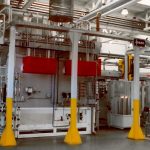
Photo credit: heat processing online. Caption: Radiant tube test furnace at IOB

Radiant Tubes Longevity Improves Heat Treating: An Analysis Read More »

15 Quick Heat Treat News Items to Keep You Current

15 Quick Heat Treat News Items to Keep You Current

Heat Treat Today offers News Chatter, a feature highlighting representative moves, transactions, and kudos from around the industry.

Personnel and Company Chatter

  • Construction on an expansion recently broke ground for Premier Furnace/BeaverMatic's plant 1 facility in Farmington Hills, Michigan. This expansion will provide space for a state of the art testing and training facility, additional manufacturing capabilities, as well as increased office space to allow Premier/BeaverMatic to accommodate business growth and customer needs. The additional 22,000-square foot space is expected to be completed by fall 2018.
  • Paul Banks as plant manager for Novelis Inc.'s recently announced $300 million automotive aluminum sheet manufacturing facility in Guthrie, Kentucky. Banks assumes the role of plant manager after previously serving as unit manager at Logan Aluminum, a Novelis joint venture in nearby Logan, Kentucky.
  • Electroplating and heat treating specialists Electro-Spec, headquartered in Franklin, Indiana, is expanding its operations with a new plating facility in Lexington, South Carolina, that will serve the automotive, aerospace, telecommunication, military, radio frequency and microwave, and medical markets in the southeast U.S.
  • A heat treating company based in Lima, Ohio, recently expanded its capacity with a new draw furnace and quench tank. Heat Treating Technologies expects the $3 million investment to boost the company's thermal processing offerings in carburizing, carbonitriding, annealing, hardening, normalizing, and carbon restoration.
  • An industrial oven manufacturer based near Williamsport, Pennsylvania, recently added a second manufacturing facility to its operation. JPW Industrial Ovens and Furnaces' Plant 2, will produce the company’s expanding line of standard industrial ovens. Plant 1, located in Trout Run, will continue to craft custom-made industrial ovens and serve as the company’s headquarters. The new plant is expected to create 25 new jobs within the next two years.

Equipment Chatter

  • Three natural gas-fired box furnaces were recently shipped to a parts manufacturer for the oil and gas industry by Lindberg/MPH, to be used to develop process control requirements for heat-treating and stress relieving of underground mining/drill heads. The goal is to double the life of the tooling through research which would revolutionize industry standards. The maximum operating temperature rating for the stress relieving box furnaces is 2050°F and work chamber dimensions are 36" wide x 20" deep x 24" high. The box furnaces were designed to meet a temperature uniformity of +/-15°F at 1700°F and 2050°F per the requirements of AMS 2750E, Class 3 furnaces and Instrumentation D.
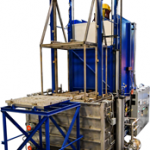
  • An aluminum casting company recently received shipment of an electrically heated horizontal quench system to be used for solution treating aluminum castings for the aerospace and automotive industries. The solution treating furnace was designed and manufactured by Wisconsin Oven Corporation to heat a 2,500-pound load of aluminum, plus basket and work grid to an operating temperature of 1,020°F. The maximum temperature rating for this horizontal quench system is 1,250°F, sized for a 5'0" wide x 5'0" long x 5'0" high basket. The horizontal quench system was designed to meet AMS2750E (Class 2, Instrumentation Type C) and with reporting to meet AMS 2771E requirements.
  • A heat treating equipment manufacturer recently shipped ten furnaces to companies in California, Georgia, Ohio, Washington and Wisconsin, and also to one location in Asia. This equipment will be used to process parts for companies in the aerospace, commercial heat treating, and medical industries. Ipsen USA shipped: two TITAN® furnaces – one H2 12-bar with a 18" x 24" x 18" (457 mm x 610 mm x 457 mm) work zone and one vertical 2-bar furnace; two MetalMaster® furnaces – one vertical 6-bar with a 96" D x 96" H (2,438 mm x 2,438 mm) work zone and 10,000 pound (4,500 kg) load capacity, and one horizontal 10-bar with a 96" x 84" x 96" (2,438 mm x 2,134 mm x 2,438 mm) work zone; one VFS® horizontal internal quench 10-bar vacuum heat-treating and brazing furnace; and several custom-built atmosphere furnaces that will process parts for the aerospace industry.
  • A retort furnace was recently shipped by L&L Special Furnace Co., Inc., to a northeastern US manufacturer of motor laminations to be deployed on motors primarily for government-based aerospace products. The furnace has a work zone of 17" square with a typical load weight of 250 pounds and is built in accordance with ASTM standards. Annealing of silicon iron and similar laminations are treated in a pure dry hydrogen atmosphere. A pure dry hydrogen atmosphere is provided to balance strength and magnetics in these laminations. There is also an oxidization process that can provide a thin oxide coating layer for improved durability and resistance.
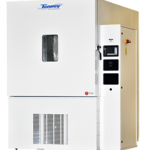
  • A global manufacturer of environmental testing equipment announced the shipment of three fast change rate automotive test chambers. These test chambers, built by Tenney Environmental, will be used for temperature and humidity testing of automotive parts. The maximum temperature rating of the automotive test chambers is 180°C and the operating temperature range is -68°C to 180°C. The work chamber dimensions are 30” W X 28.8” D X 36” H. The fast change rate test chambers can transition the air temperature in remote chambers from 20°C to -40°C with a 30-minute transition rate.

Kudos Chatter

  • Sintavia, LLC, a leading Tier One metal additive manufacturer, announced that it has achieved National Aerospace and Defense Contractors Accreditation Program (NADCAP) approval for its laser and electron beam powder bed fusion applications. The NADCAP accreditation is the latest quality certification achieved by the company and resulted from a year-long application process.
  • AIM Aerospace has earned Nadcap Merit Status at their Orange City, Iowa, facility, for AC7118 Composites Processing.  The company processes structural carbon fiber composites for key aerospace customers.
  • Plastics Extrusion has been added to the growing list of audit opportunities available through MedAccred, the medical device industry’s collective approach to critical process supply chain oversight. This newest opportunity comprises audit criteria which covers Tubing/Profile, Sheet, Film, Blown Film, Over-Jacketing, Co-Extrusion and Ram Extrusion. The audit criteria are developed by leaders in the medical device industry who are part of the MedAccred program and are focused on improving product quality and patient safety.
  • Sunlite Plastics of Germantown, Wisconsin, has become the first manufacturing facility in the world to achieve MedAccred Plastics Extrusion Accreditation, with a Scope of Accreditation covering Tubing/Profile Extrusion. Following the MedAccred audit, technical experts from leading medical device companies reviewed the audit findings and corrective actions before voting on granting each MedAccred Accreditation.
  • Medical tools manufacturers increasingly commission SECO/WARWICK technologies for product quality and strict standards compliance, according to a recent company report. For example, a U.K. company installed a 6 Bar vacuum furnace for the production of medical tools such as those used for heart bypass procedures.


Heat Treat Today is pleased to join in the announcements of growth and achievement throughout the industry by highlighting them here on our News Chatter page. Please send any information you feel may be of interest to manufacturers with in-house heat treat departments especially in the aerospace, automotive, medical, and energy sectors to the editor at editor@heattreattoday.com.

15 Quick Heat Treat News Items to Keep You Current Read More »

Heat Treat Industry Supplier Seeks Metrology Software Offerings to Broaden Capabilities

A Swedish high-tech engineering company that supplies to the heat treat industry, offering tooling systems, advanced stainless steels and special alloys, recently announced intentions to broaden its reach in digital manufacturing through the planned acquisition of French software company, Metrologic Group, headquartered in Meylan.

Björn Rosengren, president and CEO of Sandvik Group

Björn Rosengren, president and CEO of Sandvik Group, based in Sandviken, Sweden, noted that this announcement is a “first material step towards an increased offering in digital manufacturing in Sandvik Machining Solutions.”

A market leader in agnostic metrology software, Metrologic Group would form a new business unit within a new product area in Sandvik Machining Solutions and would maintain brand independence, in line with Sandvik’s decentralized business model.

Klas Forsström, president of Sandvik Machining Solutions

Metrologic Group develops 3D inspection software and electronics which run measurement machines used for dimensional control notably in the automotive, aeronautics, transport, and medical sectors. The company’s offering includes agnostic software for metrology, automation and robotics control as well as services for calibration and 3D-measuring. Products are used globally in most industries, including automotive, aerospace, energy, general engineering and consumer goods, all similar to that of Sandvik Machining Solutions.

“By merging Sandvik Machining Solutions’ know-how about materials, customer applications and machining processes with Metrologic’s deep understanding of measurement technology, we would be able to further expand the offering of increased productivity. I am convinced that this step towards increased digital manufacturing will be key for continued success for Sandvik Machining Solutions,” said Klas Forsström, president of Sandvik Machining Solutions.

The transaction is expected to close mid-2018.

Heat Treat Industry Supplier Seeks Metrology Software Offerings to Broaden Capabilities Read More »

Novel Refractory Relines Boost Furnace Performance

Original Content by Contributing Writer Ken Stanford


Furnace refractories are an essential consideration in thermal process equipment operations for optimizing efficiency, productivity, and performance as well as cutting operating costs.

To optimize furnace refractory lining, operational factors must be considered, such as furnace type, alloy composition, operating temperatures and melt rate, type of fuel used and charging and drossing practices. Furnace design is also critical, with factors including equipment type, static or tilting, capacity, desired casting temperature and position of freeze plane.

The service life of a furnace refractory lining is typically between four to 15 years, depending on the type of furnace and other variables including alloy type, melt rate, combustion system, scrap charging size and furnace practice. Contributing factors to refractory failure include corundum growth, mechanical damage, metal penetration, thermal shock, erosion and chemical attack.

Since 1974, the Pyrotek TAB Refractory Services team, based in Warrington, UK, has developed lining compositions and materials that can withstand harsh environments. The systems are pre-fired to 932°F (550°C), which eliminates water to allow for faster commissioning. A strong ceramic bond is developed and firing shrinkage is allowed that results in less stress relief cracking. Installation is not affected by ambient temperatures. Big-block systems can also be combined with castable or brick furnace linings, and to maximize service life, the company provides “zoned” refractory linings consisting of both cast-in-place and precast monolithic blocks. Employing the most suitable refractory materials for each different area of the furnace extends the lining’s durability and reduces furnace maintenance and downtime.

Figure 1. Big-block linings improve furnace performance and productivity


Examples of the work illustrate the key issues and routes to effective refractory relines. Here are recent projects where the company has provided refractory technology input:

  • The company designed and installed refractory components for a South African aluminum operation, then relined those components in 12 smelting furnaces.
  • Logan Aluminum Inc in Russellville, Kentucky, commissioned refractory lining for a new furnace designed to process flat-rolled aluminum sheet primarily for use in the beverage can market. The 340,000-pound (154-ton) tilting holding furnace, one of the largest in the world, was supplied by UK-based manufacturer Mechatherm International Ltd. Two low nitrogen-oxide burners allow the furnace to have holding and melting capacity. Furnace features include a large 33 foot (10 meter)-wide door, roof-mounted radar molten metal sensor and integration for an under hearth electromagnetic stirrer, Mechatherm says. The furnace is expected to begin operating later this year.
  • The refractory lining of six new aluminum melting furnaces was contracted by Mechatherm for the Novelis recycling plant in Nachterstedt, Germany. The plant was commissioned in 2014 and processes 881.8K pounds (400,000 tons) of aluminum scrap annually. Mechatherm believes that the melting furnaces are the biggest dual-chamber recycling units in the world. They comprise three 400,000-pound dual-chamber side well furnaces, which each has over 1 million pounds (500 tons) of refractory, and three 286.6K-pound (130-ton) side well furnaces with 661.4K pounds (300 tons) of refractory each. The company was later awarded the casthouse refractory maintenance contract.
  • A greenfield project in Saudi Arabia jointly owned by Alcoa and the Saudi Arabian Mining Co. (Ma’aden) were supplied turnkey refractory furnace linings by the company’s Saudi Arabian operation, TAB KSA. The integrated aluminum facility, which began pouring metal in 2012, includes an alumina refinery, a smelter, a casthouse and a rolling mill. The smelter has a capacity of 1.63M pounds (740,000 tons) per year. Pyrotek participated in what was reportedly the largest aluminum furnace refractory project in history. The equipment scope comprised: five 220,000-pound (100-ton) ingot furnaces, five 298,000-pound (135-ton) slab furnaces, three 187,000-pound (85-ton) billet furnaces, one 80,000-pound (36-ton) coil melter, one 198,000-pound (90-ton) remelt furnace, and two 265,000-pound (120-ton) used beverage can (UBC) side-well melters,

The company’s global refractory team and engineering centers work with aluminum operations to select the optimal refractory design and materials for their particular applications. In some cases, upgrading from brick to a non-wetting, corundum-resistant lining in smelting furnaces can increase ingot and billet casting capability. After a 5-year period, some customers reported that furnace downtime due to refractory repairs was reduced by up to 65 percent. Total furnace availability increased by up to 12.6 percent, and output increased by up to 26 percent. Refractory costs per pound of aluminum produced were reduced by up to 22.8 percent.

Furnace relines and maintenance for major aluminum companies around the world have been carried out with over 1,100 completed projects in more than 30 countries.


Ken Stanford formerly served as Group Managing Editor and Technical Director at DMG World Media in the UK, responsible for various metal, foundry, steel, and furnaces publications and associated conferences and exhibitions in the UK and overseas, including Aluminium International Today, and the ALUMINIUM series of events, which presents in Germany and the US. Particular industry interests center on new technologies, innovation, and applications, as well as sustainability and environmental issues.


 

Novel Refractory Relines Boost Furnace Performance Read More »

Special Report: MTI & IHEA Combined Meeting Photo Gallery

Special Report by Doug Glenn, Heat Treat Today Publisher

Doug Glenn, Publisher, Heat Treat Today

As mentioned in yesterday's special report, the Metal Treating Institute (MTI) and the Industrial Heating Equipment Association (IHEA) kicked off their combined triennial meeting yesterday in Scottsdale, Arizona, at the Talking Stick Resort.

For manufacturers with in-house heat treat departments, this event carries significance  . . . even though it is not an event many (or any) of you might attend. It's at this event where the suppliers of your equipment, components, technology, and know-how update and hone their skills for helping you accomplish the heat treating you do every day.

Because many of you in the aerospace, automotive, medical, and energy sectors may know and recognize some of the attendees at this event (and because we all like seeing OUR pictures online!), today's Special Report is a selection of photos taken at last night's Opening Reception. Enjoy today's Special Report and let your favorite vendor know you saw them on Heat Treat Today if/when you see them next.

Also, special thanks goes out to these three generous sponsors for helping to underwrite the cost of this event:

Photos from Opening Reception:


Special Report: MTI & IHEA Combined Meeting Photo Gallery Read More »

A Dozen Quick Heat Treat News Items to Keep You Current

A Dozen Quick Heat Treat News Items to Keep You Current

Heat Treat Today offers News Chatter, a feature highlighting representative moves, transactions, and kudos from around the industry.

Personnel and Company Chatter

  • Lars Jonsson has been appointed new employee representative to the Bulten AB board for a term of office of three years. Lars has been employed at Bulten’s plant in Hallstahammar since 1984 where he has worked as a machine operator until two years ago when he switched to tool maker. Bulten is a supplier of fasteners to the international automotive industry.
  • Paulo’s Cleveland division is expanding to add 50,000 sq ft, allow for the installation of more vacuum heat treatment furnaces, and provide optimized flow of work through the facility. The Cleveland plant primarily serves the aerospace, power generation, and agriculture industries and specializes in precise high-temperature vacuum heat treatment and brazing of nickel-based superalloys.
  • James R. Darsey, executive vice president of raw materials for Nucor Corporation announced his upcoming retirement after more than 39 years of service with Nucor.  Effective June 10, 2018, Craig A. Feldman will be promoted to the role of executive vice president of raw materials.  Mr. Feldman began his career with the David J. Joseph Company (DJJ) in 1986 and stayed with the company, becoming president of DJJ in 2013. When DJJ was acquired by Nucor in 2008, Feldman became a vice president and general manager of Nucor Corporation.  Upon his promotion to EVP, Mr. Feldman will retain his role as president of DJJ.
  • Dr. Steve Offley recently joined Phoenix Temperature Measurement as Product Marketing Manager, bringing over 21 years of experience in the industrial process temperature monitoring industry. Besides promoting and marketing PhoenixTM’s temperature monitoring productions, Dr. Offley will focus on development of new and innovative processes temperature-monitoring solutions.
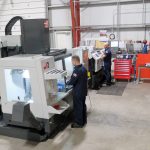
  • Solar Atmospheres of Western PA recently installed a second machining center to support its newest service for customers – tensile testing. By adding a brand new fully programmable 8100 RPM Haas VF2 milling center, Solar is now able to support the machining of flat tensile specimens. This machining ability fully complements the function of the 10,000 PSI hydraulic jaw that is an integral component of the Tinius Olsen 300SL tensile machine. These massive hydraulic jaws can grip either threaded round or flat specimens.

Equipment Chatter

  • A 750°F (399°C), gas-fired cabinet oven was recently supplied by Grieve Corporation to be used for baking radiator cores at the customer’s facility. The workspace dimensions of this oven, the No. 1046, measure 80″ W x 88″ D x 18″ H, with a 76″ wide x 76″ long, 750 lb. capacity pneumatic operated rollout shelf with an insulated plug to seal doorway opening.
  • An intermediate-sized front-loading box furnace was recently delivered to the Canadian Government Forestry Division. L&L Special Furnace Co., Inc., equipped the furnace, which meets Canadian electrical standards, with an atmosphere-sealed case for use with inert gas to displace oxygen and minimize surface de-carb. It is purged with inert gas prior to loading and the parts are then heated under a controlled atmosphere. There is a 1″ NPT survey port located on the right side of the furnace employed for calibration and uniformity surveys.
  • An aerospace and defense company recently purchased a rotary hearth furnace to heat treat state-of-the-art equipment, specifically to process specialized gears for helicopters. Ipsen plans to deliver the rotary hearth furnace early next year.

Kudos Chatter

  • Advanced Heat Treat Corp. recently reported that its Iowa (MidPort-Corporate Office and Burton Ave, Waterloo) and Michigan locations have successfully transitioned from ISO/TS 16949:2009 to ISO 9001:2015 / IATF 16949:2016.
  • Stock Drive Products/Sterling Instrument (SDP/SI) has also announced that it meets all certification requirements of the new ISO 9001:2015 + AS9100D standard, maintaining processes that provide superior components and assemblies with detailed quality reporting.
  • Harbison Walker International (HWI), based in western Pennsylvania, adds its announcement to the mix, reporting that its Thomasville, Georgia, monolithic/precast facility recently became the first of the company’s North American locations to earn ISO 9001:2015 certification, followed by HWI’s South Shore, Kentucky, plant becoming the first refractory brick manufacturing plant in North America to achieve the same status. Both plants achieved this quality system recognition based on the recommendation of SRI Quality System Registrar.
  • Rio Tinto celebrates the distinction of being the first company in the world to receive certification under the Aluminium Stewardship Initiative (ASI), the highest internationally recognized standard for robust environmental, social and governance practices across the aluminum lifecycle of production, use, and recycling. The certification follows an independent third party audit and covers a range of operations, from bauxite mining to alumina refining, aluminum smelting, the creation of value-added products, transformation and recycling, and associated activities. Rio Tinto’s five aluminum smelters, the Vaudreuil refinery, casting and spent potlining treatment centers, and associated infrastructure such as power, port and railway facilities in Quebec, Canada, have been certified, along with the Gove bauxite mine in Australia.

Heat Treat Today is pleased to join in the announcements of growth and achievement throughout the industry by highlighting them here on our News Chatter page. Please send any information you feel may be of interest to manufacturers with in-house heat treat departments especially in the aerospace, automotive, medical, and energy sectors to the editor at editor@heattreattoday.com.

A Dozen Quick Heat Treat News Items to Keep You Current Read More »

HBI Facility Launch to Benefit Steel in Great Lakes Region

A Cleveland-based iron ore mining company recently broke ground on its first hot-briquetted iron (HBI) production facility in the Toledo area.

Lourenco Goncalves, chairman, president, and CEO of Cleveland-Cliffs

Cleveland-Cliffs hosted company officials and state and local representatives to launch construction on the plant, which is expected to produce 1.6 million metric tons per year of customized, high-quality HBI. This will make Cleveland-Cliffs the sole producer of high-quality customized feedstock for the domestic electric arc furnace (EAF) steelmakers located in the Great Lakes region.

“Today we are launching a new era for the iron and steel industry in the United States,” said Lourenco Goncalves, chairman, president, and CEO of Cleveland-Cliffs of the $700 million investment. “As Cleveland-Cliffs begins the construction of the first hot-briquetted iron (HBI) production plant in the Great Lakes region, we are taking the initial steps to enable EAF steelmakers to produce the specs associated with high margin steels for sophisticated end markets, such as automotive and others.”

“For several decades, Cleveland-Cliffs has been supplying the American steelmakers in the Great Lakes with customized pellets to feed their blast furnaces,” Goncalves added. “With the growth in participation of EAFs, it was just a matter of time for Cliffs to become a supplier of these important steelmakers. Our HBI will be for the EAFs the same great feedstock our taconite pellets are, and will continue to be, for our blast furnace clients.”

“This facility is an important step for economic development in heavy industry right here in the heart of America,” said Ohio congresswoman Marcy Kaptur.

Founded in 1847, Cleveland-Cliffs Inc. is the largest and oldest independent iron ore mining company in the United States, supplying iron ore pellets to the North American steel industry from mines and pellet plants located in Michigan and Minnesota. Additionally, Cleveland-Cliffs operates an iron ore mining complex in Western Australia.


Pictured L-R: Clifford Smith, Executive Vice President, Business Development, Cleveland-Cliffs Inc.; Dean Monske, President and CEO, Regional Growth Partnership; Paul Toth, President and CEO, Toledo-Lucas County Port Authority; Congresswoman Marcy Kaptur, U.S. House of Representatives (OH-09); Lourenco Goncalves, Chairman, President & CEO, Cleveland-Cliffs Inc.; Mayor Wade Kapszukiewicz – City of Toledo; Peter Ujvagi, Toledo City Councilman; and Alex Johnson, CEO & President, Midwest Terminals. (Photo: Business Wire)


HBI Facility Launch to Benefit Steel in Great Lakes Region Read More »

Skip to content