We’re celebrating getting to the “fringe” of the weekend with a Heat Treat Fringe Friday a press release detailing how additive manufacturing continues to move into the metals manufacturing industry.
While not exactly heat treat, “Fringe Friday” deals with interesting developments in one of our key markets: aerospace, automotive, medical, energy, or general manufacturing.
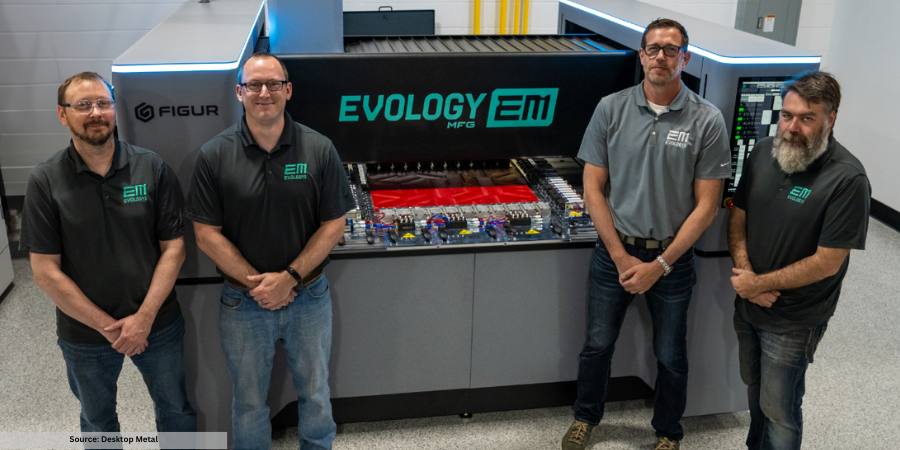
Desktop Metal, a global company at the forefront of additive manufacturing 2.0 technologies for mass production, announced that it has installed four Figur G15 Pro systems featuring digital sheet forming (DSF) technology to three manufacturers, including Evology Manufacturing in Waukesha, Wisconsin.
With 30+ years as a contract manufacturer, Evology has a full suite of both traditional and additive technologies to service companies in a wide range of industries, including aerospace, defense, automotive, agricultural, marine, mining, medical, electronics, and consumer goods. Evology serves companies ranging from small startups to Fortune 50 companies with prototyping and low-volume production, typically under 10,000 pieces.
Evology is now offering digital sheet form parts off its Figur G15 for cold rolled steel up to 2 mm thick and 6061 aluminum up to 3.175 mm thick, with more materials in development.
“We are delighted to offer our customers this cutting-edge rapid sheet metal forming technology from Desktop Metal,” said Sean Momsen, VP of Business Development and Marketing at Evology. “In addition to our ability to fabricate sheet metal parts rapidly, we also have a full suite of traditional finishing equipment to deliver finished final products to customers.”
Justin Nardone, CEO of Figur, a Desktop Metal brand, said, “We are encouraged by the continued demand we see for our rapid sheet metal forming technology, which truly saves manufacturers time and money when it comes to sheet metal production. The G15 eliminates a lot of the work required when forming metal, such as the design and manufacturing of tools and dies. Our system produces designs quickly, accurately, and repeatedly, so manufacturers are able to focus on the craftsmanship of design while getting their products to market faster and more efficiently.”
Introduced in 2022, the Figur G15 is the first commercial platform of its kind to shape sheet metal on demand directly from a digital file. A software-driven proprietary tooling system on an XY gantry forms the sheet with up to 2,000 lbs of force in a highly engineered and proprietary build zone.
With a maximum sheet size of 1,600 x 1,200 mm (63.0 x 47.2 in), the Figur G15 delivers parts with a draw depth up to 400 mm (16 in) in Z without custom forming tools, molds, dies, or presses. The G15 supports forming a range of metals and sheet thicknesses – including steel up to 2.0 mm and aluminum up to 2.5 mm – and delivers a high quality surface finish
Pro configurations of the Figur G15 include an automatic tool changer and measurement, through tool part lubrication, and automated work holding capabilities.
This press release is available in its original form here.
Heat Treat Todayoffers News Chatter, a feature highlighting representative moves, transactions, and kudos from around the industry. Enjoy these 39 news bites that will help you stay up to date on all things heat treat.
Equipment Chatter
The precision forging manufacturer Jiangsu Pacific Precision Forging Company has placed an order with SMS group for a fully automatic MP 3150 eccentric closed-die forging press. Pacific Precision will be able to forge aluminum chassis components on a much larger scale. This new expansion provides Pacific Precision with access to the growing automotive market segment for more lightweight designs.
A commercial heat treater in Mexico purchased a third vacuum furnace from SECO/WARWICKGroup.
Ecocat India, a catalyst manufacturer, has ordered an advanced technology vacuum gas cooling furnace from SECO/WARWICK. The system will carry out brazing and annealing processes.
Several new CAB lines have been ordered from SECO/WARWICK to be delivered to manufacturers in China. Two companies specifically chose EV/CAB lines while another manufacturer purchased a CAB line.
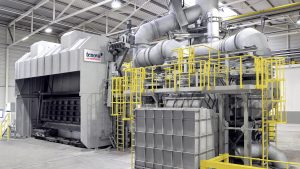
SECO/WARWICK delivered two CAB lines and one universal chamber furnace for aluminum brazing to an automotive manufacturer in China. The systems will braze large-size coolers for vehicle batteries.
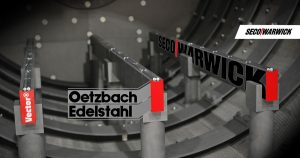
Oetzbach Edelstahl GmbH, a hardening plant, has purchased a third furnace from SECO/WARWICK.
A Swiss commercial heat treater ordered a brazing furnace to be used for nickel and silver from SECO/WARWICK.
Tenova LOI Thermprocess has completed the production optimization of a new Twin-Chamber Melting Furnace (TCF®) at E-Max Billets in Kerkrade, the Netherlands.
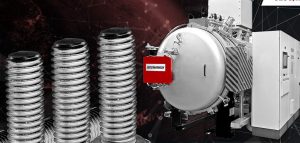
An Asian thread rolling die conglomerate selected a SECO/WARWICK vacuum furnace. The Vector® will be used for vacuum hardening and tempering fastener dies.
Vacuum furnace for heat treater in Mexico
SECO/WARWICK vacuum gas cooling furnace for Ecocat India
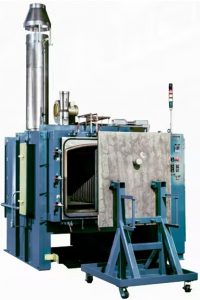
Box furnace for a manufacturer
Brazing furnaces for automotive manufacturer in China
3rd furnace for Oetzbach Edelstahl from SECO/WARWICK
SECO/WARWICK\’s brazing furnace for Swiss heat treater
TCFR for aluminum scrap recycling
Heat treated flat thread rolling dies
Company and Personnel Chatter
Hubbard-Hall has expanded its product offering and customer resources by acquiring the assets of Torch Surface Technologies, a specialty chemical company based in Whitmore Lake, MI.
New simulation software is being launched at CENOS Simulation Software. The application portfolio expands with some new electromagnetic case software apps. The first apps will be launched in Q4 or a little later.
Solar Atmospheres of California announced it has been awarded the approval to process parts for Lockheed Martin (LMCO) owned Sikorsky. The Sikorsky approval adds to the existing LMCO process specifications held for vacuum heat treatment of titanium, nickel alloys, and stainless steel per AMS 2801, AMS 2774, AMS 2759/3, and others.
Nel Hydrogen US, a subsidiary of Nel, has entered into a joint development agreement with General Motors to help accelerate the industrialization of Nel’s proton exchange membrane (PEM) electrolyzer platform. The two companies are looking to enable more cost competitive sources of renewable hydrogen.
The Supervisory Board of thyssenkrupp AGextended the appointment of Oliver Burkhard by five years. Burkhard has been a member of the Essen-based group's Executive Board since February 2013, Thyssenkrupp AG director of Labor since April 2013, and additionally CEO of thyssenkrupp Marine Systems since May 2022.
Joe Coleman, cyber security officer of Bluestreak Consulting™, has earned his Cyber AB CMMC Certification as a Registered Practitioner (RP). CMMC is a U.S. Department of Defense (DoD) program that applies to Defense Industrial Base (DIB) contractors.
CG Thermal welcomes associate process engineer Signe Laundrup to the Process Systems Group. Laundrup is a 2021 chemical engineering graduate from the University of California, San Diego. Her background is in manufacturing and research and design.
Tata Steel signed a memorandum of understanding with SMSGroup to reduce carbon emissions at Tata’s integrated steel plants across India.
Two heat treat technology companies integrate: C3 Data’s real-time pyrometry compliance software enables digital uploading of certificate data of all TT Electronics.
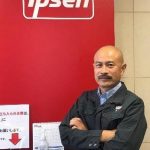
Ipsen Japan announced the addition of Mr. Masakazu Kanaka in the role of customer service director. Kanaka is responsible for the growth of all Ipsen Japan customer service business, which includes retrofits, parts, and service. He will oversee the aftermarket sales team and field service engineers.
Solar Atmospheres of California announced Honeywell approval to heat treat austenitic steels, martensitic steels, pH steels, tool steels, nickel alloys, cobalt alloys, titanium alloys, and magnetic alloys.
Aluplast – ZTG, an Altest company, recently expanded its production capacity with a second Nitrex nitriding system. The second furnace, a model N-EXT-612, is capable of processing a load of extrusion dies weighing up to 1300lbs.
Solar Atmospheres of Michigan is pleased to announce the addition of Chris Molencupp as their new sales manager.
Metal Exchange Corporation announced that Matt Rohm, current President and Chief Operating Officer (COO), will be promoted to Chief Executive Officer (CEO) of Metal Exchange Corporation effective January 1, 2023. At that time, current CEO Rick Merluzzi will assume the title of executive vice chairman, serving as an advisor to executive chairman, Mike Lefton, on key strategic initiatives for the organization, through the end of 2023.
Quintus Technologies joins the newly opened Application Center at RISE to support further development of additive manufacturing. The AM Center will also include the Quintus press model QIH 15L-2070.
Abbott Furnace Company announced that it has partnered with Obsidian Technical Group for sales and service support across much of the eastern United States.
Robert Roth announced the appointment of Nelson Sanchez as RoMan’s new president, effective January 1, 2023. Sanchez is the first non-family member to hold the office.
Hubbard-Hall hired Aaron Mambrino as chief financial officer. Her expertise lies in driving process changes to create operational synergies, developing strategic partnerships, and LEAN manufacturing.
John Savona, vice president of Americas Manufacturing and Labor Affairs, Ford Blue, will retire on March , after more than 33 years. Bryce Currie will step into the role.
AFC-Holcroft welcomed employees and their families, company retirees, and invited guests to view their newly renovated building as part of an open house.
Solar Atmospheres of California participated in the “Spark of Love” toy drive in coordination with the San Bernardino County Fire Department.
Raytheon Technologies expands Bengaluru operations with opening of Pratt & Whitney India Engineering Center. The facility is co-located with Pratt & Whitney’s India Capability Center and Collins Aerospace engineering and global operations centers.
Lucifer Furnaces in Warrington, PA, a manufacturer of heat treating furnaces and ovens for the last 80 years, has added Brett Wenger to its leadership team as vice president of sales.
Signe Laundrup, CG Thermal
Tata Steel and SMS Group to reduce carbon emissions
Mr. Masakazu Kanaka, customer service director, Ipsen Japan
Matt Rohm, CEO, Metal Exchange Corporation
Nelson Sanchez, new president of RoMan Manufacturing
Bill Disler, President & CEO of AFC-Holcroft, during the open house
Christmas toys for kids in Southern CA
Opening of Pratt & Whitney\’s India Engineering Center
Brett Wenger new vice president of sales at Lucifer Furnaces
Kudos Chatter
Global Thermal Solutions celebrates 15 years in Mexico.
Ipsen USA announced that 2023 represents a milestone anniversary. This year marks 75 years since Harold Ipsen founded the company.
Desktop Metal is sponsoring on a new season of BattleBots. The completely rebuilt robot is aided by the design freedoms and fast turnaround times of metal 3D printing.
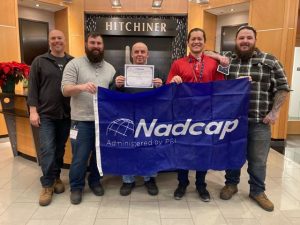
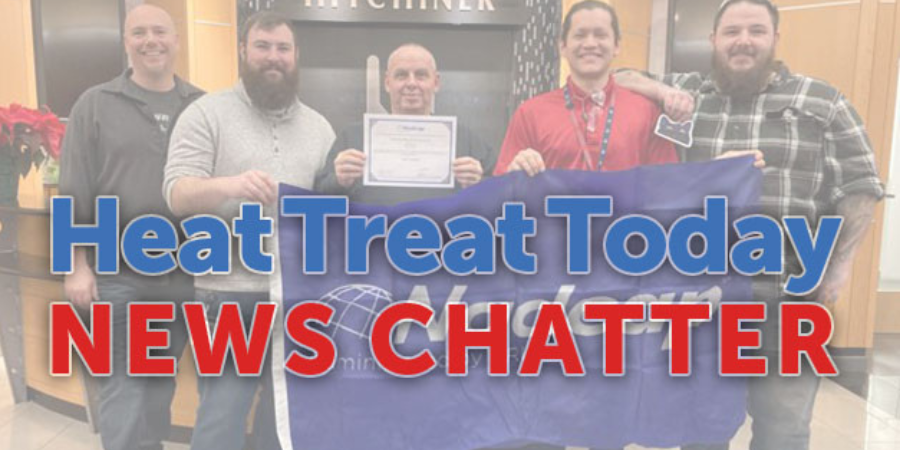
Solar Atmosphere’s Michigan and Western Pennsylvania facilities have recently been awarded Nadcap Merit status for vacuum heat treating and brazing.
In September, the Swiss Steel Group (SSG) held the 1st Hydrogen Symposium at the Henrichshütte Iron and Steel Works in Hattingen. Speakers from academia, business, and politics held lectures in four sessions.
Borikengineers, a team mentored by Pratt & Whitney employees in Puerto Rico, has advanced to the Qualifiers’ Finals Competition in the FIRST Tech Challenge DC Qualifier. The team won the Judges Choice Award.
Hitchiner Manufacturing Nadcap accredited
SawBlaze on Discovery Channel\’s TV show, \”BattleBots\”
Borikengineers, Judges Choice Award winners
Heat Treat Today is pleased to join in the announcements of growth and achievement throughout the industry by highlighting them here on our News Chatter page. Please send any information you feel may be of interest to manufacturers with in-house heat treat departments especially in the aerospace, automotive, medical, and energy sectors to sarah@heattreattoday.com.
Find heat treating products and services when you search on Heat Treat Buyers Guide.com
Welcome to Heat TreatToday's This Week in Heat TreatSocial Media. You know and we know that there is too much content available on the web, so it’s next to impossible to sift through all of the articles and posts that flood our inboxes and notifications on a daily basis. Today, Heat TreatToday brings you another hot take of the latest compelling, inspiring, and entertaining heat treat chatter from the world of social media.
We're looking at microscopic images, some in-depth heat treat content, a recap of networking opportunities, plus much more!
Through heat treatment, austempered ductile iron (ADI) becomes incredibly strong. For ADI, the material has been austempered such that the matrix is transformed into ausferrite, or a mixture of acicular ferrite and austenite. The image below has been elevated to art-gallery quality with the use of selective color etching.
Images of weld metal, microstructure of coarse-grain zone, microstructure of fine-grain zone, and base material. See how the crystal orientation changes in different zones.
2. All That Chatter
Check out some of the chatter that everyone has been posting on heat treat topics over the last few months.
It's great to connect with other folks in the industry. This past week has been an amazing opportunity to forge new relationships and strengthen old ones at trade shows and expos.
Rapid + TCT
Ceramics Expo
ACT Expo
SAMPE 2023
4. The Reading (and Podcast) Corner
Time to take your afternoon coffee and read a few technical articles from around the industry. Got too many things to do? Put on an episode of Heat TreatRadio to enjoy on your commute. Maybe you'll find some "continuing education" time this weekend!
Is there room for creativity in the heat treat shop?
Listen to an interview with Gary Sharp about ion nitriding. Topics include the history of and applications for this particular kind of nitriding.
Dig in a little deeper. Read more about ion nitriding. Hone in on TMS 80 micro alloyed steel with Dr. Rolinski.
Review of quench basics. Click to watch the video below!
5. Sleep Deprived
The excitement of nitriding keeping you awake at night?!
Try some of these seven techniques our astronauts use to get better sleep in space!
Additive manufacturing (AM) at a commercial scale began about 30 years ago and has expanded well beyond its original scope. As AM becomes increasingly prominent across different industries, heat treaters need to know how to handle AM parts in their shops. Learn about the history of binder jetting AM, the alloys used in this technology that require heat treatment, and what heat treaters should expect for the future.
Read why Animesh Bose of Desktop Metal thinks that binder jetting AM is only going to be used more and more in several heat treating sectors.
This article first appeared in Heat Treat Today’s December 2022 Annual Medical and Energy print edition.
Binder Jetting of Metals: Origins
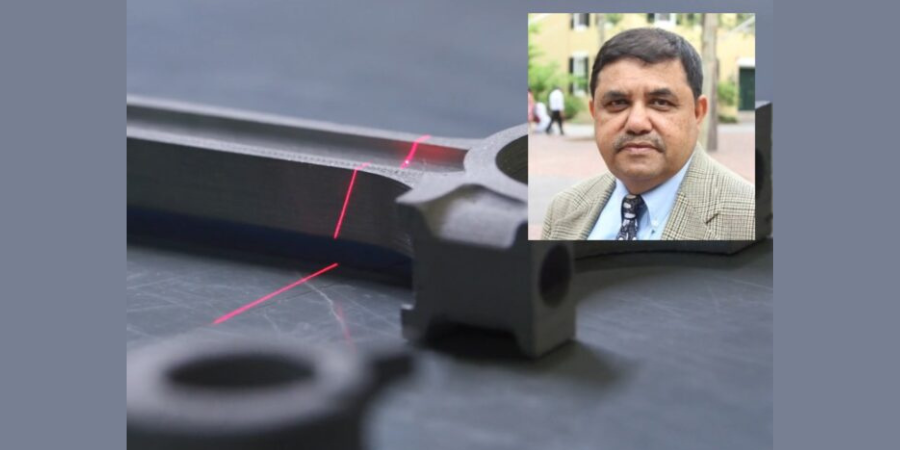
Animesh Bose Vice President of Research & Development Desktop Metal Source: LinkedIn
Additive manufacturing (AM) at a commercial scale began about 30 years ago and has expanded well beyond its original scope. At the beginning, rapid prototyping (RP) was the name for the burgeoning technology; it emerged in the 1990s to bridge the gap between the need for quickly produced prototypes for manufacturers, not just plastic replicas. Rapid tooling (RT) of metal tooling parts joined RP R&D at this time as the research frontier for materials engineers. The current name for these technologies stands at “additive manufacturing,” or AM, though the popular terminology is simply “3D printing.”
Polymers
Developments in polymer AM also advanced rapidly with both extrusion-based technology as well as through advancements in Digital Light Processing of photopolymers. Stratasys Ltd., an American-Israeli manufacturer of 3D printers, software, and materials for polymer additive manufacturing as well as 3D-printed parts on-demand, began using a material extrusion-based process with their FFF (fused filament fabrication) technology to print parts, patented in 1989. This worked by feeding coils of polymeric materials though a printer, which would extrude the material through a small, heated chamber where the material would pass through a small orifice to extrude – or print – in a three dimensional design. This method allowed for very fine, hair-like material to print in a precise X ,Y, and Z motion, building layer by layer. Vat polymerization was another polymer AM technology that gained traction and involved photopolymer processing. Both technologies are currently used for polymeric materials. Interestingly, both processes have been adapted and are being used for metal 3D printing.
Metal AM
In 1993, an MIT engineering professor named Emanuel “Ely” M. Sachs – a man who could be considered the father of metal binder jetting technique – along with his colleagues from MIT patented the process of laying fluent, porous materials in layers between 50- to 100-micron thickness to form 3D parts. They were able to do this by spraying an organic binder on each layer of material where they wanted to increase the height of the part to produce a bonded layer in the selected area. This layering is repeated several times before the unbonded powder is removed immediately or after further processing.
One of the biggest advancements in metal AM happened in 2014 when GE Aviation combined multiple parts into one huge, complex design using a laser-based additive manufacturing method called direct metal laser melting. The end result was an airplane fuel nozzle made of 20 parts for the LEAP™ engine. All of AM came into the limelight, and direct metal laser melting – a melt-based technology – just took off.
But there were limitations to this laser process, the main one being cost and special powder requirements to layer and melt to form the part. The process was also technologically intensive and not fast enough for high volume production (as would be necessary for automotive or consumer good-type application).
Binder Jetting Technology
Binder jetting that had been developing in the early 2000s started to gain traction as a non-melt-based process for high volume mass production. Instead of melting the powder material, a binder is used to adhere the powder metal layers where needed. This method of printing results in a more uniform final part microstructure compared to the melt-based processes. ExOne, a binder jet 3D printing company, pursued the binder jetting technology using a license from MIT. In 2015, Desktop Metal was formed, and they focused on high volume mass production by binder jet using their Single Pass Jetting (SPJ™) technology. As binder jet gained traction, other companies entered the market (HP, GE, and Digital Metal). Desktop Metal recently acquired ExOne and efforts at developing standards for the technology are in full swing.
Heat Treating of AM Metals
Stainless Steels
There are two popular types of stainless steel for AM. The first is 17-4 PH, a precipitation-hardened stainless steel, which I like to call an “all purpose” stainless steel. When heat treated, one can achieve varying levels of strength, hardness, and elongation; and since it’s stainless steel it has a reasonable corrosion resistance. The aging treatments are already well-established – for example, H900, H1100, etc. The other popular grade is 316L, a non-heat treatable grade used in the food industry among others. Now, most stainless steels have chromium and nickel in decent amounts, so companies have developed a grade which is called “nickel-free stainless steel” for applications where people might be allergic to nickel. This class of alloy is also heat treatable. There are many more stainless steel grades that are being developed by the binder jet process.
Low Alloy Steels
Many low alloy steels are used in AM. For example, 4140 and 4340 have various, small amounts of alloying elements. These low alloy steels also need to be heat treated.
Tool Steels
Again, most tool steels are heat treatable. One of the most popular grades is H13; it is a tool steel that is heat treatable and can achieve fairly high hardness. It’s used for dies and other types of tooling.
Then, there is a category of tool steels known as A2 and D2; those are steels in which the strength can be changed through heat treatment.
Metal Alloys with Binder Jetting
There are also non-steel alloys that are used in binder jetting and require heat treatment. One example is nickel-based alloys, which fall in the broad category of super alloys. With some of these alloys, a heat treater would solutionize the part by taking it to a high temperature (950-1000°C), hold it for 60 minutes, and then quench in water, high pressure gas, or (in some instances) in air. The part then undergoes an aging treatment for several hours, depending on part thickness.
Additionally, there is a class of copper alloys with small amounts of zirconium and chromium that is heat treatable. These alloys have lower thermal and electrical conductivity compared to pure copper but have an advantage of higher strength and hardness over pure copper, which is very soft and malleable. For example, in applications that require additional strength and hardness compared to copper, the copper zirconium-chromium-based alloys may be appropriate since their strength and hardness can be increased by heat treatment.
This is just an introduction to the many alloys that have been used in binder jetting that need heat treatment.
Future of Binder Jet and Heat Treat
While heat treaters know about AM in the medical and aerospace industries, AM will likely gain more traction in the automotive industry. Presently, these are relatively small parts, but you will begin to see larger components coming from AM; one of the things to be aware of is that AM can create organic shapes, including all kinds of twisted and complex metal geometries. To ensure that these organic shapes do not distort or droop, larger parts must be well-supported. The development of a software known as Live Sinter™ by Desktop Metal offers the possibility of negatively distorting a complex shaped part (in the green state) so that after sintering, the part shrinks and distorts to eventually provide the desired complex shape at the end. This allows for the possibility of sintering parts either with minimal or without any support structures.
Heat treaters can also anticipate high volume AM production. This is one of the major focuses for binder jet engineers – to reduce costs for most automotive parts – as it will make AM very appealing to this cost-conscious industry.
Finally, optimizing sintering processes and related equipment for AM parts will result in meeting the production demands of the industry, and this will lead to AM parts being seen in heat treat shops more regularly. It would not be a stretch to consider (since there are heat treatments where gas atmosphere quenching at high pressures is possible), that the complete heat treatment cycle may be performed in the same furnace.
About the Author: Animesh Bose is the vice president of Research & Development at Desktop Metal, where he is responsible for building out the company’s palette of materials that can be used to print quality parts. He has been involved in the area of powder metallurgy and particulate materials (PM) for more than thirty years.
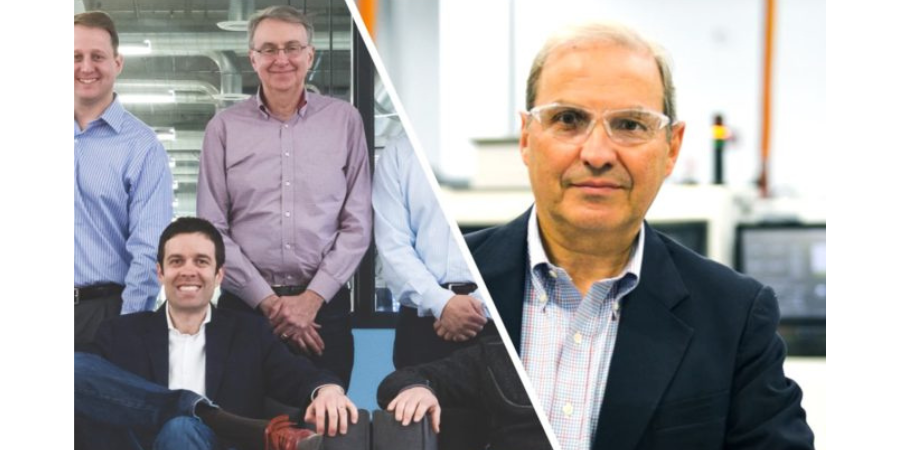
Massachusetts manufacturer Desktop Metal, Inc., is acquiring The ExOne Company, a North Huntingdon, Pa. company that specializes in 3D printing technology, in a deal valued at $575 million.
"We are thrilled to bring ExOne into the DM family to create the leading additive manufacturing portfolio for mass production," said Ric Fulop, founder and CEO of Desktop Metal, in a statement. "This transaction is a big step in delivering on our vision of accelerating the adoption of additive manufacturing 2.0.
"We believe our complementary platforms will better serve customers, accelerate adoption of green technologies, and drive increased shareholder value," said John Hartner, CEO of ExOne, in a statement.
Ric Fulop (bottom left), Co-Founder and CEO with the 2015 core leadership team at Desktop Metal, Inc.
The deal, which has been unanimously approved by the ExOne’s board of directors, is expected to close in the fourth quarter of 2021, subject to the approval of ExOne shareholders and satisfaction of customary closing conditions.




 Heat Treat