



Combustion Innovations

The Clean and Pure: 8 Heat Treat Tips

OCWant a free tip? Check out this read of some of the top 101 Heat Treat Tips that heat treating professionals submitted over the last three years. These handy technical words of wisdom will keep your furnaces in optimum operation and keep you in compliance. If you want more, search for “101 heat treat tips” on the website! This selection features 8 tips to make sure your operations are clean and pure.

Also, in this year’s show issue, Heat Treat Today will be sharing Heat Treat Resources you can use when you’re at the plant or on the road. Look for the digital edition of the magazine on September 13, 2021 to check it out yourself!


Oil and Water Don’t Mix

Keep water out of your oil quench. A few pounds of water at the bottom of an IQ quench tank can cause a major fire. Be hyper-vigilant that no one attempts to recycle fluids that collect on the charge car.

(Combustion Innovations)


Dirt In, Dirt Out!

Parts going into the furnace should be as clean as possible. Avoid placing parts in the furnace that contain foreign object debris (FOD). FOD on work surfaces going into the furnace will contaminate the furnace and the parts themselves. Dirty work in, dirty work out. FOD comes in many forms. Most common: oil, grease, sand in castings or grit blasting operations, and metal chips that generally originate from the manufacturing process before the parts are heat treated. It could also be FOD from the shipping process such as wood or plastic containers used to ship the parts.

(Solar Manufacturing)


Remove Particulates

Adding a strong magnetic filter in line after the main filtration system is an effective way to remove fine, metallic particulates in an aqueous quench system.

(Contour Hardening, Inc.)


Seal Away Dirt or Dusty Environments

Use a sealed enclosure or alternative cooled power controllers for dirty and dusty environments. For heavy dirt or dusty environments, a sealed cabinet with air conditioning or filters is recommended. Alternatively, select a SCR manufacturer that offers external mount or liquid cooled heatsinks to allow you to maintain a sealed environment in order to obtain maximum product life.

(Control Concepts)


Copper as a Leak Check

If maintaining dew point is a problem, and it’s suspected that either an air or water leak is causing the problem, run a piece of copper through the furnace. Air will discolor the copper; water will not.

(Super Systems, Inc.)


Oxygen Contamination Sources

A common source of oxygen contamination to vacuum furnace systems is in the inert gas delivery system. After installation of the delivery lines, as a minimum, the lines should be pressurized and then soap-bubble tested for leaks. But even better for critical applications is to attach a vacuum pump and helium leak detector to these lines with all valves securely closed, pull a good vacuum, and helium leak check the delivery line system. Helium is a much smaller molecule than oxygen and a helium-tight line is an air-tight line. Also, NEVER use quick disconnect fittings on your inert gas delivery system to pull off inert gas for other applications unless you first install tight shut-off valves before the quick disconnect. When the quick disconnect is not in use, these valves should be kept closed at all times. (Though the line is under pressure, when you open a back-fill valve to a large chamber, the line can briefly go negative pressure and pull in air through a one-way sealing quick disconnect valve.)

(Grammer Vacuum Technologies)


Container Clarity Counts!

Assure that container label wording (specifically for identifying chemical contents) matches the corresponding safety data sheets (SDS). Obvious? I have seen situations where the label wording was legible and accurate and there was a matching safety data sheet for the contents, but there was still a problem. The SDS could not be readily located, as it was filed under a chemical synonym, or it was filed under a chemical name, whereas the container displayed a brand name. A few companies label each container with (for instance) a bold number that is set within a large, colored dot. The number refers to the exact corresponding SDS.

(Rick Kaletsky, Safety Consultant)


Discolored Part—Who’s to Blame?

If your parts are coming out of the quench oil with discoloration and you are unsure if it is from the prewash, furnace, or oil quench, you can rule out the quench if the discoloration cannot be rubbed off. Check this before the part is post-washed and tempered.

Other possible causes:

  • Can be burnt oils as parts go through the quench door flame screen
  • Poor prewash
  • Furnace atmosphere inlet (particularly if it is drip methanol)

(AFC-Holcroft)


Check out these magazines to see where these tips were first featured:



The Clean and Pure: 8 Heat Treat Tips Read More »
10 Heat Treat Tips to Whet Your Appetite

Heat Treat 2019 is coming, and one of the great benefits of gathering with a community of heat treaters is the opportunity to challenge old habits and look at new ways of doing things. Heat Treat Today’s 101 Heat Treat Tips is another opportunity to learn the tips, tricks, and hacks shared by some of the industry’s foremost experts.

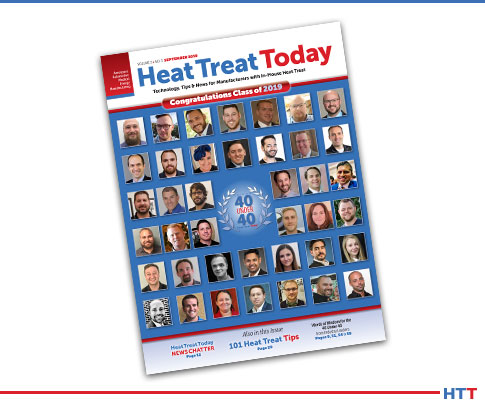
For Heat Treat Today’s latest round of 101 Heat Treat Tips, click here for the digital edition of the 2019 Heat Treat Today fall issue (also featuring the popular 40 Under 40), and to be distributed in print at Heat Treat 2019, in Detroit, Michigan, October 14-17, 2019.

Today’s Technical Tuesday features 10 Tips from a variety of categories, including SCR Power Controls (56), Cooling Systems (64), Combustion (66, 101), Induction Heat Treating (71), Thermocouples (79), AMS2750 (86), Vacuum Furnaces (92), and Miscellaneous (41, 87). These tips come from the 2018 list of 101 Heat Treat Tips published in the FNA 2018 Special Print EditionThis special edition is available in a digital format here.

If you have a heat treat-related tip that would benefit your industry colleagues, you can submit your tip(s) to doug@heattreattoday.com or editor@heattreattoday.com—or stop by to see us at Booth #2123 in Detroit!


Heat Treat Tip #41

Discolored Part—Who’s to Blame?

If your parts are coming out of the quench oil with discoloration and you are unsure if it is from the prewash, furnace, or oil quench, you can rule out the quench if the discoloration cannot be rubbed off. Check this before the part is post-washed and tempered.

Other possible causes:

  • Can be burnt oils as parts go through the quench door flame screen
  • Poor prewash
  • Furnace atmosphere inlet (particularly if it is drip methanol)

Submitted by AFC-Holcroft


Heat Treat Tip #56

Electrical Energy Savings

When we buy a pint of beer we don’t expect the head (or foam) to be ½ the glass. We can get this situation when we pay for our plant’s electricity; we pay for both the working power that drives the process (analogy: beer) and reactive power that doesn’t directly drive the process (analogy: foam/head). The lower the Power Factor the worse this situation. The latest SCR devices can help combat this while maintaining precise control and reducing overall peak load demands (using flexible firing methods).

Submitted by Eurotherm


Heat Treat Tip #64

Buy a Cooling System Capable of Growth

Plan for future growth. It is more cost-effective to provide additional capacity while equipment is being installed. Simple planning for the addition of future pumps (e.g. providing extra valved ports on tanks) and space for heat transfer equipment (e.g. pouring a larger pad or adding extra piers) can save considerable money down the road with little upfront expenditure. Consider installing one size larger piping for the main distribution supply and return. If this is not possible make sure you can add an additional piping run on the hangers you will install now.

Above all, be sure to include all necessary drains, vents, isolation valves, and plenty of instrumentation. These items are critical aids in maintenance and troubleshooting and future system expansion.

Submitted by Dry Coolers


Heat Treat Tip #66

Tune That Burner!

Don’t neglect burner tuning—a 1% reduction in excess O2 in the flue products can save you $1,000.00/year on your IQ batch or $2,000.00/year on a 2000-pound/hour continuous furnace—not to mention consistent temp uniformity, better heat-up rates. Pretty good payback for a couple of hours’ work.

Submitted by Combustion Innovations


Heat Treat Tip #71

Tube & Pipe Heat Treatment Is Different Than Solid Cylinder Heat Treating

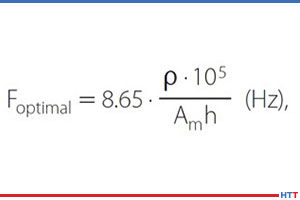
Induction heating of tubes and pipes is somewhat different from the heating of solid cylinders. There is a difference in the frequency selection that would maximize energy efficiency for heating tubular products as compared to solid cylinders. In tube and pipe heating, the frequency, which corresponds to maximum coil efficiency, is typically shifted toward lower frequencies providing larger current penetration depth than the tube wall thickness (except for heating of tubes with electromagnetically small diameters). This condition can produce an improvement in electrical efficiency of 10–16 % and even higher. One simplified formula that is used in industry for rough estimate of the electrically efficient frequency is shown in the image, where:

  • ρ – electrical resistivity of heated metal (Ω*m)
  • Am = average diameter; Am = (Tube O.D. – h) (m)
  • h = wall thickness (m)

In cases when induction heaters cannot be considered to be electromagnetically long coils, the values of the optimum frequency will be higher than the values suggested according to formula, and computer modeling can help determining its exact value.

Submitted by Dr. Valery Rudnev, FASM, Fellow of IFHTSE Professor Induction Director Science & Technology, Inductoheat Inc., An Inductotherm Group company


Heat Treat Tip #79

Order SAT Probes All at Once

Place a yearly blanket order for your SAT probes and ask that they are made from the same coil. This will give you the same correction factors and temperature tolerances.

Submitted by GeoCorp


Heat Treat Tip #86

AMS2750 Is Golden

This standard is gold and unfortunately has a bad rap today because companies feel it’s just added cost into the process. Today’s technology means you can afford AMS2750E compliant controllers and digital recorders for only a few hundred dollars above a standard offer. This investment will be paid back many times over due to the longer lifetime expected with a quality instrument as well as the quality benefits from better drift performance between calibration intervals, redundant recording (in case of record loss), and overall accurate temperature control, leading to less rejects and reduced rework.

Submitted by Eurotherm


Heat Treat Tip #87

Pay Attention to Material Chemistry

When trying to determine a materials response to heat treatment, it is important to understand its form (e.g., bar, plate, wire, forging, etc.), prior treatments (e.g. mill anneal, mill normalize), chemical composition, grain size, hardenability, and perhaps even the mechanical properties of the heat of steel from which production parts will be manufactured. The material certification sheet supplies this basic information, and it is important to know what these documents are and how to interpret them.

Certain alloying elements have a strong influence on both the response to heat treatment and the ability of the product to perform its intended function. For example, boron in a composition range of 0.0005% to 0.003% is a common addition to fastener steels. It is extremely effective as a hardening agent and impacts hardenability. It does not adversely affect the formability or machinability. Boron permits the use of lower carbon content steels with improved formability and machinability.

During the steelmaking process, failure to tie up the free nitrogen results in the formation of boron nitrides that will prevent the boron from being available for hardening. Titanium and/or aluminum are added for this purpose. It is important, therefore, that the mill carefully controls the titanium/nitrogen ratio. Both titanium and aluminum tend to reduce machinability of the steel, however, the formability typically improves. Boron content in excess of 0.003% has a detrimental effect on impact strength due to grain boundary precipitation.

Since the material certification sheets are based on the entire heat of steel, it is always useful to have an outside laboratory do a full material chemistry (including trace elements) on your incoming raw material. For example, certain trace elements (e.g. titanium, niobium, and aluminum) may retard carburization. In addition, mount and look at the microstructure of the incoming raw material as an indicator of potential heat treat problems.

Submitted by Dan Herring, The Heat Treat Doctor®


Heat Treat Tip #92

Hacksaw Your Hearth!

When loading parts, carefully place the workload on the center of the hearth (front-to-back and side-to-side). Make sure it is stable and no part of the load is close to or touching the heating elements. This can create arcing and damage your parts. Tip: Once the load is in place, mark the hearth posts with a hacksaw to quickly find the front and back measurements each time.

Submitted by Ipsen USA


Heat Treat Tip #101

Can We Achieve Perfect Combustion?

Perfect combustion is based upon the concept of neither excess oxygen or a deficiency of oxygen in the combustion process. This is known as stoichiometric or theoretical combustion. Why is this considered as theoretical and not possible under normal field conditions? Consider the factors that can affect your combustion process: temperature of air or gas, pressure fluctuations, gas composition or supply changes, operating conditions, etc. Therefore theoretical combustion is just that: perfect combustion is only possible in a lab setting. Burner adjustment and calibration normally maintains a minimum of 10% excess air to compensate for these variables and avoid operating gas-rich with high levels of CO in the combustion process.

Submitted by WS Thermal

10 Heat Treat Tips to Whet Your Appetite Read More »

Heat Treat Today’s Meet the Consultant: John Clarke

Heat Treat Consultants is a comprehensive listing of heat treat industry consultants offered as part of Heat Treat Today’s efforts to help minimize the effects of heat treat “brain drain.” In this occasional feature, “Meet the Consultants”, we will introduce you to the experts listed in this growing directory. Today, learn more about John Clarke of Combustion Innovations, and then click through to the page to read more details about each consultant. We are adding more regularly. Contact them directly, or call us and we’ll introduce you to them. Whether it’s a technical process question, a safety concern, a compliance issue, or a business-related question, one of our heat treat consultants will be able to help. If you are a consultant and would like to be listed, please contact Doug Glenn


Name: John Clarke
Company Name: Combustion Innovations
Location: Fort Wayne, Indiana
Years In Industry: 30+
Consulting Specialties:

  • Energy Manufacturing
  • New Business Development & Product Development
  • Engineering
  • Strategic Planning


Send an email | Website | Phone: (260)478-1000

Briefly:

John has served the heat treating community for several years in various roles with the Industrial Heating Equipment Association (including president in 2007). After a few years with Maxon Corporation, where he was Vice President of Business Development, primarily responsible for strategic alliance development, planning, and marketing, John began a career with Diamond Engineering Company in 2004, eventually leading the company as president. As a consultant for Diamond, he has worked with a range of corporate and organizational clients, including the Department of Energy, Oak Ridge National Lab, Purdue University Technical Assistance Program, and Union Gas. In addition, John has been the director of Sales and Technology at Combustion Innovations, Inc. in Fort Wayne, Indiana, since its founding in 2016, where he oversees product development, engineering, and sales and marketing of the company, seeking new techniques to maximize efficiency and minimize time for repair. John shares his expertise and knowledge in various roles as a trainer, a speaker/presenter at heat treating and other industry conferences and workshops, a researcher and author. He holds 3 U.S. patents for heat processing equipment.

Publications or Significant Accomplishments:

  1. Workshop Participant, “Roadmap for Process Heating Technology Priority Research & Development Goals and Near-Term NonResearch Goals To Improve Industrial Process  Heating”, Industrial Heating Equipment Association/Office of Industrial Technologies (Department of Energy), 1999
  2. Chair, Process Heating Steering Committee, assisting the Department of Energy in giving voice to end users’s needs (2002-2004)
  3. Member, IHEA (2004 to present)
  4. President of the IHEA (2007), following serving as Vice-President, 2nd Vice-President and Treasurer
  5. Presenter, “Convert a Compliance Energy Audit from an Impediment to Opportunity”, International ThermProcess Summit, Chicago, Illinois (2016)
  6. Certified Trainer for the Department of Energy, listed as a Process Heating Assessment and Survey Tool (PHAST) Qualified Specialist (current, June 2018)
  7. Holds 3 U.S. Patents for heat processing equipment.
  8. Worked with IHEA and U.S. Technical Advisory Group (TAG) to the International Standard Organization (ISO) Technical Committee (TC) to consider, develop and recommend formal proposals for changes on ISO documents regarding method of energy balance and efficiency.
  9. Author of articles published on LinkedIn and Process-Heating.

Links to Online Resources

References (partial list):

LinkedinIndustrial Heating Equipment Association


Heat Treat Today’s Meet the Consultant: John Clarke Read More »

Heat Treat Tips: Safety and Cost-Saving Hacks

During the day-to-day operation of heat treat departments, many habits are formed and procedures followed that sometimes are done simply because that’s the way they’ve always been done. One of the great benefits of having a community of heat treaters is to challenge those habits and look at new ways of doing things. Heat Treat Today‘101 Heat Treat Tips, tips and tricks that come from some of the industry’s foremost experts, were initially published in the FNA 2018 Special Print Edition, as a way to make the benefits of that community available to as many people as possible. This special edition is available in a digital format here.

Today we continue an intermittent series of posts drawn from the 101 tips. The tips for this post come from a variety of categories but all generally address safety or cost-saving ideas. 


Dr. Valery Rudnev, FASM, Fellow of IFHTSE, Professor Induction, Director Science & Technology, Inductoheat Inc., An Inductotherm Group company

Heat Treat Tip #2

Avoid axle shaft cracks after induction tempering

Situation: In induction scan hardening of axle shafts, there was NO cracking occurred after scan hardening (case depth varies from 5 mm to 8 mm). Cracks appeared in the spline region after induction tempering.
Solution: Most likely, the cause of this problem is associated with a reversal of residual stress distribution during induction tempering. Reduce coil power for tempering and increase time of induction tempering. Multi-pulse induction tempering applying lower power density might also help. As an alternative, instead of modifying temper cycle, you can also try to reduce quench severity by increasing the temperature of the quenchant and/or its concentration.

Submitted by Dr. Valery Rudnev, FASM, Fellow of IFHTSE, Professor Induction, Director Science & Technology, Inductoheat Inc., An Inductotherm Group company


Heat Treat Tip #4

Closed Loop Water System on Top

When designing a vacuum furnace installation with a closed loop water system, elevate the tank and pump about 9 feet, then cage the space underneath for thermocouple storage, spares, and tools. Saves shop floor space.

Submitted by AeroSPC


IR Cameras are inexpensive and worth the price.

Heat Treat Tip #6

Don’t Be Cheap. Buy an IR Camera.

IR cameras have come way down in price—for a thousand dollars, you can have x-ray vision and see furnace insulation problems before they cause major problems—also a great diagnostic tool for motors, circuit breakers, etc. (And you can spot deer in the dark!)

Submitted by Combustion Innovations


Heat Treat Tip #7

An Engineer’s Design Checklist

Get an SCR design checklist and avoid mistakes.

When SCRs are involved in the design of a new piece of equipment, questions arise. Control Concepts Inc of Chanhassen, MN, offers a 20-point design checklist to help engineers who don’t specialize in power controllers. Good reading. Search for “design checklist” at the website.

Submitted by Control Concepts, Inc.


Heat Treat Tip #9

Question the Spec! Save Money!

Before you specify a heat treatment, stop and consider your options. Rather than reusing an old specification, ask the design engineer to determine the stress profile, and base the hardness or case depth on real stress data. Is this complicated? Maybe. But especially for carburizing, why pay for more depth than you need, and why take the risk of inadequate strength? The 21st century is here. We have ways to help with the math. Let’s move beyond guess and test engineering methodology.

Submitted by Debbie Aliya


Heat Treat Tips: Safety and Cost-Saving Hacks Read More »

Heat Treat Tips: Quenching

During the day-to-day operation of heat treat departments, many habits are formed and procedures followed that sometimes are done simply because that’s the way they’ve always been done. One of the great benefits of having a community of heat treaters is to challenge those habits and look at new ways of doing things. Heat Treat Today101 Heat Treat Tips, tips and tricks that come from some of the industry’s foremost experts, were initially published in the FNA 2018 Special Print Edition, as a way to make the benefits of that community available to as many people as possible. This special edition is available in a digital format here.

In today’s Technical Tuesday, we continue an intermittent series of posts drawn from the 101 tips. The category for this post is Quenching, and today’s tips–#8, #38, and #81–are from three different sources: Dan Herring,  “The Heat Treat Doctor®”, of The Herring Group; Combustion Innovations; and Super Systems, Inc. 


Heat Treat Tip #8

14 Quench Oil Selection Tips

Dan Herring,  “The Heat Treat Doctor®”, of The Herring Group

Here are a few of the important factors to consider when selecting a quench oil. 

  1. Part Material – chemistry & hardenability 
  2. Part loading – fixturing, girds, baskets, part spacing, etc. 
  3. Part geometry and mass – thin parts, thick parts, large changes in section size 
  4. Distortion characteristics of the part (as a function of loading) 
  5. Stress state from prior (manufacturing) operations 
  6. Oil type – characteristics, cooling curve data 
  7. Oil speed – fast, medium, slow, or marquench  
  8. Oil temperature and maximum rate of rise 
  9. Agitation – agitators (fixed or variable speed) or pumps 
  10. Effective quench tank volume 
  11. Quench tank design factors, including number of agitators or pumps, location of agitators, size of agitators, propellor size (diameter, clearance in draft tube), internal tank baffling (draft tubes, directional flow vanes, etc.), flow direction, quench elevator design (flow restrictions), volume of oil, type of agitator (fixed v. 2 speed v. variable speed), maximum (design) temperature rise, and heat exchanger type, size, heat removal rate in BTU/hr & instantaneous BTU/minute.
  12. Height of oil over the load 
  13. Required flow velocity through the workload 
  14. Post heat treat operations (if any) 

Submitted by Dan Herring,  “The Heat Treat Doctor®”, of The Herring Group.

Heat Treat Tip #38

Oil and Water Don’t Mix

Keep water out of your oil quench. A few pounds of water at the bottom of an IQ quench tank can cause a major fire. Be hyper-vigilant that no one attempts to recycle fluids that collect on the charge car.

Submitted by Combustion Innovations

Heat Treat Tip #81

Quench Oil Troubles

According to Super Systems, Inc., there are one of three problems to consider if your quench is just not cutting it. Although SSI focuses more on atmosphere control systems, when parts come out soft, the problem isn’t always the atmosphere – sometimes it’s the quench. Here are three things to consider regarding your quench:

  • First, check the composition of the quench media. Is it up to spec? Does it need to be refreshed?
  • Is the quench receiving adequate agitation to thoroughly quench the load?
  • Is the quench at the right temperature? If the bath is too warm when the load enters, quenching won’t go well!

Submitted by Super Systems, Inc.


Photo credit: Heat Treat Today FNA 2018; Super Systems, Inc.


If you have any questions, feel free to contact the expert who submitted the Tip or contact Heat Treat Today directly. If you have a heat treat tip that you’d like to share, please send to the editor, and we’ll put it in the queue for our next Heat Treat Tips issue. 

Heat Treat Tips: Quenching Read More »

Skip to content