

Akron Steel Treating

15 Quick Heat Treat News Items to Keep You Current

15 Quick Heat Treat News Items to Keep You Current

Heat Treat Today offers News Chatter, a feature highlighting representative moves, transactions, and kudos from around the industry.

Personnel and Company Chatter

  • ThermTech of Waukesha, Wisconsin, celebrates the groundbreaking of a 10,500-square-foot manufacturing addition. Construction is expected to be completed in December 2018. 
  • An Ohio-based engineering firm, Dana Incorporated, announced a new series of Brevini™ heavy-duty winch drives for marine and offshore applications.  This new series of lightweight winch drives have been engineered with a sealing system designed to withstand harsh marine environments, and with improved power density, housing made from either cast iron or steel, and high-radial load bearings to deliver reliable lifting performance for heavy loads.
  • Brunel University London opened its Advanced Metal Processing Centre (AMPC) at the Brunel Center for Advanced Solidification Technology (BCAST), which will enable R&D activity to enable innovations, such as lightweight car parts, to make the leap from the lab to full-scale industrial trials. The 1,500 sq m AMPC facility includes industrial and pilot-scale equipment for processing and fabrication of extruded metals (novel bending processes, machining, and advanced joining); additional casting processes (gravity die casting and sand casting, etc.), and supporting materials characterization technologies (strength and fatigue testing and 3D x-ray tomography).
  • A global leader in manufacturing and overhauling aerospace structures, systems, and components, Triumph Group, Inc., based in Berwyn, Pennsylvania, recently announced that its Aerospace Structures business has been awarded a multi-year airframe component contract for Lockheed Martin’s C130J Super Hercules program. Under initial terms of the contract, Triumph Fabrications in San Diego, California will provide 108 different part numbers for the C130J program. The parts include fabricated sheet metal structures made from a combination of aluminum, steel and titanium materials that will be fitted to the nacelle, wing and fuselage sections of the aircraft.
  • Aerospace equipment manufacturer Liebherr Aerospace has been awarded another contract from Boeing Commercial Airplanes for their 777 and 777X programs. Liebherr-Aerospace will deliver two electronic components of the main gear steering system for the two wide-bodies: the main gear steering control unit and the nose gear steering position transducer.
  • Engineered bearings and power transmission manufacturer, The Timken Company, based in Canton, Ohio, recently completed the acquisition of Rollon Group, a leader in engineered linear motion products. Rollon specializes in the design and manufacture of engineered linear guides, telescopic rails and linear actuators used in a wide range of industries such as passenger rail, aerospace, packaging and logistics, medical and automation.
  • Gear Motions, which has divisional offices in central New York, recently appointed to executive positions: Dan Bartelli to Director of Operations of Nixon Gear, a division of Gear Motions, and Anna Pastore to Corporate Controller. Bartelli, who began his career as a machinist, also recently celebrated his 30th anniversary with Nixon Gear, a division of Gear Motions. He is responsible for all Nixon Gear Division Operations including Manufacturing, Quality, and Engineering. Pastore previously served as Director of Finance for Cascade & Maverik Lacrosse, and Vice President of Finance of the Produce and Technology Division at Agway.
  • Worthington Industries, a metals manufacturing firm based in Columbus, Ohio, announced today that Mark Russell, president and COO is retiring. Andy Rose has been named president and will continue as chief financial officer (CFO). Geoff Gilmore has been named vice president and chief operating officer (COO) and will also continue to lead the Pressure Cylinders business.
Equipment Chatter

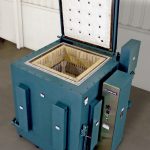
  • An electric box furnace has been supplied to a plant located in Louisiana that is a global supplier of large industrial valves for various industries. L&L Special Furnace Co., Inc., shipped this furnace, which is the fifth supplied by the company to this facility. The furnace is used to both heat treat and temper various rings and seals deployed in the manufacturing of valves used in the power-generation field. It is also used for general heat treating of various steels prior to machining.
  • Two furnaces have recently been shipped to customers from Grieve Corporation. No. 1040 is a 2200°F (1204°C), inert atmosphere pit furnace, currently used for heat treating automotive parts in baskets at the customer’s facility. No. 989 is an electrically heated, 2,000°F (1,093°C) inert atmosphere furnace from Grieve, used to process fabricated parts at the customer’s facility.
  • A leader in the technology industry recently purchased an electrically heated enhanced duty walk-in oven from Wisconsin Oven Corporation to be used for composite curing small parts. The batch oven has the capability to heat 16,000 pounds of a composite material from 70° F to 350° F within 6-7 hours.

Kudos Chatter

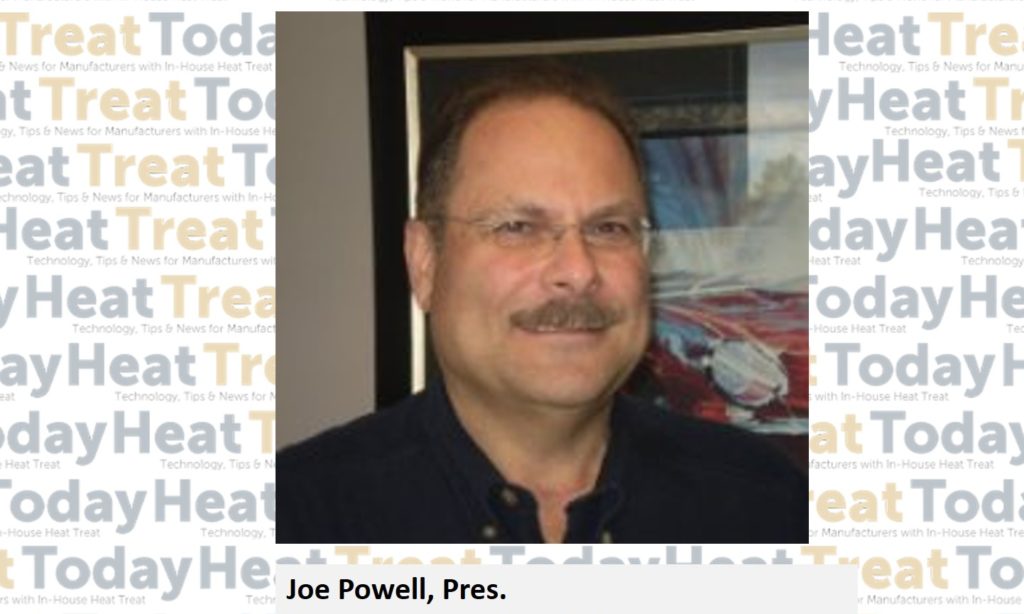
  • Akron Steel Treating celebrated its 75th anniversary August 31, 2018, with guests, officials, employees, customers, and suppliers in attendance, as well as the deputy mayor for economic development, Samuel D. DeShazior, who presented AST president Joseph Powell with a letter of congratulations from Mayor Daniel Horrigan. Joe’s grandfather, Prosper P. Powell, founded the company in 1943, and his daughter, Christina Somogye, recently purchased a 10% interest in ASTC and is an integral part of the succession plan.
  • For the second year in a row, GKN Aerospace has received a supplier award from Spirit AeroSystems. Spirit recognized GKN Aerospace with a Collaboration Values Partner award for superior performance at the 2018 Spirit AeroSystems supplier recognition banquet in Wichita, Kansas. In addition, GKN Aerospace also recently announced via Stratasys that the company is improving production times and removing design constraints for multiple tooling applications since integrating additive manufacturing at its Filton manufacturing site in the UK.
  • Retech Systems, a SECO/WARWICK company based in Mendocino County, California, recently won North Bay Maker Award for “best manufacturing process innovation”.
  • Induction heating company Ambrell Corporation is the honoree for the Global Advancement Award and Ambrell President Tony Mazzullo is a finalist for CEO of the Year at the Technology and Manufacturing Awards, created by the Rochester Business Journal and Rochester Technology and Manufacturing Association. The Global Advancement Award is given to a company that demonstrates dynamic growth through expansion of export opportunities and participation in new global markets. The CEO of the Year demonstrates leadership in the industry, commitment to staff development, and dedication to the Greater Rochester/Finger Lakes Region. Tony Mazzullo is one of two finalists and the winner will be announced on October 23rd.

Heat Treat Today is pleased to join in the announcements of growth and achievement throughout the industry by highlighting them here on our News Chatter page. Please send any information you feel may be of interest to manufacturers with in-house heat treat departments especially in the aerospace, automotive, medical, and energy sectors to the editor at editor@heattreattoday.com.


15 Quick Heat Treat News Items to Keep You Current Read More »
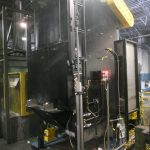
Testing Underway for Innovative Gas Quenching Unit


A Cleveland-based heat treatment software and engineering firm, specializing in metallurgical process engineering and thermal/stress analysis of metal parts, recently announced that mechanical and fatigue testing is underway on an innovative gas quenching unit designed to minimize component distortion during the hardening process.

The DANTE Controlled Gas Quenching (DCGQ) unit is capable of quenching single components following a time-temperature schedule designed for a specific component and steel alloy using the DANTE software.

DANTE Solutions proposed the concept of the process and the DANTE Controlled Gas Quench (DCGQ) unit and collaborated with Milwaukee-based Atmosphere Engineering (now part of United Process Controls), which built the unit, and Akron Steel Treating. The project is funded by the US Army Defense Directorate (ADD), and the aim market is aerospace, where high hardenability steels are used for gears, bearings, and shafts.

Justin Sims, mechanical engineer, DANTE Solutions

According to Justin Sims, a mechanical engineer with DANTE Solutions, the project began with Phase 1, wherein the team had to “make sure that a relatively slow cooling rate through the martensite transformation did not degrade material properties.”

“Phase 1 showed that we had comparable results for hardness, tensile properties, Charpy impact properties, and bending fatigue to the standard quenching practice for Ferrium C64,” said Sims. “We then initiated Phase 2 and had a unit built that was capable of controlling the temperature of the incoming quench gas to within +/- 5°C.” Phase 2 will end December 2018 after two years. The Phase 1 process currently has a patent pending.

Mechanical & Fatigue testing is currently underway at Akron Steel Treating Company where the unit is installed, and samples have been processed to compare the DCGQ process to standard HPGQ of high alloy steels. The current steel under investigation is Ferrium C64. Sims noted that DANTE is overseeing the processing of the test materials, and commercial metallurgical testing companies are performing the tests.

Tensile Testing Metallurgical Laboratory completed the hardness, tensile and Charpy impact testing, and the results are similar for conventionally hardened C64 samples and DCGQ processed samples. IMR Test Labs is conducting the bending fatigue tests. The US Army at Fort Eustis will conduct the rolling contact fatigue tests.

“We have hardness, tensile, and Charpy impact results from the unit we can share with anyone who is interested,” said Sims. “Distortion, bending fatigue, and rolling contact fatigue are currently being evaluated and the results will be available before the end of 2018.”

“We believe that the DANTE Controlled Gas Quench (DCGQ) process, patent pending, has the potential to change the way heat treating is performed on high hardenability steels,” added Sims. “By controlling the temperature of the incoming quench gas, components experience a near uniform transformation to martensite. This near-uniform transformation has the potential to eliminate post-heat treatment correction operations by minimizing part distortion and allowing designers to account for the size change distortion in the initial design of a component. To date, mechanical and dynamic properties for Ferrium C64 processed using the standard hardening process and the DCGQ process has been identical. Bend fatigue and rolling contact fatigue are currently being evaluated.”


All images provided by DANTE Solutions.

Testing Underway for Innovative Gas Quenching Unit Read More »

Joe Powell Comments on Marquenching and Austempering

Last week, we ran a news release about ThermoFusion in California expanding their heat treat capabilities to include marquenching and austempering (click here to see that release). In that short article, some comments were made about the aggressiveness of various quench methods and their effect on distortion and cracking.

Joe Powell, of Akron Steel Treating Company, Integrated Heat Treating Solutions, LLC, IQDI Products, LTD., and IQ Technologies Inc, one of the heat treat industry’s foremost experts on quenching, wrote in to help educate all of us a bit more on the finer points of quenching. Below are his comments. Joe can be reached at JoePowell@akronsteeltreating.com.


Doug,

In your recent article, you stated that Marquenching and Austempering use a “less aggressive” quench cooling rate, “and reduce distortion caused by rapid temperature change (thermal shock)” which is only half true.  The main mechanism that allow a molten salt quench to reduce distortion is the elimination of mixed phase cooling – there is no slow film boiling (gas) phase cooling mixed with the high-evaporative cooing phase of nucleate boiling, but only a single phase of all liquid convection cooling.   It’s the non-uniformity of cooling at the surface of the part that will distort or crack the part not so much the rate of cooling.

Joe

Joseph A. Powell, President
Akron Steel Treating Company

Integrated Heat Treating Solutions, LLC
IQDI Products, LTD. 
IQ Technologies Inc

Joe Powell Comments on Marquenching and Austempering Read More »

360 Degree Part Design: Listen to Your Heat Treat Department

Publisher’s Note: Joe Powell, President of Akron Steel Treating Company and IQ Technologies, raises a very compelling point that part designers should work closely with heat treaters to achieve the lowest possible cost of production. In his introduction, he lists out some lofty goals that were set by an ASM Committee back in 1999…a meeting I was fortunate to attend. The goals were lofty then, and they continue to be lofty now. Mr. Powell offers a road map for getting closer to these goals.

Enjoy the read.

Doug Glenn, Publisher


By Joe Powell, President, Akron Steal Treating & IQ Technologies


It’s now 2017, almost 18 years since the ASM R+D committee set forth its Vision 2020, a list of goals for the heat treating industry by the year 2020:

BACKGROUND AND INDUSTRY NEEDS

Industry needs have been determined from the information brought forth by various

committee efforts and surveys over the last five years. Heat treating industry executives identified many of these needs, and prepared a view of the ideal future. This view has been named Vision 2020, and the established performance targets, based in energy, environment, productivity and quality, and industry performance are:

  • Reduce energy consumption by 80%
  • Improve insulation
  • Achieve zero emissions
  • Reduce production costs by 75%
  • Increase furnace life ten-fold
  • Reduce the price of furnaces by 50%
  • Achieve zero distortion and maximum uniformity in heat treated parts
  • Return 25% on assets
  • Create 10-year partnerships with customers.”

It appears our industry has a way to go before meeting the Vision 2020 goals.  Whether you work for a captive heat treating division of a part manufacturer or do heat treating at a commercial heat treating shop for many different part manufacturers, the goals set forth in 1999 are still worth pursuing.

What can we do to speed up the process of achieving these goals?   

The above goals can be summarized as making “better parts” at a total lower cost of manufacture.   Heat treating is a crosscutting technology.  To become more efficient in the heat treating process we must look at not only our heat treating processes, but also look concurrently “upstream” and “downstream” from the heat treating process.  All the parties in the part making value stream must collaborate to eliminate waste in each of their own processes as well as the waste that occurs from the interaction between each process.  Doing the proper processes in the right order is also key to eliminating waste.  For example, create a “near net shape” part before carburizing so the carburize layer that took so long to diffuse into the part is not removed in the post-hardening grinding operation.

[blocktext align=”left”]Heat treating considerations must become part of the design and engineering processes from their inception. Heat treaters must give their input for what material is best for the part application, considering not only the desired part fit and function, but the needed physical and mechanical properties. [/blocktext]

Two of the above goals: “reduce production costs by 75%” and “achieve zero distortion and maximum uniformity in heat treated parts” will require innovations in not only heat treating processes, but also heat treating equipment.   The modeling of the heat treating process must become an integral part of the FEA modeling of the part design.  The designer should focus on fit and function as well as achieving the needed mechanical properties, all at the lowest overall cost of manufacture.   Part design engineers cannot meet these goals employing the same heat treating processes and using the same alloys of material that have been used for the last 100 years.   Innovations in heat treatment must be developed collaboratively, crosscutting the many silos of expertise that are needed for making the part.

Part distortion after heat treatment costs part makers billions of dollars each year in post-heat treat operations.  Achieving predictable part distortion after quenching with optimal grain refinement for a given alloy of steel depends on selecting the proper heat treat methods, e.g., proper racking, uniform heating, uniform atmosphere protection and most importantly the proper quenching process.  However, the selection of the optimal quenching method is only enabled by a coordinated choice of the type of alloy used.  Although higher alloy steel allows the use of gas quenching, air hardening steels usually mean higher cost.  In addition, a higher hardenability steel does not always equate to the optimal hardness, ductility and part compressive surface stress state.  The part designer must work with both the steel maker and the heat treater to optimize all three dimensions of hardened part properties.

Again, heat treating considerations must become part of the design and engineering processes from their inception. Heat treaters must give their input for what material is best for the part application, considering not only the desired part fit and function, but the needed physical and mechanical properties.  If we are to minimize waste in post-heat treat operations to achieve proper fit and function, at the lowest overall cost of manufacture, we need to collaborate with all the parties in the part making value chain.

Heat treating equipment in most heat treating departments is the same basic designs as decades ago.   The sunk costs in equipment the heat treater often dictates what heat treat processes will be done to the parts with little or no regard to the effect heat treatment has on total overall cost of manufacture.  Since heat treatment costs are typically between 5% to 10% of the total part cost, demonstrated cost savings from innovative heat treatments alone are rarely enough to justify a change to a new type of processing equipment even if demonstrated to be clearly better.

However, if the total cost of heat treatment includes an examination of the waste created “upstream” and “downstream” of the heat treatment process, often a change in heat treat processes can be shown to have a much larger effect on lowering he overall cost of parts making while making a better part for the end-user.  Achieving a proper balance of hardness and ductility in the part can be enhanced by also achieving a higher compressive surface stress state after quenching.   Higher compressive residual stresses can significantly increase part performance or yield higher power density at nominal cost.   Regardless of part hardness, compressive residual surface stress will usually enhance part wear and fatigue performance.   But to enable the optimal intensive quench that gives compressive residual surface stresses requires the part designer to collaborate with the heat treater.

A faster quench cooling rate usually will provide higher hardness to a deeper level in the part for a given alloy of steel.   Most heat treat metallurgists believe the higher cooling rate also means more part distortion or a higher probability of part cracking.  So many parts are designed around higher alloy air hardening grades of steel to get lower distortion after quenching.  However even gas quenching can cause unacceptable distortion in thin parts with complex shapes.

[blocktext align=”right”]Modern heat treat process modeling and intensive quenching practices have shown that the relationship between the probability of part cracking and rate of quench cooling is a bell curve. [/blocktext]

Modern heat treat process modeling and intensive quenching practices have shown that the relationship between the probability of part cracking and rate of quench cooling is a bell curve.  While it is true at very low cooling rates, such as gas quenching and molten salt quenching, there is a very low probability of part cracking, we also now know that at very high cooling rates which are uniformly applied to the part shell from the very beginning of the quench, the probability of part cracking is also very low.   The key is to eliminate the non-uniformity part cooling caused by film boiling at the very beginning of the quench process.

The benefit of “uniform + intensive” quench cooling is predictable part distortion and optimal grain refinement for a given alloy of steel.  In addition, intensive quench cooling develops “current” compressive surface stresses that hold the part like a die.  Even after tempering, high residual compressive surface stresses remain when designed into the part with the proper material alloy selection and the proper uniform and intensive quench process make for better parts at a total lower cost.   An added benefit is the elimination of the oil quenchants for increased safety, decreased environmental impact and cleaner parts without washing.

CONCLUSION:        

As heat treaters today, we must find the optimal processes and apply them in the best available equipment that eliminates the pains of heat treating from distortion and non-uniform properties for not only our customers, but our customers’ customer.  Obviously, we heat treaters cannot do this in a vacuum.  (Pun intended!)  Heat treating is integral and crosscutting with many different process technologies in the part making value stream.

For the heat treating industry to achieve the goals set forth for us so long ago, we must collaborate with all the other members in the part making value chain to optimize the heat treating processes we have always used and in some cases find new ways.  The simple fact is everyone at each step of part design and manufacture must collaborate to eliminate waste for the benefit of all in the lean value stream.  The order of processing is also very important.  To get it all right, the part making value map cannot be done from the individual silos of expertise.

Therefore, the selection of the optimal heat treatment process for a better part at a lower overall cost of manufacture is only enabled by a collaboration of the part designers, material makers and manufacturing engineers all working with their heat treater.

360 Degree Part Design: Listen to Your Heat Treat Department Read More »

Skip to content