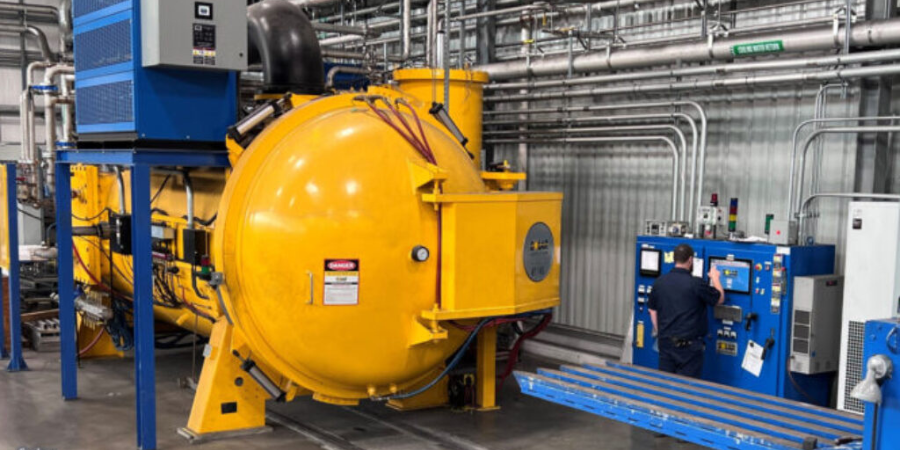
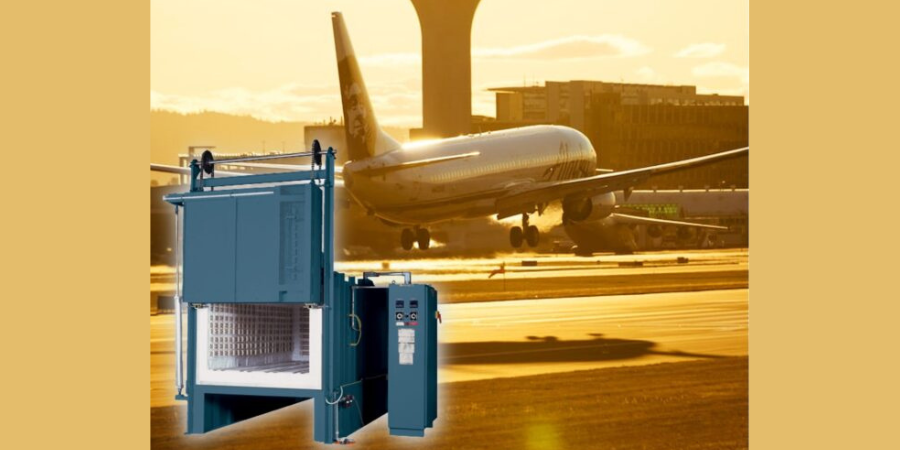
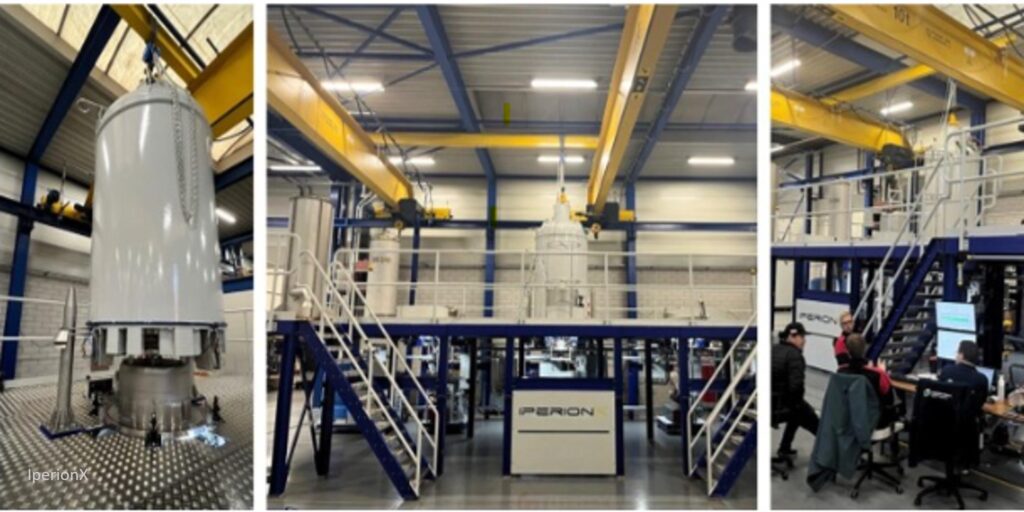
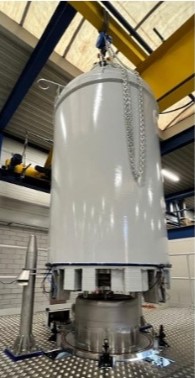
HAMR titanium furnace for Virginia facility (Source: IperionX)
IperionX announced their HAMR (Hydrogen Assisted Metallothermic Reduction) furnace has completed its final mechanical assembly and passed factory acceptance tests. The furnace will be delivered to the company’s Virginia Titanium Production Facility as a foundational asset to the low-cost titanium supply chain.
The HAMR furnace is a large-scale titanium furnace with IperionX-patented technologies. HAMR is a powder metallurgy process technology that allows for the production of titanium powders.
Installation is expected during 2024’s second quarter, with production of titanium beginning mid-2024. To ramp up low-cost titanium production, IperionX has received $2.4 million from the DoD as part of a $12.7 million grant fund.
To learn more about IperionX’s Viriginia Titanium Production Facility, visit this link.
This press release is available in its original form here.
IperionX, a producer of high-quality titanium alloys, has commissioned a titanium production facility in Virginia.
Anastasios (Taso) Arima, CEO of IperionX, commented in a letter to the company’s shareholders: “Our Virginia titanium facility is designed to apply our HAMR [Hydrogen Assisted Metallothermic Reduction] and HSPT [Hydrogen Sintering & Phase Transformation] technologies to produce sustainable, high-quality and high strength titanium metal products at low cost.”
Full capacity is scheduled for 2026, with more than 1,000 metric tons of titanium produced per year. Using titanium powder produced on site, IperionX plans to employ unique forging technologies to produce titanium mill products and near net shape titanium products and to apply AM to produce 3D printed titanium products.
Arima also added, “We engaged with Lockheed Martin, GKN Aerospace, and the U.S. Army to replace traditional titanium mill products, in this case titanium plate, providing a new domestic and sustainable source to enhance their critical supply chains.” To aid these goals, Iperion is installing a large-scale, industrial furnace at their Virginia facility.
This letter to IperionX’s shareholders can be found here.
Norsk Titanium, a global additive manufacturing supplier for aerospace-grade structural titanium components, announces delivery of flight critical aircraft structure to General Atomics Aeronautical Systems, Inc. (GA-ASI), a leading developer of unmanned aircraft systems and prime contractor to the US Department of Defense.
Under a development contract with GA-ASI’s Additive Design & Manufacturing Center of Excellence, Norsk Titanium has delivered RPD® final machined components for test and evaluation. GA-ASI will conduct destructive testing in support of specification and part development.
Said Nicholas Mayer, president of commercial at Norsk, “After an extensive collaborative qualification effort over the past few years with Norsk Titanium, GA-ASI plans to apply the qualified process to structural components within their next generation platforms currently under development, and is planning on their first flight of a critical, structurally loaded component, within the 2024-2025 timeframe.”
Norsk Titanium has recently announced qualification and production milestones in their core commercial aerospace titanium market.
This press release can be found in its original form here.
Find Heat Treating Products And Services When You Search On Heat Treat Buyers Guide.com
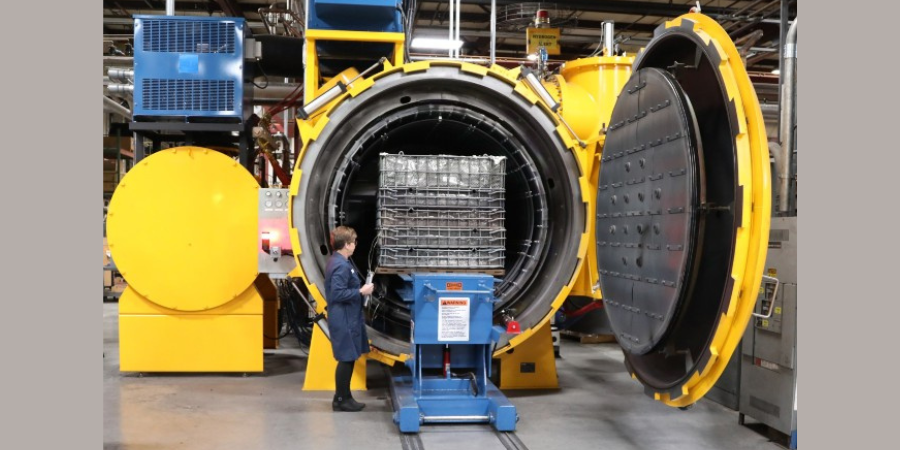
Solar Atmospheres has announced the order of a new 10-bar vacuum furnace for their Greenville, South Carolina, heat treat facility.
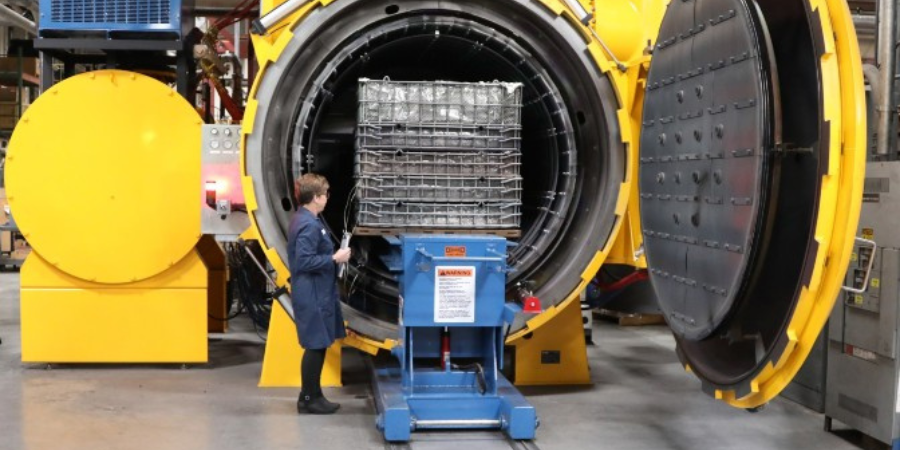
This horizontal vacuum furnace (48” wide x 48” high x 96” deep) will be manufactured by sister company Solar Manufacturing. The furnace is capable of processing up to 12,000-pound loads and is scheduled to be installed in late 2024. This new vacuum furnace will feature a vacuum pumping system capable of achieving an ultimate vacuum of 1x10⁻⁶ Torr, which is crucial for processing titanium and other high grade alloys. Additionally, this furnace will apply newly developed designs for the uniform and rapid cooling of large workloads.
Steve Prout, president of Solar Atmospheres Southeast, states, “We are proud to be offering our customers another regional option for high pressure quenching of large components and workloads, as well as the opportunity to leverage economies of scale to reduce their cost of thermal processing in the midst of the challenging economic environment we are all facing.”
Find heat treating products and services when you search on Heat Treat Buyers Guide.com
Sometimes our editors find items that are not exactly “heat treat” but do deal with interesting developments in one of our key markets: aerospace, automotive, medical, energy, or general manufacturing.
To celebrate getting to the “fringe” of the weekend, Heat Treat Today presents today’sHeat Treat Fringe Friday: an exciting development in Additive Manufacturing with Airbus Helicopters using 3D printing.
Helmut Fárber Site Manager Airbus Helicopters in Donauwöth
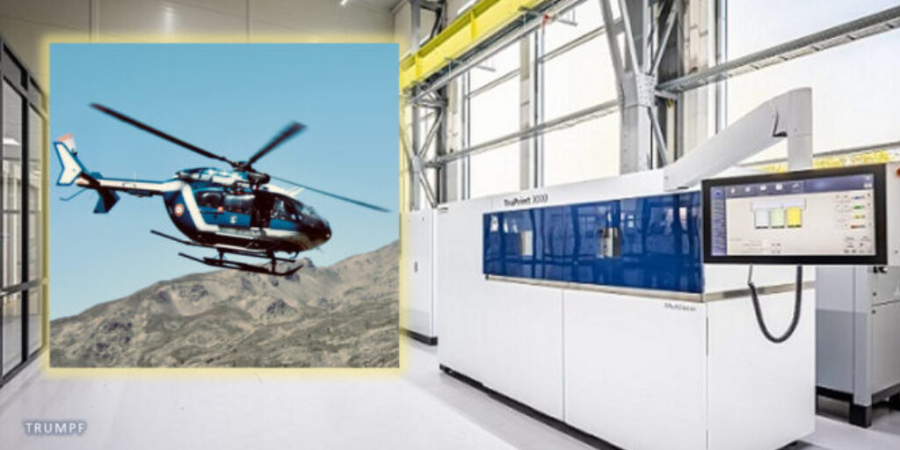
Airbus Helicopters is to use 3D printing technology to produce components for its helicopter vehicles and the aircraft of parent company Airbus.
Airbus Helicopters will use TRUMPF‘s 3D printing technology to produce components for its electric-powered City Airbus experimental high-speed Racer helicopter, as well as the Airbus A350 and A320 passenger aircraft, with structural components made of titanium and high-strength aluminum believed to be the focus. The company is investing heavily in additive manufacturing technology because of its ability to reduce weight and, in turn, bring down fuel consumption and costs. It is said to be exploring the part consolidation of some systems, again to save weight, and values the capacity to reuse powder.
“With innovative manufacturing processes, we are working on the helicopters of the future in Donauwörth,” commented Helmut Fárber, site manager at Airbus Helicopters in Donauwöth. “Among other things, 3D printing helps reduce the weight of components.”
Said Richard Bannmueller, CEO of TRUMPF Laser and System Technology, “Additive manufacturing saves expensive raw material and can lower production costs in the aviation industry. 3D printers only use the material that designers actually need for their components and that ends up taking off in the aircraft.”
Airbus, like many other aerospace manufacturers, has had a keen interest in additive manufacturing technology for several years, with the company recently signing a 3.8 million EUR contract with Oerlikon for the additive manufacture of satellite antenna clusters.
Find heat treating products and services when you search on Heat Treat Buyers Guide.com
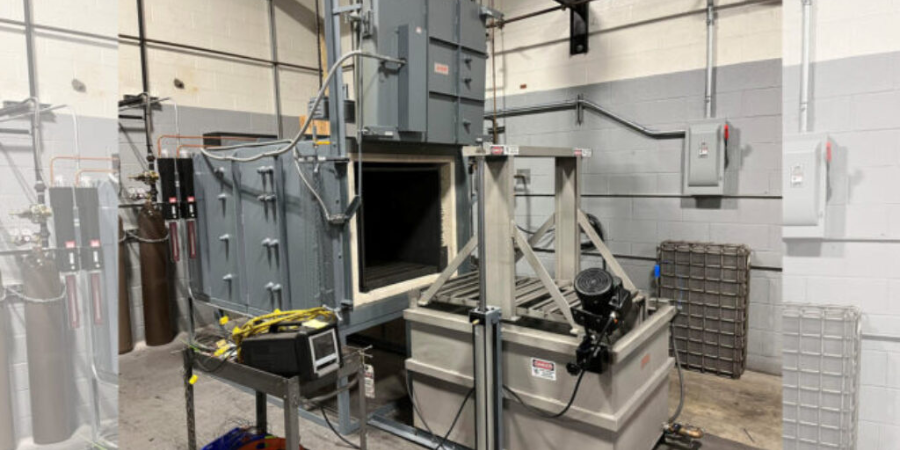
Vacu-Braze recently installed a new water quenching furnace in their Quakertown, PA, facility. This acquisition will allow for the expansion of capabilities to include rapid quenching of specialty aerospace materials such as steels or titanium.
The new furnace from LuciferFurnaces, measuring 45.5”x29.5”x28,” contains argon and nitrogen atmosphere capabilities which allow for processing in a protective atmosphere even at high temperatures while maintaining AMS 2750 compliant uniformity. The pyrometry team at Vacu-Braze was able to achieve Class 2 pyrometry, opening up more available processes such as annealing, austenitizing, normalizing, stress relieving, solution treating, and tempering.
"Lucifer Furnaces was selected for the order," commented Jerry Novak, process engineer at Vacu-Braze, "[as their furnaces] are locally made and could be custom designed for the application. They are built in Eastern Pennsylvania to our desired specifications. Vacu-Braze is always happy to partner with companies that manufacture quality equipment and products in the USA."
The heat treat company also noted that this piece of equipment expands their services to existing clients while providing processes for new clients.
Find heat treating products and services when you search on Heat Treat Buyers Guide.com
Solar Atmospheres Souderton, PA incorporated a high-production vacuum furnace with a work zone of 48"x48"x72" and a weight capacity of up to 7,500 lbs/batch. The furnace doubles the facility's hydriding and de-hydriding capacity in the reclamation of titanium and tantalum materials.
A front-loading box furnace delivered to a northeastern U.S. supplier of titanium castings will expand the manufacturer’s aerospace and gas turbine castings heat treat abilities. The company supplies to the aerospace and power generation fields and deals with exotic metals that are ideal for superior products using the lost wax process for castings, such as nickel and cobalt-based alloys.
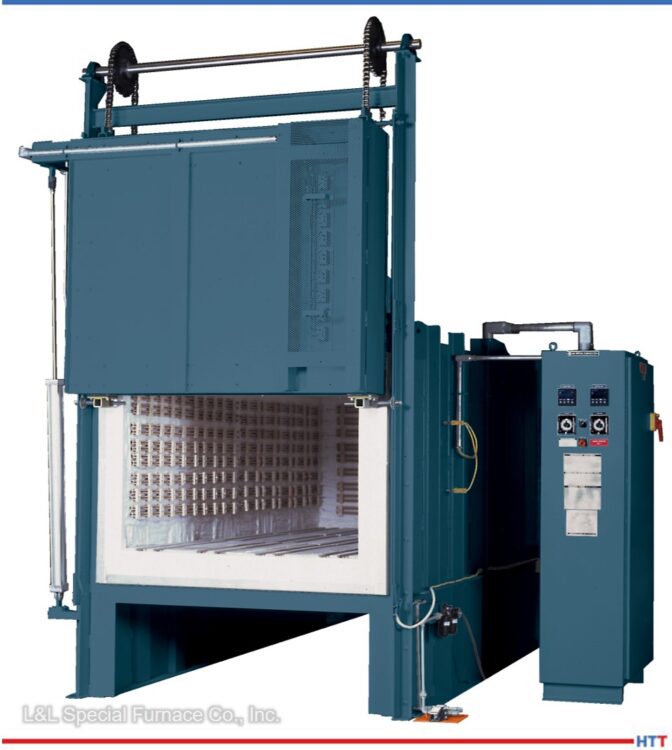
L&L Special Furnace Co., Inc. Box Furnace Source: L&L Special Furnace Co., Inc.
The L&L Special Furnace Co., Inc. model FB435 has an effective work area of 48” wide by 32” tall by 60” deep and has certifiable temperature uniformity of ±10°F from 500 to 1,850°F. Additionally, the elements are very evenly spaced around the chamber and the furnace is lined with ceramic fiber on the sides and top.
The furnace case is sealed internally for atmosphere control, and an inert blanketing gas such as nitrogen is used to displace oxygen present within the work chamber. This provides a surface finish in which oxidization is less likely to form on the part. The atmosphere is delivered automatically through a flow panel by the furnace control.
Find heat treating products and services when you search on Heat Treat Buyers Guide.com
Solar Atmospheres Souderton, PA incorporated a high-production vacuum furnace with a work zone of 48″x48″x72″ and a weight capacity of up to 7,500 lbs/batch. The furnace doubles the facility’s hydriding and de-hydriding capacity in the reclamation of titanium and tantalum materials.
A global company that produces specialty metals and provides related vacuum heat treating equipment and services recently announced the acquisition of assets of a leading titanium producer based in western Pennsylvania that supplies the aerospace industry.
AMG Advanced Metallurgical Group N.V. finalized the acquisition of the assets of International Specialty Alloys (ISA) from Kennametal Inc. through its operating unit AMG Technologies, which, besides its production of titanium aluminides and titanium master alloys, also designs, engineers, and produces advanced vacuum furnace systems and operates vacuum heat treatment facilities under the ALD Vacuum Technologies brand name, primarily for the transportation and energy industries.
ISA, located in New Castle, Pennsylvania, is a leading U.S. producer of titanium master alloys and other binary alloys for the aerospace market.
“The acquisition of ISA provides an excellent opportunity for AMG Titanium Alloys and Coatings to increase its market position in these key products for the aerospace market in North America and Europe,” stated Guido Loeber, President of AMG Technologies.








 Norsk Titanium, a global additive manufacturing supplier for aerospace-grade structural titanium components, announces delivery of flight critical aircraft structure to General Atomics Aeronautical Systems, Inc. (GA-ASI), a leading developer of unmanned aircraft systems and prime contractor to the US Department of Defense.