OP-ED

Contributor and Friend of Heat Treat Today Was Selected for ASM’s 2022 William Hunt Eisenman Award

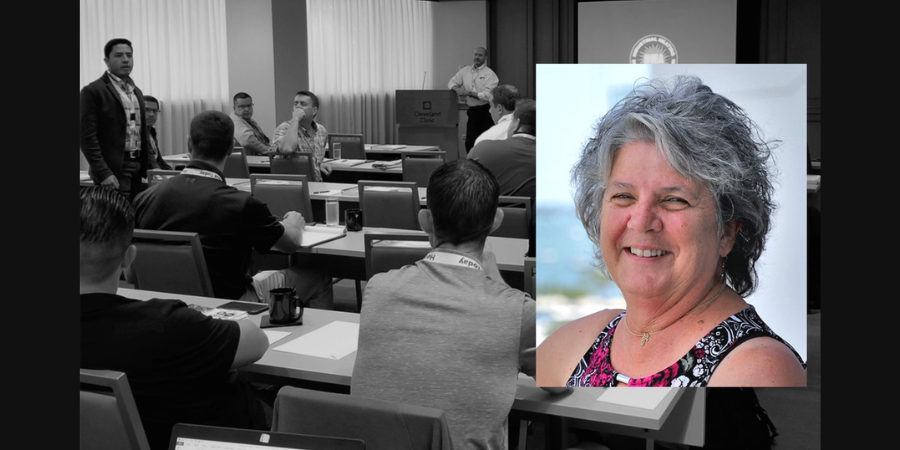
op-edDr. Valery Rudnev was recently selected to be the American Society for Metal's (ASM) William Hunt Eisenman Award. Dr. Rudnev has many years of experience in the heat treat industry, particularly in induction heating. He is quite a mover and a shaker in the industry with more than 40 years involvement with his work and publications. He has even come to be known as "Professor Induction".


Dr. Valery Rudnev was recently selected for ASM's William Hunt Eisenman Award winner “for dedicated service to the global materials science community, leadership, development and promotion of induction heating and heat treating technologies and novel technologies.” The award was established by ASM Int’l in 1960 in recognition of unusual achievements in industry in the practical application of materials science and engineering through production or engineering use.

Contact us with your Reader Feedback!

Over the years, Dr. Rudnev has close professionals ties with Heat Treat Today authoring a popular multi-installment exclusive column “Dr. Valery Rudnev on …”. He has published eleven articles in Heat Treat Today including:

During his career, Dr. Rudnev has authored and co-authored numerous chapters and articles for many handbooks devoted to various aspects of induction heating, heat treating, metallurgical aspects, computer modeling and innovative process development. His credits include a great deal of “know-how”, more than 60 patents and inventions (U.S. and International) and more than 300 engineering/scientific publications

In October of 2021, Dr. Valery Rudnev retired from his professional activity and now he is focusing on his Christian faith, family and hobbies.

Heat Treat Today sincerely congratulates Dr. Valery Rudnev with this well-deserved award and wish him all the best in his retirement.


Find heat treating products and services when you search on Heat Treat Buyers Guide.com


Contributor and Friend of Heat Treat Today Was Selected for ASM’s 2022 William Hunt Eisenman Award Read More »

Guía para el líder que quiere motivar

op-ed[Está] posicionado no solo para trabajar en conjunto con otros seres humanos sino también para liderarlos; si su potencial se ha de realizar, puede que ya haya entendido bien que en esas personas reposa la verdadera clave del éxito que a futuro pudiera conseguir.

Bill Munn, coach de liderazgo at Bill Munn Management Coaching, wrote this article for Heat Treat Today’s September 2022 Tradeshow print edition. Read the English translation when you click the flag to the right!


Bill Munn
Leadership Coach
Bill Munn Management Coaching
Source: Bill Munn Management Coaching

¡Felicitaciones a Los 40 sub-40 de Heat Treat Today Promoción 2022! (En inglés: Heat Treat Today’s 40 Under 40 Class of 2022, N. del T.) Este galardón constituye un honor que señala a quien lo recibe como portador de una muy importante  y singular responsabilidad.

Contact us with your Reader Feedback!

Usted es un líder.

Por definición, de aquí se desprende que no se desempeña solo; es más, está posicionado no solo para trabajar en conjunto con otros seres humanos sino también para liderarlos; si su potencial se ha de realizar, puede que ya haya entendido bien que en esas personas reposa la verdadera clave del éxito que a futuro pudiera conseguir.

¿Cómo, pues, lograr su compromiso?

Primer paso: Afiance en sí mismo un espíritu enseñable, asumiendo su rol con la humildad sufi ciente como para buscar el consejo, la claridad y el aprendizaje continuo.

Segundo paso: Aprenda cómo motivar a las personas.

Los tres pilares para motivar a un equipo

Luego de más de cinco décadas de trabajar de cerca con centenares de líderes excelentes junto con sus equipos, he identifi cado y confi rmado vez tras vez que hay tres factores claves para motivar el compromiso y el desempeño de las personas: la visión, la autonomía y el crecimiento.

Visión

Las personas anhelan ser parte de algo importante.

Desean que su actividad tenga significado. Ansían no solo entender la visión del equipo y la empresa a la que pertenecen sino también creer en ella.

Para generar tal visión no hace falta que usted esté dedicado a salvar el mundo. Bastará con que dedique un tiempo a revisar los valores fundamentales de su organización preguntando: <<¿Qué hace que esto sea importante? ¿Qué es imprescindible para que estemos aquí haciendo lo que hacemos?>>, para luego comunicar ese mensaje a su equipo.

Este es un proceso tan poderoso como esencial, uno que demasiadas veces se ha pasado por alto.

Autonomía

Las personas rechazan fuertemente la microgestión. Corresponda o no a la realidad, la microgestión transmite dos mensajes fatales para la motivación: <<No confío en usted>> y <<Creo que usted es incompetente>>.

Por otro lado, el asignar tareas a los miembros del equipo invitándolos a formular preguntas y despejar dudas para luego entrar con fuerza a desempeñarse por sí solos comunica todo lo contrario dando a entender: <<Confío en usted>> y <<Creo lo puede hacer>>.

Motiva de manera increíble.

Ganancia adicional: Los miembros de su equipo aprenderán y crecerán de forma más ágil, logrando un mayor alcance, cuando se les permita el desarrollo autónomo; demostrarán mayor sentido de pertenencia a la organización y su visión.

En pocas palabras, serán más comprometidos y efi caces.

Crecimiento

Las personas anhelan que se les haga progresar; quieren sentir, a lo largo de sus vidas y sus carreras, que están en vías de mejora y crecimiento, perfeccionando cada vez más su quehacer.

El personal suyo desea recibir retroalimentación, asistir a seminarios, participar en programas de formación, leer revistas informativas de peso como esta, y tener acceso a la ayuda, la asesoría y el desarrollo en su esfera particular.

Son demasiados los líderes que se acercan al personal para decir: <<deberías ser mejor en X o te falta avanzar en Y>> sin brindarles el apoyo
para lograrlo, comunicando así el no querer invertir en el éxito a largo plazo de esa persona, lo que a su vez genera que la persona invierta menos de sí en la organización y sus metas.

Si busca un equipo conformado por personas valiosas, apoye a esas personas en su crecimiento demostrando así que son valoradas.

Los resultados de una motivación efectiva

Un equipo motivado se compromete, y un equipo comprometido logra lo propuesto. Como líder de alto potencial usted tiene una oportunidad singular para encender en el personal con el que trabaja una llama, proceso que revertirá en benefi cio de sus metas propias.

Establezca la visión. Libere la autonomía. Fomente el crecimiento. Hacerlo se ha convertido ahora en su responsabilidad y un alto honor, honor que tanto su personal como su carrera le habrá de agradecer.

Le deseamos lo mejor. HTT


Sobre el Autor: Acerca del autor: Mediante el desarrollo de la visión estratégica y la resolución de retos en tiempo real, Bill Munn asiste a los ejecutivos en potenciar al máximo sus equipos. Desde su experiencia como veterano de 32 años en coaching empresarial y otrora ejecutivo destacado del Dow 30, Bill viene aportando sabiduría práctica, perspicacia innovadora y herramientas para el actuar contemporáneo a centenares de líderes corporativos a nivel mundial. Magister en administración de empresas y en su momento profesor de fi nanzas y economía, Bill es un conferencista dinámico y autor de best-sellers en Amazon.


Para más información:

Póngase en contacto con Bill en: billmunncoaching.com


Find heat treating products and services when you search on Heat Treat Buyers Guide.com


Guía para el líder que quiere motivar Read More »

IHEA’s Combustion Seminar: New Knowledge for New Improvements

op-edWith no new knowledge, no new improvements can be made. In the North American heat treating industry, new knowledge is constantly available, whether that be a new technology emerging, a new focus or agenda, or a wave of new people bringing a fresh perspective. The Industrial Heating Equipment Association’s Combustion Seminar wants to welcome these newcomers, both the new technologies and the new faces.

Read all about it in the Combustion Corner installment by Anne Goyer, executive director of the Industrial Heating Equipment Association, in Heat Treat Today's September Trade Show print edition.


Anne Goyer
Executive Director
Industrial Heating & Equipment Association
Source: IHEA

Held alongside IHEA’s Safety Standards and Controls Seminar at the Indiana Convention Center in downtown Indianapolis, the Industrial Heating Equipment Association’s Combustion Seminar will take place on Monday, October 3rd and Tuesday, October 4th. The Combustion Seminar is the longest-running annual heat treating training seminar in the industry. Year after year, IHEA’s Combustion Seminars receive high evaluation ratings from attendees, giving each engineer, manager, technician, and sales representative something he can implement at his individual facility. The Combustion Seminar is a place for heat treaters to learn anything and everything, making it the ideal space to improve manufacturing processes through implementing new information.

This year’s seminar, the 53rd consecutive Combustion Seminar, boasts a new technical session, one that is at the front of everyone’s mind. In the line up this year is a session on hydrogen combustion and decarbonization, an appropriate topic for current times when environmental and safety concerns are particularly important. Hydrogen combustion and decarbonization are beginning to play key roles in manufacturing, and given the uptake in interest, every heat treater is trying to learn how to face the challenges and benefits of these trending topics. How much of the coverage of decarbonization and hydrogen combustion is hype, and how much is legitimate? How many of the big promises these technologies make can be fulfilled? To combat the myth and uncertainty on the subject, the IHEA Combustion Seminar will provide accurate and valuable information for seminar attendees on these important and burgeoning topics.

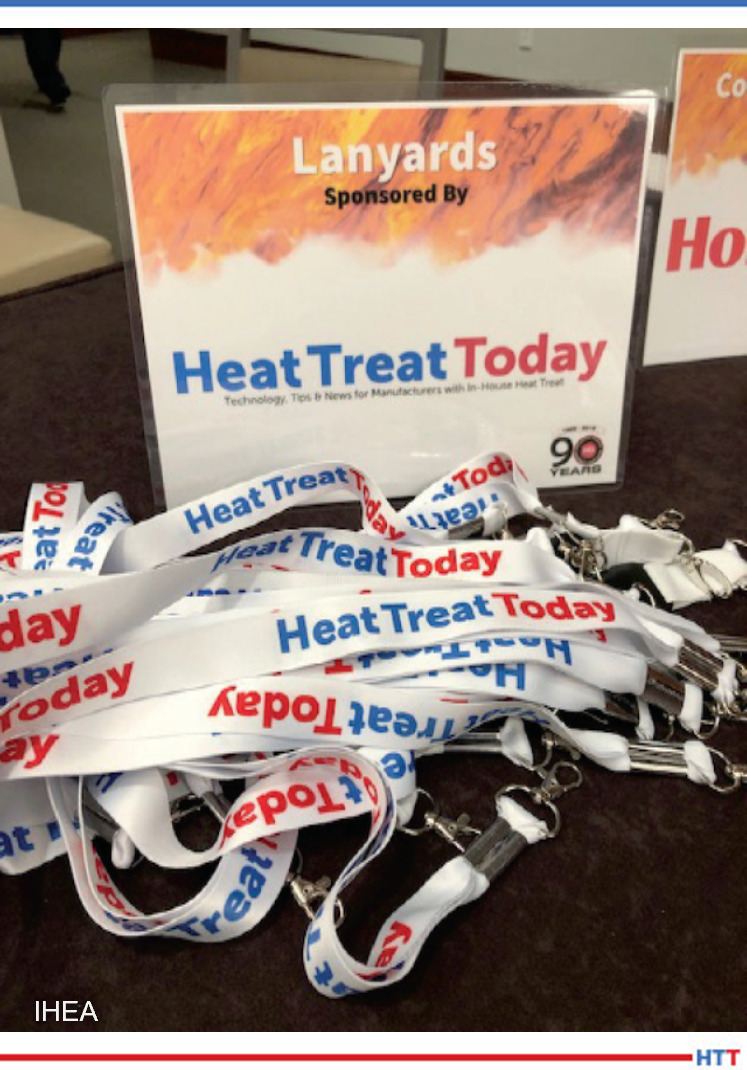
Heat Treat Today lanyards for
show attendees
Source: IHEA

IHEA’s two-day seminars are for engineers, project managers, sales staff , customer service representatives, maintenance managers, combustion technicians . . . if the job has anything to do with combustion, these seminars will be valuable. New people, both young and not so young, are continuously entering the heat treating industry. These novices need to be trained in combustion basics, but veteran heat treaters also need to learn about new and changing technologies.

With mingling opportunities at lunch and break periods each day, the IHEA Combustion Seminar comes with built-in networking times. Since the seminars also include complimentary registration to Furnaces North America, attendees can continue networking on the FNA show floor. The 17 seminars will include topics such a System Troubleshooting, Combustion Systems & the Environment, and the Problem-Solving Workshop. These 17 sessions will make for a well-rounded perspective on combustion systems.

Pulling together new knowledge, new technology, and new connections for new improvements in the manufacturing process — that is what IHEA’s Combustion Seminar is all about.

For more information on IHEA’s Combustion Seminar, as well as for a complete description of all technical sessions, please visit ihea.org/events.


Find heat treating products and services when you search on Heat Treat Buyers Guide.com


IHEA’s Combustion Seminar: New Knowledge for New Improvements Read More »

The Technology Trade Fair Quartet

op-edHeat Treat Today will be a sponsor for the technology trade fair quartet in Düsseldorf, Germany, and we hope to see you there in June 2023. To learn more about GIFA, METEC, THERMPROCESS, and NEWCAST, check out this interview with Friedrich-Georg Kehrer, global portfolio director at Messe Düsseldorf GmbH, about Messe Düsseldorf’s ecoMetals Campaign.


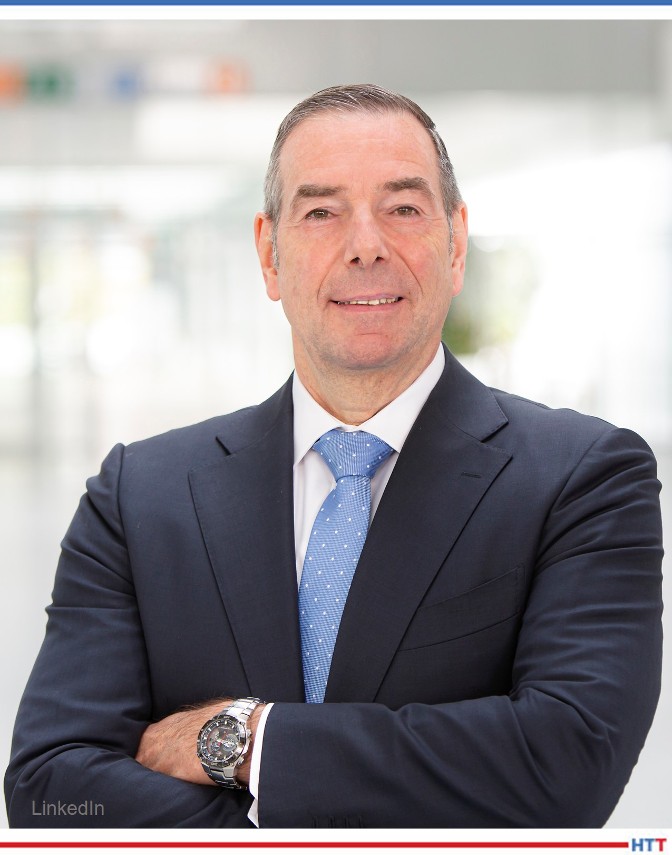
Friedrich-Georg Kehrer
Global Portfolio Director
Messe Düsseldorf GmbH

The technology trade fair quartet GIFA, METEC, THERMPROCESS and NEWCAST will again provide a complete overview of the foundry technology and metallurgical sectors from June 12–16, 2023 in Düsseldorf, Germany. Which trend topics  will particularly characterize the trade fairs?

Contact us with your Reader Feedback!

Friedrich-Georg Kehrer: How green are the energy-intensive foundry and steel sectors of industry? How sustainably do they produce and how eco-friendly is their use of materials? These are the crucial questions dominating the agenda and providing ample food for thought at GIFA, METEC, THERMPROCESS and NEWCAST 2023. Tasked with achieving climate neutrality by no later than 2050, these industries face what is probably the biggest transformation in their history. This decisive development will be reflected by the Düsseldorf trade fair quartet: on the one hand, the challenges that the sectors face; on the other hand, the innovations that machinery and plant manufacturers offer to the metallurgical and casting industries worldwide clearly making them part of the solution rather than the problem. Through in-depth exchange with the professional bodies and experts from all stages of the value chain we have identified the following three mega trends:

  1. Sustainability in the sense of energy and resource efficiency, for instance in the form of green steel or green iron as well as the decarbonization of the steel and iron industry using hydrogen as a catalyst – summarized succinctly under the “ecoMetals” motto.
  2. The use of digital technologies in manufacturing, i.e. the buzzword “Industry 4.0” in steel mills and foundries also remains another mega trend.
  3. Also, automotive lightweight construction as well as the latest additive manufacturing processes for steel and metal working continue to play a key role.

With our four trade fairs and the extensive line-up of ancillary events we offer a unique platform worldwide to discuss these important topics.

The buzzword “ecoMetals” is mentioned in connection with GIFA, METEC, THEMPROCESS and NEWCAST time and again. What does it mean and what role does the campaign play in the events?

Friedrich-Georg Kehrer: Messe Düsseldorf’s ecoMetals Campaign forms an integral part of the “Bright World of Metals” and has a long-standing success story. It refers to the ecological path of the casting and metal processing industries and promotes exhibiting companies that invest in innovative, sustainable and economically competitive technologies. Trade visitors can easily identify the award-winning innovations and are guided to the respective exhibitors at GIFA, METEC, THERMPROCESS and NEWCAST by complimentary daily Guided Tours – so-called ecoMetals Trails.  Furthermore, these exhibitors are especially highlighted in the respective Internet portals as well as in the catalogue and their exhibition stands are marked. The ecoMetals campaign was already received very well at the previous edition of the trade fair quartet. Our visitors highly appreciated this guidance. I am particularly pleased to see that some of our other capital goods trade fairs such as wire and Tube or decarbXpo have also adopted this concept this year. With this move Messe Düsseldorf also wants to live up to its ecological responsibility and provide the drivers for environment-saving products, production and processes with a special forum.

So the ecoMetals Trails will enable trade visitors to discover “new pathways for value creation” at the trade fairs?

Friedrich-Georg Kehrer: Yes, exactly! The ecoMetals brand focuses on three fields of sustainability: Resources, Innovation and Production and/or Processes. How can raw materials be extracted in a more resource-efficient way and processed more efficiently? What is trending in metal and non-metal recycling? Which new technologies, machines and plants are used to improve the energy and CO2-balance? The sustainability drivers exhibiting at GIFA, METEC, THERMPROCESS and NEWCAST will share their solutions for all of these challenges. At their exhibition stands they will explain how they reduce their carbon footprint at their production sites and merge business with environmental protection. Overcoming these challenges is as important as ever to hold your own against international competition as a valued business partner.

How much does participation in the ecoMetals Trails cost?

Friedrich-Georg Kehrer: Participation in the  ecoMetals Trails is free of charge for all visitors. Registrations can be submitted on the respective websites in the run-up to the trade fairs. Of course, those deciding onsite to take part are welcome to join a tour without prior registration.

On September 21 this year the ecoMetals Day will be held as the “Steel Day of the Future” at the Düsseldorf Exhibition Centre. What kind of event is this and how does it relate to the Bright World of Metals?

Friedrich-Georg Kehrer: The ecoMetals Day will be held for the first time, concurrently with glasstec, as part of our new event decarbXpo. The ecoMetals Day will attract the Who’s Who of the steel sector and cover all topics relevant to the technical, economic and ecological transformation of the steel industry in form of unique lectures. These impulses are, of course, also of enormous importance for THERMPROCESS 2023.

Can you already reveal any details regarding registration levels? How are the trade fair preparations going in general?

Friedrich-Georg Kehrer: The preliminary work has been completed successfully, many companies have already registered and the allocation of exhibition space is in full swing. Now the time for finetuning has come and, of course, for the visitor promotion campaigns. Our exhibitors are eager to inspire the trade fair audience at GIFA, METEC, THERMPROCESS and NEWCAST with their technologies and innovations. All renowned companies will be represented in Düsseldorf again plus many new exhibitors taking part for the first time.  GIFA, METEC, THERMPROCESS and NEWCAST are the most relevant events for their respective industries; they thrive on personal encounters and the exchange of ideas in this special setting. Everyone is particularly looking forward to this — especially after such a long time!


Contact Messe Düsseldorf North America:

E-mail: info@mdna.com

Visit www.gifa.com; www.metec-tradefair.com; www.thermprocess-online.com; www.newcast.com and www.mdna.com


Find heat treating products and services when you search on Heat Treat Buyers Guide.com


The Technology Trade Fair Quartet Read More »

A Leader’s Guide to Motivation

op-edLeadership coach Bill Munn writes to Heat Treat Today’s 40 Under 40 Class of 2022: "[You] are positioned not only to work with fellow human beings, but to lead them. And if your potential is to be realized, you may already know well that those people are the true key to your future success."

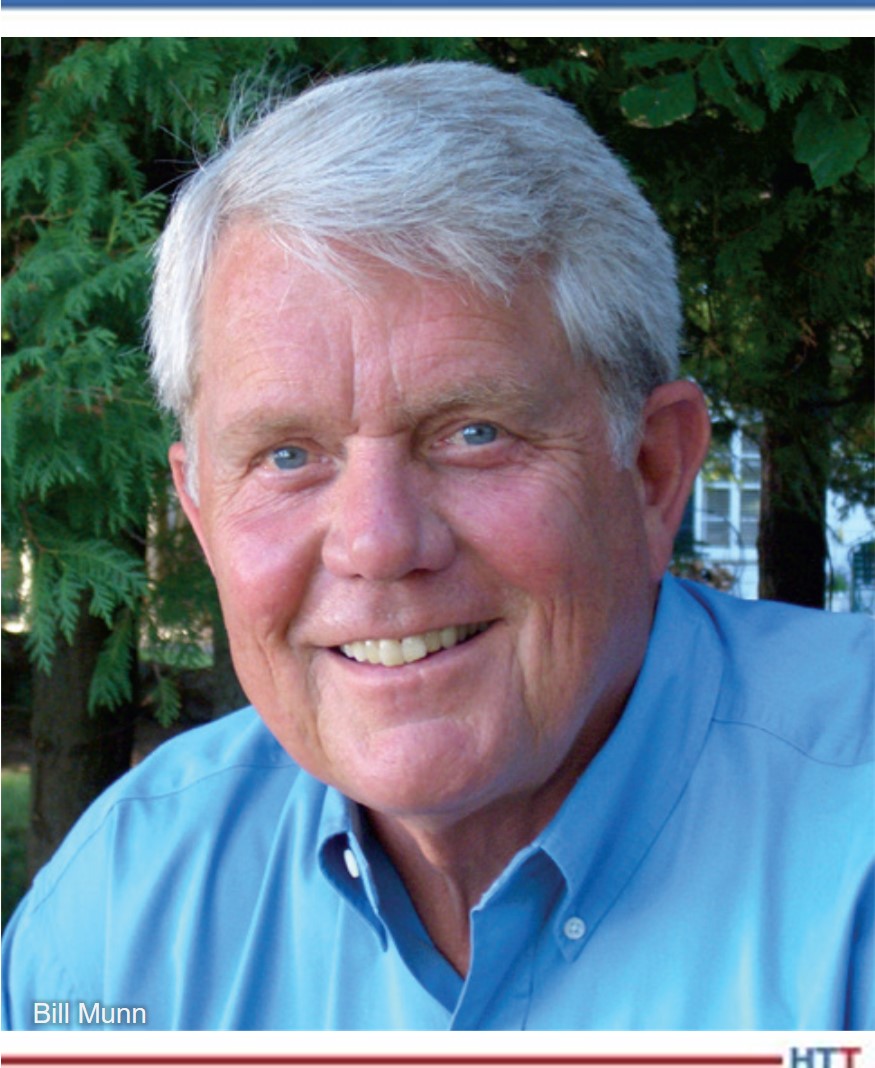
Bill Munn, leadership coach at Bill Munn Management Coaching, wrote this article for Heat Treat Today’s September 2022 Tradeshow print edition. Read the Spanish translation when you click the flag to the right!


Bill Munn
Leadership Coach
Bill Munn Management Coaching
Source: Bill Munn Management Coaching

Congratulations to the Heat Treat Today 40 Under 40 Class of 2022! This accolade is an honor, and it marks you as one carrying a unique and important responsibility: You are a leader.

Contact us with your Reader Feedback!

By definition, this means that you are not functioning alone. Moreover, you are positioned not only to work with fellow human beings, but to lead them. And if your potential is to be realized, you may already know well that those people are the true key to your future success.

So how will you engage them?

✔ Step one: Embrace a teachable spirit. Bring enough humility to your role to pursue advice, insight, and continuous learning.

✔ Step two: Learn how to motivate people.

The 3 Pillars of Team Motivation

After over five decades of working closely with hundreds of excellent leaders and their teams, I have identified and repeatedly confirmed that three key factors motivate engagement and performance in people: vision, autonomy, and growth.

Vision

People want to be part of something important.

They want what they’re doing to matter. They want to not only understand the vision of their team and organization, but to also believe in it.

You don’t need to be saving the world in order to cast such a vision. Simply take the time to think through your core values as an organization. Ask, “Why is this important? What is key to us being here, doing what we’re doing?” Then communicate that message to your team.

This process is essential, powerful, and far too often overlooked.

Autonomy

People hate to be micromanaged.

True or not, micromanagement communicates two messages that kill motivation: “I don’t trust you” and “I think you’re incompetent.”

On the other hand, when you give your team members assignments and invite them to ask questions, gain clarity, and then charge in on their own, you communicate exactly the opposite message. You say, “I trust you” and “I believe you can do this.” That is incredibly motivating.

Bonus: Your team members will learn and grow farther, faster when given the autonomy to do so. And they will take greater ownership in the organization and its vision.

In short, they will be more engaged and effective.

Growth

Your people want to receive input, attend seminars, participate in training programs, read great and informative magazines like this one, and have access to help, coaching, and development in their area of focus.

Too many leaders go to their people and say, “You should be better at X” or “You should improve Y,” but they don’t support them in doing so. So, what they communicate is a lack of investment in that person’s long-term success, which in turn makes that person less invested in the organization and its goals.

If you want a team made up of valuable people, show your people that you value them by supporting their growth.

People want to be developed. They want to feel — throughout their lives and careers — that they are growing and improving, becoming better at what they do.

The Results of Effective Motivation

Motivated teams are engaged, and engaged teams are effective. As a high-potential leader, you have a unique opportunity to ignite the people you work with — and improve your own outcomes in the process.

Set the vision. Unleash autonomy. Nourish growth. It is now your responsibility and a great honor to do so — one your career and your people will thank you for.

Best of luck to you.

About the Author: Through strategic visioning and in-the-moment issue resolution, Bill Munn helps executives manage teams to their greatest potential. As a 32-year management-coaching veteran and former Dow 30 top executive, Bill has supported hundreds of corporate leaders worldwide with practical wisdom, real-world action tools, and out-of-the-box insight. An MBA and former professor of fi nance and economics, Bill is a dynamic public speaker and Amazon best-selling author of Why Make Eagles Swim? Embracing Natural Strengths in Leadership & Life and Lead or Be Led.

For more information: billmunncoaching.com


Find heat treating products and services when you search on Heat Treat Buyers Guide.com


A Leader’s Guide to Motivation Read More »

Fringe Friday: Foundry 4.0

Sometimes our editors find items that are not exactly "heat treat" but do deal with interesting developments in one of our key markets: aerospace, automotive, medical, energy, or general manufacturing. To celebrate getting to the "fringe" of the weekend, Heat Treat Today presents today’s Heat Treat Fringe Friday press article to prepare you for the global conversations you can expect at the international metallurgy trade fair quartet GIFA, METEC, THERMPROCESS, and NEWCAST. The theme? Foundry 4.0.

"From ArcelorMittal to Thyssenkrupp, digitization has arrived in the steel industry. Drivers are the desire to improve margins in existing business and increasingly the challenges of decarbonization. It is not disruptive new business models that are on the agenda of steel mills, but primarily improvements in earnings and an expansion of services. New digitalization solutions - from the transformation of the blast furnace to the vision of the autonomous steel mill, from digital melting operations to Foundry 4.0  - will be a focal theme at the upcoming metallurgy trade fairs GIFA, METEC, THERMPROCESS and NEWCAST, to be held from June 12 - 16, 2023 in Düsseldorf, Germany."

This guest column was provided by Gerd Krause, Mediakonzept in Düsseldorf, Germany. HTT is a media partner for the THERMPROCESS quadrant of the show. Give it a read and then email editor@heattreattoday.com if you have an op-ed or guest column that you would like to submit to Heat Treat Today!


In the highly automated steel industry data have long played a pivotal role. Take ThyssenKrupp Steel, for example: the hot strip mill in Duisburg alone not only processes about 16,500 tons of steel slabs but also the data of more than 1.2 billion measurements. Terms like Big Data, Digital Twin and Machine Learning are today just as familiar to metallurgists as tapping and slab casting. Artificial intelligence (AI) specialists and App programmers join traditional workers such as blast-furnace and hot rolling mill operators. Digital twins map production from start to finish and can be used for all steps in the value chain of products, plants and services alongside the real steel mill. One key objective is to analyze product and machine data across various process steps. With the help of Data Analytics material characteristics such as thickness fluctuations, roughness or stiffness can be forecast precisely and tolerances can be adhered to more closely. To this end, thousands and thousands of sensors capture the quality and production data across the entire flat steel process chain. This data base forms the basis for controlling and analyzing manufacturing processes in real time. In ThyssenKrupp Steel’s No. 8 hot-dip coating line in Dortmund the data analytics results are used to generate mathematical models for controlling the skin pass mill. The data model controls the line in such a way that the aspired roughness values of the steel strips are reached and the operation mode can be re-adjusted online if needed. This opens up new service options for steel producers. Commenting on this Lothar Patberg, Head of Innovation at Thyssenkrupp Steel said: “In future, customers would be able to not only track the current status of their orders. They could also obtain selected quality data from manufacturing with a view to adjusting their own processes before the coil is delivered.”

Contact us with your Reader Feedback!

The technological shift to CO2-free production with hydrogen and renewable energies has provided added momentum to the uses of digital technologies. According to consultancy Accenture, in industrial manufacturing up to 61 megatons of CO2 could be saved by 2030 through digitalization. Metallurgy plant builders such as SMS, Primetals and Danieli have long identified this potential: to strengthen their own companies but above all to open up new lines of business.

SMS digital: The big players develop the market

A pioneer in digitalization exhibiting at METEC 2023 is the Düsseldorf-based SMS group. Automation technology has formed part of this metallurgy plant builder’s DNA for many years. Technologies such as Virtual Reality (VR), Augmented Reality (AR) and Digital Twins were used by their engineers in steel mill development long before Industry 4.0 hit the headlines. While in the past individual divisions like the rolling mill were automated, digitalization today connects the entire production line from the blast furnace to the finished product on all levels. SMS was among the first in this industry to identify the potential digitalization holds for developing new business lines and established the start-up SMS digital in 2017. What started with 10 members of staff in a backyard, is now the leading software provider for metallurgy: SMS Digital GmbH with more than 350 specialists employed worldwide. As Chief Digital Officer on the board of SMS group Katja Windt, a former university professor with a PhD in engineering, has been responsible for the key areas of digital transformation – at her own company and with customers. The SMS Chief Digital Officer views the 150 years of process know-how in the metallurgical sector as a key advantage over competitors, or potential new entrants such as the digital champions Google or Amazon that have long had their sights on the industry. Digitalization for process optimization and energy management also forms an essential part of the new business lines of the SMS group. As a global player for the reduction of carbon dioxide emissions and the circular economy the plant builder has successfully invested in decarbonization and recycling technologies – ranging from climate-neutral steel production based on hydrogen, battery recycling and urban-mining solutions for reclaiming precious metals from electrical scrap to plants for producing green syn-gas and synthetic fuels.

Big River Steel: Learning steel mills are just the beginning

Digitalization focuses on the steel industry. At METEC 2019, the International Metallurgical Trade Fair with Congresses, the plant builder was able to present the world’s first “learning steel mill” together with Big River Steel. The mill built by SMS in the U.S. and digitalized and fitted with artificial intelligence (AI) in cooperation with partner Noodle.ai , is operated in the most resource- and energy-efficient way possible today. The AI by Noodle.ai analyses historical data and in part high-frequency signal series captured by more than 50,000 sensors. In addition to the steel mill’s data the AI platform also uses external data sources that capture and predict manufacturing processes, and even propose corrective measures. This means artificial intelligence helps to maximize the yield, improve product quality and eliminate safety risks. Huge data volumes from which AI generates knowledge allowing BRS to produce high-quality steel products at a lower cost and faster. The learning steel mill in the USA is just the beginning. For Digital Director Windt, the objective is self-controlling production: a steel or aluminum mill that runs autonomously with the help of learning algorithms. The key product for digitalization in the SM digital building block is the so-called Data Factory that collects and edits sensor data. Depending on custom requirements and desired performance increase, a wide variety of applications can be hooked up to this software platform. In conventional production, finished products are inspected for defects. If the goods are defective, the search for the cause begins and the source of the defect must be eliminated. In Industry 4.0 logic, continuous monitoring of production prevents errors before they occur. This saves time and money.

Customers do not to necessarily need to buy new plant technology for the service. As a new business model SMS also offers “Equipment-as-a-Service.” “Customers conclude a service contract with us for a component, such as part of a rolling mill or a continuous casting line,” explains Windt. So the plant builder does not sell the equipment but the customer pays for its operation and the digital applications used.

The power of digitalization has become evident during the Covid pandemic if not before. With the help of its AR SMS was able to commission steel mills remotely, i.e. without service engineers being on site as was the case before.

Smart Steel Technology: Start-up ready to attack

Smart Steel Technology (SST) promises to reduce energy consumption and the emission of climate gases such as carbon dioxide in steel production by means of artificial intelligence (AI) and machine learning (ML) Established in 2017 by mathematician Dr. Falk-Florian Henrich in Berlin, this start-up has set out to optimize processes on all levels. To this end the steel industry is set to change from control-based production to AI-based manufacturing.

Steel producers transform conventional manufacturing processes towards higher energy savings and CO2 reductions. With a gradual changeover from coal to hydrogen as a reducing agent, carbon dioxide emissions are already reduced at the blast furnace. Add to this new process pathways such as direct reduction using natural gas initially and later hydrogen as part of the decarbonization route for steel production. This is why steel producers need solutions to assess and control the CO2-efficiency of all production routes as well as their carbon and energy footprints broken down for each individual steel product. The pressure to do so emanates not least from customers. In the automotive industry the carbon footprint is increasingly becoming a sourcing criterion for steel products. “Precise energy and CO2 data allow steel producers to charge for their conversion efforts and complete audits successfully. Automated CO2 and energy analyses with AI-based models are the key to this,” says Henrich. With SST’s AI-based software packages, he explains, it is possible to precisely document and trace back the energy consumption and CO2 emission for every flat or strip product. AI considers numerous factors impacting energy efficiency such as raw material quality, product mix and maintenance.

In addition to companies such as Feralpi and Vallourec, SST CEO Henrich was able to convince the world's largest steel producer ArcelorMittal of the strength of his AI solutions. Example Eisenhüttenstadt:  here AI and ML methods managed to improve the surface quality of high-end steel grades for the automotive industry by more than 50%. The AI software is not only used to forecast the surface quality but also to prevent surface defects from forming. After the successful trial run in Eisenhüttenstadt ArcelorMittal has also installed software from the SST family at sites in Bremen, Hamburg and Duisburg.

Fero Labs: Changing raw material composition in real time

U.S. start-up Fero Labs also seeks to score points with decarbonization and green steel, as Head of Business Unit Europe Tim Eschert confirms. The AI software by Fero Labs makes it possible, he explains, to change the raw material batch composition in real time and thus significantly reduce the probability of rejects in the manufacturing process: “At the Brazilian steel producers Gerdau with a medium production volume we achieve some 9% savings a year.”

The international metallurgy trade fair quartet GIFA, METEC, THERMPROCESS and NEWCAST are part of the “The Bright World of Metals” portfolio and will be held in Düsseldorf, Germany from June 12 – 16, 2023. www.tbwom.com

About the Author: Gerd Krause is the Mediakonzept for Düsseldorf, Germany


Find heat treating products and services when you search on Heat Treat Buyers Guide.com


Fringe Friday: Foundry 4.0 Read More »

DUAL PERSPECTIVES: Is Green Hydrogen a Game Changer in the Heat Treat Industry?

op-edChanges are inevitable, but the world today is changing so rapidly that it’s constantly keeping us on our toes. Do two men from different parts of the world, both with significant experience within the heat treating community, have vastly different perspectives on the happenings in the heat treat industry?

We want to find out, so we asked a question that focuses on the world of heat treating to Thomas Schneidewind, the editor-in-chief of heat processing magazine, and Doug Glenn, the publisher and founder of Heat Treat TodayThe question: Is green hydrogen a game changer in the heat treat industry?

Thomas’s expertise lies in the European market while Doug’s resides in the North American market. We will feature their responses in each print magazine. Will their views align? Time will tell. Enjoy this third installment of an ongoing column. This column was first published in Heat Treat Today’s  August 2022 Automotive print edition.


Is Green Hydrogen a Game Changer in the
Heat Treat Industry?

Thomas Schneidewind, Editor-in-Chief, heat processing magazine
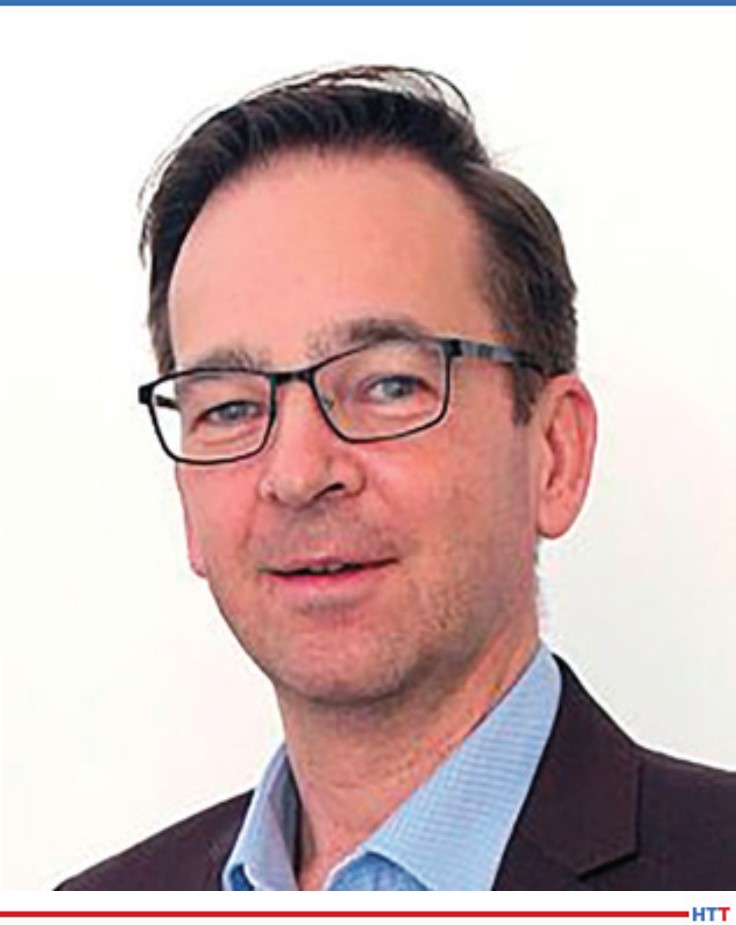
Green hydrogen is the oil of tomorrow

Thomas Schneidewind
Editor-in-Chief
heat processing Magazine

Last year, as moderator of our “Hydrogen in Practice” webinar, I had conversations with representatives of various industries about hydrogen. We always came to the same conclusion: technically, everything is already feasible today, only hydrogen is missing. Whether combustion processes, infrastructure or even the fuel cell, ultimately all the processes and technical challenges are not only known, but already solved. After all, hydrogen is an industrial gas that has long been used in many processes and is sometimes simply produced as a waste product. When hydrogen comes into contact with atmospheric oxygen and the necessary ignition energy is supplied, both burn together to form water. In the process, up to 90% of the energy that previously had to be applied to split the water is released again. During its combustion, apart from water in the form of water vapor, only a very small amount of nitrogen oxide is formed through reaction with atmospheric nitrogen. No hydrocarbons, no sulfur oxides, no carbon monoxide and, above all, no carbon dioxide are produced. This is why hydrogen is the great hope of the energy industry and a key building block in the decarbonization of the industry.

Contact us with your Reader Feedback!

In 2050, hydrogen will be the most important energy carrier for energy-intensive industry alongside electricity produced by renewable energies. We need hydrogen for the direct reduction of iron ore (DRI) in the steel industry as well as for burners in the heat treatment industry. Many metallurgical processes require the use of gas-fired burners. Electric heating in heat treatment is not an alternative in many cases. That is why the “all electric” concept pursued by some politicians has long since been abandoned, after many engineers from the industry have spoken out. That is why hydrogen will be the green gas of heat treaters in the next decades. But it’s still a long way to get there.

Alongside renewable electricity, green gases such as hydrogen are seen as a central element of the German and European energy transition. The German government and the European Union have long recognized this and are funding government projects worth billions of euros, as in the Important Projects of Common European Interest (IPCEI Hydrogen). Nevertheless, a large-scale hydrogen economy is still a long time coming.

The first step to be able to use hydrogen as an energy carrier on a broad scale in the future is to build up an infrastructure, both here and in the future exporting countries. At least in Germany, the starting position is very good; with the existing gas infrastructure, there is already the foundation for a successful hydrogen future. Nevertheless, investments are necessary here as well, but above all the necessary development of the international infrastructure is capital-intensive. For investors, however, it will only become attractive when development and market opportunities arise in the interim to long term.

The development is driven by climate protection legislation. On June 24, 2021, the German Bundestag (German federal parliament) passed a new Federal Climate Protection Act. The amended law raises Germany’s greenhouse gas reduction target for 2030 to minus 65% compared with 1990. Previously, a reduction target of minus 55% applied. By 2040, greenhouse gases must be reduced by 88%, and greenhouse gas neutrality must be achieved on a binding basis by 2045. That is why many companies are investing in the green market.

Electrolyzer manufacturers aren’t able to handle the fast-growing demand. Metallurgical plant manufacturers are also far from being able to process all the requests from customers in the steel industry in a timely manner. The problem is not only the lack of hydrogen, but also the limited resources of plant manufacturers. The steel industry and heat treaters cannot be transformed and decarbonized within a short time. Even though these problems are focused on today, the structural change will take time. It’s the classic ketchup effect that everyone knows: You hit the bottle, and nothing comes out the front – but eventually everything comes out at once. Everyone knows that hydrogen is coming, but no one can say exactly when and in what quantity. Only some politicians claim to know this. In my opinion it’s up to the industry to manage this. I’m convinced that hydrogen will be the oil of tomorrow. We will see in 2045 if I was wrong.

Doug Glenn, Publisher, Heat Treat Today

No. Nor do I see it being a significant player within the next decade. By significant, I mean more than 5% of all heat treat combustion being fueled by green (generated by renewable or low-carbon sources) OR gray (steam/methane reformed)
hydrogen.

Doug Glenn
Publisher and Founder
Heat Treat Today

That’s the short answer.

But it’s the “why” behind the answer that is important. And the “why” is predominantly economic. As some experts I’ve been talking to say, “The price of hydrogen at the burner nozzle.” The nozzle price is impacted by three significant factors:

  1. The cost to produce the hydrogen
  2. The cost to deliver the hydrogen
  3. The cost to store and/or use the hydrogen

None of these costs are anywhere near competitive given current technology or infrastructure, and it is going to take well over 10 years to get those technologies and infrastructures in place. And that assumes that there is adequate economic incentive – not political or environmental incentives, but economic incentives – in place TODAY. These economic incentives don’t exist today, especially here in North America. Some have argued that geopolitical disruptions have made hydrogen a bit more appealing. Possibly. Nonetheless, it is drastically more profitable to fire with natural gas than hydrogen, and there are no market-driven economic incentives to push us toward hydrogen at this point. There is no scarcity of natural gas and there is no scarcity of the technology to extract it from the earth. The only thing that is scarce is the political will to allow its extraction.

Here’s one more observation about the cost of producing hydrogen compared to producing natural gas. For all practical purposes, natural gas is ready to use once it comes out of the ground – after a few and relatively inexpensive purification processes. The major cost involved with the production of natural gas is drilling.

Hydrogen, on the other hand is abundant and readily accessible. Three-fourths of the earth’s surface is made of two hydrogen atoms combined to one oxygen atom. It’s everywhere and easy and inexpensive to “extract” from the earth unlike natural gas. However, even though it is easily extracted, the molecular bond between those two hydrogen atoms and one oxygen atom is VERY STRONG – one of the strongest bonds occurring in nature. The cost of breaking that bond is what makes the production of hydrogen so economically unviable, and there are no incipient technologies currently being developed that will change that within the next decade.

Water, water everywhere and not a drop to . . . burn.

Hydrogen combustion – green or gray – will not be a significant player in the heat treat industry for at least a decade. That’s not to say that some of our more forward-looking companies will not and should not start researching and developing technologies to help increase the economic incentive to produce, distribute, and use hydrogen. I know for a fact that there are a number of combustion companies already heavily investing in this way. More power to them. I’m looking forward to the day when I can fill up my vehicle with water and drive 500 miles, and I’m sure there are heat treaters who would love to fuel their furnaces and drinking fountains from the same source.


Find heat treating products and services when you search on Heat Treat Buyers Guide.com


DUAL PERSPECTIVES: Is Green Hydrogen a Game Changer in the Heat Treat Industry? Read More »

When Is It Time for Recuperation?

op-ed

Last month, we discussed adjusting the fuel to air ratio of our burners – which is always the starting point. This month we will discuss the value of preheating combustion air using the waste energy in the furnace’s flue products to reduce our fuel consumption. This is commonly referred to as recuperation.

This column is a Combustion Corner feature written by John Clarke, technical director at Helios Electric Corporation, and appeared in Heat Treat Today's August 2022 Automotive print edition.

If you have suggestions for savings opportunities you’d like John to explore for future columns, please email Karen@heattreattoday.com.


John B. Clarke
Technical Director
Helios Electric Corporation
Source: Helios Electric Corporation

Natural gas prices continue to be a concern for our industry. We did see some short-term price relief in the U.S. because of the explosion at a Houston area LNG export facility that will reduce the U.S. ability to export natural gas for the balance of the year. Even so, there are LNG export expansion projects that will be completed in the coming year that will further expand the movement of North American natural gas to Europe and Asia. The result is that the U.S. price for natural gas will be more closely aligned with the price paid abroad. It appears the long-term factors influencing the price of natural gas in the U.S. remain unchanged — so, what should we do?

Contact us with your Reader Feedback!

We will continue to use the same typical furnace as last month — where after adjusting the fuel to air ratio, the furnace consumes $110,208 in natural gas per year. This furnace operates at 1600°F with an exhaust temperature of 1700°F. We have purchased and installed a recuperator that preheats the air supplied to the burner to 800°F. How much can we save?

If we locate our exhaust temperature in the left-hand column and find where it intersects with the preheated air column — the estimated savings is 32.3%.

Table 1. Savings from preheating combustion air

Recuperation requires a great deal more investment than simple fuel to air ratio adjustment. The projects are involved and generally require the burners be replaced or upgraded. There may also be the need to upgrade combustion air blowers and controls. Recuperation also alters the peak flame temperature the burner produces and can impact the temperature distribution within the furnace. Higher flame temperature may lead to increased NOx emissions as more nitrogen is oxidized. In most, if not all cases, these factors can be addressed with the selection of the right combustion equipment. So, assuming we wish to achieve a three-year payback — we can budget up to $106,000 for this project.

Recuperation is but one way to make use of the energy in the flue products that we would otherwise throw away. The exhaust from our burners can be directed over work to preheat it before introducing it into the furnace. The flue products can be used to generate steam so the energy can be used elsewhere in the facility.

The optimist may look at higher natural gas prices as an opportunity to gain an advantage over our competitors while the realist will see it as an imperative that we work to minimize the impact of rising costs. Either way, the path is the same: optimize the efficiency of what we have, then determine if further capital investments make sense. Next month we will discuss these steps in greater detail.

About the Author:

John Clarke, with over 30 years in the heat processing area, is currently the technical director of Helios Corporation. John’s work includes system efficiency analysis, burner design as well as burner management systems. John was a former president of the Industrial Heating Equipment Association and vice president at Maxon Corporation.


Find heat treating products and services when you search on Heat Treat Buyers Guide.com


When Is It Time for Recuperation? Read More »

Cybersecurity Desk: Why and How To Become a Compliant Heat Treater

op-edCybersecurity: it's important for more than just keeping checking accounts safe. Banks, government agencies, and online data bases all require strict cybersecurity. But what about heat treaters? What are cybersecurity requirements for heat treaters, and how can they become compliant?

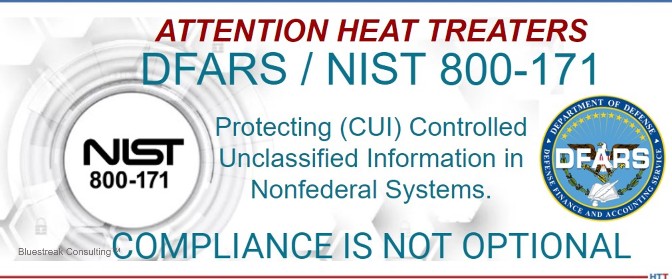
Today's Technical Tuesday is a Cybersecurity Desk feature written by Joe Coleman, cybersecurity officer at Bluestreak Consulting™. This column series will have its debut in Heat Treat Today's September 2022 Trade Show print edition.


 Do You Need To Be Compliant?

If you are a heat treater who provides services to a Department of Defense (DoD) contractor or downstream DoD requests, you are affected by this topic and need to read on to get more details. In some cases, you may have already been asked about compliance by some of your customers. In this article and in future articles, we will provide the answers to the most

frequent questions regarding how heat treaters can become and stay in compliance to cybersecurity specs and even improve compliance in cybersecurity health.

Discussions around DFARS compliance, NIST 800-171 implementation, and cybersecurity within federal defense contracting are becoming increasingly prevalent by the day. Although it seems like the conversation is only recently gaining steam, the DFARS mandate has been around longer than people realize.

The DoD is requiring all contractors, subcontractors, and suppliers to be DFARS 252.204-7012 and NIST 800-171 compliant. Don’t take a chance on losing current DoD contracts and losing future business because of noncompliance. Compliance is non-negotiable for heat treaters within the DoD supply chain.

Heat treaters implementing effective cybersecurity practices are facing particularly challenging circumstances because there are more devices (including mobile devices) than people, and attackers are becoming more innovative. Cybersecurity is the practice of protecting systems, data, networks, and programs from digital attacks (web/cloud based). These cyberattacks usually seek to access, change, or destroy sensitive information; extort money from users; or interrupt normal business processes. Therefore, the government is pushing cybersecurity more than ever before. All of us need to be sure critical data and systems are protected and secured.

Here are several eye-opening statistics of how cybercrime affected SMBs (small to mid-sized businesses) from 2021:

  • Cyberattacks increased by nearly 300% since the beginning of the pandemic
  • 58% of cyberattack victims are small and mid-sized businesses
  • 60% of small companies go out of business within 6 months after a major security breach
  • 55% of ransomware attacks involve companies with fewer than 100 employees
  • 95% of cybersecurity breaches are a result of human error

What Is DFARS 252.204-7012?

DFARS  252.204-7012 is a DoD regulation that has become increasingly important for defense contractors and suppliers.

Originally implemented in 2016, DFARS 252.204-7012 requires safeguarding and “adequate security” of Covered Defense — which also includes CUI (Controlled Unclassified Information) — by implementing the guidelines found in NIST SP 800-171.

DFARS 252.204-7012 further requires contractors to follow certain procedures in the event of a cyber incident, report the incident to the government, and provide access to systems.

What Is NIST SP 800-171?

NIST SP 800-171 is a NIST (National Institute of Standards and Technology) Special Publication that provides recommended requirements for protecting the confidentiality of CUI in non-federal organizations or businesses. Defense contractors must implement the recommended 110 control requirements contained in NIST 800-171 to demonstrate their provision of adequate security to protect the Covered Defense Information (CDI) included in their defense contracts, as required by DFARS 252.204-7012. If a manufacturer is part of a DoD, General Services Administration (GSA), NASA, or other federal or state agencies’ supply chain, the implementation of the security requirements included in NIST SP 800-171 is a must.

The deadline to be fully compliant with NIST 800-171 was December 31, 2017. But it’s not too late.

Photo Source: Bluestreak Consulting™

Even if a heat treater is not a DoD contractor or in the DoD supply chain, NIST 800-171 is a great "best practice" standard for any organization to improve overall cybersecurity health. This will help in obtaining future orders because customers will know critical data is secure. Explaining NIST 800-171 in depth, and each of the specific control areas, is beyond the scope of this article, so, be on the lookout for a future article on this specific topic later in this series of articles.

Consequences of Failing To Comply With DFARS 7012 and NIST 800-171

Heat treaters willing to move forward with these cybersecurity initiatives by the DoD will have an overwhelming impact on the DoD supply chain and your business. If many heat treaters in the U.S. choose to not embrace the mandatory requirements, the DoD and DoD contractors will award contracts solely to the few heat treaters who do choose to become compliant. Poor cybersecurity practices can result in hacking, loss of company data and critical customer data, and attacks by malware, viruses, and ransomware. All of this can result in major damage to the business and loss of customers, not to mention being liable for all losses and paying significant fines.

Complying with DFARS 7012 and NIST 800-171 is a requirement for all DoD contractors, subcontractors, vendors, and suppliers. The DoD has now begun confirming that contractors and subcontractors are compliant before awarding additional contracts. Navigating NIST 800-171 and DFARS is a complex and challenging — but necessary — step in this process.

Watch for Future Articles in Heat Treat Today Covering the Following Topics:

  • DFARS 252.204-7012 and NIST SP 800-171 Explained for Heat Treaters
  • DFARS Interim Rule Explained (DFARS 252-204-7019, 7020, and 7021)
  • General Cybersecurity Best Practices and What You Should and Should Not Do
  • Performing Your Basic & Your Final NIST 800-171 Assessments
  • Submitting Your Assessment Score(s) to the SPRS (Supplier Performance Risk System)
  • CMMC 2.0: The New Changes and How To Become Certified
  • How To Safely and Securely Work From Home and Work Remotely
  • If You're Not Using 2FA or MFA, Your Data and Your Customer’s Data Is Not Secure
  • . . . and many more cybersecurity topics curated for heat treaters

Can You Afford Compliance? Funding and Cost Sharing for Heat Treaters

With the huge push for cybersecurity by the government, cost sharing and funding sources have been identified that may cover a substantial percentage of the costs associated with these critical cybersecurity projects.

About the Author:

Joe Coleman is the cybersecurity officer at Bluestreak Consulting™, which is a division of Bluestreak | Bright AM™. Joe has over 35 years of diverse manufacturing and engineering experience. His background includes extensive training in cybersecurity, a career as a machinist, machining manager, and an early additive manufacturing (AM) pioneer. Joe will be speaking at the Furnaces North America (FNA 2022) convention, presenting on DFARS, NIST 800-171, and CMMC 2.0. Contact Joe at joe.coleman@go-throughput.com.


Find heat treating products and services when you search on Heat Treat Buyers Guide.com


Cybersecurity Desk: Why and How To Become a Compliant Heat Treater Read More »

What Are the Real Threats to the Economy?

op-edIs the sky falling? Are we all doomed? Are we on the cusp of stagflation or hyper-inflation? Is this the beginning of the worst recession since the 1930s? The short answer is no.

Chris Kuehl, PhD, managing director of Armada and economic analyst at Industrial Heating Equipment Association, explains why the future may not be all doom and gloom. Read on to discover a positive outlook on the economy in this original content piece, originally published in the June 2022 Heat Treat Buyers Guide print edition.


Chris Kuehl
Managing Director, Armada, Economic Analyst, IHEA

The frothy coverage of the economy has been an exercise in extremes and one has to wonder why. Especially when we look at the actual data. The signals that are being sent are not all that dire. This is not to say that there are no problems to be aware of and there are most definitely some impending threats, but the near hysteria that shows up almost hourly is not justified by the facts — at least not as they are emerging right now. Why do some economists present these extremely pessimistic assessments and assert that a major catastrophe lies ahead?

The truth is that economists are not all that good at forecasting and predicting despite the fact this is supposed to be our job. The reality is that we have predicted 13 of the last three recessions. The comparisons between an economist and a meteorologist are not flattering but both professions have the same challenge. The data changes and it changes fast. The real purpose of the dire economic forecast is to warn. It is essentially pointing out that the economy is headed for a brick wall unless something changes. The prediction of a major recession in 2030 or 2035 or 2050 is nothing more than a call to action. If the issues that are affecting the economy are not dealt with, the likely outcome will indeed be the recession or other economic calamity that has been forecasted.

The predictions of doom and gloom are designed to call attention to major issues that demand attention sooner rather than later. All are driving the negative performance of the current economy. None of these will be easy to deal with and failure to either prepare for the impact or find a way to avert the disaster will indeed mean the economy could be headed for strains that will significantly hamper growth.

At the top of the list is the supply chain. It is safe to assume that the old system will never return. The breakdown in globalization has been due to everything from geopolitical tension to the desire on the part of companies to have better control of their processes. It is estimated that there will be a trillion dollars of reshoring in the U.S. this year alone. Nearly 70% of those doing business in China want to shift significant production to the U.S. or at least to North America. Robotics and technology allow companies in the U.S. and Europe to compete with those low production cost platforms in other countries. Despite these moves, China and other nations provide trillions of dollars of goods to the U.S. and the rest of the world which means that the reshoring effort will not eliminate the importation of material from China and elsewhere, but the dependence that has developed on the Chinese export sector will diminish. Along with the effort to bring production back to the U.S., there will be diversification when it comes to these overseas sources. There will be expansion to other Asian states such as Vietnam, Thailand, and Malaysia and there will be efforts to expand to more Latin markets such as Colombia and Brazil. Even states in Africa such as Nigeria, South Africa, Ghana, and Kenya will see efforts to expand. It is important to note that all these nations provide opportunities but also challenges.

The next challenge is connected to both the labor issue and the supply chain. Companies that struggle to find the people they want to hire will turn increasingly to automation and robotics. This has already occurred in the manufacturing sector as machines have largely replaced the people who once worked on the line in the factories. Now the automation revolution has reached the service sector with developments such as online buying, self-serve retail, and complete conversion to consumer driven interactions. The need for the labor that once dominated the service sector has largely diminished. The technology demands a higher-level worker, and those people are in even shorter supply than other skilled workers. The future is one of cobots — people interacting with and working alongside machines that have the ability to do their own problem solving. It is the robot and technology revolution that has spurred so much of the reshoring effort as the machines allow U.S. companies to compete with the low wage and low production cost operations overseas.

About the Author: Chris Kuehl is the managing director of Armada and an economic analyst for IHEA. Over the last 21 years, Chris has worked with many private clients and professional associates. He writes a bi-weekly publication for Fabrinomics on the impact of economic trends for manufacturers. Among other advanced degrees, Chris has a doctorate in Political Economics and is a well-known keynote speaker, giving nearly 100 presentations a year.


Find heat treating products and services when you search on Heat Treat Buyers Guide.com


What Are the Real Threats to the Economy? Read More »

Skip to content