Heat Treat Today is today releasing the very first economic indicator numbers for four (4) separate heat treat industry specific indices. On a monthly basis, the data will be gathered from suppliers to the heat treat industry and will measure forward-looking expectations about the upcoming month.
The results from the inaugural June survey are as follows; numbers above 50 indicate growth, numbers below 50 indicate contraction, and the number 50 indicate no change:
Anticipated change in the number of inquiries from May to June: 61.8
Anticipated change in value of bookings from May to June: 65.0
Anticipated change in backlog size from May to June: 57.9
Anticipated change in the health of the manufacturing economy from May to June: 58.0
Heat Treat Today’s Economic Indicator results from May 2023 projected for June 2023. Source: Heat Treat Today
These June results reporting on May were forward-looking to June. All four indices registered quite high. Therefore, these results show that suppliers responding to the survey anticipated that June would be significantly better than May.
The four index numbers will be reported monthly by Heat Treat Today and will be made available on our website.
The questionnaire is sent out monthly to over 800 industry suppliers. If you are interested in receiving the monthly survey, please subscribe by clicking here.
Results will be published monthly.
Find heat treating products and services when you search on Heat Treat Buyers Guide.com
The monthly Industrial Heating Equipment Association (IHEA) Executive Economic Summary released in June provides some bad news and some good news about the U.S. economy status. Referring to the Leading Economic Indicators, the nation is in one of the lowest spots it has been for 23 years. A silver lining: This low point is not as low as other drops (2000-2001, 2007-2009, and 2020).
While this certainly shows the nation in a difficult spot, the report continues with some encouraging news. Even better, the heat treat industry can find positive impacts with the U.S. continuing to increase reshoring efforts as well as labor shortages helping with job security and job availability for industry workers.
The economic indices demonstrate that "[t]he majority of the data . . . shows solid performance and even the declines are relatively minor." There are drops in these sectors: Steel Consumption, Metal Pricing, Purchase Managers Index, Capital Expenditures, and Transportation Activity. Five indices show increase or at least holding steady: New Home Starts, Industrial Capacity Utilization, New Auto & Light Truck Sales, Durable Goods, and Factory Orders.
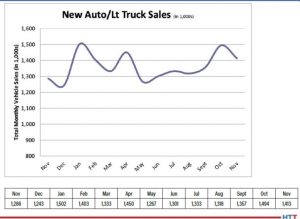
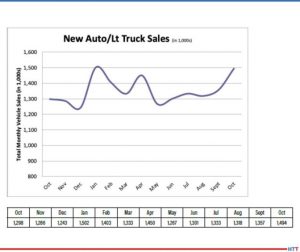
In New Auto and Light Truck Sales, the numbers are looking good. The report indicates this comes as a surprise, but it's good news for those manufacturing new vehicles.
"Consumers are still in a good mood, unemployment numbers are still low, car loans are still cheap and getting cheaper as interest rates fall." Source: IHEA
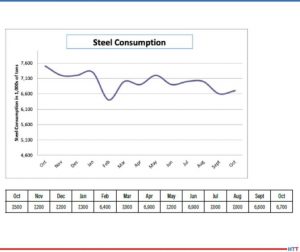
The Steel Consumption index shows lots of ups and downs. Certainly there are still some supply chain issues, and the demand for construction of office space has been low during/since the pandemic. Growth stems from the reshoring movement as well as in construction for manufacturing facilities.
"The good news for steel is that manufacturing has been the driving sector for construction due to this investment in new technology that needs upgraded facilities." Source: IHEA
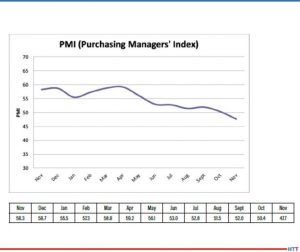
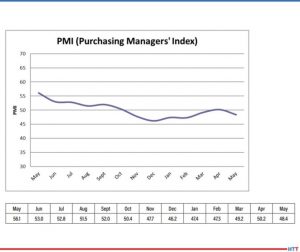
The Purchasing Managers' Index measures industrial purchases for manufacturers. The PMI is going to drop if the purchase managers feel that the economy is slowing. Raw materials and other purchases are slowing down here, as the data shows.
"Right now, there are twenty nations registering under 50 and the US is now back among them at 48.4." Source: IHEA
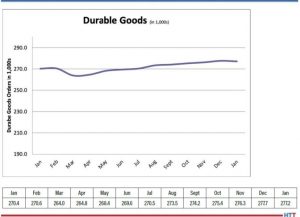
Conversely, Durable Goods is staying strong. Vehicles, appliances, even electronics are selling. Putting the PMI and this Durable Goods data together shows the two sides of the coin very clearly. Maybe the nation is just in economic slowdown, not entering dangerous recession.
The level of durable goods activity has been remarkably stable given all the turmoil in the overall economy." Source: IHEA
Anne Goyer, Executive Director of IHEA
IHEA's report points out, "the U.S. is a country so large and diverse that it can easily host both recession and growth." With the majority of the indices holding steady or, at worst, seeing minimal drops, the coin toss of economic future doesn't seem too extreme in either positive or negative directions.
Check out the full report to see specific index growth and analysis which is available to IHEA member companies. For membership information, and a full copy of the 11-page report, contact Anne Goyer, executive director of IHEA. Email Anne by clicking here.
Find heat treating products and services when you search on Heat Treat Buyers Guide.com
Searching for sustainability resources? Check out this first installment of the Sustainability Insights series, from the Industrial Heating Equipment Association (IHEA) for what’s available to in-house heat treaters across the industry.
Discover the resources IHEA provides in their web-based Sustainability area and a new webinar series launching May 11.
One thing is certain, and it's that there is great deal of uncertaintyabout how tobegin addressing issues of sustainability and decarbonization.As heat treaters begin to receive more and more questions about decarbonization, IHEA saw an opportunity to help the industry and began developing a variety of initiatives relating to sustainability and decarbonization in the industrial heating equipment industry.
Getting Started with Sustainability
Contact us with your Reader Feedback!
The first step towards decarbonization isunderstanding this is a topic that will not go away. While they may not see any immediate consequences, heat treaters need to at least begin preparing now for what is quickly approaching.Before long, clients are going to be demanding heat treaters showthat they are lowering their carbon emissions. Thinking, “This will not affect my business,” will be detrimental in the long term.
IHEA recommends to start byconsidering efficiency and getting an initial assessment of carbonfootprint.The fastest, easiest way to reduce carbon footprint is to burn less fuel by investing in efficiency improvements. As a side benefit, operating costs are also reduced. IHEA's current combustion courses do have content on efficiency and low carbon fuels and a webinar series specifically designed to help everyone understand how to determine their initial accounting of their carbon footprint.
Future Plans
The deeper driving forces that will affect our industry regarding sustainability are regulations, incentives, andenergy economics. Rapidlychanging environmental policy, growing technology incentives, and a shifting relative cost of fuels (and alternate fuel options like hydrogen) are opening new pathways for businesses to factor carbon footprint and sustainability into their operations.
Because of these upcoming changes, IHEA is developing a wide array of services and tools that will help those looking to lower carbon emissions determine the best approaches for their heat treat facilities. An entirely new body of content will be developed that will be at the leading edge of this industrial revolution.
To kick things off, IHEA has developed a Sustainability area on their website that features the foundation of information the industry needs. The Sustainability area includes the following sections: Sustainability FAQs,Sustainability Terms & Definitions, andSustainability Resources. The Sustainability section will continue to expand by adding content and resources on a regular basis.
Additionally, IHEA is launching a series of webinars that will start the process of walking companies through the complicated issues related to decarbonization:
June 15: Defining Greenhouse Gas (GHG) Emissions to Target NET-ZERO
July 20: DOE Tools and Programs for GHG Reduction
August 24: Ongoing Sustainability: Industry Best Practices for Continual Improvement
The goal is to provide unbiased education for everyone involved in the process heating industry. The webinars are complimentary.Visit www.ihea.org and click on the "EVENTS & TRAINING" tab.
Brian Kelly President at Honeywell Thermal Solutions
Recently elected IHEA President Brian Kelly of Honeywell Thermal Solutions says, “IHEA is taking a leadership role because we see that this will be an ongoing and changing landscape for the industry for years to come. With the years of collective expertise of our membership we feel that we can provide information, education, and guidance to help everyone navigate what is sure to be a challenging environment.” Kelly continued by saying, “In the end, we want to be a source to count on to help our entire industry in their sustainability journey as it will be a long and winding road that will be different for everyone.”
The monthly Industrial Heating Equipment Association (IHEA) Executive Economic Summary released in April starts with an analogy of current world events compared to a scene from the animal kingdom. The statement, "when elephants fight it is the mice that suffer," is used to describe the "elephants", the U.S. and China. There's not a lot of good that comes when two major world economies continue to disagree all while still depending on each other for supplies and material goods.
How does this analogy include the heat treating industry? Heat treaters come under the "mice" category, and there are definite hardships that continue to plague supply chain, production, and demand; as the "elephants" battle. China is putting up all sorts of obstacles on their exports, and now the U.S. is dealing with the Biden administration's push for the automotive industry to convert electric vehicle production. "How does the U.S. manufacturer avoid becoming the mouse that gets trampled by this fight between elephants?" the IHEA report questions. "The simple assertion is that the U.S. has to find alternative sources for the materials and commodities that have been provided by China. This may be simply stated but accomplishing this will be anything but simple."
An examination of the economic indices shows how the tension between nations seems to be affecting numbers. A majority of the sectors see drops: Steel Consumption, Industrial Capacity Utilization, Metal Pricing, Capital Expenditure, Durable Goods, and Factory Orders. However, 4 indices show, if not improvement, steady progress: New Auto/Light Truck Sales, New Home Starts, Purchase Managers Index, and Transportation Activity.
Good news for heat treaters in the automotive sector is that demand for cars and light trucks is still high. This is tempered with banks that are becoming more guarded in offering car loans since large numbers of people are not keeping up with their loan payments. Another concern creeping in is the future of traditional vehicles since the push for EVs is becoming apparent. The "mice" have a lot to think about for the future of automotive sales.
"The most recent factor [for volatility in this market] is the push to force adoption of the electric vehicle through putting severe limits on traditional vehicle mileage performance." Source: IHEAThe 3-pronged influences in the steel industry - construction, vehicle manufacturing, and oil and gas pipeline - are declining overall. The report says that 2024 could be even worse than the current year.
"Oil and gas demand [one of the 3 relevant sectors] has started to improve as the daily commute resumes and that will spur more demand for pipelines." Source: IHEAThis decline in PMI seems to be common around the world, as the U.S. is only 1 of over 20 nations that are seeing a downturn. The slight uptick for the month might be due to the U.S. seeking different sources for supply chain; Mexico and India are filling the gap with available resources.
"The data is still not back to the expansion zone above 50 but it is headed in the right direction and is only slightly below that cut-off line." Source: IHEA
Heat treaters know that durable goods include things like appliances and equipment. This sector is staying strong due to demand in markets like defense, multi-family housing, and machinery.
"There was a slight dip this month but overall, the sector is still solid." Source: IHEA
"The transportation sector is often a leading indicator. . . .There is no reason to book a truck or plane or rail car unless there is something to move," states the IHEA report. Not only does this index rise when actual goods are being moved to demand, but the need for transportation comes when there is "anticipated demand." These numbers are encouraging, still staying on the positive side.
"Trucking and rail are still down from their past levels but it is worth noting that these numbers are still in positive territory." Source: IHEA
Anne Goyer, Executive Director of IHEA
The mice are depending on the elephants to make some decisions that will benefit all. While the U.S. is still dealing with China, the report encourages making decisions based more on economical reasons rather than political clout. It seems the writing is on the wall to consider alternative nations from which to source supplies and raw materials. Within the U.S., there are raw materials that can be sourced; so maybe it is time to focus on those resources.
Check out the full report to see specific index growth and analysis which is available to IHEA member companies. For membership information, and a full copy of the 11-page report, contact Anne Goyer, executive director of IHEA. Email Anne by clicking here.
Find heat treating products and services when you search on Heat Treat Buyers Guide.com
The monthly Industrial Heating Equipment Association (IHEA) Executive Economic Summary released in March came out a little later than usual in order to incorporate recent global banking events. Even with bank failures, heat treaters can see the economy being part of an overall forward, albeit slow, recovery from the big recession during the pandemic.
Some of the banks to collapse were Silicon Valley Bank along with others such as Signature Bank and Republic Bank as well as Credit Suisse in Europe. The continual raising of rates, by the Feds, to fight inflation exposed weaknesses in banks that were already struggling. In the aftermath of this collapse, the report states uncertainty in how the Fed will respond to inflation in the future.
While the following report shows current stability in the economic indices, there is uncertainty following the banking collapse about how the economic future will unfold. The report states, "the industrial sector is still expected to decline although the speed of that decline has slowed
a bit. The projected readings are far below the trend line . . . but has started to show some very slow recovery." Only time will tell how the banking collapse will affect the future trends.
As a first example of continuous supply chain improvement, new automobile and light truck sales are up. New cars are being produced more consistently, and people are attracted to new vehicle purchase over the high-priced used vehicle market.
"Now that the supply chain crisis has started to recede the new cars are available again." Source: IHEA
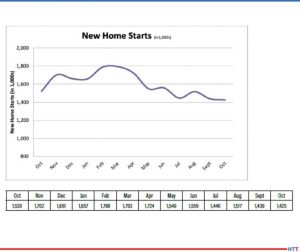
New home starts have about the same data as last month's report with the need still great for multi-family units are needed. The durable goods chart will be shown next since a good portion of that manufacturing is feeding into the new home builds.
"The good news for the manufacturer is that appliance demand is far higher with multi-family homes." Source: IHEA
"There have been major gains in sectors such as vehicle manufacturing and aerospace..." Source: IHEA
Another economic trend for heat treaters is the steel consumption sector. Construction is going strong, but know that this could drop when current projects get finished. There is hesitation in construction to embark on new projects because of financing concerns. As mentioned before, automotive is still doing well.
"Most of the big projects have started to get closer to completion and the economic environment is causing delays in starting new efforts." Source: IHEA
Similarities can be seen in the industrial capacity utilization and the factory orders scenes. When the panic due to supply chain problems hit, companies bought up as much as they could. Now, there is the opposite problem of overstock. Inventory is going to have to be sold before these numbers will start working their way up again.
"Until these excess inventories are dealt with there will be slack reports." Source: IHEA
"The dip in commodity pricing has already passed for the most part..." Source: IHEA
Raw metal pricing saw a huge dip with the bank failures, and the report shows this is due to investor panic. Already the numbers are leveling out.
Anne Goyer, Executive Director of IHEA
Overall, the report is showing on-trend charts and indices. Even with the bank scares recently, the economy is not radically dropping and changing. Things are straightening out - slowly, slowly - as the recession moves more and more into the rearview mirror.
Check out the full report to see specific index growth and analysis which is available to IHEA member companies. For membership information, and a full copy of the 11-page report, contact Anne Goyer, executive director of IHEA. Email Anne by clicking here.
Find heat treating products and services when you search on Heat Treat Buyers Guide.com
The monthly Industrial Heating Equipment Association (IHEA) Executive Economic Summary released in February shows that 2023 has already been forecasted in very different ways by expert analysts. Some are claiming that 2023 is just going to be terrible with rampant recession, pointing to the Purchase Manager's Index (PMI) as the true marker for what to expect. Then, there are the more moderate studies. The automotive and aerospace industries are looking up. The split forecasts might leave one spinning in confusion.
By taking a closer look at some of the specific industries, the economic summary shows that, "We don't quite know what to do with 2023 yet." The report reiterates this balance of highs and lows, with several bright spots for heat treaters, "In the more detailed breakdowns we see some significant variations – booms in automotive and aerospace but declines in machinery. Less volatility in fabricated metal and more volatility as far as primary metal is concerned."
The 10 economic indices show the aforementioned balance with almost half showing some increase, and the other sectors have a drop. A closer look below will show that even within the indices that are dropping, heat treat related markets are holding steady. Global events continue to impact metal prices. Indices that are down include: New Automobile and Light Truck Sales, New Home Starts, Industrial Capacity Utilization, and the Transportation Activity Index. The up indices are Steel Consumption, Metal Pricing, PMI, Capital Expenditure, and Durable Goods.
High interest rates and high new vehicle prices are driving these sales down. Heat treaters, keep in mind that older vehicles are still on the road needing parts and eventually replaced.
"There is a threat of continued low demand." Source: IHEA
With a look at new home starts, yes the index is down. There is a bit of a surprise within this big picture. Multi-family unit construction is actually up by 11%! This means heat treating is needed for construction components as well as appliances that go into these units. There is a relationship here with the durable goods pictured a few charts further down. Demand is high for these manufactured items.
"New homes are expensive, and loans to buy them are expensive as well." Source: IHEA
Metal pricing reflects political events around the world - places like China and Peru where industrial metals and copper are sourced. Supply chain problems are correcting, but government conflicts continue. Currently the numbers are up, but quite a bit of uncertainty swirls.
“The sense is that prices are settling into a predictable pattern — for now.” Source: IHEA
Durable goods are things that are supposed to last years. Appliances for the multi-family housing units shown above would be something in this category.
"A bigger demand for U.S. exports and most of these are high-value manufactured goods." Source: IHEA
Robotics industry is booming too as is the automation sector. Durable goods also includes U.S. exports, and those are in high demand.
Anne Goyer, Executive Director of IHEA
2023, it would seem, is a year to "Keep calm, and carry on". The incredible lows due to the pandemic, and then some major highs coming out of that time are in the past. With some rising indices balanced with some low economic markers means, "companies are facing a year of unknowns after a couple of years of predictability."
Check out the full report to see specific index growth and analysis which is available to IHEA member companies. For membership information, and a full copy of the 11-page report, contact Anne Goyer, executive director of IHEA. Email Anne by clicking here.
Find heat treating products and services when you search on Heat Treat Buyers Guide.com
The monthly Industrial Heating Equipment Association (IHEA) Executive Economic Summary released in January takes a look at the 3 common problems for the economy and provides another sector that may be surprising player. Usually, inflation, recession, and supply chain have been considered the culprits for the economic downturns in past months. There is something else edging in as cause for concern: the worker shortage. Specifically, the looming problem that the Boomer generation is retiring.
By 2030, the report projects, every worker of this generation will have reached retirement age. It is forecasted: "These people will be very hard to replace, and it will be expensive." Worker shortages have been discussed before, but now the study is showing that things are at "crises level."
"Remarkably stable" due, in part to "expansion of capital spending" Source: IHEA
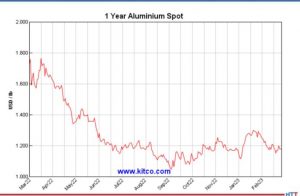
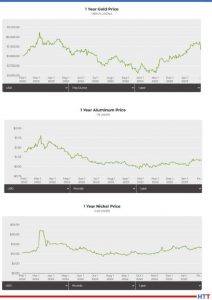
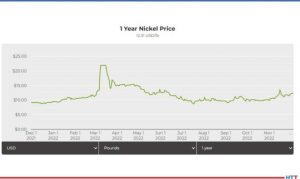
The 10 economic indices have all shown a drop except two: Durable Goods and Metal Pricing. Metal prices are remaining stable even as there are signs of reducing demand. The report credits this to companies thinking there will be a slowdown this year. Global events do make copper rather volatile, but nickel and aluminum are holding steady.
"The metal markets have been stabilizing to a degree." Source: IHEA
All of these indices are slowing down: New Auto Sales, New Home Start, Steel Consumption, Industrial Capacity Utilization, Purchasing Managers Index, Capital Expenditure, Factory Orders, and Transportation Activity. It's difficult to pin just a few reasons for this, but supply and demand issues, high interest rates, and high prices overall have consumers hanging on to their money if they can.
Some supply chain resolution but "consumer demand is frequently frustrated by the lack of the desired vehicle." Source: IHEA
In the automotive arena, heat treaters can find measures of security in knowing production is still expanding.
"The estimate is that another 5 million homes are needed." Source: IHEA
Yes, the numbers are down, but overall there is a great need yet for housing. Multi-family homes see numbers still up by 12%, so that reflects well for heat treaters providing construction needs.
Some slowing in the steel sector Source: IHEA
The report on steel consumption shows decline in the three major "drivers" for the industry: commercial construction, vehicle manufacturing, and the oil and gas business.
Anne Goyer, Executive Director of IHEA
2023, it would seem, is going to see a lot of spending on labor. There is hope even while seeing numbers drop, and it is possible that the nation is moving into a better time. The claim is that the "recession threat [is fading]," and supply chain circumstances are improving with China and elsewhere.
Check out the full report to see specific index growth and analysis which is available to IHEA member companies. For membership information, and a full copy of the 11-page report, contact Anne Goyer, executive director of IHEA. Email Anne by clicking here.
Find heat treating products and services when you search on Heat Treat Buyers Guide.com
The monthly Industrial Heating Equipment Association (IHEA) Executive Economic Summary released in December gives forecasts for Q4 results and takes a look into the start of 2023. The 3.9% growth from Q3 is not expected to be matched in Q4, but the spending power of the consumer holds out hope for battling recession.
The 3.9% growth from Q3 is not expected to be matched in Q4 and beyond, but the spending power of the consumer holds out hope for battling recession. The thought is that inflation highs have peaked, and interest rates could lower about halfway into 2023. Heat treaters should note that applicable indices are remaining steady while still dealing with supply chain problems and work force shortages. Of the 10 economic indices in this report, 6 sectors are steady or seeing growth; while 4 are on a downturn.
Holding steady with biggest strength found in automotive. Source: IHEA
The categories included in seeing maintenance and growth are: New Auto & Light Truck Sales, Steel Consumption, Industrial Capacity Utilization, Metal Pricing, Durable Goods, and Factory Orders. Automotive sales are strong; people are wanting and needing to replace vehicles they've maintained for a long time. "People want new and they are confident enough in their job security to buy a new vehicle."
Automobiles are still in heavy demand due to supply chain issues and need to replace older vehicles. Source: IHEA
There are no surprises from the Steel Consumption reports, as the "big three sectors are all performing about as expected – vehicle manufacturing, construction and the oil and gas arena." Metal Pricing is seeing a A Tale of Two Cities because copper is affected by political tensions around the world, but aluminum is seeing strong demand, particularly for the aerospace industry.
Interest rates are prohibitive for single-family home purchases. Source: IHEA
Those indices that are in decline or experiencing drops are: New Home Starts, Purchasing Managers Index (PMI), Capital Expenditures, and Transportation Activity. New home purchases are difficult for those buyers because the interest rates are high. There is a bit of a bright spot for heat treaters since multi-family home sales are still strong; this means metal products are needed - appliances, window frames, and construction components.
Manufacturers are showing caution in purchases. Source: IHEA
The PMI "is always a good indicator of overall industrial activity as the purchasing manager will be doing what they do at the start of any industrial process." In the report it's down to 47.7; not an emergency, but very uncomfortable level.
Anne Goyer, Executive Director of IHEA
The report on these indices takes a middle-of-the-road approach. There are no alarmingly sharp drop-offs in the reports, neither is there any drastic growth into the positive numbers; it all comes down to inflation. Economic markers are such that the interest rates are as high as they will get indicate a drop about halfway through the new year. The report looks for some lowering of the numbers to "between 4.25% and 4.50%" while the Fed members think the rate "may top out at 5.1%."
Check out the full report to see specific index growth and analysis which is available to IHEA member companies. For membership information, and a full copy of the 11-page report, contact Anne Goyer, executive director of the Industrial Heating Equipment Association (IHEA). Email Anne by clicking here.
The monthly Industrial Heating Equipment Association (IHEA) Executive EconomicSummary released in November takes a look at high inflation. The report focuses the reasons for current inflation on four factors: supply chain issues, oil crises stemming from Ukraine situation, increase in wages, and possibility of bringing jobs back to American soil.
"If one compares the readings for other nations to that of the US, there is still more growth here than in Europe and even Asia." Hints of good news can be found, even as inflation continues to be high.
The IHEA report hones in on good and bad news related to wages and reshoring of jobs. Thirty or forty years ago, moving production overseas meant that U.S. employers could spend very little on wages. What's happening now is China and other players are seeking to have domestically independent economies, which means paying their own employees higher wages. The report states, "The China under Xi Jinping seeks to be far less dependent on its export economy and wants to be driven by its own consumers. For that to happen the Chinese consumer needs more money and that means higher wages. The bargain that was Chinese production has faded." So the bad news for manufacturers is that wages are high everywhere. The good news is that this helps bring the jobs back to North America.
Good and bad news carries over into the steel industry. "Imports of steel are down and that is good for domestic producers but the demand slump has many concerned."
Anne Goyer, Executive Director of IHEA
There is good and bad for reshoring the jobs back to America. The report states, "If they [American companies] produce close to the consumer, they can be more adaptable . . . . The ability to take advantage of U.S. innovation and development improves. This all comes at a cost as well – higher wages, higher regulatory costs and higher taxes." It seems that America has been caught off guard. Bringing jobs back to America, in a time when preparations have not been implemented, means growing pains. The pressure is on to find workers, train workers, and keep current and new workers happy.
Check out the full report to see specific index growth and analysis which is available to IHEA member companies. For membership information, and a full copy of the 11-page report, contact Anne Goyer, executive director of the Industrial Heating Equipment Association (IHEA). Email Anne by clicking here.
The monthly Industrial Heating Equipment Association (IHEA) Executive EconomicSummary released in October investigates the role politics takes in the economy. At this time of the year, thoughts turn to elections, with the economy discussed throughout the nation. What can politicians really do to change the course of the nation's economy? The IHEA report shares a hope for 2023 and some thoughts on what politicians could do to encourage this growth.
The nation's economy spreads over diverse sectors. It's difficult to point to one area to explain the cause of the recession. Some, like the aerospace and automotive, are seeing positive growth. Other areas, like electronics and machinery, are still in a downturn. The report states, "The expectation is that GDP will expand by a very anemic 0.3% in Q3 and this will be followed by another two quarters of GDP decline (0.5% in Q4 and another 0.5% in Q1 of 2023)." After this, if the estimates play out, 2023 will see the economy growing by the end of year. Forecasts suggest that Q2 of 2023 will see small, albeit positive, growth; while Q3 and Q4 suggest significant moves to the positive.
People are holding back on spending, wanting to save something for an uncertain future. They are thinking about their jobs and are concerned for household budgets. If they could be motivated to spend, that will help the economy with substantial growth in 2023. Politicians can do something about this, according to the report.
How can the political sector make an impact? "The most useful thing the politician could do now would be to reassure the population so that there would be the kind of spending that pulls an economy out of a downturn," explains the report. "There could be significant encouragement for the process of reshoring or attention paid to worker shortage or infrastructure development." According to the report this isn't happening. It doesn't seem like the politicians are interested in taking this approach.
Anne Goyer, Executive Director of IHEA
Check out the full report to see specific index growth and analysis which is available to IHEA member companies. For membership information, and a full copy of the 11-page report, contact Anne Goyer, executive director of the Industrial Heating Equipment Association (IHEA). Email Anne by clicking here.












 Future Plans