A 122-year-old cast-iron pipe maker started operating its $460-million ferrous foundry in North Carolina, and celebrated its role in “revitalizing manufacturing in the U.S.”
Charlotte Pipe and Foundry Company, a maker of cast iron and plastic pipe and fittings for plumbing applications, held its grand opening of a new $460 million foundry in Oakboro, North Carolina. Charlotte Pipe’s new foundry is situated on 700 acres in Stanly County, about 35 miles east of the cast iron foundry it operated in Uptown Charlotte for more than 100 years.
“The move to Oakboro will spur growth of other businesses, including vendors who supply and support the plant, opening a new window of economic growth for Stanly County,” said Hooper Hardison, CEO of Charlotte Pipe. “Even better, the region is already home to many of the Company’s associates who will benefit from reduced commute times and increased amenities within their work environment.”
Charlotte Pipe’s Oakboro Foundry, which became fully operational on September 5, 2023, employs more than 530 associates, and according to Hardison, up to another 500 construction workers were on the Oakboro jobsite each day over three years, working more than 1.2 million hours to open the new plant. All construction materials and supplies for the new foundry were 100% Made in the USA, as are all Charlotte Pipe products.
In addition, Charlotte Pipe added a rail spur to connect the new plant to the Aberdeen Carolina & Western Railway, a short-line railroad that crosses central North Carolina. The Aberdeen line connects to the Norfolk Southern Railway, giving the Oakboro Foundry rail access to move recycled materials to and from the Eastern Seaboard and the Midwest.
Find heat treating products and services when you search on Heat Treat Buyers Guide.com
GKN Aerospace has expanded its capabilities with additive manufacturing (AM) machines, accelerating its industrialization of sustainable aero engine solutions. This new technology will offer more reliable and sustainable alternatives to traditional castings and forgings.
The supplier of these machines is Nikon SLM Solutions, whose NXG XII 600's printing area and 12 lasers align with GKN Aerospace's vision to produce large parts with high productivity. Two systems have been ordered, one to be used with In718 and another for Ti64.
In the words of Martin Thordén, VP of Permanova, the newly formed business unit for material solutions within GKN Aerospace, "Partnering with Nikon SLM Solutions is a key milestone in our journey to create better, more sustainable aerospace products. . . . This collaboration provides us access to cutting-edge additive manufacturing capabilities necessary to propel us towards our net zero ambition."
Find Heat Treating Products And Services When You Search On Heat Treat Buyers Guide.com
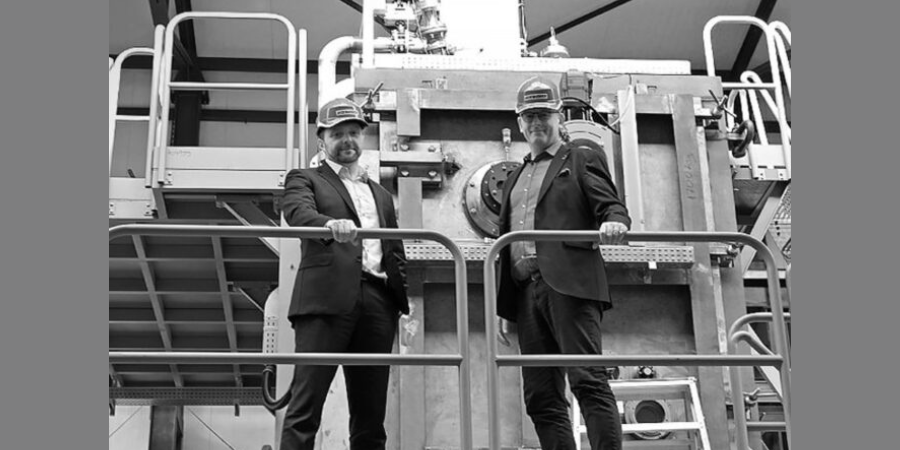
A multinational aluminum producer ordered a new 100,000 lb. capacity tilt melting aluminum furnace for one of their regional aluminum extrusion plants. Fabricated in PA, the furnace will incorporate several features to meet the manufacturer’s efficiency, production, and capacity requirements, as well as options to accelerate melting and transfer flow.
SECO/WARWICK USA will fabricate this aluminum reverb furnace. “Most of the damage to a furnace like this is from loading it with a forklift,” comments Marcus Lord, managing director at SECO/WARWICK USA. “Either bumping into the refractory around the door or being a bit clumsy with large awkward chunks of aluminum. It means the door is open a lot, and when it is closed, it might not have the best seal because the sills, jams and lentils are all beaten up. This furnace has a separate loading mechanism, so the door doesn’t need to open nearly as often. It really extends the life of the refractory, but it’s a huge efficiency boost too.”
This furnace will be fabricated with additional features, including capabilities to allow for a magnetic stirrer (supplied by the client) to be mounted under the furnace, saving more energy by increasing the melt rate by up to 10%. It will be capable of completely one full batch cycle in under 6 hours, for four batches a day, yielding a total of 340,000 to 400,000 lbs. per day. These combined factors will result in a fuel economy when the burners are firing in the regenerative mode of less than 1200 BTU per pound during the melt cycle.
Find heat treating products and services when you search on Heat Treat Buyers Guide.com
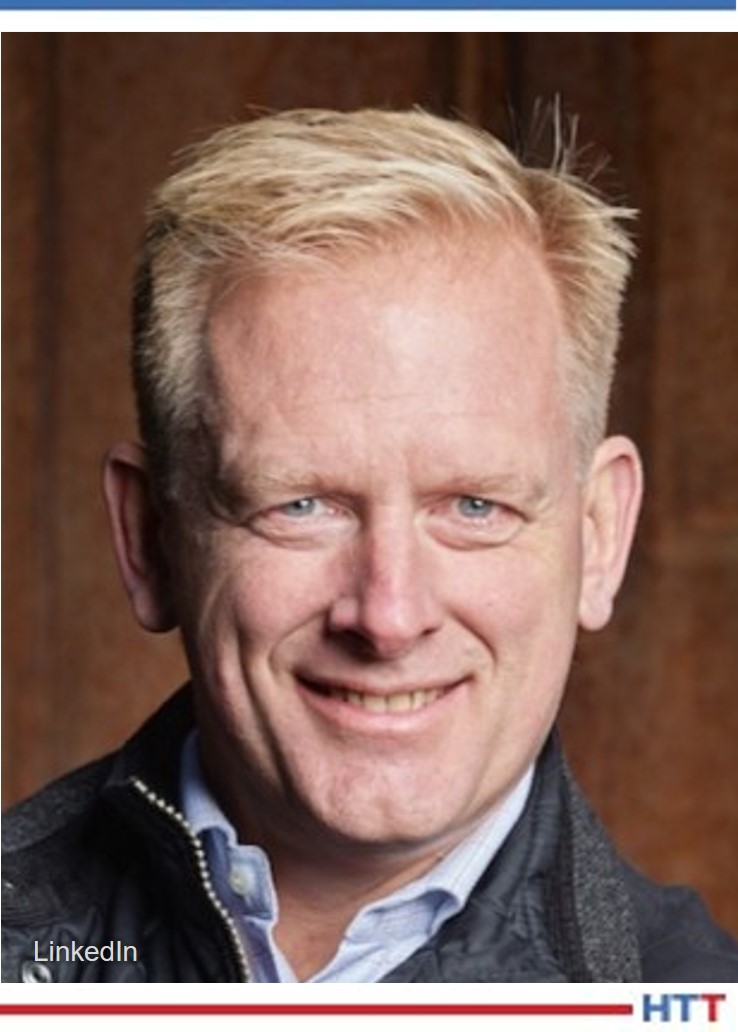
Rick Bucher President and CEO at Victaulic Source: LinkedIn
On March 30, 2023, Victaulic, a manufacturer of mechanical pipe joining, fire protection and flow control solutions, acquired Horizon Metals Inc., a foundry with heat treatment capabilities, located in Nephi, Utah. The acquisition supports growth in the infrastructure and waterworks market by increasing capacity for large-diameter piping solutions made in the U.S.
Horizon Metals, Inc. has been a family-owned and operated iron and steel foundry with heat treating capabilities including: austenitizing, normalizing, water/air quench, tempering, stress relieving, and solution annealing. "Horizon Metals represents Victaulic’s fifth foundry in North America and our fourth foundry located in the United States.” commented Rick Bucher, president and chief executive officer of Victaulic.
Find heat treating products and services when you search on Heat Treat Buyers Guide.com
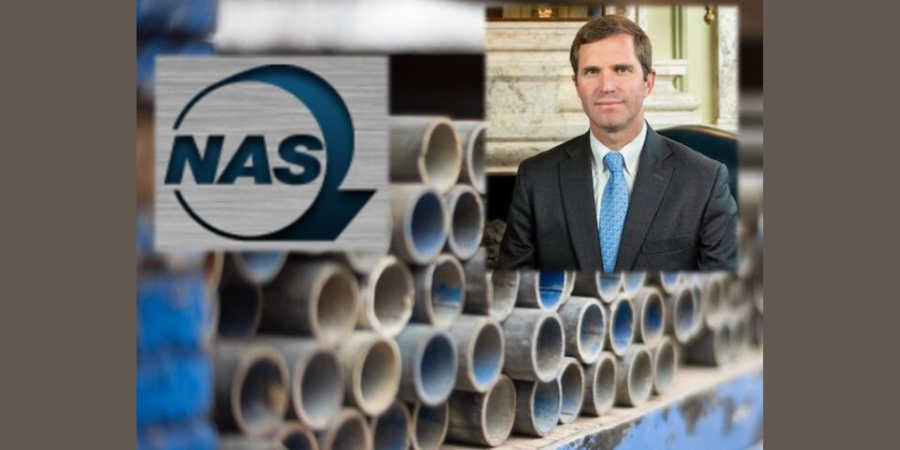
North American Stainless (NAS), a stainless steel producer in the United States, will proceed with a $244 million expansion to its Ghent, Kentucky facility in Carroll County. This expansion adds 70 new jobs to the plant.
For its 13th expansion since 1990, NAS will build a new cold rolling mill, roll grinders, an extensive upgrade of its annealing and pickling lines to support the new rolling mill, a new temper mill and the expansion of the Melt Shop Building to include a 400-metric ton crane. The new expansion will grow NAS’ 4.4 million-square-foot facility in Carroll County. NAS offers a full range of stainless flat and long products. All of NAS’ production lines are located onsite at its 1,600-acre headquarters.
Andy Beshear Governor of Kentucky
"Our latest expansion will bring more clean, sustainable and American-made stainless to consumers and directly compete with the subsidized imports of stainless,” said Cristobal Fuentes, CEO at NAS. “Our parent company Acerinox was eager to further invest in Kentucky to demonstrate its commitment to our customers and the U.S. market.”
“I’m excited to announce more growth in Kentucky’s metals industry with this latest investment from North American Stainless,” said Andy Beshear, Governor of Kentucky.
Find heat treating products and services when you search on Heat Treat Buyers Guide.com
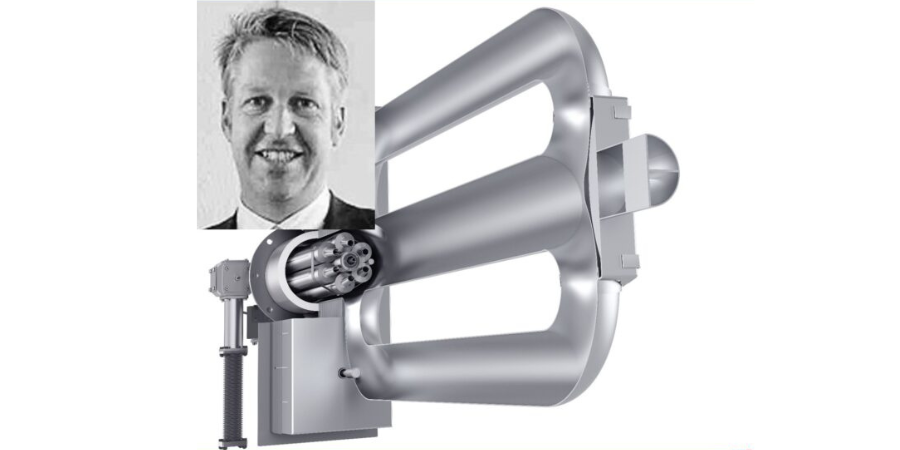
Dr.-Ing. Joachim G. Wünning President WS Wärmeprozesstechnik GmbH
thyssenkrupp Steel, a steel manufacturer with North American locations, recently inaugurated its newest hot-dip galvanizing line 10 (FBA 10) in Dortmund, Germany. The plant has a total of three vertical strip-processing lines and is a location for annealing and surface finishing of steel strip.
thyssenkrupp Steel, by using modern regenerative burners from WS Wärmeprozesstechnik GmbH (with Ohio, U.S., and Renningen, Germany locations) in double-P radiant tubes, will save between 15% and 30% fuel as compared with conventionally heated furnaces. The patented FLOX® combustion process helps achieve low NOx emission values. The heating system is set for a later switch to green fuels such as hydrogen.
"All continuously operated strip lines are . . . suited for a future with green combustion gases," says Dr.-Ing. Wünning, President of WS Wärmeprozesstechnik GmbH.
Sometimes our editors find items that are not exactly "heat treat" but do deal with interesting developments in one of our key markets: aerospace, automotive, medical, energy, or general manufacturing. To celebrate getting to the “fringe” of the weekend, Heat TreatToday presents today’s Heat Treat Fringe Friday press release: an agreement for the supply of a direct reduction system for ArcelorMittal Dofasco, in North America.
ArcelorMittal Dofasco chooses Tenova for the supply of a hydrogen-ready 2,500,000 tons/year ENERGIRON® direct reduction system, to be located in Hamilton, Canada. This system will be incorporated in the decarbonization plan through a direct reduced iron (DRI) program.
Ron Bedard President & CEO ArcelorMittal Source: LinkedIn
"While [the project] involves installing new technology and equipment, the investment is really about people and planet," explains Ron Bedard, president and CEO of ArcelorMittal. "It will help our customers lower their carbon footprint, ensuring they deliver low carbon products to consumers. It will create and protect green careers in advanced manufacturing here at Dofasco. It will improve the work environment for our operations, maintenance, and technology teams. And it will significantly reduce the environmental impact of steelmaking in Hamilton.”
The manufacturer will transition away from the blast furnace (basic oxygen furnace steelmaking production route) to the DRI-electric arc furnace production route. The technology has the capability to capture and use CO2, reducing overall CO2 emissions and providing an additional revenue stream for the system operations. The system will produce hot DRI pellets that will be processed via the proven HYTEMP, a pneumatic transport system, to a new EAF mill to be located next to the ENERGIRON® system.
Stefano Maggiolino President & CEO Tenova HYL Source: LinkedIn
“This innovative direct reduction plant will help ArcelorMittal to reach its target of reducing carbon emission and Tenova is very proud to be part of this journey.” said Stefano Maggiolino, president and CEO at Tenova HYL.
Find heat treating products and services when you search on Heat Treat Buyers Guide.com
Sometimes our editors find items that are not exactly "heat treat" but do deal with interesting developments in one of our key markets: aerospace, automotive, medical, energy, or general manufacturing. To celebrate getting to the “fringe” of the weekend, Heat TreatToday presents today’s Heat Treat Fringe Friday press release: an agreement between GreenIron and SECO/WARWICK for a reduction furnace line will allow for the recycling of oxidized metals without emissions.
Swedish company GreenIron H2 AB has signed an agreement with the SECO/WARWICK Group, a global manufacturer of metal treatment equipment, for the delivery of a series of furnaces for fossil-free metal production including ore, residuals, and waste recycling.
Edward Murray CEO GreenIron Source: LinkedIn
"We feel that our partnership is a great foundation for rapid growth and a positive impact on emissions and climate change," commented Edward Murray, CEO of GreenIron. "GreenIron has high ambitions in regard to CO₂ reduction, starting with the first furnace, delivered by SECO/WARWICK, and the subsequent first shipment of commercial fossil-free iron in 2023."
The furnaces ordered by GreenIron will be used to recycle oxidized metals without emissions. They will therefore directly contribute to CO₂ emission reduction as each furnace has the capacity to reduce emissions by 56.000 metric tons/yr. The technology will help many enterprises implement "green" solutions and function in harmony with the natural environment.
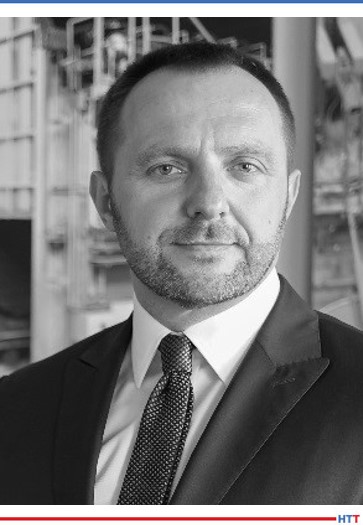
Sławomir Woźniak CEO SECO/WARWICK Source: secowarwick.com
The metals are extracted from ore or recycled without the release of fossil gases. Iron oxide (magnetite, hematite, wustite) is converted to pure iron by the hydrogen reduction process. In traditional technology, this process takes place in coke furnaces, which results in CO₂ emissions. In the GreenIron furnaces, CO₂ emissions are zero.
“It is also an opportunity for SECO/WARWICK, because together with GreenIron we are creating a production line of completely new furnaces. For the first time, we are working closely with an external partner with technology that comes from outside of our organization,” adds Sławomir Woźniak, CEO of SECO/WARWICK Group.
Reduction furnaces will be available to companies throughout the entire lifespan of iron and other metals – including mining, steelmaking, milling stations, foundries, metal workshops and heavy ashes from incinerators.
Find heat treating products and services when you search on Heat Treat Buyers Guide.com
Sometimes our editors find items that are not exactly "heat treat" but do deal with interesting developments in one of our key markets: aerospace, automotive, medical, energy, or general manufacturing. To celebrate getting to the "fringe" of the weekend, Heat Treat Today presents today’s Heat Treat Fringe Fridaypress article to prepare you for the global conversations you can expect at the international metallurgy trade fair quartet GIFA, METEC, THERMPROCESS, and NEWCAST. The theme? Foundry 4.0.
"From ArcelorMittal to Thyssenkrupp, digitization has arrived in the steel industry. Drivers are the desire to improve margins in existing business and increasingly the challenges of decarbonization. It is not disruptive new business models that are on the agenda of steel mills, but primarily improvements in earnings and an expansion of services. New digitalization solutions - from the transformation of the blast furnace to the vision of the autonomous steel mill, from digital melting operations to Foundry 4.0 - will be a focal theme at the upcoming metallurgy trade fairs GIFA, METEC, THERMPROCESS and NEWCAST, to be held from June 12 - 16, 2023 in Düsseldorf, Germany."
This guest column was provided by Gerd Krause, Mediakonzept in Düsseldorf, Germany. HTT is a media partner for the THERMPROCESS quadrant of the show. Give it a read and then email editor@heattreattoday.com if you have an op-ed or guest column that you would like to submit to Heat Treat Today!
In the highly automated steel industry data have long played a pivotal role. Take ThyssenKrupp Steel, for example: the hot strip mill in Duisburg alone not only processes about 16,500 tons of steel slabs but also the data of more than 1.2 billion measurements. Terms like Big Data, Digital Twin and Machine Learning are today just as familiar to metallurgists as tapping and slab casting. Artificial intelligence (AI) specialists and App programmers join traditional workers such as blast-furnace and hot rolling mill operators. Digital twins map production from start to finish and can be used for all steps in the value chain of products, plants and services alongside the real steel mill. One key objective is to analyze product and machine data across various process steps. With the help of Data Analytics material characteristics such as thickness fluctuations, roughness or stiffness can be forecast precisely and tolerances can be adhered to more closely. To this end, thousands and thousands of sensors capture the quality and production data across the entire flat steel process chain. This data base forms the basis for controlling and analyzing manufacturing processes in real time. In ThyssenKrupp Steel’s No. 8 hot-dip coating line in Dortmund the data analytics results are used to generate mathematical models for controlling the skin pass mill. The data model controls the line in such a way that the aspired roughness values of the steel strips are reached and the operation mode can be re-adjusted online if needed. This opens up new service options for steel producers. Commenting on this Lothar Patberg, Head of Innovation at Thyssenkrupp Steel said: “In future, customers would be able to not only track the current status of their orders. They could also obtain selected quality data from manufacturing with a view to adjusting their own processes before the coil is delivered.”
Contact us with your Reader Feedback!
The technological shift to CO2-free production with hydrogen and renewable energies has provided added momentum to the uses of digital technologies. According to consultancy Accenture, in industrial manufacturing up to 61 megatons of CO2 could be saved by 2030 through digitalization. Metallurgy plant builders such as SMS, Primetals and Danieli have long identified this potential: to strengthen their own companies but above all to open up new lines of business.
SMS digital: The big players develop the market
A pioneer in digitalization exhibiting at METEC 2023 is the Düsseldorf-based SMS group. Automation technology has formed part of this metallurgy plant builder’s DNA for many years. Technologies such as Virtual Reality (VR), Augmented Reality (AR) and Digital Twins were used by their engineers in steel mill development long before Industry 4.0 hit the headlines. While in the past individual divisions like the rolling mill were automated, digitalization today connects the entire production line from the blast furnace to the finished product on all levels. SMS was among the first in this industry to identify the potential digitalization holds for developing new business lines and established the start-up SMS digital in 2017. What started with 10 members of staff in a backyard, is now the leading software provider for metallurgy: SMS Digital GmbH with more than 350 specialists employed worldwide. As Chief Digital Officer on the board of SMS group Katja Windt, a former university professor with a PhD in engineering, has been responsible for the key areas of digital transformation – at her own company and with customers. The SMS Chief Digital Officer views the 150 years of process know-how in the metallurgical sector as a key advantage over competitors, or potential new entrants such as the digital champions Google or Amazon that have long had their sights on the industry. Digitalization for process optimization and energy management also forms an essential part of the new business lines of the SMS group. As a global player for the reduction of carbon dioxide emissions and the circular economy the plant builder has successfully invested in decarbonization and recycling technologies – ranging from climate-neutral steel production based on hydrogen, battery recycling and urban-mining solutions for reclaiming precious metals from electrical scrap to plants for producing green syn-gas and synthetic fuels.
Big River Steel: Learning steel mills are just the beginning
Digitalization focuses on the steel industry. At METEC 2019, the International Metallurgical Trade Fair with Congresses, the plant builder was able to present the world’s first “learning steel mill” together with Big River Steel. The mill built by SMS in the U.S. and digitalized and fitted with artificial intelligence (AI) in cooperation with partner Noodle.ai , is operated in the most resource- and energy-efficient way possible today. The AI by Noodle.ai analyses historical data and in part high-frequency signal series captured by more than 50,000 sensors. In addition to the steel mill’s data the AI platform also uses external data sources that capture and predict manufacturing processes, and even propose corrective measures. This means artificial intelligence helps to maximize the yield, improve product quality and eliminate safety risks. Huge data volumes from which AI generates knowledge allowing BRS to produce high-quality steel products at a lower cost and faster. The learning steel mill in the USA is just the beginning. For Digital Director Windt, the objective is self-controlling production: a steel or aluminum mill that runs autonomously with the help of learning algorithms. The key product for digitalization in the SM digital building block is the so-called Data Factory that collects and edits sensor data. Depending on custom requirements and desired performance increase, a wide variety of applications can be hooked up to this software platform. In conventional production, finished products are inspected for defects. If the goods are defective, the search for the cause begins and the source of the defect must be eliminated. In Industry 4.0 logic, continuous monitoring of production prevents errors before they occur. This saves time and money.
Customers do not to necessarily need to buy new plant technology for the service. As a new business model SMS also offers “Equipment-as-a-Service.” “Customers conclude a service contract with us for a component, such as part of a rolling mill or a continuous casting line,” explains Windt. So the plant builder does not sell the equipment but the customer pays for its operation and the digital applications used.
The power of digitalization has become evident during the Covid pandemic if not before. With the help of its AR SMS was able to commission steel mills remotely, i.e. without service engineers being on site as was the case before.
Smart Steel Technology: Start-up ready to attack
Smart Steel Technology (SST) promises to reduce energy consumption and the emission of climate gases such as carbon dioxide in steel production by means of artificial intelligence (AI) and machine learning (ML) Established in 2017 by mathematician Dr. Falk-Florian Henrich in Berlin, this start-up has set out to optimize processes on all levels. To this end the steel industry is set to change from control-based production to AI-based manufacturing.
Steel producers transform conventional manufacturing processes towards higher energy savings and CO2 reductions. With a gradual changeover from coal to hydrogen as a reducing agent, carbon dioxide emissions are already reduced at the blast furnace. Add to this new process pathways such as direct reduction using natural gas initially and later hydrogen as part of the decarbonization route for steel production. This is why steel producers need solutions to assess and control the CO2-efficiency of all production routes as well as their carbon and energy footprints broken down for each individual steel product. The pressure to do so emanates not least from customers. In the automotive industry the carbon footprint is increasingly becoming a sourcing criterion for steel products. “Precise energy and CO2 data allow steel producers to charge for their conversion efforts and complete audits successfully. Automated CO2 and energy analyses with AI-based models are the key to this,” says Henrich. With SST’s AI-based software packages, he explains, it is possible to precisely document and trace back the energy consumption and CO2 emission for every flat or strip product. AI considers numerous factors impacting energy efficiency such as raw material quality, product mix and maintenance.
In addition to companies such as Feralpi and Vallourec, SST CEO Henrich was able to convince the world's largest steel producer ArcelorMittal of the strength of his AI solutions. Example Eisenhüttenstadt: here AI and ML methods managed to improve the surface quality of high-end steel grades for the automotive industry by more than 50%. The AI software is not only used to forecast the surface quality but also to prevent surface defects from forming. After the successful trial run in Eisenhüttenstadt ArcelorMittal has also installed software from the SST family at sites in Bremen, Hamburg and Duisburg.
Fero Labs: Changing raw material composition in real time
U.S. start-up Fero Labs also seeks to score points with decarbonization and green steel, as Head of Business Unit Europe Tim Eschert confirms. The AI software by Fero Labs makes it possible, he explains, to change the raw material batch composition in real time and thus significantly reduce the probability of rejects in the manufacturing process: “At the Brazilian steel producers Gerdau with a medium production volume we achieve some 9% savings a year.”
The international metallurgy trade fair quartet GIFA, METEC, THERMPROCESS and NEWCAST are part of the “The Bright World of Metals” portfolio and will be held in Düsseldorf, Germany from June 12 – 16, 2023. www.tbwom.com
About the Author: Gerd Krause is the Mediakonzept for Düsseldorf, Germany
Find heat treating products and services when you search on Heat Treat Buyers Guide.com
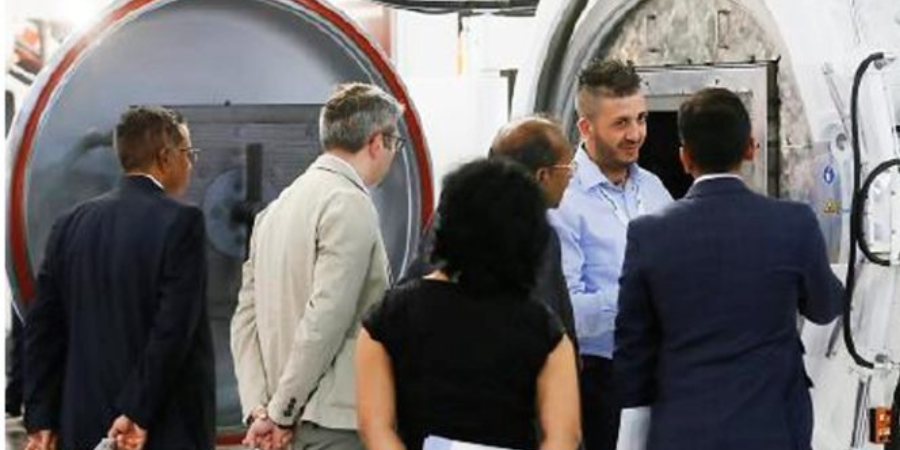
Today, we look to our European information partner, heatprocessing, to explore what international tradeshows you can look forward to, such as Thermprocess 2023 next June!
"The international trade fair quartet GIFA, METEC, THERMPROCESS and NEWCAST is THE platform for meetings and business. International buyers, users, experts and decision makers from the metallurgy, heat technology and foundry industries meet here at four events, at the same time and at the same place." (Website)
EUROGUSS - International Trade Fair for Die Casting
"The international die casting industry meets at the biggest trade fair for die casting for the 14th time. The product range shows innovative solutions for die casting processes like aluminium die casting, magnesium die casting or zinc die casting. The event also focuses on topics like rapid prototyping, die casting machinery and material testing." (Website)
"HANNOVER MESSE is the most important international platform and hot spot for industrial transformation - with excellent innovations or unusual products. Here you will find all the facts that make one thing even clearer: participation is an absolute 'must'!" (Website)










 Today, we look to our European information partner,