


Leone

Plans for “Largest Continuous ERW Tube Mill”

A Chicago-based manufacturer recently announced the construction of  “the world’s largest continuous ERW tube mill,” according to the project’s supplier.

Capable of producing hollow structural sections (HSS) with a size range of 8″ square x 0.750″ wall up to 22″ square x 1″ wall, the new mill, operated by Atlas Tube, a division of Zekelman Industries, will produce square, rectangular, and round structural sections in the mill. The largest rectangular section will be 34″ x 10″ x 1″ wall, and the largest round section will be 28″ OD x 1″ wall. The new mill will produce products to meet or exceed ASTM A500, ASTM A1085, CSA G40 and ASTM A252. This will be the first time ERW sections above 16″ square will be available domestically.

The mill will also be engineered to allow for world-leading full change-over times of less than 60 minutes, as well as special forming and sizing technology for precise dimensional tolerance. Zekelman Industries selected SMS as the supplier for the mill, Kusakabe for the milling cut-off, and Mair for the material handling and packaging line.

Barry Zekelman, CEO of Zekelman Industries

The total project investment is over $150 million — the largest private investment in the U.S. steel industry in the last decade. Frank Lagac, sales manager of welded pipe plants at SMS, noted that it will be the “world’s largest continuous ERW tube mill.”

“At Zekelman, we continue with our long-standing goal of creating, not waiting for, the future, said Barry Zekelman, CEO of Zekelman Industries.

Tom Muth, president of Atlas Tube

“Over the past few years, we have seen the increasing need for larger, domestically produced HSS in the bridge, transportation, and building markets,” said Tom Muth, president of Atlas Tube. “Also, HSS with thicker walls that meet the more stringent width-to-thickness ratio requirements of the AISC Seismic Provisions are in greater demand for lateral bracing systems.”

Brad Fletcher, senior sales engineer for Atlas Tube

“This new mill gives structural engineers new tools to meet the demands of designing and building cost-efficient and safe steel structures,” said Brad Fletcher, senior sales engineer for Atlas Tube.


Main image photo credit: SMS Group

Plans for “Largest Continuous ERW Tube Mill” Read More »

Heat Treat Expansion for HPH Bell-Type Furnace Plant

Source : Strategic Research Institute, SteelGuru

Image Source: Tenova

A Magnitogorsk, Chelyabinsk (Russia) company has placed a new contract for the expansion of their existing HPH® Bell-Type Furnace Plant for Wire Coils with a company based in Essen, Germany. OJSC MMK-METIZ located in Magnitogorsk, Chelyabinsk region, already operates a HPH® Bell-Type Furnace Plant supplied by Tenova LOI Thermprocess in 2014. This plant consists of 2 annealing bases, 1 heating hood and 1 Jet-cooling hood with a maximum net charge weight of 36 tons of wire rod or drawn wire coils. It uses a hydrogen/nitrogen mixture as protective gas atmosphere and features a useable diameter of 3,200 mm and a useable height of 2,700 mm.

In the spring of 2019, a new contract was signed concerning the expansion of the existing plant by further 2 annealing bases, 1 additional heating hood and 1 Jet-cooling hood. The start of production of the new plant is scheduled for the beginning of 2020. Besides the spheroidization annealing of wire rod, this plant also carries out the recrystallization annealing of drawn wire coils with the HPH® (High Performance Hydrogen) annealing technology.

Provided by: Strategic Research Institute, SteelGuru

Heat Treat Expansion for HPH Bell-Type Furnace Plant Read More »

Heat Treat Company Purchases Neighboring Property

Source: Crains Cleveland

Stephen Kowalski, president of Kowalski Heat Treating, talks about how the family-owned company will streamline operations after adding three buildings next door from Conveyer & Caster to its other six on Detroit Avenue in Ohio City.
Stephen Kowalski, president of Kowalski Heat Treating, talks about how the family-owned company will streamline operations after adding three buildings next door from Conveyer & Caster to its other six on Detroit Avenue in Ohio City. (Photo Credit: Stan Bullard)

An Ohio City heat treating business recently purchased a neighboring company’s property. The transaction was advantageous to both parties; the owners made a good sale, and the new occupants gained plenty of space without relocating.

After moving to a larger location, Conveyer & Caster sold their three Detroit Ave. buildings to family-owned Kowalski Heat Treating, which now fills nine buildings purchased since their 1975 opening on that street.

“It’s wonderfully exciting,” Kowalski said. “We needed assembly and warehouse space and office space. That’s all there in the Conveyer & Caster buildings. And we don’t have to move.”

Read the full article from Crains Cleveland.

Heat Treat Company Purchases Neighboring Property Read More »

Dunkirk Specialty Steel Receives $10M Modernization Investment

Source: Observer Today

Dunkirk Specialty Steel LLC, a leading U.S. manufacturer of semi-finished and finished specialty steel products, unveiled several state-of-the-art upgrades and modernization efforts at its Dunkirk facility. These renovations are the result of a $10 million capital investment from parent company Universal Stainless and Alloy Products, Inc., and collaborative efforts by the County of Chautauqua Industrial Development Agency, City of Dunkirk Department of Development, and NYS Empire State Development.

The 800,000 square-foot facility has installed a new $10 million bar turn and burnish line, as well as a new General Electric phased array nondestructive testing system. The addition of the specialty equipment from Germany and Japan makes the Dunkirk-based unit finishing cell the most advanced in the United States.

“This is more great news for Chautauqua County,” stated Mark Geise, Deputy County Executive for Economic Development/CEO of the County of Chautauqua Industrial Development Agency, “and demonstrates how collaboration at all levels can reap rewards for the County and the region. Dunkirk Specialty Steel LLC continues to up their game, and we’re glad we could be a part of it. I just want to thank Dunkirk Specialty Steel LLC and their parent company Universal Stainless and Alloy Products, Inc.; our economic development partners; and the CCIDA staff for making this project a reality.”

Read the full article from Observer Today.


Dunkirk Specialty Steel Receives $10M Modernization Investment Read More »

HRL Laboratories Registers New 3D-Printed Aluminum Alloy

Aluminum Association Creates Registration System for Additive Alloys Beginning with HRL’s First-Ever 3D-Printed High-Strength Aluminum

HRL Laboratories, LLC, is commercializing its additively manufactured (3D-printed) high-strength aluminum, which has obtained the first ever registration of an additive alloy from the Aluminum Association. HRL will be granted registration number 7A77.50 for the aluminum powder used to additively manufacture the alloy, and number 7A77.60L for the printed alloy.

The Aluminum Association oversees alloy registration and product standards used throughout industry. The association’s new additive alloy registration system was launched in February 2019 in response to a growing number of additively manufactured alloys. The first to be registered was HRL Laboratories’ high-strength aluminum, the first alloy of its kind to be printable. (This breakthrough discovery was published in the journal Nature in September 2017.)

“Essentially, this will connect us to this particular alloy composition forever,” said Hunter Martin, the lead scientist on the HRL team that created the alloy. “These alloy numbers will always be trackable back to HRL, like a DNA signature. When I first contacted the Aluminum Association about registering our alloy, they did not have a way to register alloys printed from powders, so they decided to create a new system for registration of additively manufactured materials – a first in the materials space.”

Zak Eckel, another HRL team member said, “We’re in the process of commercializing this material, which is already in high demand. As we scale up to commercial levels, AA registration validates our product. Companies who want the powder for their 3D printers can ask for its specific number, and it becomes a true commercial alloy.”

As the aluminum industry’s leading voice in the United States, the Aluminum Association provides global standards, statistics, and expert knowledge to manufacturers and policy makers. Alloy and temper designations, chemical composition limits, and registered properties in North America adhere to those standards. The association also provides business intelligence, sustainability research, and industry expertise and is committed to environmental considerations while advancing aluminum as the sustainable material of choice around the world.

HRL Laboratories Registers New 3D-Printed Aluminum Alloy Read More »

Flash Heat Treat Boost & Silicon Anodes Boost Lithium Batteries’ Energy

BOTW

Source: IHS Engineering 360 

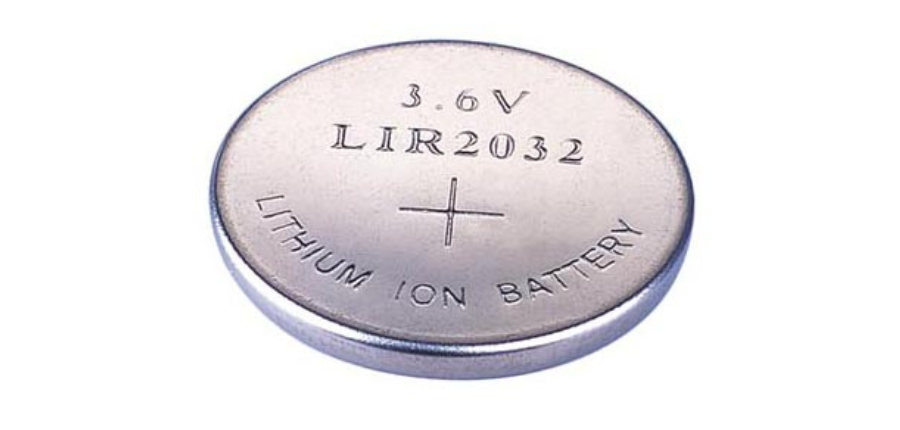
Chemical engineers at the University of Waterloo in Canada have swapped out graphite for silicon anodes, resulting in smaller and longer-lasting lithium batteries for products ranging from smart devices to electric cars.

Current lithium-ion batteries, of the sort used in many electronic devices, typically use graphite anodes. Researchers led by Zhongwei Chen, a chemical engineering professor at Waterloo, found that silicon anode materials have a much higher capacity for lithium and are capable of producing batteries with more energy.

The silicon technology yields a 40%-60% increase in energy density, which the researchers say could improve the performance of devices that rely on lithium-ion batteries. An electric car powered by the new technology could be driven up to 500 kilometers between charges, the researchers claim, and the smaller, lighter batteries could also reduce the overall weight of vehicles.

“Graphite has long been used to build the negative electrodes in lithium-ion batteries,” says Chen. “But as batteries improve, graphite is slowly becoming a performance bottleneck because of the limited amount of energy that it can store.”

The most critical challenge the Waterloo researchers faced when they began producing batteries using silicon was the loss of energy that occurs when silicon contracts and then expands by as much as 300% with each charge cycle. The resulting increase and decrease in silicon volume form cracks that reduce battery performance, create short circuits and eventually cause the battery to stop operating.

To overcome this problem, Chen’s team, with help from the General Motors Global Research and Development Center, developed a flash heat treatment for fabricated silicon-based lithium-ion electrodes that minimizes volume expansion while boosting the performance and cycle capability of lithium-ion batteries.

“The economical flash heat treatment creates uniquely structured silicon anode materials that deliver extended cycle life to more than 2,000 cycles with increased energy capacity of the battery,” Chen says. He says he expects to commercialize this technology and have batteries on the market within the next year.

Flash Heat Treat Boost & Silicon Anodes Boost Lithium Batteries’ Energy Read More »

Skip to content