

Vacuum brazing super duplex stainless steels presents unique challenges in maintaining corrosion resistance and metallurgical stability. In this Technical Tuesday installment, Rodney Rice, sales director at Langley Alloys, discusses how optimized furnace cycles, high-pressure nitrogen gas quenching, and careful braze alloy selection enabled the successful production of large Coriolis flowmeters for demanding industrial applications.
This informative piece was first released in Heat Treat Today’s November 2026 Annual Vacuum Heat Treating print edition.
Vacuum brazing super duplex stainless steels presents significant metallurgical challenges, particularly when thermal cycles threaten the phase balance responsible for the material’s corrosion resistance and toughness. Through furnace cycle optimization, high-pressure nitrogen gas quenching, and careful braze alloy selection, a collaborative development program established a viable process for producing large Coriolis flowmeters for demanding service environments.
Super duplex stainless steels have now been in industrial service for more than five decades and are widely recognized for their exceptional combination of mechanical strength and corrosion resistance. They are routinely specified for highly demanding environments, such as offshore oil and gas production, desalination plants, chemical processing equipment, and subsea systems.
Despite this strong track record, super duplex grades are rarely associated with vacuum brazing. The process is more commonly applied to austenitic stainless steels, nickel alloys, and tool steels, where metallurgical stability at high temperature is easier to control. This article describes a collaborative development program that successfully combined vacuum brazing with super duplex stainless steels in the manufacture of large Coriolis mass flowmeters, opening new applications for both materials and joining technology.
Meeting the Demand for Super Duplex Flowmeters
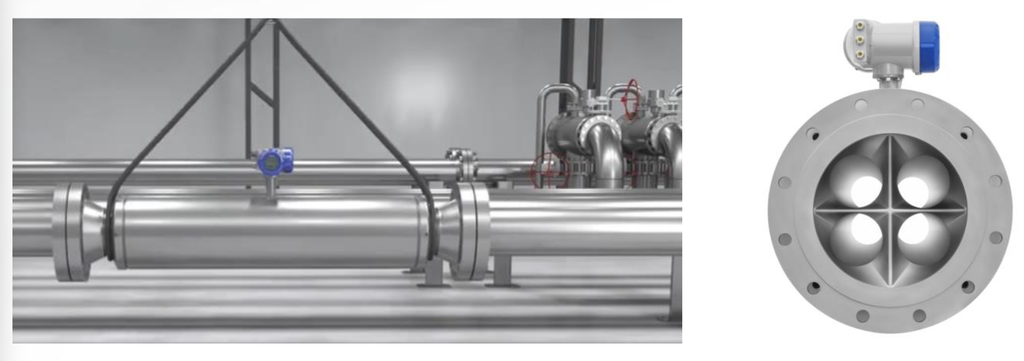
Coriolis mass flowmeters are widely used for high-accuracy measurement of liquids and gases, providing simultaneous measurement of mass flow, density, and temperature within a single in-line device. Their operation is based on the Coriolis effect: fluid passes through vibrating tubes, and the resulting phase shift between upstream and downstream sensors is directly proportional to the mass flow rate.
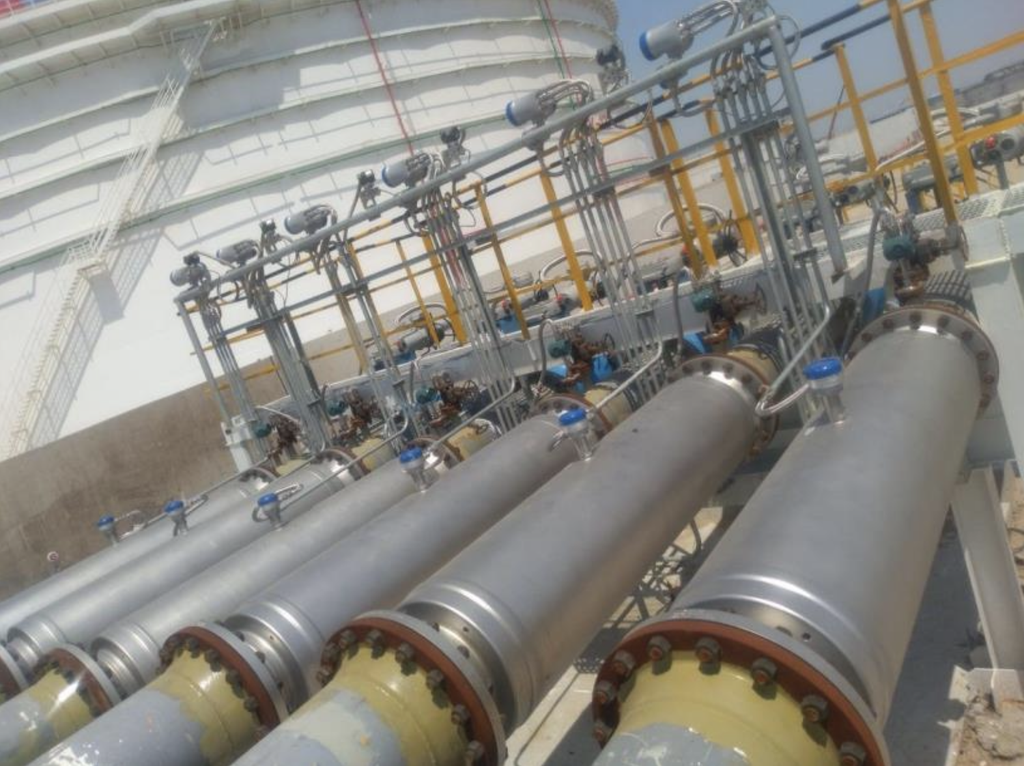
High-capacity Coriolis meters are increasingly employed in custody transfer, bunkering, and bulk chemical handling, where reliability and accuracy are commercially critical. One example is the OPTIMASS 2400, a straight-tube Coriolis meter capable of handling flow rates of up to 4,600 tons per hour.
Historically, this product range was available only in standard duplex stainless steel, typically UNS S32205 (1.4462). While suitable for many industrial duties, this limited its use in more aggressive environments, particularly in offshore oil and gas, where super duplex stainless steels are often required to meet corrosion specifications such as NORSOK M-630. The market therefore demanded a large-scale Coriolis flowmeter manufactured in super duplex stainless steel, without compromising the mechanical integrity or dimensional precision of the existing design.
The collaborative research and development program, known as Adv-Flow, brought together Coriolis flowmeter manufacturer Krohne, welding and joining research organization TWI, and super duplex stainless steel supplier Langley Alloys. The project was supported by external R&D funding and focused on the development of an advanced manufacturing route for large Coriolis flowmeters based on vacuum brazing and super duplex alloys.
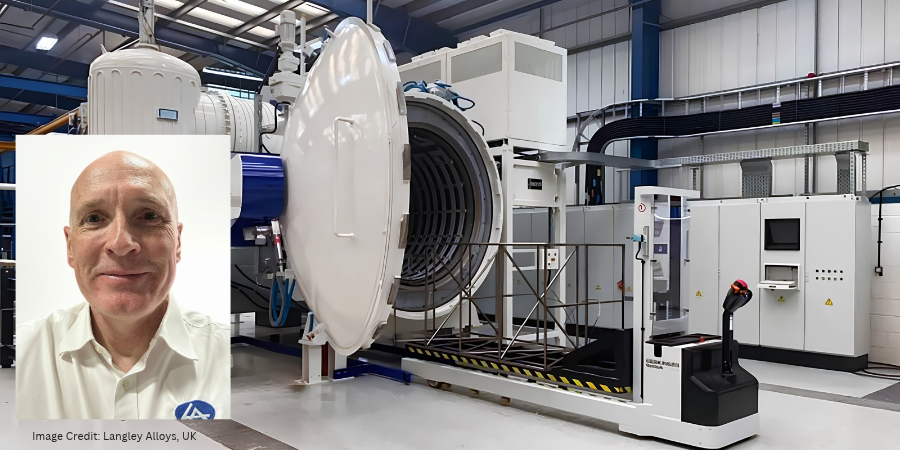
As part of this investment, Krohne commissioned the United Kingdom’s largest horizontal vacuum furnace, capable of processing assemblies up to two meters in length. This represented a significant step change in scale for vacuum-brazed instrumentation components.
Why Vacuum Brazing?
Vacuum brazing is often perceived as a relatively slow and expensive joining method compared with welding or mechanical assembly. However, for Coriolis flowmeters it offers a unique combination of advantages. It produces joints with high integrity and repeatability, allows very tight dimensional tolerances to be maintained, and avoids the need for post-brazing cleaning or chemical treatment. Most importantly, it minimizes distortion, which is critical for a device whose performance depends on precise vibrational behavior.
In Coriolis meters, the measuring tubes are brazed into a supporting structure that forms part of the dynamic system. Any residual stress, distortion, or joint inconsistency directly affects calibration accuracy and long-term stability. Vacuum brazing is therefore not simply a manufacturing convenience, but a functional requirement of the product.
The Metallurgical Challenge
Although super duplex stainless steels offer excellent in-service performance, they present significant challenges during high-temperature processing. Their properties depend on maintaining a carefully balanced microstructure consisting of approximately equal proportions of austenite and ferrite. This balance is highly sensitive to both temperature and time, and relatively small deviations can lead to substantial degradation in corrosion resistance and toughness.
During brazing, several metallurgical risks arise. Sigma phase, a chromium- and molybdenum-rich intermetallic, can form within the ferrite, leading to embrittlement and chromium-depleted regions that are highly susceptible to pitting corrosion. At intermediate temperatures around 475°C (887°F), spinodal decomposition of ferrite can occur, increasing the brittle–ductile transition temperature. In addition, nitrides and carbides may precipitate, while nitrogen may diffuse out of the surface in high vacuum environments.
From a processing perspective, super duplex steels exhibit a critical temperature range between roughly 700°C and 1000°C (1292°F and 1832°F), within which harmful phases can rapidly nucleate if cooling is too slow. This makes thermal cycle design far more critical than for conventional austenitic stainless steels.
Identifying the Critical Process Variables
Early development trials used furnace cycles that had previously been applied successfully to standard duplex stainless steel. However, these proved unsuitable for super duplex grades, with corrosion testing revealing unacceptable variability and frequent failures.
Detailed investigation showed that furnace variables such as heating rate, maximum temperature, hold time, and, most critically, cooling rate all had a profound influence on final material performance. While rapid heating was generally desirable to minimize overall exposure time, it also created temperature gradients between thin-walled tubes and thicker structural components. Similarly, while higher peak temperatures improved braze flow, they increased the risk of microstructural degradation.
The most important factor proved to be cooling rate. Vacuum cooling alone was found to be far too slow to prevent the formation of deleterious phases. Even short delays in cooling allowed sufficient time for sigma phase and other precipitates to nucleate, particularly near the surface.
A key client requirement was that the brazed components meet NORSOK corrosion specifications, specifically ASTM G48 Method A pitting corrosion testing. Early test results showed significant scatter between samples and between different laboratories.
This variability prompted a detailed review of testing procedures and sample preparation methods. It became clear that factors such as surface finish, time between brazing and testing, thermocouple placement and furnace loading could all dominate apparent corrosion performance. In some cases, polished samples performed significantly better than as-received surfaces, potentially masking underlying near-surface metallurgical problems.
These findings highlighted an important lesson: in advanced heat treatment development, process metallurgy and test methodology are inseparable. Without strict control of both, it is impossible to draw reliable conclusions about material behavior.
Metallographic analysis of early trial samples revealed several consistent features. A thin surface layer enriched in austenite was commonly observed, beneath which the microstructure became more ferrite rich. Grain coarsening was also evident near the surface, attributed to slow cooling under vacuum conditions.
Perhaps most significantly, a clear depletion of nitrogen was detected at the surface, extending approximately 300 micrometers into the material. This nitrogen loss was associated with the high vacuum and prolonged exposure at elevated temperature. Given the importance of nitrogen in stabilizing austenite and enhancing pitting resistance, this effect was considered a major contributor to poor corrosion performance.
In addition, secondary phases such as nitrides and carbides were frequently observed near the surface, further degrading corrosion resistance.
The Breakthrough: Nitrogen Gas Quenching
A major breakthrough occurred when high-pressure gas quenching was systematically evaluated as an alternative to vacuum cooling. Introducing nitrogen gas at pressures of up to six bar immediately after brazing produced a dramatic improvement in cooling rate, particularly over the first 100°C (212°F) of temperature drop.
This rapid initial cooling effectively bypassed the most dangerous region of the time–temperature–transformation diagram, significantly reducing the formation of sigma phase and other deleterious microstructures. In contrast, pure vacuum cooling consistently produced inferior results.
Interestingly, nitrogen gas quenching also appeared to influence surface chemistry. In some cases, partial restoration of nitrogen content was observed near the surface, leading to a higher austenite fraction and improved corrosion performance. While not a true diffusion treatment, the use of nitrogen clearly had beneficial secondary effects compared with inert gases such as argon.
Selecting the Right Brazing Alloy
In parallel with furnace optimization, extensive work was carried out to qualify suitable braze alloys for use with super duplex substrates. Precision-machined test specimens were produced in several SDSS grades and brazed using a range of commercial filler metals. Joint quality, wettability and diffusion behavior were assessed using destructive testing in accordance with BS EN 12797.
Boron-containing nickel brazes performed poorly, primarily because the processing temperatures and times required for full diffusion were incompatible with the metallurgical stability of the base material. Copper-based brazes produced joints with insufficient strength relative to the super duplex substrate.
Phosphorus-containing nickel brazes, particularly grades such as Ni 613 and F300-20, performed significantly better. F300-20 demonstrated excellent diffusion and joint integrity, likely because its iron-chromium-nickel composition closely matched that of the base alloys, reducing chemical gradients and interfacial segregation.
From Development to Industrial Application
After extensive experimental work, a narrow but robust processing window was defined. This involved controlled heating to minimize thermal gradients, limiting the maximum brazing temperature to that strictly necessary for full braze flow, minimizing hold time, and implementing immediate high-pressure nitrogen gas quenching.
Within this window, components consistently achieved acceptable microstructures, stable phase balance and compliance with ASTM G48 corrosion requirements, while maintaining high joint strength and repeatability.
The successful integration of super duplex stainless steels and vacuum brazing has enabled Krohne to introduce large-scale super duplex Coriolis flowmeters into their product portfolio. This has opened new markets in offshore oil and gas, chemical processing, and other highly corrosive environments where standard duplex grades are inadequate.
More broadly, the project demonstrates that super duplex stainless steels can be vacuum brazed successfully, provided that sufficient attention is paid to cooling rate, nitrogen behavior, and braze alloy compatibility. It also illustrates the importance of close collaboration between materials suppliers, process specialists, and equipment manufacturers when developing advanced manufacturing routes.
Conclusions
Super duplex stainless steels present unique challenges for vacuum brazing due to their sensitivity to thermal history and the formation of deleterious phases. Through systematic furnace optimization, implementation of high-pressure nitrogen gas quenching, and careful selection of compatible braze alloys, these challenges were successfully overcome.
The result is a validated industrial process that combines the dimensional precision of vacuum brazing with the outstanding performance of super duplex stainless steels. For the heat treatment community, this work reinforces a key message: with sufficient metallurgical understanding and process control, even the most demanding alloys can be integrated into advanced joining technologies.
About The Author:

Sales Director
Langley Alloys
Rodney Rice, C.Eng., is sales director at Langley Alloys and a qualified metallurgist and Chartered Engineer with nearly 35 years of experience in the metals industry. His background spans technical support, product development, R&D, and marketing, with particular expertise in super duplex stainless steels, high-performance stainless steels, and nickel alloys.
For more information: Contact Rodney Rice at Rodney.Rice@langleyalloys.com.