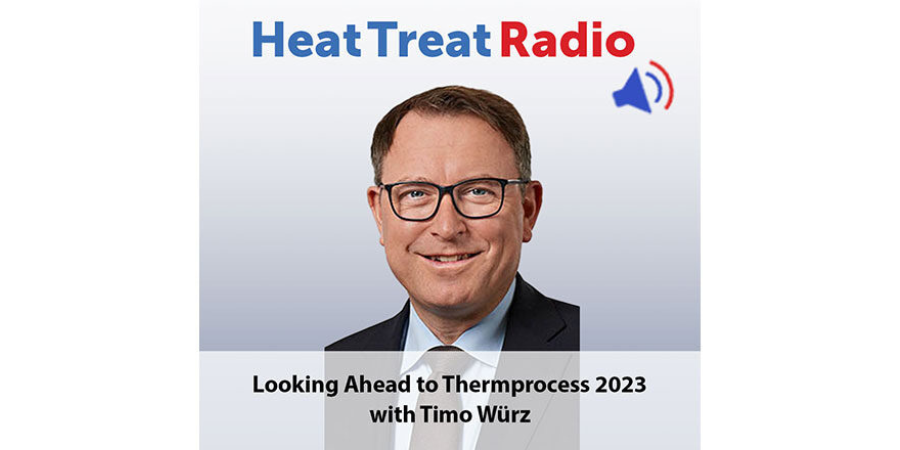
Heat Treat Radio #86: Looking Ahead to Thermprocess 2023 with Timo Würz
 As 2022 comes to an end, we’re taking this episode to look forward to what North American heat treaters can expect in the largest trade show for heat treaters anywhere: THERMPROCESS 2023. Doug Glenn, publisher of Heat Treat Today and Timo Würz, managing director at VDMA Metallurgy and General Secretary of The European Committee of Industrial Furnace, Heating and Metallurgical Equipment Associations (CECOF) talk about what attendees and exhibitors should expect and several of the hot topics in manufacturing that will be guiding this event.
Below, you can watch the video, listen to the podcast by clicking on the audio play button, or read an edited transcript.




Heat Treat Today is cancelling the North American Exhibitor Group. Please disregard the comments in podcast above or transcript below referencing this.
The following transcript has been edited for your reading enjoyment.

DG: Let’s talk about this. I know you are involved, in your capacity, with VDMA and CECOF and things of that sort with the THERMPROCESS event which is coming up in June. For people who might not know what THERMPROCESS is, can you give us a 30,000-foot view of the event?

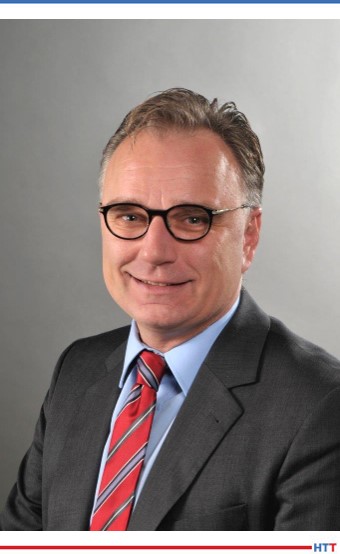
Managing Director at VDMA Metallurgy
General Secretary of CECOF
Source: LinkedIn
Timo Würz (TW): THERMPROCESS is the world-leading tradeshow for the thermal processing industries. And it’s not just one show -- THERMPROCESS is part of a tradeshow quartet. It’s four shows, and they are all about metallurgical equipment, metallurgical processes, thermal processing, foundry equipment, foundry applications. All of these topics are very much connected one to the other, and that makes it a really big show. It’s not just this little part of industrial furnaces and burners, but it’s imbedded in a huge metallurgical environment. That’s the reason they call this exhibition “the bright world of metals.” You’ll find there any kind of thermal applications. If you want to process glass or ceramics, you'll find the respective equipment there. This is the larger context of this show.
It's really huge. The 2019 edition that was more than 73,000 visitors in Düsseldorf, more than 2,300-something exhibitors on all the four tradeshows. For the THERMPROCESS alone I think it was about 340-350 exhibitors and about 6,000 visitors only for the show, not taking into account all the others coming from GIFA show or the METEC show which are the other shows. So, there are a lot of symmetries between these shows, and you see really everything that has something to do with thermal processing -- with equipment, with applications- it’s really a big thing.
DG: You and I both have probably been to the THERMPROCESS since early on, maybe its beginning. I’m not sure when the first show was, but I know the first one I attended was in 1999. It was quite an event, even then.
I want to give our listeners and viewers a sense of the enormity of it. You’ve been to some of the North American shows. I don’t know if you’ve been to one of the larger shows in Chicago like the IMTS. It’s probably one of the larger metal shows in the United States. My contention is, and I wonder if you’d agree with this -- McCormick Place, where the IMTS is held, the campus on which the quartet of shows, as you say, is being held, is probably four to five times the size of an IMTS show. I don’t know if you’ve got that comparison or not, but it’s much larger than any other North American show I know of.
TW: I know IMTS quite well because I’ve been there many years ago when I was working for the machine/tool industry. That is really a big show in the United States. I think the FABTECH is about the same size or even a little bit bigger than IMTS. I would say, maybe THERMPROCESS and the other three tradeshows are even a little bigger. I don’t know if your readers know the exhibition crowds in Düsseldorf, but they are quite huge. I think it’s the second or third largest exhibition area in Germany. The four trade shows, they really occupy all halls at the exhibition center. So, 73,000 square meters -- that is about 150,000 cross square meters, so 33,000 is only the net square meters. If you take all of the other areas together, it’s really a huge exhibition area. Still, the comparison is not too bad -- it compares to the big shows in the United States in other industries.
DG: Yes, I think so. I tell people, when I try to give them a sense of the size of the campus that the Düsseldorf Messe. If you were to start on one end and just walk at a normal rate, it would probably take you 15-20 minutes to walk from one side to the other which, fortunately, we don’t have to do too much.
The dates of the show?
TW: It’s June 12-16, 2023, in Düsseldorf.
Source: Unsplash.com
DG: Which is a great time of year in Düsseldorf. It’s a lovely, lovely place, so I would encourage people to go.
Let’s talk about some of the trends, the international trends in thermal processing. From your perspective, what are some of those international trends, international things that are happening now that people will be able to learn about and hear about if they do come to THERMPROCESS?
TW: There are a lot of things going on at the moment: there is the whole sustainability greenhouse gas reduction discussion going on. That is certainly going to be reflected at the show. There is digitization which is a very important issue for all industries but also for the metallurgical industries and the thermal processing industries. It gives you some new benefits you can offer to your customers, or you can benefit from in your product development. So, that’s a huge topic.
There is additive manufacturing that gives you completely new opportunities on how to produce certain parts for your equipment or how to replace a traditional technology. Think about replacing a casting by a part that is produced with additive manufacturing. Finally, the part is the same but the production process is completely different. There is a very interesting competition now between different production technologies coming out. That will be shown there and many, many others.
We could go into very specific details like new types of communication between machines and management systems or between different kinds of machines, and really a lot of interesting developments -- artificial intelligence, machine learning -- that all helps to optimize your process and your equipment, so that’s really an amazing development going on.
DG: I’ve got a question for you: I know you are kind of on the inside track with the whole Bright World Metals and Messe Düsseldorf, the organization that puts this on. Do you think that some day in the future they will add a fifth show on 3-D printing? There are a lot of metals going on here, right?
TW: That is a very good question. I don’t know because there are still other exhibitions for 3-D printing and additive manufacturing. Maybe not necessarily a new show, but it is certainly becoming a permanent part of the existing show. One or the other place will really highlight that additive manufacturing maybe without having a fifth show to do it.
DG: I think it would be interesting! We’d have to figure out instead of being a quartet, it would have to be a quintet, or something.
Let’s talk a little bit about the electrification. Let’s dig a little bit deeper into the electrification. What are you seeing there? I know, right now, you’re sitting in Florida, with tropical storm Nicole in your background. Is that the name?
TW: It’s Nicole.
DG: You’re sitting there in Florida, but I know you’re typically out of Germany. What are you seeing, Timo, there in Germany, regarding electrification and the move away from greenhouse gas, let’s say?
TW: That is a good question but difficult to answer question. Electrification is not really new. There are well-established processes which are already electrified. Think about induction heating or melting or electric arc furnace. That is all electrified heating equipment, so that is not really new.
The important question is, how many other processes could be replaced by electrified processes? Now, I mean such processes where you burn fossil fuel, for example, natural gas. That is really the point when it comes to greenhouse gas mitigation -- you want to get rid of greenhouse gases, and usually they are emitted when you burn something. From a physics point of view or an engineering point of view, electrification is great because it has a very high efficiency. Turning electricity into heat has a very high efficiency, much better than burning something and generating heat from burning fossil fuels.
The problem is -- think of a reheating furnace in a steelworks. In terms of energy consumption, which has to be called a monster because a reheating furnace in a steelworks consumes per hour as much energy as a jumbo-jet flying from Europe to the U.S., each hour. And now, try to imagine how to electrify such an application. At the moment it’s hardly conceivable that you can really replace that existing equipment by something that is electrified. You have the same energy density that is needed to get the process done. That is very difficult. You really come to technological limits.
I don’t say you can’t overcome them in the future; but at the moment, it is just not possible. But you have to see which processes are possible, and those which possible should be electrified. And for others, you have to accept maybe you need a hybrid concept -- electrical heating and conventional burner, or you have to accept that you have to burn something. In the future, maybe that will be green hydrogen. So, there are different roots.
Finally, green hydrogen is another form of electrification because you need electricity to produce green hydrogen. When you bring that all down to one point, it’s only a question of -- are you able to generate a sufficient amount of renewable energy? It’s not a question about the thermprocess aspect, it’s more or less a question about the generation of enough renewable energy so that it’s about wind energy, it’s about solar power, etc. If there’s enough renewable energy, I would say everything can be electrified or everything could be supplied with green hydrogen. That is not the main problem. The main problem is the availability of enough renewable energy.
DG: I think our listeners would be interested in your perspective just on this one little issue: I know one of the drivers in Germany for electrification is the fact that you’re getting your gas supply cut off by friends to the East. I’m curious, how is it there in Germany with the lines being cut? The pipes being cut?
TW: It’s really challenging. To be honest, we were used to having a cheap energy supply from Russia, cheap gas from Russia that was the fuel for a lot of parts of our life -- for industry, for private heating, and everything. So, that’s gone now. Now, we have a completely different situation. At the moment, fortunately, all our gas storage is full so we were able to fill them very quickly at very high cost because we had to buy all the gas, wherever we got it, and had to pay really insane prices.
So, maybe that might not really push electrification because, at the moment, a good part of our electrification strategy was based on burning natural gas as a kind of transition technology. Now that’s gone and we have to reactivate all the power plants which are already phased out. Now we reactivate the coal-fired power plants in order to have enough electricity. So, we have a big discussion about nuclear power because we phased out already most of our nuclear power plants. There are only three running. How long they can run to maybe support energy production?
On the other hand, we’ve seen friends that more than 50% of their nuclear power plants, at the moment, are not working either because they have technical problems or because the French rivers don’t have enough water due to the drought. You need the cooling water for the nuclear power plant. At the moment, we have to export electricity to France; usually it’s the other way around.
DG: That is very interesting. I didn’t realize that. I knew there was quite the drought, but I didn’t realize that that had an impact on their nuclear power production.
TW: Yes. At least in France, it is very bad. The whole situation is somewhat strange, at the moment. My personal opinion is that it will help us to transform our energy system much faster than we already tried to do. That is really something pushing us in a completely new direction. I think the renewable power generation will really get a boost because we don’t have that many alternatives. We have to rely on I don’t know how many ships from the U.S. bringing LNG or from Qatar or some of these places. It is a challenging situation but I think it will help to transform the whole system much faster.
DG: We have a saying, and you may have something similar in Germany, but they say, “necessity is the mother of invention,” meaning, if you’ve got to do something, you figure out how to do it, right? You invent something to be able to do it. Such is the case with the power situation there in western Europe, for sure.
Well, we wish you luck on that.
Let’s talk a bit about digitization or the internet of things and things of that sort. Tell me what people will possibly see, if they go to THERMPROCESS in regard to digitization and IIoT.
TW: I think digitization is not a trend anymore. It’s a reality and it’s a necessity for all companies. You can’t do any business without thinking about how to digitize certain aspects of your business. It helps on different levels. First of all, it is, of course, a great help to optimize processes. Think of using, for example, machine learning or artificial intelligence or whatever you might want to call it. You can generate optimized furnace recipes for heat treating processes, for example, which were then based on the knowledge of people, in the past. And they were quite good, but now you reach new levels of optimization just using these digital solutions or the transformation of data communication. You get a complete new level of transparency of what is going on in your system because every part has an IP address and can tell you what its stage is, what it’s doing, and what is maybe a problem. So, you have a complete new transparency of your processes of your equipment that you can transfer easily to management systems. You can base decisions on such data which then becomes information and that is something that really improves the overall equipment efficiency very much. That is a really big benefit for the customers.
Digitization is also the way towards new business models. So, having all your equipment, all your processes as a part of, let’s say, a digital or data ecosystem, it allows you to offer completely new products. For example, apps that help your customer to do the scheduling of the production or to allow you to have paper production concept or maybe helps you to do predictive maintenance and all those things. I think you will see all of this at the THERMPROCESS and the other three trade shows next year because, I would say, most of the companies, be it small or be it big, they have such digital solutions now and they will show it in all different aspects and types of application.
DG: Along that line, shifting gears just a little bit on this, one of the issues that we’re experiencing here in the United States is labor shortages and things of that sort. I don’t know if that’s exactly the same in Germany, but let’s assume that it is. How about automization and the use of robotics? Are you seeing anything along that line there, and do you anticipate that people would see some solutions or some ideas along that line if they were to come to THERMPROCESS?
TW: Yes, we do have the very same problem. Finding young people, finding skilled people who are able to do their jobs in a highly sophisticated, industrial environment is terribly difficult. We have many, many jobs where we can’t find people for. Not the low wages jobs, but highly qualified jobs that require a lot of training. It’s exactly the same problem you have in the United States. And automization is maybe one aspect of overcoming that problem. Of course, a lot of companies do invest in automization, they do invest in robotics. Maybe not in the thermal processing industry. Robotics there is maybe different from what we maybe think of when we hear robotics like in automotive assembly, when you see maybe 2,000 robots working in a coordinated way, assembling a car structure. But any kind of automization that helps to overcome labor shortages being manipulating heavy pieces.
DG: I think of fixturing and racking, right? I mean, that’s a heavily labor-intensive process, even if it’s small parts? Taking 100 parts and putting them in a rack so that they can be heat treated -- I think automization.
TW: Yes. So, if you don’t find the people to do that, you certainly will have automization. You find all the big robotic companies and the automization suppliers on the four trade shows, especially in the foundry environment -- there is a lot of robotics. So, robotics manufacturers like KUKA, ABP and Fanuc, they are all there. They will show their special applications for the metallurgical sector. There is certainly a lot to see at the THERMPROCESS and the other three shows.
DG: So, you and I both know that at THERMPROCESS and GIFA and METEC and NEWCAST, that it’s not all business. There is a little bit of enjoyment beyond business that goes on there. It’s also a little bit of fun on the show floor, but I would like your personal opinion: What do you enjoy about Düsseldorf? What is there for those people who would want to come over and do more than just work? What is there to see?
TW: First of all, it’s taking place in summer and usually, at least the last two or three editions, we had really nice weather. That helps a lot to get people in a good mood. Düsseldorf is a particularly nice city. It has an old part, Düsseldorf Altstadt, where you’ll find these typical restaurants and these typical Düsseldorf pubs where you get this special beer. That is really a place where people just meet and have fun. So, after the show you can go there and just have fun. You can talk business of course, if you like, but you can just have fun, drink a beer, sit at the banks of the Rhine river. The people are nice people. The people from the Rhineland, they are known as nice people. They have a good sense of humor so it is really a good place to come, do business, but also do anything else but business. It is a good place to be in June. There is plenty to do, and it’s a good place to have a lot of fun.
DG: And it’s easy to get around, I must say. At the Messe or the fairgrounds, where the show is, the trains pull right in. They’re more like trolley trains, not necessarily subway trains, but it’s kind of what we think of in the United States as subway cars- they pull right into the Messe there. It’s easy to get on, it’s easy to get off. It’s 10-15 minutes to downtown. There is some great shopping for any of you ladies, or men if you’re a shopper, that you can easily take a walk down Königsallee which is a beautiful shopping place there and the Altstadt as you mentioned- all pretty much, which I think is nice, depending on where you stay in Düsseldorf . If you’re in the downtown area, it’s all relatively, if you’re in decent shape, in walking distance. You can walk it. I walked from the Bahnhof all the way over to Altstadt. You can do it; it’s not undoable.
TW: That is all within walking distance, yes. And, if not, you can take the tram or the subway and it takes you 15-20 minutes, and you’re right in the center. Even if you want to go a little further- all the other large cities around are very well connected by this public transportation system. Never use a car in this area -- that is bad. In terms of traffic, if you are in a car, it’s a mess. Use the public transportation, and it’s wonderful because it connects all cities. You can easily go to Cologne, you can go to all the other cities around. It’s very easy.
DG: In the past, they’ve had a bit of a technical program associated. Are they having that this time?
TW: Yes, of course.
DG: If you don’t mind, tell us a bit about what you know about that technical program.
Source: Unsplash.com
TW: At THERMPROCESS, there is going to be the THERMPROCESS forum -- what was the THERMPROCESS symposium, in the past. It’s a kind of 2-day presentation program right in, I think, Exhibition Hall #9, so where the THERMPROCESS really is, where we have a two days with program presentations from exhibiting companies showing their innovations or showing new solutions, new applications.
We’re going to have at the first day, a special program that will try to dive a little bit deeper into the energy transition -- how the energy system will transform in the future. That is more from a scientific point of view, a political point of view, but nevertheless very interesting. Then we have the company presentations, and we are going to have the ‘tech talks.’ On Thursday, we are going to have the ‘tech talks.’ Originally, it was an online forum, but there we transfer it to the exhibition. So, three companies are giving presentations in a frame of a specific topic. They all build thematically on the other presentations so you see a whole picture of one specific topic. That is going to happen.
And there will be, of course, the foundry related events. There is going to be the ESTA that is the European steel technology application day. That is a very big event with seven hundred sessions over the whole exhibition. That is for the metallurgical people, so for the steel producers.
DG: Good. That’s great. I thought that was going on but I wasn’t sure and I just wanted to confirm.
Timo, I thank you very much. I appreciate you taking the time to help us understand what might be going on at THERMPROCESS. Thanks very much for joining us.
TW: It was my pleasure, thank you.

Doug Glenn
Publisher
Heat Treat Today
To find other Heat Treat Radio episodes, go to www.heattreattoday.com/radio .

Search heat treat equipment and service providers on Heat Treat Buyers Guide.com
Heat Treat Radio #86: Looking Ahead to Thermprocess 2023 with Timo Würz Read More »
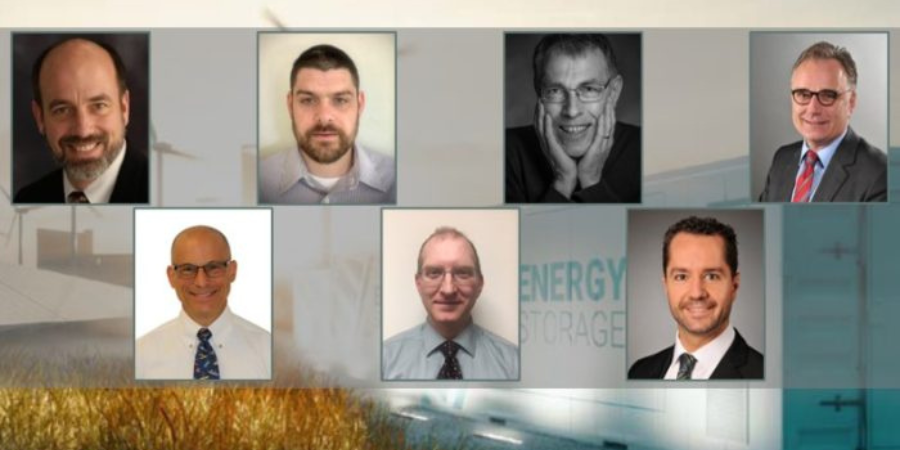

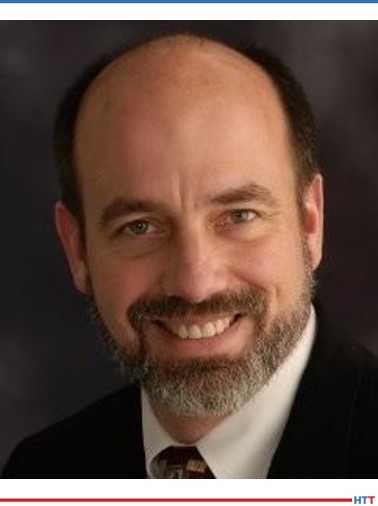

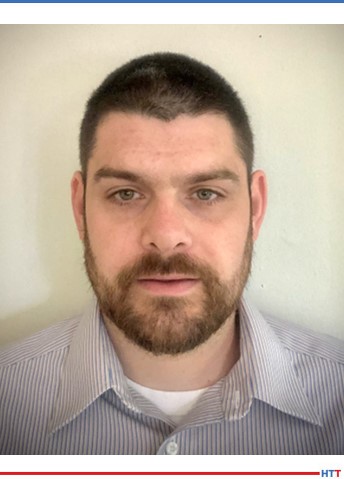
 Keenan Cokain, global sales and applications coordinator and Michael Cochran, an applications engineer, both from Pittsburgh’s Bloom Engineering, an industrial combustion and controls company, add another consideration: “Natural gas is a vital primary energy source globally and will likely remain so over the next 10 years. Although energy demands will likely show an overall decline in 2020, over the next 10 years, global natural gas consumption will likely rise as it continues to grow in comparison to other fossil fuels (such as oil and coal) as a percentage of the global primary energy consumed.