


richard sisson

Heat Treating: The Best Medicine

OCHeat treating solutions are important for more than keeping an airplane flying in the sky or a bridge suspended above the water. These two examples are high profile, but what about the heat treating solutions that do not zoom through the air or mark the skyline above rivers? In the medical industry, heat treating solutions are often unseen unless something goes wrong.

When it comes to medical implant and device heat treating, what options are available to manufacturers that will benefit patients? What should we know about the heat treating processes that make metal parts functional as knees, hips, and elbows? Find out in this expert analysis from Quintus Technologies and ECM USA, Inc.

This Technical Tuesday article was first published in Heat Treat Today's December 2022 Medical and Energy print edition.


Introduction

Dan McCurdy, former president at Bodycote, Automotive and General Industrial Heat Treatment for North America and Asia, knows full well just how much time, energy, and pain the right medical heat treating practice and alloy composition can save a patient. Dan’s wife suffered from complications due to a nickel allergy in a traditionally thermally-processed ASTM F75 knee implant. She dealt with constant inflammation, swelling, and pain. Physical therapy and a second procedure did nothing to ease the discomfort. The best medicine for Dan’s wife? A specially heat treated medical implant (more of Dan's story can be found at the end of this article).

Contact us with your Reader Feedback!

To understand the stories behind final medical products, Heat Treat Today asked Quintus Technologies and ECM USA, Inc. to share two different approaches on medical implant and device heat treatment. These two companies at the forefront of the medical heat treating industry shared about hot isostatic pressing (HIP) with additive manufacturing, and vacuum heat treating. Read their answers to our questions and learn how, when it comes to implantable medical devices, heat treating can be the best medicine.


How do you ensure your equipment maintains the precise specifications required in the medical industry? What specifically is necessary to maintain compliance when it comes to medical implants?

Quintus Technologies
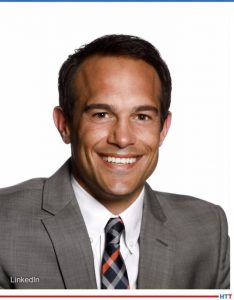
Chad Beamer
Applications Engineer
Quintus Technologies

Quintus Technologies has observed a trend in bringing Nadcap to the medical industry. Historically the medical industry has focused on the standards and regulations for the quality management system of their approved supplier, but a consistent transition to technical aspects of critical processes (including HIPing) is becoming the norm. Quintus Technologies’ background is one of delivering HIP equipment in line with Nadcap and AMS2750 specifications. The medical industry requires best-in-class temperature uniformity and accuracy; systems designed with production driven flexibility (such as thermocouple quick-connectors for T/C sensor installation
to minimize downtime); HIP furnaces equipped with uniform rapid cooling (URC®) for optimized cycle productivity; active involvement in standards committees; and working directly with the industry.

Requirements are increasing in terms of productivity and the introduction of more complex surface requirements. It is crucial to work closely with the industry to reduce oxidation of orthopedic implants during the HIP and heat treatment processes.

Steering of the HIP cycle is key, along with in-HIP heat treatments to achieve the desired microstructure for the application, which is a standard offering for High Pressure Heat Treatment™ (HPHT™) equipment.

ECM USA, Inc.
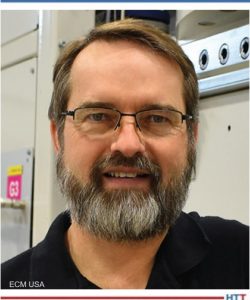
Dennis Beauchesne
General Manager
ECM USA, Inc.

Some of the features that are most important are leak rate at deep vacuum along with a chamber and furnace design that does not contribute to any contamination. In our systems, these features, along with others, are of the utmost importance when supplying equipment for the medical implant market.

What are the top 3–5 key requirements or compliance/quality issues needed to heat treat medical implants?

Quintus Technologies

There are several industry standards that have been released to establish key requirements for the HIP process that are often leveraged for medical applications demanding performance and reliability. For example, Nadcap has released AC 7102/6 which details the audit criteria for HIP. This document was developed with significant input from the industry and the government to define operational requirements for quality assurance. It offers a checklist for the HIP processing of metal products and includes requirements for:

  • managing the equipment per pyrometry standard AMS2750
  • qualifying technical instructions and personnel training
  • handling product during the loading and unloading operations
  • complying with gas purity requirements of the pressure medium
  • controlling temperature, including uniformity and accuracy evaluations and management

These aspects are critical to ensure product quality meeting medical customer requirements and expectations. Recent additions beyond conventional requirements highlighted above include high speed cooling in the HIP process (>200 K/min) for some materials which is important for metallurgical results.

ECM USA, Inc.

Key requirements include thermal performance (both uniformity and ramp control); real-time vacuum and gas management; traceability and production lot follow up through human machine interface (HMI); quality procedures for all sensor calibrations; and remote access for control and troubleshooting.

Can you share an example of how your equipment could be used to heat treat a medical implant/device from start to finish?

Quintus Technologies

Many medical implants — whether fabricated using conventional processing techniques such as casting, or more novel approaches such as additive manufacturing — require HIP to eliminate process related material defects. Defects include shrinkage porosity for castings and lack-of-fusion and keyhole defects for fusion based additive manufacturing techniques. These defects can have a negative impact on product quality, impacting performance and reliability. Once HIP has been applied to a material, post processing is often not complete, with additional thermal treatments required to achieve the optimum microstructure leading to the desired material properties and performance. Such thermal treatments are material and process dependent, but could include a stress relief, solution anneal, rapid cooling or quenching, and aging and are often applied in separate heat treat equipment.
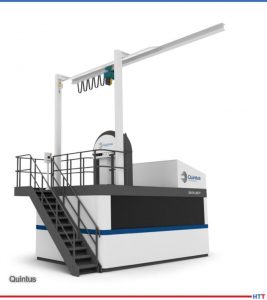
Hot Isostatic Press QIH 60 offering our most advanced Uniform Rapid Cooling (URC®) furnace technology with industry leading temperature control and accuracy

Quintus Technologies has introduced HIP systems providing capabilities beyond conventional densification. Decades’ worth of work in equipment design, system functionality, and control now offers an opportunity to perform HIP and heat treatment in a combined cycle, referred to as HPHT. Combined HIP and heat treatment for castings and AM implants can mitigate the risk of thermally induced porosity, as well as grain growth, which can offer advantages for mechanical and chemical properties in implants. This methodology provides a more sustainable processing route with improved productivity and energy efficiency. A joint HIP and heat treatment offers significant advantages with lead time, and this improvement in lead time couples well with the demands placed on the personalized medical implants. It also offers opportunities to further optimize microstructures for improvement in material properties coupled with ease of manufacturability. HPHT and modern HIP equipment may allow for a higher performing material system, which produces an implant with improved reliability and life.

Within the medical industry, fine grain AM microstructure, repeatability, and low porosity are key concerns. There are many reported benefits by applying the combined HPHT route such as reduced number of process steps, reduced cycle time and lead time, and improved process and quality control. Other advantages include spending less time at elevated temperatures helping to preserve the fine grain AM microstructure by minimizing grain growth. Tight control and steering of the cooling rates during the different steps of the HPHT cycle ensures repeatability of the properties. Manufacturability can be improved through HPHT as this approach reduces the cooling or quench severity during cooling segments which can often lead to part distortion or cracking. Improved functionality and
control go hand-in-hand with the high quality and reliability demanded in the medical industry.

ECM USA, Inc.

We have several customers making titanium alloy prothesis for various applications: shoulders, hips. Our furnaces are used for post printing processes, such as stress relieving and solution annealing.

Given concerns of metal poisoning, do you know of any changes in alloy composition of medical devices over the last decade?

Quintus Technologies

There are some metals that are becoming more common for implants, including tantalum, magnesium, CP Titanium, etc., and there have been major steps in improving ceramic materials to compete with metals for many applications.

ECM USA, Inc.

As a vacuum furnace equipment supplier, we are not deeply involved in the entire process of material selection. In the early stages of 3D printing joint replacements, from 2013 to 2014, we saw cobalt being part of some alloys. Lately it seems, indeed, that there is a trend in removing that element from the finished parts.

A Happy Ending

Dan McCurdy
Former president, Bodycote, Automotive and General Industrial Heat Treatment for North America and Asia

(The rest of Dan's story from the beginning of the article....) The effects of metal poisoning and metal allergies post-surgery can be
devastating. In the narrative below, Dan McCurdy shares the story of his wife’s struggle with an allergic reaction to a knee implant, and the heat treating solution that proved to be the best medicine for her.

My wife, an avid runner up and down the hills of Cincinnati, was diagnosed with osteoarthritis in both knees at the age of 53. Her orthopedist suggested a knee replacement for the most degraded one. The replacement was a well-known brand, made from investment-cast ASTM F75 (nominally a Co-Cr-Mo alloy) with full FDA-approval. After a successful surgery and diligent physical therapy, her recovery plateaued, and she experienced chronic inflammation, swelling, and pain.

A blood test, designed to detect allergies to materials used in orthopedic implants, showed a reaction to nickel that was nearly off the charts. We were surprised, as she had previously tested negative for nickel allergies through skin patch testing. The ASTM F75 specification allows for up to 0.5% bulk nickel as a tramp element in implantable devices; however, depending on foundry practices, the concentration of tramp alloys at any point on the surface of a casting can vary significantly. Titanium implants may be the solution to this, but FDA-approved titanium alloys can still contain up to 0.1% Ni.

The solution for my wife, as it turned out, was a different material, originally developed for the nuclear industry, along with an innovative heat treatment process. Created with an alloy of zirconium and niobium (with a maximum nickel content of 0.0035%), her new knee was heat treated at a high temperature in an oxidizing environment, which converts the soft zirconium surface into hard
ceramic zirconia, increasing hardness and wear resistance. With this specially heat treated implant in place, my wife is back to nearly 10K steps a day.


References

[1] Magnus Ahlfors and Chad Beamer. “Hot Isostatic Pressing for Orthopedic Implants.” quintustechnologies.com/knowledge-center/hot-isostatic-pressing-for-orthopedic-implants. Quintus Technologies. 2020.

[2] Chad Beamer and Derek Denlinger. “Hot Isostatic Pressing: A Seasoned Player with New Technologies in Heat Treatment — Expert Analysis.” www.heattreattoday.com/processes/hot-isostatic-pressing/hot-isostatic-pressing-technical-content/hot-isostatic-pressing-a-seasoned-player-with-new-technologies-in-heat-treatment-expert-analysis/. Heat Treat Today. 2020.

For more information

Contact Chad Beamer at chad.beamer@quintusstream.com

Contact Dennis Beauchesne at DennisBeauchesne@ECM-USA.COM


Find heat treating products and services when you search on Heat Treat Buyers Guide.com



Heat Treating: The Best Medicine Read More »
Corrosion Behavior of DMLS Titanium Alloy for Orthopedic Applications

OCIn this article, explore the importance of alternative advanced manufacturing processes and the effects of post-process heat treating of DMLS titanium alloy parts. In a recent study, a team at Worcester Polytechnic Institute (WPI) evaluated the effects of these processes. Read along to see what they found.

This Technical Tuesday article was first published in Heat Treat Today's December 2022 Medical and Energy print edition.


Contact us with your Reader Feedback!

Jianyu Liang
Professor of
Mechanical and Materials Engineering
at Worchester Polytechnic Institute
Source: WPI

According to Markets and Markets reports, the metal implants and medical alloys market 1 will reach $17.64 billion by 2024, at a CAGR of 9.4%, with titanium metal implants and medical alloys accounting for the largest share of the market. Since it was first reported in the 1940s that titanium had excellent compatibility with human bones, titanium has been used in a wide range of biomedical applications, including arthroplasty and bone replacement, prostheses, craniofacial, maxillofacial, and dental implants, as well as surgical instruments and healthcare goods. 2,3

Although Ti-6Al-4V alloy was originally developed for aerospace applications, its many attractive properties — such as high strength-to-weight ratio, satisfactory biocompatibility, and good corrosion resistance — resulted in it being one of the most widely used biomedical alloys. 4

However, Ti-6Al-4V alloy is very difficult to machine. Traditional Ti-6Al-4V manufacturing processes include casting, wrought (forging/milling from ingots), and powder metallurgy (P/M), with wrought products accounting for 70% of the titanium and titanium alloy market. 5

In recent decades, additive manufacturing (AM) processes have been rigorously

Richard Sisson
Key Heat Treat
Researcher and Lecturer at Worchester
Polytechnic Institute
Source: WPI

developed as an alternative advanced manufacturing process for Ti-6Al-4V, especially in personalized biomedical applications. Alternate processes, including powder-bed fusion (PBF), directed energy deposition (DED), and sheet lamination (SL) have been applied in AM processing of titanium and its alloys. 6 Direct metal laser sintering (DMLS), a PBF technology, was the first commercial rapid prototyping method to produce metal parts in a single process and is one of the most widely used AM technologies to manufacture Ti-6Al-4V parts. 7 However, even with the protective oxide film (mainly TiO2), titanium alloys still suffer from pitting and crevice corrosion. Localized breakdown of the protective film leads to the formation of pits. These pits can grow and propagate into macroscopic cracks, which lead to catastrophic failure in orthopedic applications. 8,9

It was reported that post-heat treatment of Ti-6Al-4V parts fabricated by AM techniques could improve its mechanical properties, especially increasing ductility and fatigue strength.

Yangzi Xu
Yield & Module
Process Engineer at Intel Corporation
Source: WPI

However, the changes in corrosion behavior with various post-heat treatments of Ti-6Al- 4V parts fabricated by AM techniques have not been fully understood. In a recent study, a team at Worcester Polytechnic Institute (WPI) evaluated the effects of various post-process heat treatments (including solution treatment and aging, annealing, stress relief, and hot isostatic pressing (HIP)), on the corrosion behavior of Ti-6Al-4V parts manufactured by DMLS. The researchers then proposed a desirable posttreatment procedure that can obtain a good combination of mechanical properties and corrosion behavior of as-printed parts in a simulated body environment. 10,11,12

Ti-6Al-4V dumbbell-shaped tensile testing bars were fabricated by DMLS, according to ASTM standards. The microstructure, phase fraction, porosity, and residual stress of as-printed parts were examined and compared to those of the commercial Grade 5 alloy. It was found that the as-printed samples, mainly composed of acicular α’ martensite phase with a small amount of nano-scaled β precipitates, dispersed in the α’ matrix due to rapid cooling during laser processing, whereas the Grade 5 alloy has an α + β two phase with an equiaxed microstructure. The β phase fractions in the as-printed and Grade 5 alloy were 1.6% and 20%, respectively, based on the results of x-ray diffraction refinement. Furthermore, porosity and defects due to lack of fusion or entrapped gas were observed in the DMLS samples. The rapid cooling rate also resulted in residual tensile stress in the as-printed parts.

The microstructure and phase changes due to different heat-treatment processes were examined and compared to those of the commercial Grade 5 alloy. The corrosion behavior of the heat-treated DMLS parts was studied in simulated body fluid by well-established electrochemical methods.

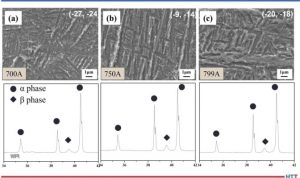
Microstructure: coarsening of the α lath thickness, more spherical β precipitates.
Phase identification: narrowed α characteristic peaks (reduced compressive residual stress)
Source: WPI

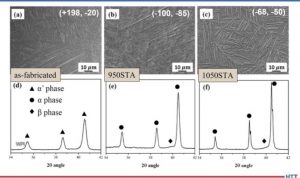
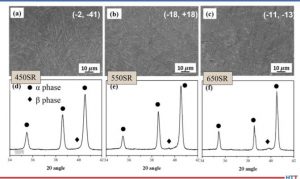
Transformation from α’ to α phase, coarsening of the α lath microstructure, and the development of β phase were observed in samples after heat treatments. The greatest fraction of β phase was obtained in the high temperature annealed sample. Enhanced corrosion resistance was found in all heat-treated samples. The reasons for improved corrosion resistance after heat treatments include: 1) a passive layer that was developed on the sample surface after heat-treatments; 2) increased β phase fraction and size after heat treatments that led to the reduction of the corrosion susceptible sites. Furthermore, only a single passive layer has been observed in the as-printed sample, whereas double passive layers have been observed in samples after heat treatments at temperature higher than 550°C. However, this second layer, which was largely composed of Al2O3 and V2O5, had very low corrosion resistance compared to that of the primary passive layer that was primarily TiO2.

Microstructure: coarsening of the α lath, and grain boundary can be observed
Phase identification: narrowing of α characteristic peaks (reduced microstrain, increased grain size) and evolution of β phase
Source: WPI

It was also found that the surface roughness had an exponential effect on the corrosion current density and calculated corrosion rate. A rough surface led to a higher corrosion rate, but a rough surface is known to enhance osteointegration. Therefore, surface roughness needs to be adjusted, based on specific applications.


Microstructure: no significant change in the α lath thickness
Phase identification: narrowing of α characteristic peaks (reduced microstrain), evolution of β phase
Source: WPI

The effect of porosity was analyzed by using a crevice corrosion test. After a one-month immersion in Ringer’s solution at body temperature, pits were found on the Ti-6Al-4V sample surface near the pores in the as-printed samples, which was due to the formation of localized O2 concentration cells near the pore. Porosity in the as-printed parts was confirmed to impair crevice corrosion resistance. To reduce porosity, HIP was applied at three different temperatures. Based on polarization tests and electrochemical impedance spectroscopy tests, different degrees of reduction in porosity and corrosion-current density were observed in samples after HIP; this reduction was most significant after high-temperature HIP at 799°C (1470°F).

In summary, it was found that high temperature heat-treatment enhanced the corrosion resistance of DMLS Ti-6Al-4V parts. HIP was effective in reducing porosity and improving corrosion resistance. HIP below the annealing temperature (799°C, 1470°F) was recommended as a post-treatment for DMLSprintedTi-6Al-4V, to achieve a good corrosion resistance.

References

[1] “Metal Implants and Medical Alloys Market – Global Forecast to 2024,” 2019. https://www.marketsandmarkets.com/Market- Reports/metal-implant-medical-alloy-market-256117768.html.

[2] R. Bothe, et al., “Reaction of bone to multiple metallic implants.” Surgery, Gynecology and Obstetrics, 1940, 71:598–602.

[3] M. Sarraf, E. Rezvani Ghomi, S. Alipour, et al., “A state-of-the-art review of the fabrication and characteristics of titanium and its alloys for biomedical applications,” Bio-des. Manuf., 2022, 5, 371–395. https://doi.org/10.1007/s42242-021-00170-3.

[4] L.-C. Zhang and L.-Y. Chen, “A Review on Biomedical Titanium Alloys: Recent Progress and Prospect,” Adv. Eng. Mater., 2019, 21: 1801215. https://doi.org/10.1002/adem.201801215.

[5] L. E. Murr, S. A. Quinones, et al., “Microstructure and mechanical behavior of Ti–6Al–4V produced by rapid-layer manufacturing, for biomedical applications,” Journal of the mechanical behavior of biomedical materials, 2009, 2(1), 20-32. https://doi. org/10.1016/j.jmbbm.2008.05.004.

[6] A. Hung Dang Nguyen, A. K. Pramanik, Y. Basak, C. Dong, S. Prakash, S. Debnath, I. S. Shankar, Saurav Dixit Jawahir, and Budhi Dharam, “A critical review on additive manufacturing of Ti-6Al- 4V alloy: microstructure and mechanical properties,” Journal of Materials Research and Technology, 2022, 18: 4641-4661. https://doi.org/10.1016/j.jmrt.2022.04.055.

[7] “Direct Metal Laser Sintering (DMLS) Technology,” Additive News. https://additivenews.com/direct-metal-laser-sintering-dmlstechnology/.

[8] O. Cissé, O. Savadogo, M. Wu, and L’H Yahia, “Effect of surface treatment of NiTi alloy on its corrosion behavior in Hanks’ solution.” Journal of Biomedical Materials Research, 2002, 61/ 3 :
339-345. https://doi.org/10.1002/jbm.10114

[9] Sara A. Atwood, Eli W. Patten, Kevin J. Bozic, Lisa A. Pruitt, and Michael D. Ries,”Corrosion-induced fracture of a double-modular hip prosthesis,” The Journal of Bone & Joint Surgery, 2010, 92/ 6: 1522-1525.

[10] Y. Xu, Y. Lu, K.L. Sundberg, et al., “Eff ect of Annealing Treatments on the Microstructure, Mechanical Properties and Corrosion Behavior of Direct Metal Laser Sintered Ti-6Al-4V,” J. of Material Eng and Perform, 2017, 26: 2572–2582. https://doi.org/10.1007/ s11665-017-2710-y

[11] Ibid.

[12] Z. Yang, Y. Xu, R. D. Sisson, & J. Liang, “Factors Influencing the Corrosion Behavior of Direct Metal Laser Sintered Ti-6Al-4V for Biomedical Applications,” Journal of Materials Engineering and Performance, 2020, 29/6: 3831-3839.

About the Authors

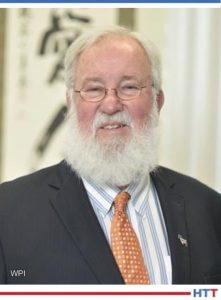
Professor Richard Sisson is a key heat treat researcher and lecturer at Worchester Polytechnic Institute. His main research interest is the application of diffusion and thermodynamics to the solution of materials problems. Currently, he is working on modeling the surface treatment of steels and the postprocessing of AM ceramics and metals. His research endeavors have resulted in over 300 publications and over 300 technical presentations.

Dr. Yangzi Xu is currently working at Intel Corporation as a Yield & Module Process Engineer. She received her PhD at Worcester Polytechnic Institute (WPI) and focuses her research on understanding the mechanical and electrochemical properties of AM Ti alloys with different types of heat treatments, and their corrosion performance in biofluid for potential orthopedic applications. Her background includes research in polymer and food science and engineering.

Professor Jianyu Liang is a Professor of Mechanical and Materials Engineering at Worchester Polytechnic Institute, with affiliated appointments in the departments of Civil and Environmental Engineering, Chemical Engineering, and Fire Protection Engineering. Her research work on nanomaterials, AM, agile manufacturing, machine learning for materials science and manufacturing engineering, and sustainability has been funded by NSF, NASA, DoD, ED, and industry. Her work has resulted in over 300 research papers and technical presentations. As an educator, Liang strives to equip students with the confidence, enthusiasm, knowledge, and skills to allow them to enjoy learning throughout their lives.

For more information

Department of Mechanical and Materials Engineering Worcester Polytechnic Institute, 100 Institute Road, Worcester, MA 01609 Or email jianyul@wpi.edu and sisson@wpi.edu


Find heat treating products and services when you search on Heat Treat Buyers Guide.com


Corrosion Behavior of DMLS Titanium Alloy for Orthopedic Applications Read More »

Heat Treat Radio #33: A Discussion with Jeff Fuller and Professor Richard Sisson from CHTE

Welcome to another episode of Heat Treat Radio, a periodic podcast where Heat Treat Radio host, Doug Glenn, discusses cutting-edge topics with industry-leading personalities. Below, you can either listen to the podcast by clicking on the audio play button, or you can read an edited version of the transcript. To see a complete list of other Heat Treat Radio episodes, click here.


In this conversation, Heat Treat Radio host, Doug Glenn, publisher of Heat Treat Today, discusses the heat treating resources available to members of the Center for Heat Treating Excellence (CHTE) as well as the background and current look of this collaborative endeavor. Featured in this conversation is member and current chairman of CHTE, Jeffery Fuller, metallurgy manager at Amsted Rail Company and Professor Richard Sisson, key heat treat researcher and lecturer at Worchester Polytechnic Institute (WPI).

Click the play button below to listen.


The following transcript has been edited for your reading enjoyment.

Doug Glenn (DG): Today we are talking about the Center for Heat Treating Excellence (CHTE) and the role it plays in connecting researchers and heat treaters across North America.  The topic is especially relevant to manufacturers with their own in-house heat treat departments who want to know how to join innovative research with their everyday practical heat treat needs.  One of CHTE's members and current chairman, Jeffery Fuller (JF), metallurgy manager at Amsted Rail Company Inc. with the Brenco division in Petersburg, VA, will talk about his experience at CHTE and the diverse projects that the center has undertaken.  We will also hear from Richard Sisson (RS), the key heat treat researcher and lecturer at Worcester Polytechnic Institute (WPI), as he shares his input on both his history and the present operations of the center.

DG:  Jeff, can you share with our readers where you stand in the world of heat treat?

JF:  I got my Bachelors degree in materials engineering at Virginia Tech.  My first job was actually at an iron foundry.  Then I transferred to a manufacturing company in upstate New York and there I was exposed to a lot of heat treating very, very quickly.  I was heat treating tool

Screenshot from Amsted Rail PRECISION MANUFACTURING Video. (photo source: www.amstedrail.com)

steels, I was heat treating stainless steels, I was heat treating copper alloys and so I had a lot of experience with a wide range of atmospheres, a wide range of types of furnaces and a wide range of materials when I was working at that company.  That was my first real exposure to heat treatment, particularly the tool steel part where I was working with a wide range of tool steels and we had a couple of Ipsen batch furnaces that we were using.  It was like going to metallurgy school all over again because I had such a wide variety of things to work with.  After that I spent several years working at a specialty steel manufacturer in upstate New York as well.  I ended up transferring over to Brenco.  Brenco used to be its own independent company in the mid '90s and this was where I spent the bulk of my career.  I've been here since 1995 and we have a large captive heat treating operation here and we primarily produce bearings for the rail industry.  We are doing a lot of carburizing.  We have pressure furnaces, pit furnaces, and batch hardening furnaces, so I've spent a lot of time dealing with carburization and some of the idiosyncrasies of the carburizing process.  We've seen how to make parts well and some things that don't make parts quite as well.  Brenco is now part of what is called Amsted Rail.

DG:  Tell us about your involvement in your current position with the Center for Heat Treating Excellence.

JF:  Sure!  I was looking for an opportunity to branch out and get some more support for heat treating research and other kinds of research into heat treating issues.  We are actually a fairly small company, even though the Amsted Group is a large company with many employees.  We are also spread out in many locations and a lot of our locations are fairly small.  Our particular location here in Petersburg, VA is only

CHTE Event with Members (photo source: www.wpi.edu/CHTE)

about 400 employees and the metallurgical engineering group consists of myself and another metallurgist, and then our lab technicians.  There are occasions where we run into issues where we were looking for a little more support and the opportunity to engage with other people that might be able to answer questions and solve problems that were beyond our particular knowledge.  So we started looking for a group that could help us out, whether it was going to be just a professor at a university or some other kind of group, and we became aware of the industry university consortium type model.  So we started looking around and wanted to see if there was a consortium that would suit our needs.  And we found a few.  But what drew our attention to the CHTE up at Worcester Polytech was the fact that it was focused specifically on heat treating, that it was run by physical metallurgists and, to be perfectly honest, one of the main draws for us was that the membership fee is very, very reasonable compared to some of the other consortiums that we've talked with.  When we put all of those things together, we wanted to give this a try and see if we think this is the kind of thing that is going to be beneficial for us.  That was around 2015, so I guess my company has been a member for about 5 years.  I was asked to join the board of directors and become the chairman of the board of directors in 2018, so I've been chairman for my fourth meeting as chairman.

DG:  Let's move to Rick Sisson.  Rick, you sort of represent the research end of this collaboration with your work at WPI.  Why don't you give us an understanding of how CHTE operates and also why it might be helpful for heat treaters?

RS:  The mission is to provide a research home for the heat treating industry in the United States, even though we have had international members, but to provide a home to work on current issues in the heat treating industry.  We also provide graduates who do go to work in the industry.  We have some undergraduates who work with us, but it is mostly MS and PhD students and a lot of post docs who work on this as well.

The Center for Heat Treating Excellence is an industrial sponsored and led consortium.  We conduct industry-proposed and industry-selected research on topics that are important to the heat treating industry today.  Our organization is focused on timely research to immediately support the industry's needs.  We are made of up of large and medium OEMs as well as heat treat suppliers and furnaces manufacturers (I can give you the full list of companies later), but it's their collective wisdom that really guides the project selections and implementation.  The process we use is- the companies propose the research, they work with me and we development a project plan to the board, all of which is people from industry.  You get my input, but it’s projects and industries which is important to them.

DG:  So this is a primarily academic/industrial partnership?

RS:  Yes.  We use our relationship with these companies to get some fairly large federal and military money to continue the research which support research that is going on at the Center, but research within the Center is driven by the industry and their needs.

DG:  Is CHTE a Worcester Polytechnic Institute entity?  Is it owned by them?

RS:  Actually, a group called the Metal Process Institute, which is several centers, the oldest one being the Advanced Casting Research Lab that's been led by Diran Apelian for over 30 years, and that is the model we use that he developed working with the aluminum casting industry.  There is the Center for Heat Treating Excellence.  We also have CR3 which is the Center for Resource Recovery and Recycling which is part of that, but it is also funded by the government directly through the National Science Foundation.  We also are a part of an ASM initiative that is looking in data: How do you collect data, analyze data? We work with the University of Connecticut and the University of Rochester on that.

DG:  So from 30,000 feet then, the Center for Heat Treat Excellence is an industry/academic partnership has obviously some ties with government funding as well.  WPI first.  Underneath that is an entity called the Metal Processing Institute and then the Center for Heat Treat Excellence is part of that.

RS:  Yes.  And if you look at all the companies that are members of what we call the MPI (metal process institute), it has been as many as one hundred.

DG:  Let's talk specifically about how the Center for Heat Treating Excellence got started.  How long ago was it, the founding members, and things of that sort.

RS:  It's was started about 16 years ago and it was an idea from the ASM heat treat society R&D as part of a planning entity, and they had determined that heat treating needed a research home in the United States.  If you look around, a lot of the universities have a little bit here and a little bit there, but they determine that.  The whole effort was really led by Bob Gassler and Bruce Boardman at John Deere, but also with a lot of other OEMs, people from CAT, people from the automotive as well as the aerospace industries.

DG:  You said Bill Bernard from Surface Combustion, correct?

RS:  Yes, Bill Bernard.  Bill is mostly retired, but his son B.J. is the president and Ben Bernard is one of the other head guys there.

We had a lot of support from the major induction companies, besides the regular furnace companies, and the quenching fluid providers when we were getting started.

DG:  If you're a member of the organization, what's the typical calendar look like for you in a year?  How often do members meet?  How often do they have to do work outside of meeting times?

RS:  We have two review meetings a year; one in June and another one in December.  In addition, almost every member company is either a member the board or a member of the project selection committee and they meet periodically by conference call or by zoom to conduct business when necessary.  The project selection committee is the one who meets the most because they need to collect all the project proposals and get together and discuss them and make their determination about what would be the most interest. And then they decide, is this something you guys could do; does this fit into whatever capability you have?

Center for Heat Treating Excellence from WPI on Vimeo.

DG:  So Jeff, what perspective can you give us on how the Center of Heat Treating Excellence benefits members and their companies?

JF:  There are a lot of things benefits that with being part of the CHTE.  But one of the things you hear people talk about the most is they like the networking that happens at the meetings.  We meet twice a year, once usually in June and once in December, and there are usually a couple of social events associated with that, and a lot of people get to talk with colleagues that are in other industries and things and there is a lot of sharing that goes on.  Of course people are always careful to watch their proprietary information and be noncompetitive and things like that.  But the simple truth is, there are not that many times you get to get a bunch of heat treaters together, put them in a room and let them talk.  I've had some very, very good conversations with people that are in industries that are very different than mine but happen to have a lot of the same problems.  I've talked with some people, for example, that make parts for heavy trucks and we've been able to sit down and say, “Hey, you know, we both have the same problem.  Let's share some information here.”

CHTE Members (photo source: www.wpi.edu/CHTE)

Some of the other benefits people have if they're members of CHTE, is first of all, the staff at CHTE is available for phone consults to members at any time.  So for example, if I'm scratching my head over a particular issue and I'm not quite sure how to approach it, or if there is some information that I need, I can all CHTE and get a hold of Dr. Sisson or Dr. Zhang or whoever, and I can say, “What do you guys think about this?” Or they may say, “We don't have your answer, but we have some modeling software and we can run that for you.  Send us some information and we'll run the model for you and get you the results.”  So you have this kind of thing where the staff is available for you to consult and that's basically at no charge.

The other benefit is if you say, “I have a particular research project that I want to do, but I don't really want this to be a part of the consortium because this is going to be proprietary, something just for me.”  Then we're able to engage the resources of Worcester Polytech without having to pay any overhead fees.  If you've ever looked at any university research contracts, the overhead fees can be substantial.  So it's a nice discount if someone wants to get something like that done, they can get some directed research and get a pretty substantial discount on what would be if you went to another university where you don't already have a standing relationship.

DG:  I'd like to know how the CHTE projects are managed and distributed to benefit CHTE members.  Could you nail down or discuss one or may two research projects that have been most helpful to you to Amsted?

JF:  Ok, sure!  One of the projects has been helpful to us and was actually one of the ones that drew my attention early on.  Worcester Polytech was looking at creating a carburizing calculator, which they call CarbTool.  I had worked with some of the commercially available carburizing calculators that you can get out there and they're okay; they all have their own little benefits to them.  But what really attracted me to CarbTool was the fact that it had more detailing.  I could put in different geometries, I could put in a lot of different kind of processing steps, and I was able to get more information out of the CarbTool than out of some of the more commercial software packages that were out there.  In fact, it was so interesting to me, that at one point I actually went to them and said, “Hey guys, I really like this, but the user interface is a little clunky.”  And so they got me in touch with one of the computer science people up at Worcester and we helped make the user interface much more usable and we went through several versions of that.  Now it is a tool that is available for members; they can all download that and use that license for free.  They are working on another one now that's going to be for nitrocarburizing.  It's kind of nice because in addition to the straight research projects (we've done projects on induction tempering, a research project on how to extend furnace fixture life and we're currently doing some projects on distortion control and we did some on nondestructed testing), we also have some practical projects where you end up with a tool that you can actually use going forward.

Current research project, "CarboTool" (photo source: www.wpi.edu/chte)

DG:  The CarbTool that you were talking about, and the one that might be coming around for nitriding, is it commercially available to nonmembers?

JF:  No.  It is not available at all to nonmembers.  At various times we've talked about it; in other words, should we look at trying to commercialize some of this or should we not?  We've had some discussions with some other nonprofits about it, asking if there was some way maybe some of our research could be distributed through other channels.  But the truth is, the consortium exists for the benefit of the consortium members, so we have to be careful about that.  We want to make sure that people are getting their value, and that we aren't giving things away.  The consortium members paid for it and they have a right to it.  People that haven't paid for it, don't.  We haven't really looked at how we would price that out and that's not really our model.  Our model really is: join consortium, participate with us, help sponsor the research and then we all get to share the benefits.

DG:  Dr. Sisson, who is involved in these projects and the programs?

RS:  First, the membership kind of goes up and down with the economy.  In general, the current memberships include a new member ArcelorMittal which is a very large steel company.  Amsted Rail.  We've always had ASM international as a member.  Bodycote has always been a big supporter being a very large heat treating operation.  Then we have Caterpillar, Cummins, Fiat Chrysler, John Deere, Pratt & Whitney, Sikorsky, and those kind of OEMs.  We have DANTE Solutions which does heat treat modeling and then the Thermo-Calc software that does all the thermodynamics in phase productions.  We have GKN Sinter Metals that does a lot of work with us recently, because we're doing more in additive manufacturing.  A new focus that has emerged over the last 2 or 3 years is in post-processing of additives.

DG:  So Jeff, have those relationships with suppliers in the industry been helpful?

JF:  I think it has.  And I think that's a really great point.  We are always looking for new members and for greater diversity in our membership base.  The more members we get, the more projects we can take on and the more work we can do.  But one of the things we find that is really great is, for example, we have a project right now where we need a particular kind of access to a piece of equipment in order to do part of the testing.  And one of our equipment manufacturers says, “Yes, we can do that.  We can put that piece of equipment together and you guys can use that for purposes of this test.”  We've had this happen both with the kind of the more traditional heat treating equipment, we've had that done with some of the induction heat treating equipment and we've had the ability to pair up with certain members.  When we create a project, the project selection committee goes out to the different members and they ask, “What do you want to work on?  What is of interest to you in the industry?”  We get a lot of different ideas and then they look at the degree of interest in the different ideas.  We also look at the diversity of the ideas, because what we want to make sure of is that we don't completely drive projects in one direction and then leave some of our membership out in the cold.  So, we look at the diversity of the projects and we look at the interest in the projects and we also look at the relative success of the project.  Can we be successful with this project or is it completely off the wall?  We'll then come up with a project scope and then a project description.  Then what ends up happening is a focus group is put on that project.  What we will do is put people on that focus group that have a high interest in the project and also have resources to provide for the project.  For example, we had a project here recently where we have one member who is interested in something that is induction related and we also have an induction company that is one of our members as well. So, we’re going to put them on that focus group and they can work together directly along with the WPI staff to help drive that project forward and bring it to a conclusion.  It's great, because instead of us sitting around going, “Gee, who's going to do that?”, we've already got people in the room associated with the project that will know how to get things done, or may even already have the equipment or the resources that we need to get something done.

CHTE's Distortion & Residual Stress Research from WPI on Vimeo.

DG:  So you at least have an implicit commitment already to provide whatever resources need to be provided to get the task done.

JF:  Right.  Now it's subject to cost and things like that, as every company has their own resource constraints, but yes, it's been very successful so far.  It's because we have that breadth and diversity of membership.  If we had only users, then we would be much more dependent on having to use only the facilities at WPI or only commercial services that we had to hire to accomplish tasks that we didn't already have.  If you think about it, if we're doing research, we probably don't have that equipment.  If we already had that equipment or that set-up, we'd already be using it.  Just by the very nature of it, we often talking about things we don't have.  If it was just users, it would take us a lot longer to get things done and it would be a lot more difficult.  Having the equipment manufacturers and fluid suppliers and things like that involved is a big, big, big help.

DG:  Rick, when all the research is done, frankly, who owns it?  And how is it shared?

RS:  Formally, WPI owns it.  We hold it confidential mostly.  And a company can use anything that has been developed on these projects royalty free.  If we decide we want to pursue a patent, and even if we get a patent, then they can use this royalty free.  In cases where WPI doesn't pursue a patent, then a company can.  We have a semiformal process to say, “I'd like to get a patent on what you guys did.”  Then you've got to let the other members know and see how that's going to work out.  But we rarely have any issues with doing that.  So it's owned by WPI but the content is strictly for the members.

JF:  And that's my understanding as well.  We had an interesting project a few years ago where we came up with a really great process for doing a kind of treatment that would help extend fixture life.  Turns out, none of our members are in that fixture business.  Some discussions were held, but it didn't actually go anywhere.  We still have this knowledge how it could be done, how it might be done.  But, a lot of the other things are much more immediately available, if you will.

One of the other things people are going to have to remember is that if they're going to join a consortium, every project isn't going to be relevant to what you do.  For example, a few years ago we did a big project on induction tempering.  Fascinating project.  I don't do any induction heat treating.  I learned a lot by going through and having access to all of that information and research, but that doesn't affect my position here because I don't use induction heat treat in this job currently.  But there are a lot of other things.  When I go to my boss and we talk about the justification for our membership, one of the things I talk about is, of the projects, how many of them that are current are relevant to what we do and what's coming up and what's in the pipeline?  Because they're not 100% going to be projects that are going to mean something to me.  But that's okay, because we're all benefiting.  Some of the carburizing projects are beneficial to me but aren't beneficial to the induction people, but we're all working on it together and we all get benefit out of it.

DG:  Roughly how many projects are going on at one time?

JF:  Right now we have two main projects and one sort of a side project.  This is completely based on how many members we have.  Right now, we're running around 14 members in the consortium, some big companies and some smaller companies (you can see the member list on the CHTE website).  If we had 25 members, we'd probably be running three or four projects.

DG:  And do those projects tend to last a year?  Two years?

JF:  They tend to last usually two years as a project length.  It takes awhile to get a team together, get things moving, start getting results and then put everything together and do the report, so typically it's about two years long.

Doug Glenn, Publisher, Heat Treat Today

Doug Glenn, Heat Treat Today publisher and Heat Treat Radio host.


To find other Heat Treat Radio episodes, go to www.heattreattoday.com/radio and look in the list of Heat Treat Radio episodes listed.

Heat Treat Radio #33: A Discussion with Jeff Fuller and Professor Richard Sisson from CHTE Read More »

Skip to content