



induction tooling inc.

3 Hallmarks of a Successful Business

Heat Treat Today publishes twelve print magazines annually and included in each is a letter from the publisher, Doug Glenn. This letter from the April 2026 Annual Induction Heating & Melting print edition highlights three hallmarks common to thriving companies — prioritizing people over technology, people over profit, and a relentless commitment to continuous improvement — drawing on a visit to Induction Tooling in North Royalton, Ohio, as a real-world example of these principles in action.

Feel free to contact Doug at doug@heattreattoday.com if you have a question or comment. 


Michele Schaller, one of Heat Treat Today’s excellent editors (we have three excellent editors), and I recently visited Induction Tooling in North Royalton, Ohio, near Cleveland, to talk with Bill and Sherry Stuehr regarding their company’s 50th anniversary. I make it a point never to promote one company over and above other companies in this column because 1) our mission is to get good information to our readers as objectively as possible without showing preference to any one company, and 2) it would be bad business.

Meeting with the Stuehrs, however, did allow me to meditate a bit on what makes a company a good company…of which there are many in this industry. If a company is successful, the following will undoubtedly be true about that company.

1. People Over Technology

It is almost certain that the most successful companies prioritize people, both clients and employees, ahead of their technology or product offering. This may sound like heresy to some, but I’m convinced that it is true — as counterintuitive as it may appear. Ultimate business success is dependent on finding and keeping the right people employed and finding and keeping clients.
Finding and keeping competent employees is one of the most difficult business challenges in today’s world. Manual labor is not seen as something desirable. In fact, as Bill Stuehr said during our recent visit with him, “Industrial Arts” is not a thing at institutions of higher learning anymore. When Bill said those words, “Industrial Arts,” it was the first time our 30-something-year-old editor, Michele, had ever heard the words. This is telling. Kids just aren’t being educated or encouraged to go into industrial vocations. That makes finding and keeping them all the more important.

And while having a technology, product, or service that meets the client’s needs is critical to success, it is not the most important thing. Having an organization that remembers that “clients are people too” and treats them with respect and dignity is even more important in the success of a company.

Induction Tooling lives out this trait quite well, and it is Heat Treat Today’s desire to do the same. I frequently remind our team that while we are an industrial trade publication, we are first and foremost helping people and hopefully making them happy as our “Why Statement” asserts: We believe people are happier and make better decisions when they are well informed.

The bottom line is successful companies understand that they can have the best technology, product, or service in the world, but if they are not prioritizing their people — employees, vendors, and clients — they will ultimately fail.

2. People Over Money

As with technology, money (i.e. profits) should not be sitting in the driver’s seat either. Profits are important. Profits are good (more about this in my Publisher’s Page from the Aerospace Heat Treating, March 2025 edition). But truly successful companies will regularly sacrifice profits to please their employees and/or clients. A previous employer of mine became a “spreadsheet” company as opposed to a “people” company and has suffered because of it. Companies who are willing to sacrifice profits to keep their clients or their employees happy have a vastly better chance of being a successful company.

3. Better & Better

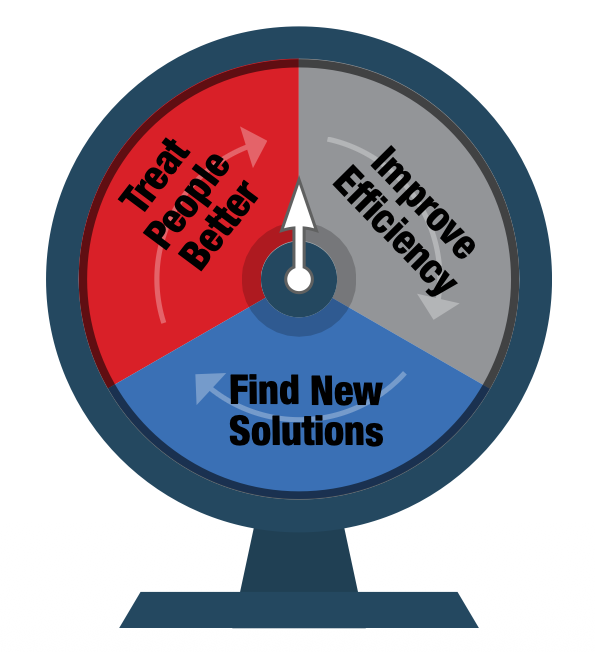
The final characteristic that seems to be common among successful companies is the desire to advance and never be content. Lethargy and complacency are the enemies of success. You are either growing or dying; there is no neutral. Treating clients better, providing a better service, doing things more efficiently, thinking of new ways to be helpful, spending less and less on necessary expenses, finding ways to be easier to work with or for — all of these are ways that successful companies strive to be better. Companies who become complacent will ultimately fail.

Some people are naturally change-averse. That’s difficult. In business, the one constant is change and successful companies find a way to encourage and embrace continual change, continual improvement.

Embrace and Influence for Good

If you are looking to make your company successful, if you are in a position to influence the direction and culture of your company, I recommend that you encourage your company to embrace these pillars of success. There are many companies in the North American thermal processing industry that do and are successful including the good folks over at Induction Tooling.

Doug Glenn
Publisher
Heat Treat Today
For more information: Contact Doug at
doug@heattreattoday.com

3 Hallmarks of a Successful Business Read More »
Induction and Sustainability Tips Part 1: Cleaning and Maintenance

OC

Discover expert tips, tricks, and resources for sustainable heat treating methods Heat Treat Today's recent series.  And, if you're looking for tips on combustion, controls systems, or induction in general, you'll find that too! Part 1, today's tips, digs into cleaning and maintenance

This Technical Tuesday article is compiled from tips in Heat Treat Today's May Focus on Sustainable Heat Treat Technologies print edition. If you have any tips of your own about induction and sustainability, our editors would be interested in sharing them online at www.heattreattoday.com. Email Bethany Leone at bethany@heattreattoday.com with your own ideas!


1. Maintenance of Induction Coils Used in Hardening Applications

Contact us with your Reader Feedback!

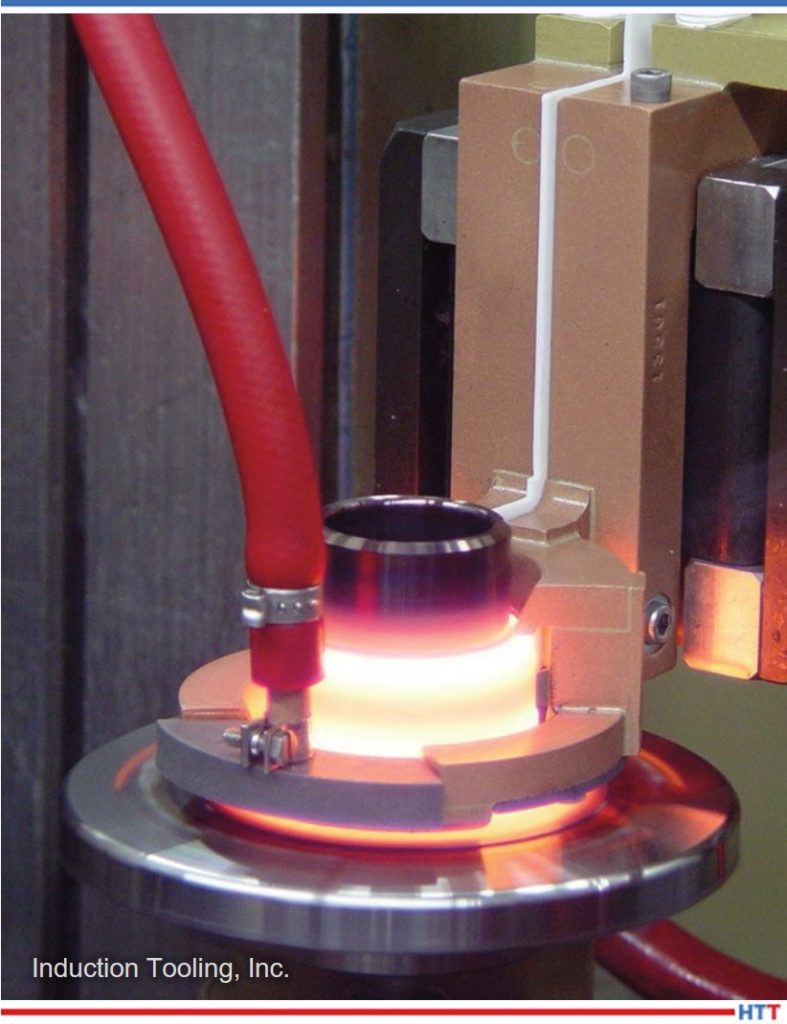
Soap and hot water will remove sticky quench and debris.
Source: Induction Tooling, Inc.

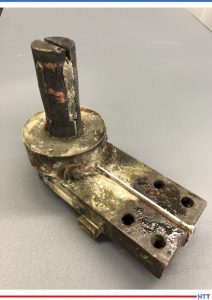
How should you maintain induction coils used in hardening applications? Elbow grease — a little goes a long way. After each use, a simple solution of soap and hot water will remove sticky quench and debris. Scrub hardened dirt with a Scotch-Brite pad. Check for pitting, arcing, and insulator damage. If all is good, use a hot water rinse, and it’s ready for use. If the inductor is to remain on the machine for an extended period, it is advised to wash it and the associated bus daily. Check for damage. Following this simple procedure will reduce business waste.

Source: William Stuehr, President/CEO, Induction Tooling, Inc.

#partscleaning #inductorcoil #hardening

2. Maintaining Tooling Fixtures for Induction Hardening

Tooling fixtures are usually maintained simply by storing them inside a mandrel and a box. This system will prevent coils from getting distorted.

Most tooling should be rinsed in hot water to wash off the polymer and then dried and stored away for future use.

It is a good practice to use deionized water for cooling the power supplies.

Source: Madhu Chatterjee, President, AAT Metallurgical Services LLC

#partscleaning #toolingfixtures

3. Switch to Aqueous

As industry tries to become more “green,” a number of companies are switching from lubricants that are petroleum or mineral oil-based to water-based (“aqueous”) lubricants instead. However, some of these companies then make the mistake of not changing their degreasing fluids that they use to remove these lubricants prior to their next processing operations, and stay with their standard degreasing fluids, such as acetone or alcohol, which are not effective at fully removing water-based lubricants. Instead, they need to run tests to find an appropriate alkaline-based degreasing fluid for such water-based lubricants, since alkaline-based degreasers will be effective at removing such lubricants. Commonly available dish-detergents (alkaline-based) have been shown to be highly effective for such use.

Source: Dan Kay, Owner, Kay & Associates

#aqueouscleaner #gogreen #lubricants


Find heat treating products and services when you search on Heat Treat Buyers Guide.com


Induction and Sustainability Tips Part 1: Cleaning and Maintenance Read More »

15 Questions To Ask Before Designing an Induction Coil

OCDesigning a new induction coil? Here are 15 questions to ask to ensure the coil meets all the requirements to do the job.

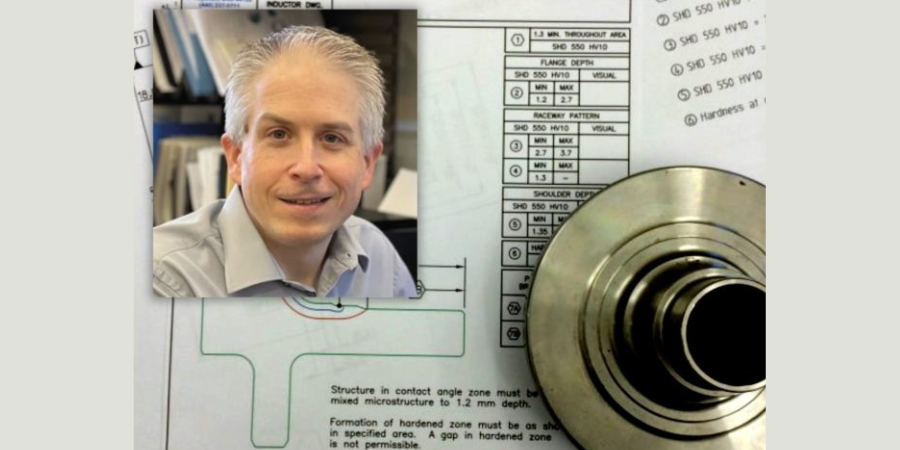
This Technical Tuesday feature was written by John Gadus, Design & Sales specialist at Induction Tooling, Inc., and was first published in Heat Treat Today's May 2022 Induction Heating print edition.


John Gadus
Design & Sales Specialist
Induction Tooling, Inc.
Source: Induction Tooling, Inc

The scope of information available when designing a new inductor can vary greatly. The tooling designer must understand how the customer will process the parts to achieve the desired heat treat specification. Captive heat treating typically involves dedicated high-volume automated systems that heat treat the same part for the life of the production run. Commercial heat treating can be high or low volume with relatively simple setups that provide flexibility to adapt multiple part geometries very quickly. The induction machine design regarding the material handling system, locator tooling, and cooling and quenching capabilities are all important details that need to be provided for any new inductor design.

When beginning a new project, especially for a new customer, basic background information is always helpful. This initial consultation provides insight when presenting follow-up questions to help familiarize new customers with the correct terminology.

1. Have you had any prior induction experience?

2. Have you processed similar parts previously?

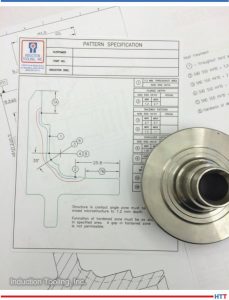
Prior to quoting a new job, the very first thing a potential customer should provide for review is a “green” part print and heat treat specification. If there are any questions or clarifications needed, this is the time to confirm with the customer the exact heat treat requirements to provide feedback for realistic expectations. The part material and the machined condition of the part prior to heat treating are key to avoid design complications from misquoting.

Induction hardening
Source: Induction Tooling, Inc.

For new applications, often prototype or mock-up parts are used during development to prove out the heat treating process. This works well for very complicated or expensive parts. Extra care should be taken to maintain identical part geometries between prototypes and actual production parts to keep an apples-to-apples comparison.

Viable questions to ask would be:

3. What is the part material?

4. What is the hardness specification?

5. What are the heat treat pattern minimum and maximum limits for depth and breakout?

6. What are the “green” dimensions of the part prior to heat treating?

7. Will the part have extra stock for finish machining or grinding?

Specific details and information about the induction machine are very important as well. The machine design sets the stage for the style or type of inductor and determines how the part will be presented to the coil for heat treating. Locators often affect the temperature profile when placed in close proximity to heating zones. This can be used as an advantage especially when anticipating possible overheat conditions due to sharp corners or a thin wall. Detailed drawings of the locators and the material handling system along with close-up photos (or if practical, a visit to the customer’s facility) go a long way to avoid awkward tooling setups and machine clearance issues.

Here are a few induction machine questions whose specific answers will aid in the design process:

8. What is the generator frequency and power?

9. Single-shot or scanning?

10. What is the output contact design?

11. Is there an existing bus bar or quick-change clamping adapter?

12. What is the workpiece centerline?

13. What are the locator/material handling details?

Additional follow-up questions to narrow down the specific inductor features will help finalize the design. Cooling is the life blood of any inductor and will have a large impact on cycle life. The part material and heat treat specification will often dictate the quench design to provide optimal hardening results.

Because of the importance of cooling and quenching, the last two questions we must ask are:

14. How many cooling lines (supply & return) and type of quick-disconnect fittings?

15. How many quench supply lines and type of quick-disconnect fittings?

Most induction projects are unique but all share similar design characteristics. Depending on the machine builder or OEM manufacturer, dedicated equipment or custom-built systems can vary greatly even when processing the same or similar parts. Well defined and detailed answers to this list of important questions will provide the tooling designer with the information needed to provide the best inductor design possible to achieve the desired heat treat specification.

About the Author: John Gadus is a Design & Sales specialist at Induction Tooling, Inc. with over 25 years of inductor design experience mentored under the guidance of president/CEO Bill Stuehr and VP of Engineering David Lynch. John has honed his induction knowledge and tooling design techniques working closely with customers to meet project requirements across a wide range of induction heating applications, from initial design concepts to customer support at installation. John is co-author of several design patents and has recently taken the lead to explore additive manufacturing solutions for new innovative inductor designs.

Contact John Gadus: jgadus@inductiontooling.com


Find heat treating products and services when you search on Heat Treat Buyers Guide.com


15 Questions To Ask Before Designing an Induction Coil Read More »