Heat Treat Industry Supplier News

Heat Treat Radio #15: Jim Oakes

Welcome to another episode of Heat Treat Radio, a periodic podcast where Heat Treat Radio host, Doug Glenn, discusses cutting-edge topics with industry-leading personalities. Below, you can either listen to the podcast by clicking on the audio play button, or you can read an edited version of the transcript. To see a complete list of other Heat Treat Radio episodes, click here.


Audio: Jim Oakes

In this conversation, Heat Treat Radio host, Doug Glenn, speaks with Jim Oakes from Super Systems, Inc., based in Cincinnati, Ohio. SSI develops and manufactures products for the thermal processing industry, including probes, analyzers, flow meters, controllers, software solutions, and engineered systems. Jim Oakes of Super Systems corrals the data about data and makes sense of its use in the heat treating world, covering topics that include the evolution of data collection, sensor technology, data collection for preventative maintenance, operational benefits of data collection, Super Systems data capture explained, the Cloud and security.

Click the play button below to listen.


Transcript: Jim Oakes

The following transcript has been edited for your reading enjoyment.

On this episode of Heat Treat Radio, we’re discussing data.  If there is one thing that is significantly changed in the Heat Treat world in the last decade, it’s the quantity and quality of data.  What the heck do you do with all the data?  How do you collect it?  How do you decide which data sets the capture and after you capture them, how can you learn anything from them? Data, data everywhere, and not a drop to drink!

Welcome to Heat Treat radio.  I am your host and publisher of Heat Treat Today, Doug Glenn.  Today, we’re going to talk to one of the industries leading authorities on data, Jim Oakes from Super Systems Inc.  But before we do, why don’t you take a little cyber trip over to www.heattreattoday.com and see all the data we have there?  We’ve got aerospace heat treat data, we’ve got automotive heat treat data, we’ve got medical heat treat data and energy heat treat data as well as general manufacturing heat treat data.  In fact, we’re adding at least one new piece of heat treating data every day.  On Tuesday, we publish technical content.  We call it ‘Technical Tuesday.  If you’re a manufacturer within in-house heat treat, we’re pretty sure you’re going to find www.heattreattoday.com really helpful.

Before we get started, here is a word about this episode’s sponsor:  Today’s Heat Treat Radio is brought to you by Dry Coolers, designers and builders of industrial cooling systems and the professional engineering services surrounding those systems.  As a leader in the heat treat industry for decades, they’re located in Oxford, Michigan and supply cooling systems for the aerospace, automotive, medical and energy industries, plus many others.  If you have any industrial cooling needs, call Dry Coolers.  You can find them on the web at www.drycoolers.com or by phone at 800-525-8173.

Doug Glenn (DG):  Let’s get started on today’s topic — data. Our guest is Jim Oakes from Super Systems Inc.  Hi, Jim. Take a minute and introduce yourself to our listeners.

Jim Oakes (JO):  Hi, Doug, this is Jim Oakes with Super Systems. We’re a technology provider for the heat treating industry. We focus on sensors, controls, and software for the thermal processing and heat treating industry, and we’ve been doing that for over 20 years now.

DG:  Jim, how many years have you been in the heat treat industry?

JO:  15 years.

DG:  Over the past 15 years, what impresses you about the way we are using data now as opposed to the way we used it back then?

JO:  Well, a couple things, actually. My introduction to the industry was actually longer ago than 15 years. I started in an internship, and oddly enough, at that internship — it was for a technology provider in the heat treating industry — I was involved in doing data capture from a PLC at a Timken plant in Gaffney, South Carolina, and that was 25 years ago. Data acquisition has been happening not just in the heat treating industry, but in manufacturing for a very long time. What’s really been changing though, if you look at the last 10 to 20 years, is that the technology is lending itself, because of cost, both from a storage standpoint and processing standpoint, to really being accessible everywhere. You have more information that is coming out of microprocessor controls or PLCs or programmable logic controllers throughout the shop floor. Whether it be a piece of thermal processing equipment or a cooler or anything that is on the shop floor, we have tons of information that is becoming available. Before you might have been worried about how you would store all that information, but that is a thing of the past. The amount of information, and actually making sense of all of it, is where the challenge lies today, certainly not collecting it.

The Evolution of Data Collection

DG:  Ten years ago, are you seeing us collecting anything now that we didn’t collect then? Are we collecting more stuff than we were collecting back then, and if so, what are we collecting now that we weren’t collecting before?

JO:  That’s a great question, Doug, because back then a lot of the data was very specific and focused on process-related information. Now, there is additional data that is being collected that can be used for some predictive modeling, if you will. It’s not just proof of process that meets the industry requirements. Your customers were expecting that if you used a heat treatment process, then you had to really prove you performed that. Well, that’s a thing of the past. Of course, any data acquisition system that you have today, or anything data-related is going to provide you with that. But now there is more data, so on any day, in any heat treat facility, captive or commercial, I’d say there are 750,000 to well over a million data points that are being collected. Honestly, most people don’t even know that they’re collecting all that information. Their laser focus is on that one specific requirement. All that information that you can have is coming from these microprocessors or PLCs, so the amount of information today versus what you were gathering way back when is really one of the biggest differences.

DG:  What are some of the technologies that have driven that change so that now we can collect more?

JO:  A couple things. Standardized protocols have been around for capturing data, so you have to have a mechanism to get the data from all of these different pieces of equipment. That’s one piece. It’s existed for a long time. But if you think about it, if you take the shop floor today versus 10 years ago versus 20 years ago, there is a PC everywhere now.  You have a networking infrastructure that exists that maybe wasn’t there 20 years ago. Maybe you had a limited number of people that would be able to absorb that information and utilize it. Today, everyone is using a computer. Everybody is using a hand-held device. Now, all of a sudden, that information is readily available to lots of people, and that’s where the difference is. Not only do you have the networking infrastructure on the manufacturing on the shop floor, but you also have the technology that is available to everybody. Computers are everywhere.

Sensor Technology

DG:  One of the contentions I have is that the reason we’re able to gather so much more data now is that we’ve had advances in sensor technology. Maybe you can address this a bit.  I think there are things we are capturing now that we weren’t even able to capture before because of advances in sensors, whether it be IR sensors, or whatever.

JO: Yes, you’re right, Doug. If you look at the amount of information that is readily available, it is because of the technology that is available to capture it. There is all this sensor technology, whether it’s a limit switch identifying a basket or a tray moving to a specific location, or an infrared device that is used maybe for just measuring temperature on the outside of a furnace shell or an infrared analyzer used for analyzing the gas inside the chamber where the parts are being heat treated. Now you have the ability to take that additional information and use it for a decision making process.

And now you have all this data. Nobody is concerned about the amount of information you’re storing. Nobody ever says, “Well, we’re not going to have that much space.” The problem is people and time in actually evaluating all of the data. No doubt, using a sensor to monitor vibration of a pump or motor, or looking at the current usage, or looking at gas usage — the list goes on of the amount of information you can gather and this is because the cost has gone down. Each of those specific devices are now lower in cost and reasonably achievable from a data capture standpoint.

DG:  We might describe it as to say something like:  In the past, we used to put all the sensors inside the furnace, as you mentioned, to validate the process and things of that sort. It seems now that, because of cost of sensors and things of that sort, the fact that you can gather all this data and actually do something with it now, that we’re getting sensors on the outside of the equipment to make sure not that just the process is validated, but that the equipment is also validated, if you will, so that we can see troubles coming and that type of thing. Do you agree?

JO:  Yes, there is no doubt if you look at some of the benefits of what we see in the heat treating industry today. Of course, operational efficiencies are important. Now you’re taking the data that you’re gathering, again it’s not going to just prove that you’re running the parts properly, but you’re able to make better decisions from an operational standpoint. You can look for better load planning, you can look for reducing time between loads or gap time between loads and identify what’s causing those. The other thing is using this information for preventive maintenance. The equipment manufacturers are doing a great job with providing preventive maintenance programs and it is because of the sensors and the data acquisition systems that you are able to even just locally to that piece of equipment or gather from a plant-wide standpoint. There is no doubt, that some of the biggest benefits are from doing the data capture and then having this different sensor technology that allows for the preventive maintenance programs that can be put into place.

DG:  Isn’t that, in fact, where huge benefits can be gained, in the area of preventative maintenance?

Preventative Maintenance

JO:  Unplanned downtime is a huge cost component in heat treating. Anything you can do to manage the up-time of your equipment is beneficial. Of course, planned downtime gives you an opportunity to work with customers, work with the product that is flowing through your facility as well as managing the incoming parts that you might need for that equipment. So it’s a huge benefit. You can still do preventive maintenance programs that are in place; it doesn’t have to be with new equipment. You just have to be smart about the things that are important to that equipment and then utilize that data. I always say that data acquisition is very underutilized when it comes to maintenance. The maintenance department is usually one of the busiest groups within the thermal processing industry. A lot of domain knowledge goes into the equipment, but they have a lot of this information that is readily accessible to them, so if they could look at this information and anticipate that fan is going to fail, that motor is going to fail, that there is a short on your electrical elements, or whatever that might be, you’re going to be able to plan for the downtime. That’s going to help from an operational standpoint as well as reduce the amount of time that that furnace might be out of commission.

DG:  And when you’re not planning ahead, when you’re responding to fires rather than preventing fires, so to speak, it is usually the maintenance guys who catch the brunt of it.

JO:  Yes, that poor guy walks into work every day dreading work because he’s got a crisis on his hands every single time. If you can prevent that crisis, so he can plan to do something, it’s a totally different work environment.

Let’s take a quick break here and remind you that additional support for today’s Heat Treat Radio episode is being provided by Dry Coolers. If there is one thing we know about thermal processes, it’s that things get hot, and to remove that heat from critical areas, you need a system that is reliable, and if necessary, designed for your specific needs. The fact is, Dry Coolers has been custom designing and providing standardized units for decades, and they have the staff and experience to take care of any of your industrial cooling needs. If you’re a manufacturer with in-house heat treating and you need an industrial strength cooling system, make you first, and only call to Dry Coolers. You can look them up on the web at www.drycoolers.com.

Now let’s get back to our interview with Jim Oakes of Super Systems.

DG:  Where are you seeing data being used well?

Operational Benefits of Data Collection

JO:  The people that are taking advantage of the information are of course meeting the industry requirements. They are staying on top of things like CQI-9 or NadCap requirements from a data collection and meeting the customer requests. That is the foundation. I always say that in a lot of cases, that is a big driver for electronic data. But the people that are really taking advantage of that are using that information for operational benefits. Operational can be both from a maintenance standpoint as well as just improving your overall operations.  You’re looking at, “Why do I have downtime of two hours between loads on this particular piece of equipment?” So now, instead of using somebody to go search the shop for, and walk out and get a paper chart, you now have people that can actually evaluate the downtime between loads. You can look at gap times and identify what the issue is. Is it because I don’t have enough fixtures? Is it because I don’t have enough labor? The labor market is tight right now, so you want to use something that is going to provide you with something to maximize efficiency with what you have. Challenges might be your labor or might be your equipment. Are you making the most of your equipment? You can look at that data. You have tons of information. If you can evaluate that, it gives you an opportunity to make better decisions. That is one area.

The other area is, how can you utilize the data and push that out to all your people. Let everybody look at this, but only give them the pieces of information that are important. The maintenance department is going to be interested in maybe the percent output, the current going to the electrical elements, vibration, or water temperature. That information is relevant and if they could isolate that information, they can sit down with their cup of coffee in the morning and they can evaluate this information. Before they have to react to all the firestorms that they have in front of them, maybe they can actually plan for some preventative maintenance activities based off what the data is telling them. The right information to the right person is really critical. The people that are doing this are the ones that are really taking full advantage of the information that they have with a SCADA package.

DG:  Is there someone out there that is actually doing it?

JO:  Yes, absolutely! There is no doubt about it. People are taking resources, and instead of being reactive and trying to find stuff on the shop floor, they are using the system to identify, answer customer needs and then create those operational efficiencies. People absolutely, no doubt, are taking advantage of that. They are looking at shortening time between loads, notifying users when loads are done so they can get the parts out and then put new parts in. This is happening with mobile devices and/or emails so that the right people are notified at the right times.

DG:  Give us the lowdown on what SSI is doing in this area.

The SSI Data Capture

JO:  Our foundation provides us the ability to provide information everywhere. This starts with the sensor and taking that sensor data into a controlling equipment, whether course microprocessor control PLC. But you need to make that readily available so that people can make decisions quickly. Proof of process is one thing of course, but so is giving access to information, whether by mobile device or a messaging system. So we’re taking all of the information that we’ve already done in the past and providing that into the technology that people are utilizing today. We see huge opportunities from being able to go through the existing data that’s there, and then look at better ways to capture data based off the technology that is becoming available, whether it’s how we capture usage of gas or usage of electricity or just process-related data to make sure that the right person is getting the right information.

DG:  Many of the folks reading this article are manufacturers with their own in-house heat treat plants, and I’m guessing that many of them are wondering what they can do to move in this direction. What should these folks do next?

JO:  First step is to do an inventory of the equipment and be realistic about what data you can get out of them, highlight the drivers, meaning what are your business drivers for capturing that information, and then at that point decide if it is just the infrastructure from a data acquisition standpoint or, if you want to get some bigger bang for your buck, maybe you want to make an investment in some equipment that is technology down at each piece of equipment level, to capture that so that you can realize the gains based off of capturing that information.

DG:  If a company wants to move in this direction, must they go cloud-based?

The Cloud and Security

JO:  No, definitely not. The cloud is a tool that allows basically data and information to be stored externally. The reality is a virtual server in many degrees can potentially be a cloud-based system, but it doesn’t have to be. A large number of the installs we have are storing information locally and then transferring data to the cloud for backup recovery.

DG:  Address cloud-based security, if you would.

JO:  It is a huge topic from a security standpoint and I would say that most of the companies that use the SCADA packages are on-premise. That is not all of them, but most of them are. This means that if you are on premise, you have a private network where it is not accessible from anywhere unless you create that tunnel into that private network using virtual private network. That’s what you refer to as on-premise. Then you have cloud-based system, which is really just pushing that information up to a server form which provides access into it. Of course, there is a security aspect regarding accessing that information. A strategy has to be put forth that prevents external access to that information. In many cases, if you decide that you’re going to go to a cloud-based system, you’ve already thought through that and you’ve probably already transitioned some other systems to that. Anyone that is going to a cloud-based system has some security requirements to prevent any illegal or unwanted access.

DG:  Jim, thanks for your time.

JO:  Doug, thank you for having me on Heat Treat Radio. I really appreciate the opportunity. This topic is important to us here at Super Systems. As a technology provider to the industry, we really like to get the word out there about what types of things are coming, whether it’s making data accessible at the hand-held level, or helping make decisions, it is something that is near and dear to our heart and that is because a lot of our customers really find this necessary. I appreciate you spending the time with me and I really look forward to having discussions around this in the future.

That was Jim Oakes of Super Systems Inc. talking about data and how to get the most out of that data. If you’d like to get in touch with Jim, please email me directly at doug@heattreatoday.com and I’ll put you in touch with Jim. Super Systems can be found on the web at supersystems.com.

Suffice it to say, you will be hearing more from Heat Treat Today about data and how to use it more effectively for your business. To see more heat treat technology articles, go to www.heattreattoday.com. We post a new heat treat item, either a technical article or some industry news, every weekday. If you’d like more Heat Treat Radio, simply Google H”eat Treat Radio”. We’re the first thing that pops up. You can also subscribe to Heat Treat Radio on iTunes or SoundCloud.

One last reminder that today’s episode of Heat Treat Radio was underwritten by Dry Coolers. If you have need for any industrial cooling system, give the good people at Dry Coolers a call.  They are on the web at www.drycoolers.com.

This and every other episode of Heat Treat Radio is the sole property of Heat Treat Today and may not be reproduced without express written permission and appropriate attribution from Heat Treat Today. Jonathan Lloyd of Butler, PA, produced and mixed this episode. I am your host, Doug Glenn.  Thanks for listening.

Doug Glenn, Publisher, Heat Treat Today
Doug Glenn, Heat Treat Today publisher and Heat Treat Radio host.

To find other Heat Treat Radio episodes, go to www.heattreattoday.com/radio and look in the list of Heat Treat Radio episodes listed.

Heat Treat Radio #15: Jim Oakes Read More »

Industrial Gases Supplier to Build 2 Air Separation Units, Increase Bulk Production

The leading U.S. supplier of industrial, medical and specialty gases recently announced plans to build two new air separation units (ASUs), one in the Minneapolis/St Paul area, and the other in Fairless Hills, Pennsylvania.

Pascal Vinet, Chief Executive Officer of Airgas, Inc. and Air Liquide Executive Committee Member

Airgas, an Air Liquide company, projects that the two new ASUs will increase bulk gas production in the Midwest and Northeast and complement Airgas’ strategic independent supply network throughout the United States. The two new ASUs, along with previously announced production facilities under construction in North Carolina (on-stream late 2019) and Southern California (on-stream early 2019), will ensure access to vital supply of atmospheric gases, further enable supply chain efficiencies, bolster network reliability and provide capacity for continued growth.

“With the construction of these two new ASUs, Airgas will deliver on our Air Liquide integration strategy to grow our independent production of bulk gases, to gain efficiencies in our dynamic supply chain, and to deliver product supply reliability to our customers,” said Pascal Vinet, Chief Executive Officer of Airgas, Inc. and Air Liquide Executive Committee Member.

The new ASU near Minneapolis/St. Paul, Minnesota will enhance the company’s gas production to serve growing needs in the Midwest, ensuring long-term reliability of supply and enabling ongoing efficiencies in support of its merchant, packaged and on-site gas customers. Permitting is ongoing and construction will begin in 2019 with operations expected to be on-stream in 2020.

In Fairless Hills, Pennsylvania, a new ASU will increase Airgas’ production capabilities throughout the Northeast and Mid-Atlantic regions, particularly to support major bulk gas markets including Philadelphia and New York City. Airgas will build this ASU on a former industrial site to be redeveloped under Pennsylvania’s Land Recycling Program (ACT 2). Construction is underway and the ASU is slated to be on-stream in early 2020.

Each ASU will produce oxygen, nitrogen and argon for use in customer applications such as food chilling and freezing, metal fabrication, blanketing and purging, and combustion enhancement. In addition, the ASUs will produce medical grade oxygen to supply to hospitals, nursing homes and research laboratories as well as food and pharmaceutical grade nitrogen.

Industrial Gases Supplier to Build 2 Air Separation Units, Increase Bulk Production Read More »

10 Quick Heat Treat News Items to Keep You Current

10 Quick Heat Treat News Items to Keep You Current

Heat Treat Today offers News Chatter, a feature highlighting representative moves, transactions, and kudos from around the industry.

Personnel and Company Chatter

  • Julien Noel has been named Vice President / General Manager of the Buehler worldwide division. ITW Test and Measurement Group President, Yahya Gharagozlou, made the announcement. Buehler is an ITW Company which manufactures scientific equipment and consumables for materials analysis.
  • A fourth vacuum aluminum brazing (VAB) furnace has been purchased by California Brazing, a Newark, California, heat treating company in order to expand the capability to service the aerospace sector.
  • Solar Atmospheres recently awarded the title of CEO Emeritus to Roger A. Jones, FASM. The honorary title was conferred by the company and announces his semi-retirement as Solar Atmospheres’ CEO, the culmination of 45 years of leadership and service to the vacuum heat treating industry.
  • A refractories supplier’s recently established partnership will result in the full-service distribution of the company’s products and services throughout several European countries. The Plibrico Company and Pli Group Europe GmbH, a highly experienced refractory distributor contractor based in Vienna, Austria, have entered into a new value-added distribution partnership will cover Austria, France, Germany, Switzerland, Italy, Hungary, Czech Republic, Slovakia, Slovenia, Croatia, Serbia, and Bulgaria.
  • The world’s largest aerospace company, the Boeing Company recently acquired Embraer SA, the commercial aircraft arm of a Brazilian aircraft manufacturer, in a new $4.75 billion joint venture.

Equipment Chatter

  • Seven Gruenberg Glassware drying ovens were recently shipped to a university in the U.S. Midwest by Thermal Product Solutions, a manufacturer of thermal-processing equipment based in New Columbia, Pennsylvania.
  • A furnace equipment company based in Erie, Pennsylvania, recently designed and manufactured a front-loading forge furnace for a leading North American forging company. The furnace built by Onex, Inc., is one of the largest of its kind in North America with workspace dimensions measuring 26ft (W) x 20ft (D) x 14ft (H).
  • A heat treating services provider in the U.S. Northwest recently purchased a Meg-HIP hot isostatic press for heat treating and metal processing. Västerås, Sweden-based, Quintus Technologies installed the system at Stack Metallurgical Group in Albany, Oregon.

Kudos Chatter

  • Thermal-Vac Technology, Inc. has been awarded a 2018 Top Workplaces honor by The Orange County Register. The list is based solely on employee feedback gathered through a third-party survey administered by research partner. The anonymous survey measures several aspects of workplace culture, including alignment, execution, and connection, just to name a few.
  • AK Steel recently announced that it has accepted an award of up to $1.2 million from U.S. Department of Energy (DOE) under the Office of Energy Efficiency and Renewable Energy’s (EERE) Advanced Manufacturing Office program to investigate novel low-density steels in the laboratory, which could ultimately be used in automotive structural applications. The three-year project will be conducted in collaboration with DOE, Oak Ridge National Laboratory Materials Science and Technology Division, and the Advanced Steel Processing and Products Research Center in the Department of Metallurgical & Materials Engineering at the Colorado School of Mines.  The objective of the project is to conduct alloy design, laboratory validation, and testing of low-density steels that are alternatives to currently available advanced high strength steels and other lightweight metals.

Heat Treat Today is pleased to join in the announcements of growth and achievement throughout the industry by highlighting them here on our News Chatter page. Please send any information you feel may be of interest to manufacturers with in-house heat treat departments especially in the aerospace, automotive, medical, and energy sectors to the editor at editor@heattreattoday.com.

10 Quick Heat Treat News Items to Keep You Current Read More »

10 Quick Heat Treat News Items to Keep You Current

10 Quick Heat Treat News Items to Keep You Current

Heat Treat Today offers News Chatter, a feature highlighting representative moves, transactions, and kudos from around the industry.

Personnel and Company Chatter

  • A Berwick, Pennsylvania, machining company which offers heat treating among its services was recently acquired by precision machining provider DPMS, based in Santa Clara, California. K-Fab Inc. operates a 22,000-sq.-ft. precision machine shop that manufactures parts for the aerospace, defense, and semiconductor sectors.
  • GKN Powder Metallurgy recently announced a strategic collaboration with HP Inc, becoming the first to deploy the just-launched HP Metal Jet, a groundbreaking binder jetting technology, into its factories to produce functional metal parts for auto and industrial leaders, including Volkswagen and Wilo, and for companies around the world.
  • Joshua Farrell recently took over the Operations Manager position at Mid-South Metallurgical, based in Murfreesboro, Tennessee.

Equipment Chatter

  • California-based Delta H Technologies, LLC, recently delivered a commissioned dual chamber aerospace heat treating system — the largest and most advanced to date — to a leading U.S. military aircraft manufacturer. Both chambers are certified for heating parts up to 1200°F and capable of solution heat treating, aging, annealing aluminum, stress relieving titanium and ferrous castings, weldments, and aging of PH stainless steel.
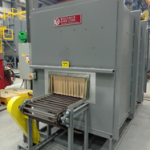
  • An auto parts manufacturer recently received shipment of a customized oxidation nitriding furnace, manufactured by JGEF Furnace, a vacuum heat treating  equipment supplier with U.S. offices in San Francisco, California. The pit furnace, which has useful dimensions of 43.3 inches (1,100 mm) in diameter x 70.9 inches (1,800 mm) high, has a maximum temperature rating of 1292°F (700°C). The goal for this project was to represent an advanced solution for metallic parts. The furnace includes an advanced oxidation system that ensures the workpieces are preheated in a controlled oxidizing atmosphere and guarantees corrosion resistance, which in turn facilitates nitrogen uptake and growth of the nitride compound layer.
  • A large capacity fastener hardening furnace system has been commissioned by a tier one automotive supplier based in Detroit, Michigan. CAN-ENG Furnaces International Ltd has been contracted to design and commission the system for the company, which offers heat treating among its services.
  • A large capacity SECO/Warwick vacuum furnace was delivered to U.K.-based Wallwork Heat Treatment company just before Christmas.

Kudos Chatter

  • America Makes recently announced the awardees of a Directed Project Opportunity on advancing additive manufacturing (AM) post-processing techniques (AAPT), funded by the Air Force Research Laboratory (AFRL), Materials and Manufacturing Directorate, Manufacturing and Industrial Base Technology Division. Awardee #1 is Arizona State University, in conjunction with Quintus Technologies; Phoenix Heat Treating, Inc.; and Phoenix Analysis & Design Technologies, Inc. Awardee #2 is ASTM International Additive Manufacturing Center of Excellence (AM CoE), a collaborative, which includes ASTM International, Auburn University, EWI, the National Aeronautics and Space Administration (NASA), Wichita State University – National Institute for Aviation Research (NIAR), in conjunction with Quintus Technologies, Carpenter Technologies Corporation, Aerojet Rocketdyne, Rolls Royce Corporation, Honeywell Aerospace, GE Aviation, and Raytheon.
  • Paulo recently announced the recent addition of the St. Louis Division to the approved heat treat sources list for General Motors High-Pressure Die Casting Die Insert Material. The approval list references AWQ49658 which includes the heat treatment specifications for Hot Work Tool Steels for GM High-Pressure Die Casting applications.  The St. Louis Division joins Paulo’s Nashville plant on the approval list, which includes only seven approved locations in the US. AWQ49657 covers approved material providers, heat treaters, and testing labs. Paulo is the only US source with two facilities on the list.
  • Nominations are open for the ASM HTS/Surface Combustion Emerging Leader Award, which recognizes an outstanding early-to-midcareer heat treating professional whose accomplishments exhibit exceptional achievements in the heat treating industry. The award was created in recognition of Surface Combustion’s 100-year anniversary in 2015. The winning young professional will best exemplify the ethics, education, ingenuity, and future leadership of our industry. Deadline for the nomination is February 1, 2019. Past winners include Olga Rowan of Caterpillar in 2015 and Lee Rothleutner of Timken in 2017. For nomination rules and forms, visit the Heat Treating Society website at hts.asminternational.org and click on Membership & Networking and Society Awards.

Heat Treat Today is pleased to join in the announcements of growth and achievement throughout the industry by highlighting them here on our News Chatter page. Please send any information you feel may be of interest to manufacturers with in-house heat treat departments especially in the aerospace, automotive, medical, and energy sectors to the editor at editor@heattreattoday.com.

10 Quick Heat Treat News Items to Keep You Current Read More »

Heat Treat Today’s Meet the Consultants: George Totten

Heat Treat Today recently unveiled its Heat Treat Consultants page in the October 2018 print edition (available in digital format here) and at FNA in Indianapolis, Indiana. We offer this comprehensive listing of heat treat industry consultants as part of our efforts to help minimize the effects of heat treat “brain drain.” With so many heat treat brains growing older, the expertise that once used to reside inside of manufacturing operations is dwindling. Where, then, do manufacturers with in-house heat treat departments go when they need heat treat answers?

Turn to Heat Treat Today and our comprehensive list of heat treat industry consultants, which we will introduce to you one by one in this occasional feature, “Meet the Consultants”. There is no more comprehensive list of heat treat consultants. Learn more about George E. Totten of  G.E. Totten & Associates, and then click through to the page to read more details about each consultant. We are adding more regularly. Contact them directly, or call us and we’ll introduce you to them. Whether it’s a technical process question, a safety concern, a compliance issue, or a business related question, one of our heat treat consultants will be able to help. If you are a consultant and would like to be listed, please contact Doug Glenn


Name: George E. Totten
Company Name: G.E. Totten & Associates
Location: Seattle, Washington
Years In Industry: 30+
Consulting Specialties:

  • Heat Treating & Thermal Processes
  • Fluids & Lubricants
  • Advanced Quenching Technology & Engineering
  • Surface Engineering
  • Consulting & Contract Research

Send an email | Website | Phone: 206-788-0188

Briefly:

G. E. Totten & Associates LLC, a research and consulting firm specializing in thermal processing and industrial lubrication problems and related equipment supply, was founded by George E. Totten, Ph.D., FASM. Dr. Totten began with over 31 years of experience before launching his company, and he is widely known from his long-term experience in the heat treating and fluids/lubricants industry. The initial mission of G.E. Totten & Associates LLC was to make global experts in the fields of thermal process, fluids, and lubricants available to those with problems in these areas, regardless of location, through either a consulting or contract research (or both) basis. In time, the initial mission expanded to include providing global technical support in cooling curve analysis, furnaces and equipment, advanced quenching technology and engineering, hydraulic system equipment, and software.

Publications or Significant Accomplishments:

  1. Founder and president of G.E. Totten & Associates LLC (2001 to present).
  2. Research Professor, Portland State University — Portland, Oregon (2004-2015).
  3. Adjunct Professor, Polytechnic University of New York — New York, New York (2001).
  4. Visiting Scholar, Texas A&M University — College Station, Texas (2005-2006).
  5. Visiting Professor, Department of Engineering, Materials, Aeronautics and Automobile Technology, School of Engineering at São Carlos, University of São Paulo — São Carlos, Brazil (2006 to present).
  6. Associate Professor, Associação Instituto Internacional de Pesquisa — São Carlos, Brazil (2006 to present).
  7. Adjunct Professor, Texas A&M University — College Station, Texas (2006-2015).
  8. Associate Professor, Portland State University — Portland, Oregon (2015 to present).
  9. Completed Ph.D. in Physical Organic Chemistry, Dissertation: “Substituted Neopentyl Systems via Silyl Ketene Acetal Chemistry and Acetolysis of Alkyl-Substituted Neopentyl Derivatives” (awarded 1989).
  10. President, International Federation for Heat Treatment & Surface Engineering (IFHTSE) (2002-2004); Fellow of IFHTSE (2005).
  11. Member of ASM International, Brazilian Association of Metallurgy and Materials, American Chemical Society, Society of Automotive Engineers, Society of Tribologists and Lubrication Engineers, American Society for Testing and Materials, serving on several committees; member-at-large, ASTM Committee D02 on Petroleum Products, Liquid Fuels, and Lubricants.
  12. Recipient of sixteen U.S. patents.
  13. Recipient of American Society of Testing and Materials (ASTM) Awards, including of Excellence (2000), Sydney D. Andrews Scroll of Achievement (2004), of Merit (2006), Outgoing Chairman Award (2006), Charles B. Dudley Award (2008).
  14. Recipient of ASM Eisenman Award (2017); Hephaestus Award (2016); Nitrex Hephaestus Award (2013); IFHTSE Medal (2011); SAE McFarland Award (2000).
  15. Established George E. Totten Symposium on Quenching — Heat Treating Society of ASM International (2007).
  16. Co-authored or edited 37 books and conference proceedings, including: Handbook of Residual Stress and Deformation of SteelEditor, ASM International (2002); Steel Heat Treatment Handbook (2 vol.), Editor, CRC Press (2006); Mechanical Tribology: Materials, Characterization, and Applications, Co-editor with Hong Liang, CRC Press (2004); Handbook of Hydraulic Fluid Technology, Co-author with Victor J. De Negri, CRC Press (2017, 2nd ed.); Handbook of Aluminum: Vol. 1: Physical Metallurgy and Processes and Vol. 2, Co-author with D. Scott MacKenzie, CRC Press (2003); Handbook of Quenchants and Quenching Technology, Co-author with C.E. Bates and N.A. Clinton, ASM International (1993); Manual 64, Intensive Quenching Systems: Engineering and Design, Co-author with Nikolai Kobasko, Ph.D., Michael Aronov, Ph.D., and Joseph Powell, ASTM (2010).
  17. Contributor to several articles published by Industrial Heating magazineASTM Standardization News magazine and over 100 technical papers for ASTM Technical Committee.
  18. Contributor to or Author or Editor of over 600 publications, including several ASTM publications.

Links to Heat Treat Today or Other Online Resources (a select list):

References (partial list, more available upon request):

Linked In  |  G.E. Totten & Associates  |  ASM International


Heat Treat Today’s Meet the Consultants: George Totten Read More »

15 Quick Heat Treat News Items to Keep You Current

15 Quick Heat Treat News Items to Keep You Current

Heat Treat Today offers News Chatter, a feature highlighting representative moves, transactions, and kudos from around the industry.

Personnel and Company Chatter

  • Mike Paponetti recently accepted the position of Sales Manager at Solar Atmospheres South Carolina. Prior to accepting this position, Mike was the Regional Sales Manager at Solar’s Hermitage, Pennsylvania, facility.
  • Alliance Steel LLC has announced plans to relocate the company from the northwest suburbs of Chicago, Illinois, to Gary, Indiana, where a new plant will allow the company to consolidate its multi-structure facility into a single-structure facility.
  • William M. Brown, Harris Corporation Chairman, President, and CEO, has been named chairman of the Aerospace Industries Association (AIA) Board of Governors for 2019. He succeeds outgoing AIA Chairman Tom Kennedy, chairman and CEO of Raytheon.
  • A new 107000-square-foot facility will focus on additive manufacturing, advanced composites, assembly, and industry 4.0 processes for aerospace design and manufacturing. GKN Aerospace’s new Global Technology Centre in Bristol, United Kingdom, has received support through the UK Governments Aerospace Technology Institute.
  • A provider of heat treatments and specialist thermal processing services held an official opening ceremony last week at its brand new facility on the Advanced Manufacturing Park (AMP), Rotherham, Yorkshire. Bodycote‘s new advanced heat treatment center, now fully operational and supporting customer requirements, offers a range of heat treatment services and has been established to support the aerospace and power generation markets in the UK and Europe.
  • An Iowa-based foundry recently sold its operating assets to its Galesburg, Illinois-based sister company, Aluminum Castings Company, an aluminum sand castings foundry. The transition will include the relocation of the ALCAST Midwest Works LLC‘s heat treating and grinding operations back to the Fairfield facility from their Clarence, Missouri, facility.
  • A supplier of live tooling for the North American machine tool industry, Prospect Heights, Illinois-based Heimatec Inc., has become part of a new corporation, Platinum Tooling Technologies Inc.
  • German car maker Porsche AG and Schuler, Inc., a Canton, MI-based provider of metalforming technologies and products announced plans to build an innovative press shop together for the car factory of the future. The objective of Schuler and Porsche’s joint venture is to create a so-called Smart Press Shop as part of a networked Industry 4.0 approach. The new press shop’s pioneering technologies will enable the highly flexible production of complex car body parts; whereby the focus will be on aluminum body panels and small batch production.
  • Constellium contracted with Tri-Arrows Aluminum Holding Inc. (TAAH) for the supply of cold coils from its Logan plant in Kentucky for up to five years as part of its agreement with UACJ Corporation and TAAH, its U.S. subsidiary, to acquire TAAH’s 49% stake in Constellium-UACJ ABS, LLC. Constellium’s plant in Muscle Shoals, Alabama, will continue to ramp-up its Auto Body Sheet substrate capability to gradually become Bowling Green’s sole supplier of cold coils.

Equipment Chatter

  •  A Japanese customer has placed an order with EBNER to expand an existing HICON/H2® bell annealer facility. The facility, which spheroidizes and recrystallizes coils of steel strip, will be upgraded with two additional gas-fired heating bells.
  • A natural gas-fired conveyor oven was shipped to a supplier of the oil and gas industry by Wisconsin Oven Corporation. This conveyor oven will be used for the preheating and powder coating of couplings. This conveyor oven has sufficient capability to heat 1,000 pounds per hour of steel parts from 70° F to 1000° F. In addition, Wisconsin Oven Corporation announced the shipment of a natural gas-fired conveyor oven to a leader in the forging industry. This conveyor oven will be used as a preheating oven for aluminum billets.
  • A Gruenberg truck-in-oven was recently shipped to the oil and gas industry by Thermal Product Solutions. The truck in oven will be used to test parts used for downhole drilling.

Kudos Chatter

  • Alloy Engineering Company, an industry leader in the design and manufacture of alloy equipment for high-temperature and corrosive industrial applications, celebrated its 75th anniversary in the month of November. The Berea, Ohio, company’s equipment is used for both commercial and in-house heat treating, and for processes such as annealing, hardening, carbo-nitriding, carburizing, nitriding, tempering, brazing, and sintering.

    SMS Group has won the German Design Award in 2018.
  • Paulo is celebrating its milestone 75th year in business. The company was founded in 1943 in St. Louis, conceived originally as Paulo Products Company was originally conceived as a manufacturer with heat treatment provided as a secondary service. Helping customers succeed by offering thermal processing solutions is where the company excelled. Founders husband and wife Ben and Pauline Rassieur had previously worked for Central Mine Equipment Company. Pauline, after whom Paulo is named, was one of the first women to earn an engineering degree from the University of Missouri.
  • SMS Group has won the German Design Award 2019 in the category “Industry” for the additively manufactured 3D spray header. The component for which plant and mechanical engineering company SMS group has received the German Design Award 2019 in the category “Industry” is a spray head used to cool dies in forging presses.

Heat Treat Today is pleased to join in the announcements of growth and achievement throughout the industry by highlighting them here on our News Chatter page. Please send any information you feel may be of interest to manufacturers with in-house heat treat departments especially in the aerospace, automotive, medical, and energy sector to the editor at editor@heattreattoday.com.

15 Quick Heat Treat News Items to Keep You Current Read More »

Heat Treat Today’s Meet the Consultants: Debbie Aliya

Heat Treat Today recently unveiled its Heat Treat Consultants page in the October 2018 print edition (available in digital format here) and at FNA in Indianapolis, Indiana. We offer this comprehensive listing of heat treat industry consultants as part of our efforts to help minimize the effects of heat treat “brain drain.” With so many heat treat brains growing older, the expertise that once used to reside inside of manufacturing operations is dwindling. Where, then, do manufacturers with in-house heat treat departments go when they need heat treat answers?

Turn to Heat Treat Today and our comprehensive list of heat treat industry consultants, which we will introduce to you one by one in this occasional feature, “Meet the Consultants”. There is no more comprehensive list of heat treat consultants. Learn more about Debbie Aliya of Aliya Analytical Inc, and then click through to the page to read more details about each consultant. We are adding more regularly. Contact them directly, or call us and we’ll introduce you to them. Whether it’s a technical process question, a safety concern, a compliance issue, or a business related question, one of our heat treat consultants will be able to help. If you are a consultant and would like to be listed, please contact Doug Glenn


Name: Debbie Aliya
Company Name: Aliya Analytical, Inc.
Location: Wyoming, Michigan
Years In Industry: 30+
Consulting Specialties:

  • Metallurgy
  • Failure & Root Cause Analysis
  • Materials and Process Engineering
  • Leadership & Business Development

Send an email | Website | Phone: 616-475-0059

Briefly:

Debbie brings 32 years of experience in development and use of applied critical and creating thinking skills in failure analysis, materials selection and characterization, and specification preparation for structural applications to the industry. She founded and serves as president of Aliya Analytical, Inc., which for almost 25 has served manufacturing clients in failure analysis and materials characterization, and education and training of manufacturing company employees. Debbie is a highly sought-after instructor, presenter, and author and editor of scholarly and non-scholarly works, including articles, journals, and industry handbooks and guides. In addition, she is a student and educator in interfaith and thinking skill optimization studies.

Publications or Significant Accomplishments:

  1. Founded, president of Aliya Analytical, Inc., in Grand Rapids (1994, incorporated 2004 to present)
  2. Adjunct Technology Faculty, Grand Rapids Community College (1990-1993); Montcalm Community College (1993-1996); Ferris State University (MI) (1994); Western Michigan University (2000); various math and physics courses, including basic metallurgy and materials science and formability of sheet metal
  3. Chair or Co-chair of various committees or proceedings, including, Society of Manufacturing Engineers, Materials Solutions Conference/American Society for Metals (ASM International), Failure Analysis Committee/American Society for Metals (ASM International), Society for Machinery Failure Prevention Technology, Society of Automotive Engineers (West Michigan)
  4. Expert witness at depositions in local, state and federal trial proceedings
  5. Contributor to multiple industry journals, including Journal of Failure Analysis and Prevention (and predecessor, Journal of Practical Failure Analysis), Lubrication and Fluid Power: Journal of MachineryIndustrial HeatingJournal of Materials Engineering and Performance,
  6. A frequent lecturer, present at international, national, and regional conferences, including Society for Machinery Failure Prevention Technology Conference, ASMI/ASNT chapters, Materials Science & Tech Conference/American Society for Metals (ASM International), Minnesota Microscopy Society, ASMI Student Chapter at the Government Engineering College (Pune, India), Michigan Microscopy Society Conference,  American Society for Nondestructive Testing
  7. Instructor, MEI faculty, ASM International, Failure Analysis and Prevention and Heat Treating of Steel (part-time)
  8. Founding Member, Root Cause Forum (Yahoo Group)
  9. Member of the Editorial Board of the Journal of Failure Analysis and Prevention, and its predecessor, Journal of Practical Failure Analysis, American Society for Metals (ASM International) (2001-2006)
  10. Co-Editor, Section 4, Metals Handbook Volume 11, American Society for Metals (ASM International), Authored: “The Failure Analysis Process: An Overview,” “Metals Chemical Analysis in Failure Analysis,” “Hydrogen Embrittlement of High Strength Steels” (from “Hydrogen Damage”); Co-compiler/Author of Volume Glossary (2002 edition)
  11. Author, “Sectioning of Metallurgical Specimens,” Co-author, “Physical Metallurgy in Metallography,” Metals Handbook Volume 9 (2004 edition), American Society for Metals (ASM International) (2004)
  12. Author, “Mechanisms and Causes of Failure in Heat Treated Steel Components,” chapter in Failure Analysis of Heat Treated Steel Components, Canale, Mesquite & Totten, published by ASM International (2008)
  13. Contributing columnist to “The Experts Speak”, Industrial Heating (2009-present)
  14. Experis contract with Cummins, Inc., in Columbus, Indiana, failure analysis consultant  (2011-2012)

Links to Heat Treat Today or Other Online Resources

References (partial list; more available upon request)

LinkedIn.com | Aliya Analytical

Heat Treat Today’s Meet the Consultants: Debbie Aliya Read More »

15 Quick Heat Treat News Items to Keep You Current

15 Quick Heat Treat News Items to Keep You Current

Heat Treat Today offers News Chatter, a feature highlighting representative moves, transactions, and kudos from around the industry.

Personnel and Company Chatter

  • Tracy Dougherty has been named Vice President of Sales at AFC-Holcroft. Dougherty has been with AFC-Holcroft since 2008 and served in several sales-related roles, most recently as the company’s Sales Manager. As Vice President of Sales, Dougherty will now have a number of added responsibilities, including overseeing the company’s activities in Europe.
  • Retech Systems, which has been manufacturing vacuum melting systems in Northern California, will transition much of the manufacturing and assembly to facilities in Świebodzin, Poland. All of the future work done at the SECO/Warwick facilities in Poland will be per the established Retech standards with the focus on maintaining all expectations associated with the Retech brand. The Ukiah office will be downsized and will retain engineers, technical directors, technologists, and service staff. Retech’s unique R&D Center will continue to be built up, maintaining a west coast office along with the recently opened east coast office in Buffalo, NY.
  • Philip Wrisley, Project Manager at Plibrico‘s Salem, Ohio, office, is the recipient of an API STD 936 Refractory Personnel Certification from the American Petroleum Institute (API). This internationally recognized certification verifies Wrisley’s knowledge of API Refractory Installation Quality Control Guidelines for field-testing of monolithic refractory materials, as well as best practices in the installation and repair of refractory linings.
  • A new 57,500 square foot building dedicated to vacuum furnace manufacturing is under construction at Solar Manufacturing‘s campus in Sellersville, Pennsylvania. As can be seen in the photo below, the four bridge cranes are in place, the full plant and office roof is complete, and much of the concrete floor poured.
  • A thermal technology company recently announced the opening of its new sales and operations office in Norway. Chromalox, based in Pittsburgh, Pennsylvania, manufactures process heating and heat tracing products.
  • A global leader in aluminum rolling and recycling recently announced an expansion at the company’s Pindamonhangaba, Brazil, plant. This $175 million investment of its flagship facility in South America will bolster Novelis‘s capacity with 100 kilotonnes of additional rolling production and 60 kilotonnes of increased recycling and bring total capacity of the Pindamonhangaba facility to approximately 680 kilotonnes per year of aluminum sheet and 450 kilotonnes annually of recycled metal.
  • Nucor Corporation has announced that it is acquiring Corporacion POK, S.A. de C.V. (POK), a fully integrated precision castings company with a facility in Guadalajara, Mexico. POK produces complex castings and precision machined products used by the oil and gas, mining and sugar processing industries.
  • A new automotive structures facility opened in Zilina, Slovakia, dedicated to the production of aluminum crash management systems and body structure components. Constellium‘s 5,200 square meter facility in Zilina features advanced technologies for forming, machining, welding, and heat-treating aluminum automotive components, along with a state-of-the-art quality lab to ensure products meet customer specifications. Constellium plans to expand its facility to 15,000 square meters by mid-2019.

Equipment Chatter

  • A Japanese manufacturer of precision tool steels components recently commissioned a precision vacuum furnace system from SECO/WARWICK. This specialized system reduces energy consumption through power optimization and cycle time reduction, customized to work within the tight physical space limitations.
  • In addition, an American manufacturer which produces transportation components recently ordered a new precision gas nitriding furnace with ZeroFlow® from SECO/VACUUM (SVT), a SECO/WARWICK Group company.
  • L&L Special Furnace Co., Inc., has supplied a custom designed and manufactured oil quench tank to a metal stamping manufacturer in the Midwest. The quench tank is specifically used to quench metal stamping dies that are heated to 1,550°F.
  • Advanced Heat Treat Corp recently posted to Facebook a video of the installation of one of three new nitriding vessels delivered to the company’s MidPort Blvd location as part of an ongoing building expansion.
  • An international heat treating equipment manufacturer with a location in California, JGEF Furnace, recently sold 6 furnaces to a Japanese heat treating company. Four nitriding horizontal furnaces are front-loading and designed specifically for precision gas nitriding in a retort style with vacuum purge, and two tempering horizontal furnaces are designed to temper workloads after hardening.

Kudos Chatter

  • Hydro Extruded Solutions Hoogezand B.V. (Netherlands), which produces aluminum profiles as well as anodized and painted components, has become the first aluminum extrusion company to be certified with ASI’s Performance Standard for environmental, social and governance performance.
  • SECO/WARWICK was recently awarded the Honorary Badge for Meritorious Performance in the area of innovation in a badge award ceremony held at the Royal Castle as part of the celebrations of the 100-year anniversary of the Patent Office and industrial property protection system in Poland. The badge, given to entities and organizations having outstanding achievements in their pro-development activities, was received by Bartosz Klinowski, Managing Director (Europe), Member of the Management Board of SECO/WARWICK.
Heat Treat Today is pleased to join in the announcements of growth and achievement throughout the industry by highlighting them here on our News Chatter page. Please send any information you feel may be of interest to manufacturers with in-house heat treat departments especially in the aerospace, automotive, medical, and energy sectors to the editor at editor@heattreattoday.com.

15 Quick Heat Treat News Items to Keep You Current Read More »

Heat Treat Industry Supplier Gears Up for Relocation of US Headquarters

A company providing industrial process control and automation in the heat treatment and combustion industry recently announced plans to relocate its U.S. headquarters from West Chester, Ohio to Oak Creek, Wisconsin.

United Process Controls (UPC) will complete the second phase of the company’s initiative to unify its US operations to one centralized location in December. Earlier this summer, UPC completed the first phase that saw its two Wisconsin facilities come together under a larger facility in Oak Creek, WI. At present, the 30,000-square-foot campus located in the southeastern corner of Milwaukee county accommodates the growing flow controls business and will provide additional manufacturing space for the company’s diverse product lines.

“This latest move is an exciting development for UPC and has been coming for a while, as the company has grown steadily over the past few years,” said Paul Oleszkiewicz, President of UPC. “With the acquisition of Atmosphere Engineering in 2017, we understood that moving all USA facilities to a new location was necessary to create operational synergy across our business units – heat treating controls, flow controls, and combustion optimization solutions. Sharing the same facility will bring more cross development and cross manufacturing opportunities, and this interactivity means that the latest products and systems are designed and delivered with better efficiency to our customers. Additionally, cross training will enhance the proficiency of our engineers, manufacturing and service technicians, building a greater team that can interact more effectively with our customers and sales network.”

“UPC operations in the USA have outgrown its current space,” said Pat Torok, VP Sales & Marketing. “The larger facility in Wisconsin allows for greater flexibility in inventory management and streamlined manufacturing and will house an expanded laboratory, as well as engineering, manufacturing, sales, and service personnel. The space at 6724 South 13th Street also has room to accommodate future growth for product development.”

Heat Treat Industry Supplier Gears Up for Relocation of US Headquarters Read More »

Heat Treat Today’s Meet the Consultants: Daniel Kay

Heat Treat Today recently unveiled its Heat Treat Consultants page in the October 2018 print edition (available in digital format here) and at FNA in Indianapolis, Indiana. We offer this comprehensive listing of heat treat industry consultants as part of our efforts to help minimize the effects of heat treat “brain drain.” With so many heat treat brains growing older, the expertise that once used to reside inside of manufacturing operations is dwindling. Where, then, do manufacturers with in-house heat treat departments go when they need heat treat answers?

Turn to Heat Treat Today and our comprehensive list of heat treat industry consultants, which we will introduce to you one by one in this occasional feature, “Meet the Consultants”. There is no more comprehensive list of heat treat consultants. Learn more about Dan Kay of Kay and Associates, and then click through to the page to read more details about each consultant. We are adding more regularly. Contact them directly, or call us and we’ll introduce you to them. Whether it’s a technical process question, a safety concern, a compliance issue, or a business related question, one of our heat treat consultants will be able to help. If you are a consultant and would like to be listed, please contact Doug Glenn.


Name: Daniel Kay
Company Name: Kay & Associates
Location: Simsbury, Connecticut
Years in Industry: 45+
Consulting Specialties:

  • Brazing Engineering
  • Business Management, Leadership, Training
  • Brazing Auditor, “Expert Witness”
  • Trade Shows, Industry Education

Send an email | Website | Phone: (860) 651-5595

Briefly:

Dan Kay has been involved full-time in brazing engineering for more than 45 years and has been operating his own brazing consulting and training business since 1996, regularly consulting in areas of vacuum and atmosphere brazing, as well as in torch (flame) and induction brazing. Dan has become known worldwide as an excellent seminar leader, trainer, speaker, and well-versed brazing auditor, traveling all over the world not only providing consulting and problem solving but also teaching brazing seminars and conducting in-house brazing-training programs. Numerous publications include his articles on the subject of brazing; in addition, he is a regular contributor to several online resources, including Industrial Heating, VAC AERO, and the Heat Treat Forum. Dan’s extensive knowledge and experience in brazing have also proven useful over the years when companies are seeking an “Expert Witness” in legal matters, enabling clients to bring about resolution to their legal issues, usually without having to go inside a courtroom.

Publications or Significant Accomplishments:

  1. Head brazing engineer on corporate engineering staff for Handy & HarmanNew York, N.Y, customer liaison, brazing-training, new product development, and the marketing and advertising for the brazing product line. Also responsible for trade show development, salesmen training, and problem solving for customers. (1974-1980)
  2. Asst. Vice President of Manufacturing, Wall Colmonoy Corporation, Madison Heights, Michigan. Also: plant general manager for the Detroit Processing Plant; Brazing Products Manager (worldwide); Director of the Brazing Engineering Center (WCC’s Detroit-based R&D center for development of brazing products and applications for same). 1980-1995
  3. Conducted semi-annual 3-day furnace brazing seminars in Detroit for Wall Colmonoy along with Robert Peaslee; taught the ASM Brazing Fundamentals course in Materials Park, Ohio, for several years; taught 3-day torch brazing seminars several times each year for more than 7 years while at Handy & Harman.
  4. Contributed to and reviewed brazing information for inclusion in the AWS Welding Handbook, Vol. 4, Metals and their Weldability (Seventh Ed., ©1982, AWS)
  5. Revised and rewrote Chapter 34 (Honeycomb Brazing) for the Fifth Edition (©2007, AWS) of the AWS Brazing Handbook. Also contributed to and reviewed brazing information for inclusion in the AWS Brazing Handbook (Fourth Ed., ©1991, AWS).
  6. Authored several articles published in Industrial Heating, Practical Welding Today, AWS Welding Journal, Heat Treating magazine and ASM International from 1993 to present.
  7. Founded Kay & Associates Brazing Consultants, 1996.
  8. Recipient of Materials Engineering Institute Instructor of Merit Award by ASM International for “excellence in technical expertise, presentation skills, and quality support materials.”
  9. Expert Witness in legal disputes.
  10. Wrote and published the Nicrobraz NewsTM, a highly successful, technical brazing newsletter for Wall Colmonoy Corporation (which was issued 2-3 times per year). It achieved worldwide distribution to over 4,000 recipients.
  11. “Life Member” in both the American Welding Society (AWS) and in ASM International.
  12.  Technical speaker, technical-session chair, host at hospitality suites, and working in booths at numerous international and regional industry trade shows.
  13. Has conducted intensive brazing-engineering training seminars for 45 years (varying in length from 1-day to 5-days) around the U.S., Canada, Mexico, and several Pacific-basin countries, consisting of regionalized general brazing seminars, as well as intensive in-house specialized training seminars for individual companies.

Links to Heat Treat Today or Other Online Resources

References (partial list):

VAC AERO | Kay & Associates Brazing Consultants | Wall Colmonoy Corporation |

Heat Treat Today’s Meet the Consultants: Daniel Kay Read More »

Skip to content