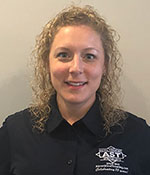
A Columbus, Ohio-based global manufacturer of monolithic refractories and precast refractory shapes combined two of their recently acquired facilities into one larger location.
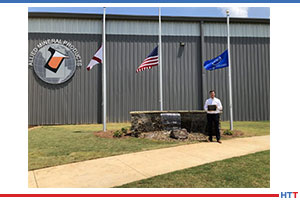
Allied Mineral Products purchased Riverside Refractories in 2017, which included two Alabama locations – Anniston and Pell City. Allied moved the Anniston operation to the now expanded Pell City facility in hopes of better serving their local customer base in the southeast region.
Parker Morris
Upon completion of the Pell City facility, a fountain was dedicated to the Morris family (operators of the former Riverside Refractories) for their service to the refractory industry, local community and their employees. A plaque was presented to Parker Morris, one of the family members who operated Riverside Refractories for decades.
Allied has three other US manufacturing operations: Columbus, Ohio; Brownsville, Texas; and Chehalis, Washington.
A Baker’s Dozen Quick Heat TreatNewsItems to Keep You Current
Heat TreatTodayoffers News Chatter, a feature highlighting representative moves, transactions, and kudos from around the industry.
Personnel and Company Chatter
GE Additive has announced the opening of its Arcam EBM Center of Excellence in Gothenburg, Sweden. The new 15,000 square meter facility triples the floor space of Arcam EBM’s previous site in Mölndal with production, R&D, training facilities, and support functions all housed under one roof.
Northern Minerals Ltd., Australia, has signed a rare earths supply agreement with Germany’s Thyssenkrupp Materials Trading for 100% offtake from the Western Australia Browns Range pilot plant, which has already begun producing heavy rare earth carbonates. Under the terms of the agreement, Thyssenkrupp will purchase all heavy rare earth carbonates from the pilot plant and will serve as the exclusive sales partner of Northern Minerals. The two companies will jointly work on the implementation of separating technologies and future expansion of the Browns Range project.
Fluxtrol Inc. presented at the 2019 National Induction Heat Treatment Technology Seminar & Mr. Shen Qingtong Career 67th Anniversary Event in Luoyang City, Henan Province, China. The presentation was titled, “What is Happening When We Induction Scan Harden an Axle?”
Equipment Chatter
An international aerospace firm based in the southeastern United States recently purchased spray/dunk washers manufactured and shipped by Premier/BeaverMatic.
A universal oven (No. 841) was recently put to use heat treating at a customer’s facility, provided by Grieve Corporation.
The production facilities of China-based stainless steel producer Fuxin Special Steel Co Ltd, a part of Formosa Plastics Corporation, in Zhangzhou city in Fujian Province of China, were expanded by a new hot rolling mill as well as cold rolling mills including continuous annealing line and numerous finishing lines. The supply contract for coil transport logistics between the individual plants was awarded to AMOVA GmbH, a company of SMS group.
A hot stamping company in Grand Rapids, Michigan, recently purchased an integrated three-chamber furnace from Lindberg/MPH. A recent video of the installed furnace (at Lindberg/MPH’s website) shows the integration with a robotic transfer system and a hydraulic press.
A rapid heating furnace was recently purchased by a research organization to be used for lightweight hot stamping & formed aluminum automotive component product development. Can-Eng Furnaces International Limited was awarded the contract for the equipment which will integrate the aluminum sheet heating furnace with existing equipment to support both automotive manufacturers and Tier 1 suppliers throughout North America for the development of new safety-critical, lightweight structural components.
A company from within the pharmaceutical industry purchased a Gruenberg steam-heated granulation dryer from Thermal Product Solutions.
Kudos Chatter
Ipsen USA announces its next Corporate Academy class for training Field Service Engineers, part of a fast-track development strategy to continue increasing technical
service capacity in the field. Participants get 26 weeks of comprehensive classroom knowledge, hands-on troubleshooting experience, and on-the-job field training. expertise in servicing and maintaining furnace equipment.
The Cleveland Chapter of ASM International will be hosting its Season Kick-off Event on Friday, September 13, 2019, raising money for the Annual Scholarship Fund. The event will be a luncheon, followed by an 18-hole, shot-gun start golf tournament and ending with dinner and awards, at Briarwood Golf Course in Broadview Hgts, Ohio. For more information, contact Rosanne Brunello, incoming chair, at ASMInternational.org/cleveland. Non-golfers welcome to cheer and/or help.
Novelis and Georgia Institute of Technology recently established the Novelis Innovation Hub at Georgia Tech Company, committing $2.5 million to initiate transformational innovation through sponsored research.
On August 12, 2019, Parker Hannifin and ASM International officially dedicated two new laboratories located at ASM’s headquarters in Materials Park, Ohio. The Powder Characterization Lab and the Computed Tomography Lab were established due in large part to the partnership that Parker Hannifin formed with ASM, allowing key equipment to be acquired for use in the evaluation of additive manufactured metal parts. The Powder Characterization Lab focuses on the size, flow, and shape characteristics of metal powders. The laboratory utilizes a Freeman Powder Rheometer FT4, Horiba Partica LA-960, and a Retsch Technology Camsizer X2, in a total cleanroom environment. The Computed Tomography Lab focuses on non-destructive analysis of metallic parts by way of a Nikon XT H 225 ST CT scanner and an Olympus LEXT OLS5000 laser confocal microscope.
Heat TreatTodayis pleased to join in the announcements of growth and achievement throughout the industry by highlighting them here on our News Chatter page. Please send any information you feel may be of interest to manufacturers with in-house heat treat departments especially in the aerospace, automotive, medical, and energy sectors to the editor at editor@heattreattoday.com
A supplier of refractory products and services in North America recently celebrated the completion of its phase one facility expansion plan.
HarbisonWalker International (HWI) hosted a ribbon-cutting event at its manufacturing operations in White Cloud, Michigan, to celebrate completion of the first phase of an expansion that increases the floor space of the facility by 35%. The project is part of a $9 million investment being made this year to significantly increase warehousing space along with the addition of new, advanced manufacturing and hydraulic press technologies.
Carol Jackson President & CEO HarbisonWalker International
“White Cloud is an extremely important facility that has been vital to our company and the community for more than four decades,” said Carol Jackson, chairman and CEO at HWI. “Historically, and especially in the past two years, the team at White Cloud has helped fuel our steel industry customers’ success by consistently delivering on their tremendous demand for the refractory products we produce here. We’re so proud of the great work our White Cloud employees do every day for our company and our customers.”
HWI’s White Cloud operations primarily produces refractory products that are utilized by the steel industry.
Dan Szynal, VP of Engineering & Technical Services, Plibrico
Installing new refractory materials is a necessary furnace maintenance practice which needs to be done periodically. But extended downtime and installation errors can be a major financial and operational headache. In this article, Dan Szynal, VP of Engineering & Technical Services, Plibrico, gives 12 factors which will ensure that the refractory installation is successful.
At 700°F, steam can exert 3,000 psi pressure.
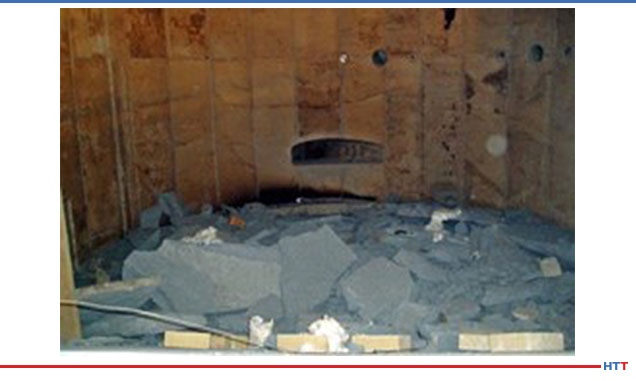
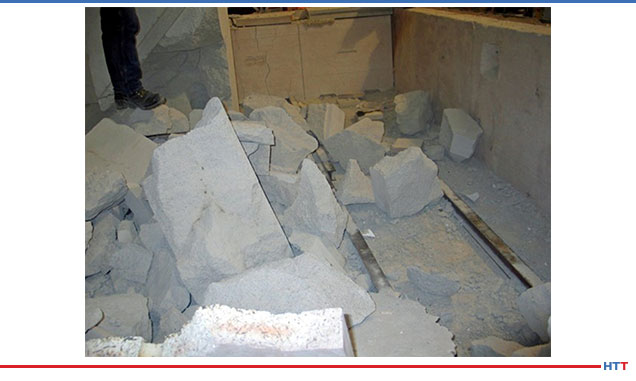
During an initial dry-out, the powerful effects of superheated steam can cause explosive, devastating consequences to freshly cured refractory material. To that end, removing moisture from castable and precast shapes is a serious pursuit. The production pressures to minimize downtime can lead to shortcuts and rushed dry-out procedures. Usually, these sidesteps have the opposite effect, quickly compounding delays and costs by causing thermal damage to the linings and potentially incurring personal injury.
Dry-outs fail due to imprecise management of water extraction from refractories. At the boiling point of water, the pressure of steam is less than 1 psi. However, at 700°F, saturated steam reaches 3,000 psi, and possesses enough energy to disintegrate the most resilient refractories. Too much heat, rapid ramp-ups, vapor lock, poor curing, and surplus water can contribute to potentially hazardous situations.
Here are the 12 preventive factors to manage for dry-out safety and success:
1. Hot spots and flame impingement. Ensure that your burner flame is centered accurately. The direction of flame in the vessel must promote equal heating of all the refractory surfaces. A flame that impinges on a single area of the surface will quickly create a hot spot, forcing an unequal expansion of water vapor in that area and resulting in thermal spalling.
Thermocouples need to be monitored at both hot and cold areas to measure temperature consistency.
2. Temperature spikes. Insulation is ill-advised. Attempting to cover green castable with an insulating blanket can lead to destructive temperature spiking when the blanket is removed, breaks, or falls off. At a wall surface temperature of only 550°F, the removal of insulation exposes the surface to an extreme temperature shift which will activate unequal steam expansion and pressure.
3. Thermocouple placement and monitoring. Pay attention to the locations and readings of your TCs. Watching only the coldest location will allow the hottest area of your vessel to heat too quickly in the dry-out schedule. Conversely, monitoring only the hottest area will allow the colder area to retain more water than specified. This will lead to failure later in the schedule or during hold periods. At 700°F, steam can exert 3,000 psi pressure.
4. Air temperature vs. surface temperature. Thermocouples should report surface temperature. Air temperatures are typically 50°F to 100°F hotter, thus misreporting schedule impact. The initial hold period is typically designed to melt burn-out fibers. That creates important permeability. If the actual load temperature is lower than specified, permeability is not created, leading to failure in the next ramp-up period.
Pre-cast refractory requires longer bake-out schedules to release all water vapor.
5. Field vs. precast dry-out schedule. A field dry-out schedule is specified for single-sided heating. It precipitates a dual water migration, first (stage 1) towards the heat as the path of least resistance, but then reversing course (stage 2) and moving away from the heat, escaping towards the furnace shell. Field dry-outs are faster schedules than precast, where the pieces are heated from all sides simultaneously. The precast water migrates to the center of the piece, and that takes longer to escape. By misapplying the faster field dry-out to precast, there is a greater risk of water retention, which will ultimately lead to spalling, even at temperatures of 550°F or less.
6. Venting and air circulation. Proper venting is required to rid the furnace of water vapor during dry-out. Without vents and free air circulation, the steam is forced to exit via the furnace shell, which takes longer than the schedule would provide. Water will be retained closer to the shell side, increasing the likelihood for disintegration as temperature and steam pressure rise.
7. Surface coating. An impermeable coating on the refractory surface will prevent the stage 1 escape of water. Slowly, this water will be forced to move to its second exit, the furnace shell. This delay prepares the still-saturated refractory for failure at the next heat ramp-up.
8. Clear obstruction from weep holes. As stage 2 water migration occurs, it will escape to the furnace shell. There should be adequate weep hole capacity, cleared of obstructions which will allow the water to exit the furnace shell. These provide a release valve for buildup of steam pressure. Thermocouples need to be monitored at both hot and cold areas to measure temperature consistency. Pre-cast refractory requires longer bake-out schedules to release all water vapor.
9. Cold weather curing. In the curing process, simple hydrates form needle-like morphology. These structures promote permeability, and water/steam can more easily migrate through the refractory to escape. Curing in below-freezing temperatures alters the hydrates to be less permeable, thus trapping the water, even during dry-out and creating an inherent risk. As well, cold weather curing slows the required strengthening process, leading to a weaker refractory and likely spall. We have had a thermal operator tell us about a below-freezing cure that went badly: The water in the castable actually froze in place. When the dry-out was initiated, the castable melted and fell to the floor, where it subsequently cured and dried.
10. Cutting short cure time. Recommended dry-out schedules always assume a 24-hour equivalent curing time at moderate temperatures. By cutting short the cure time, water is retained, and strength is reduced. For example, a conventional castable requires 24 hours cure time; high cement/low moisture castable needs at least 16 hours. Adherence to product cure time specifications ensures optimum strength and a successful dry-out.
11. Free water removal without consideration. The goal of curing and dry-out is to create permeability in the refractory at lower temperatures (300°F) to enable water to escape. By quickly ramping up dry-out temperatures for the sake of time, permeability is diminished. At higher temperatures, (+500°F) steam pressure rises aggressively. Again, refractory composition drives curing and dry-out schedules, and as a rule, the faster temperatures rise beyond specification, the higher the risk of failure.
Pre-cast shapes spall at 550°F.
12. Refractory strength as a function of water content. A simple 1% excess of water will reduce refractory strength by as much as 20%. Overwatering by 1.5% cuts strength 25% to 40%. The implications are profound: the refractory will not withstand the steam pressures in dry-out, and worse yet, there is more water that must be extracted. A successful dry-out can be jeopardized by the slightest variance in water composition.
Conclusion
Meticulous care in refractory installation is the foundation to successful furnace operation. While no one looks forward to non-productive downtime, close adherence to product specifications, cure times, and dry-out schedules will ensure a more profitable return to operations. Managing the water issues in refractory composition is job one.
Two leading industrial process fluids suppliers have merged to create a new company which will continue to service the aerospace, aluminum, automotive, machinery, industrial parts manufacturing, offshore, steel, and tube and pipe industries.
Quaker Chemical Corporation and Houghton International have combined to create Quaker Houghton (NYSE: KWR), positioning the new company to be a global leader in industrial process fluids to the primary metals and metalworking markets. Along with the new name, the company revealed a new logo and brand representing the combined companies. The company will continue to be listed on the New York Stock Exchange and trade under the “KWR” ticker symbol.
Michael F. Barry, Chairman, Chief Executive Officer, and President, Quaker Houghton
Quaker was founded in 1918 and Houghton in 1865. The combined $1.6 billion revenue company employs 4,000 associates serving 15,000 customers worldwide.
“We are rooted in companies commonly acknowledged as authorities in industrial fluids and valued experts in customer processes,” said Michael F. Barry, Chairman, Chief Executive Officer, and President of the new company, previously serving Quaker Chemical in similar capacities. “Our similar cultures and values, combined with the talent and resources we bring to Quaker Houghton, create exciting opportunities to deliver innovative solutions that will help our customers’ operations run even more efficiently and effectively.”
Specific products the company offers include metal cutting and forming fluids, corrosion protection fluids, specialty hydraulic fluids, and steel and aluminum rolling oils. In addition, legacy-Houghton customers will benefit from Quaker’s strength in specialty greases, high-pressure die casting, mining specialties, surface treatment and bio-based lubricants, while legacy-Quaker customers will now have access to Houghton’s heat treatment quenchants, offshore hydraulic fluids, metal finishing products, and a broader metal removal fluids portfolio.
A Dozen Quick Heat TreatNewsItems to Keep You Current
Heat TreatTodayoffers News Chatter, a feature highlighting representative moves, transactions, and kudos from around the industry.
Personnel and Company Chatter
Patrick J. DeCourcy, who has served as Allegheny Technologies Incorporated’s Senior Vice President, Finance and Chief Financial Officer since 2013, recently announced plans to retire. To ensure a smooth leadership transition, he will remain in his current role until his successor is appointed and will retire from ATI on March 31, 2020.
A leading manufacturer of products used in the transmission, distribution, and measurement of water in North America, Mueller Water Products, recently announced plans to build a new, state-of-the-art foundry in Decatur, Illinois. According to Mueller, this facility is expected to be one of the largest finished goods brass foundries in the world.
Jerry Bunch has recently joined Pelican Wire as a Design Engineer II, and Larry Brindise has been hired as IT Development Leader. Bunch will be reviewing production processes, ensuring technical oversight to manufacturing steps and working to support the company-wide ‘continuous improvement’ program. Brindise comes to Pelican Wire with some knowledge of the company, as he has previously served Pelican Wire as a professional software consultant. He comes on-board full-time to lead an ongoing ERP project and will continue to develop and implement software solutions to improve the entire customer lifecycle process.
It has been announced that Opti-Tech Scientific, a leading Canadian supplier of scientific equipment, will represent Buehler, an ITW Company, in Canada. Opti-Tech Scientific specializes in optical/digital microscopy, metallography, and hardness testing.
Allegheny Technologies Incorporated announced it completed the sale of its Cast Products business unit to Consolidated Precision Products Corp. (CPP) of Cleveland, OH.
A partnership has been launched between leading Enterprise Artificial Intelligence® provider Noodle.ai and SMS group, which digitalizes plant and equipment used in steel and nonferrous-metals production and processing, to jointly further optimize the world’s first learning steel mill for Arkansas-based Big River Steel. To help Big River Steel conserve resources and control energy output, the joint solution was created by implementing Noodle.ai’s learning algorithms into SMS group’s X-Pact® MES 4.0. Noodle.ai was able to seamlessly leverage the fact that SMS group’s X-Pact® MES 4.0 was engrained into the steel mill’s IT environment and into their SaaS (Software as a Service) applications. The new end solutions digitize applications throughout every stage of the steelmaking process – starting at the liquid phase all the way to strip finishing.
Equipment Chatter
Centorr Vacuum Industries announced it has shipped its new Sintervac AM™ furnace for the debind and sintering of additively manufactured parts for a leading 3D/Additive Manufacturing company.
A customer needed the lower sidewalls of its forge furnace shotcreted with 90,000 lbs of material. Onex Inc posted a video of the job on Twitter.
The Slovakian company U.S. Steel Košice – one of the largest integrated steel producers in Central Europe – placed a major order for the supply of an annealing and coating line (ACL) for dynamo steel strips to Tenova LOI Thermprocess, a worldwide leader in heat treatment lines and furnaces located in Essen, Germany.
Kudos Chatter
The Chemical Coaters Association International (CCAI) recently announced the second annual Women in Finishing FORUM will be held at the Embassy Suites South Bend at Notre Dame from May 6-8, 2020.
Metal heat treater Exactatherm, based in Mississaugua, Ontario, has been awarded Nadcap Merit status for heat treatment.
The International Titanium Association (ITA), Denver, Colo., announces that metallurgist George L. Durfee has been named the recipient of the ITA’s 2019 Lifetime Achievement Award. A member of ASM International, Mr. Durfee is a metallurgist who built his career around pioneering applied research projects for the titanium industry at forging company Wyman-Gordon Co.
Heat TreatTodayis pleased to join in the announcements of growth and achievement throughout the industry by highlighting them here on our News Chatter page. Please send any information you feel may be of interest to manufacturers with in-house heat treat departments especially in the aerospace, automotive, medical, and energy sectors to the editor at editor@heattreattoday.com
A Baker’s Dozen Quick Heat TreatNews Items to Keep You Current
Heat TreatToday offers News Chatter, a feature highlighting representative moves, transactions, and kudos from around the industry.
Personnel and Company Chatter
James Herald has been appointed the president and CEO of EVRAZ North America, Chicago. He will replace Conrad Winkler, who is leaving the group to pursue other opportunities. Herald joins EVRAZ from AXIP Energy, where he served as CEO. He has more than 35 years of experience in the oil and gas and energy pipe industries.
Advanced Heat Treat Corp. (AHT) recently announced the addition of three new sales and metallurgy employees: Tim Zemaitis, Shane Seevell, and Katie Herron. Zemaitis, regional sales manager for AHT’s Michigan facility, joins the team with over 30 years of experience in heat treatment, metallurgy, and engineering. Seevell, regional sales manager in the corporate office located in Iowa, brings over 15 years of sales experience plus past heat treat experience working at AHT; and Herron, materials engineer & quality specialist in Alabama, rounds out the growing AHT team. Herron is a recent materials engineering graduate from the University of Alabama – Birmingham.
Meggitt, which specializes in high-performance components and subsystems for the aerospace, defense, and selected energy markets, has opened its newly expanded aerospace services and support center of excellence in Miami, Florida.
Virginia-based aluminum extruder Service Center Metals has been acquired by The Riverstone Group through its investment entity SCM Industries, LLC in Richmond.
L&T Technology Services, a leading global pure-play engineering services company has been selected as a strategic partner by United Technologies Corporation (UTC) for Collins Aerospace, a subsidiary of UTC. Collins Aerospace comprises of the former UTC Aerospace Systems, Rockwell Collins, and BE Aerospace, and is one of the leading providers of intelligent solutions for the global aerospace and defense industries.
Equipment Chatter
A 2000°F (1093°C), gas-fired heavy-duty furnace from Grieve (No. 1042), is currently being used for heat treating at a customer’s facility. In addition, the No. 1047, a 350°F (177°C), bench oven, has been purchased from Grieve for curing plugs on the ends of cords at the customer’s facility.
A factory with multiple lines of (fixed) heat treating ovens recently purchased a temperature data logging solution from CAS DataLoggers for the purpose of automatically monitoring the oven temperatures with precise accuracy while also handling data transmission and enabling remote access.
A manufacturer of electronic components purchased a Blue M inert gas batch oven, with a temperature range of 59°F (15°C) above ambient to 1099°F (593°C), from Thermal Product Solutions.
A manufacturer in the oil and gas industry recently received a shipment of an electrically heated four-zone conveyor oven from Wisconsin Oven Corporation. Each chamber in this oven has a maximum temperature rating of 752°F (400°C). The oven has a guaranteed oven temperature uniformity of ±10.8°F at 590°F (±6°C at 310°C)) for a minimum of 6 minutes per heating chamber. In addition, Wisconsin Oven Corporation announced the shipment of an indirect natural gas-fired batch oven to a leading manufacturer in the aerospace industry. The batch oven will be used to cure composite materials and has a maximum oven operating temperature of 500°F.
Kudos Chatter
Onex, Inc., recently received the 2018 Pinnacle Award from Vesuvius. Only two contractor installer distributors were presented this award in 2018.
AK Steel has accepted an award from the U.S. Department of Energy (DOE) High-Performance Computing for Materials (HPC4Mtls) Program. Researchers from AK Steel plan to work in collaboration with DOE’s Oak Ridge National Laboratory to develop microstructure-based transformation models to predict austenite stability in high strength steels in a project titled “Thermo-Mechanical Forming Process Development to Produce Tailored Strength Automotive Structural Components.”
Specitubes has received Nadcap accreditation for demonstrating its ongoing commitment to quality by satisfying customer requirements and industry specifications. The scope of this accreditation covers the heat-treating of seamless precision metallic tubes made in Samer (northern France) of Nickel and Cobalt Alloys, Austenitic Stainless Steels and Titanium Alloys. Typical applications include hydraulic and pneumatic ducting systems for aircraft.
thyssenkrupp has announced plans to build the world’s most advanced forging line in Homburg/Saarland, a new facility to produce forged front axles for trucks. This production expansion represents the biggest single investment ever made at thyssenkrupp’s Homburg site.
Heat Treat Today is pleased to join in the announcements of growth and achievement throughout the industry by highlighting them here on our News Chatter page. Please send any information you feel may be of interest to manufacturers with in-house heat treat departments especially in the aerospace, automotive, medical, and energy sectors to the editor at editor@heattreattoday.com
Onex is proud to receive the 2018 Pinnacle Award from Vesuvius. Only two contractor installer distributors were presented this award.
Heat treat safety is relevant to all of us. Check out these dos and don’ts to maintain a safe heat treat shop. Content is provided by Plibrico Company, LLC.
Use Fall Protection Systems to Reduce Construction-Related Falls
Most equipment used for thermal processing stands well over 10 feet tall and has the capacity to hold or process over 60 tons of molten metal. During refractory installation, repair and maintenance of this large equipment, refractory professionals often find themselves raised atop platforms, scaffolding, decking and work stations. Due to the fact that refractory employees regularly work at elevated heights, it is crucial to keep them safe from fall-related injuries, as well as to ensure the job site is free of safety violations. To accomplish this goal, it is essential to understand the hazards of falls and know the Occupational Safety and Health Administration (OSHA) rules.
According to OSHA, in 2017, almost 42% of all construction worker related deaths were attributed to falls. Thousands more were injured. Fall Protection infractions (OSHA 29 CFR 1926.501) also topped OSHA’s 2018 list of the Top 10 Safety Violations for the eighth consecutive year.
Incidents involving falls frequently involve a variety of factors, however, a common thread running through most is the absence of fall protection equipment. Even if you’re Nik Wallenda, the high wire aerialist of the famed Flying Wallendas family, OSHA requires protection when working on refractories at heights of six feet above a lower level:
Handrails, Guardrails and Toe-boards: serve as barriers between the employee and an open edge. Midrails or screens need to be installed between the top of the guardrail and the walking or working surface to prevent falls.
Personal Fall Arrest Systems: provide employees with an individual form of fall protection. For example, a body harness connected to a lanyard or retractable line secured to a fixed anchor. These types of systems are designed to go into action before contact with any lower level.
Personal Fall Restraint Systems: prevent employees from reaching the edge where a fall hazard is likely to occur. It tethers a worker in a manner that will not allow a fall of any distance. This system is comprised of a body belt or body harness, an anchorage, connectors, and other necessary equipment.
As a second line of defense or where fall prevention systems are not practical, for instance roof work, a warning line system consisting of ropes, wires, or chains is an approved solution if it is at least 6 feet from open edges around all sides of the work area. Fixed barriers can also be installed to prevent employee access to dangerous areas.
To address any hazardous areas that may have floor openings, color-coded covers should be used and marked with the word “Hole”. Covers should be secured tight to prevent workers from falling through floors or elevated areas.
OSHA clearly states employer requirements. OSHA mandates employers train workers on how to use personal fall protection equipment and how to work in hazardous situations. Employers must also assess the workplace to determine if walking or working surfaces have the necessary strength and structural integrity to safely support workers.
Before any work begins, conduct a hazard assessment to develop a comprehensive fall protection plan, to manage hazards and focus employee attention on prevention. Falls cause deaths and numerous serious injuries each year, many of which are preventable. Maintain the highest safety standards on your job site by installing or using fall protection systems – not all of us can be as sure footed as Nik Wallenda.
Less than one week remains in the nomination period for Heat TreatToday’s Class of 2019 40 Under 40! The nomination process closes at midnight (EDT) on Wednesday, July 31, 2019, so if you have been considering submitting the name of a colleague, a client, or an employee but just haven’t gotten around to it, now is the time!
What you may not realize is that the benefits to being selected as a member of Heat Treat Today’s40 Under 40 are more than just a “one and done” recognition in the Heat Treat Show issue of Heat TreatToday’s print magazine. We will continue to point our audience to the 40 Under 40 landing page at our website, which will always feature the most current class of recipients. In addition, we request and publish interviews with 40 Under 40 members, highlighting their entry into the industry, what sparked their interest in heat treating, how their interest has grown, the remarkable projects they’ve enjoyed working on, and what words of wisdom they would share with other young professionals in the industry.
Michael Elmore, Heat Treat Engineer, with GKN Driveline
For example, Michael Elmore, Heat Treat Engineer, with GKN Driveline, remembered his early days in the industry this way: “When I came to GKN, I fell in love with heat treating,” said Elmore. “I expected this to be a puddle and it turned out to be more like jumping into an ocean. There’s so much more to it than I expected. . . . [Four years later,] I’m still finding out things I didn’t know. It goes deeper and deeper the longer I’m here, never hitting the bottom of what can be learned, done, or explored.”
Christina Somogye, Akron Steel Treating Company’s VP of Administration and Operations
Christina Somogye, Akron Steel Treating Company’s VP of Administration and Operations, grew up in the environment of metallurgy, steel treatment and manufacturing, and heat treating operations, so her thoughts on how companies can stay relevant in an industry that is changing rapidly due to technology, new materials, etc., are unique, and she offers this perspective: “There are many opportunities in large and small heat treating companies (commercial and captive) as well as the equipment, alloy, material suppliers and service industries that serve the heat treating companies. The knowledge of senior industry members is ready to be passed on to the next generation with tremendous opportunities for growth and technical expertise. Small, privately held businesses and large, multi-facility companies have the need to pass down this tribal knowledge for their continued success.”
Wei Guo, Principal Materials Engineer for The Timken Company
Wei Guo, Principal Materials Engineer for The Timken Company, reflected on his passion for this industry by drawing a parallel between a metallurgist crafting a heat treat recipe and “a famous cook developing a recipe for new cuisine.”
“One needs to control the ingredients, mixing sequence, baking time and cooking temperature combined with skill and expertise to obtain an optimized flavor and palate. The development of heat-treating process recipes is similar, relying on the metallurgist’s fundamental knowledge and experience of physical metallurgy. The most exciting aspect of thermal processing is the application of the knowledge and experience to create a heat treat process that produces the desired result and creates value to the company.”
How should a young professional find his or her way into the right niche in the industry? Wei gives this advice:
“Gain hands-on experience with practical heat treatment processes when trying to identify problems and challenges. . . . Determine an area of interest and drive . . . to learn/practice thermal processing skills. . . . Find a mentor; learning from a senior experienced metallurgist is always helpful. Many aspects of heat treatments cannot be learned from the textbook and might take a long time to figure them out on your own.”
“Heat treatment processing is a very dynamic world because many novel metallic materials are emerging every day,” says Wei. “We, not only young professionals, but everyone in this field need to keep abreast of the latest materials development and make ourselves ready for the new challenges.”
A Baker’s Dozen Quick Heat TreatNews Items to Keep You Current
Heat TreatToday offers News Chatter, a feature highlighting representative moves, transactions, and kudos from around the industry.
Personnel and Company Chatter
Tom Spicer recently joined Gasbarre Industrial Furnace Systems (OEM of J.L. Becker brand equipment) as a Field Service Technician. Tom brings over 20 years of industry experience to the Plymouth, Michigan, company, having previously worked with OEMs assembling and servicing equipment and in maintenance at a commercial heat treat facility.
Changes at DANTE: The month of May saw the transition of Dan Londrico and Stefan Habean from intern to staff engineer. Charlie Li moved from Vice President to President of the company, and Lynn Ferguson became Emeritus. Edward Lee, a mechanical engineering student at The Ohio State University, joined the DANTE team as an intern.
Sławomir Woźniak has been appointed by the Supervisory Board at the SECO/WARWICK Group to the role of President of the Management Board. The new President has been appointed for the same period as the joint term of the new Management Board, which spans the next three full financial years.
Ajax TOCCO Magnethermic / Emmedi would like to congratulate Don Gibeaut on his election to Chairman of the North American Management Board of Directors (NAMB) for the International Tube Association (ITA). Don is the product manager for ATM’s Tubular Products Division.
A materials technology engineering group recently completed a partial acquisition of a provider of metal additive manufacturing (AM) services and advanced end-use components. Sandvik acquired a 30% stake in privately owned Beam IT, which supplies metal AM end components to demanding industries, including automotive, energy and aerospace, and holds several relevant quality certifications to serve these industries.
A new hot isostatic press (HIP) has been delivered and installed at Paulo’s Cleveland Division. The furnace was built by Quintus Technologies. The 30,000-sqft expansion to house the HIP vessel is complete and will provide the Cleveland Division room for additional expansion to support customer needs.
GE Additive recently announced that the company has made a significant investment in its electron beam melting (EBM) technology, with the purchase of an additional 17 A2X systems and 10 Spectra H systems. Avio Aero, a GE Aviation company, currently operates a fleet of 35 Arcam machines at its recently expanded site in Cameri, Italy. The additional EBM systems will be installed at GE Aviation and Avio Aero facilities in the US and Europe and will be used primarily for the production of titanium aluminide (TiAl) blades on the low-pressure turbine for the GE9X engine.
Metal Exchange Corporation (MEC), headquartered in St. Louis, MO, is forming a new joint venture with Novellini Industries Srl in Mantova, Italy. Called novALmec, the newly formed company will supply aluminum billet capacity to the European market.
Charlie Li, DANTE
Lynn Ferguson, DANTE
Equipment Chatter
An automotive supplier recently ordered a nitrocarburizing furnace for a new component line for a major carmaker. SECO/WARWICK commissioned the high-volume, horizontal retort furnaces, which will allow the customer to produce parts for North American suppliers. In addition to ferritic nitrocarburizing, the furnaces can provide clean, stress relief processing.
Four atmosphere controlled, aluminum coil annealing furnaces, which will be used to anneal automotive body stock and common alloy sheet coils, have been ordered by a leading U.S. aluminum producer from Consolidated Engineering Company.
A quench tank has been installed by Baker Furnace, a division of Thermal Product Solutions, for a supplier in the heat treatment industry. The customer had two quench tanks and three drop bottom furnaces and needed the third quench tank in order to optimize quench loads per day.
Kudos Chatter
During the 2019 CCAI Annual Meeting in Hilton Head, South Carolina, the Chemical Coaters Association International held their annual awards ceremony to recognize the CCAI Chapter Users and Suppliers of the Year and announce the 2019 James F. & David J. Wright Lifetime Achievement Award recipient. The 2018-19 Chapter Award winners are: Central States Chapter – Frank Laster, A-1 Paint Powder and Sandblasting LLC and Ron Cudzilo, George Koch Sons LLC; Georgia Chapter – Wayne Pettyjohn, Georgia Power Company; Las Vegas Chapter – Tony Sclafani, AR Iron, LLC and Sercy Spears, TIGER Drylac, Inc. USA; Northern Illinois Chapter – Matt Ambrose, Henkel Corporation; Salt Lake City Chapter – Ginny Phommavongsay, Martin Door Mfg.; Southern California Chapter – Shivie Dhillon, Sundial Powder Coating, Tony Sclafani, AR Iron, LLC and Luis Hernandez, Coral Chemical Co.; Twin Cities Chapter – Mark Walsworth, Retired and Jim Henningsen, Troy Chemical; West Michigan Chapter – In memory of Herb Knape, Knape Industries Inc., and Jason Meekof, Industrial Metal Cleaning; and Wisconsin Chapter – Justin Jarmuz, Wacker Neuson Corp. and Matt Roeser, DuBois Chemical Co.
During the July 9th Collier County Board of County Commissioners meeting, Pelican Wire was named the Collier County ‘Business of the Month’ and was recognized by the Board for being a manufacturing leader in Collier County for over forty years.
On July 11th, Solar Atmospheres hosted 28 high school students enrolled in the Summer Engineering Institute (SEI) at Lehigh University. The group also included a few members of Lehigh University undergraduate students and staff. The SEI program, under the guidance of Director Dr. Laura Moyer, is a two-week residential program, running two sessions back to back. Students are nominated by faculty of local high schools, and the program specifically targets under-represented groups including girls, first-generation students, and students who might otherwise have limited opportunities to study in the fields of science, technology, engineering, and math (STEM).
Heat TreatToday is pleased to join in the announcements of growth and achievement throughout the industry by highlighting them here on our News Chatter page. Please send any information you feel may be of interest to manufacturers with in-house heat treat departments especially in the aerospace, automotive, medical, and energy sectors to the editor at editor@heattreattoday.com










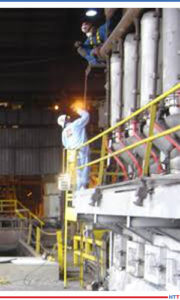 Most equipment used for thermal processing stands well over 10 feet tall and has the capacity to hold or process over 60 tons of molten metal. During refractory installation, repair and maintenance of this large equipment, refractory professionals often find themselves raised atop platforms, scaffolding, decking and work stations. Due to the fact that refractory employees regularly work at elevated heights, it is crucial to keep them safe from fall-related injuries, as well as to ensure the job site is free of safety violations. To accomplish this goal, it is essential to understand the hazards of falls and know the Occupational Safety and Health Administration (OSHA) rules.