

CAB systems

Auto Parts manufacturer Adds EV/CAB Line

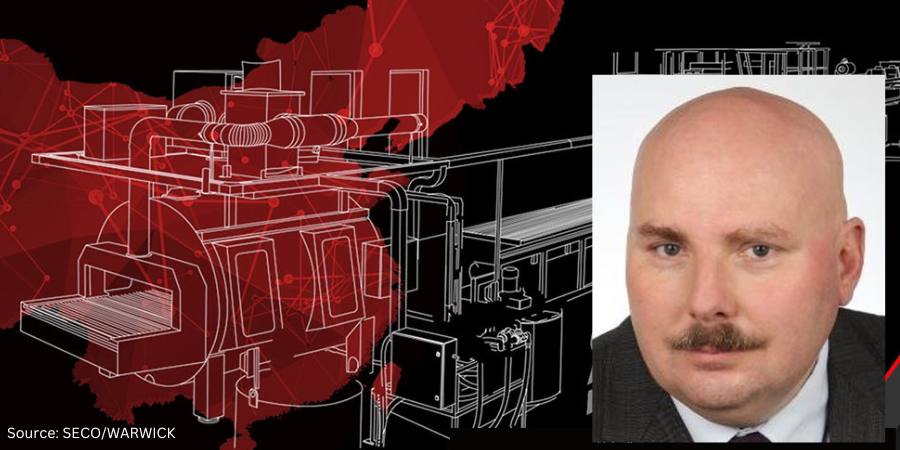
An auto parts manufacturer that specializes in the production of radiators and air conditioning systems recently ordered a fully electric furnace for brazing aluminum in a protective atmosphere. The EV/CAB line is designed for the production of tubular and plate-fin heat exchangers with uniform temperature distribution across the 1300 mm wide belt.
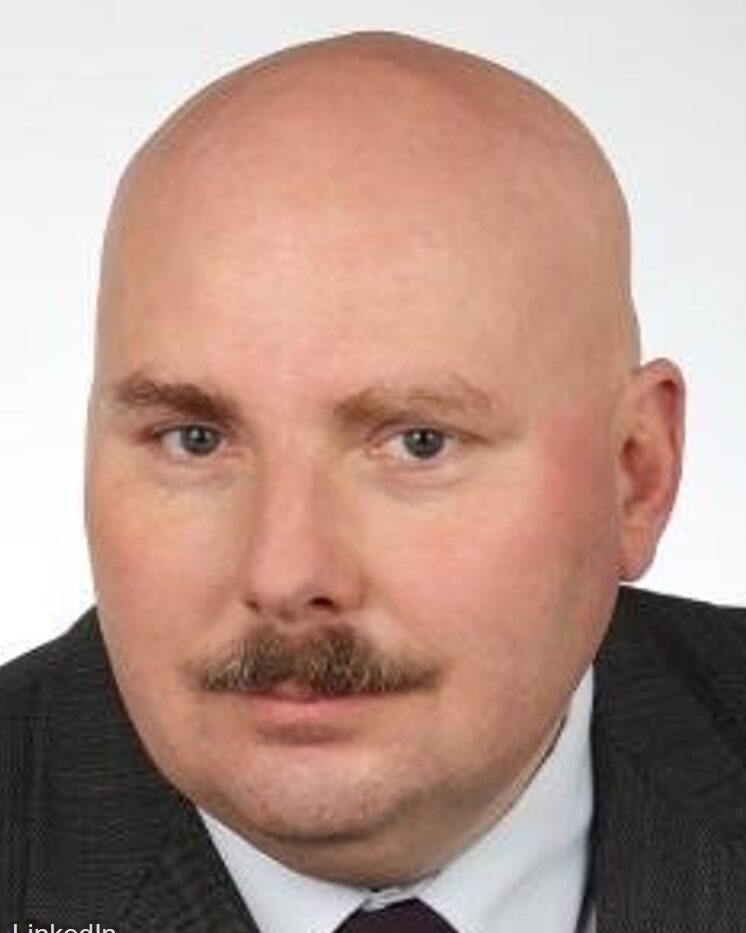
Piotr Skarbiński
Vice President of Aluminum and CAB Products Segment
SECO/WARWICK

SECO/WARWICK designed the uniform temperature distribution feature in the equipment to meet the company’s quality requirements of the finished products. The CAB line on order, the first this manufacturer has acquired from SECO/WARWICK, provides the continuous brazing of products with similar dimensions and features. The temperature is evenly distributed over the entire width of the belt due to several independent heating zones, resulting in long-term operation under industrial conditions.

“Uniform temperature distribution across the entire belt, regardless of how wide it is, is an important consideration influencing the final effect of the production,” said Piotr Skarbiński, vice president of the Aluminum Process and CAB Business Segment at SECO/WARWICK. “Our furnaces provide an optimal brazing temperature profile and a very clean atmosphere necessary to maintain high process quality. In China, we sell CAB lines for manufacturers of electric vehicle battery coolers, as well as for manufacturers of other heat exchangers. The furnaces on order by this partner are powered by electricity, making them ecological and free of CO2 emissions.”

Press release is available in its original form here.


Auto Parts manufacturer Adds EV/CAB Line Read More »
CAB Capabilities Expanded for Heat Exchanger Manufacturer

An aluminum heat exchanger manufacturer specializing in the production of heat exchangers recently expanded its production capabilities with a semi-continuous furnace for controlled atmosphere brazing (CAB) aluminum components. The system for semi-continuous operation, based on the cycle multi-stage division, is designed to increase the efficiency and quality of the heat exchangers with ribbed plate construction.

Piotr Skarbiński
Vice President of Aluminum and CAB Products Segment
SECO/WARWICK

SECO/WARWICK provided this CAB system, often chosen by the HVAC industry and manufacturers of car parts, for the industrial production of heat exchangers. The semi-continuous operation mode ensures uniform heating of elements even with above-average dimensions.

“The key advantages of this solution includes higher hourly efficiency — modern brazing technology ensures shorter production cycle time; stable and repeatable quality — the advanced brazing atmosphere control system minimizes the risk of defects, guarantees faster maintenance as well as no production downtime. . . . The semi-continuous CAB system is popular because it allows users to realize a reduction in costs while producing atmosphere brazing with exceptional quality control,” said Piotr Skarbiński, vice president of Aluminum Process and CAB Business Segment in the SECO/WARWICK Group. “We supply solutions to many companies in Asia, and a large part of the contracts are the result of recommendations we receive from our customers.”

The CAB line includes a drying furnace, an inlet purging chamber, a patented heating and brazing chamber, an intermediate cooling chamber with an air jacket and a direct final cooling chamber. The product moves between stages in a horizontal position based on a continuously adjustable cycle time, depending on the load’s type and configuration. The semi-continuous operation mode ensures that even large-sized heat exchangers will be heated evenly during the correct process time.

Press release is available in its original form here.


CAB Capabilities Expanded for Heat Exchanger Manufacturer Read More »

Heat Treat History Offers Promise to the Present

In today’s article, Heat Treat Todays editorial staff has gathered noteworthy reflections of heat treaters who are looking to the past to offer hope to present circumstances. Read more to see that while the present seems paused with Covid-19, the past offers promise of growth and change through challenges.


Like many markets, the heat treating industry is seeking to make the best out of this summer of 2020, and even though the market is looking more positive by the day, there are many who still look for a sense of normalcy. However, with leaders looking at historical moments in heat treat, they remind us that while the present seems paused with Covid-19, the past offers promise of growth and change through the challenges of life.

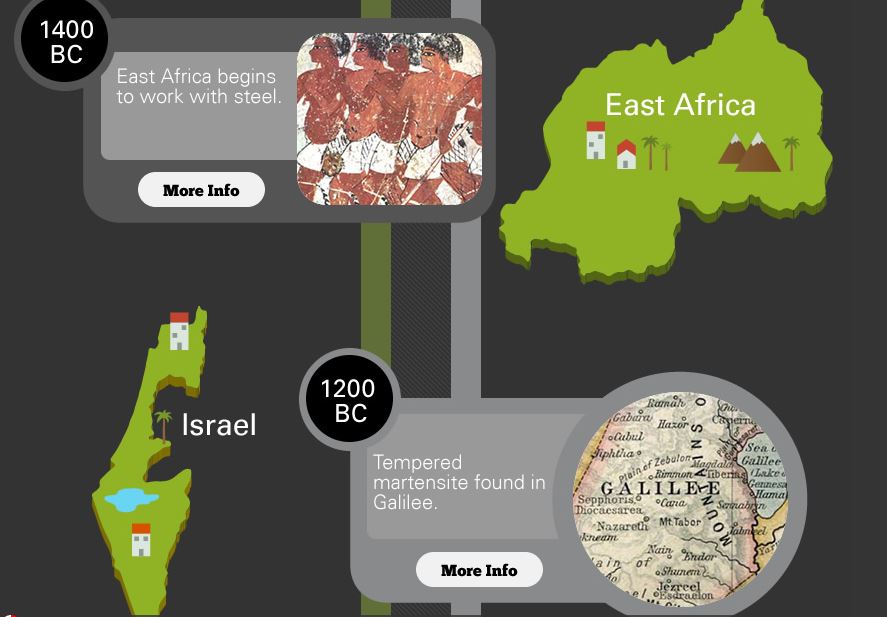
Sceenshot of Bodycote’s “An Interactive History of Metallurgy” (photo source: https://www.bodycote.com/history-of-metal/)

A major reach into the past is a throwback to the 90th century BC called “An Interactive History of Metallurgy.” In this historical timeline, Bodycote presents an engaging look at copper, bronze, iron, and tin through the centuries. The developments include detailed information, mostly funneled from Wikipedia, like the fact that bronze alloy in 12th century English candlesticks contained a degree of silver, antimony, and arsenic. And the modern, continuous development of steel is believed to have begun in the carbon furnaces of Sub-Saharan African communities.

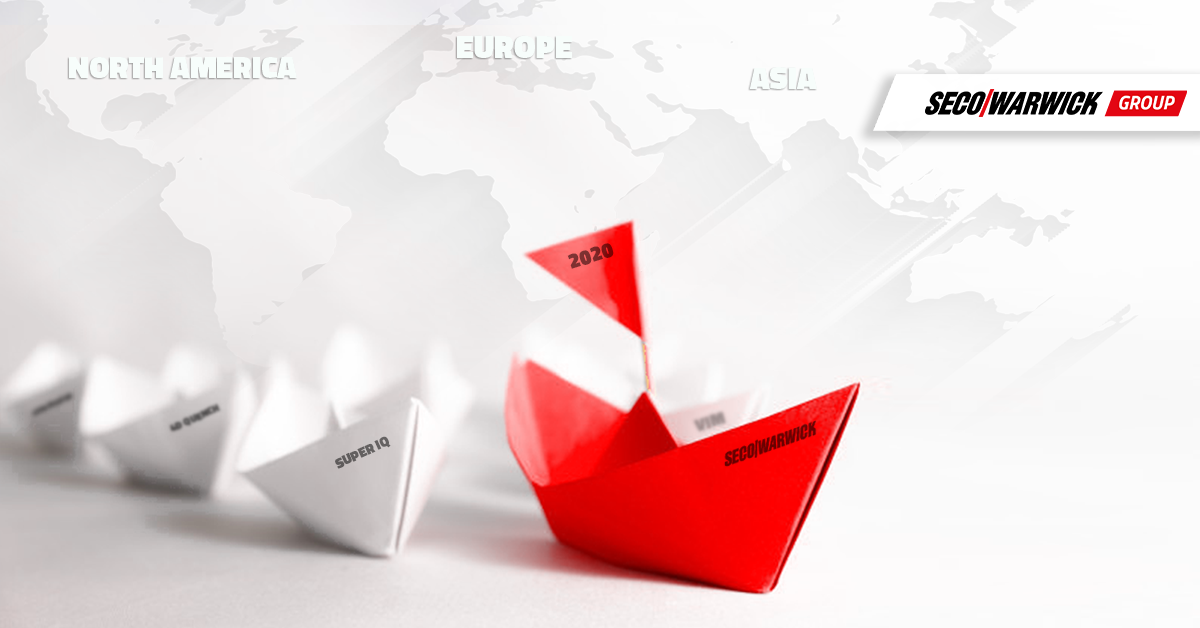
(photo source: SECO/WARWICK)

On June 30, 2020, SECO/WARWICK released an “anniversary reflection” to commemorate the achievements of the Group in the first half of 2020. Among these is the 10th anniversary of their Chinese branch which has now become a recognized leader of CAB systems in heat treat, creating furnaces for aluminum brazing in controlled atmospheres. They conclude their message with a word from Sławomir Woźniak, President of the Management Board, saying, “We wish that health, patience and faith – embracing the world at large – will return to normal.”

Sanderson’s Weir (photo source: Shane Higgins on LinkedIn)

Finally, a recent LinkedIn post from Shane HigginsField Sales from Special Quality Alloys Ltd, shared a lunch-time crowd favorite: Sanderson’s Weir, built in the 1580s. With two iron forges on either side of the River Don in Sheffield, this low dam was built to provide power to the industrial work. Changes in the nature of industry has allowed a 20-year project along the River Don in Sheffield and Rotherham to permit a fish pass for salmon after 200 years without. It is impressive that the location that once produced iron still houses metalworking business.


(photo source: Hakon Sataoen on unsplash.com)

(photo source: https://www.bodycote.com/history-of-metal/)


Heat Treat History Offers Promise to the Present Read More »

Skip to content