

Abbott Furnace

Annealing Furnace for Aerospace and Defense Manufacturer

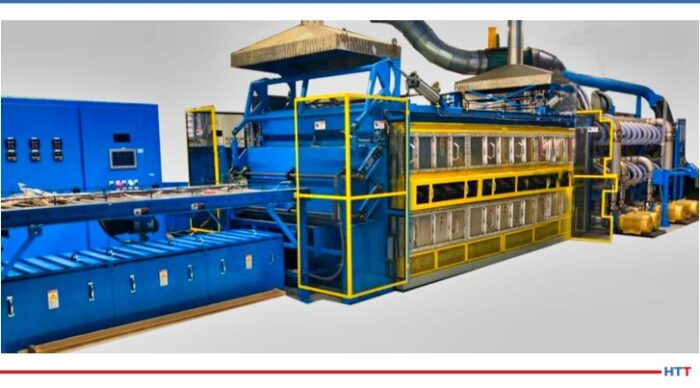
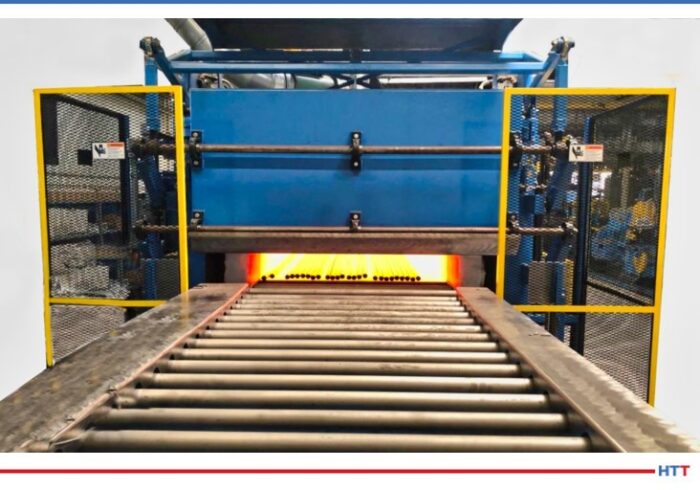
A roller hearth tube annealing furnace was recently installed and commissioned at an aerospace and defense products manufacturer. This manufacturer fabricates the most critical precision tubular products, and the high temperature roller hearth furnace quench anneals superalloy tubing for their drawing operation.
(photo source: Abbott Furnace Company)

Additionally, the electrically heated furnace is atmosphere tight and is operated with an argon protective atmosphere. The high-speed roll drive quickly transfers the tubing from the furnace to the water-spray quench.

The furnace, provided by Abbott Furnace Company, allows the manufacturer to increase production, processing a greater number of tubes between tubing draws. “On a daily production basis," says Mr. George Ray, chairman of the manufacturing company, "the Abbott Furnace is 300% more efficient than the previous furnace.” He indicates that with the +/- 5 F furnace temperature uniformity and the uniform water spray, the new furnace also provides better uniformity of hardness than the retired furnace.
(photo source: Abbott Furnace Company)


Annealing Furnace for Aerospace and Defense Manufacturer Read More »

7 Tips for Restarting a Furnace

As society begins to slowly reopen in the wake of the COVID-19 pandemic, equipment that has been sitting idle will need to be brought back online.

In this Heat Treat Today Original Content feature, Abbott Furnace gives us a few important considerations to ensure a successful return to operation.


1) Reference the manufacturer supplied manual for specific information regarding the re-starting of the equipment.

2) Be sure that water is flowing to all of the cooling chambers of the furnace.

3) Check that the belt is on and moving smoothly through the furnace. Watch for jerking or jumping of the belt that would indicate an issue with the drive or pathway through the furnace.

4) Enable the ramp mode in your controls to limit the heating rate of each zone to 55C (100F) per hour or less. If the furnace does not have a ramp mode, be sure to manually adjust the set-points of each zone so as not to exceed the suggested ramp rate.

5) Once the furnace reaches 150C (300F) , purge the furnace with nitrogen and allow the nitrogen to flow as the furnace continues to heat up.

6) When the zones of the high heat section of the furnace are above 760C (1400F), combustibles may be introduced and the furnace can continue to be ramped to the final processing set-points, once the pilots are ignited.

7) Allow the furnace atmosphere to re-condition the furnace, clean the belt, and stabilize.

Loading scrap metal that is free of oils, grease, and rust will help the furnace to “clean-up” and stabilize.

(source: Abbott Furnace)

7 Tips for Restarting a Furnace Read More »

Skip to content