IHEA’s Fundamentals of Industrial Process Heating Online Learning Course is scheduled to begin April 13, 2020. The course content provides an overview of the essential areas used throughout the industrial process heating industry. The program offers vital tools to operators and users of all types of industrial heating equipment. Students learn safe, efficient equipment operation, how to reduce energy consumption. and ways to improve a company’s bottom-line.
The course agenda includes the basics of heat transfer, fuels and combustion, energy use, furnace design, refractories, automatic control, and atmospheres as applied to industrial process heating. Weekly coursework, quizzes and a final exam project are administered to guide students on their progress and evaluate their knowledge of the material.
Jack Marino
Industry expert Jack Marino, in his third year as an IHEA instructor, will lead students in this 6-week online course. Jack is a registered professional engineer with over 40 years’ experience in the heat processing business. He graduated from Rensselaer Polytechnic Institute with a bachelor’s degree in Aeronautical Engineering and has a master’s degree in Engineering Science from Penn State.
Both IHEA members and non-members alike will benefit from the flexible online format that includes interactive forums with other students and scheduled office hours with the instructor. It’s an affordable alternative to campus-based classes and allows students to go at their own pace without needing to take time away from the office.
Registration for the Fundamentals course is now open through April 6 at www.ihea.org/event/FundamentalsSpring20. Click the Training and Events tab on the top menu bar then scroll down to Online Course. Cost for IHEA members is $700 or one member voucher, and cost for non-members is $875, which includes an electronic course handbook, course instruction, quizzes and projects, class forums, and the opportunity to contact the instructor throughout the course. Printed materials are available for an additional fee.
StandardAero has acquired a global services subsidiary based in Cork, Ireland, that provides specialized component repair and manufacturing processes for industrial, aeroderivative, and aircraft gas turbines.
TRS Ireland is a privately held company that has extensive experience as an OEM-approved specialty coating provider of engine component repair and MRO services on blades, vanes, and other hot section components for both new engines and a rising number of mature engines and a variety of applications. The company, which has more than 180 OEM approvals/licenses and unique FAA and EASA certifications, also supports gas turbine users worldwide through its services.
Russell Ford, Chairman & CEO, StandardAero
“TRS Ireland has a long-standing, hard-earned reputation in the industry as a reliable service partner and will bring immediate growth and opportunity for StandardAero,” said Russell Ford, Chairman & CEO of StandardAero.
Rick Stine, President of StandardAero’s CH&A Division
“TRS Ireland’s robust and long-tenured engineering and development team has extensive intellectual property around turbine airfoil and coating technologies and we see significant opportunities to leverage these capabilities and capacity to the fast growing aerospace and aeroderivative turbine engine repair markets,” added Rick Stine, President of StandardAero’s CH&A Division.
With the addition of TRS Ireland, StandardAero now has 40 primary repair facilities located on five continents.
Nadcap accreditation is looked on by most of the heat treating world as a significant achievement and a guarantee of quality. It not only permits a company to perform heat treating for the Aerospace/Defense industries but also tells customers that this company has a high standard of quality.
So what is it, and how does it work?
In this HTT Best of the Web Technical Tuesday feature, Vac Aero International takes readers through the entire Nadcap accreditation process from start to finish, examining what it is, how it works, and troubleshooting problem areas.
An excerpt: “Nadcap accreditation benefits not only the company being audited but helps ensure their customers receive products and services that meet or exceed both their expectations and requirements. The audit and accreditation processes result in continuous improvement in multiple areas, with deficiencies (i.e., nonconformances) identified and corrected based on specific rules (i.e., guidelines) to ensure each process meets or exceeds industry standards.”
Vac Aero gives a detailed look at the common pitfalls in the accreditation process, useful resources and training courses to help companies prepare for their audit, and what to do after the audit is complete.
Stack Metallurgical Group, a Nadcap accredited and Northwestern U.S. commercial heat treater, recently installed a TITAN® vacuum furnace at its location in Spokane Valley, Washington. Formerly known as Inland NW Metallurgical Services, Stack Spokane is one of the company’s four locations offering metal processing services such as vacuum heat treating, induction heat treating, aluminum chemical processing, and ion nitriding. Ipsen USA completed the installation.
Ron Decker, General Manager, Stack Metallurgical Services, Inc.
“It was an easy choice adding another Ipsen furnace to our offering,” said General Manager Ron Decker. “We count on Ipsen for a versatile product that delivers great results.”
Installation of the TITAN® H6 2-bar vacuum furnace was completed in late 2019 and will be used to process aerospace components. Stack operates four Ipsen furnaces in Spokane and a dozen more in Portland.
As we look forward to the weekend ahead, HTT would like to share a fascinating story about man’s best friend; although we know that Astro won’t ever be able to fully replace your furry, warm, and ever-loyal companion, once up and running, it has great potential to serve in various capacities.
A lightweight aluminum frame is only one of the tricks Astro the Robodog can boast. Florida Atlantic University’s (FAU) Machine Perception and Cognitive Robotics Laboratory (MPCR), with funding from Astro Robotics, is using deep learning and artificial intelligence (AI) to develop a four-legged seeing and hearing intelligent robotic dog. “Astro,” as he is called, is the only quadruped robot of this type with a head, designed to resemble a Doberman Pinscher.
Weighing 60 lbs, Astro features an aluminum tubular frame manufactured from 6068 alloy. Sitting on top of this structure is a 3D-printed polylactic acid head and shell housing six computers, built-in cameras, and other features designed to enable the mechanical canine to be able to see and hear its surroundings.
Elan Barenholtz, Associate Professor at FAU
“Aluminum’s strength-to-weight ratio along with its affordability make it an excellent choice for long-range autonomous robots, where every additional ounce translates to reduced runtime and/or reduced payload,” said Elan Barenholtz, an associate professor at FAU. “We are loading Astro up with computer-power and sensors but still expect field runtime in the 3 hour range, all while maintaining the durability to withstand the shocks of rough surface movement.”
The AI systems within Astro are inspired by the human brain. He is an intelligent machine that will be able to learn from experience to perform tasks that benefit humanity. Currently, he is able to respond to commands such as “sit,” “stand,” and “lie down.” Eventually, he will be able to understand and respond to hand signals, comprehend multiple languages, coordinate his efforts with drones, distinguish human faces, and even recognize other dogs.
The robodog’s missions will include detecting guns, explosives, and gun residue to assist police, the military, and security personnel. In addition, he can be programmed to serve as a first responder in search and rescue missions, assist as a service dog for the visually impaired, or to provide medical diagnostic monitoring. (Source: Light Metal Age)
Airbus will expand operations in the U.S. by increasing the production rate of A320 family aircraft at its U.S. manufacturing facility in Mobile, Alabama, to seven per month by the beginning of 2021 as part of its plans to produce 63 of this aircraft per month. With plans already in place for production of four A220 aircraft per month in Mobile by the middle of the decade, Airbus is on track to produce more than 130 aircraft in Mobile each year for its airline customers.
C. Jeffrey Knittel, Airbus Americas Chairman & CEO
Airbus Americas Chairman and CEO C. Jeffrey Knittel said, “Airbus has been manufacturing in the U.S. for many years now through our helicopter, aircraft, and satellite products. This increase in commercial aircraft production in Mobile is an exciting expansion of our significant industrial investment in the U.S., and it continues Airbus’ positive contribution to American aerospace.”
Airbus plans to open its new final assembly line for the A220 in Mobile this year and deliver the first U.S.-made A220. They are on track to deliver their 200th U.S.-built A320 family aircraft in the summer.
Welcome to another episode of Heat Treat Radio, a periodic podcast where Heat Treat Radio host, Doug Glenn, discusses cutting-edge topics with industry-leading personalities. Below, you can either listen to the podcast by clicking on the audio play button, or you can read an edited version of the transcript. To see a complete list of other Heat Treat Radio episodes, click here.
Audio: Eliminating Human Error in Heat Treat: Contour CEO, Ben Crawford
In this conversation, Heat Treat Radio host Doug Glenn engages new Contour Hardening CEO Ben Crawford, in a wide-ranging conversation about his background and vision for moving Contour Hardening into the future. According to Mr. Crawford, 100% product inspection is in the future and a heavy emphasis on automation and the removal of human error will be the focus of the company moving forward. Find out more about Contour’s plans for expansion both geographically and with the addition of nitriding as a process capability.
Click the play button below to listen.
Transcript: Eliminating Human Error in Heat Treat: Contour CEO, Ben Crawford
Doug Glenn (DG): So 100% automated inspection is on its way, that according to Contour Hardening CEO and president Ben Crawford, who is our guest today on Heat Treat Radio. Welcome to this episode, which was recorded when Mr. Crawford was just one year into being the new president and CEO of the company.
Ben Crawford, CEO and President of Contour Hardening
Ben Crawford (BC): I am currently the president and CEO of Contour Hardening and Realpower. I started about a year ago. I’ve been in industry of heat treat for about 30 years. I’ve worked for Bodycote, Bluewater Thermal Solutions, Paulo Heat Treating, and now Contour Hardening, which has give me a lot of exposure to how publicly traded companies think, private equity thinks, and family businesses think. One of the great things that I’ve been able to gain over the 30 years is what’s important to each type of investment, from family to public.
DG: Most recently you were at Bluewater, I believe.
BC: In December of 2012, the business sold and it was broken apart. Approximately six plants went to Bodycote, (all the southeast plants), and the balance went to a private equity group up in New York called Aterian Investment Partners. I stayed on for exactly one year, October of 2013, and we each went our separate ways. Then I worked with the Gasbarre group for a couple of years, and then I joined Paulo, and now recently Contour Hardening.
DG: Tell me a bit about Contour and specifically what excites you about it.
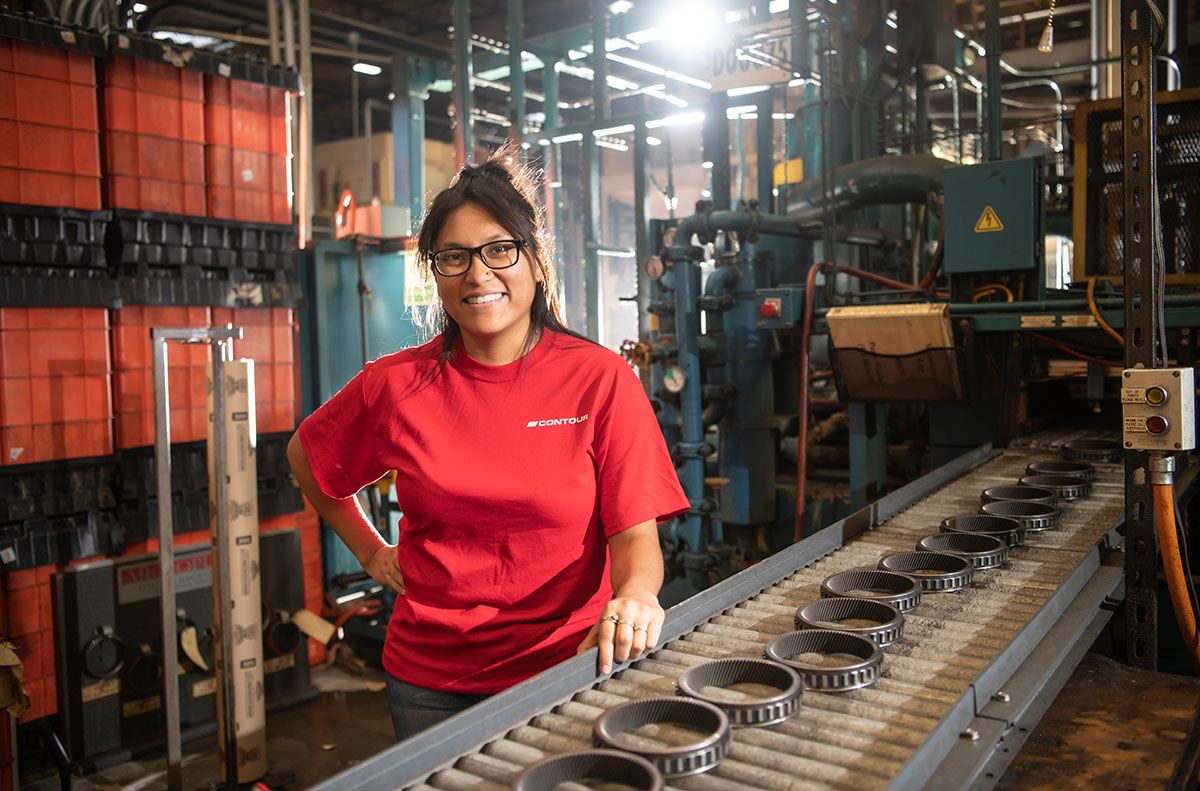
BC: Most importantly, this is going to be the first time in 30 years that I’ve had a job in my own hometown, so that’s pretty exciting. What’s exciting about Contour is I’ve done business with them throughout the years. They’ve been solely an induction heat treat provider. They’ve also built equipment for the market. But what makes them different is I see Contour as more of an engineering company than a heat treat company. The team there has a lot of engineers from mechanical, electrical, controls engineers, and in a company of our size, being privately held, we have four metallurgists on staff, so we consistently look for ways to problem-solve, find new ways to take part applications, and I think the most significant thing that really separates Contour is that our team is very focused on providing results to how that part is going to move during the treatment process and that’s really what separates us. We inspect green parts as they come in and heat treated parts as they are going out, and in all of my 30 years, I’ve never been with any heat treat company that has ever done that and has really focused on dimensional control stability and telling the customer how their part’s going to react in heat treatment. So very much more of an engineering company than just a “me too” heat treater. There are a lot of people who put parts in ovens, process the parts, and send them back out. We’re very much different. I think that as soon as you walk through our facility through the front door and go through our quality lab and out to the shop floor, it is a significant experience in how we manage the heat treat facility and the entire engineering department.
DG: You mentioned that one of the great advantages for this job was that it was in your hometown. We ought to probably make sure that our readers know where you guys are located. You’re in the Midwest, yes?
BC: Yes, we are located in Indianapolis, Indiana, so we’re in the heart of the Midwest, particularly the heart of the automotive sector. Most of our business today is focused on automotive, and we’ll talk about plans for diversification coming up. We also have a plant in Silao, Mexico, that is in the very centerpoint of all of Mexico, again focused on automotive processing today.
DG: After asking Ben who owned the company, he mentioned that the management team was looking to execute a buyout in the near future. That being the case, I asked him to tell us who was on that management team.
BC: Contour’s executive team is myself; Neil Merrell, who is the Vice President of the company; Tim Chaplin, who runs all the commercial sales marketing for us; Donald Smith, who takes on strategic directives for the entire company; and Sam Spenia, who is the Chief Financial Officer. We make up the core team.
Tim Chaplin, Commercial Director, Contour
Donald Smith, Strategic Initiatives Director, Contour
Sam Spenia, CFO, Contour
DG: You mentioned diversification. Why don’t you give the readers a sense of what your current mix of business is, or has been recently, and then what you’re doing to diversify.
BC: Today, we’re predominantly about 90% automotive. Over the past year, we engaged the core group for strategic planning and we took a hard look at our business, a 5 year outlook, and worked backwards. A couple of key things that we noticed is that we wanted to change our end markets. We wanted to get into more aerospace AG business, so one of the things we’ve done to focus on that is that we’ve got our first nitride installation coming up next month. We’re currently working on AS90/100 and we have our first commitments and purchase orders to process parts for Rolls-Royce and their supply base, so we’re very excited to become an important supplier for Rolls-Royce in the Indianapolis market. The reason that is very strategic is because today Rolls-Royce parts leave the Indianapolis market, so we’re able to fulfill a void for gas nitriding while keeping the parts right here in Indianapolis.
DG: Ben then wanted to discuss the geographic diversification of the company. But before he did, I asked him to elaborate a bit on the company’s move into nitriding. Tell us a little about the expansion into adding on nitriding. That is new to Contour, correct?
BC: Yes, and we’re very excited about it. The reason why we chose nitride is one, it is an expansion in the entire heat treat market. Nitride is growing because it is low distortion, low temperatures, the product comes out clean, you can control the types of depth and cases required by the customer. It fits very well with what our induction provides. We are very precise in what we provide for induction services. Again, minimal distortion, we can provide clean parts. It compliments what we’re doing today so that is why it was very important for us to focus on nitriding because they compliment each other and we had a lot of requests in the market for customers asking us to expand into nitriding. This was simply because we’re very focused on the engineering part of it–the dimensional control, providing outlook of what’s going to happen to that part before we ever process the part, and that’s been very important to customers in their designing of products and then working with us as we develop the process in the part.
DG: Tell us a little about your investment in the nitriding effort. How much? What are you doing? Where’s it going to be? Where do you see it in 3–5 years?
Research & Development
BC: We have partnered with Gasbarre and we’re very excited about this partnership. We will receive the unit in approximately 2–3 weeks, and it’s going to be installed in Indianapolis, Indiana. The reason why it’s going to Indianapolis, Indiana is that is where our core engineering team is, our research development team and three of the four metallurgists are located there. We have planned for 6 units in Indianapolis and 3 units in Silao, Mexico. The reason we planned for 9 units, and this is in a period of approximately 5 years, is that we have demand from our customers. The unfortunate part of this is that we’re not going to be able to build these fast enough to meet the demand of what our customers require and the expectation, but it is very exciting. We’re going to become a very dominant player in the nitride market and we’ll be a very dominant player in the induction market. So we will do two things very well–induction and nitride, and that’s what’s pretty exciting about it.
DG: Next we will talk about Contour’s geographic diversification as well as take a peek into Ben’s future plans for Contour, and some very interesting comments about cybersecurity, the current labor market, and Contour’s drive to eliminate process variability.
Besides the process diversification, which includes the addition of nitriding to their process mix, Ben also indicated that Contour was planning on diversifying geographically.
BC: We currently have several geographic expansions that we’re working on. Today we’ve got a potential opportunity in the Southeast and the Southwest and we hope both those expansions come to fruition over the next year. What we’ve been able to do is partner with other commercial heat treat companies that today don’t offer induction or nitride services. We can fulfill that void, expand the market together and expand Contour’s presence nationally, which we’re very focused on.
DG: Do you want to say anything more about the potential expansions into the Southeast or Southwest, or is it too early to comment on that?
Production Line
BC: I think it’s a little bit too early. The goal is to expand in these facilities, then over a 3, 4, 5 year period, to buy out these owners. These are owners that want basically transition plans. They may not want out today, they don’t want to give up full ownership, but if we acquire them over a 5 year period, this allows them to do two things–one, remain active in the business, but then have a buyer for the business when they’re all done let’s say in 5 years.
DG: I thought you were doing green field type stuff, but it sounds like you’re doing acquisitions.
BC: Yes, basically it’s going to be a brown field, so we’re going to go right inside other heat treat companies that have space on the floor today. That way we don’t have to invest in all of the infrastructure, all the costs that aren’t necessary, so that we’re leveraging people that have done it, know the market, and we’re going to bring some knowledge to the market of past clients and potential clients and clients that we are doing business with today. That’s the whole vision–to leverage what is already being done, and basically it’s cost avoidance. These commercial heat treat shops already have the infrastructure in place to get us up and running very fast, and we would build the induction equipment and be up and running pretty quick.
DG: As you’re moving forward now, looking at Contour over the next 3–5 years, two questions: One, what excites you most? What are you the most optimistic about? And secondly, what keeps you up at night?
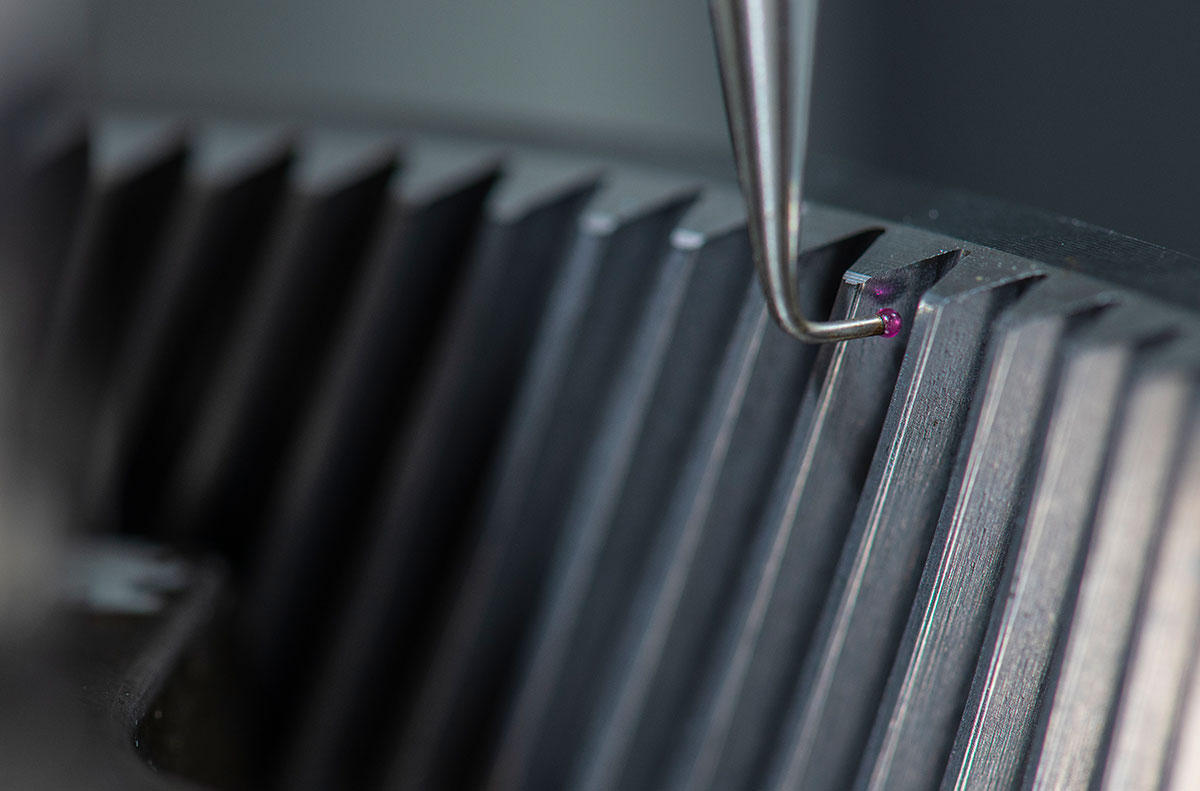
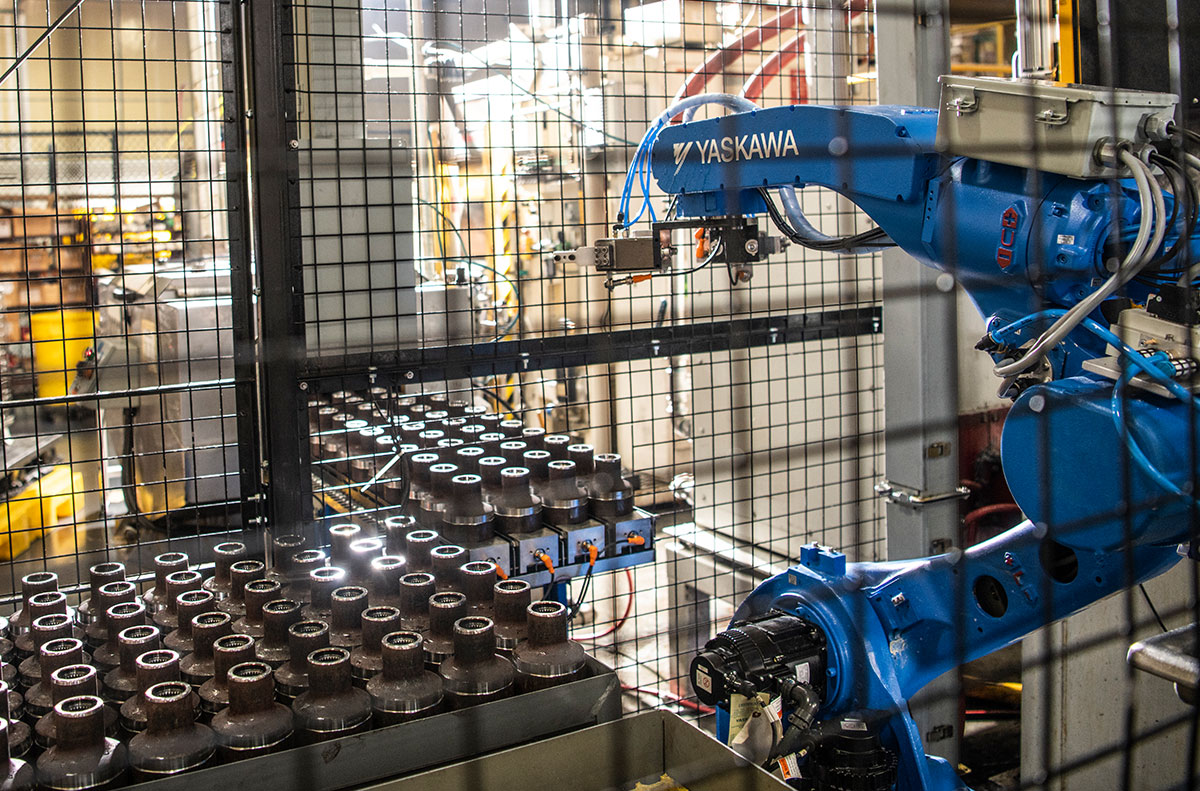
BC: The most exciting thing that we’ve been able to address at Contour in the next year, and really moving forward, is that we’re very focused on automation. We have defined automation in several categories, but it’s the use of robotics, it’s the use of data acquisition, and it’s the use of how do we eliminate variation. We’ve installed two robots. One is a fully integrated cell where we have no operators interacting in the cell today. So we’ve been able to one, minimize labor content, which is very, very important in the market to remain competitive. But I think the most significant change that I see in the market today is we have to reduce variation. Customers expect that. So anytime we have operators interacting with the machine and making decisions and recording information, there is that risk or chance of making a mistake, and that is what this entire cell has done. We’ve eliminated all of those mistakes. The machine processes the parts, 100% inspects the parts, sends it through tempering, takes a look at it again, and then the part is repackaged and returned right to the customer. So every part coming off that line is 100% inspected and all of the data is automatically gathered. We have installed an MES (manufacturing excellence system) that communicates with the PLCs at the unit, grabs that information, and then uploads it into our ERP. I think the whole automation part, from the robotics to the data acquisition in the type of systems that we’re using to analyze the data, is so important and if companies aren’t doing those things today, it’s going to make it very tough on them to work with sophisticated customers in the entire global market. That’s one of the things we’ve been very, very successful at in this past year, gaining new business simply on how we’re managing data because customers want that variation eliminated.
Robotics
The things that keep me up at night relate just to this: When you have “spill” sometimes, let’s say in particular automotive, where product gets out of containment and gets shipped and there are some quality suspect parts released, with our new lines that we’re installing, we’re not doing sample testing anymore, the parts are being 100% inspected in-line as we’re processing live. So it gives me much more comfort to sleep at night knowing that I’m not inspecting 5%, 10% or whatever the requirement might be. The parts today on the new lines are 100% inspected, so we’re very, very focused on what we call automated inspections that we want to move our entire company to all of the products 100% tested, which is very, very different from most companies in the automotive field. Today at Contour, we process. And if you think about this for an induction company, between both facilities today, 40–50,000 parts per day and within the next year, every one of those parts will be 100% tested automatically, using technology software robotics before they leave our facility. So that provides a great deal of comfort, one, to me, and really is a very competitive position in the marketplace that our customers really like. It attracts them to do business with us and it creates a lot of interesting discussions.
DG: You had mentioned about automation and data collection. That sparked in my mind the question about the “customer experience” and whether or not you guys are doing anything along the line, or moving in any direction, towards allowing customers to monitor jobs as they’re going through the shop. I don’t know that there are too many commercial heat treaters that do that now, but I’m just curious, with internet 4.0 and all that good stuff, I know it’s possible. Any thoughts or comments on that?
BC: That’s a terrific question, and I’m glad you brought this up. Over the past year, Contour reinvented ourselves–new logo, new marketing, new message, new go-to-market strategy in everything that we’re doing. So as part of this entire upgrade, customers will have a portal access, and that will happen this year, which we are very excited about. They’re going to be able to request documentation from shippers to certifications, and they’re going to be able to have real time monitoring of their product in the shop. The number one question that every heat treater gets when a call is made from the customer is “where are my parts, and when am I going to get them?” So they’re going to have the visibility in our system in their portal to know when they’re going to get their parts and if they have any questions about that, they can instantly email and have a live chat, or they can give us a call. So we’re very excited about this, and this will be come live in 2019. Again, it’s the use of technology and automation, and we’re very, very excited. That’s really what’s going to be a different factor for Contour, positioning us as the engineering company.
DG: Now, you’re not putting internet cameras on the shop floor or in the CEO’s office are you, so that they can see if you guys are actually working?
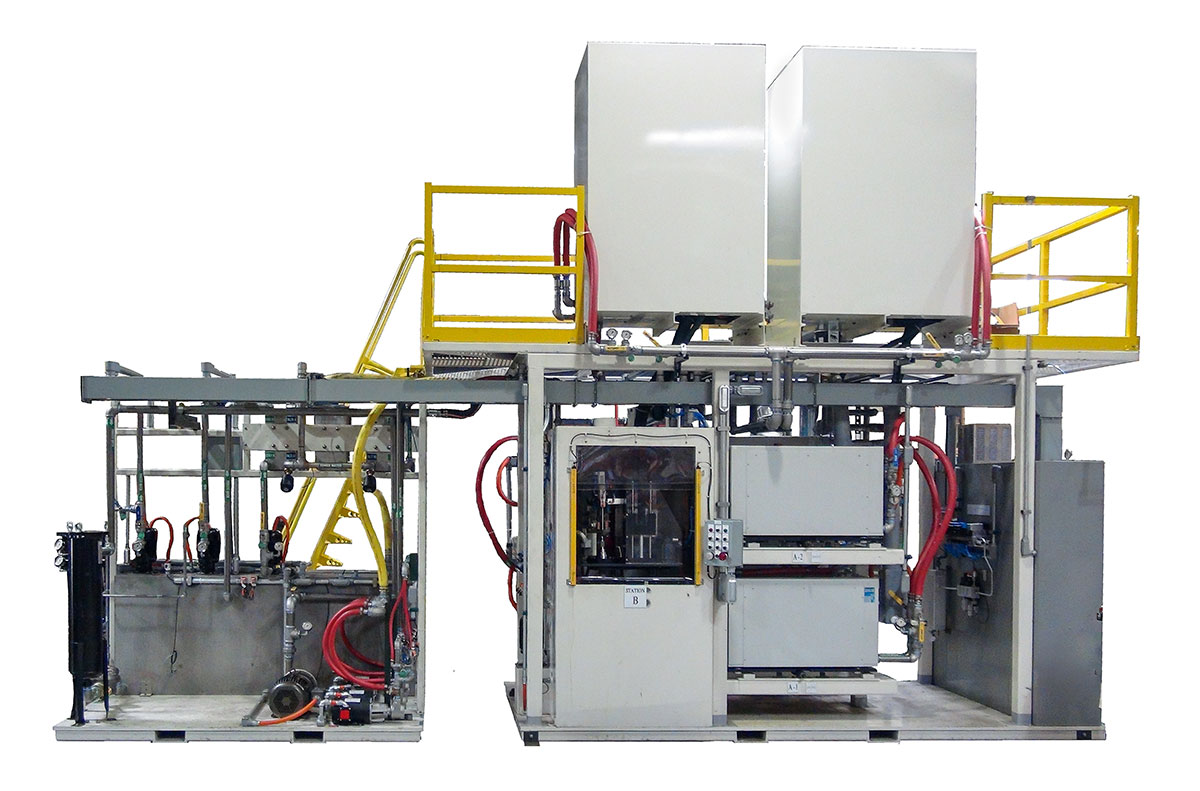
Thermal Processing Machine
BC: Unfortunately, we already have them, right? The only reason why I say that is we do capture product coming into our shop right off the truck, product going onto the truck, and we capture the live recording of all the robots and what’s happening. What’s most important, and the reason why we do also have cameras throughout the shop, is for safety. When events happen, we want to be able to look into what the problem was, what the issue was, and eliminate any safety hazards. That’s the most important use of cameras, really, the safety and the quality of the product, the two most important things of what we do every day.
DG: Speaking of internet 4.0 and the internet of things and industry 4.0–cybersecurity. Any issues you guys have had or any concerns that you currently have?
BC: We’ve had a lot of concerns. So much so, where we have people infiltrating our emails and sending fake emails for wire transfers, information, and emails distributed to the team, that we have engaged a local company here in Indianapolis, and they are completely in charge of our cybersecurity, again a new upgrade that we weren’t doing. We are very focused on the whole cybersecurity issue. We’re going to stick with what we do best, and that’s the engineering design of heat treat applications, and we’ve engaged this company and they are just absolutely amazing in the whole security aspect. You ask me what keeps me up at night–cybersecurity is one of them. What you don’t want is one of these fraudulent emails going out and somehow they hold you hostage for your families or whatever, so we are very focused on taking care of our employees, providing this very safe work environment, not only in the shop but while they’re at home, and they don’t have to worry about these invasions of their own personal space and security. We are spending a lot of money and this is the whole internet of things that you’ve been asking about that we’re very focused on.
DG: The other broad-based pressing question is labor–labor market, tightness of the labor market. Any comments about that?
BC: Labor market is getting nothing but more and more difficult, particularly the unskilled labor. Skilled labor you can attract, you just have to present a quality of life. We’re very focused on employee engagement. We have a person that we hired 6 months ago that that’s their main responsibility is employee engagement. So we’re doing a lot of things for our employees, but most importantly, the reason for the whole automation effort is that unskilled labor base is so hard to attract. Our future picture, where we’re going to go in 5 years, is we won’t have any unskilled labor. It will be skilled labor from engineers walking around the machines, tuning them, making sure everything is going well, making adjustments to the robotics. We’ll have skilled material handlers moving products in and out of cells. But we want to be a fully automated company with very highly skilled, technical people interacting with the parts and the equipment where over the next 5 years we will be higher skilled people. That’s going to be the most significant change at Contour and that’s probably the biggest thing that excites me, that we’ll have a lot more control over the quality, and again, the entire variation in the process. That’s what customers want us to focus on. That’s the enemy. Any time you have variation in your business, that’s your enemy and that’s what we’re very focused on.
Doug Glenn, Heat Treat Today publisher and Heat Treat Radio host.
To listen to more Heat Treat Radio episodes, click here.
Gulfstream recently awarded Solar Atmospheres of Western Pennsylvania with material processing specification approvals for GAMPS 5101 and 5102. Specification GAMPS 5101 relates to the heat treatment of low alloy steels and GAMPS 5102 is associated with the annealing and precipitation hardening of PH stainless steel. Compliance to these two specifications are important to ensure that flight-critical raw materials and parts are heat treated and tested properly.
Michael Johnson, Sales Manager Solar Atmospheres of Western PA
“This prime approval not only gives our current customer base permission to use our location for thermal processing of Gulfstream components, it also gives them the ability to run larger loads of 40,000 – 60,000 lbs. at a time, due to our large furnace sizes,” stated Michael Johnson, Sales Manager. “The larger loads reduce the number of certifications, furnace charts, and mechanical testing documentation that is typically required post heat treating.”
Heat TreatToday is privileged to oversee the 40 Under 40 recognition awards highlighting a group of young, up-and-coming talent in the North American heat treat industry every year. This year’s Class of 2019 is no disappointment–a group of industry elite, significant contributors to the heat treat market.
Every couple of weeks we highlight two of the current class of recipients. This week we introduce Michael Bubolz of Eisen Dev and John Quaglia of Bennett Heat Treating and Brazing.
Name: Michael Bubolz
Company: Eisen Dev
Position: Induction Process Engineering Center Manager
Michael demonstrates outstanding leadership capabilities; he is well-spoken and well-liked. In his knowledge and expertise within heat treating, he is familiar with deep case carburizing and heat treating large components and is an expert in induction heating. He has worked with iron alloys, copper alloys, magnesium alloys, titanium alloys, aluminum alloys, and ceramics, and he demonstrates a working knowledge of SMAW, robotic MIG, and Hermetic Brazing.
Nominated by: Eisen Dev
Name: John Quaglia
Company: Bennett Heat Treating & Brazing
Position: President
John is no stranger to the industry–he is a third-generation heat-treater, becoming president of Bennett Heat Treating & Brazing in 2017 after more than a decade in the business. When John attended Wentworth Institute of Technology and Kean University to earn degrees in computer integrated design and manufacturing, he worked part-time learning all of the key roles in his father’s and grandfather’s shop. John’s belief in using technological advances helps Bennett Heat Treating provide customers with more precise processing, easier record retrieval, and better transparency. The 90-year-old business provides heat treating services to the entire metalworking industry, and that loyalty is attributed to John’s push for continued learning and ability to keep his customers happy.
Nominated by: Ipsen USA
Read more about the feature at Heat Treat Today’s 40 Under 40 resource page and find out more about each of this year’s winners by clicking on their image. To nominate someone for the Class of 2020 40 Under 40, please click here.
The 11th staging of the biggest heat treat show in the world will be held June 12–16, 2023, in Düsseldorf, Germany. The dates for GIFA, METEC, THERMPROCESS and NEWCAST 2023 have been set, and the international leading trade fairs for metallurgy and foundry technology will take place at the fairgrounds in Düsseldorf.
Friedrich-Georg Kehrer, Global Portfolio Director Metals and Flow Technologies at Messe Düsseldorf.
“I am delighted that we have once again found a date in the early summer since this timeline has proven to be very successful,” stated Friedrich-Georg Kehrer, Global Portfolio Director Metals and Flow Technologies at Messe Düsseldorf.
The trade fair’s duration of five days remain the same, but the weekdays have changed. The metal trade fair quartet will start on a Monday and end on Friday. “This meets the expectations of the international industry, as our exhibitor and visitor survey has shown,” explained Kehrer.
With 2,368 exhibitors from all over the world and around 72,500 visitors (with 65% coming from outside of Germany) at the last staging in 2019, the trade fair quartet has confirmed its leading international position.
For further information on visiting or exhibiting at GIFA, METEC, THERMPROCESS or NEWCAST 2023, contact Messe Düsseldorf North America; Telephone: (312) 781-5180; E-mail: info@mdna.com; Visit www.mdna.com; Follow us on twitter at http://twitter.com/mdnachicago