

IperionX has received a second U.S. Army task order to expand domestic titanium component manufacturing through hydrogen sintering and phase transformation (HSPT) and dehydrogenation. The program will increase component-processing capability and bring critical manufacturing steps in-house, supporting shorter lead times and potentially lower production costs for defense applications.
The award falls under the company’s existing $99 million Small Business Innovation Research Phase III contract. Task Order 2 has a stated base value of $18.5 million, with $11.5 million currently funded and obligated. Unexercised and unfunded options could increase its maximum value to $25.4 million. The performance period runs from August 28, 2026 to August 27, 2030.
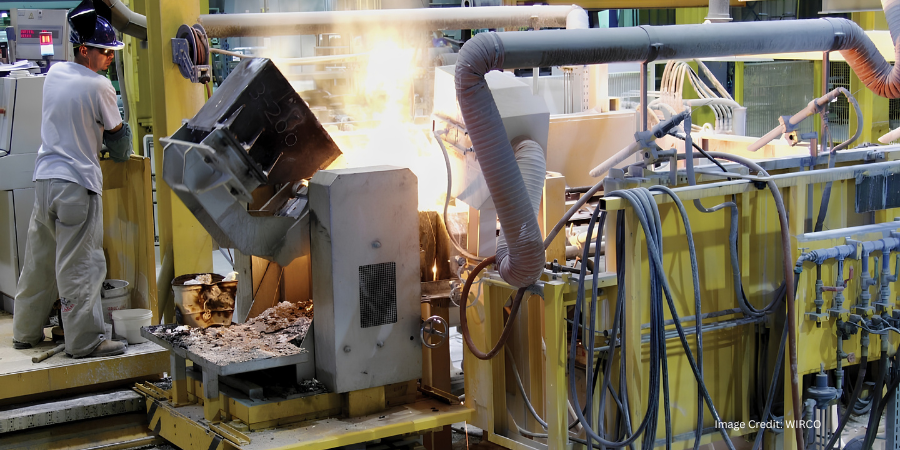
IperionX’s manufacturing platform integrates two proprietary technologies: HAMR, which converts titanium scrap or mineral feedstocks into low-oxygen titanium powder, and HSPT, which consolidates that powder into near-net-shape components with wrought-like microstructure. Continuous HSPT processing complements GenX, the company’s next-generation continuous HAMR development platform.
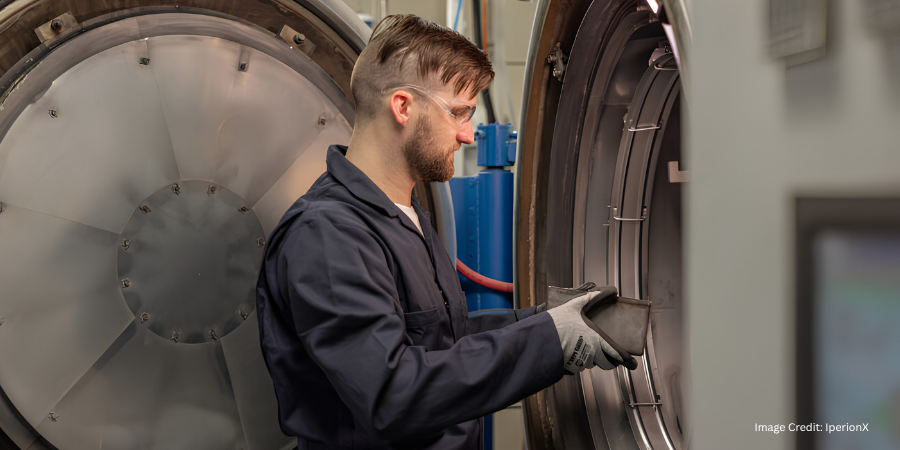
Three fully funded work packages cover $3.4 million for continuous HSPT furnace development, $1 million for in-house fastener manufacturing equipment, and $7.1 million for industrial-scale continuous HSPT and dehydrogenation furnaces. IperionX will procure, install, and commission the furnaces to demonstrate processing of titanium components, including track pins and bolts for Army applications. Inspection and acceptance for the industrial-scale continuous furnace work package are planned at Detroit Arsenal, Michigan.
A centerless grinder and thread-rolling equipment will bring titanium fastener finishing fully in-house at the company’s Virginia manufacturing facility. The equipment will convert fastener blanks into completed bolts and other threaded fasteners, reducing reliance on external finishing providers.
A separate $7.1 million work package for industrial-scale bath HSPT and dehydrogenation furnaces has an initial $100,000 allotment. Further execution remains subject to additional government funding and authorization.
Four unfunded options totaling $6.9 million would support a binder-jet printing and HSPT demonstration for an aerospace-grade titanium component; C103 alloy scrap recycling; and niobium reduction, powder spheroidization, and scaled spherical niobium and C103 powder production with Global Advanced Metals. C103 is a niobium-hafnium-titanium refractory alloy used in high-temperature space and defense propulsion applications.
Press release is available in its original form here.