


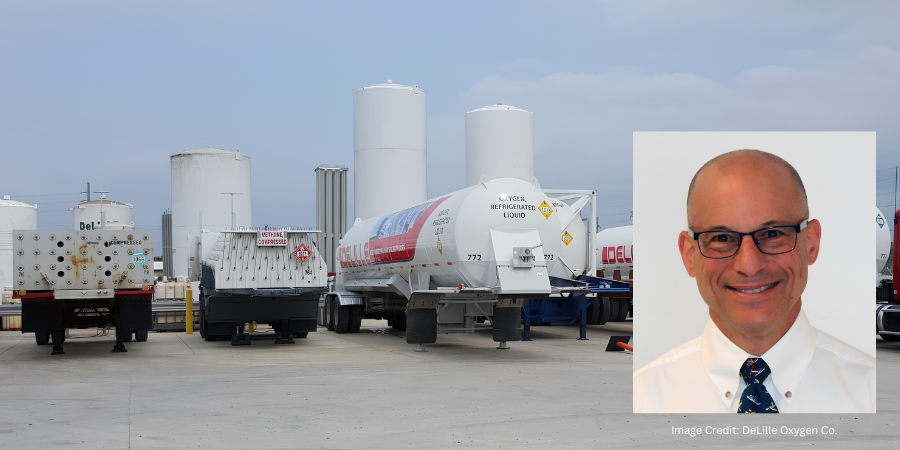
Industrial gas costs involve far more than the gas itself. In this Technical Tuesday installment, Dave Wolff, an independent expert focusing on industrial atmospheres for heat treat applications, draws on an interview with Josh Weinmann, president of DeLille Oxygen Co., to explore how delivery logistics, storage, tank sizing, supply contracts, and supplier selection can affect both costs and supply reliability.
This informative piece was first released in Heat Treat Today’s October 2026 Ferrous & Nonferrous Heat Treatments/Mill Processing print edition.
DeLille Oxygen is a regional multilocation industrial gas manufacturer and distributor serving Ohio and adjoining areas with industrial and specialty gases. The company recently celebrated its 100th year in operation, an enviable record of success. Josh Weinmann has worn many hats at DeLille, from cylinder filler and bulk driver to operations management and now is president of the organization. We discussed the importance and cost implications of gases logistics in serving industrial gases clients.
The Real Cost of Gas Delivery

President
DeLille Oxygen Co.
Because industrial gases are gaseous products, shipped either as highly compressed gases or as liquefied cryogenic liquids, they are hazardous materials requiring special handling. For that reason, when a client plans to purchase bulk industrial gases from a supplier, that arrangement includes delivery of those gases to the client. While some gases may be manufactured at the client’s location (so-called on-site gas production), in most cases, the gas is manufactured at large process plants far from the client and shipped by truck to the client. The embedded shipping costs are a large fraction of the pricing that clients pay for delivered industrial gases.
Industrial gas transportation requires special trailers, drivers with specialized training and licenses, and very precise procedures. The cryogenic trailer itself may cost several hundred thousand dollars. Backhauls are uncommon, so the trailers are returned empty to the plants, further increasing costs. In Josh’s experience, delivery costs are often higher than the “spigot” price of the gas at the plant before delivery. But the gases must be delivered to be used, so clients pay for both product and delivery.
Different suppliers handle shipping costs differently. Some suppliers provide a single price for their gases, including delivery. In that case, the client may be asked to pay say 90 cents per 100 scf for their nitrogen, including delivery costs, assuming normal delivery arrangements.
Other suppliers, like DeLille, quote gas prices at the spigot (source location), plus a delivery charge. They might quote 45 cents per 100 scf at the spigot, plus a fixed freight charge per delivery, for example. The two line items, gas plus delivery, will appear separately on each invoice, providing an additional degree of transparency. This approach is clearer about the cost structure and provides the client with visibility over costs and incentive to reduce the number of delivery events by maximizing the amount delivered at each delivery event.
Understanding Your Industrial Gas Contract
Industrial gas contracts detail the financial, legal, and procedural requirements of the supplier and the client. Most bulk supply contracts span 3 to 7 years. These contracts include provisions for cost recovery by the suppliers as their costs change over time. Typically, contracts include cost recovery on electricity and/or natural gas for production of the gas product and cost recovery for changes in cost of diesel fuels and labor for delivery. There also may be factors built in for changes in overall costs such as inflation recovery. All modern contracts will also include provisions for uncommon/impactful events, such as those experienced during Covid when supply and delivery mechanisms were dramatically challenged.
Most industrial gas contracts are negotiated with a certain amount of monthly use in mind. It is important to be realistic and relatively transparent when negotiating quantities because the final contract will specify the range of product deliveries that the supplier is committed to supply and the client is required to buy. While the client may wish to get a cheaper price by specifying a larger amount of monthly use to get a cheaper price, if the client regularly uses less gas than committed to, the supplier may adjust the pricing accordingly. Possibly even more important, the contract will specify a certain increment of additional product that the supplier commits to making available to a client above and beyond their expected monthly use. You don’t want to be in the position of begging for additional gas supply to meet your needs if your business is highly successful. Commitments between clients and suppliers for industrial gases apply in both directions.
Telemonitoring and Delivery Schedule
In the past, industrial gas clients would have an employee who was responsible for monitoring the tank levels of their industrial gases and calling their supplier(s) to schedule deliveries when levels got low. That operational model has been largely abandoned, and most clients and suppliers today use telemonitoring to monitor tank levels for each cryogenic and compressed gas product in use. For cryogenic liquid tanks, telemonitoring generally monitors liquid level or uses a load cell to measure tank filled weight; for gaseous products such as compressed hydrogen, telemonitoring measures and reports on tank pressure, which corresponds to inventory. The suppliers continuously monitor tank levels and can schedule deliveries to achieve continuous supply at the lowest cost of deliveries. In theory, telemonitoring should eliminate the risk of runouts. Because telemonitoring data provides real-time data and powerful analytics regarding client gas use, DeLille makes that data available to their clients through a client portal. It is worthwhile for clients to request access to their data from tank telemonitoring.
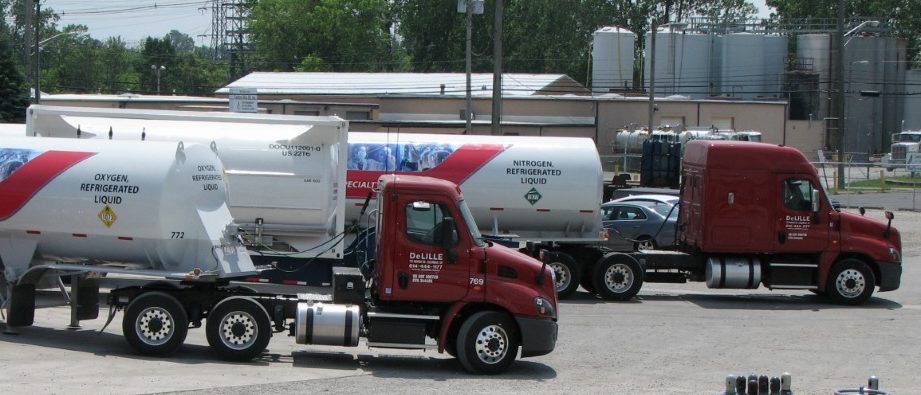
Industrial gas providers work 24×7 to produce and deliver industrial gases. DeLille, like many industrial gas providers, prefers to deliver to clients at night, when client operations are at low ebb, and traffic delays affecting expensive delivery assets are less likely. The standard contract assumes that the supplier will be able to deliver around the clock. Clients that require restricted deliveries, either fewer than 24 hours/day or only certain days of the week, will most likely be required to pay additional costs for delivery. Clients should make every attempt to provide unrestricted delivery to keep their costs down.
Making Every Delivery Count
Because liquid and gas bulk trailers are filled to capacity before they start the day, they may end the day with some residual gas that has not been delivered to clients. It is to the supplier’s benefit to deliver that remaining cargo to one of their clients before returning to refill, because it does not make sense to pay to transport the gas back and then haul it out again. As such, suppliers sometimes dump the remaining product, often just a few thousand cubic feet of gas, at a client willing to accept it.
Clients should be aware of two things regarding these unscheduled deliveries. First, every delivery requires a certain amount of gas to be wasted to depressurize tanks, fill pipes, and cool down hoses. The wasted product amount is the same regardless of small delivery or large one. The client pays for that vented product. For a large delivery, the wasted product is a small percentage, but for a small delivery of residual product, the wasted amount can be a meaningful percent of the total amount of gas to be paid for. It is fair to come to an agreement with your supplier about some equitable way for the supplier to drop off residual product without the client paying extra for gas that is wasted on a small delivery.
Because the supplier did not plan the route to fill your tank, it seems clear that the client should not pay full delivery charges for product delivered for supplier convenience. Regardless of whether your agreement splits out delivery cost or bundles it into the product price, clients should ensure they pay a full delivery fee only for product associated with a trip made specifically to meet your needs.
It is worth understanding how quantities delivered are computed for compressed and cryogenic gas deliveries. Previously, trucks with cryogenic gases would weigh before and after each delivery at a commercial truck scale, charging the client for the weight difference associated with that delivery. Now, most cryogenic trailers are equipped with calibrated volume meters, similar to the meter in a gasoline pump, that measures the exact amount of liquid cryogenic fluids dispensed. For gaseous deliveries like compressed bulk hydrogen, the delivery ticket will show the starting pressure of the receiving tank or tubes, the ending pressure, and the temperatures at the beginning and end of the delivery. The exact amount of gas dispensed can thus be determined for billing purposes.
Storage Tanks: Renting, Maintaining, and Sizing
Gas storage tanks and tubes are normally rented from your industrial gas supplier. That system works well for both supplier and client, but it does create limitations in flexibility. For example, no other supplier will deliver into a different supplier’s tank, unless written permission from the tank owner (not the renter) is received. If your supplier runs into delivery problems, you need to seek temporary written permission to have another supplier deliver.
Tank owners are responsible for having tanks inspected according to schedules established by OSHA and referring to codes from ASME and NFPA. Required inspections include insulation, piping, regulators, and safety relief valves. Industrial gas suppliers have staff to perform these inspections while clients may find it difficult or expensive to have these required inspections done. It is rarely attractive for clients to buy their own cryogenic and compressed gas storage equipment.
Cryogenic liquefied gas storage tanks are like giant thermos bottles and use a vacuum insulation system to keep the precious cryogenic liquefied gas from evaporating. The normal loss rate for a cryogenic tank evaporation rate during periods of non-use is under 1% of the tank volume per day of non-use. Over time, the vacuum may gradually leak down, creating a loss of insulation and the possible loss of gas to evaporation. Tank renters should be aware that tank evaporation rate may increase over time and should alert their supplier if they feel that evaporation has increased. It is the supplier’s job to maintain proper insulation.
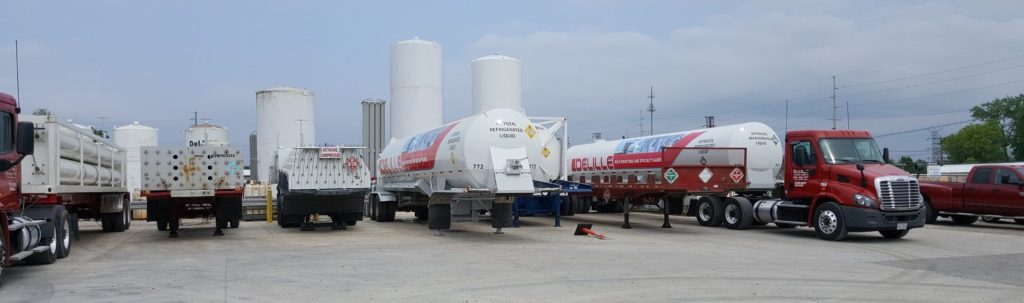
Most suppliers want to deliver to their clients once per month, unless the client’s usage rate is high enough to require more frequent delivery. It is important for both the client and the supplier for deliveries to be efficiently managed or there will be extra costs incurred which will eventually impact the client. Once-per-month delivery means sizing the volume of cryogenic liquid or gaseous storage to hold enough volume to enable the client to be delivered once per month without risk of runout. Because bigger tanks have a higher rental rate than smaller tanks, tank sizing can sometimes provoke a lively discussion between client looking to minimize rental rates and suppliers looking for additional storage. Experience has shown that sizing storage representing about 1.5 to 2 months use is generally the most efficient size.
While too small a tank forces extra deliveries and increases likelihood of runouts, too large a cryogenic tank can also be problematic because cryogenic evaporation rate increases with tank wall surface area; therefore, a larger tank will lose more gas during periods of non-use. One possible exception to the tank-sizing conventions may be for argon, which is subject to frequent swings in supply availability. It may be wise to moderately oversize argon storage to ensure continuous supply and eliminate risk of runouts. The extra tank capacity makes it possible to run through temporary supply shortfalls. Argon users who are willing to step up slightly in tank size may wish to try to negotiate a slightly lower gas price by improving their attractiveness as delivery locations (because the larger tank can improve delivery efficiency).
Choosing the Right Gas Supplier
When choosing a gas supplier, logistics are a huge component of the delivered gas cost to the client, even though logistics are only indirectly visible to the average industrial gas user. Just as Amazon stocks warehouses close to clients with many common items to achieve unprecedented short client delivery times, local gas distributors and industrial gas companies may have local depots where they have inventory of gases ready to be loaded and delivered to nearby clients. Talk to several potential suppliers about your use of gases to find a supplier that can meet your needs. If you use more than one bulk gas (say nitrogen plus hydrogen, for example), consider having just one supplier to vastly simplify dealing with your supplier. Be aware that the standard language of most bulk industrial gas contracts claims that the gas supplier has a right of first refusal to supply all the bulk industrial gases used at the location served (not just the gas listed on the accompanying rider document).
Industrial gases are a true commodity meaning nobody’s nitrogen is any “better” than any other supplier. As such, feel free to negotiate hard to achieve your economic and supply assurance goals when negotiating a contract. DeLille suggests that local distributors may be able to offer unique security of supply to clients while eliminating the need for clients to seek permission from their supplier for alternative supply during a supply shortfall or interruption of supply. Distributors may be able to pivot to an alternative supplier without the need for their clients to be involved.
It may not be obvious what industrial gas suppliers serve a particular area, so potential gas users can use a general-purpose search engine to find one, or consult with the member headquarters of one of the two major industry organizations: GAWDA (Gases and Welding Distributors Association) or IWDC (Independent Welding Distributors Cooperative). For highest satisfaction, choose a supplier that has a significant commitment to serving your geographic area and the gases you plan to use.
The delivery vehicles used for industrial gases can be as large as a tractor trailer, and they are transporting a dangerous cargo. As such, there is tremendous focus by suppliers on the safety of clients’ delivery environment. If a client cannot or will not provide a safe environment for a gas delivery, many suppliers will not deliver to the site or will have to use specialized equipment that will cost extra. Of particular interest to suppliers is the ability to pull through a client’s site because backing up bulk trailers is the most risky part of a delivery. If backing up can be avoided, the attractiveness of the supply contract will increase.
Negotiating a Contract that Works for Both Sides
When negotiating an industrial gas supply contract, most clients make operations the primary participant in the discussions, with procurement and legal as advisory. It seems wise to narrow the field of potential suppliers with the active participation of operations, and then use procurement and legal to avoid liability and issues with terms and conditions. The number of industrial gas suppliers is finite, and your process requires industrial gases, so be realistic about negotiations. Your objective should be to achieve a contract which serves the needs of both parties.
About The Author:

Industrial Gas Professional
Wolff Engineering
David Wolff has over 45 years of project engineering, industrial gas generation and application engineering, marketing and sales experience. Dave holds a degree in engineering science from Dartmouth College. Currently, he consults in the areas of industrial gas and chemical new product development and commercial introduction, as well as market development and selling practices.
For more information: Contact David Wolff at Wolff_eng@icloud.com.