Heat Treat Radio host, Doug Glenn, sits down with Peter Sherwin, director of Strategic Marketing at Watlow, to discuss how the next generation of process control technology is being shaped by the evolving needs of the heat treating industry. Their conversation explores the role of AI, cybersecurity, workforce development, energy efficiency, and compliance in modern furnace operations, as well as how Watlow’s Edge Process Management (EPM) platform aims to bring these capabilities together in a unified system. Looking beyond a single product launch, the episode examines the trends that could define heat treating over the next two decades.
Below, you can watch the video, listen to the podcast by clicking on the audio play button, or read an edited transcript.






The following transcript has been edited for your reading enjoyment.
Introduction (1:04)
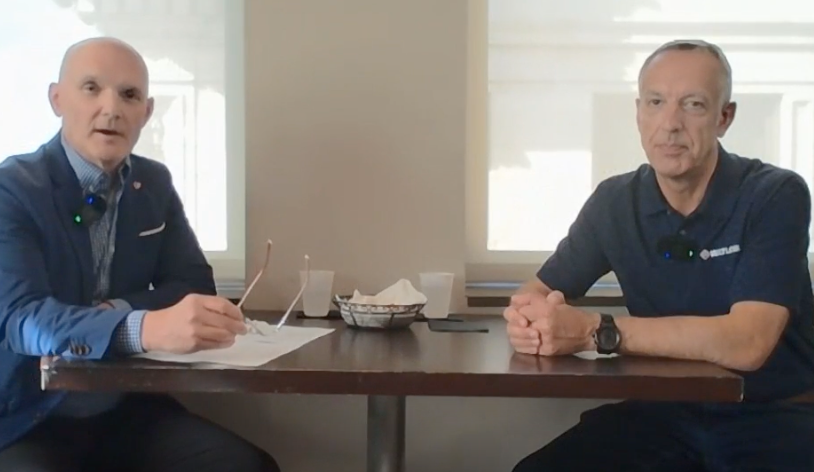
Doug Glenn: Welcome to another episode of Heat Treat Radio. I have the pleasure of actually being face-to-face here with our guest today, Peter Sherwin. Peter is the director of strategic marketing at Watlow, and we’re going to be discussing an exciting product that Watlow recently launched.
There’s been some discussion in the industry about Watlow’s commitment to the thermal processing market. Can you address that?
Peter Sherwin: One of Watlow’s taglines is “wherever thermal is critical.” Obviously, thermal is very critical in heat treatment. My background is from Eurotherm, now combined with Watlow. I’ve been with the organization for around 17 years now. There was always a bias toward heat treatment within Eurotherm, but Watlow has a much broader portfolio.
Heat treatment is still very important to Watlow, but we play in a number of different spaces. The business is split into two key verticals: semiconductor and industrials. The heat treatment activity resides under the industrials banner, whether it’s automotive, aerospace, etc. So, it’s still very key to us, and I think we’ve been pushing more through our distribution channel as of late, particularly in the last twelve months.
We have been working on training and re-skilling our workforce, as well as developing the next generation of products. That’s been taking quite a bit of our focus, but we definitely have not stepped away from heat treatment.
Doug Glenn: Watlow has been dedicated to providing the resources to do that. You have been with the company when Eurotherm was standalone, when Eurotherm was Schneider, and now as Eurotherm is Watlow. Comparatively speaking, are you happy with the resources that Watlow has dedicated to the brand?
Peter Sherwin: Originally, Eurotherm was part of the Invensys setup.
Doug Glenn: Correct; I forgot that.
Peter Sherwin: But it was pretty much a standalone company. We used some of the Invensys products, like Wonderware, etc. As time went on, we were acquired by Schneider around 2014. We were folded into the energy controls business as a whole but still remained intact with Eurotherm. We had our own offices and sales team spread globally around the world. But you could tell toward the end, when Eurotherm put us up for sale and Watlow acquired us, there was a little bit of restriction in spending at that time, which probably slowed down some of the velocity of that program. Thankfully, since Watlow picked us up, we’ve gone full steam ahead. A lot of investment — I’m surprised by the amount of investment.
I’ve been in the industry for 30+ years, and it’s given me the opportunity to work across the world. I started in Europe running commercial heat treatment plants, as well as captive. Then I moved to India working with a suite of commercial shops. Then, about 18 years ago, I moved to the U.S., and it’s all on the back of heat treatment. It’s amazing to look back on. It’s a fascinating industry, and I feel as though I still owe something to the industry. This next generation of platform, for me, is something I’ve worked on for 10 years.
The Edge Process Management (EPM) Platform (6:38)
Doug Glenn: Let’s talk about that. We both attended an industry event where they said the next 4 years will determine the next 20. Essentially, this next period of time is going to be pretty critical. This product you mentioned, EPM, which stands for Edge Process Management, correct?

Peter Sherwin: Correct.
Doug Glenn: Can you describe what it is?
Peter Sherwin: EPM is a platform product. Eurotherm was started in 1965 and produced a lot of instrumentation for the heat treat industry. Everything was kind of separated. We had the best in temperature control, the best in chart recorders, originally from a brand called Chessell, and also the best in SCR power controllers. That was perfectly good for the time those came out.
But as we’re moving into this newer arena, there needs to be far more connection between those devices to address some of the challenges the heat treat industry has to wrap its arms around. For example, how do we improve compliance and make it far easier? What about energy efficiency? That 4 years will dictate the next 20 years to 2050. Think about how the planet will be at that point in time. We will need to run our furnaces far more efficiently.
Doug Glenn: I think more than any other time in history, nobody knows what the industry is going to look like 20 to 30 years down the road. It used to be that you could make a decent prediction. I’m not sure we can do that anymore.
EPM is a platform, not a discrete instrument or product, correct?
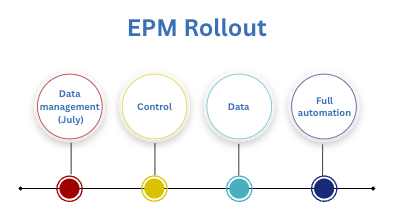
Peter Sherwin: The four years are key because of how we are rolling it out. We are releasing one part after another, so it will take a bit of time for the full platform to emerge. We start the release in July with data management, which really replaces our historical chart recorder but goes much further than that. And then, as that evolves, we will bring out control, data, and full automation over the next few years. That’s why it’s a platform. It all shares the same IO base and has the same programming software. There’s commonality across everything, but effectively you can put any of these modules anywhere that makes sense.
Doug Glenn: What is the motivating force behind the development of the platform? I’m assuming that your company, and perhaps companies even before that, had concepts of changes that would occur over the next so many years. Were some of those developments the impetus behind creating this platform? For example, workforce changes — did they have an impact on the motivation to get this platform up and running?
Peter Sherwin: I think we benefited from some of the slowing-down process of Schneider because we were able to make some architectural choices that fit with this kind of new world of AI. A lot of the web technology we’re using fits very well with AI, so we are fortunate that we can leverage some of the current technologies. As we sit here today, AI is in the news all the time. Not everyone is completely sure how all of that is going to unfold but producing a platform today and not being able to utilize AI would be a big miss. So, we integrated those features within the platform, which helps us address many of these workforce challenges.
Considerations When Building This Platform (11:35)
Doug Glenn: Those were actually two of the areas I wanted to ask you about: the workforce and AI. Some other areas I was thinking about were electrification, energy, compliance, and cybersecurity. I assume these were all considerations when you were putting together this platform.
Peter Sherwin: These areas of concern have just accelerated the need for deeply embedding all those technology features. I’m not sure we fully understand how the workforce changes are going to affect the industry and specifically in a furnace operation, but there’s definitely going to be a component of AI that is needed. As we have so many people retiring, there are people coming into the industry who have no background in processes like signing off on records and certain procedures. We have to get new hires up to speed very quickly.
This is the type of technology we’re putting into the EPM platform, to enable people to have a very short learning curve, be useful very quickly, and arm them with the likes of AI so they can enhance their capabilities.
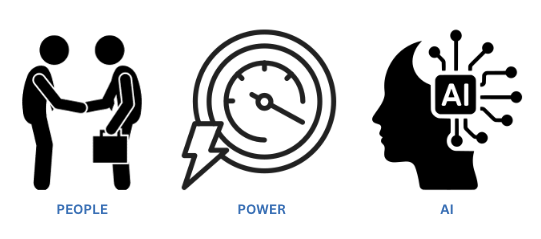
Energy is another one of these points. If you have separate components, it takes quite a lot to then integrate those components together to make them more useful, like a temperature controller and a power controller. You can do it, but it doesn’t have all the abilities of one device. You’re only passing certain information between the two. But if you can make that power controller have all the capabilities of control and data, you can more easily manage energy efficiency going forward. This energy piece is another trend this new platform will address.
Doug Glenn: How about the cybersecurity and compliance issues you were talking about?
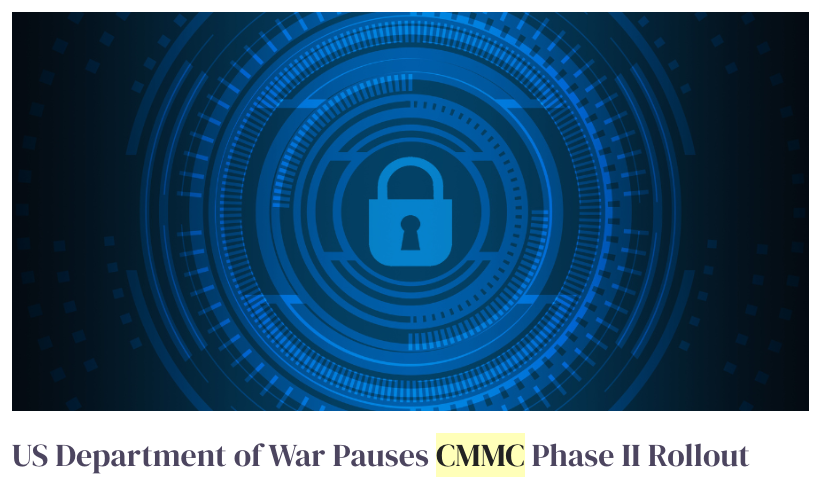
Peter Sherwin: I think that’s one major benefit of a new platform. Cybersecurity requirements have been around for a while. A few years ago, we had SB-327, a California law that came out because of hacking concerns with baby monitors. This law affected everything, though. If an industrial supplier had an internet-connected device, they had to ensure more protection on those devices. You wouldn’t believe the hurdles to then re-engineer cybersecurity into older products — not easy and kind of clunky. Our clients probably still want to slap our wrists on that, because it’s not easy for them. We had to do it because it was a law in California and CMMC. There are laws just coming into effect toward the end of next year in Europe. All of these are going to push higher and higher requirements for cybersecurity. The benefit of a new platform is that you can design these cybersecurity requirements from the start. We’re fortunate there, but it’s a big deal.
Impact of Aging Infrastructure (15:26)
Doug Glenn: How about the fact that the infrastructure most of the systems are built on now is aging out. You’re fortunate to be able to almost start from scratch. Can you comment on the aging infrastructure?
Peter Sherwin: I was having a discussion with a large global heat treater a couple of weeks ago, and they were talking about how one of their issues is that every furnace is different. With this new platform, we are looking to solve those challenges and requirements for clients. We also realize some clients want something they can just take out and put in place, a discrete instrument. So, along with EPM, we’re building what we call our level three controller. That’s a project in flight at the moment. We’ll preview it at Furnaces North America, and it’ll be released sometime in 2027.
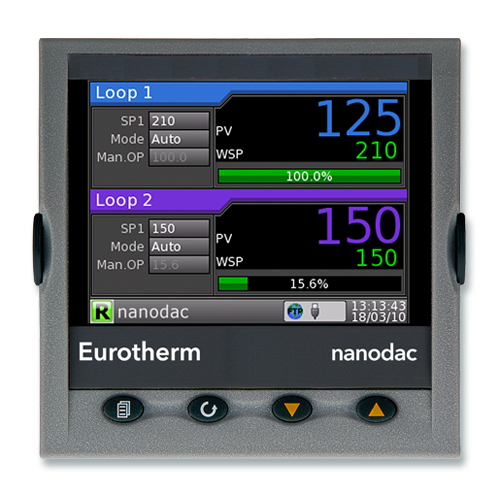
If you look at all the different products now across Watlow and Eurotherm, discrete products like the F40, the NanoDac, 2704, 2604, 3504 — these devices are very different, and it’s a learning curve for someone to learn and program them. We are taking the best of these devices and putting them into a new device. Even if you just want to replace a single device, we’ll have that next year.
We are trying to account for the fact that if you’ve got an operator who’s been running a particular controller for several years, how can we make that display appear the same to them? I’m hoping we’ll have some prototypes at the show so we can demonstrate. It’s kind of exciting as we come to the end of a whole suite of products from the Eurotherm and Watlow portfolio and what we’re moving into next. Not just the platform but also being able to keep some of those instruments going with a slightly new disguise.
Doug Glenn: Right, that fits into this platform. Sounds very interesting.
EPM Platform Benefits for Users (18:00)
Doug Glenn: You have talked about the clients and the users of these devices and technologies. If you can summarize briefly, why do they need this platform?
Peter Sherwin: It’s about what you were saying earlier — the next 4 years dictate the next 20. There are so many challenges for heat treaters: dealing with a lack of personnel, new hires not having the skill base, and trying to train faster. These issues are going to hit everyone.
We are not going to see a slowdown in energy initiatives, though possibly a pause in some places in the world at the moment. Why wouldn’t you want to be more energy efficient? We’ve been developing some algorithms for this new platform to enable energy efficiency. It’s not just about climate — it’s about running your operations more efficiently. The two concepts we mentioned earlier: cybersecurity, which is going to rise, and AI. How are our clients or prospective clients going to be able to leverage AI for their operations?

I don’t think that exists in today’s technology, but we’re building it. I’ve seen some of these prototypes where, instead of having to drag function blocks onto an engineering diagram and manually software-wire, it’s just a prompt. Say what you want, and it will create that architecture. It blows my mind when you see it. It’s not a big leap from what’s available to us at our fingertips today, if you use ChatGPT, Claude, etc. But it’s bringing that technology into our industry.
Building the EPM Platform (21:24)
Doug Glenn: We’ve talked a bit about what EPM is. I’m curious about what it took for Watlow to build it. It seems daunting. Can you discuss that process in terms of scalability, data integrity, etc.

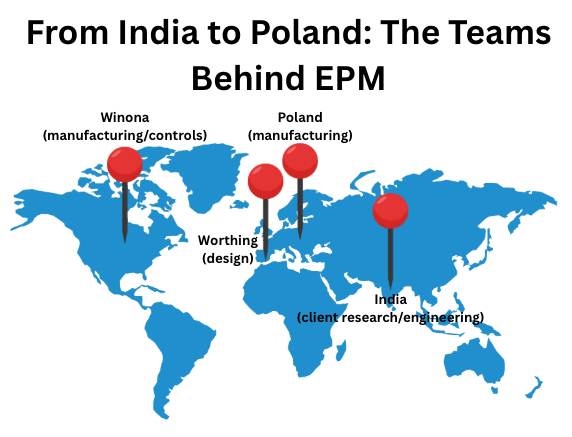
Peter Sherwin: Like anything, it takes a village — a global village. We started in 2016. We had a team in India that put together a questionnaire and went around the world to key clients asking in-depth questions.
Doug Glenn: Getting the voice of the client.
Peter Shirwin: We wanted to learn what was needed for a next-generation product. Now, as we’ve mentioned, things slowed down a bit with the handover at the end of Schneider and into Watlow. Since then, it’s been full speed ahead with Watlow.
Watlow also bought control capabilities; they had their own control line. They manufacture their products in Winona. So now we’ve introduced a Winona team into this village. The original creators were based in Worthing. These were the designers and were responsible for product/project management. We have initial manufacturing where all the Eurotherm instruments are manufactured in Poland, and we also have engineering resources in India. You can imagine all of these groups collaborating. It’s a 24-hour cycle just to build this platform. For anyone looking to build something similar, do not underestimate the amount of effort and money it takes to create something like this. It’s a commitment.
You asked about our commitment to heat treatment. This platform alone is a big commitment, because of the increased ability to do TUSs, SATs, along with process control and process recorders.
Doug Glenn: I did want to ask you about that.
Peter Sherwin: All of that has been considered in this platform. It doesn’t just apply to heat treatment, because from the Eurotherm side, historically, there were two main industries we focused on: heat treatment and life sciences. Life science is all the requirements for auditing. If you make one single change on a device, you have to make sure it was the right person that made that change and have full records. So we really just expanded on all of that intelligence that we already had to a point in some of our data management products. Where heat treatment is kind of moving, life science has already been somewhat out in front. All of that functionality supports the direction we feel heat treatment will potentially go.
Doug Glenn: It seems like a very daunting task to put something like this together.
Peter Sherwin: Daunting but exciting, and you always want to release things as soon as possible. There’s a lot of work in testing the platform. We have a brand to uphold, and we need to make sure we get something out there that works consistently. You know what the heat treatment game is like, Nadcap requirements, AMS2750 — it has to be right.
Compliance for Both Captive and Commercial Heat Treaters (25:46)
Doug Glenn: You mentioned compliance, AMS2750, and Nadcap. How will this EPM platform help a captive heat treater, as well as a commercial one?
Peter Sherwin: For us, it doesn’t really matter. It’s a furnace, and it’s about how best to control that furnace. It starts with the analog input card. You have to get that right for everything else to follow. Much of the development was around how we make a card that meets the requirements of not just a process controller, but also a field test instrument. How can we get that accuracy level in that card so it can be used across anything and isn’t restricted? And, obviously, we need to do it in a cost-effective manner so a commercial or captive heat treater can actually afford it.
We had an R&D project that looked at various ways of doing this. The analysis concluded that errors with the cold junction compensation (CJC) had the biggest impact on accuracy, so we developed a method of CJC. Essentially, it’s like having a very accurate sensor at every junction. That’s what we have on our IO cards. It’s patented, so anyone can go out and look at the details of the patent. Ultimately, it meets process control requirements and field test requirements, which then means you have the possibility, per furnace, to do process control, SAT, and TUS on the same platform. There are some restrictions on Nadcap. You have to mark that this module’s doing an SAT, these modules are doing a TUS, but it’s all common, so you can then share that information, which improves compliance.
AI and Running Processes (28:25)
Doug Glenn: I want to come back to AI. How is this platform going to help end users in running processes? Is there anything in the system, as far as AI goes, that would help?
Peter Sherwin: The ability to pull data and control together means we can start to look at the set-point program as the cycle is running. One of the new functions we’re creating is something called Batch Validator. Think from an operator’s point of view about what they need to do as the process is running, when it finishes, and to sign off and make sure it meets all its requirements. Typically, today, they may need to refer to some other guidance that specifies that this run must be within this tolerance at this level or that it’s had a guaranteed soak between these soak time points. It’s not easy for an operator to see whether the requirements has been met or not, because it’s just a line. That’s the one thing AI and Batch Validator will do — overlay the specifications for that run of the process and show very clearly if it’s deviated or not. It takes that kind of human error and guesswork away from an operator and gives them more information.
Doug Glenn: Do the current standards allow for an automated check on the validation of the load, or will that have to change?
Peter Sherwin: I fully believe in “human in the loop.” Obviously, I’m human. So, there will always be a check. But this really helps as an operator aid, because it’s just checking the screen. Ultimately, the person signing off has to be a real person.
The Future of Heat Treating (31:11)
Doug Glenn: To wrap up, tell us what you think the future of heat treating will look like.
Peter Sherwin: That’s a really good question. It depends on the time scale. I think we’re kind of clear about efficient and reliable running for the next few years. We know we can help with that, but how is it going to structurally change?
I think the operator is going to have a much, much bigger role. There have been less operators in plants. But think about maintenance skills, quality experience, and personnel retiring from the industry. We will have a real problem unless we arm the operator with the ability to do quality, a level of maintenance, and even purchasing.

I think the operator of the future is going to be very multi-skilled but also assisted by AI. We’re seeing it in different areas of our business, how people are moving and taking on more responsibility because of AI. Correlate that with a future where the operator’s going to be that key person and may not require anyone else around to fully run that furnace and run it profitably, with a minimum amount of energy, and making sure it has all the right consumables to keep on running. They’ll manage that whole operation. I think that will be a trend into the future.
Doug Glenn: That is actually a very interesting trend, because with the use of AI, I would expect to see less operators, but I like your perspective. We’ll have to come back in ten years and see how well it panned out.
About the Guest
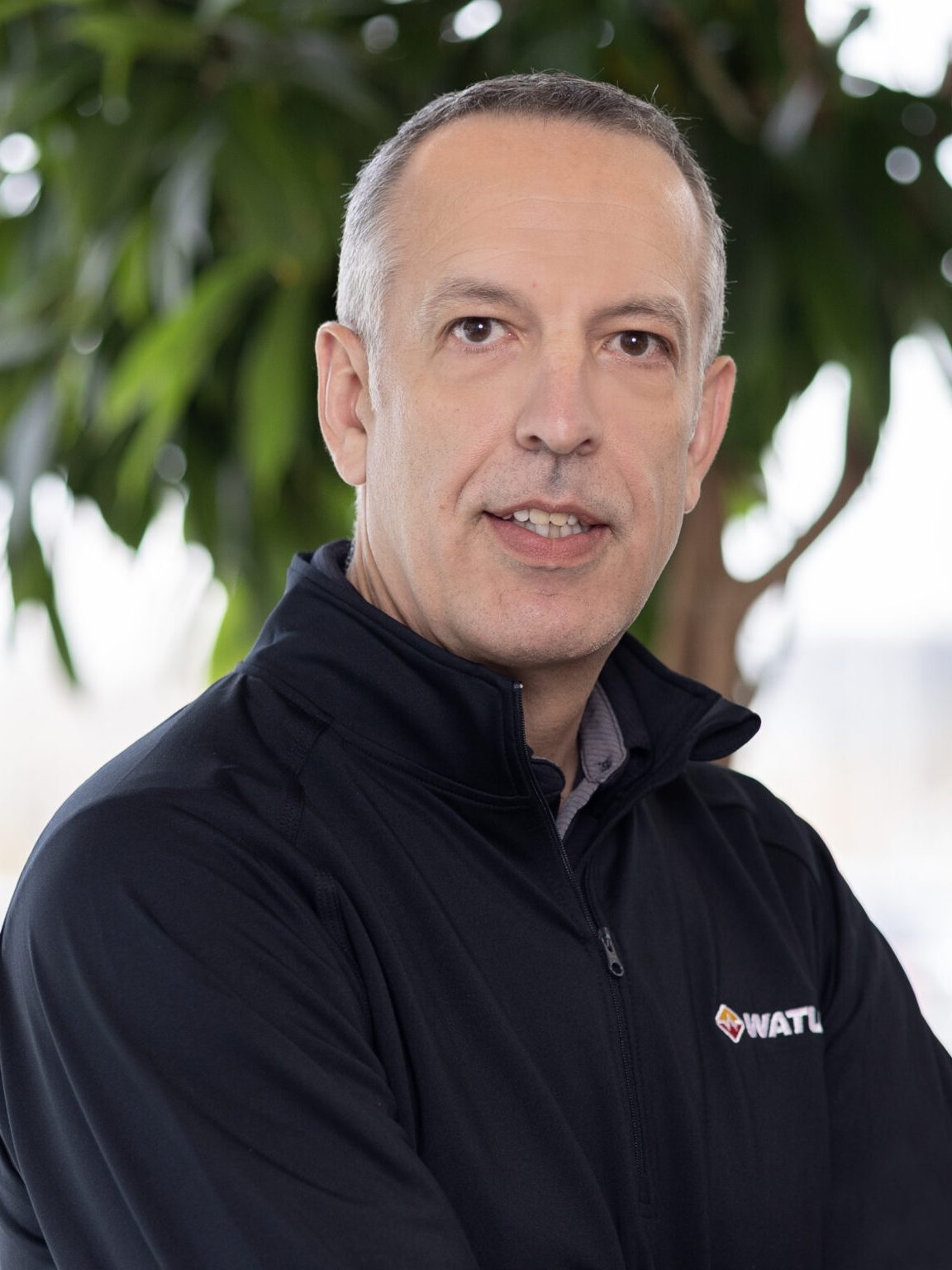
Director of Strategic Marketing
Watlow
Peter Sherwin leads strategic marketing at Watlow and brings more than 30 years of experience across heat treatment, industrial technology, business development, and product marketing. His career has included leadership roles with Watlow, Schneider Electric, DOWA HighTemp Furnaces, and Aalberts surface technologies, with experience spanning the United States, United Kingdom, and India. He also holds an MBA from Henley Business School.
For more information: Contact Peter Sherwin at Peter.Sherwin@watlow.com.