In this installment of Answers in the Atmosphere, David (Dave) Wolff, an independent expert focusing on industrial atmospheres for heat treat applications, dives into the hairy issues of gas contracts with guest co-author David Loomis, an industrial gas consultant.
This informative piece was first released in Heat Treat Today’s June 2026 Sixth Annual Buyers Guide print edition.

Industrial Gas Consultant
The following column identifies the key facts about gas contracts to dispel the mystery behind these agreements. David Loomis, an industrial gas consultant, joins me in this effort. Having retired in 2020 after 35 years of bulk gas sales and contract management experience with Praxair (now Linde plc) and Airgas, David now assists clients to negotiate and manage their industrial gas contracts, saving money and enhancing supply reliability. This knowledge of contracts will help you create supply arrangements that are mutually beneficial to all parties.
Supplying Industrial Gas
Supply of industrial gases typically requires a long-term relationship with an industrial gas provider. Supplying industrial gases is a capital- and people-intensive business. Success in industrial has supply requires a disciplined approach to deploying resources.
Industrial gas contracts enable suppliers to commit resources to customers. If a thermal processor purchases gases in larger volumes than can be effectively delivered in cylinders, the supplier will need to supply gases and dedicate capital investment into the production, delivery, and gas storage equipment in order to provide the gases needed.

In this sense, industrial gas suppliers are invested in their clients’ success. Therefore, industrial gas supply contracts are for the benefit of both suppliers to protect their capital investments as well as the client, on whom continued success hinges.
Understanding Gas Supply Contracts
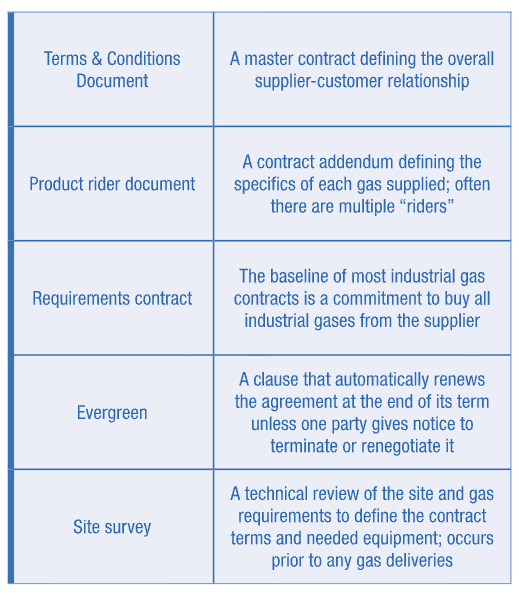
If a business requires industrial gases, it probably will have a supply contract. Insightful negotiation and active management of the industrial gas contract is key to reliable, cost-effective industrial gas supply. Industrial gas contracts generally consist of two related documents:
- Terms & Conditions: This document describes the relationship between the client and the industrial gas supplier (generally one per client).
- Product Rider(s): Often more than one, these individual sections describe the specific contract considerations and economics for each product purchased.
The terms and conditions and the product riders will each have a start date and a term (determined by the specified end date).
Industrial gas contracts are generally continuous: they will automatically renew unless cancelled in writing by one of the parties at least one year prior to the renewal date. Note that the effective date and contract term of the boilerplate terms and conditions contract may differ from the product riders — one document may expire before the other. For example, the term (and therefore the required cancellation date) for a nitrogen supply agreement is determined based on the expiration date for the nitrogen gas rider.
Many industrial gas clients note the difficulty in cancelling their industrial gas contract, which is why proactive management is critical. If industrial gases are used to manufacture a product, then the operations depend on access to those gases.
Product management avoids:
- Inadvertently canceling gas supply, forcing operations to stall.
- Not securing access to enough gas to meet operational needs, resulting in lost profits.
- Knowledge gaps from unavoidable personnel changes in operations that risk missing multi-year contract terms and conditions, which can lead to missed gas supply cancellations.
To avoid these headaches, some thermal processing operations send a cancellation letter as soon as they sign a gas supply contract to ensure it ends when expected. However, David advises caution, as cancellations cannot be easily withdrawn. Since market conditions are difficult to predict over 4+ years, he suggests companies decide to secure a new contract and cancel the previous agreement close to the cancellation deadline to ensure that supplier options, gas requirements, and specific market information are up to date.
If neither the client nor supplier cancels the contract in accordance with the cancellation requirements, then the contract enters the “evergreen” stage at the end of the contract term. Evergreen is a rolling one-year extension of the contract that repeats until the contract is canceled in accordance with its cancellation requirements. Having a comprehensive understanding of the terms and conditions of the contract is necessary to avoid unintentionally missing the cancellation date and falling into the evergreen stage.
Gas Supply Method
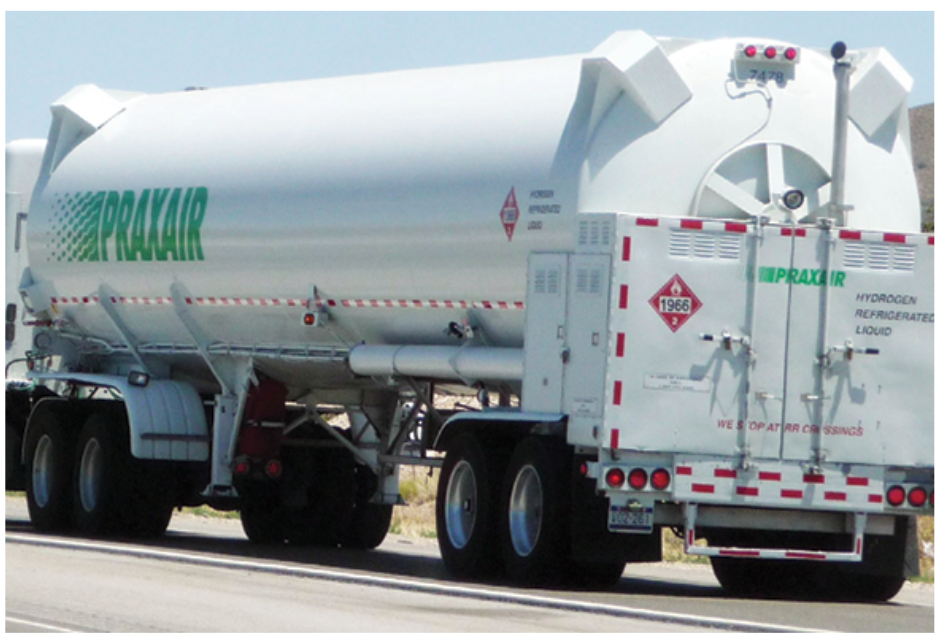
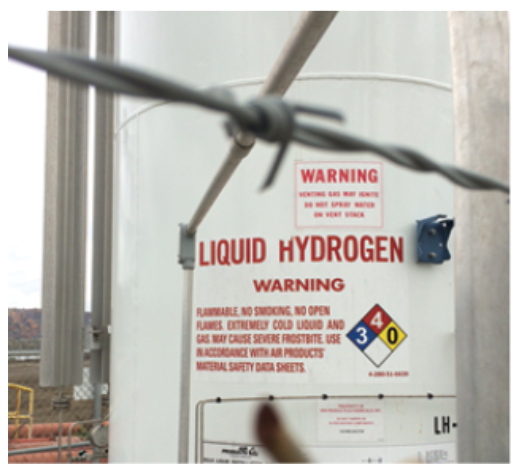
Recovery of costs and generation of profit are the goals of the industrial gas contract. As most thermal processors use bulk gases, stored as a liquid or as a compressed gas, these are delivered in bulk form. A trailer is sent from the supplier and the liquified gas in the trailer is pumped to fill an on-site tank, or the full compressed gas trailer will be exchanged in place of an empty trailer. In either case, there are equipment and delivery costs incurred.
Requirements
Paragraph one of the terms and conditions section of most industrial gas contracts is titled “Requirements.” It is important to read this paragraph carefully and ensure full understanding. Unless it is modified, Requirements typically obligates the client (“Buyer”) to buy all of their present and future needs (“requirements”) of all industrial, specialty, and medical gases to all of the client’s present and future locations from that specific industrial gas supplier. It also restricts the client in their ability to eliminate gas deliveries by switching to on-site generation unless they work with the contracted supplier.
Left as is, it is a very sweeping obligation for clients. Consider modifying the Requirements by limiting the obligation to:
- Only those gases defined on accompanying gas riders
- Specific locations
Clients may also consider revising the Requirements to allow for unfettered ability to convert to on-site generation for applicable gases, such as nitrogen, oxygen, or hydrogen.
Costs
Each product rider will define the unit cost of the specific gas and the monthly cost of storage equipment rental for that product. It is not unusual for clients to receive two separate periodic bills from their industrial gas supplier — one following each product delivery and another monthly bill for tank rental. The product delivery bill will include the cost for the product delivered, as well as any applicable fees and surcharges.
Some clients consider buying their own storage tank to eliminate storage rental fees. My own experience has shown that that is rarely an appropriate decision. Suppliers amortize their storage equipment over decades, so their monthly costs are relatively low, enabling them to keep their rental rates reasonable. Additionally, tanks are pressure vessels and thus must be recertified periodically. They also require annual maintenance to maintain the vacuum and ensure that pressure regulators and safeties are working as required. Buying a tank introduces the need to figure out what to do with the storage tank if your gas needs increase, decrease, or go away entirely. Consequently, buying your own storage tank may only be advisable for the largest users.
The primary cost elements of industrial gas supply and delivery are the generation of the gases themselves and the fuel costs and labor to deliver the gases to you. The energy to generate the air gases is primarily in the form of electricity, while for hydrogen the cost is a blend of electricity and natural gas costs. The cost of delivery is primarily driven by diesel fuel pricing. Clients should expect to see escalation approaches for the cost elements that may vary over time, such as electricity, natural gas, and diesel fuel. It is advisable to negotiate the contract to define formulas for each of these variables. If buyers do not negotiate, then the supplier uses their own internal criteria, which may not be advantageous for buyers.
Typical contract terms vary, depending on the form of supply. Small quantities of liquefied gases are typically supplied in micro bulk form using a straight truck for delivery and a highly portable pallet-mounted storage tank. These contracts tend to be 3 to 5 years in duration. Standard liquid and gases bulk supply is typically 5 to 10 years in duration. If the supplier builds an on-site gas generation plant for you, expect a contract with a minimum duration of 10 years. If you choose a shorter term, the supplier may charge higher unit prices due to the reduced value of your contract and the risk to the supplier of having unproductive assets or excess, unsold product.
Determining Your Gas Usage
A site survey is the first step in a contract negotiation. It’s important for the buyer to understand that making the tank available for deliveries is the buyer’s responsibility. The best (and least expensive) delivery infrastructure allows the gas delivery driver to pull through the site, entering, unloading, and exiting the site without needing to back up. Flammable gases require certain minimum clearances; the greater the quantity stored, the farther the distance required between the tank and areas of occupation and site borders. Oxygen cannot be stored close to flammable gas. In the case of snow, the delivery driver is not equipped or permitted to dig out your tank.
A delivery consideration that influences fees is the hours and days of access to the storage equipment. The supplier is going to expect 24/7 access to the tank so they can make deliveries based on their schedule not the buyer’s. If 24/7 access cannot be made available, clients should ensure that access restrictions are defined in the contract. Site restrictions can increase the supplier’s cost to serve, which will cost more for the client.
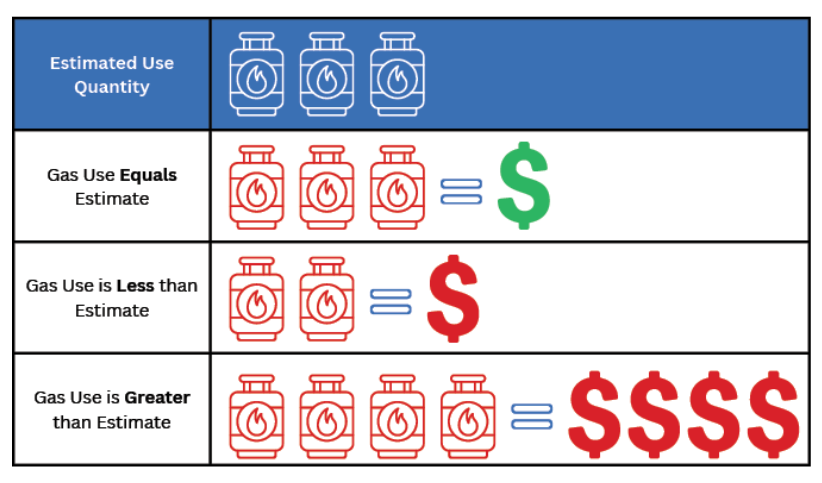
Another characteristic of many industrial gas contracts is the “estimated use quantity,” typically denominated in standard cubic feet per month. The purpose of this is to allow the supplier to understand how much product they need to reserve for your use. Suppliers cannot sell more than they make, but they are highly incentivized to sell out everything they do make since industrial gases are difficult to store. Buyers may be asked to estimate their monthly use quantity; the resulting estimate may become a contract variable. In essence, the supplier is acting to reserve the quantity of gas the buyer has nominated (and the assets to deliver it), and the buyer is indicating a willingness to pay for it.
If the buyer uses substantially less than estimated, the supplier may increase the price per unit. Alternatively, if the buyer uses substantially more than estimated, the supplier may not be able to provide the necessary amount or may charge a premium to do so. Estimated quantities are a particular concern for supply-constrained gases like argon and helium.
Clients of industrial gases must communicate to their potential supplier the pressure and flow rates (min, average, max) of the gas supply they need to ensure that the tank and ancillary equipment (vaporizers, regulators, etc.) are specified correctly. Maximum gas supply rate is largely determined by vaporizer sizing and technology. Note that the supplier will supply the rental tank, but clients are financially responsible for the installation, including permitting, clearances, foundation, utilities, fencing, and piping. Companies expecting an increase in production should anticipate an increase in tank size in the future and consider the distance requirements for a larger tank, potentially including an oversized foundation to accommodate installing a larger tank in the future.
Most industrial gas suppliers will offer a telemetry device, which enables them to monitor the buyer’s tank inventory and schedule automated deliveries. Although the clients will pay a monthly fee for the telemetry, most thermal processors find the service helpful. If a client declines the telemetry or the supplier does not offer one, the client will be responsible for checking gas inventory every day and reporting that inventory to the supplier for them to manage deliveries.
Fair Price Analysis
The market for industrial gases is relatively opaque, meaning it can be difficult for buyers to know if they are receiving a fair price. As such, it’s a good practice to get at least two quotes when considering industrial gas requirements. Operations personnel should collaborate with procurement personnel to negotiate and manage the gas contract. Some industrial gas clients find it helpful to seek assistance from an industrial gas purchasing consultant. While legal counsel may be helpful in evaluating the terms and conditions portion of the contract, attorneys may not have expertise in the gas rider portion(s) of the contract, which is where most of the costs are driven.
About The Author:

Industrial Gas Professional
Wolff Engineering
Dave Wolff has over 40 years of project engineering, industrial gas generation and application engineering, marketing, and sales experience. Dave holds a degree in engineering science from Dartmouth College. Currently, he consults in the areas of industrial gas and chemical new product development and commercial introduction, as well as market development and selling practices.
For more information: Contact Dave Wolff at Wolff-eng@icloud.com.