TFL Incorporated, a Houston-based provider of refractory materials and precast shapes, has been acquired in a move that strengthens resources and technical support for high-temperature industries. The acquisition enhances service capacity and product availability for clients operating in demanding thermal-processing environments, including sectors that rely on consistent refractory performance to maintain uptime and efficiency.
Click the image above to read more about a related refractory acquisition.
TFL has long specialized in the distribution and manufacturing of refractory materials and precast refractory shapes for industrial applications requiring durable, heat-resistant solutions. Its expertise supports operations across energy, petrochemical, and other high-heat industries throughout the Gulf Coast region.
Plibrico Company, a manufacturer of monolithic refractories and engineered refractory solutions, completed the acquisition as part of its continued growth strategy. The addition of TFL expands Plibrico’s geographic footprint, particularly in Texas and the Southern U.S., and strengthens its ability to deliver comprehensive refractory products and technical services to customers facing increasingly complex thermal processing demands.
John Paul Surdo President and CEO Plibrico Company
“This combination enhances the technical and operational strengths that matter most in the field,” said John Paul Surdo, president and CEO of Plibrico. He noted that TFL’s established customer relationships, combined with Plibrico’s engineering depth and precast abilities, provide broader solution options and strengthened technical collaboration for clients across key industrial markets it serves.
Press release is available in its original form here.
Plibrico, a manufacturer and installer of superior aluminosilicate and high alumina monolithic refractories, has expanded its footprint with the grand opening and dedication of its new state-of-the-art production facility in Oak Hill, Ohio. The company’s refractories are used in a variety of heat treating applications, and the new plant will enhance technology and production capacity.
Brad Taylor President & CEO Plibrico
Plibrico celebrated the occasion with a two-day GO LIVE Showcase, which included in attendance Shane Wilkin, Ohio State Senator; Samuel Brady, president and CEO of Economic Development Partnership of Jackson County; and Paul McNeal, mayor of Oak Hill. In addition to the dedication ceremony and training sessions, attendees received a behind-the-scenes tour of the company’s new refractory production facility. The event also featured discussions on innovation, growth, and development in the refractory industry.
“This facility represents more than just bricks and mortar,” said Brad Taylor, president and CEO of Plibrico, in his welcome address. “It symbolizes our dedication to innovation, growth, and a higher standard of excellence that we bring to our industry every day.”
Main photo: Brad Taylor, President and CEO of Plibrico, ribbon cutting to celebrate opening of new refractory production facility in Oak Hill, Ohio/ Source: Plibrico
The press release is available in its original form here.
Welcome to Heat TreatToday's This Week in Heat TreatSocial Media. You know and we know: there is too much content available on the web, and it’s next to impossible to sift through all of the articles and posts that flood our inboxes and notifications on a daily basis. So, Heat TreatToday is here to bring you a hot take of the latest compelling, inspiring, and entertaining heat treat chatter from the world of social media.
Today, check out some posts on everything from a new design to an interactive periodic table to ways to shore up your heat treat knowledge. Don't forget to thank an engineer for Engineer Appreciation Week!
Check out a winner from the Metal Powder Industries Federation 2022 PM Design Excellence Awards Competition. This device is used in laparoscopic surgeries! In order to make the curved jaw piece needed for the instrument, the powder metallurgy metal injection molding process was used. Take a look at this piece from all angles with the video below.
2. Continuing Education
Each of these posts brings an educational aspect for you in your heat treat knowledge base. Something new or something to refresh those brain cells, take some learning moments with these posts.
7 Components To Think About with an Industrial Oven Purchase
DFARS Compliance, Free eBook
Preventing Refractory Anchoring System Failures
Advancing 3D Printed Metals with HIP
Interactive Periodic Table 2.0
3. "Molten" Videos
Too hot to handle? We think not. Check out some of these action shots.
4. The Reading (and Podcast) Corner
Time to take your afternoon coffee and read or listen to a few technical pieces from around the industry, or put on an episode of Heat TreatRadio to enjoy as you commute home!
Here's a recent edition from expert Mike Mouilleseaux on underrated heat treat processes.
With a nod to engineering week, this article delves into categorizing things. "Art or Engineering" explores how to think about products, maybe stretching to think differently about labels applied to things.
5. Engineer Appreciation Week
Spreading the love this week for the engineers among us. Thanks for everything that you do!
6. Updating the Office Space!
This office model might be something you want to incorporate? Looks like some great spots to go over the heat treat paperwork and take the calls.
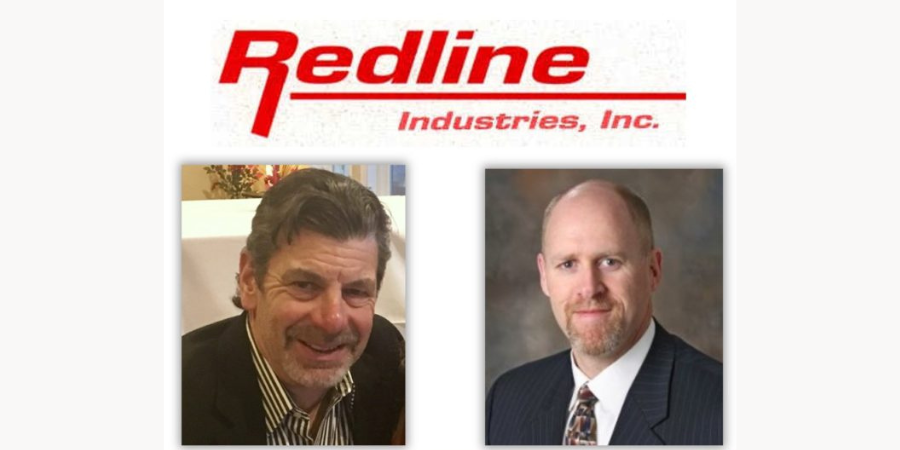
A supplier of monolithic refractories and construction services announced that it has completed the acquisition of Redline Industries, Inc., solidifying its reputation for innovation and customer satisfaction.
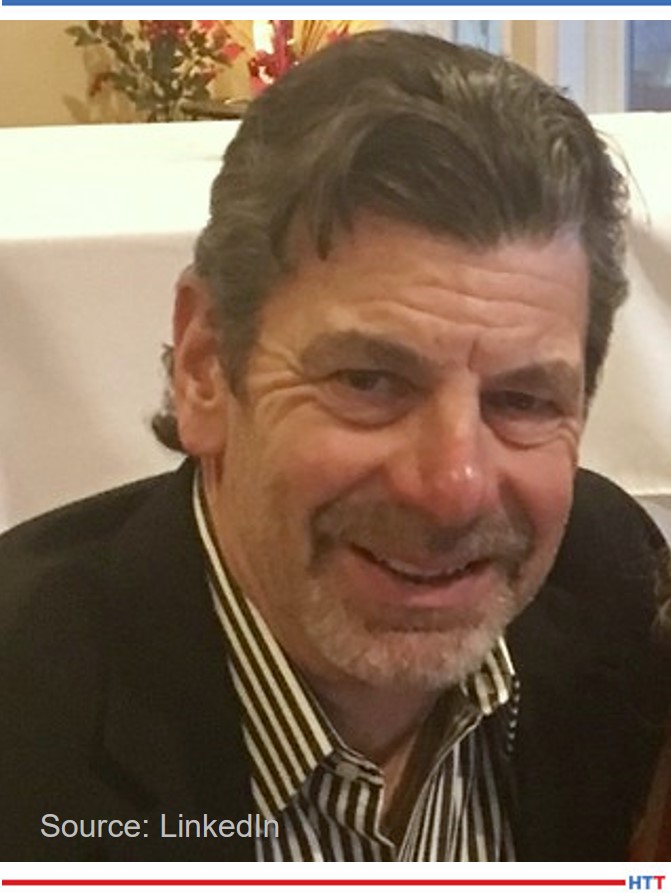
Jim Host Business Development Manager Redline, Inc.
Based in Chicago, IL, Redline Industries, Inc. was founded in 1998 and today is recognized as a first-rate supplier of low-cement refractory castables and gun mixes, having earned industry recognition for the quality of its products and the integrity of its people and business practices. Redline™ refractories are engineered to safeguard furnaces in the high-temperature processing of non-ferrous metals, such as aluminum, as well as prevent furnace heat loss to promote greater energy efficiency.
Brad Taylor President and CEO Plibrico
The Plibrico Company, LLC will provide seamless consistency for Redline customers by continuing to manufacture Redline refractories to their current specifications, while promoting the Redline brand within Plibrico's broad portfolio. Dedicated Redline support experts will carry on serving customers with no interruptions.
"This acquisition enhances our ability to better serve our customers," said Jim Host, business development manager at Redline.
"We are thrilled to bring Redline into the Plibrico family," commented BradTaylor, president and CEO at Plibrico. "We believe this acquisition will provide customers with more choices as we leverage our complementary technologies and our core competencies in customer care, product development and manufacturing."
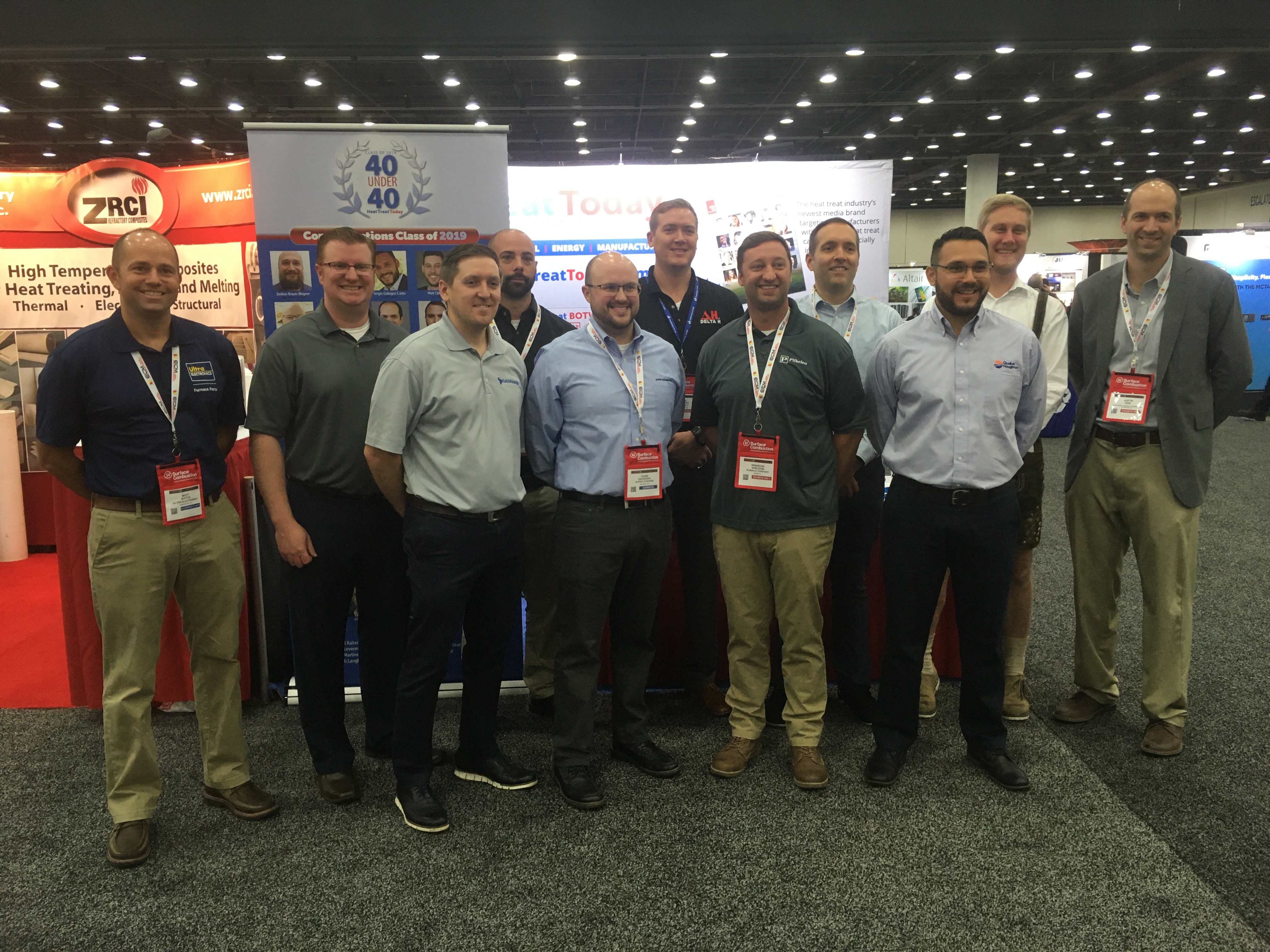
The Class of 2019 40 Under 40, revealed online on October 4, was featured at the Heat TreatTodaybooth at the Heat Treat Show in Detroit, Michigan. Here is a group photo of most of those still present on the last day:
Matt Watts (Ultra Electronics Energy), Mike Harrison (Gasbarre), Ben Gasbarre (Gasbarre), Tom Zimmerman (ATP), Chris Davidson (SSi), Neal Conway (Delta H), Brandon Sheldon (Plibrico), Kyle Hummel (Contour), Sergio Cantu (Quaker Houghton), Uwe Rahn (Rubig), Justin Dzik (Fives)
Dan Szynal, VP of Engineering & Technical Services, Plibrico
Installing new refractory materials is a necessary furnace maintenance practice which needs to be done periodically. But extended downtime and installation errors can be a major financial and operational headache. In this article, Dan Szynal, VP of Engineering & Technical Services, Plibrico, gives 12 factors which will ensure that the refractory installation is successful.
At 700°F, steam can exert 3,000 psi pressure.
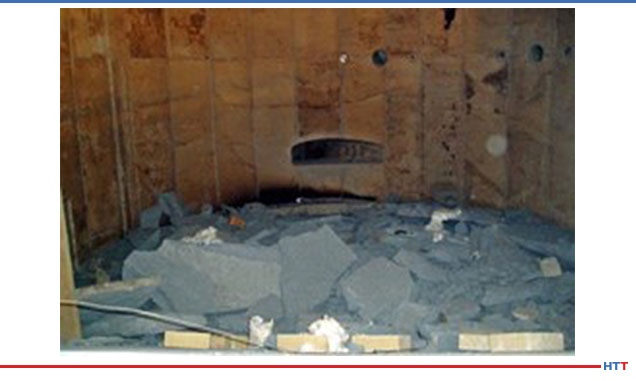
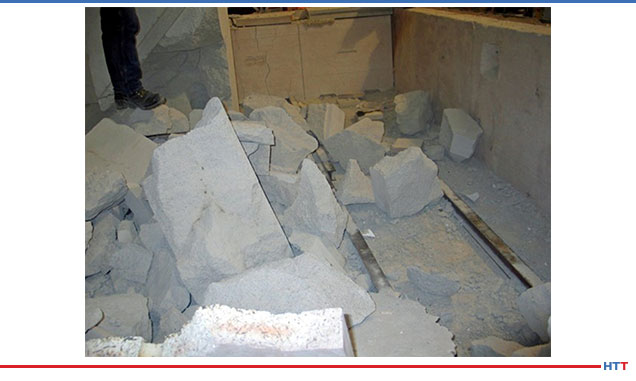
During an initial dry-out, the powerful effects of superheated steam can cause explosive, devastating consequences to freshly cured refractory material. To that end, removing moisture from castable and precast shapes is a serious pursuit. The production pressures to minimize downtime can lead to shortcuts and rushed dry-out procedures. Usually, these sidesteps have the opposite effect, quickly compounding delays and costs by causing thermal damage to the linings and potentially incurring personal injury.
Dry-outs fail due to imprecise management of water extraction from refractories. At the boiling point of water, the pressure of steam is less than 1 psi. However, at 700°F, saturated steam reaches 3,000 psi, and possesses enough energy to disintegrate the most resilient refractories. Too much heat, rapid ramp-ups, vapor lock, poor curing, and surplus water can contribute to potentially hazardous situations.
Here are the 12 preventive factors to manage for dry-out safety and success:
1. Hot spots and flame impingement. Ensure that your burner flame is centered accurately. The direction of flame in the vessel must promote equal heating of all the refractory surfaces. A flame that impinges on a single area of the surface will quickly create a hot spot, forcing an unequal expansion of water vapor in that area and resulting in thermal spalling.
Thermocouples need to be monitored at both hot and cold areas to measure temperature consistency.
2. Temperature spikes. Insulation is ill-advised. Attempting to cover green castable with an insulating blanket can lead to destructive temperature spiking when the blanket is removed, breaks, or falls off. At a wall surface temperature of only 550°F, the removal of insulation exposes the surface to an extreme temperature shift which will activate unequal steam expansion and pressure.
3. Thermocouple placement and monitoring. Pay attention to the locations and readings of your TCs. Watching only the coldest location will allow the hottest area of your vessel to heat too quickly in the dry-out schedule. Conversely, monitoring only the hottest area will allow the colder area to retain more water than specified. This will lead to failure later in the schedule or during hold periods. At 700°F, steam can exert 3,000 psi pressure.
4. Air temperature vs. surface temperature. Thermocouples should report surface temperature. Air temperatures are typically 50°F to 100°F hotter, thus misreporting schedule impact. The initial hold period is typically designed to melt burn-out fibers. That creates important permeability. If the actual load temperature is lower than specified, permeability is not created, leading to failure in the next ramp-up period.
Pre-cast refractory requires longer bake-out schedules to release all water vapor.
5. Field vs. precast dry-out schedule. A field dry-out schedule is specified for single-sided heating. It precipitates a dual water migration, first (stage 1) towards the heat as the path of least resistance, but then reversing course (stage 2) and moving away from the heat, escaping towards the furnace shell. Field dry-outs are faster schedules than precast, where the pieces are heated from all sides simultaneously. The precast water migrates to the center of the piece, and that takes longer to escape. By misapplying the faster field dry-out to precast, there is a greater risk of water retention, which will ultimately lead to spalling, even at temperatures of 550°F or less.
6. Venting and air circulation. Proper venting is required to rid the furnace of water vapor during dry-out. Without vents and free air circulation, the steam is forced to exit via the furnace shell, which takes longer than the schedule would provide. Water will be retained closer to the shell side, increasing the likelihood for disintegration as temperature and steam pressure rise.
7. Surface coating. An impermeable coating on the refractory surface will prevent the stage 1 escape of water. Slowly, this water will be forced to move to its second exit, the furnace shell. This delay prepares the still-saturated refractory for failure at the next heat ramp-up.
8. Clear obstruction from weep holes. As stage 2 water migration occurs, it will escape to the furnace shell. There should be adequate weep hole capacity, cleared of obstructions which will allow the water to exit the furnace shell. These provide a release valve for buildup of steam pressure. Thermocouples need to be monitored at both hot and cold areas to measure temperature consistency. Pre-cast refractory requires longer bake-out schedules to release all water vapor.
9. Cold weather curing. In the curing process, simple hydrates form needle-like morphology. These structures promote permeability, and water/steam can more easily migrate through the refractory to escape. Curing in below-freezing temperatures alters the hydrates to be less permeable, thus trapping the water, even during dry-out and creating an inherent risk. As well, cold weather curing slows the required strengthening process, leading to a weaker refractory and likely spall. We have had a thermal operator tell us about a below-freezing cure that went badly: The water in the castable actually froze in place. When the dry-out was initiated, the castable melted and fell to the floor, where it subsequently cured and dried.
10. Cutting short cure time. Recommended dry-out schedules always assume a 24-hour equivalent curing time at moderate temperatures. By cutting short the cure time, water is retained, and strength is reduced. For example, a conventional castable requires 24 hours cure time; high cement/low moisture castable needs at least 16 hours. Adherence to product cure time specifications ensures optimum strength and a successful dry-out.
11. Free water removal without consideration. The goal of curing and dry-out is to create permeability in the refractory at lower temperatures (300°F) to enable water to escape. By quickly ramping up dry-out temperatures for the sake of time, permeability is diminished. At higher temperatures, (+500°F) steam pressure rises aggressively. Again, refractory composition drives curing and dry-out schedules, and as a rule, the faster temperatures rise beyond specification, the higher the risk of failure.
Pre-cast shapes spall at 550°F.
12. Refractory strength as a function of water content. A simple 1% excess of water will reduce refractory strength by as much as 20%. Overwatering by 1.5% cuts strength 25% to 40%. The implications are profound: the refractory will not withstand the steam pressures in dry-out, and worse yet, there is more water that must be extracted. A successful dry-out can be jeopardized by the slightest variance in water composition.
Conclusion
Meticulous care in refractory installation is the foundation to successful furnace operation. While no one looks forward to non-productive downtime, close adherence to product specifications, cure times, and dry-out schedules will ensure a more profitable return to operations. Managing the water issues in refractory composition is job one.
Heat TreatTodayoffers News Chatter, a feature highlighting representative moves, transactions, and kudos from around the industry.
Personnel and Company Chatter
Tracy Dougherty has been named Vice President of Sales at AFC-Holcroft. Dougherty has been with AFC-Holcroft since 2008 and served in several sales-related roles, most recently as the company’s Sales Manager. As Vice President of Sales, Dougherty will now have a number of added responsibilities, including overseeing the company’s activities in Europe.
Retech Systems, which has been manufacturing vacuum melting systems in Northern California, will transition much of the manufacturing and assembly to facilities in Świebodzin, Poland. All of the future work done at the SECO/Warwick facilities in Poland will be per the established Retech standards with the focus on maintaining all expectations associated with the Retech brand. The Ukiah office will be downsized and will retain engineers, technical directors, technologists, and service staff. Retech’s unique R&D Center will continue to be built up, maintaining a west coast office along with the recently opened east coast office in Buffalo, NY.
Philip Wrisley, Project Manager at Plibrico‘s Salem, Ohio, office, is the recipient of an API STD 936 Refractory Personnel Certification from the American Petroleum Institute (API). This internationally recognized certification verifies Wrisley’s knowledge of API Refractory Installation Quality Control Guidelines for field-testing of monolithic refractory materials, as well as best practices in the installation and repair of refractory linings.
A new 57,500 square foot building dedicated to vacuum furnace manufacturing is under construction at Solar Manufacturing‘s campus in Sellersville, Pennsylvania. As can be seen in the photo below, the four bridge cranes are in place, the full plant and office roof is complete, and much of the concrete floor poured.
A thermal technology company recently announced the opening of its new sales and operations office in Norway. Chromalox, based in Pittsburgh, Pennsylvania, manufactures process heating and heat tracing products.
A global leader in aluminum rolling and recycling recently announced an expansion at the company’s Pindamonhangaba, Brazil, plant. This $175 million investment of its flagship facility in South America will bolster Novelis‘s capacity with 100 kilotonnes of additional rolling production and 60 kilotonnes of increased recycling and bring total capacity of the Pindamonhangaba facility to approximately 680 kilotonnes per year of aluminum sheet and 450 kilotonnes annually of recycled metal.
Nucor Corporation has announced that it is acquiring Corporacion POK, S.A. de C.V. (POK), a fully integrated precision castings company with a facility in Guadalajara, Mexico. POK produces complex castings and precision machined products used by the oil and gas, mining and sugar processing industries.
A new automotive structures facility opened in Zilina, Slovakia, dedicated to the production of aluminum crash management systems and body structure components. Constellium‘s 5,200 square meter facility in Zilina features advanced technologies for forming, machining, welding, and heat-treating aluminum automotive components, along with a state-of-the-art quality lab to ensure products meet customer specifications. Constellium plans to expand its facility to 15,000 square meters by mid-2019.
Construction underway for Solar Manufacturing\’s new building. at Sellersville, PA.
Equipment Chatter
A Japanese manufacturer of precision tool steels components recently commissioned a precision vacuum furnace system from SECO/WARWICK. This specialized system reduces energy consumption through power optimization and cycle time reduction, customized to work within the tight physical space limitations.
In addition, an American manufacturer which produces transportation components recently ordered a new precision gas nitriding furnace with ZeroFlow® from SECO/VACUUM (SVT), a SECO/WARWICK Group company.
L&L Special Furnace Co., Inc., has supplied a custom designed and manufactured oil quench tank to a metal stamping manufacturer in the Midwest. The quench tank is specifically used to quench metal stamping dies that are heated to 1,550°F.
Advanced Heat Treat Corp recently posted to Facebook a video of the installation of one of three new nitriding vessels delivered to the company’s MidPort Blvd location as part of an ongoing building expansion.
An international heat treating equipment manufacturer with a location in California, JGEF Furnace, recently sold 6 furnaces to a Japanese heat treating company. Four nitriding horizontal furnaces are front-loading and designed specifically for precision gas nitriding in a retort style with vacuum purge, and two tempering horizontal furnaces are designed to temper workloads after hardening.
SECO VACUUM sells gas nitriding furnace with ZeroFlow®.
L&L Special Furnace Co., Inc., delivers oil quench tank.
AHT installs new intriding equipment
JGEF Furnace ships 6 furnaces to Japanese manufacturer.
Kudos Chatter
Hydro Extruded Solutions Hoogezand B.V. (Netherlands), which produces aluminum profiles as well as anodized and painted components, has become the first aluminum extrusion company to be certified with ASI’s Performance Standard for environmental, social and governance performance.
SECO/WARWICK was recently awarded the Honorary Badge for Meritorious Performance in the area of innovation in a badge award ceremony held at the Royal Castle as part of the celebrations of the 100-year anniversary of the Patent Office and industrial property protection system in Poland. The badge, given to entities and organizations having outstanding achievements in their pro-development activities, was received by Bartosz Klinowski, Managing Director (Europe), Member of the Management Board of SECO/WARWICK.
Hydro Extruded Solutions Hoogezand B.V. certified by ASI.
SECO/WARWICK awarded the Honorary Badge for Meritorious Performance.
Heat TreatTodayis pleased to join in the announcements of growth and achievement throughout the industry by highlighting them here on our News Chatter page. Please send any information you feel may be of interest to manufacturers with in-house heat treat departments especially in the aerospace, automotive, medical, and energy sectors to the editor at editor@heattreattoday.com.
15 Quick Heat Treat News Items to Keep You Current
Heat TreatToday offers News Chatter, a feature highlighting representative moves, transactions, and kudos from around the industry.
Personnel & Company Chatter
Professor Chris Sutcliffe, Director of Research and Development (R&D) at Renishaw‘s Additive Manufacturing Products Division (AMPD), was awarded a prestigious Silver Medal from the Royal Academy of Engineering (RAE), recognizing his role in driving the development of metal 3D printed implants for use in human and veterinary surgery and celebrating his successful commercialization of additive manufacturing products as part of his work with Renishaw, the University of Liverpool, Stryker Orthopaedics and Fusion Implants Ltd.
Michael Handscombe joins UK-based Phoenix Temperature Measurement as National and International Sales Manager to support PhoenixTM temperature monitoring solutions used in industrial heat treatment and furnace surveying and other industries.
One of five new vacuum furnaces, with an all-metal hotzone and 15 bar Argon quenching with an 8,000lb capacity, have been delivered to the Cleveland division of Pauloand will be ready for production late July. This represents the first step of a larger expansion that includes a new building.
Two large heat-treating furnaces were recently rebuilt and upgraded at Metlab, a heat treatment and surface enhancement company located in Wyndmoor, Pennsylvania. The furnaces, designated P-1 and P-2, are believed to be the largest atmosphere-controlled pit furnaces in North America and are used to neutral harden, carburize and harden, nitride, anneal, and stress relieve large components or multiple quantities of parts.
A 20-foot long car bottom air furnace capable of handling a workload up to 30,000 lbs will be installed at Solar Atmospheres of Western PA during July 2018 and surveyed in accordance with AMS2750. With a maximum operating temperature of 1400°F, this furnace will accommodate not only the tempering of large tool steel components but also age hardening of 15-5 PH, 17-4 PH, and nickel-based alloys. Although Solar is typically known as a “vacuum only” heat treater, the company notes the need for heat treating non-finished parts and materials in accordance with the same specifications (AMS, MIL, Boeing and Airbus) within different atmospheres where surface oxidation is permissible.
Robrecht Himpe retired from his position as CEO of ArcelorMittal North America and CEO of AM/NS Calvert on July 1, as well as his duties with ArcelorMittal’s executive management team. He has been with the group for 37 years and will be succeeded as ArcelorMittal North America CEO by Brad Davey, who has been serving as chief marketing officer of ArcelorMittal North America and head of global automotive.
Team, Inc., an industrial services company based in Houston, Texas, recently announced that Arthur F. Victorson, President of the Inspection and Heat Treating segment, will retire from the company on September 30, 2018. In connection with his retirement, Mr. Victorson will transition from his current role, effective July 15, 2018, and serve as a special advisor to Amerino Gatti, Team’s Chief Executive Officer, to ensure a seamless transition. Team anticipates naming a successor to Mr. Victorson in the near future.
A partnership has been formed between Plibrico, based in Northbrook, Illinois, and Upstate Refractory Services, headquartered in Newark, New York.
John Hynes has been promoted at Pauloto Director of Information Systems from his previous role as Manager of Information Technology. John has been with Paulo for just over one year, strengthening the company’s IT position.
Chris Sutcliffe, Renishaw
Michael Handscombe, PhoenixTM
One of 5 new furnaces at Paulo
New equipment at Metlab
Solar Atmospheres installs car bottom air furnace.
Robrecht Himpe retires as CEO of ArcelorMittal North America.
New partnership between Plibrico and Upstate Refractory Services
John Hynes promoted at Paulo to Director of Information Systems.
Equipment Chatter
A natural gas-fired, enhanced-duty, walk-in oven was recently shipped to the technology industry by Wisconsin Oven Corporation for use in post-curing refractory material. With a maximum operating temperature of 300°F, the oven was designed with the capacity to heat 8,000 pounds of steel and 4,000 pounds of refractory material from 70° to 150° F within 180 minutes.
A 1400°F electric, inert atmosphere tempering furnace from Grieve Corporation, No. 885, is currently being used for heat treating weldments at a customer’s facility.
An India-based conglomerate recently commissioned an aluminum automotive casting heat treatment system from CAN-ENG Furnaces International Limited for its new greenfield North American expansion in South Carolina.
CAN-ENG Furnaces, aluminum automotive casting heat treatment system
Kudos Chatter
The F-35 Joint Program Office of The Pentagon and Lockheed Martin delivered the 300th production F-35 aircraft, a US Air Force F-35A, to be delivered to Hill Air Force Base, Utah. “The F-35 weapons system is a key enabler of our National Defense Strategy and is providing our warfighters the combat-proven, advanced capabilities they need to meet mission requirements,” said Vice Admiral Mat Winter, program executive officer for the F-35 Joint Program Office. The first 300 F-35s include 197 F-35A conventional takeoff and landing (CTOL) variants, 75 F-35B short takeoff/vertical landing (STOVL) variants, and 28 F-35C carrier variants (CV) and have been delivered to U.S. and international customers. More than 620 pilots and 5,600 maintainers have been trained, and the F-35 fleet has surpassed more than 140,000 cumulative flight hours.
The first Future Aluminum Forum was held on 8th & 9th May 2018 in Milan, Italy, with more than 150 delegates from across the aluminum manufacturing and processing industries gathering to hear from technical experts and uncover the myths behind Industry 4.0 and what this means for the manufacturing value chain. An Advisory Board was established to develop a strategic approach towards integrating Industry 4.0 across the aluminum manufacturing and processing sectors.
A center for aerospace air management systems, Liebherr-Aerospace Toulouse SAS, in Toulouse, France, recently obtained accreditation from the National Aerospace and Defense Contractors Accreditation Program (NADCAP) for its materials testing laboratory. This accreditation follows an audit conducted in early March 2018 by the Performance Review Institute (PRI), which focused on both the overall quality system of the laboratory and the practice of static and dynamic mechanical tests.
Lockheed Martin and Pentagon deliver 300th aircraft.
Future Aluminum Board meets in Milan, Italy.
Liebherr-Toulouse obtains Nadcap Approval.
Heat Treat Today celebrates with our heat treatment industry partners by highlighting their accomplishments and announcements here on our News Chatter page. Please send any information you feel may be of interest to manufacturers with in-house heat treat departments especially in the aerospace, automotive, medical, and energy sectors to the editor at editor@heattreattoday.com.
An industry leader in monolithic refractories based in Illinois recently announced a partnership with a maritime repair specialist to deliver retrofit supplies and services to the world’s cruise ship operators, extending the reach of advanced heat treatment technology and improving the reliability of onboard boilers and incinerators.
Brad Taylor, president and CEO of Plibrico
Nordic Made Boiler Services Inc. (NMBS), headquartered in Denmark, will use Plibrico’s Plico™ brand high alumina- and alumino-silicate monolithic refractories in the retrofitting of cruise ship boilers and waste incinerators needed to ensure passenger safety and comfort.
“Partnering with Nordic Made Boiler Services enables Plibrico to help improve maritime operations the world over reducing cruise ship costs and their energy consumption,” said Brad Taylor, president and CEO of Plibrico. “Combining our refractories with NMBS’s retrofit solutions means that together we can extend the reach of our most advanced heat treatment technology.”
NMBS operates in a variety of industries in addition to the maritime market and will be the exclusive distributor for Plico materials in Norway, Sweden, Finland, Denmark, Poland, Spain, Holland, and Belgium. It will also be joining the Plibrico PliPartner™ network of certified installation and repair companies. The partnership will take full advantage of Plibrico’s high-quality aluminosilicate and high-alumina monolithic refractory materials. Demonstrating superior insulating properties, Plibrico refractories’ insulating properties facilitate the containment of heat generated by the marine boiler, minimizing heat loss and ensuring reliable hot water for ship passengers.
Heat Treat Todayoffers News Chatter, a feature highlighting representative moves, transactions, and kudos from around the industry.
Personnel and Company Chatter
Arathi Krishna has been appointed managing director of Sumdram Fasteners Ltd, based in Chennai, India, as her father and manufacturing veteran Suresh Krishna retires. However, Suresh Krishna will continue to be the director and non-executive chairman of the global auto components maker. Arathi Krishna has been the joint managing director of the company since 2011 and has been on the Board since 2006.
ASM International recently announced that William J. Lenling and Masahiro Fukumotohave been selected to become members of the 2018 Thermal Spray Hall of Fame by the ASM Thermal Spray Society Board of Directors. “Mr. Lenlingis a co-founder (1992) and CTO of TST Engineered Coatings in Sun Prairie, Wisconsin, which engineers and manufactures industrial coatings and coated components. The award citation reads: For sustained achievements in entrepreneurial advances of thermal spray processes and proven leadership in establishing state-of-the-art production processes and high value in-situ quality monitoring manufacturing practices. Dr. Fukumotois a professor of mechanical engineering at Toyohashi University of Technology in Japan. Award citation: For significant contributions to the development of thermal spray technology through innovative research, published papers, and leadership in TSS and Asian thermal spray societies.” (ASM)
UK-based Wallwork Cambridge, which supplies heat treatment, engineering, castings and vacuum equipment to the aerospace sector, has secured Rolls-Royce’s seal of approval for vacuum brazing, plasma nitriding, and heat treatment. With the installation of a vacuum brazing furnace and two new plasma nitriders, the company is more than doubling the nitriding capacity at Cambridge, enabling versatility and quicker processing of aerospace components.
Brandon Sheldon, a project manager based at Plibrico Refractory Construction‘s Salem, Ohio office, recently received his API 936 Refractory Personnel Certification from the American Petroleum Institute (API). The industry certification program certifies knowledge of API STD 936 Refractory Installation Quality Control Guidelines for field testing of monolithic refractory materials, as well as installation and repair of refractory linings. In addition, the certification program helps to align the company’s installation teams with third-party inspection services to facilitate improved quality assurance practices overall.
Solar Atmospheres, Inc., in Souderton, PA, recently installed a 74″ diameter by 72″ deep horizontal internal quench vacuum furnace, designed by Solar Manufacturing, Inc., to quench with argon at 10-bar while utilizing a 600 horsepower motor running at 460 volts from a variable speed drive, and rear head moveable gas baffle doors. The goal of the massive quench system is to be able to quench larger batches of power generation castings by increasing the cooling rate and eliminating the supplemental use of helium and operating in 100% argon.
An electrically heated cyclone pit furnace was recently delivered by Lindberg/MPH to a steel heat treater to be used for a heat treating process on aircraft components. The maximum temperature rating for this electric pit furnace is 1250ºF. The work chamber has a 38″ diameter x 48″ depth and is constructed with an alloy liner backed with 7″ of block insulation.
Spanish supplier of aluminum sheets and coils Aludium has announced that the company will install a multi-chamber furnace to reduce metal costs and improve the sustainability of its operations. The new furnace will be installed in the Amorebieta cast house and will increase Aludium’s ability to melt lacquered scrap and is due to come onstream during 2019. The multi-chamber furnace selected is a Hertwich Ecomelt PS275, a proven technology and one of the largest shaft furnaces in the world.
Solar Atmospheres, Inc., installs internal quench vacuum furnace
Lindberg/MPH delivers cyclone pit furnace
Aludium installs multi-chamber furnace
Kudos Chatter
Proudly presenting the certificates are (l-r) Director Georg Anzer, Managing Partner Renate Keinath and Head of Training Michael Vieth.
PyroGenesis Canada Inc. has announced that it has received certification for the production of metal powders under a quality management system which complies with the requirements of ISO 9001:2008. This certification is an amendment to the company’s existing ISO certification, pertains specifically to metal powder production, and was received under the auspices of a major independent risk and standards company, SAI Global.
Family-owned global manufacturer of plastic processing machines Arburg, based in Loßburg, Germany, has recently been presented three certifications: LQW, ISO, and IHK recognition. The LQW certificate was presented to the machine manufacturer in January after the successful completion of the “Learner-oriented Quality Certification in Continuing Education and Training”. The company received the approval of DIN ISO 29990:2010 “Quality Management Systems for Learning services for Non-formal Education and Training” inspection in February. In late 2017, the manufacturer was recognized with the “1A Excellent Training Company” award presented by the Chamber of Industry and Commerce (IHK) – Northern Black Forest region.
Countyline Tool, a Komet Service Partner based in East Peoria, Illinois, has attained ISO 9001:2015 certification. All Komet partners are currently working to obtain the ISO 9001:2015 certification, and Countyline Tool is the eighth partner to have completed the certification.
Heat Treat Today is pleased to join in the announcements of growth and achievement throughout the industry by highlighting them here on our News Chatter page. Please send any information you feel may be of interest to manufacturers with in-house heat treat departments especially in the aerospace, automotive, medical, and energy sectors to the editor at editor@heattreattoday.com.