

Michael Stowe

Sustainability Insights: How Can We Work To Get The Carbon Out Of Heating? Part 2

The search for sustainable solutions in the heat treat industry is at the forefront of research for industry experts. Michael Stowe, PE, senior energy engineer at Advanced Energy, one such expert, offers some fuel for thought on the subject of how heat treaters should prioritize the reduction of their carbon emissions by following the principles of reuse, refuel, and redesign.

This Sustainability Insights article was first published in Heat Treat Today’s January/February 2024 Air & Atmosphere print edition.


Reduce

Michael Stowe
PE, Senior Energy Engineer
Advanced Energy

We explored why the question above has come to the forefront for industrial organizations in Part 1, released in Heat Treat Today’s December 2023 print edition. Now, let’s look at the four approaches to managing carbon in order of priority.

Click to share your Reader Feedback

The best way to manage your carbon footprint is to manage your energy consumption. Therefore, the first and best step for reducing your carbon footprint is to reduce the amount of energy you are consuming. Energy management tools like energy treasure hunts, energy assessments, implementation of energy improvement projects, the DOE 50001 Ready energy management tool, or gaining third party certification in ISO 50001 can all lead to significant reduction in energy consumption year over year. Lower energy use means a smaller carbon footprint.

Additionally, ensuring proper maintenance of combustion systems will also contribute to improved operational efficiency and energy savings. Tuning burners, changing filters, monitoring stack exhaust, controlling excess oxygen in combustion air, lubricating fans and motors, and other maintenance items can help to ensure that you are operating your combustion-based heat treating processes as efficiently as possible.

Reuse

Much of the heat of the combustion processes for heat treating goes right up the stack and heats up the surrounding neighborhood. Take just a minute and take the temperature of your exhaust stack gases. Chances are this will be around 1200–1500°F. Based on this, is there any effective way to reuse this wasted heat for other processes in your facility? One of the best things to do with waste heat is to preheat the combustion air feeding the heat treating process. Depending on your site processes, there are many possibilities for reusing waste heat, including:

  • Space heating
  • Part preheating
  • Hot water heating
  • Boiler feed water preheating
  • Combustion air preheating

Refuel

Once you have squeezed all you can from reducing your process energy consumption and reusing waste heat, you may now want to consider the possibility of switching the fuel source for the heat treating process. If you currently have a combustion process for a heat treat oven or furnace, is it practical or even possible to convert to electricity as the heating energy source? Electricity is NOT carbon free because the local utility must generate the electricity, but it typically does have lower carbon emissions than your existing direct combustion processes on site. Switching heating energy sources is a complex process, and you must ensure that you maintain your process parameters and product quality. Typically, some testing will be required to ensure the new electrical process will maintain the metallurgical properties and the quality standards that your customer’s specific cations demand. Also, you will need a capital investment in new equipment to make this switch. Still, this method does have significant potential for reducing carbon emissions, and you should consider this where applicable and appropriate.

Redesign

Finally, when the time is right, you can consider starting with a blank sheet of paper and completely redesigning your heat treating system to be carbon neutral. This, of course, will mean a significant process change and capital investment. This would be applicable if you are adding a brand-new process line or setting up a new manufacturing plant at a greenfield site.

In summary, heat treating requires significant energy, much of which is fueled with carbon-based fossil fuels and associated-support electrical consumption. Both combustion and electricity consumption contribute to an organization’s carbon footprint. One of the best ways to help manage your carbon footprint is to consider and manage your energy consumption.

For more information:
Connect with IHEA Sustainability & Decarbonization Initiatives www.ihea.org/page/Sustainability
Article provided by IHEA Sustainability


Find Heat Treating Products And Services When You Search On Heat Treat Buyers Guide.Com


Sustainability Insights: How Can We Work To Get The Carbon Out Of Heating? Part 2 Read More »

Sustainability Insights: How Can We Work to Get the Carbon Out of Heating? Part 1

op-ed

The search for sustainable solutions in the heat treat industry is at the forefront of research for industry experts. Michael Stowe, PR, senior energy engineer at Advanced Energy, one such expert, offers some fuel for thought on the subject of how heat treaters can reduce their carbon emissions.

This Sustainability Insights article was first published in Heat Treat Today’s December 2023 Heat Treat Medical and Energy print magazine.


Michael Stowe
PE, Senior Energy Engineer
Advanced Energy

The question in the article title is becoming increasingly popular with industrial organizations. Understanding the carbon content of products is becoming more of a “have to” item, especially for organizations that are in the supply chain for industrial assembly plants such as in the automotive industry. Many heat treaters are key steps in the supply chain process, and their carbon footprints will be of more interest to upstream users of heat treated parts in the future. I know I am overstating the obvious here, but I am going to do it anyway for emphasis:

Click to share your Reader Feedback
  1. Heat treating requires HEAT.
  2. HEAT requires ENERGY consumption.
  3. ENERGY consumption creates a carbon footprint:
    a. Fossil fuels heating — direct carbon emissions (Scope 1)
    b. Electric heating — indirect carbon emissions (Scope 2)

Therefore, by definition and by process, if you are heat treating, then you are producing carbon emissions. Again, the question is, “How can we work to get the carbon out of heating?” Let us explore this.

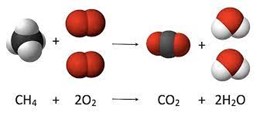
Figure 1. Methane combustion (Source: Advanced Energy)

Once more, heat treating requires energy input. The energy sources for heat treating most frequently include the combustion of carbon-based fossil fuels such as natural gas (methane), propane, fuel oil, diesel, or coal. Also, most combustion processes have a component of electricity to operate combustion air supply blowers, exhaust blowers, circulation fans, conveyors, and other items.

Figure 1 shows the chemical process for the combustion of methane (i.e., natural gas). Figure 1 demonstrates that during combustion, methane (CH4) combines with oxygen (O₂) to form carbon dioxide (CO₂) and water (H₂O). This same process is true for any carbon-based fuel. If you try to imagine all the combustion in progress across the globe at any given time, and knowing that all this combustion is releasing CO₂, then it is easy to see the problem and the need for CO₂ emission reductions.

In the most basic terms, if you have a combustion-based heat treating process on your site, then you are emitting CO₂. The electricity consumed to support the combustion processes also has a carbon component, and the consumption of this electricity contributes to a site’s carbon footprint.

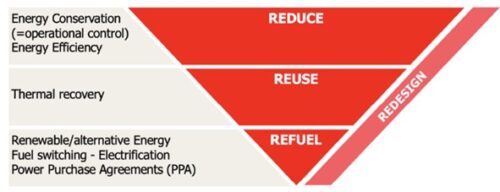
Figure 2. The 4 Rs of carbon footprint (Source: Advanced Energy)

So, combustion and electricity consumption on your site contributes to your carbon footprint. Knowing this, organizations may want to consider the level of their carbon footprint and explore ways to reduce it. There are many methods and resources available to help organizations understand and work to improve their carbon footprint. For this article, we will focus on the 4 Rs of carbon footprint
reduction (see Figure 2).

We will discuss each of these approaches individually in priority order in the next installment of the Sustainability Insights.

For more information:
Connect with IHEA Sustainability & Decarbonization Initiatives www.ihea.org/page/Sustainability
Article provided by IHEA Sustainability


Find Heat Treating Products And Services When You Search On Heat Treat Buyers Guide.Com


Sustainability Insights: How Can We Work to Get the Carbon Out of Heating? Part 1 Read More »

20 Quick Heat Treat News Chatter Items to Keep You Current

Heat Treat Today offers News Chatter, a feature highlighting representative moves, transactions, and kudos from around the industry. Enjoy these 20 news bites that will help you stay up-to-date on all thing heat treat. 

Equipment Chatter

  1. A leading Chinese aviation company began cooperating with SECO/WARWICK, placing an order for a Vector® vacuum furnace for carburizing and gas quenching. The furnace will be used for the manufacturer of hydraulic pump components and other machinery.
  2. Tenova Italimpianti, a technologies and equipment supplier for industrial furnace providers, recently received a contract from Metalloinvest for the reconstruction of the Heating Furnace 2 in the second rolling unit of Alexey Ugarov OEMK, in Russia.
  3. Tenova LOI Thermprocess has received an order from Wuhan Iron & Steel Co. Ltd. (WISCO) in Wuhan, China for the installation of a continuous quench for the efficient cooling of thin steel plates.

Personnel/Company Chatter

  1. Nitrex’s Aurora commercial heat treat facility is now in the hot testing phase of its newly installed low-pressure carburizing (LPC) and vacuum system, which is expected to start production in September.
  2. Can-Eng Furnaces International Ltd. welcomed Johan Vargas to its Mechanical Engineering team.
  3. Mike Stowe, senior energy engineer at Advanced Energy, recently won an ACEEE Champion of Energy Efficiency in Industry award in the industrial leadership category.
  4. Selas Heat Technology Co. announced that Burner Design and Controls (BDC) of Hazelwood, Mo. has joined their network of manufacturers’ representatives. BDC will be handling Selas burners, valves, mixers, and control components serving customers in Missouri, Kansas, Iowa, and Southern Illinois.
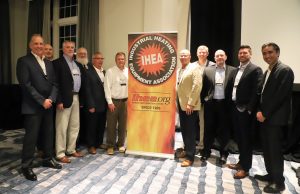
  5. The Industrial Heating Equipment Association (IHEA) recently gathered for its annual meeting in St. Pete Beach, FL, where the National Board of Directors and Executive Officers met in person. The leading Board of Directors consisted of both continuing and new members. Scott Bishop of Alabama Power – Southern Company serves as president; Jeff Valuck of Surface Combustion, Inc. as vice president; Brian Kelly of Honeywell Thermal Solutions as treasurer and Michael Stowe of Advanced Energy serves as past president. Jason Safarz returns to the IHEA Board of Directors as a regional sales manager at Karl Dungs, Inc. Jeff Rafter, vice president of sales and marketing with Selas Heat Technology Co., joins the IHEA Board of Directors this year. Continuing their service for 2021–2022: Gary Berwick, Dry Coolers; Alberto Cantu, Nutec Bickley; Bob Fincken, Super Systems, Inc.; Doug Glenn, ; Francis Liebens, SOLO Swiss Group; John Podach, Fostoria Infrared; and John Stanley, Karl Dungs, Inc.
  6. The Industrial Heating Equipment Association (IHEA) acknowledges their current committee chairpersons on the IHEA Committees and Divisions: Government Relations Committee led by Jeff Valuck, Surface Combustion, Inc.; Safety Standards and Codes Committee led by Kevin Carlisle, Karl Dungs, Inc.; Education Committee led by Brian Kelly, Honeywell Thermal Solutions; Marketing Communication & Membership Committee led by Erik Klingerman, Industrial Heating The Infrared Division is chaired by Scott Bishop, Alabama Power – Southern Company; and the Induction Division is chaired by Michael Stowe, Advanced Energy.
  7. Alvis Eimuss, head of Customer Support at CENOS, presented the company’s most recent software, CENOS Induction Heating simulation software’s version 3.0 at a webinar titled, “Webinar: CENOS 3.0 release”.

Kudos Chatter

  1. Braddock Metallurgical announced that they achieved the renewal of Nadcap accreditation at their Bridgewater, Boynton Beach, and Jacksonville locations. Additionally, Braddock Metallurgical earned the special Nadcap recognition of Merit.
  2. Solar Atmospheres – Souderton, PA announces that it has been awarded Nadcap 24-month Merit status for heat treating, brazing and carburizing.
  3. Metallurgical Processing, Inc. in New Britain, CT has achieved two-year Merit status with PRI/Nadcap with 10 checklists ranging from Aluminum, Ion Nitride, Vacuum Furnace Brazing and Carburize among others.
  4. The Bodycote team in Berlin, CT completed a three-day Nadcap audit for electron beam welding, maintaining their Merit status for a further two years.
  5.  Bodycote teams at Silao, Romulus, and Canton Haggerty were awarded the Supplier Quality Excellence Award from General Motors for their work in 2020.
  6. Isostatic Pressing Services, LLC successfully completed the PRI evaluation process, becoming Nadcap certified for various criteria including AC7102/6 and AC7102/8 Rev A among others.
  7. Thermal-Vac Technology has been nominated and asked to take part in the Orange County Business Journal’s celebration of the 22nd annual Family-Owned Business Award.
  8. Allied Mineral Products of Columbus, Ohio celebrates its 60th anniversary in August 2021.
  9. SECO/WARWICK, a Polish company with American roots, was awarded a prize at the USA-Central Eastern Europe Investment Summit & Awards, one of the key events summing up the economic partnership between the U.S. and the Central Eastern European region. The award for the Most Successful Expansion was accepted by Sławomir Wozniak, the president of SECO/WARWICK Group
  10. The European Steel Technology Platform (ESTEP) reconfirmed Roberto Pancaldi, Tenova CEO, as member of the Board of Directors in the position of vice president. Enrico Malfa, Tenova R&D Director, was appointed member of the Clean Steel Partnership’s Board at ESTEP

Heat Treat Today is pleased to join in the announcements of growth and achievement throughout the industry by highlighting them here on our News Chatter page. Please send any information you feel may be of interest to manufacturers with in-house heat treat departments especially in the aerospace, automotive, medical, and energy sectors to bethany@heattreattoday.com.


20 Quick Heat Treat News Chatter Items to Keep You Current Read More »

New Additions to the 2020-2021 IHEA Board of Directors and Officers

Scott Bishop, incoming president of IHEA (source: IHEA)

Jeff Valuck, incoming VP of IHEA (source: IHEA)

The Industrial Heating Equipment Association (IHEA) recently announced its 2020 – 2021 Board of Directors and Executive Officers. The new executive officers are Scott Bishop of Alabama Power Company as president, Jeff Valuck of Surface Combustion as vice president, and Brian Kelly of Honeywell Thermal Solutions as treasurer. Outgoing president Michael Stowe of Advanced Energy assumes the role of president emeritus.

Brian Kelly, incoming treasurer for IHEA (source: IHEA)

IHEA also welcomes new board member Alberto Cantu of Nutec Bickley. Alberto has been involved with IHEA since 2011 and participates on the Safety Standards and Codes Committee.

Alberto Cantu, incoming board member of IHEA (source: IHEA)

IHEA President Scott Bishop, who is highly involved in IHEA’s Infrared Division, says, “It is an honor to serve as IHEA’s president for the 2020-2021 term.  I look forward to continuing the great work IHEA has done for more than 90 years.  Also, during this unprecedented time I would like to encourage our members to be proactive in finding ways to better serve our industry and make an impact.” Bishop has served as IRED chairman, presented at numerous workshops and seminars, and provided key support in the recent revision of the Infrared Process Heating Handbook for Industrial Applications. 

Michael Stowe, outgoing president of IHEA (source: IHEA)

“I am very excited about this new role,” Cantu states. “I think it will be a great opportunity to connect with colleagues in the industry and help move it forward,”


New Additions to the 2020-2021 IHEA Board of Directors and Officers Read More »

Skip to content