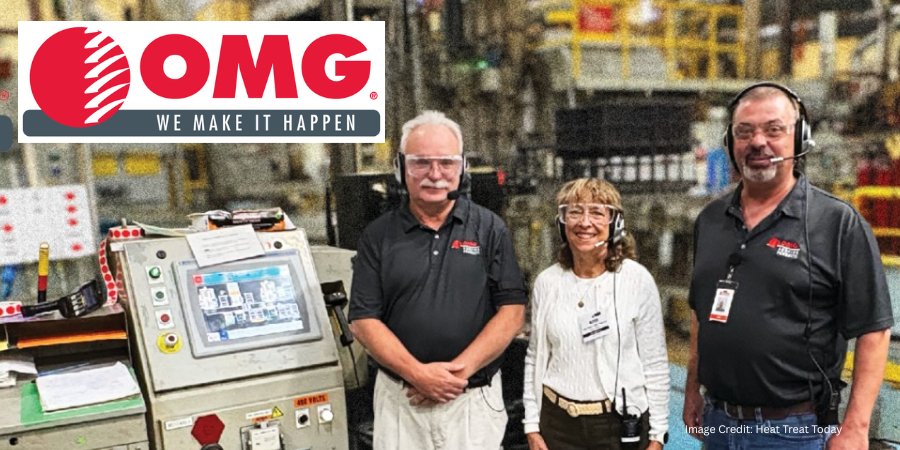
This Technical Tuesday installment summarizes the highlights from a site visit by Heat Treat Today’s Doug Glenn, publisher and founder, and Karen Gantzer, manager of events. Learn how OMG Building Products, LLC took control of efficiency, product quality, and R&D in the middle of New England.
This informative piece was first released in Heat Treat Today’s July 2026 Annual Super Brands Issue print edition.
In 2003, OMG‘s decision to vertically integrate manufacturing operations meant that heat treating needed to be brought in-house, making R&D a prized cornerstone of operations that guarantee high quality products. The Northeast operation in Agawam, Massachusetts, now moves 20 million pounds of steel per year (two to three tractor trailer trucks of steel wire per day) and features electrically powered IQ batch furnaces and continuous mesh belt furnaces.
Founding and Evolution
Five guys in Agawam, Massachusetts, gathered around a backyard BBQ in 1981 talking about the challenge of finding decent roofing screws. Pooling their talents across fabrication, finance, and more, they formed the company that has expanded to be OMG Building Products LLC. Their singular focus: making better roofing fasteners. To this day, roofing fasteners still make up 60% of OMG’s business.
In 2003, following years of sustained growth and product expansion, they took steps to bring increased oversight to their product. The main objective was to further ensure quality, gain greater material velocity, and increase customer service. The first step was to invest in an ECoat painting line for the fasteners, the process closest to OMG’s clients. Kevin Walters, now OMG’s senior process engineering manager, was hired as quality manager to oversee these transitions.
Making room for roofing heat treating operations soon followed, as well as several building expansions in the industrial park, including a residential construction fastener business and increased warehouse space. These capacity developments brought OMG’s low-carbon steel and yet highly efficient roofing product to a global market.
The Next Step: In-House Heat Treat
Bringing heat treating in-house would be a major move to further secure the manufacturing line. Product was being shipped to as many as ten different locations, including facilities in the Midwest and Canada. In fact, the biggest percentage was at risk since that Waterbury, Connecticut, heat treat supplier was looking at closing its doors with just a 90-days’ notice.
It was 2012 when OMG decided to investigate installing systems at the industrial park in Agawam. After three to four years’ worth of technical and business research, the parent company approved the funds to embark on the installation that is there today.
Research and Design
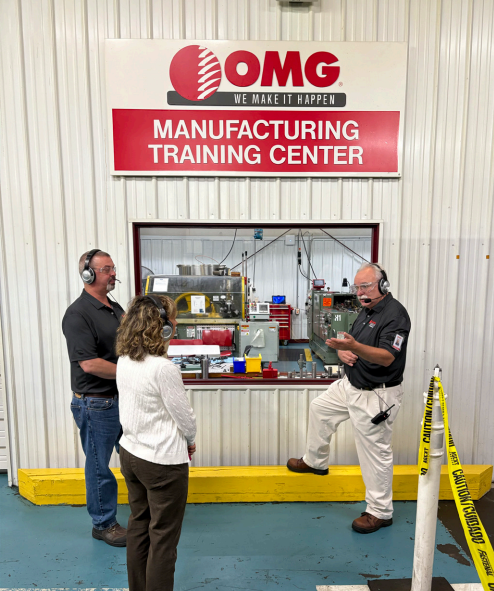
When it comes to the success of their heat treat operations, Jeffrey (Jeff) Hotham, OMG heat treat manager, put it bluntly: “Kevin is our secret weapon.” Since joining the team in 2003 at the apex of change, the senior process engineering manager brought heat treating operations in-house, facing every obstacle that comes with it.
The first challenge was logistics. OMG is situated in a light industrial park that cannot provide enough energy to power gas or electric furnace operations. After much analysis, it was determined that the most cost-efficient solution was to build an electric line connecting to an Eversource utility grid. This has had welcome maintenance implications as the electrically powered furnaces do not require an on-site burner tech and the accompanying nickel element ceramic tubes are also low maintenance.
Next was determining the thermal processing equipment. For an entire year, Kevin researched heat treating methods to optimize the company’s fasteners. His boots-on-the-ground research included visiting commercial heat treat facilities, attending trade shows, and speaking directly with industry professionals.
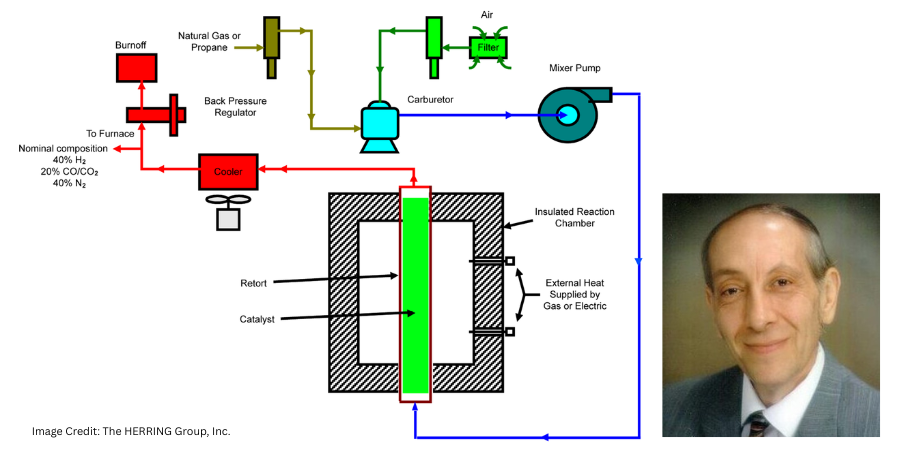
Because OMG produces a variety of lengthy fasteners, distortion control drove the decision of an integral quench furnace design, while productivity needs were met through a continuous mesh belt furnace design. Additionally, size of the furnace systems was all important in balancing flexibility and time-to-market realities. This resulted in a competitive heat treat system design that would leverage a significant amount of automation and a loading system that minimized manual intervention. This original furnace line included two endo generators, smart oil filtration, cooling equipment, and material handling.
The Right Fit: Finding a Furnace OEM
The competitive system design, however, would hinge on the ability to find a vendor who could deliver dependable, customizable equipment. Kevin and a cross-functional team of OMG business, operations, finance, purchasing, and safety representatives were tasked with selecting the equipment supplier.
When reviewing their options, OMG’s choice of furnace supplier came down to three key factors: design flexibility, locality, and customer service. It was essential that the system integrate design decisions to accommodate Kevin’s researched solutions.
Some furnace OEMs had reservations about adapting their systems to accommodate these special requests. Other suppliers had systems completed at various locations, with features sometimes being subcontracted off-site. Ultimately, the team found their perfect fit with Williams Industrial Service, located in Bowling Green, Ohio, who were eager to accommodate design changes, maintained full control of furnace build under one roof, and demonstrated a service-minded team.
Once ordered, the next step was to monitor job progress. OMG was proactive, providing timeline-focused goals. The furnace build progressed on schedule with Kevin making quarterly visits to complete milestone reports.
Within three years, OMG’s full heat treating line was installed.
Optimizing Productivity in Current Operations
Operations have increasingly shifted to focus on cost savings and control over inefficiencies. From a 30,000-foot view, wire arrives, is skim drawn, goes through cold forming, then heat treating, and finally painting and packing.
Facility design is critical in operational performance. According to Kevin, the working environment surpasses that of many heat treat operations he has visited, a credit to how well Jeff manages the plant floor. A key example of this is safety. OMG’s safety culture can be seen throughout their operations, extending to the racking department where a climate-controlled room away from loud manufacturing supports racking staff. Kevin also remarked that the air ventilation system is a point of pride: “We literally have guys wear hoodies in the heat treat department in the wintertime… because we have so much fresh air intake and exhaust in the room; the climate here is pretty good.”
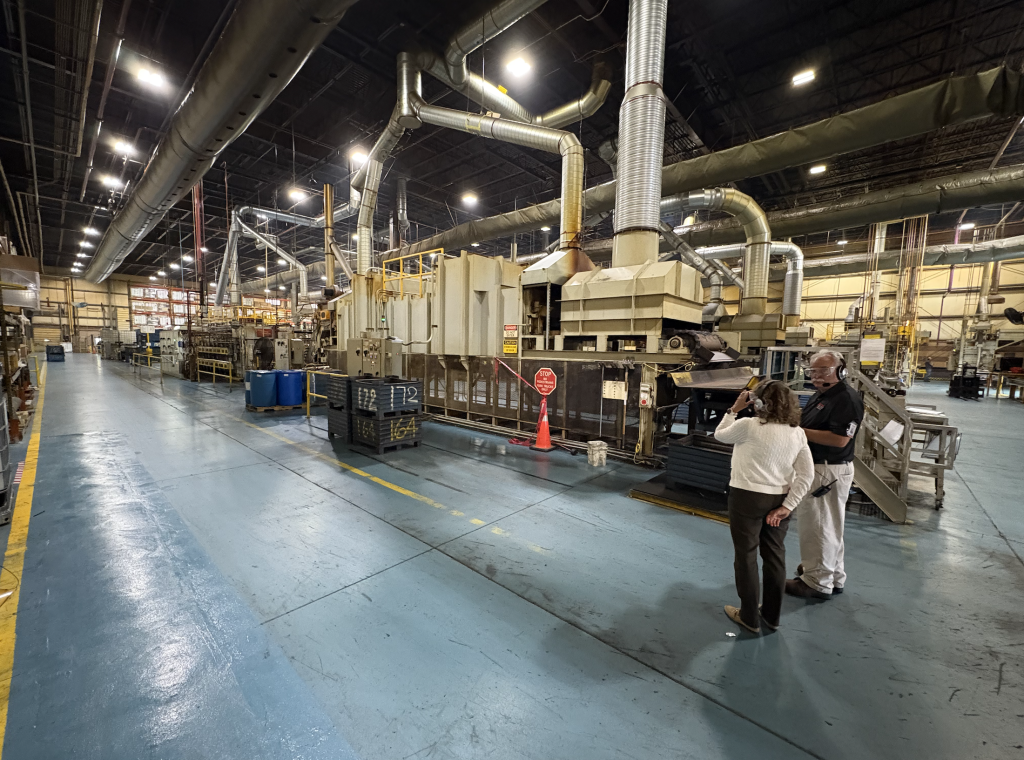
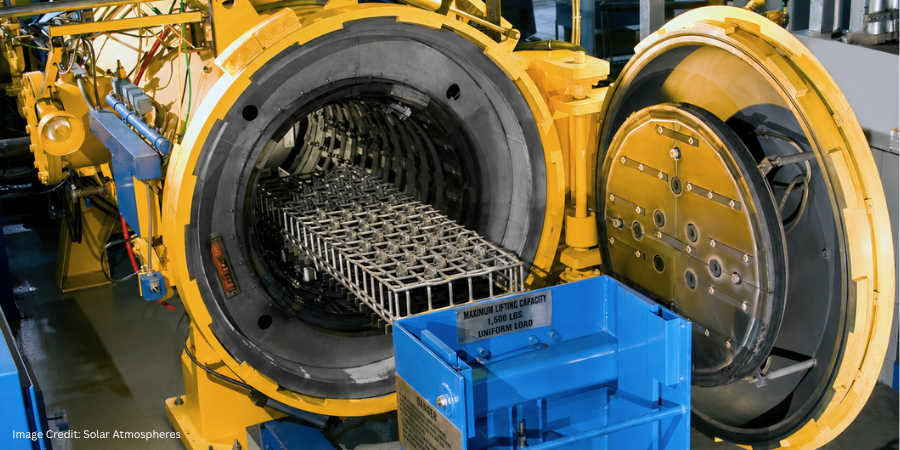
When roofing fasteners are heat treated, they either go through one of the three medium- to large-scale continuous mesh belt furnace lines or through the automated integral quench (IQ) furnace line. The mesh belt line receives shorter, 1.5- to 6-inch parts that are poured from a tub onto the belt with ease as well as longer 7- to 8-inch product. On the other hand, the IQ furnace line includes two furnaces which receive longer parts up to 24 inches long from a fully automated delivery system; fasteners are hung from their heads on the rack to prevent distortion. In the future, the team looks forward to automating this part of the process.
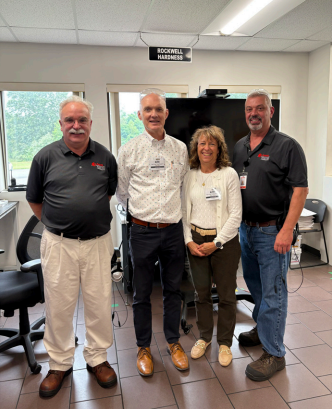
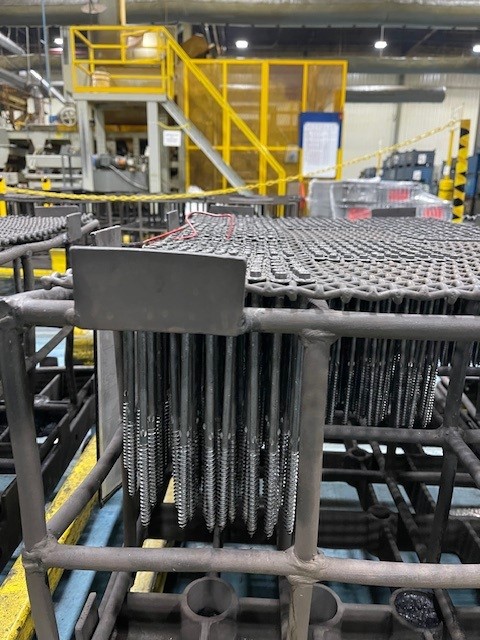
The IQ line is a point of pride. Kevin commented that he has reason to believe that his IQ line may be the most automated in the country. “My operators do not have to get on a charge cart at all,” he explains, “[because] it’s fully automated; it knows when loads are done in the furnaces, takes them, puts them in, takes them out, puts them in the washer, and takes them out. Everything is automatically programmed.” These loads are monitored based on weights for baskets and piece count for racks.
Jeff and Kevin have collaborated to increase equipment efficiency and throughput while maintaining quality.
Operations feature an in-house laboratory to test product, particularly for distortion, the leading quality concern for roofing product. As mentioned earlier, furnace line automation is a goal, yet longer parts — like thin-shanked 8-inch parts — may still need to be hand-racked on the mesh belt to attain the quality results.
The Power of Planned Maintenance
Regular planned maintenance schedules work to keep this operation up and running. Jeff coordinates any maintenance requiring extended furnace downtime to occur at the same time.
On an annual basis, temperature uniformity is prioritized through extensive furnace care, including replacing the thermocouples and carbon probes. As Jeff asserts, “We try to stay ahead of the game.” This planned maintenance takes two weeks of the furnace being out of commission to ensure the furnace is thoroughly cleaned and any equipment replacements completed.
Biannually (twice every year), furnace ductwork is cleaned — a critical measure to stop risk of fire since, according to Jeff, most industry fires start in the ducts. OMG outsources experts to complete this maintenance over the course of a full week.
Finally, on a quarterly basis, all equipment undergoes vibration and infrared analysis. Following this proactive maintenance schedule has brought the operation from producing 9 million pounds in his first year to 19.2 million pounds just six years later in 2025 — same equipment, simply leveraged by Jeff’s proactive planning and coordinating Kevin’s R&D efficiency endeavors.
Future
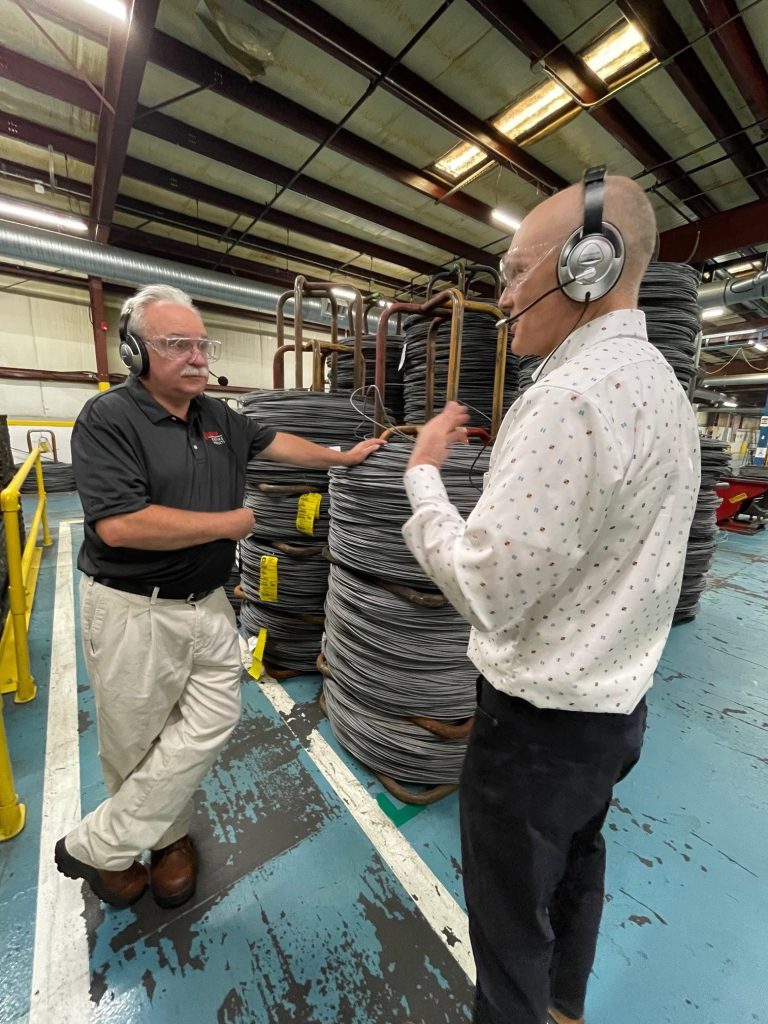
As the business grows, OMG is exploring other ways to accomplish tasks better and more efficiently: induction, vacuum furnace, continuous or pass-through IQ, and rack furnaces are all being considered.
Kevin addressed their laser-focused approach in heat treating operations, saying, “As time goes on though, we are perfecting productivity with Kaizen events and controlling our own destiny and lowering overall costs. Last year, process optimization on the mesh belt lines boosted our productivity by more than 30% and our automated IQ line is up 20% this year.”
OMG’s operation demonstrates what curious innovation and on-the-ground industry research can unlock for in-house heat treating. If the past is any indication of the future, we’ll see OMG leading the way in thoughtful, quality-focused integration of advanced technology in the industry.
This article was written by Heat Treat Today’s editorial team. For more information, contact editor@heattreattoday.com.