Sometimes our editors find items that are not exactly "heat treat" but do deal with interesting developments in one of our key markets: aerospace, automotive, medical, energy, or general manufacturing. To celebrate getting to the "fringe" of the weekend, Heat TreatToday presents today’s Heat TreatFringe Friday best of the web article that will have you saying "It's alive!"
Not to be dramatic, this steel stands up to corrosion under salt water and heals itself. When the special alloy coated steel was perforated, it could repair itself with the assistance of heat or on its own. The new alloy? Apparently, the result of research done at Rice University described as "a lightweight sulfur-selenium alloy."
An excerpt:
"A coating developed using a lightweight sulfur-selenium alloy has proven effective so far in preventing corrosion after being applied to steel that’s then submerged in seawater for a month. The scientists say the formula combines several different corrosion-inhibiting methods."
Are you sure you should vacuum braze that? As the title of this best of the web article suggests, vacuum brazing materials containing zinc is not a good idea. Volatized zinc can contaminate, and maybe even ruin, your vacuum furnace. But what about cadmium, lead, chromium, and magnesium? Is vacuum brazing safe for those materials?
In this article by Dan Kay, examine the vapor pressure curves of common metallic elements to be sure you know exactly when you need to worry about vaporization. And remember, operating your furnace at partial pressure does not offset the effects of vaporization.
An excerpt:
Many people braze stainless steels (which contains chromium) at vacuum levels approaching 10-5 Torr [. . . ] You can readily see that at 10-5 Torr the temperature at which Cr volatilizes has dropped down to only about 1800F (950°C). Since nickel-brazing of stainless typically takes place at about 2000-2100°F (1095-1150°C), please understand that you will indeed be volatilizing chromium during this brazing operation, which will condense on the furnace walls, giving them a greenish/bluish coloration.
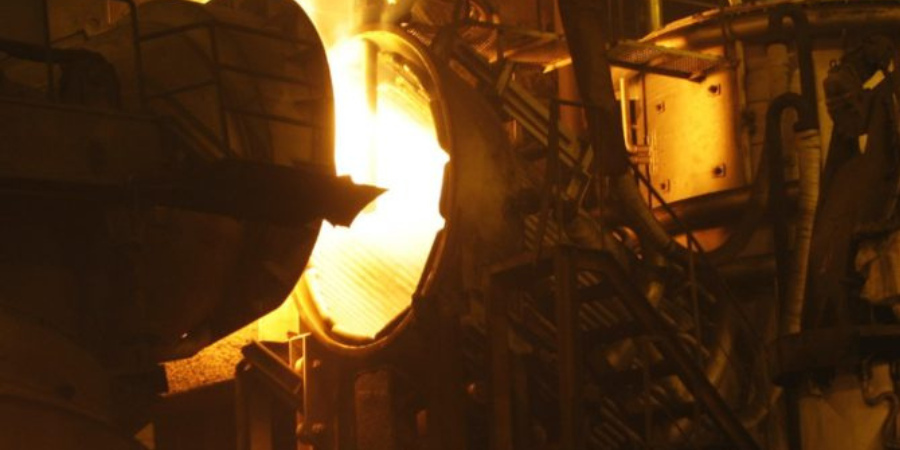
Celsa France, an EAF (electric arc furnace) steel producer specializing in the production of steel billets from steel scrap, will be increasing the technology capabilities of their 150-ton scrap AC top charge furnace in Boucau, France.
The iEAF® technology platform supplied by Tenova Goodfellow, Inc., a Canadian subsidiary of Tenova, is Celsa France’s third NextGen® system to be installed in Europe. The scope of supply will include NextGen® hardware for upstream off-gas measurement and various software solutions.
“We are pleased to continue our long-standing relationship with Tenova,” states Nicolas Claveranne, production manager at Celsa France and project manager for this project. “The NextGen® references – we are sure – will bring added value to the steelmaking operations of our plant.”
A batch sintering furnace will be installed at Mueller Brass Co., a major supplier of brass rod and forgings in the United States. The 60" wide x 90" deep x 30" tall atmosphere box sintering furnace includes an accelerated gas cooling system to improve floor-to-floor cycle time and meet their demanding production needs.
This Gasbarre Thermal Processing Systems box furnace is designed with a maximum operating temperature of 1650°F, a capacity of 14,000 lbs., and utilizes a nitrogen atmosphere. The system incorporates an Allen-Bradley PLC with SSi 9130 control and 12.1" HMI display. Additionally, the indirect fired gas heating system incorporates parallel positioning control for efficiency and process flexibility, and an integrated oxygen analyzer gives Muller Brass Co. the proper furnace environment prior to heating.
Tall atmosphere box sintering from Gasbarre Thermal Processing Systems Photo Credit: Gasbarre Thermal Processing Systems
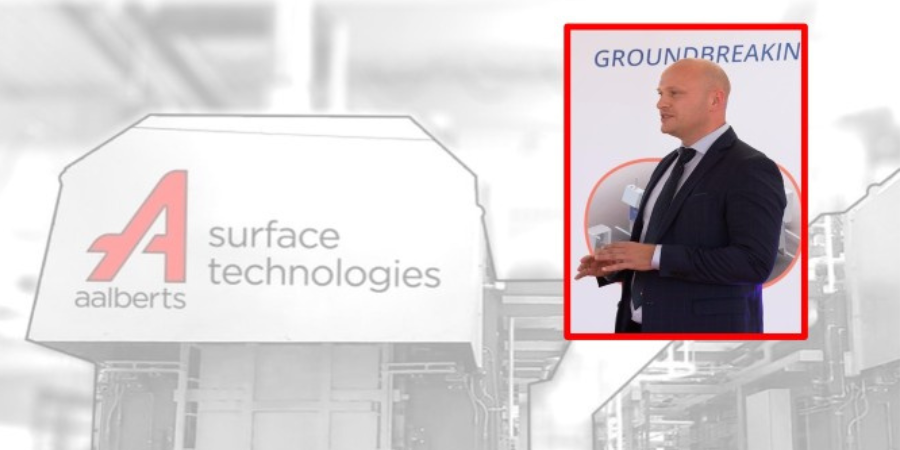
Aalberts Surface Technologies Group will expand their Dzierżoniów, Poland hardening plant with a new AFT process line. The line, based on two-chamber atmosphere furnaces, will boost the plant's manufacturing of transmission components and specialized hardening processes including carburizing, nitrocarburizing, and annealing.
SECO/WARWICK, parent company of North American furnace supplier SECO/VACUUM Technologies, will provide a main furnace, a tempering furnace, and an endothermic atmosphere generator, loading/unloading devices, and auxiliary infrastructure. The line offers both conventional load arrangements with modular accessories and hardening baskets.
"The new line will significantly increase our capacity and will allow us to expand our business to other Eastern European countries,” said Bartłomiej Olejnik, managing director, Aalberts Surface Technologies Heat Sp. z o.o.
What's most important when heat treating: time, quality, costs, aesthetics?
With competing demands, you need to discern when cleaning parts pre- or post-heat treat is a beneficial, or even necessary, step. In today's Technical Tuesday, provided by SAFECHEM, dive into this topic -- to clean or not to clean -- and examine 6 easy questions you can ask yourself when planning any heat treat load.
Is Cleaning a Must in Heat Treat?
The answer is neither a simple "yes" nor a simple "no" – it depends.
In the past, cleaning has not been given much attention to in heat treatment, and the step is often bypassed. However, the attitude is slowly changing. On the one hand, product specifications and higher quality requirements are driving the demand for cleaner products – both visually and qualitatively. On the other hand, evolving materials used in upstream manufacturing has amplified the need for cleaning. Environment-friendly cutting fluids, for example, can go deep into the substrate where their complete removal is necessary to ensure successful thermal treatment.
Contact us with your Reader Feedback!
But still, the question remains: should you clean or not clean?
To answer that, we need to differentiate between cleaning pre-heat treat, and cleaning post-heat treat.
The main goal of cleaning pre-heat treat is to remove upstream contaminants such as cutting oils, coolants, chips and dust to ensure a clean, smooth surface. Their remnants could otherwise become baked on surfaces which might require costly processes to remove. Pre-cleaning is also key to protecting the furnaces. It prevents the formation of smoke and oil vapors resulting from burned oils, which in itself is also an environmental and worker safety issue.
Pre-Heat Treat Cleaning Key To Nitriding and Carburizing
The reality is that the majority of heat treaters have not fully recognized the need for cleaning prior to heat treat (with the exception of brazing). And this is of particular concern for demanding applications such as nitriding and carburizing, where a cleaned surface is fundamental to achieving good heat treat results.
"Cleanliness conveys quality, standard and care, while also offering protection to critical furnace equipment. For certain heat treat applications, including gas nitriding, ferritic nitrocarburizing and low pressure carburizing, cleaning is almost non-negotiable. For others, cleaning could be a competitive advantage that helps differentiate your products." Photo Credit: Adobe Stock
Insufficient cleaning can lead to challenges such as non-uniform layers, soft spots and stop-off paint issues. Particularly with nitriding, spotty nitriding layers may not be obvious to the eyes and can only be detected under microscope. Phosphate additives in corrosion inhibitors can also work themselves deep into the surface of deep drawn parts, which can cause spotty nitriding patterns if not removed properly.
When it comes to cleaning post-heat treat, cleaning is a standard step after oil quenching where most heat treaters rely on water-based systems to do the job. Of course, it is common knowledge that water and oil do not mix well, so residues could still remain. Therefore, how clean the parts need to be will depend very much on the end-use application (e.g., will the parts be shipped to clients? Will they be machined further?) as well as client quality requirements. Medical applications, for example, would have strict residual particle size limitations in place.
The Real (Hidden) Risk of Not Cleaning
Tackling a heat treat failure where cleaning is an apparent contributing factor needs not be problematic. The real challenge lies in cases where the heat treat process seems to have worked – while in fact it has not.
Complaints about unexpected nitriding/carburizing layers, or component problems with equipment, can arise when parts are in the final assembly, are already in use, or are even out there for many years. The link between these issues and (the lack of/insufficient) cleaning can become very hard to detect by then.
Hence, the pain point for heat treaters does not have to be “in the present.” Client claims issues that come back to bite in the future represent a far greater risk, precisely because of their unpredictability. Cleaning should not be taken lightly because it can mitigate future problems that heat treaters are not necessarily aware of at this point.
The Bottom Line Is This . . .
Cleaning is good housekeeping. Cleanliness conveys quality, standard and care, while also offering protection to critical furnace equipment. For certain heat treat applications, including gas nitriding, ferritic nitrocarburizing and low pressure carburizing, cleaning is almost non-negotiable. For others, cleaning could be a competitive advantage that helps differentiate your products.
When assessing your need to clean, consider these questions:
What would be the cost of not cleaning? I.e., what damage could potential claims cause in terms of money, time, delays, client trust and corporate reputation?
What are the costs to maintain/replace your furnace?
What are the technical justifications?
What are your client expectations in terms of quality, aesthetics, and applications?
What are your corporate standards in terms of health, safety and the environment (HSE)?
Are you producing parts for high-value manufacturing sectors such as aviation, automotive, or medical devices, where your product quality can make or break your business?
Needless to say, cost will be a key driving factor. Do you have a high enough utilization rate to justify the cost of investing in a cleaning system? If not, outsourcing to job shops could be a potential option.
If you do have the cost argument to invest in an in-house solution, do not cut corners! Don’t be tempted to choose the cheapest cleaning option available. Companies do that and realize years later that the system is not working properly and have to shell out another large sum to upgrade their equipment. Because it is not always obvious that your heat treat failures are a direct result of poor cleaning, as a best risk mitigation policy, take a step above rather than a step below – no one loves paying twice!
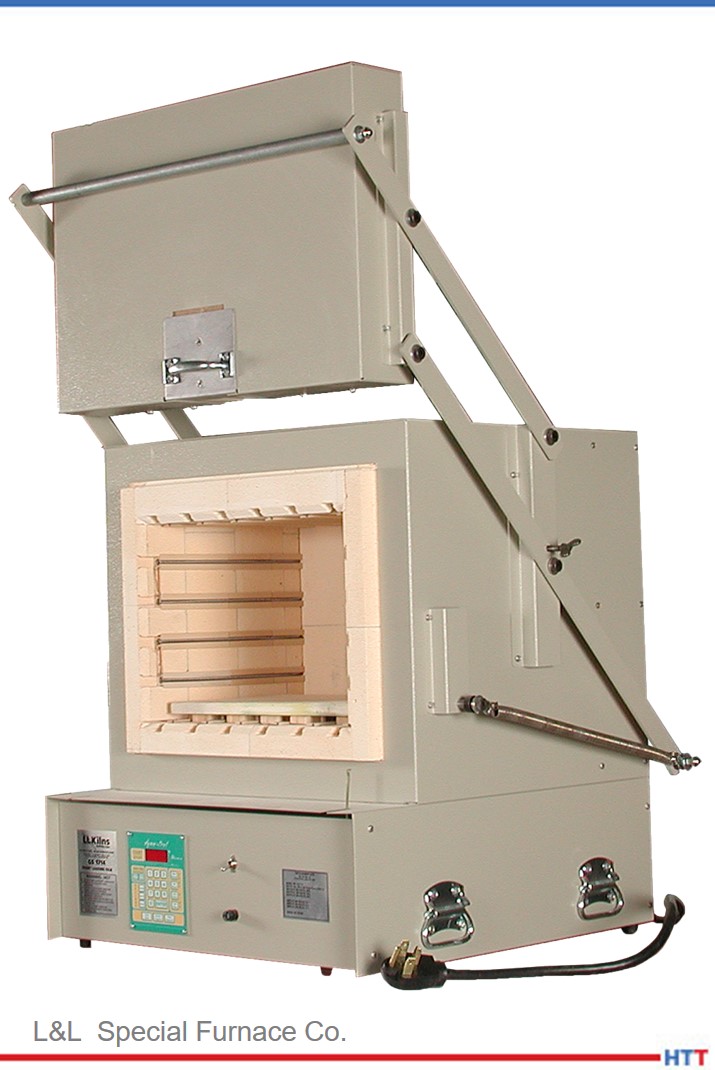
L&L Special Furnace Co., Inc. model GS1714 Photo Credit: L&L Special Furnace Co., Inc.
A worldwide manufacturer of catalytic convertors, medical devices and pollution environment controls is set to receive 10 bench-top lab furnaces that will be used as part of a precious metals recovery system. The assay division recycles many parts that were originally deployed as catalytic convertors for diesel motors, medical components, and electrical parts.
The precious metals are burned out of the existing product and placed in crucibles. The crucibles are heated in the L&L Special Furnace Co., Inc. model GS1714 at temperatures between 1,800°F/982°C and 2,200°F/1,204°C. This allows any impurities in the metals to rise to the surface and be removed for further refinement. The model GS1714 has an effective work zone of 10” high by 15″ across by 13″ deep.
VIVA ALUMINIUM SYSTEMS – a Vias Group member – has recently acquired a turnkey system for nitriding extrusion dies after experiencing heightened demands for its extrusion profiles.
Marcin Stokłosa Project Manager Nitrex Poland Photo Credit: LinkedIn.com
With these demands from the industrial and construction markets, VIVA decided to expand its manufacturing capacity, installing an additional extrusion press and nitriding equipment. The new pit furnace has an effective work zone of 39" diameter by 59" high (1000 x 1500 mm) with the capacity to nitride a 4400 lbs. (2000 kg) load. The Nitreg® process technology adapts to the application requirements, achieving a high throughput per extrusion run and scoring a high number of runs per treated die, which in turn optimizes tool life and lowers tooling cost for a faster return on investment.
"We are delighted to do business with VIVA again," states Marcin Stoklosa, product manager at Nitrex. "Fostering customer loyalty is a top priority at Nitrex and key to building an ongoing partnership for future growth."
We’ve assembled some of the top 101Heat TreatTips that heat treating professionals submitted over the last three years into today’s original content. If you want more, search for “101 heat treat tips” on the website! Today’s tips will remind you of the importance of materials science and chemistry.
By the way, Heat TreatToday introduced Heat Treat Resources last year; this is a feature you can use when you’re at the plant or on the road. Check out the digital edition of the September Tradeshow magazine to check it out yourself!
Induction Hardening Cast Iron
Induction hardening of cast irons has many similarities with hardening of steels; at the same time, there are specific features that should be addressed. Unlike steels, different types of cast irons may have similar chemical composition but substantially different response to induction hardening. In steels, the carbon content is fixed by chemistry and, upon austenitization, cannot exceed this fixed value. In contrast, in cast irons, there is a “reserve” of carbon in the primary (eutectic) graphite particles. The presence of those graphite particles and the ability of carbon to diffuse into the matrix at temperatures of austenite phase can potentially cause the process variability, because it may produce a localized deviation in an amount of carbon dissolved in the austenitic matrix. This could affect the obtained hardness level and pattern upon quenching. Thus, among other factors, the success in induction hardening of cast irons and its repeatability is greatly affected by a potential variation of matrix carbon content in terms of prior microstructure. If, for some reason, cast iron does not respond to induction hardening in an expected way, then one of the first steps in determining the root cause for such behavior is to make sure that the cast iron has not only the proper chemical composition but matrix as well.
(Dr. Valery Rudnev, FASM, Fellow IFHTSE, Professor Induction, Director Science & Technology, Inductoheat Inc.)
14 Quench Oil Selection Tips
Here are a few of the important factors to consider when selecting a quench oil.
Part Material – chemistry & hardenability
Part loading – fixturing, girds, baskets, part spacing, etc.
Part geometry and mass – thin parts, thick parts, large changes in section size
Distortion characteristics of the part (as a function of loading)
Stress state from prior (manufacturing) operations
Oil type – characteristics, cooling curve data
Oil speed – fast, medium, slow, or marquench
Oil temperature and maximum rate of rise
Agitation – agitators (fixed or variable speed) or pumps
Effective quench tank volume
Quench tank design factors, including number of agitators or pumps, location of agitators, size of agitators, propellor size (diameter, clearance in draft tube), internal tank baffling (draft tubes, directional flow vanes, etc.), flow direction, quench elevator design (flow restrictions), volume of oil, type of agitator (fixed v. 2 speed v. variable speed), maximum (design) temperature rise, and heat exchanger type, size, heat removal rate in BTU/hr & instantaneous BTU/minute.
Height of oil over the load
Required flow velocity through the workload
Post heat treat operations (if any)
(Dan Herring, “The Heat Treat Doctor®”, of The HERRING GROUP, Inc.)
How to Achieve a Good Braze
In vacuum brazing, be certain the faying surfaces are clean, close and parallel. This ensures the capillary action needed for a good braze.
A good brazing filler metal should:
Be able to wet and make a strong bond on the base metal on which it’s to be applied.
Have suitable melt and flow capabilities to permit the necessary capillary action.
Have a well-blended stable chemistry, with minimal separation in the liquid state.
Produce a good braze joint to meet the strength and corrosion requirements.
Depending on the requirements, be able to produce or avoid base metal filler metal interactions.
(ECM USA)
Pay Attention to Material Chemistry
When trying to determine a materials response to heat treatment, it is important to understand its form (e.g., bar, plate, wire, forging, etc.), prior treatments (e.g. mill anneal, mill normalize), chemical composition, grain size, hardenability, and perhaps even the mechanical properties of the heat of steel from which production parts will be manufactured. The material certification sheet supplies this basic information, and it is important to know what these documents are and how to interpret them.
Certain alloying elements have a strong influence on both the response to heat treatment and the ability of the product to perform its intended function. For example, boron in a composition range of 0.0005% to 0.003% is a common addition to fastener steels. It is extremely effective as a hardening agent and impacts hardenability. It does not adversely affect the formability or machinability. Boron permits the use of lower carbon content steels with improved formability and machinability.
During the steelmaking process, failure to tie up the free nitrogen results in the formation of boron nitrides that will prevent the boron from being available for hardening. Titanium and/or aluminum are added for this purpose. It is important, therefore, that the mill carefully controls the titanium/nitrogen ratio. Both titanium and aluminum tend to reduce machinability of the steel, however, the formability typically improves. Boron content in excess of 0.003% has a detrimental effect on impact strength due to grain boundary precipitation.
Since the material certification sheets are based on the entire heat of steel, it is always useful to have an outside laboratory do a full material chemistry (including trace elements) on your incoming raw material. For example, certain trace elements (e.g. titanium, niobium, and aluminum) may retard carburization. In addition, mount and look at the microstructure of the incoming raw material as an indicator of potential heat treat problems.
(Dan Herring, The Heat Treat Doctor®)
Aqueous Quenchant Selection Tips
Determine your quench: Induction or Immersion? Different aqueous quenchants will provide either faster or slower cooling depending upon induction or immersion quenching applications. It is important to select the proper quenchant to meet required metallurgical properties for the application.
Part material: Chemistry and hardenability are important for the critical cooling rate for the application.
Part material: Minimum and maximum section thickness is required to select the proper aqueous quenchant and concentration.
Select the correct aqueous quenchant for the application as there are different chemistries. Choosing the correct aqueous quenchant will provide the required metallurgical properties.
Review selected aqueous quenchant for physical characteristics and cooling curve data at respective concentrations.
Filtration is important for aqueous quenchants to keep the solution as clean as possible.
Check concentration of aqueous quenchant via kinematic viscosity, refractometer, or Greenlight Unit. Concentration should be monitored on a regular basis to ensure the quenchant’s heat extraction capabilities.
Check for contamination (hydraulic oil, etc.) which can have an adverse effect on the products cooling curves and possibly affect metallurgical properties.
Check pH to ensure proper corrosion protection on parts and equipment.
Check microbiologicals which can foul the aqueous quenchant causing unpleasant odors in the quench tank and working environment. If necessary utilize a biostable aqueous quenchant.
Implement a proactive maintenance program from your supplier.
(Quaker Houghton)
Container Clarity Counts!
Assure that container label wording (specifically for identifying chemical contents) matches the corresponding safety data sheets (SDS). Obvious? I have seen situations where the label wording was legible and accurate and there was a matching safety data sheet for the contents, but there was still a problem. The SDS could not be readily located, as it was filed under a chemical synonym, or it was filed under a chemical name, whereas the container displayed a brand name. A few companies label each container with (for instance) a bold number that is set within a large, colored dot. The number refers to the exact corresponding SDS.
(Rick Kaletsky)
Check out these magazines to see where these tips were first featured:
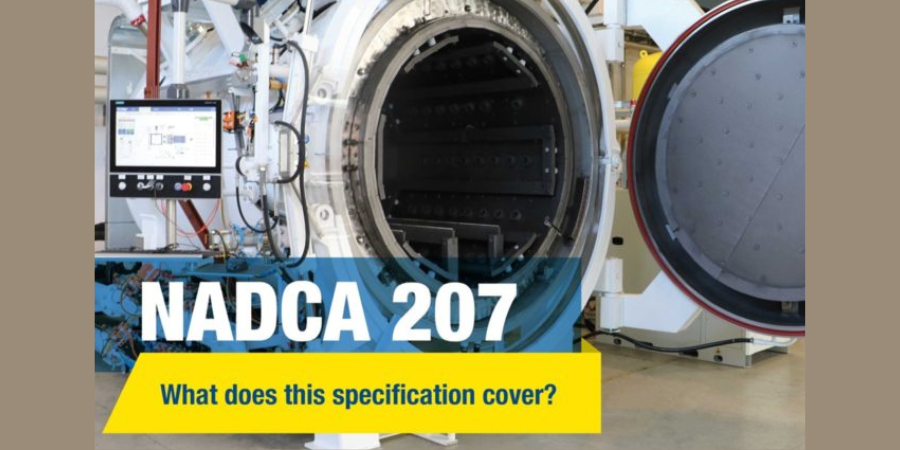
When "the die is cast," heat treaters should make sure that they're using NADCA 207 standards. Prepared by the North American Die Casting Association (NADCA) for its members, they provide recommendations on how to produce dies for die casting to optimize thermal tool life in terms of thermal fatigue.
In today's best of the web article, check out what some of the essential requirements are and how this standard could help in "maximizing the resistance of tools to the occurrence of cracks from thermal fatigue."
An excerpt:
However, the content of this specification is so well processed that it is valid not only for the production of die casting dies and for thermal fatigue, but also for many other applications, and is the best information material for commercial vacuum heat treatment plants, tool shops and die casting foundries, enabling the elimination of fundamental errors in the tool making process.





 Source: ThomasNet
 Source: