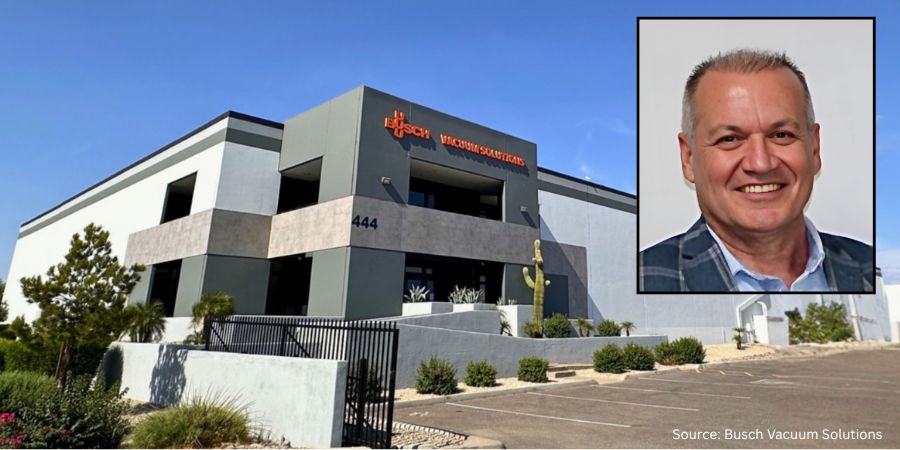
Busch Vacuum Solutions, part of the Busch Group, a global company in vacuum and overpressure technology, has announced the development of its newest U.S. facility. As a key regional hub, the facility will specialize in the repair, service, and overhaul of vacuum pumps, vacuum systems, and overpressure equipment including turbo molecular pumps, leak detectors, valves, and accessories. The almost 60,000-square-foot facility will be located in Tempe, Arizona.
Turgay Ozan President & CEO Busch Group USA
The state-of-the-art facility is scheduled to open in October 2025. This expanded capability brings greater flexibility, technical expertise, and responsiveness to customers across the semiconductor, industrial, medical, and environmental sectors. The Tempe Service Center will provide faster turnaround times, expert support, and more efficient service delivery tailored to the unique operational needs of those across the U.S.
“This investment represents more than just added square footage. It’s about proximity, partnership, and performance. With the launch of our Tempe location, we’re better positioned to deliver unmatched value…on advanced vacuum technologies in high-performance environments,” said Turgay Ozan, president & CEO of Busch GroupUSA.
Corey Woods Mayor Tempe, Arizona
The mayor of Tempe, Corey Woods, commented, “We’re excited to welcome Busch Vacuum Solutions…Their decision to invest here speaks to the strength of Arizona’s semiconductor ecosystem, diversity of thriving industries located here, and the spirit of innovation that defines our community. The new Tempe Service Center will create skilled employment opportunities, strengthen business partnerships, and keep Tempe at the forefront of high-tech growth and excellence.”
In addition to semiconductor and industrial markets, Busch’s vacuum technology supports automotive, food and beverage, packaging, metallurgy, pharmaceuticals, plastics, and large-scale distribution. These capabilities enable more localized production and increase operational resilience across essential supply chains.
Press release is available in its original form here.
In today’s News from Abroad installment, we highlight an electrically heated aging furnace for aluminum production, an electric arc furnace as part of a £1.25 billion ($1.69 billion USD) transformation, a new electric arc furnace world record, and more!
Heat TreatTodaypartners with two international publications to deliver the latest news, tech tips, and cutting-edge articles that will serve our audience — manufacturers with in-house heat treat. Furnaces International, a Quartz Business Media publication, primarily serves the English-speaking globe, and heat processing, a Vulkan-Verlag GmbH publication, serves mostly the European and Asian heat treat markets.
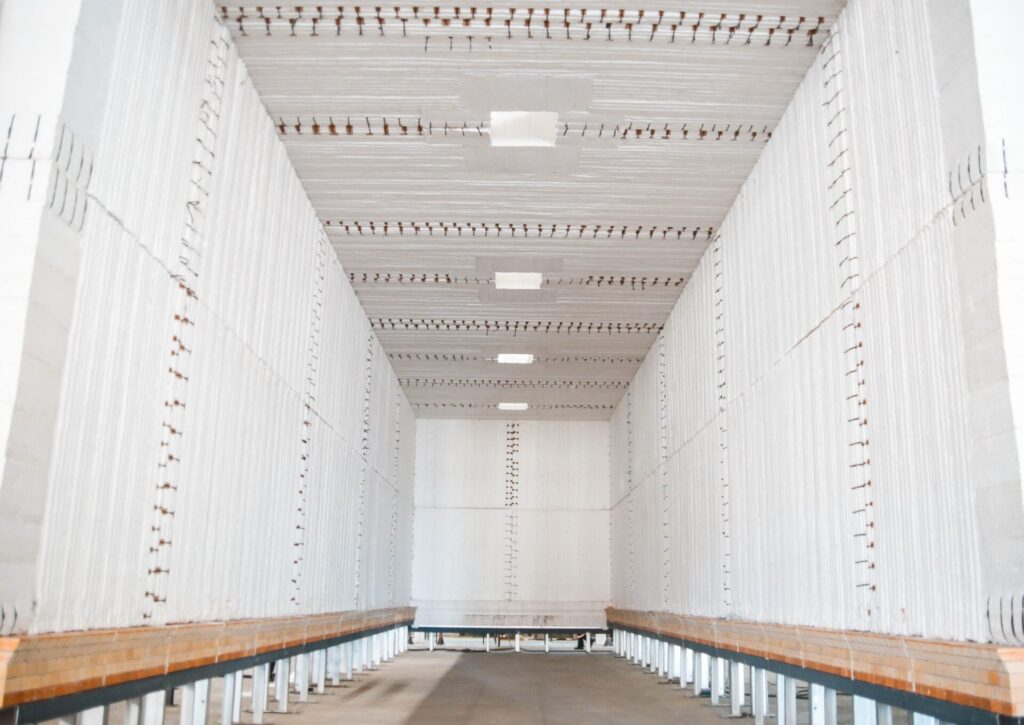
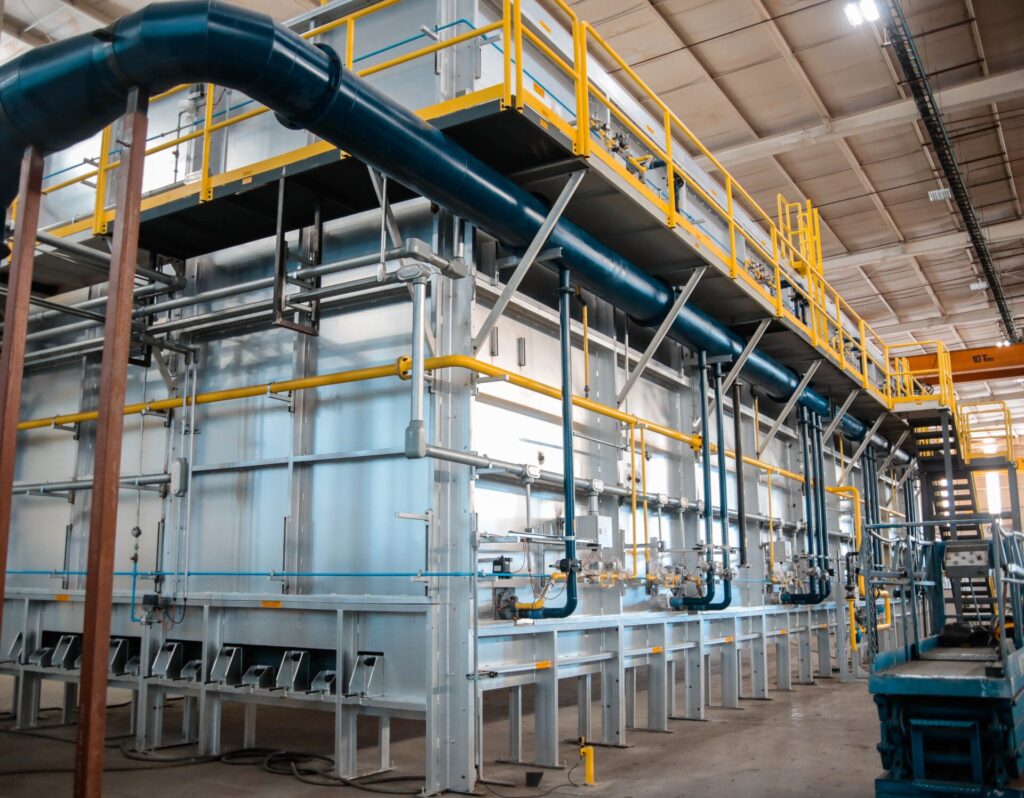
The commission comes as part of the company’s strategy to increase the production of high value aluminium. Source: Furnaces International
“ALRO, one of the largest vertically integrated aluminium producers in Europe by production capacity, announces the commissioning of an electrically heated aging furnace.
“This follows a total investment of 11.5 million RON (Romanian new leu) into the project. The commission comes as part of the company’s strategy to increase the production of high value aluminium.
“The CEO of ALRO, Marin Cilianu, stated: ‘By replacing natural gas with electricity, this equipment not only brings added precision and efficiency to our production processes, but also aligns with our firm commitment to sustainable development.'”
Tata Steel’s Port Talbot EAF will reduce carbon emissions by an estimated 90%. Source: Furnaces International
“Tata Steel UK launch the construction of its electric arc furnace (EAF) facility in Port Talbot, South Wales. This is part of a £1.25 billion transformation to low CO2 steelmaking, supported by a £500 million investment from the UK Government.
“To mark the construction, Chairman of the Tata Group, Mr. Natarajan Chandrasekaran, was joined at the ceremony this week by Tata Steel CEO and Managing Director, T. V. Narendran, and Tata Steel UK CEO, Rajesh Nair, as well as government ministers.
“Mr. Chandrasekaran stated: ‘This is an important day for Tata Group, Tata Steel and for the UK. Today’s groundbreaking marks not just the beginning of a new Electric Arc Furnace, but a new era for sustainable manufacturing in Britain. At Port Talbot, we are building the foundations of a cleaner, greener future, supporting jobs, driving innovation, and demonstrating our commitment to responsible industry leadership.’”
EAFs set world record in China. Source: Furnaces International
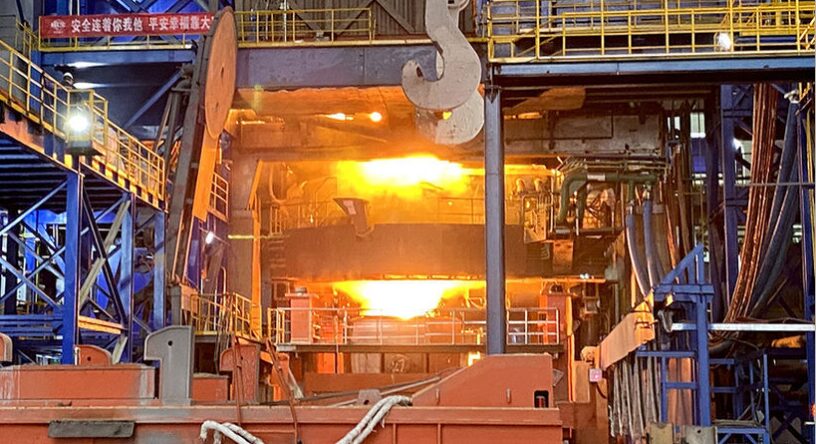
“Two EAF Quantum electric arc furnaces (EAF) from Primetals Technologies have set a world record after achieving up to 50 heats per day. The furnaces are located at the Hubei Shunle site in Hubei Province, China.
“Figures by Primetals show that on top of achieving 48 to 50 heats a day, both EAFs can record tap-to-tap times of less than 28 minutes and have power-on and power-off times of 25 and 3 minutes respectively.”
ABP CEO Till Schreiter attends the anniversary celebration of ABP Induction. Source: ABP Induction Systems GmbH
“ABP Induction celebrated its 20th anniversary with an official ceremony: On November 1, 2005, the company was spun off from the ABB Group and started into a new future as an independent company…
“Heike Marzen, managing director of the Dortmund Economic Development Agency, praised ABP Induction as an important pillar of Dortmund’s economy. She emphasized that over the past two decades, the company…impressively demonstrated its ‘Innovative strength, commitment and sustainable development.’ Many of those present had followed the company’s development.
“Heike Marzen emphasized that ABP Induction, as ‘one of the world’s leading manufacturers of induction melts, heating systems and aftermarket services,’ is a valuable partner for Dortmund. She was particularly impressed by the innovative technologies and tailor-made solutions that ABP uses worldwide.”
The event will include 320 exhibitors and have speakers from companies such as ALFED and Hydro Aluminium. Source: Furnaces International
“UK Metals Expo returns on 10 and 11 September 2025 at the NEC Birmingham, uniting the entire metals supply chain with the manufacturing and engineering community.
“Launched in 2022, UK Metals Expo is the essential meeting place for fabricators, stockists, production specialists, procurement teams, engineers, researchers, manufacturers, and policymakers. It’s where the industry comes together to collaborate, share ideas, and do business in a welcoming, engaging environment.
“At UK Metals Expo 2025, you can meet face-to-face with leading suppliers and top technical experts ready to tackle your project challenges and deliver tailored solutions. Expect live machinery demos, automation, robotics, and AI-powered technology, plus cutting-edge materials, coatings, and processing systems.”
The BMWE is implementing important requirements of the immediate action programme. Source: Adobe Stock
“On August 6, the German Federal Government launched six projects of the Federal Ministry of Economics. In doing so, the BMWE is implementing important requirements of the immediate action programme.
“In addition to the Carbon Dioxide Storage Act and the simplification of public procurement law, four important energy projects were launched and companies and citizens were relieved.”
A plant is expanding its heat treatment capacities with a dual-chamber vacuum furnace equipped with an oil quenching system and an advanced vacuum carburizing system.
The new device for Bodycote, a heat treater with U.S. locations, is for their Siechnice, Poland location. The furnace will expand its range of services and will be provided by SECO/WARWICK, a furnace provider with locations in North America.
Maciej Korecki Vice President of Business of the Vacuum Furnace Segment SECO/WARWICK
“These multi-chamber furnaces combine heat treatment in a vacuum with traditional oil quenching in dual- or triple-chamber configurations, enabling high efficiency, and delivering clean, oxide-free (IGO) parts. The Bodycote Group is a key partner for us, thanks to our shared commitment to advanced heat treatment technology,” said Maciej Korecki, vice president of the Vacuum Segment Group at SECO/WARWICK.
Dariusz Podgórski Vice President Bodycote Polska
“The dual-chamber [furnace] was the correct choice to meet the requirements for implementing sustainable development strategies and reducing CO₂ emissions. The new furnace will allow us to conduct cleaner carburizing processes without an endothermic atmosphere,” said Dariusz Podgórski, vice president of Bodycote Polska Sp. z o.o.
The features of the furnace include an oil quenching system ensuring fast and uniform cooling of the charge, as well as the FineCarb vacuum carburizing system, which allows for precise control of process results.
Press release is available in its original form here.
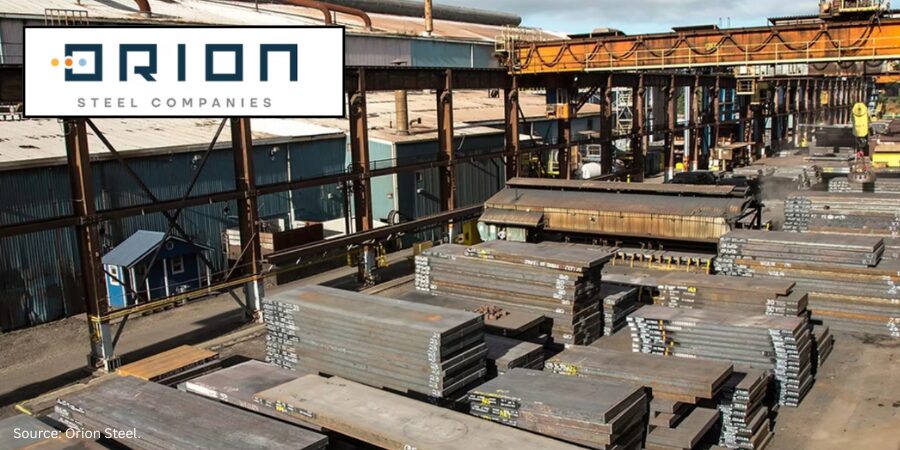
Atlas Holdings has announced the formation of Orion Steel following the completion of the acquisition of EVRAZ Inc. North America and EVRAZ Inc. NA Canada with their respective subsidiaries. The newly formed Orion Steel will be led by former U.S. Steel executive, Doug Matthews, who will serve as chief executive officer. Orion Steel is poised to become a central player in the North American steel market due to its focus on engineered steel products intended for rail, energy, infrastructure, and industrial.
Atlas announced the agreement in June of 2025 to acquire EVRAZ North America, a leading producer of engineered steel products in the United States and Canada for rail, energy, infrastructure, and industrial end markets. The new company, Orion Steel, includes Rocky Mountain Steel Mills in Pueblo, Colorado; Oregon Steel Mills in Portland, Oregon; and Interpro Pipe and Steel in Regina, Saskatchewan, and locations across Alberta, Canada.
Orion Steel’s website Source: Orion Steel
Collectively, Orion Steel employs 3,400 skilled associates across two electric arc furnace steel facilities, 12 steel product mills, and 17 scrap recycling facilities. They have a steelmaking capacity of 2.3 million tons and a finished steel capacity, including tubular products, of 3.5 million tons. Orion Steel products regularly contain more than 98% recycled scrap material, and Rocky Mountain Steel is the world’s largest solar-powered steel mill and the largest rail supplier in North America.
“As a well-capitalized strategic supplier, Orion Steel is poised to become a central player in the North American market, helping to ensure economic and security interests of the United States and Canada are advanced through significant, local production,” said Doug Matthews, CEO of Orion Steel. “I’ve been in this business for three decades and I am completely energized by this unique opportunity. This is a historic operation heading into a bold new chapter.
“I’ve seen the look in steelworkers’ eyes when they push an operation to new heights. We are going to see that same look from our team members across all Orion Steel facilities as we write the next chapter of this essential North American steelmaker,” added Matthews.
“Doug offers more than just decades of experience in operations, sales, marketing, and supply chain management. He brings a forward-thinking, hands-on approach that helped transform U.S. Steel’s commercial strategy and operations, and he has the deep belief that the heart of this business is the people on the ground, running the mills day in and day out — and he works to empower them to perform at their best.” Atlas Partner Sam Astor commented. “This is a critical time in the global steel market. We’re ready to meet the challenges and seize the opportunities, and we are excited to be playing a role in ensuring the long-term future of strategic steel production in the United States and Canada.”
Matthews began his 33 years with U.S. Steel rising through the ranks from plant leadership in Pittsburgh, Pennsylvania, to operations leadership as a member of the executive team.
Former CEO of EVRAZ, Skip Herald, will continue his service as a member of the Orion Steel Board of Directors.
Press release is available in its original form here.
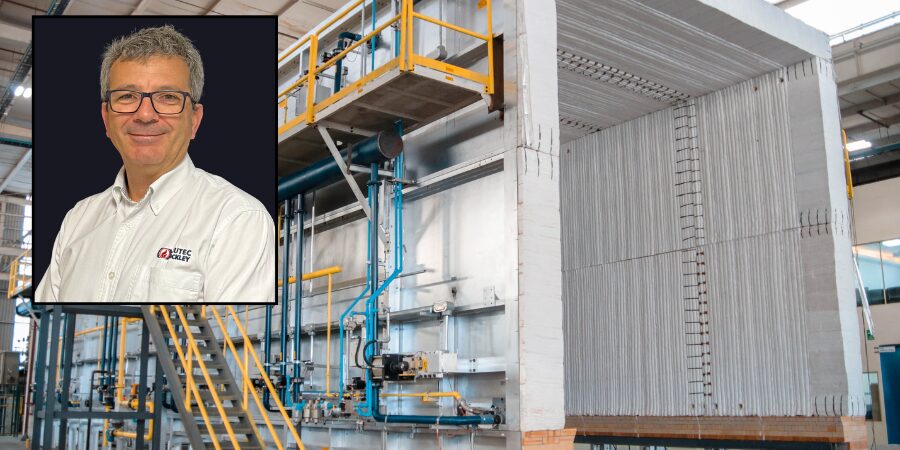
A heat treater in the U.S. Midwest anticipates greater heat treat abilities of ingots with a new gas-fired car bottom furnace. The furnace will be capable of handling both steel and aluminum ingots, with loads up to 150,000lb per cycle.
NUTEC Bickley designed the furnace to operate across a wide temperature range. The high levels of temperature uniformity to be delivered by the combustion system mean that this furnace will be qualified to undertake AMS2750 compliant surveys.
Arturo Arechavaleta, NUTEC Bickley’s vice president of Metal Furnaces, said: “Our customer for this important project has been serving the industry with a dedicated heat treat facility for many decades, and is a widely recognized and trusted name in steel and aluminum circles.”
The working dimensions of the furnace are 12ft w. by 35ft l. by 14ft 6in h. Normal operational temperatures range between 300°F (150°C) and 1650°F (900°C), with a maximum of 2000°F (1095°C). With burners firing above and below the load, there are 11 automatic control zones (five top, six bottom). The optimum approach to heat treat these heavy loads is pulse firing with variable excess air.
The furnace uses high-velocity nozzle-mix burners in a staggered configuration to fire above and below the load, maximizing heat transfer and providing optimum temperature uniformity. One of the IMPS® (Integrated Multizone Pulsing System) modes is Excess Air Firing. Among other things, it allows control over very low temperature while high turbulence is maintained to achieve temperature distribution.
In the Ratio Firing mode, the air and gas valves pulse in a synchronized pattern, from low to high fire in stoichiometric ratio, to ensure optimal fuel efficiency. This is made possible by using the kinetic energy generated by the flame speed and the rapid transition from low to high fire which increases entrainment and turbulence, thus promoting a better temperature distribution without the need for a high level of excess air.
Press release is available in its original form here.
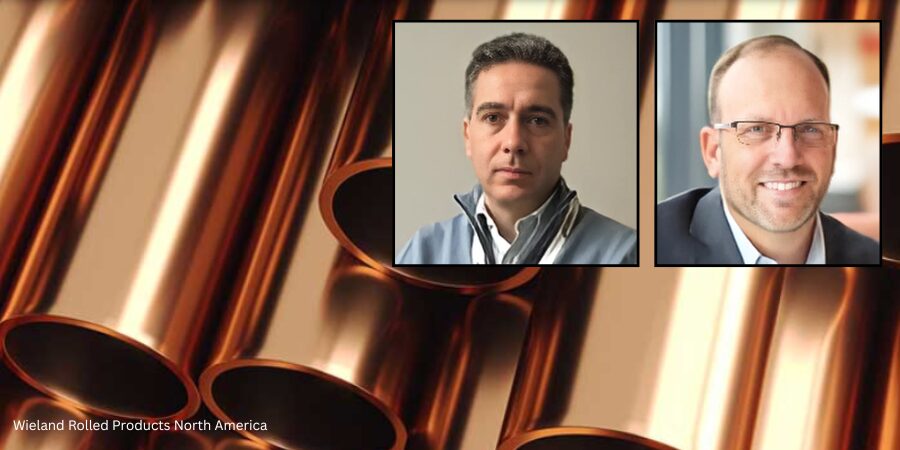
A new reheating walking hearth furnace has been commissioned for Wieland Rolled Products North America. The new furnace has a processing capacity of up to 110 metric tons per hour and will support Wieland’s expansion plans in the production of high-grade copper products.
Greg Keown President Wieland Rolling & Recycling Source: Tenova
Wieland Rolled Products North America was delivered the furnace by Tenova, which is integrated with a selective catalytic reduction (SCR) deNOx emissions control system. The equipment will enable Wieland to expand the production of high-grade copper products, essential for several key industrial sectors. This installation is a key element of Wieland’s broader investment to upgrade and expand its East Alton, Illinois facility.
“We are pleased to continue our collaboration with Tenova as we enter the next phases of this expansion project. Their technology and project management expertise are expected to support our production goals and sustainability efforts,” said Greg Keown, president of Wieland Rolling & Recycling.
Francesco Memoli remarked, “This project is particularly meaningful for us because it integrates advanced combustion and fume treatment technologies to meet both performance and environmental targets. It’s a clear example of how we tailor heat treatment solutions to the unique requirements of non-ferrous production.”
Francesco Memoli President & CEO Tenova Inc. Source: Tenova
The furnace, engineered by Tenova Italimpianti, has a processing capacity of up to 110 metric tons per hour. Powered by a natural gas combustion system, it features Tenova’s proprietary TR Flat Flame Roof burners equipped with integrated recuperators and post-combustors. The configuration ensures a substantial 90% reduction in NOx emissions. This technology has already delivered positive environmental performance in both reheating and heat treatment applications.
Wieland’s expansion project includes a new hot rolling mill designed to increase production capacity for copper and copper alloy components used in electric vehicles (EVs), EV charging networks, and renewable energy systems.
Press release is available in its original form here.
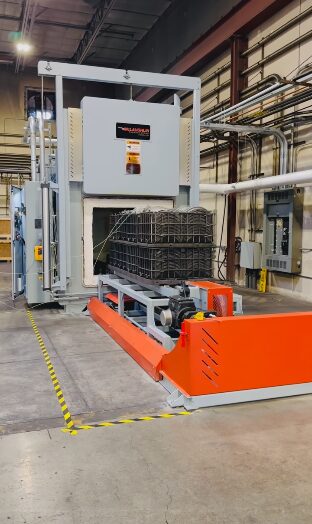
Stack Metallurgical Services has added a new furnace to their Portland facility. The furnace adds significant capacity for stress relieving, sub-annealing, and high-temperature annealing, under protective atmosphere.
Source: Stack Metallurgical Services
The furnace has a working zone of 48″ W x 96″ L x 36″ H, it can handle up to 12,000 lbs, and is certified for temperatures up to 1650°F.
Jeff McLaughlin, owner of McLaughlin Furnace Group, was on-site to help commission the new equipment. Stack also partnered with Super Systems, Inc for charting, testing, and running simulated loads.
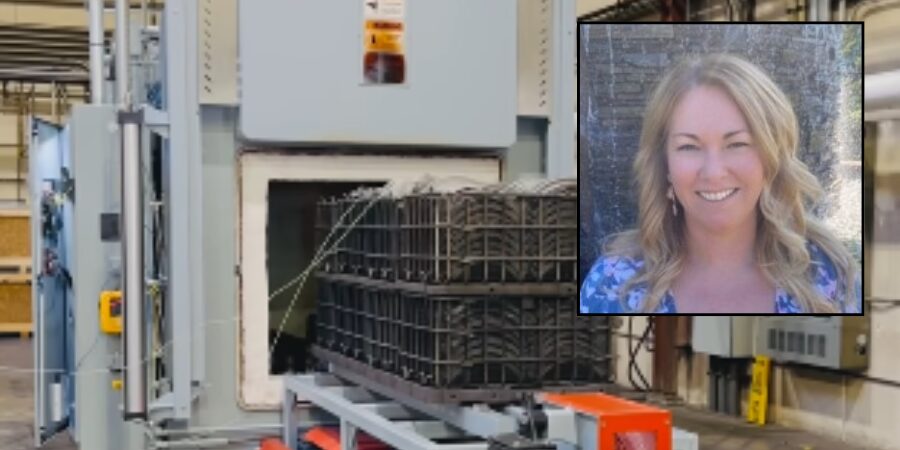
Kimberly Chaussee General Manager Stack Metallurgical Group
“We are very happy to partner with McLaughlin Furnaces to add this new equipment to Stack’s Portland facility. We’ve always taken a proactive approach to expanding our capabilities and capacity to stay ahead of our clients’ evolving needs. I want to thank Jeff McLaughlin and his team for designing, building, and commissioning this equipment on schedule — it’s been a seamless collaboration,” shared Kimberly Chaussee, general manager at Stack Metallurgical Group.
Stack plans for other significant short-term and long-term investments in both equipment and facilities. They are anticipating additional major announcements later this year. These ongoing investments reflect their commitment to meeting the needs of their clients.
SSAB is investing approximately $74 million to expand its heat treat capacity at its Axis, Alabama facility. The expansion will support the production of premium steel products.
Andy Bramstedt General Manager SSAB Alabama Source: Linkedin
“This expansion will bolster our capacity to produce high-strength steel brands such as Hardox and Strenx and will also increase SSAB Alabama’s truck shipping capacity.” said Andy Bramstedt, general manager of SSAB Alabama.
The project will encompass the construction of a new building equipped with a state-of-the-art tempering furnace, and improvements to the infrastructure.
“We have been working on this investment for a long time, and it is very gratifying to see it come to fruition. This investment will not only expand our capacity for niche products, which are in high demand, but also enable us to offer a broader product range from our Alabama facility,” said Kjell Baeckman, head of Sales Special Steels for SSAB.
Mobile Chamber President and CEO Bradley Byrne Source: Mobile Chamber
The expansion anticipates the creation of 12 new jobs in the local community.
Mobile Chamber president and CEO Bradley Byrne said, “By expanding production of high-strength, specialized steel, SSAB is reinforcing Mobile County’s role in driving innovation and supplying critical materials to key sectors across North and South America.”
This initiative is set to commence in 2025 and is expected to be completed in 2027.
Press release is available in its original form here.
Industrial Ceramic Products, Inc. (ICP) has been acquired by Allied Mineral Products, LLC (Allied). The acquisition includes all ICP’s product lines, equipment, facilities, grounds, and employee base. The deal will increase Allied’s capacity, applications, and expansion into precision, high-fired refractory shapes markets.
Paul Jamieson CEO Allied Mineral Products
“We have been each other’s’ customers and we have partnered with ICP on various projects for over 50 years. They have a strong management team, a highly tenured workforce and expertise in precision high-fired ceramic shapes. Their skill in manufacturing high quality ceramic refractory shapes is well known in our industry. Culturally we are very aligned,” said Paul Jamieson, president and CEO of Allied. “With this acquisition, we add a highly skilled workforce and plenty of room to grow and expand at ICP’s current location in Marysville. We will continue producing products under the ICP name for the foreseeable future.”
John Odenthal President ICP
“We recently celebrated ICP’s 89th year of quality manufacturing. We are proud of what we and our employees have accomplished over the years,” said John Odenthal, president of ICP. “As the marketplace continues to be more competitive, we realized we needed to align with a strong company to ensure we could continue to serve our customers and provide security for our employees. With this sale, we know our customers and employees will benefit, and that is especially important to us.”
ICP’s production facility in Marysville, OH, joins Allied’s existing U.S. manufacturing operations in Columbus, OH; Brownsville, TX; and Pell City, AL. Allied Mineral Products, LLC is a global manufacturer of monolithic refractories and precast, pre-fired refractory shapes. Headquartered in Columbus, OH, Allied serves a wide variety of industries with refractory solutions.
Press release is available in its original form here.
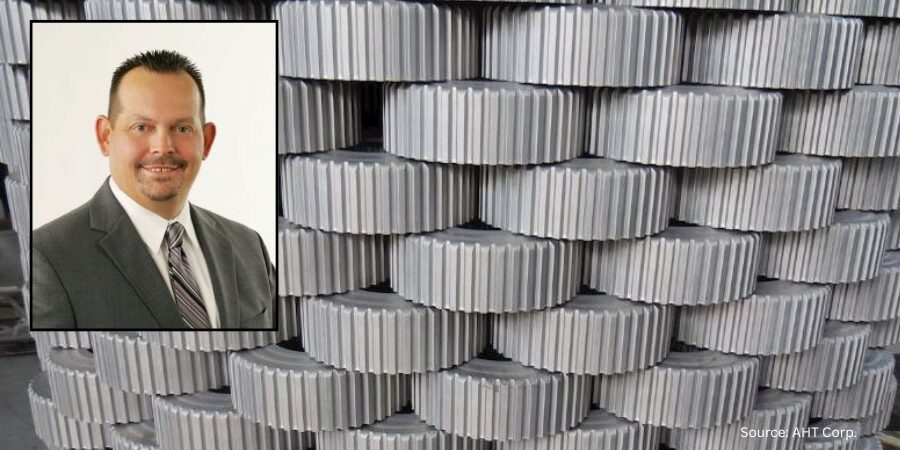
Advanced Heat Treat Corp. (AHT) has increased operations at their Monroe, Michigan facility with additional gas nitriding equipment.
Chad Clark Plant Manager Advanced Heat Treat Corp.
The new unit will be utilized in heat treatment for industries such as automotive, government and defense, plastics, power generation, and others. It will utilize UltraGlow® Gas Nitriding, which is a case-hardening process whereby nitrogen is diffused into the surface of a solid ferrous alloy by holding the metal at a suitable temperature in contact with a nitrogenous gas, usually ammonia.
AHTMichigan Plant Manager Chad Clark added, “Our mission statement is ‘Exceeding expectations with UltraGlowing results,’ so this is an example of us expanding capacity to provide our customers with great turnaround. We are pleased to offer additional capacity and look forward to the completion of our building expansion and additional equipment/services in the future.”
AHT can accommodate parts up to 400” inches in height, 160” in diameter and up to 60,000 lbs in weight. A few of the common materials used in gas nitriding processes are austenitic stainless steel; martensitic stainless steel; cast materials (gray/ductile/nodular iron); medium carbon steel; and low alloy/low carbon steel.
This equipment follows on the heels of a building expansion for AHT’s Monroe facility.