The Industrial Heating Equipment Association (IHEA) recently announced the opening of registration for its annual fall seminar series.
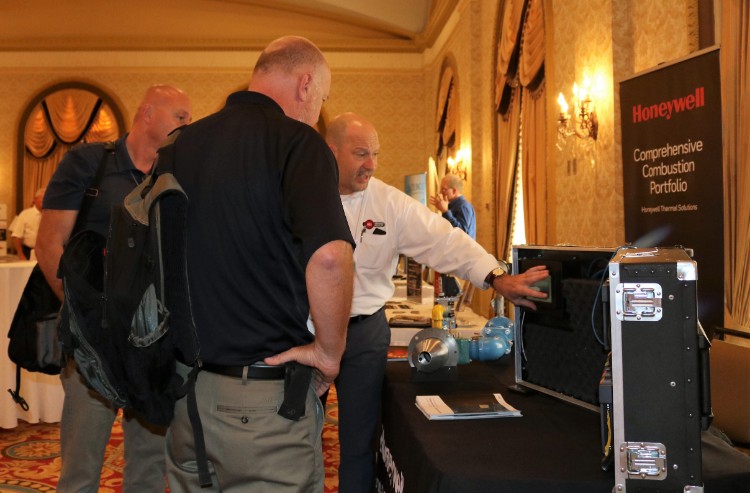
IHEA Fall Seminar 1: Attendees receive valuable technical information at IHEA’s Fall Seminar Series.
IHEA, a voluntary trade association representing segments of the industrial heat processing equipment industry, opened registration for the IHEA Fall Seminar Series, to be held from September 24-25, 2019, in Cleveland, Ohio.
This annual series will be comprised of three seminars addressing combustion, safety standards and codes, and process heating, respectively. Attendees from all three seminars may also attend IHEA’s Tabletop Exhibition & Reception on Tuesday, September 24, to network with suppliers of thermal processing products and services.
The Combustion and Safety Standards and Codes Seminars, as well as the Tabletop Exhibition & Reception, will be held at the InterContinental Hotel Cleveland, while the Process Heating Seminar will be held at Selas Heat Technology.
IHEA’s 50th Combustion Seminar will span two full days, featuring 16 sessions designed to give round exposure to combustion technology and led by industry professionals in a non-commercial environment.
IHEA Fall Seminar 2: IHEA Fall Seminar attendee takes advantage of visiting with tabletop exhibitors during the networking reception.
The Safety Standards and Codes Seminar will also follow the two-day format. This class will be led by instructors involved with the 2019 revision of NFPA 86 – Standards for Ovens & Furnaces. The agenda will include discussion of these recent updates as well as several safety topics.
New this year, the one-day Process Heating Seminar will be held at Selas Heat Technology, a member company of IHEA. Besides live demonstrations and a facility tour, this seminar will present information about infrared and induction technologies and the industrial applications that use these heating processes.
During the day-to-day operation of heat treat departments, many habits are formed and procedures followed that sometimes are done simply because that’s the way they’ve always been done. One of the great benefits of having a community of heat treaters is to challenge those habits and look at new ways of doing things. Heat TreatToday’s101 Heat TreatTips, tips and tricks that come from some of the industry’s foremost experts, were initially published in the FNA 2018 Special Print Edition, as a way to make the benefits of that community available to as many people as possible. This special edition is available in a digital format here.
Today we continue an intermittent series of posts drawn from the 101 tips. The tips for this post can be found in the FNA edition under Vacuum Furnaces, Radiant Tubes, Combustion, and Thermocouples.
Heat TreatTip #15
Shut the Door, PLEASE.
Minimize the threat of water vapor by keeping the vacuum furnace door closed in between cycles (especially if it’s wet or humid outside) and keeping the furnace under vacuum between cycles.
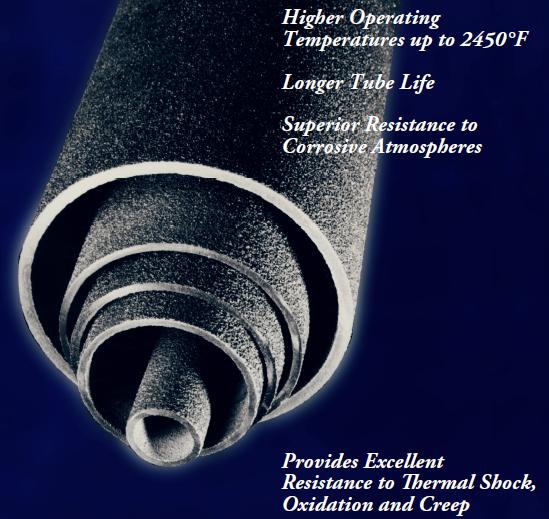
Although silicon carbide radiant tubes crank out twice the heat flux of radiant tubes and last decades longer than many alloy tubes, there are SOME places where these tubes should not be used. If any of the following apply to your heat treat situation, you should avoid these tubes; if not, you might want to put them to the test. Don’t use a silicon carbide radiant tube if . . .
1. Whenever there is a high probability that the tubes will be bumped either by the load or loading mechanism.
2. Whenever there is a high probability that parts will fall on the tube you will either have to shield the tube or avoid them altogether.
We all know that today’s plan is only current at the time it was made. Our industry dictates constant change and adapting to a new plan. And what is the first change in plan? Often this involves a delay or change in your maintenance schedule. Customer orders and Production needs can dictate plans or changes to your maintenance team. Very often it is canceled maintenance schedules or planned shutdowns that can be a quick solution for production needs. However, has your production team considered the real effect of changes to your maintenance planning? Unscheduled shutdowns compared to a planned maintenance program can influence production in numerous ways: equipment reliability, customer response & equipment audits, production capacity & planning, downtime, efficiency and availability. Preventative maintenance planning and coordinated support between maintenance & production will typically result in meeting production goals while maximizing equipment reliability and efficiency.
Try not to use insulated thermocouple wire if you snag the insulation off the outerjacket along the length of the wire. This may cause the inner insulation to fail andcause low temperature readings.
Heat Treat Today is compiling the 2019 101 Heat Treat Tips list for the fall issue to be distributed at Heat Treat 2019, the biennial show from the ASM Heat Treating Society to be held in Detroit, Michigan, October 14-17, 2019. If you have a heat treat-related tip that would benefit your industry colleagues, you can submit your tip(s) to doug@heattreattoday.com or editor@heattreattoday.com.
A Dozen Quick Heat TreatNews Items to Keep You Current
Heat TreatToday offers News Chatter, a feature highlighting representative moves, transactions, and kudos from around the industry.
Personnel and Company Chatter
Joyce Paliganoff (Midwest RSE), Patrick Heiser (Southeast RSE), and Larry Gomez (West/Northwest RSE) were recently hired by Ipsen USA as part of an initiative to double the number of Regional Sales Engineers (RSEs) by year-end.
A $9M investment provides needed space for capacity increases for Mercury Marine, which recently opened its 23,500 square foot expansion to its diecasting facility, where the company will manufacture complex blocks, driveshafts, and gearcases for Mercury outboards. In addition, Mercury will add another 4,500-ton die-cast machine giving the company two of the largest of its kind in North America.
SPIROL employees, company executives, board members, state representatives, and other honored guests gathered to celebrate the completion of the major expansion to SPIROL’s world headquarters and largest global manufacturing facility located in Northeastern Connecticut.
Digital manufacturing company, Protolabs has launched production capabilities for its metal 3D printing service. The new capabilities use secondary processes to improve the strength, dimensional accuracy, and cosmetic appearance of metal parts.
Equipment Chatter
A manufacturer in the automotive industry recently purchased an electrically heated enhanced duty walk-in series oven from Wisconsin Oven Corporation. The batch oven will be used for pre-heating racks of plastic parts prior to painting.
A leading supplier of high-quality automotive parts commissioned a Brinell hardness testing specialist for a second bespoke system for the intricate inspection of automotive suspension components. The challenge that Foundrax faced was that the hardness test location as specified by the car manufacturer was in an extremely tight space, hemmed in on three sides by vertical sections and almost no test area to work with. As many of these parts are hollow, there is no other position which would be strong enough to allow for a reliable test.
A retort box furnace was shipped and installed at the facility of an aerospace components manufacturer based in the southern U.S by L&L Special Furnace Co., Inc. The furnace is used to de-binder ceramic matrix composite components deployed in the aircraft industry. The main function of the furnace is to remove all organics and other materials used in the product prior to placing it in a high-fire vacuum chamber. This de-bindering process is extremely important and allows for a finished product that is not only very strong but also lightweight.
No. 824 is a 500°F (260°C), modified universal oven from Grieve, currently used for housing a vertical conveyor system at the customer’s facility. Grieve also shipped No. 797, a 260°F (127°C), clean room cabinet oven, to be used for drying coating on printed circuit boards at the customer’s facility.
Qinghai Zhuofeng New Material Co., Ltd, based in China, recently received shipment of two continuous annealing and processing lines, each with an annual capacity of 110,000 tons, from technology Group ANDRITZ.
Kudos Chatter
In 1986, Dave Strand was hired by Wisconsin Oven Corporation as a shop worker. In 2019, he retires as President & CEO of Thermal Product Solutions, LLC, the parent company of Wisconsin Oven. Dave Strand has dedicated 33 years to the continued growth of Wisconsin Oven Corporation.
Dave Strand
During the HEAT TREAT 2019 conference, Fluxtrol Inc., in conjunction with the ASM Heat Treating Society, will be recognizing and awarding academic researchers and young scientists in the field of thermal processing. Two Fluxtrol/ASM awards will be given, the “Prof. Valentin S. Nemkov Academic Research Award,” and the “Fluxtrol Student Research Award”.
In an effort to continually improve the workplace environment for all Employee-Owners, the Pelican Wire leadership team recently announced a new, comprehensive “Paid Family Leave” benefit. This expanded paid-leave benefit includes maternity/paternity leave and leave for primary caregivers of immediate family members with a serious health condition requiring
full-time care.
Heat TreatToday is pleased to join in the announcements of growth and achievement throughout the industry by highlighting them here on our News Chatter page. Please send any information you feel may be of interest to manufacturers with in-house heat treat departments especially in the aerospace, automotive, medical, and energy sectors to the editor at editor@heattreattoday.com
Dan Szynal, VP of Engineering & Technical Services, Plibrico
Aluminum processors face constant challenges to their aluminum melt operations. Due to robust demand, processors often operate these furnaces at higher temperatures to maximize production rates. As a result, one of the costliest operational challenges is the aggressive formation of corundum deposits in their furnaces.
In this article, Dan Szynal, VP of Engineering & Technical Services, Plibrico, discusses the causes and concerns of corundum growth and outlines excessive, damaging, and costly corundum growth can be mitigated with the right refractory materials, coupled with the correct maintenance and watchful operation.
Root Causes of Corundum Growth
Corundum growth in a refractory lining of an aluminum furnace occurs due to a reaction between the alumina-silicate refractory and molten aluminum. Corundum formation can occur both externally and internally in the refractory lining.
There are four identifiable root causes that promote corundum growth:
High temperature
Presence of oxygen
Alloy composition
Use of fluxes and fluoride salts
Corundum Formation Illustration
High temperatures accelerate the reduction of oxides in the refractory. The higher the temperatures, the more quickly non-wetting agents lose their effectiveness. Aluminum begins to penetrate the refractory matrix because of decreases in aluminum viscosity and surface tension. Excessive furnace temperature can be the result of several causes: overfiring, improper furnace control, or inaccurate thermocouple placement. For example, a thermocouple that is recessed into the refractory lining by 2 inches may underreport temperatures by several hundred degrees.
Oxygen drives the reaction process in two ways: as an atmospheric gas, and as a reducible oxide in the refractory. Minimizing oxygen by controlling negative pressure sources such as doors, windows, and well openings reduces the potential for reaction. Proper flue sizing and burner stoichiometry also reduce excess oxygen and improve furnace energy efficiency.
Alloy composition can be a factor. Some aluminum alloys contain elements that reduce the silica as well as iron oxide, zinc oxide, and other oxides in refractories. Careful attention is necessary when choosing an appropriate refractory for more aggressive aluminum alloys to reduce the potential for reaction.
The use of fluxes and fluoride salts like cryolite Na3AlF6 in aluminum melting accelerate the reduction of oxides in the refractory. Their alkaline properties also reduce the local melt temperature of the refractory at the bellyband and then infiltrate the furnace lining. Over time, with a lack of regular maintenance, the corundum buildup will reduce furnace performance and increase aluminum loss.
Trouble Spots
The spread of corundum growth occurs most commonly in areas where its formation mechanisms of heat and oxygen are present. Typical problem areas include doors, openings, flue areas, and burner cones due to the potential for excess oxygen. Negative furnace pressure can also lead to leakage from the outside. Other common areas of formation include rear walls and bellyband areas where regular cleaning and maintenance are more difficult.
Control and Avoidance
The key to fighting corundum starts with choosing the proper refractory material for molten aluminum contact. The development of effective refractory additives that combat corundum, including non-wetting additives, dense oxide barrier formers, and pore-size reducers was pioneered by Plibrico, which includes these additives in products aimed at:
increasing wetting resistance and reducing the potential for oxidation-reduction of the refractory (The Plicast Al-Tuff® system)
forming a reactive layer to resist molten aluminum penetration up to 2000°F (Plibrico’s Al-Shield™ refractories)
offering good resistance to metal slag penetration, especially in higher temperatures, and adhering well to the existing refractory for repairs (Phos-bonded castables like Plibrico’s Exo-set Uno™)
In general, PliPartner refractory contractors tell us that they find phos-bonded plastic refractories to be excellent repair materials for aluminum processors. They are usually low in free silica and nonwetting. The material bonds chemically to existing refractory, making them easier to install, and phos-bonded plastic refractories are an excellent solution for corundum growth at the bellyband.
Best Practices That Will Help
A regular maintenance plan can go a long way to increasing refractory life; a schedule is essential. A knowledgeable refractory expert with genuine experience in aluminum heat processes can help with ideal schedules and checklists.
Corundum buildup is a common concern among aluminum furnace end users. Optimally, the longevity of a furnace lining depends on best practices in refractory materials and installation methods, knowing the past refractory performance history to evaluate future performance, managing expectations of furnace production output, and monitoring regular maintenance and operation of the furnace.
These factors are measurable key performance indicators that will help decision makers design and build good refractory linings for the demanding needs of aluminum producers today. Considering these factors and balancing them according to the producers’ needs can deliver a higher-quality product for longer life.
15 Quick Heat Treat News Items to Keep You Current
Heat TreatTodayoffers News Chatter, a feature highlighting representative moves, transactions, and kudos from around the industry.
Personnel and Company Chatter
David P. Hess and Marianne Kah have been appointed to the Board of Directors for Allegheny Technologies Incorporated. Hess brings 40 years of experience in the aerospace industry. Kah is a global energy and raw materials markets expert with tremendous experience in board-level strategic planning and risk analysis.
Neil Merrell was recently promoted to Vice President at Contour after more than twenty years of experience with the company.
Bill Gornicki has been appointed as Chief Executive Officer (CEO) of both Diablo Furnaces and Machine Tool Builders (MTB) based in Machesney Park, Illinois.
Skip Schaefer is now the consulting Product Design Specialist at Industrial Heating Systems, a manufacturer of quality immersion heating systems based in Boise, Idaho. Skip, also known as Mr. Heater to many, has nearly 50 years in the industry. He helped lead his father’s company Proheco from 1971-2003, another ten more years under the name Proheatco and over ten more with Titan Industrial Heating.
The leading Tier One metal additive manufacturer for the Aerospace & Defense industry, Sintavia LLC, has officially opened the doors to its new 55,000 square foot advanced manufacturing facility, located in Hollywood, Florida.
Equipment Chatter
A U.S. manufacturer recently commissioned a specialized aluminum solution heat treating furnace, which will be AMS2750 compliant and Nadcap capable and will be used to heat treat products for use in automotive, aerospace and medical applications. SECO/WARWICK Group’s subsidiary based in Meadville, Pennsylvania, has designed and built the furnace to load, heat treat, quench, and discharge with minimal operator assistance.
A leading western Pennsylvania heat treatment provider recently installed a brand new, 14-foot long car bottom air furnace. The furnace was surveyed in accordance with AMS2750 Rev E and is uniform within ±10°F (Class 2) and will be capable of handling workloads up to 30,000 pounds. A maximum operating temperature of 1400°F allows this furnace to accommodate the tempering of large tool steel components, as well as the age hardening processes of nickel-based alloys and precipitation hardenable stainless steels at Solar Atmospheres of Western PA.
An aerospace manufacturer has purchased an Electrically Heated Soluble Mandrel Curing Oven from Wisconsin Oven Corp. The oven is capable of heating 8,000 pounds of steel and 20,000 pounds of soluble material from 80° to 350°F at an average rate of 0.1° F per minute.
In addition, Wisconsin Oven Corporation announced the shipment of two Electrically Heated Four Zone Two Drawer Ovens to a manufacturer in the oil and gas industry. The batch ovens will be used for pre-heating drill pipe motor tubes and cores. The ovens have sufficient capability to heat 15,000 pounds of steel from 21°C to 120°C in approximately 90 minutes in a pre-heated oven.
An international mint recently purchased a horizontal vacuum furnace with a maximum temperature of 2462°F (1350°C) from Furnacare Inc., a TAV Group Company.
Three Gruenberg Cleanroom Truck-In Ovens have been shipped to the medical industry from Thermal Process Solutions.
Kudos Chatter
Nucor Corporation has been recognized as a General Motors Supplier of the Year for Non-Fabricated Steel at the automotive company’s 27th annual Supplier of the Year awards ceremony held last month in Detroit, Michigan.
The Powder Coating Institute (PCI) recently awarded its 2019 scholarships to worthy students who are studying various subjects that can lead to a career in powder coating. he 2019 PCI Scholarship Program awarded $25,000 in total, which includes donations of $5,000 from each of our corporate donors: Axalta Coating Systems, Gema USA and Nordson Corporation. PCI/Axalta Scholarship: Samuel Little, Purdue University; PCI/Gema Scholarship: Genevieve Andreae, University of Wisconsin – Platteville; PCI/Nordson Ken Kreeger Scholarship: Daikon Iverson, University of Wisconsin – Stout; PCI General Scholarships: Mark Rupert, University of Cincinnati, and Ashley Sullivan, University of Cincinnati.
Physical Digital is the first company in the world to be awarded Nadcap accreditation for measurement and inspection using 3D Structured Light (3DSL). Physical Digital has provided 3DSL measurement services to the aerospace industry for many years, completing repeatability studies, batch measurement, inspection and analysis on industrial components from single turbine blades to complete jet turbine engines and full aircraft.
Commercial Metals’ Barbara Smith has been named Steelmaker of the Year AISTECH 2019. Smith was honored during the AISTech president’s Award Breakfast, recognizing her for her leadership and strategic evolution of Commercial Metals Company.
Heat TreatTodayis pleased to join in the announcements of growth and achievement throughout the industry by highlighting them here on our News Chatter page. Please send any information you feel may be of interest to manufacturers with in-house heat treat departments especially in the aerospace, automotive, medical, and energy sectors to the editor at editor@heattreattoday.com
A large North American supplier of refractory products and services is responding to domestic steelmakers’ increased capacity and solving their refractory challenges through several new initiatives.
Mirroring its steel customers’ investments to boost production capabilities and upgrade facilities, HarbisonWalker International (HWI) is investing to increase capacity by 25 percent in 2019 at key steel refractory facilities. In fact, approximately one-half of HWI’s capital investment dollars will have a direct positive impact on its steel industry customers. Much of the investment will be at its White Cloud, Michigan facility, which manufactures refractory products primarily for steelmakers.
HWI Announces Investments and Digital Refractory Transformation at AISTech 2019
This is the latest in a series of capital investments that HWI has made at White Cloud over the past three years. In 2018, HWI integrated new equipment and technologies to modernize the facility.
The 2019 investment includes expansion to accommodate new warehouse and shipping space, which is being constructed with American-made steel. Additional manufacturing space will house new production technologies, including a new brick press and packaging line, manufacturing technologies that improve production efficiency and worker safety.
“The improvements will further optimize production, product quality, and delivery efficiencies for our steel customers,” said Carol R. Jackson, Chairman and CEO, HarbisonWalker International. “The new press and warehouse increase our capacity to supply our industry-leading products including mag carbon brick for steel ladles, electric arc furnaces (EAF), and basic oxygen furnaces (BOF). The new packaging line allows for increased handling safety and provides quality control benefits associated with our product.”
One year after announcing its plan to significantly invest in monolithic refractories manufacturing, HWI built and opened a new, state-of-the-art facility in South Point, Ohio in 2018. It is North America’s most technologically advanced refractories plant and one of the top globally. Featuring state-of-the-art processes and technology, the South Point plant is now fully operational and supplying steel industry products.
In addition to physical expansion and technology integration in its plants, HWI is evolving the refractory industry for the 21st century by taking a holistic approach to advancing its use of data. HWI is aggressively initiating programs to help customers transition numerous decision-making processes from experienced-based to data-based, through use of various sensor and data acquisition systems, for instance.
Through the expertise of its team and strategic partnerships with industry leaders, HWI is employing sensor technologies, such as infrared cameras, and also utilizing three-dimensional laser measurement to make digital twins of physical assets. These technologies, along with ‘edge’ software that can access datasets from various plant level sources, are helping HWI develop tools to increase product campaign life and improve worker safety. Performance data will also benefit future generations of HWI products.
The outcomes for steelmakers include closer collaboration for customized products and continuous improvement, optimizing throughput and analytical insights to find even more significant cost savings.
“HWI is working to transform data into process improvements and business intelligence that help steel industry customers work safer and smarter, with even better tools for knowledge sharing,” noted Jackson. “Combining our digital transformation with HWI’s proven products and the industry-leading expertise of our field services team, we’re effectively positioned to deliver for our steel customers today and in the future as our industries evolve together.”
HWI has also recently innovated and patented new functional product solutions that are helping steel customers further reduce downtime and increase performance. These solutions allow for faster, easier installation with improved ergonomics.
In addition to its products, HWI also provides around-the-clock support from the most extensive service team in the U.S. and offers dedicated iron and steel application specialists who provide highly customized solutions.
Earlier this spring, a heat treat equipment organization appointed several professionals to new leadership roles.
Established in 1929 to meet the need for effective group action in promoting the interests of industrial furnace manufacturers, The Industrial Heating Equipment Association (IHEA) has expanded and currently includes designers and manufacturers of all types of industrial heat processing equipment used for the melting, refining and heat processing of ferrous and nonferrous metals and certain nonmetallic materials and heat-treatment of products made from them.
IHEA announced its 2019 – 2020 Board of Directors and Executive Officers. IHEA’s President is Michael Stowe of Advanced Energy; Scott Bishop of Alabama Power Company assumes the role of Vice-President; and Jeff Valuck of Surface Combustion was elected Treasurer. Serving as Past President is Daniel Llaguno of Nutec Bickley.
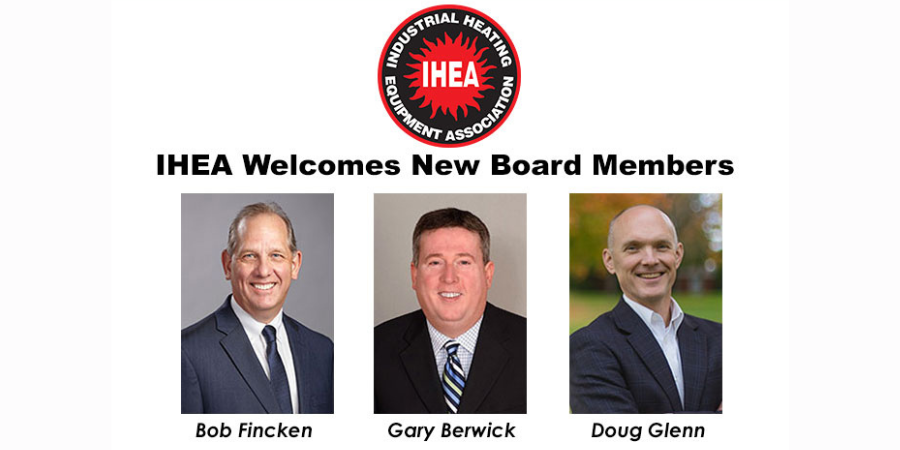
IHEA also welcomed three new board members: Gary Berwick of Dry Coolers, Bob Fincken of Super Systems, Inc., and Doug Glenn of Heat Treat Today. IHEA President Michael Stowe comments, “At our recent annual meeting in Sarasota, FL, we were very excited to officially appoint three new board members. They will each serve a three-year term, with service through the 2022 annual meeting. These folks represent dozens of years of process heating experience across several different markets. IHEA is very fortunate to have them serving on our board.”
Gary Berwick is a veteran in the heat-treating industry with over 30 years’ experience. He has been involved with IHEA since the early 1990s and stays active through his engineered sales role with Dry Coolers. Berwick is also a member of the Metal Treating Institute and the American Society of Manufacturing. IHEA is fortunate to have Gary’s valuable contributions on the Education committee as well.
IHEA gains a respected industry professional in Bob Fincken of Super Systems Inc. Fincken is their national sales manager for all of North America with 30 years of experience in controls and sensors. He is a great asset on IHEA’s Safety Standards and Codes committee and provides input for IHEA’s educational tools to support the association’s knowledge base.
Publisher of Heat Treat Today, Doug Glenn returns to the IHEA Board of Directors. His support of the association spans 25 years and includes everything from promotion, sponsorships, speaking engagements, and serving as a committee chair. Doug has an extensive background in publishing, marketing and association business. IHEA is pleased to have Doug’s dedication and commitment.
To complete the Board of Directors for 2019 – 2020, IHEA is proud to name those continuing their service:
B.J. Bernard, Surface Combustion, Inc.; Brian Kelly, Honeywell Thermal Solutions; Francis Liebens, SOLO Swiss Group, John Podach, Fostoria Process Equipment, a div. of TPI Corp., Jason Safarz, Selas Heat Technology Co. LLC; and John Stanley, Karl Dungs, Inc.
Stephen Kowalski, president of Kowalski Heat Treating, talks about how the family-owned company will streamline operations after adding three buildings next door from Conveyer & Caster to its other six on Detroit Avenue in Ohio City. (Photo Credit: Stan Bullard)
An Ohio City heat treating business recently purchased a neighboring company’s property. The transaction was advantageous to both parties; the owners made a good sale, and the new occupants gained plenty of space without relocating.
After moving to a larger location, Conveyer & Caster sold their three Detroit Ave. buildings to family-owned Kowalski Heat Treating, which now fills nine buildings purchased since their 1975 opening on that street.
“It’s wonderfully exciting,” Kowalski said. “We needed assembly and warehouse space and office space. That’s all there in the Conveyer & Caster buildings. And we don’t have to move.”
Heat TreatTodayoffers News Chatter, a feature highlighting representative moves, transactions, and kudos from around the industry.
Personnel and Company Chatter
Diane C. Creel was recently announced as independent Board Chair at Allegheny Technologies Incorporated (ATI) upon the retirement of Executive Chairman Richard J. Harshman.
A global company specializing in the manufacture of flow measurement instrumentation was recently acquired by The TASI Group. Sierra Instruments is comprised of two divisions: FLOW, headquartered in Monterey, California, and AUTO, headquartered in Malvern, United Kingdom. The FLOW Division manufactures mass flow meters and flow controllers for gas, liquid, or steam application. The AUTO Division builds complex, custom, integrated test facilities, and world-class engine and vehicle test automation systems.
StandardAero Component Services facility, located in Prahova, Romania, expanded its manufacturing capacity from 32,000 sq. ft. to 43,000 sq. ft. and also recently exceeded over 200,000 gate valves processed with High-Velocity Oxygen Fuel (HVOF) coatings.
A multi-year contract has been signed between American privately-funded aerospace manufacturer and spaceflight services company, Blue Origin, and Constellium N.V., to support their launch vehicle programs. This contract is a new milestone in a successful collaboration between the two companies for the supply of high-performance Airware® products. Under this agreement, Constellium is to supply Airware® aluminum plates and sheets for Blue Origin’s massive orbital rocket, New Glenn.
Diane C. Creel, independent Board Chair, ATI
Sierra Instruments acquired by The TASI Group.
Constellium and Blue Origincontract to support launch vehicle programs.
Equipment Chatter
A state-of-the-art hot isostatic press (HIP) with Uniform Rapid Quenching (URQ®) will introduce a new quality benchmark for the FIT Additive Manufacturing Group. Coming online in September 2019 in FIT’s main facility in Lupburg, Germany, the press from Quintus Technologies will enable the additive manufacturing (AM) specialist to boost productivity while responding to the heightened industrial requirements for 3D printed metal series parts.
A global manufacturer of cutting tools has purchased an additional vacuum temper furnace from Pennsylvania-based SECO/VACUUM, for its North American manufacturing operations. The new furnace, which will be used for tempering and stress relieving metal parts, is part of the company’s growing manufacturing expansion and complements another commissioned earlier in 2019 at this facility.
Hot isostatic press (HIP) with Uniform Rapid Quenching (URQ®) from Quintus Technologies
Vacuum temper furnace from Pennsylvania-based SECO/VACUUM
Kudos Chatter
Electro Tech Machining – Carbon and Graphite Innovation, which serves the heat treating industry among others, recently announced the launch of its new website: http://www.etmgraphite.com
Dana Incorporated has been named Outstanding Thermal Management Solutions Supplier of the Year by the China Decision Makers Consultancy (CDMC) for its work in 2018.
AMETEK SMP Superior Tube, a leading manufacturer of small diameter precision metal tubing for the aerospace and defense industries as well as other sectors, has announced two successful reaccreditations from Nadcap. Superior Tube met all Nadcap’s requirements based on the exacting standards around heat treating and welding/brazing.
Franck Adjogble and Wolfgang Spies, both SMS group engineers, received the AIST James Farrington Award 2019 in Pittsburgh, Pennsylvania, for their work entitled “Holistic Approach of High Quality Flat Steel Production – Dynamic Production Scheduling in Respect to Process Quality, Control System and Plant Condition”.
Electro Tech Machining – Carbon and Graphite Innovation launches new website
Brian Gorney and Scott Bussinge, AMETEK SMP Superior Tube
Franck Adjogble and Wolfgang Spies, SMS group
Heat TreatTodayis pleased to join in the announcements of growth and achievement throughout the industry by highlighting them here on our News Chatter page. Please send any information you feel may be of interest to manufacturers with in-house heat treat departments especially in the aerospace, automotive, medical, and energy sectors to the editor at editor@heattreattoday.com
Mihails Scepanskis, CEO of CENOS LLC, a heat treating simulation company, released a short (3:50-minute) video with thoughts on the U.S. induction market. Click on the image below to listen.








 Source: