Ford Motor Company and Volkswagen AG announced they are expanding their global alliance to include electric vehicles and will collaborate with Argo AI to introduce autonomous vehicle technology in the U.S. and Europe. Volkswagen and Ford independently will integrate Argo AI’s SDS into vehicles.
Ford will also become the first additional automaker to use Volkswagen’s electric vehicle architecture and Modular Electric Toolkit – or MEB – to deliver a high-volume zero-emission vehicle in Europe starting in 2023. For Ford, using Volkswagen’s MEB architecture is part of its more than $11.5 billion investment in electric vehicles worldwide.Both companies will continue to target additional areas where they can work together on electric vehicles because of their goal to accelerate the transition to sustainable and affordable mobility.
“Looking ahead, even more customers and the environment will benefit from Volkswagen’s industry-leading EV architecture. Our global alliance is beginning to demonstrate even greater promise, and we are continuing to look at other areas on which we might collaborate,” Volkswagen CEO Dr. Herbert Diess, said. “Scaling our MEB drives down development costs for zero-emissions vehicles, allowing for a broader and faster global adoption of electric vehicles.”
The alliance, which covers collaborations outside of Volkswagen and Ford’s joint investments in Argo AI, does not entail cross-ownership between the two companies and is independent from the investment into Argo AI.
A manufacturer of induction furnaces and heating systems is scheduled to be acquired by two global corporations from a Chicago-based private equity firm.
Mitsubishi Heavy Industries (MHI) and Primetals Technologies will acquire ABP Induction Systems (ABP), which offers a variety of products and services to automotive OEMs and suppliers, industrial manufacturers, independent foundries as well as steel plant manufacturers and steel producers.
Satoru Iijima Chairman of the Board and CEO of Primetals Technologies
“ABP’s induction heaters are one of the most crucial elements for endless strip production, a flagship process for Primetals Technologies. With ABP becoming one of MHI’s group companies and the further close ties that will bring, we can develop and provide customers with even more advanced technologies,” said Satoru Iijima, Chairman of the Board and CEO of Primetals Technologies.
ABP will be a group company of MHI under the ownership of Mitsubishi Heavy Industries America, Inc., headquartered in Houston, Texas, and Primetals Technologies USA LLC, of Alpharetta, Georgia. The acquisition is planned to close around the end of August 2019.
A large Chinese automotive steel producer recently announced plans to expand its integrated steel production complex by installing heat treat equipment for a cold rolling mill to meet the demand for automotive grade steel in the South China and Southeast Asia markets.
Fives, a partner of steel producer Baosteel, has been contracted to supply the complete thermal part for the continuous annealing line (CAL) with a reported production capacity of 630,000 tons per year. The line’s purpose is to produce both standard steel grades and advanced high-strength steels. The company hopes to produce the line’s first coil by the end of 2021.
Fives will provide design, supply, and installation supervision of CELES induction heaters and a Stein Digiflex® furnace. Part of Fives’ equipment will be engineered and manufactured in China under the supervision of Fives’ subsidiary in Shanghai.
A fifth-generation furnace manufacturer supporting the metals processing industry recently entered into a strategic partnership with a Florida-based furnace equipment supplier.
Gillespie & Powers Inc., headquartered in St. Louis, Missouri, will continue to offer Remelt Technologies’ homogenizing furnaces, DC casting machines, and DC casting automation to the North American aluminum industry.
“Gillespie & Powers Inc. is proud that Gary Bowden, president of Remelt Technologies, has entrusted them to continue providing equipment and services that will continue this legacy,” said Jack Gillespie, vice president of Gillespie & Powers.
Remelt Technologies, founded and owned by Bowden, has a 26-year history of supplying quality equipment and is involved in the design, manufacture, and installation of homogenizing furnaces and DC casting machines for secondary aluminum extrusion cast houses.
Gillespie & Powers is a 5th Generation family owned design, build, supplier of specialized furnaces supporting the metals processing industry. The company has over 80 years of experience in the design, supply, and installation of furnace equipment.
As part of a second expansion to their facility, a North American steel company plans to install a second electric arc furnace with the assistance of a group of companies internationally active in plant construction and mechanical engineering for the steel and nonferrous metals industry.
North American steel producer Big River Steel (BRS) recently commissioned SMS Group with the expansion of its steel plant in Osceola, Arkansas. SMS Group will supply BRS with additional mechanical equipment, electrical and automation systems, and digitalization, which the group reports will increase the plant’s annual output.
David Stickler, CEO of Big River Steel
“I have purchased several technologically advanced steel production facilities from SMS over the past twenty years and I am fully confident that SMS group will again deliver a high-quality mill that sets the standard in terms of product capability, energy efficiency and environmental sustainability,” commented David Stickler, CEO of Big River Steel.
Following this second expansion of their facility, the steel plant will house two electric arc furnaces and two twin-ladle furnaces. In addition, Big River Steel commissioned Systems Spray Cooled for the installation of furnace cooling equipment at Big River’s Osceola facility, including furnace sidewall, roof, elbow, and off-gas duct work. SMS reports that installing an additional gas cleaning system will ensure compliance with environmental legislation. A second strand, a second tunnel furnace, and a further downcoiler will also be added to the Big River Steel’s CSP® plant, which reportedly produces coils up to 1,930 millimeters wide.
Big River Steel produces high-quality steels, including tube grade sheet for pipeline construction, silicon steels for a wide variety of energy and electric motor applications, and advanced high-strength steels for the U.S. automotive industry.
The hot coils produced in the CSP® plant are processed into high-grade cold strip in the downstream coupled pickling line/tandem cold mill. The continuous galvanizing line (CGL) will receive an additional coiler. For all the newly installed plants, SMS group is going to supply the mechanical equipment and the X-Pact® electrical and automation systems, including level 3.
Big River Steel
Also in the second construction stage, the PQA® (Product Quality Analyzer) system developed by SMS group company MET/Con will be a central module of the process automation system. By capturing and evaluating all relevant production data on a continuous basis, PQA® monitors, documents and assures the product quality down to the finished cold strip along the complete production process. The system uses stored rules defined on the basis of expert knowledge to assess the coil quality in a semi-automatic procedure and, based on these assessments, takes “ship” or “block” decisions for the downstream processing of the strip or its dispatch.
This system then sends instructions for action to the operators while production continues in order to make them aware of any onset of irregularities within the production process and suggest countermeasures to be taken. This allows the operators to predictively intervene in the process before an incident becomes a problem, reducing the occurrence of failures along the production process which otherwise might have resulted in poor quality and downtimes. Over time, the system is intended to provide higher yield while increasing product quality.
Burkhard Dahmen, Chairman of the Managing Board of SMS Group
“Working closely with the management and staff of Big River Steel, we have succeeded in digitalizing a highly complex steel plant in a way that meets the targets of stable and resource-saving production,” said Burkhard Dahmen, Chairman of the Managing Board of SMS group. “We are very pleased about Big River Steel’s decision to also award us the order for the next expansion stage of the steel plant and to continue on the proven successful way with SMS group as their partner.”
It’s a busy week here at Heat TreatToday. We are announcing the launch of the Leaders in AutomotiveHeat TreatLinkedIn Group, as well as our inaugural Leaders in AutomotiveHeat Treat monthly e-newsletter, both on the heels of the new Automotive Heat Treat special print/digital edition (click here for digital).
Leaders in AutomotiveHeat Treat LinkedIn Group (click here) provides a professional-level space where heat treaters from the automotive industry can discuss issues and ideas. Heat TreatToday will regularly provide content related to the group, keeping members current on the latest technologies, products, processes, and discussions. If you’re a heat treat leader in the automotive industry, you should be in this group.
Share the love: forward this invitation to Leaders in AutomotiveHeat Treat LinkedIn Group to any others you feel may benefit.
Go to your LinkedIn account, sign in, and search for “Leaders in Automotive Heat Treat.” Join the group and connect with other leaders in automotive heat treat.
For more information about the Leaders in AutomotiveHeat Treat monthly e-newsletter, contact Doug Glenn at doug@heattreattoday.com.
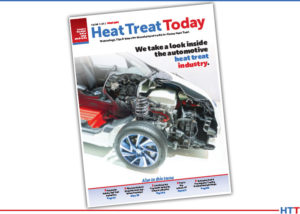
Heat TreatToday has launched Automotive Heat Treating special edition in print and digital form, the third print magazine and the second in a series of industry-specific quarterlies.
The print edition of Automotive Heat Treating entered the mail stream onJune 24 and landed in the mailboxes of6,000 automotive manufacturing suppliers andOEMs with more being distributed at Thermprocess 2019. The digital edition is available byclicking hereoron the image to the right.
In this special magazine, Heat TreatToday delivers quality content both new and original as well as a round up of past automotive-related news, technical articles, and tips, including:
“Making Sense of Trade Wars” / Understand the different types of tariffs, where they are coming from, and what effect they may have on the heat treating world.
“Heat TreatBrain Trust on Industry Innovations That Have Enhanced Automotive Heat Treating in Recent Years” /Recent, innovative, or helpful enhancements that have advanced the automotive heat treat industry.
“Nitrocarburizing for Automotive and Large-Volume Production” / Advantages and disadvantages of batch vs. continuous processing for automotive nitrocarburized parts.
“Continuous and Progressive Hardening: Frequency Selection” / Frequency selection for induction hardening equipment.
“How to Join Industry 4.0” /An edited transcript from a recent Heat TreatRadio interview unpacks how manufacturers with in-house heat treating can take their first steps into Industry 4.0.
“Carburizing Trends in the Automotive Heat Treating World” / Where we have been, where we are now, and what we can expect in the future in automotive carburizing.
“Thermomechanical Processing for Creating Bi-Metal Bearing Bushings” / The potential for creating and heat treating bi-metal bearing bushings consisting of steel 20MnCr5 and aluminum AA-6082 by closed-die-forging.
In October,Heat TreatToday will be publishing another special edition, featuring reader favorites, the 40 Under 40 Class of 2019 and 101 Heat Treat Tips. It will be sent to6,000+ industrycontacts. If you haverelated editorial content or if you would like to have your promotional message in this issue, please emaildoug@heattreattoday.comoreditor@heattreattoday.comas soon as possible.
If you haven’t done so already, you might want to join Heat TreatToday’s “Leaders in Automotive Heat Treat” LinkedIn Group.Click hereoron the image to the left to be taken there. You’ll need to sign in to LinkedIn before you can join the group.
A large aluminum producer recently announced a large investment in a new rolling plant in Ashland, Kentucky.
Braidy Industries, Inc. (Braidy) and Rusal jointly announced the approval by their respective Boards of Directors for Rusal to invest $200 million in Braidy Atlas mill. The companies estimate that it has been more than three decades since a greenfield aluminum rolling mill like Braidy was built in the U.S. The deal is expected to close in the second quarter of 2019.
Craig Bouchard, Braidy Industries Chairman and CEO
“This is a sustainability match made in heaven for the global aluminum industry,” said Craig Bouchard, Braidy Industries Chairman and CEO.
Rusal intends to supply 200,000 tons of certified low-carbon prime aluminum ingot and slabs each year for a 10-year period, allowing Braidy to target lower carbon emissions.
Braidy is dependent on long-term supplies of high-quality, low-carbon aluminum, which is rarely supplied in the high quantity required for their production. If met, this order would be one of the world’s largest for one mill of high-quality, pre-alloyed and low-carbon primary aluminum slabs.
A British steel company recently acquired a large Pennsylvania producer of value-added carbon and alloy wire.
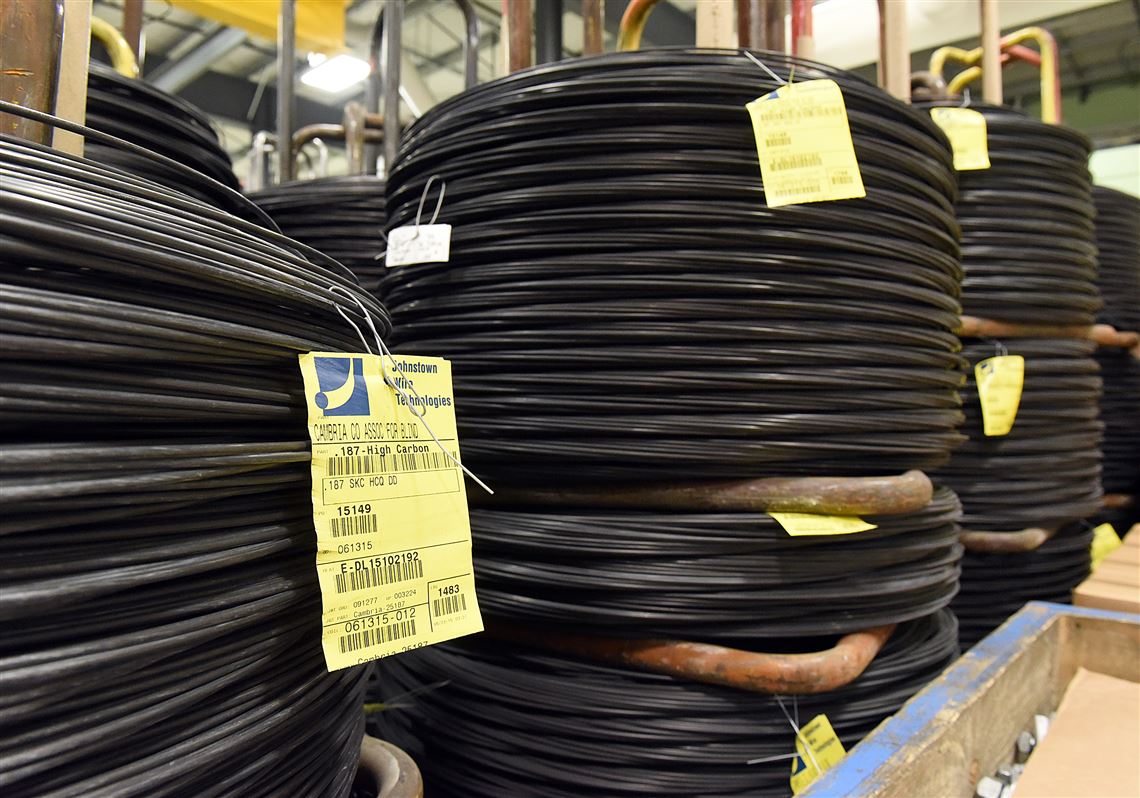
Liberty Steel, part of the global GFG Alliance, purchased Johnstown Wire Technologies (JWT) in Johnstown, Pennsylvania, a large producer of value-added carbon and alloy wire in North America.
The acquisition allows Liberty the opportunity to manufacture a range of high-value carbon and alloy wire products for multiple end markets including the infrastructure, automotive, utility, and consumer sectors.
The advanced manufacturing facility at Johnstown will complement Liberty’s melting and rolling operations at Georgetown, South Carolina, and Peoria, Illinois, and, combined with its scrap processing plant in Tampa, Florida, will have a wide presence in the U.S. steel market.
The 638,000-square-foot Johnstown site has been a high-profile steel manufacturing facility for over 100 years and is one of the few U.S. producers of CHQ, electro-galvanized, aluminized and spring wire. JWT currently holds a high market position in the electro-galvanized and aluminized sectors.
Source: Pittsburgh Post Gazette
With more than half of JWT’s output sold into the transportation market, Liberty is also aiming to capitalize on continued growth in U.S. vehicle production. It is one of the largest producers in the U.S. of CHQ wire, which is used in automotive products such as engine block bolts and brake pad rivets.
Liberty hopes that the acquisition will increase its capability to meet the “Made in America” specifications required for public infrastructure and utility contracts.
Grant Quasha, Chief Investment Officer for GFG in North America
“This is another very significant step towards our ambitious U.S. goals,” said Grant Quasha, Chief Investment Officer for GFG in North America. “JWT is a profitable business with a skilled workforce and tremendous pedigree in the industry, so we look forward to welcoming it into the GFG USA family and helping it build an even stronger future.”
“We are excited to be joining the GFG family of global businesses and see this as a tremendous opportunity to further our position as a leading manufacturer of steel wire in North America,” said Jack Miller, President and CEO of Johnstown Wire Technologies.
Sanjeev Gupta, GFG Group executive chairman
“It’s a great pleasure to welcome 250 highly-skilled new members to our family,” said Sanjeev Gupta, GFG Group executive chairman. “Integration upstream and downstream with value-added product manufacturing is an absolute core to our U.S. steel strategy. The addition of high-quality specialized facilities at Johnstown further strengthens our existing facilities at Georgetown and Peoria.”
Liberty entered the U.S. market in 2017 by acquiring ArcelorMittal’s Georgetown mill and followed up with the purchase of Keystone Consolidated Industries, including its flagship Peoria mill, in 2018.
A North American steel manufacturer recently made an investment with intent to expand its services at its South Carolina bar mill.
Nucor Corporation announced plans to add vacuum degassing to its engineered bar services at its bar mill in Darlington, South Carolina. Nucor hopes that by providing this service the mill will be better equipped to produce engineered bar products according to high-quality specifications in the industry. The vacuum degassing system is expected to begin operating in late 2020.
John Ferriola, Chairman, CEO, and President of Nucor Corporation
“This strategic investment complements our existing bar mills that primarily produce engineered bar products in Norfolk, Nebraska, Memphis, Tennessee, and Wallingford, Connecticut. It will position us to better serve our customers in the Southeastern United States and support the growing demand in the region for higher quality automotive and other specialty steel applications,” said John Ferriola, Chairman, CEO, and President of Nucor.
Nucor Steel South Carolina, the first steel mill Nucor built, now employs more than 450 teammates and will recognize its 50th anniversary this summer at the Darlington facility.
Producing steel by means of melting recycled scrap in an electric arc furnace (“EAF”), the mill influenced the way steel is now made in the United States. Today, Nucor estimates that approximately 70 percent of the steel made in this country is produced using EAFs.