AEROSPACE HEAT TREAT

Pratt & Whitney Awarded F135 Production Contract

Pratt & Whitney, a division of United Technologies Corp., recently announced that it has been awarded a production contract for the 12th and 13th lots of F135 propulsion systems, powering all three variants of the F-35 Lightning II aircraft.

Matthew Bromberg, president of Pratt & Whitney Military Engines

This award represents the largest-ever F135 production contract, funding more than 332 engines for the U.S. armed services and international customers, and includes program management, engineering support, production support, and tooling. The total contract value for Lot 12-14 is approximately $5.7 billion and it covers all Lot 12 and Lot 13 engines, with priced options for Lot 14.

“This is a significant milestone for the program and underscores the hard work of our joint government and industry team,” said Matthew Bromberg, president of Pratt & Whitney Military Engines. “We’re proud to be delivering 5th-generation propulsion capability at a great value for the warfighter. With more than 500 F135 engines delivered to date, we’re at an exciting inflection point for the program. We are laser-focused on standing up an effective global sustainment network that will support the F135 throughout its lifecycle.”

The combat-proven F135 is the most advanced fighter engine ever produced, delivering more than 40,000 lbs. of thrust and unmatched advances in safety, design, performance, and reliability.


Pratt & Whitney Awarded F135 Production Contract Read More »

AM Supplier Adds Dual Chamber Aerospace Heat Treating (DCAHT™) System

An independent metal additive manufacturer for the aerospace and defense industry recently added a dual-chamber aerospace heat treating system to its vertically integrated, end-to-end production process.

Doug Hedges, president of Sintavia

Sintavia, based in Hollywood, Florida, purchased the DCAHT system from DELTA H TECHNOLOGIES. In addition to aerospace and defense, the company provides advanced manufacturing for critical industries such as oil and natural gas and industrial gas turbomachinery.

“The DCAHT is a great addition to our machine fleet in our new facility,” said Doug Hedges, president of Sintavia. “We are impressed with its performance and complex capabilities such as quenching to our customer specifications. We look forward to meeting the furnacing needs of our customers with this advanced system.”

Ellen Conway Merrill, DELTA H vice president

“The collaboration with the Sintavia team has been an exciting experience as they have proven themselves as a leader in the industrialization of Additive Manufacturing production,” said Ellen Conway Merrill, DELTA H vice president. “The DELTA H DCAHT furnace was a perfect fit as it has enabled them to immediately process aluminum-based AM parts, as well as other alloys requiring heat treatment. We look forward to being a part of their continued success.”

The DELTA H DCAHT furnace features dual chambers operable to 1200°F and 500°F with precision control and temperature uniformity, qualifying as Class 2 (+/-10°F) per AMS2750E and in full compliance with all aerospace pyrometry standards and Nadcap.

AM Supplier Adds Dual Chamber Aerospace Heat Treating (DCAHT™) System Read More »

Global Aircraft Manufacturer Acquires Canadian Regional Jet Program

A multinational manufacturer of ships, industrial machinery, and aircraft headquartered in Tokyo, Japan, recently entered into an agreement to acquire the regional jet program from a Montreal-based manufacturer of regional airliners, business jets, and equipment for public transport.

Mitsubishi Heavy Industries, Ltd. and Bombardier Inc. announced they have entered into a definitive agreement, whereby MHI will acquire the maintenance, support, refurbishment, marketing, and sales activities for the CRJ Series aircraft, including the related services and support network located in Montréal, Québec, and Toronto, Ontario, and its service centers located in Bridgeport, West Virginia, and Tucson, Arizona, as well as the type certificates.

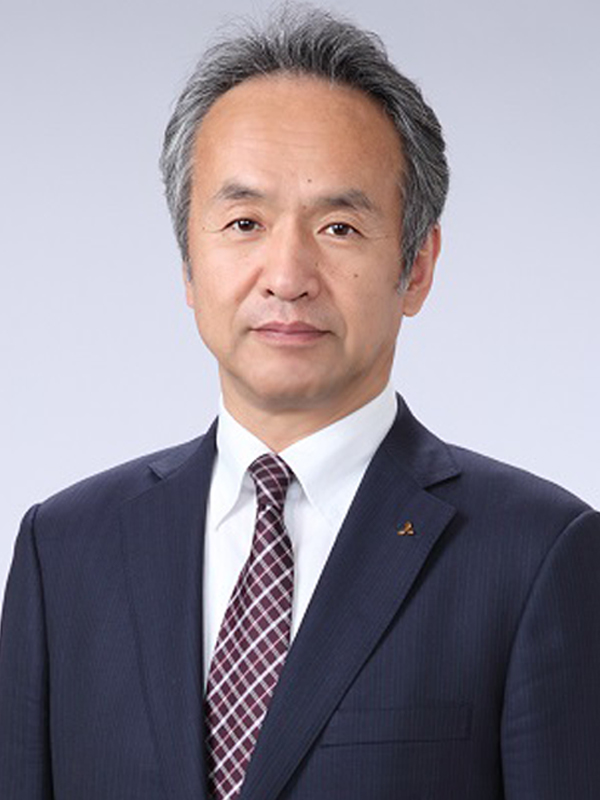
Seiji Izumisawa, president and CEO of MHI
“This transaction represents one of the most important steps in our strategic journey to build a strong, global aviation capability. It augments these efforts by securing a world-class and complementary set of aviation-related functions including maintenance, repair, and overhaul (MRO), engineering and customer support,” said Seiji Izumisawa, president and CEO of MHI. “The CRJ program has been supported by tremendously talented individuals. In combination with our existing infrastructure and resources in Japan, Canada and elsewhere, we are confident that this represents one effective strategy that will contribute to the future success of the Mitsubishi SpaceJet family. MHI has a decades-long history in Canada, and I hope this transaction will result in the expansion of our presence in the country and will represent a significant step in our growth strategy.”

Alain Bellemare, president and CEO, Bombardier Inc.

“We are very pleased to announce this agreement, which represents the completion of Bombardier’s aerospace transformation. We are confident that MHI’s acquisition of the program is the best solution for airline customers, employees and shareholders. We are committed to ensuring a smooth and orderly transition,” said Alain Bellemare, president and CEO, Bombardier Inc. “With our aerospace transformation now behind us, we have a clear path forward and a powerful vision for the future. Our focus is on two strong growth pillars: Bombardier Transportation, our global rail business, and Bombardier Aviation, a world-class business jet franchise with market-defining products and an unmatched customer experience.”

The CRJ production facility in Mirabel, Québec, will remain with Bombardier. Bombardier will continue to supply components and spare parts and will assemble the current CRJ backlog on behalf of MHI. CRJ production is expected to conclude in the second half of 2020, following the delivery of the current backlog of aircraft.


Photo credit/caption: Dmitry Denisenkov (Canwolf) [CC BY-SA 2.5 ] / Bombardier CRJ200 cockpit 

Global Aircraft Manufacturer Acquires Canadian Regional Jet Program Read More »

Auto, Aero, Oil & Gas, Energy Industries to Benefit from Specialty Chemicals Acquisition

A global leader in primary and metalworking industrial process fluids recently announced an agreement to acquire the operating divisions of a UK company that provides specialty chemicals, operating equipment, and services to industrial end markets.

Quaker Houghton plans to purchase Norman Hay plc, which serves a number of industries including aerospace, automotive, oil and gas, and power generation through four divisions:

  • Ultraseal, a leading global provider of impregnation technology, including porosity sealants, and associated chemistry and equipment for die cast components;
  • SIFCO ASC, a leading global provider of surface treatment solutions through selective electroplating, anodizing, chemical solutions and engineering solutions;
  • Surface Technology, a specialty provider of surface treatment solutions including coatings, thermal sprays, plating and other ancillary services; and
  • Norman Hay Engineering, a leading provider of design and engineering services that support surface treatment plants and equipment for the Ultraseal, SIFCO ASC and Surface Technology businesses as well as additional third-party industrial engineering applications.
Michael F. Barry, chairman, CEO, and president of Quaker Houghton

Quaker Houghton intends to operate the acquired divisions as a stand-alone business within its Global Specialty Businesses platform while it completes the integration of Quaker Chemical and Houghton International.

“This acquisition represents an opportunity to add new technologies with good growth characteristics in attractive core market segments with high barriers to entry such as die-casting, automotive OEM and aerospace,” said Michael F. Barry, chairman, CEO, and president of Quaker Houghton. “We also believe it provides a strategic opportunity to take advantage of external market trends such as the light-weighting of vehicles and 3D printing where we have the opportunity to leverage our global footprint and complementary geographic strengths.  In addition, Norman Hay’s engineering expertise, which includes robotics applications, strengthens the existing equipment solutions platform inside Quaker Houghton and further positions the Company for Industry 4.0.”

Norman Hay plc was established in 1946 as a decorative electroplating business and has evolved into a global specialty chemicals sealant, surface coatings, and engineering group.  The company is headquartered at its modern, state of the art production facility in Coventry, England.  The company has approximately 400 employees with production and R&D facilities across Europe and the United States.


Main images photo credit: video stills, Quaker Houghton 


Auto, Aero, Oil & Gas, Energy Industries to Benefit from Specialty Chemicals Acquisition Read More »

Heat Treating Chamfered Parts: Before or After Makes a Difference


Source: Gear Technology


“For years, I have always told people who ask me that my machines pretty much don’t care if a part is hard or soft,” says James Richards of James Engineering.

In a simple experiment, Richards ran several parts through multiple machining and finishing processes to determine whether the hardness or softness of certain steel alloys had any effect on chamfering. What he found regarding hardness or softness did not surprise him. What he did note were the different outcomes that resulted from heat treating the part before or after chamfering.


“We have yet to find a material that we cannot create a chamfer and/or edge finish on. As to whether we chamfer before or after heat-treating—that’s a very different story.” ~ James Richards


This week’s Technical Tuesday highlights Richards’ article “Chamfering: Hard vs Soft Parts and Before vs After Heat Treating”, which appeared in the July 2019 issue of Gear Technology.


Read more: “Chamfering: Hard vs Soft Parts and Before vs After Heat Treating”

Main photo credit: James Engineering


Heat Treating Chamfered Parts: Before or After Makes a Difference Read More »

Link between Heat Treatment and Fatigue Crack Growth of αβ Titanium Alloys

Source: Outlook Biz


Titanium alloys have a high tensile strength because of density ratio, high corrosion resistance, and ability to withstand moderately high temperatures without creeping. Because of these features, titanium alloys are used for aircraft development.  This  article, from Outlook Biz, highlights the research done by IRT Saint Exupery in which they assessed the potential use of the Ti-6Al-4V ELI alloy in aerospace applications, specifically in relation to heat treatment and fatigue crack growth.

Researchers from IRT Saint Exupery assessed the impact of microstructure on the fatigue crack growth resistance of αβ titanium alloys.


Read more: “Link between Heat Treatment and Fatigue Crack Growth of αβ Titanium Alloys”


Photo Credit: Outlook Biz


Link between Heat Treatment and Fatigue Crack Growth of αβ Titanium Alloys Read More »

Aluminum Alloy Achieves Ultimate Tensile Strength in Heat Treating

An aluminum alloy developed and patented five years ago has been identified as one of the strongest aluminum additive manufacturing powders commercially available.

Mike Bond, Director of Advanced Material Technology at Aeromet

Aeromet’s A20X™ surpassed the key 500 MPa UTS mark following a recent research project involving aero-engine giant Rolls-Royce and additive manufacturing equipment specialist Renishaw. Heat-treated parts produced using A20X™ Powder have achieved an Ultimate Tensile Strength (UTS) of 511 MPa, a Yield Strength of 440 MPa and Elongation of 13%. Crucially, parts additively manufactured with A20X™ Powder maintain high-strength and fatigue properties even at elevated temperatures, outperforming other leading aluminum powders.

“Since bringing the A20X™ alloy to market for additive manufacturing 5 years ago we have seen significant adoption for high-strength, design-critical applications,” said Mike Bond, Director of Advanced Material Technology at Aeromet. “By working with Rolls-Royce, Renishaw, and PSI, we have optimized processing parameters that led to record-breaking results, opening up new design possibilities for aerospace and advanced engineering applications.”

The HighSAP project was backed by the UK’s National Aerospace Technology Exploitation Programme (NATEP).  A20X™ Powder for additive manufacturing is derived from the MMPDS-approved A20X™ Casting alloy, the world’s strongest aluminum casting alloy, which is in use by a global network of leading aerospace casting suppliers.

Aluminum Alloy Achieves Ultimate Tensile Strength in Heat Treating Read More »

Heat Treat Capabilities Included in Plans for Aerospace Testing Laboratory

Heat treatment equipment will provide pre-testing services at a new state-of-the-art aerospace materials testing laboratory.

Rick Sluiters, EVP for Aerospace, Element

Element Materials Technology (Element), a global provider of testing, inspection, and certification services for materials and products recently announced plans to open the 30,000 sq. ft. laboratory in Shanghai, China, to specialize in a comprehensive range of services that include chemical analysis, fatigue testing, failure investigation, mechanical testing, metallurgical analysis, and on-site testing at client sites. In addition, pre-testing services will include a full machine shop and heat treatment furnaces for the treatment of materials prior to testing.

With ISO/IEC 17025:2017 accreditation complete and Nadcap and OEM audits ongoing, the laboratory will bring capability, capacity, and expertise to the large aerospace manufacturers and their supply chains based in the region. The facility will also provide testing services to the local oil and gas, transportation, power generation, and medical device markets.

“Our new laboratory in Shanghai creates an unparalleled offering for customers in the region as it provides a local service – saving them time and money – while still connecting to the Group’s large, global network of technical capability, capacity and expertise,” said Rick Sluiters, EVP for Aerospace, Element. “The Chinese aerospace industry is going through rapid growth and this investment is a direct response to our customers’ needs for destructive testing services, for metals and composite materials, that will be used on the current and future generations of aircraft developed in the region.”

Heat Treat Capabilities Included in Plans for Aerospace Testing Laboratory Read More »

USAF Commissions Aerospace Heat Treating System

The United States Air Force commissioned a dual chamber aerospace heat treating (DCAHTTM) furnace system from a leading manufacturer of heat treating equipment for the aerospace and defense industry.

DELTA H Chief Technology Officer and founder Richard Conway
DELTA H chief technology officer and founder Richard Conway

DELTA H Technologies presented the system while visiting Kunsan Air Base in South Korea. These highly specialized furnaces provide crucial heat treating capacity for military aircraft while adhering to the strict calibration and record standards of the Armed Forces.

“As a USAF veteran, there are few things more gratifying than personally delivering to our warfighters the absolute best and most practical technology possible for heat treating aircraft parts,” said DELTA H chief technology officer and founder Richard Conway, who was there when the innovative technology was presented.

DELTA H’s DCAHT furnaces are designed exclusively to comply with the strict aerospace / military pyrometry standards AMS2750E and USAF/NAVAIR Technical Order 1-1A-9. Nine airmen stationed at Kunsan Air Base received certificates of training for heat treating operation. Three outstanding servicemen were also qualified as trainers and are now authorized to teach future operators how to effectively use the system.

“Heat treating is vital to the mission of any airfield. When you look at any aircraft, it is not difficult to imagine all the metal parts – and every single one has been processed with heat in some form or another in order to have the necessary properties required,” said Conway, adding, “Kunsan AB stands fearlessly in the face of a powerful and serious threat. Our warfighters deserve nothing less than the best and we are honored and humbled to be among their technology providers.”


USAF Commissions Aerospace Heat Treating System Read More »

Aerostructures Manufacturer Transitions Breakthrough Titanium Fabrication Technology from Lab to Factory

A manufacturer of aerostructures for both commercial and defense headquartered in Wichita, Kansas, recently announced it is transitioning recent research breakthroughs—a new process that allows for more advanced production of titanium parts—from the laboratory to its factory.

Spirit AeroSystems developed The Joule Form™ process, a new proprietary method for forming titanium raw material at elevated temperatures in the fabrication of aerospace components. This method provides the company with a competitive advantage in the use of titanium, a highly desirable material thanks to its combination of strength and its light weightedness.

John Pilla, Spirit AeroSystems Senior Vice President and Chief Technology and Quality Officer

“We are the first in the aerospace industry to use this high-tech solution,” said Spirit AeroSystems Senior Vice President and Chief Technology and Quality Officer John Pilla. “The implementation of the Joule FormTM process allows for more advanced production of titanium parts, such as those on Spirit’s propulsion, fuselage and wing products. This approach offers a host of benefits that ultimately reduce costs and drive greater efficiencies.”

The Joule FormTM process allows Spirit to form parts out of titanium plates rather than relying on machining large blocks of titanium, significantly reducing waste and decreasing the amount of machining. The process was internally developed as part of one of Spirit’s key research focus areas, the Lean Metallic Structures Distinctive Capability.

Kevin Matthies, Spirit's senior vice president of Global Fabrication
Kevin Matthies, Spirit’s senior vice president of Global Fabrication

“This emerging manufacturing improvement can replace more expensive techniques,” said Kevin Matthies, Spirit’s senior vice president of Global Fabrication. “We want to build high-quality products in a cost-effective way. This is a great example of improving a process to better serve our customers.”

Joule Form™ technology can be used on aircraft components that are machined from plates or forgings, specifically on materials that are hard to machine and expensive to procure (like titanium and steel alloys). Spirit operates sites in the U.S., U.K., France and Malaysia. The company’s core products include fuselages, pylons, nacelles and wing components for the world’s premier aircraft.

Photo Credit: Still image from Spirit AeroSystems video


Aerostructures Manufacturer Transitions Breakthrough Titanium Fabrication Technology from Lab to Factory Read More »

Skip to content