


We like to celebrate the wins for good reason: they inspire us when times get tough. Regardless of where you find yourself in the North American heat treat community, you will face challenges that may redirect your life and prompt you to question your goals or values. Given this universal experience, we asked respected individuals from across the industry to share the hardest decisions of their professional lives. Just as successes inspire resilience, these challenges offer lessons in navigating the toughest moments of your career.
This inspiring piece was first released in Heat Treat Today’s September 2025 Annual People of Heat Treat print edition.
“No Jerks” Rule, with Sarah Jordan

Founder & CEO
Skuld, LLC
For Sarah Jordan, president and CEO of the cutting-edge casting startup Skuld LLC, hard decisions have paved the path of her career. An earnest visionary — and as down-to-earth as they come — Sarah has made a habit of launching startups for the metal processing industry. Today, she leads a team that has developed a toolless, net-shape casting process and the equipment to perform it, advancing the way parts are formed while minimizing post-processing needs.
It comes to no surprise that her hardest decision came while forging this path. In 2009, Sarah’s first startup, Aesir Metals, faced fall-out from the 2008 economic recession. The impact was most acute when their largest customer informed them that they were unable to pay.
Faced with this reality, Sarah had to make the painful choice to close the company. Just after Christmas that year, every employee was let go. “And that’s awful when everybody’s…you know, they’re counting on you, their families are counting on you.” It was her first time navigating such a challenge, and while it was difficult, it became a formative experience.
Leading her current company, Sarah operates with a “‘no jerks’ rule.” She says culture and people are critical, and the postmortem of Aesir Metals revealed other opportunities for improvement. While mistakes are inevitable — learning requires that — she moves forward, determined not to repeat the same ones.
Upgrade Your Skillset, with Kevin Walters
Research & Development Manager
OMG Inc.
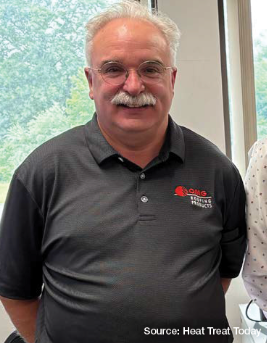
Kevin Walters‘s official title is R&D manager at OMG Inc. out in Massachusetts — however, his nickname “Father of Interns” is extremely fitting. With decades of engineering experience, Kevin has dedicated 25 of them (and counting) to mentoring interns, first at Spalding Sports Worldwide and now at OMG. Using his own career for reference, he tells them this story.
Approaching his forties with four boys near or in their teenage years, Kevin began thinking seriously about his career trajectory. He knew that to stay relevant in engineering, he needed to expand his skillset. In this field, the rule is simple: upgrade your abilities or risk becoming obsolete. The question was how.
“I’m a guy who likes to fix stuff — work with my hands,” Kevin told me. The typical career-advancement routes didn’t seem like the right fit: waiting for an opportunity to open up in the company could take too long, a doctorate might pigeonhole him into academia, and an MBA didn’t align with his engineering focus. It took five years of consideration, conversation, and research to find the right path.
That opportunity appeared when he learned about a management degree specifically tailored for engineers. With Spalding’s full “blessing” and tuition reimbursement program, Kevin enrolled at Western New England University, taking two courses per year while balancing his job and his sons’ baseball games. In five years, he had earned his Master’s of Science in Engineering Management.
These kinds of programs have become more widely available, and Kevin encourages his interns to pursue them. “Engineers, if they don’t upgrade their skillset, become obsolete,” he says. “I see too many engineers who graduated with their four-year degree — did great things at the beginning of their career — but because technology is advancing and they’re not learning with it, they are not as useful as they used to be.”
Each summer, Kevin continues mentoring one or two interns, urging them to think strategically about building their résumés and preparing for an industry that never stops moving.
It’s the People, with Dan Bender
Director of Sales
Control Concepts
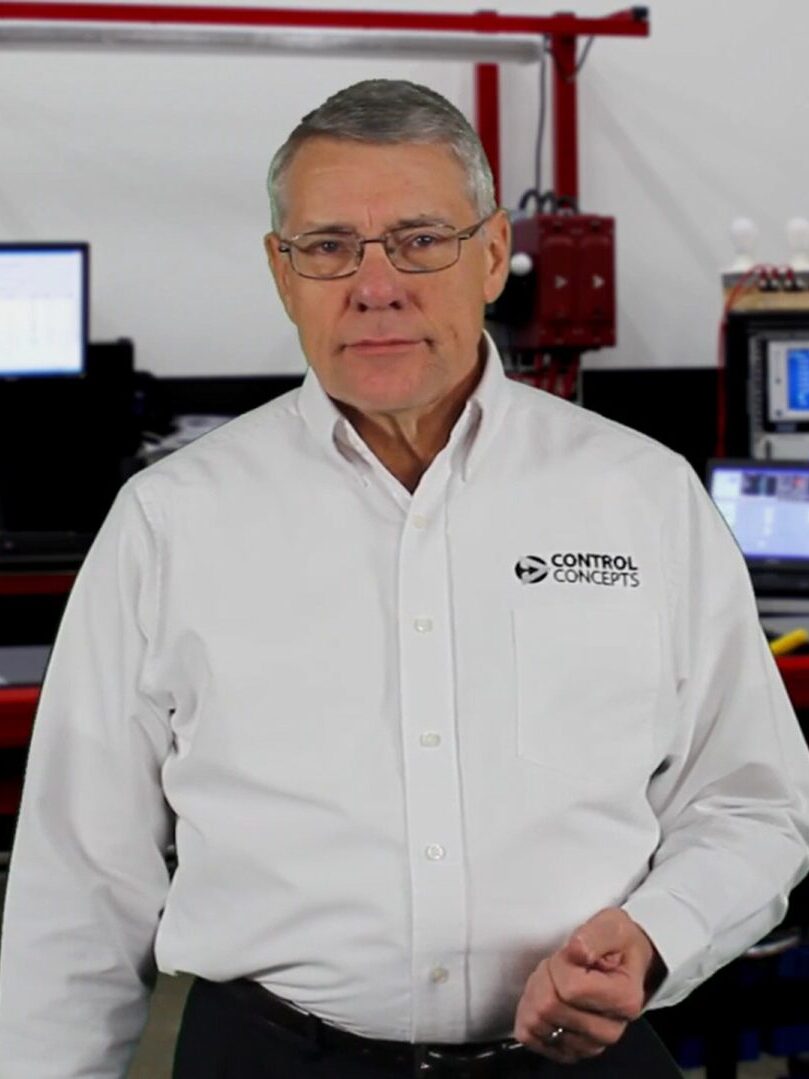
As Dan Bender reflects on his 47 years in industry, many as director of sales at Control Concepts, one priority has guided him: bring in business so the people in manufacturing have a job, can feed their families, and keep a roof over their heads.
In the late ’80s and early ’90s, there were a lot of mergers and acquisitions of companies by holding firms. A general attitude that “work is work” within industry started to emerge. He observed that people were being treated as just another factor of direct manufacturing costs.
This inhumane approach was augmented by a larger lack of pride in the business by the leadership. He also perceived that businesses were treated as financial investments; leadership seemed to be just concerned with flipping the company for a profit. Eventually, these factors reached Dan’s workplace.
Desiring more from his employer and wanting to be useful and productive in a place where people mattered, he parted ways. He reflects, “I left a pretty good job and went out to try some other things, realizing I still had a family to support.”
Over the next few years, he explored different roles, leaning on the counsel of friends and mentors from outside the heat treat industry, many of them from his church. Then, in 2008, the recession hit. Dan was working for a European company when it eliminated nearly all North American positions, and for the first time in his career, he was out of a job.
“That was tough,” he commented. “That was a hard, a hard thing…I did some interviews, I had some possibilities, I had some decent things, but I wanted to find somewhere where…people are important.”
His faith was central to that search, and in time, he found the right fit at Control Concepts. While it was not the best offer at the time, it was “what made me feel good, and it [did turn] out to be very financially rewarding for me.”
Choosing to stick with his principles also meant staying in an industry where he had built decades-long relationships. Dan says he looks forward to seeing those connections at tradeshows like Heat Treat 2025 this fall and Furnaces North America next year. “It’s to me, you know…that’s a blessing that I can have conversations with those people and feel a real sense of knowing they are very interested in what you’re doing as well as you being interested in what they’re doing at this stage in their career and your life.” Serving the heat treat industry, and the people in it, is why Dan has no plans to retire anytime soon.
Never Stand Still, with Bill Stuehr
President & CEO
Induction Tooling Inc.
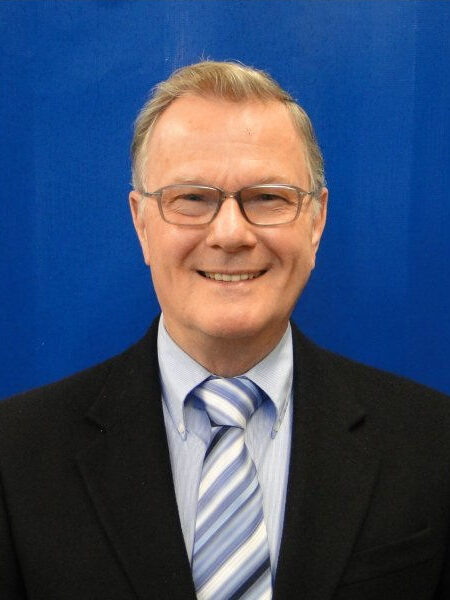
What do you do when an unforeseen market collapse changes the fabric of your business? William (Bill) Stuehr, engineer, founder, and CEO of Induction Tooling Inc., has a clear answer: make a plan and move forward. “I’m a pragmatist,” he says. “I look at things the way they are, then I make decisions and proceed with what has to be done. That’s all.”
In 2005, Bill built a brand-new facility to expand his operations from 14,000 to 30,000 square feet. Business had been picking up for induction heating since the 1980s and ’90s, and manufacturers of driveline components were interested in induction. Induction was becoming more accepted on two fronts: first, as a green energy source; second, as an integrated manufacturing step in cell production, allowing automotive components such as wheel bearings and axle shafts to come out finished at the end of the line. With the expectation to expand to 50 employees by 2015, the city even granted Induction Tooling a tax abatement to encourage expansion and boost the local economy.
The critical moment happened in 2009, beginning on the heels of the 2008 financial crisis. With the housing collapse, people stopped purchasing automobiles, and the automotive industry went reeling. In April and June, General Motors and Chrysler appeared before U.S. Congress after filing for bankruptcy. Bill’s tier 1 automotive manufacturing customers began shutting down operations. “I had never seen it in my career, ever.”
Work was running out. Bill made the hardest decision of his career: “I had to lay off half of my workforce. I went from 28 people to 14 in less than a year.” Some of them had been with him since he started in the late 1970s. “It was out of my control. I tried to keep them on as long as possible without suffering the financial hardship of my own.” Even in hard times, the company covered all employee medical insurance, a practice Bill maintains to this day.
By 2012, the market showed signs of recovery. Bill pivoted the business to focus almost exclusively on CNC automation for rebuilding tooling — a move that met the needs of their tier 1 customers with high production rates and sidestepped the challenges of rehiring or retraining a large workforce.
Commenting on today’s market, Bill revealed it had never truly recovered. “The buyers of the automotive companies had the time to seek outsourcing worldwide.” He continued, explaining that over the course of the four years that followed the crash, there was enough offshoring of driveline components to an enthusiastic, energetic workforce with new facilities and abilities. Reshoring to the U.S. has not gained back the momentum that it had, though perhaps that will change with the priorities of the current U.S. administration.
From those years came a few lasting lessons. First, embrace automation to keep the business profitable, especially when attracting young talent is a struggle. Second, when hard times come, make a plan and commit — but remember that you can’t control time, the weather, or other people. Bill sums it up with gritty simplicity: “You never stand still; you just keep going. ‘What do I have to do and how can I get it done?’ That’s it.”

Managing Editor
Heat Treat Today
Contact: Bethany Leone at bethany@heattreattoday.com