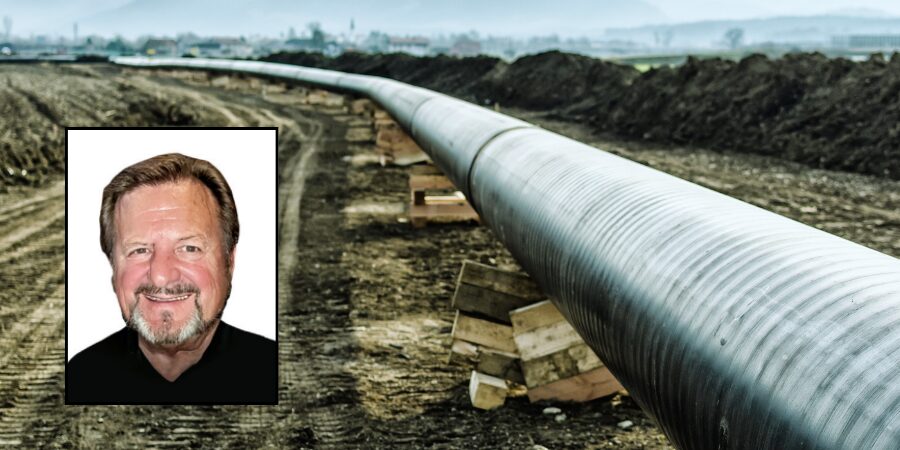
Jim Roberts of U.S. Ignition entertains readers in a Combustion Corner editorial about how the industrial gas industry evolved from its humble beginnings in the early 1900s into a precision-driven force that transformed combustion technology and modern manufacturing.
This editorial was first released inHeat Treat Today’sNovember 2025 Annual Vacuum Heat Treating print edition.
Let’s think about how young the industrial gas industry really is.
A Short Pipeline in Time
The first real industrial usage was way back in the 1800s somewhere. But there was no infrastructure, no supply other than bottled gas for industrial applications. The gas industry, as far as we recognize it, did not really take off until somewhere around the early 1920s when the first welded pipeline was installed. Then, as usage increased, it became apparent that safety was going to be a concern. The addition of mercaptan (rotten egg smell) was not until the late 1930s.
With the growth of commercial and residential usage, the demand for gaseous fuels grew by 50 times the original market size anticipated between 1910 and 1970! What does that demand look like? Today there are over 3 million miles of gas distribution lines connected to 300,000 miles of big transmission pipelines in the U.S. alone. All that growth in a span of 100 years, essentially. That means the transmission pipeline system in the U.S. could stretch around the planet 12 times!
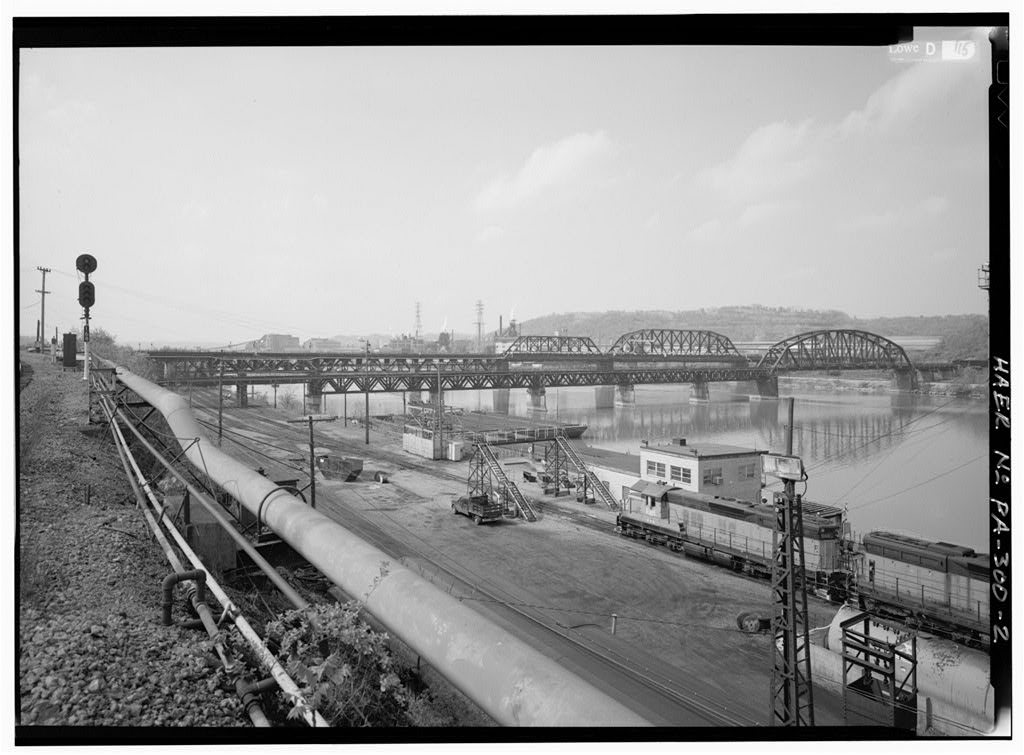
USS coke gas pipeline in the foreground with the Conrail Port Perry Bridge spanning the Monongahela River, Port Perry, Allegheny County, PA (Lowe, 1994) Source: Library of Congress Prints and Photographs Division
Most of that construction occurred during the post-war 1940s to 1960s timeline. That’s one busy industry! And it dragged all the thermally based markets and industries along with it. Now, we have come to accept the availability of natural gas as so commonplace that we cannot imagine life without it.
Responding with Precision
So, now you ask yourselves, “Why this history lesson, Jim?” Well, because we are supposed to be learning about combustion and the era of major combustion advancements — and if I would quit veering off into side topics we might actually get there. But it is all interconnected.
If you recall the story of the heat treater with the bedpost burners (October 2025 edition), he had no inspiration to improve efficiency or performance because those darn bedposts would burn gas just fine. So, what changed? Firstly, the world had been through a couple of military conflicts during this rise of the gas industry. And sadly, sometimes the best technological advances occur in times of conflict; engineering becomes more precise. All of a sudden, instead of hammering out horseshoes for the cavalry, we were heat treating gun barrels and crankshafts for airplanes. We needed to be more than precise — actually, we had to be perfect. So, we stepped away from the old heat treatment ways and developed systems that we could control to within a couple of degrees.
As a result, burners became specialized. Each process became unique and precise. Instead of pack carburizing components, a company called Surface Combustion developed a piece of equipment called an Endothermic generator. This device made carbon-based atmosphere out of natural gas or propane- and nickel-based catalysts. All of a sudden, we could do very precise non-scale covered heat treating. And the burners from companies like North American Combustion, Eclipse Combustion, Maxon, Hauck, Pyronics, Selas, W.B. Combustion, and on and on, all scrambled to develop the specific types of burners that the heat treaters and iron and steel makers needed.
Another important milestone hit around 1963: the Government got involved (gasp!). The Clean Air Act of 1963 essentially said we needed to burn our fuels cleanly and not spit smoke into the air. Those laws got reviewed again in 1970, 1977, and again in the updated Clean Air Act of 1990 with some of the biggest revisions.
With all of these changes, we had several drivers for innovation in the combustion world. Again, precision became a must. Heat treating became a very standards-driven industry. Metallurgists roamed the planet inventing both new materials and the processes to achieve them. Gas companies themselves became huge drivers of innovation and developed think tanks, like the GRI (Gas Research Institute), where people learned and laboratories hummed with development projects investigated in conjunction with burner and furnace companies. Academia became involved with industry in the form of organizations like The Center for Heat Treating Excellence (CHTE) and the Metal Treating Institute (MTI). Suddenly, the industry was more than just blacksmiths.
We’ll talk about how burner companies became design specialists and system efficiency experts and what that meant to various burner styles in next month’s offering.
References
Lowe, Jet. 1994. Panorama of Industry (Conrail Port Perry Bridge, Spanning Monongahela River, Port Perry, Allegheny County, PA). Historic American Engineering Record, HAER PA,2-POPER,1-2. Library of Congress Prints and Photographs Division.
About The Author:
Jim Roberts President US Ignition
Jim Roberts president at U.S. Ignition, began his 45-year career in the burner and heat recovery industry focused on heat treating specifically in 1979. He worked for and helped start up WB Combustion in Hales Corners, Wisconsin. In 1985 he joined Eclipse Engineering in Rockford, IL, specializing in heat treating-related combustion equipment/burners. Inducted into the American Gas Association’s Hall of Flame for service in training gas company field managers, Jim is a former president of MTI and has contributed to countless seminars on fuel reduction and combustion-related practices.
For more information: Contact Jim Roberts at jim@usignition.com.
Listen as Jeff Rafter, vice president of sales and marketing at Selas Heat Technology and current IHEA president, discusses the upcoming IHEA Decarbonization SUMIMIT with Doug Glenn. Scheduled for October 28-30 in Indianapolis, Indiana, the summit will address the challenges and opportunities of decarbonization for manufacturers. Jeff highlights IHEA’s nearly 100-year history in industry education. The event will feature keynote speakers from the DOE, Oak Ridge National Laboratory, and John Deere, with a mix of technical and business content aiming to provide practical strategies for energy management and sustainability. Learn more in this episode of Heat TreatRadio, and learn more about this episode sponsor, IHEA, and their event at summit.ihea.org.
Below, you can watch the video, listen to the podcast by clicking on the audio play button, or read an edited transcript.
The following transcript has been edited for your reading enjoyment.
The IHEA Decarbonization Summit (01:03)
Doug Glenn: Jeff, when and where is the summit? And what was the driving force behind deciding to do this event?
Jeff Rafter: The IHEA Decarbonization SUMMIT will be at the Conrad Hotel in Indianapolis, Indiana, beginning on Monday, October 28, and ending Wednesday, October 30.
The drive to create this event arose because the IHEA membership had often commented on, and lamented, the frequent inquiries they get from the client base across all sectors of manufacturing; clients are looking for clarification on the ongoing changes of the U.S. energy infrastructure and, specifically, how to manage the requirement to reduce carbon dioxide emissions.
There is a lot that is changing quickly in the U.S. energy infrastructure around renewables, electrification, and low carbon fuels. he IHEA board felt that it was essential to assist manufacturing members by trying to clarify these topics in an interesting event that presented the information objectively and provided a diverse array of all the decarbonization pathways available to manufacturers today.
IHEA’s Qualifications (02:36)
Doug Glenn: For those who might not know what IHEA is, what makes it uniquely qualified to present such a summit?
Jeff Rafter: I am proud to say that IHEA is a very unique organization. Many trade organizations do not have the long-standing success in supporting members that this organization has. The composition of IHEA, which is close to 100 years old, was originally made up of heating appliance and heating component manufacturers, who have spent most of our history focused on industry education as a service to all the member companies.
We felt that this was the perfect organization to take up the topic of sustainability and decarbonization because we are education focused. From that background and that bias, we are leveraging thousands of years of experience over a broad array of manufacturing options from traditional fossil fuels through electrification. Our member companies provide a very strong basis to deliver real-world examples of how to deal with reducing CO2 emissions.
Doug Glenn: And if I am remembering correctly, IHEA actually has a standing history of cooperation and working with the DOE on different things in the past, correct?
Jeff Rafter: Very good point, Doug. If you look back in history, before “CO2 reduction” and “decarbonization” became buzzwords, we spent a lot of similar efforts working with government organizations, research laboratories, and third-party organizations around topics of NOx reduction and trying to create a cleaner basis of industrial, manufacturing, and energy. In addition, we have always spent our time helping with business concerns regarding efficiency, not only operating successfully heating processes and appliances, but also making manufacturing more cost effective.
Keynote Speakers (04:44)
Doug Glenn: And speaking of the DOE, I see that there are some pretty high-profile speakers coming. The keynote speaker is Dr. Avi Shultz, from the U.S. DOE, and he is on the Industrial Decarbonization Initiative. Other speakers include Paulomi Nandy from Oak Ridge National Lab, Jeff Kaman from John Deere, and Tim Hill from Nucor. Can you give us a sense of what these folks will be talking about?
Dr. Avi Shultz Director U.S. Department of Energy (DOE) The Industrial Efficiency & Decarbonization Office (IEDO)Paulomi Nandy Technical Account Manager, R&D Assistant Staff Member Manufacturing Energy Efficiency Research Analysis Group (MEERA) Oak Ridge National Laboratory (ORNL)Jeff Kaman Manager, Energy Supply and Sustainability John DeereTim Hill General Manager Sustainability Solutions NucorSpeakers at the IHEA Decarburization Summit
Jeff Rafter: Doug, we are very excited to have the diverse mix of speakers that will make up the summit presentations. With Dr. Schultz and Miss Nandy, we are very excited to be providing a third-party opinion — government organizations and research laboratories — and they will be presenting on their views of the trends for the future of sustainability and decarbonization.
When we move to some of the other presenters like Tim Hill from Nucor and Mr. Kaman from John Deere, we also wanted members and attendees to take away from the summit real-world experience. These are not imagined or planned changes. We wanted companies that had actual experience with decarbonization — who had even taken actions towards net-zero positions — to share with attendees exactly how they approached the challenges.
Because, of course, some of the issues around sustainability are that it comes at a cost.
And how do you fund that? How do you research that? Where do you look for grants, and how do you make the business case towards decarbonization or any sustainability action for that matter?
Finally, adding to those two bodies of participants, we have a number of presenters speaking about real-world solutions today. IHEA’s view on decarbonization and sustainability is that there is a very broad set of pathways that you can take today with inexpensive, readily available technologies all the way out to longer term solutions like full electrification of processes.
There is more than one way to approach this challenge and do the responsible thing in manufacturing, which is to address our CO2 production globally.
Is Electrification the Only Answer? (07:25)
Doug Glenn: You mentioned electrification. When people hear decarbonization or sustainability, they often think electrification. There may be a lot of people listening saying, “I am primarily combustion. Should I be going?” Are only electrification solutions going to be presented? Or are combustion solutions going to be presented as well to help with the decarbonization?
Jeff Rafter: The answer to that question is, “Yes, you should be going, regardless of whether your focus and your background is in traditional fossil fuel combustion or electrification.”
The summit will contain a very balanced approach of different technologies, presented with no bias. The goal of this summit is providing education to help business leaders make better decisions around their energy management and their environmental concerns.
With that said, when we look at the body of what is available in the agenda, electrification is an important topic. But as a lot of people recognize, some portions of electrification are just relocating to a different fossil fuel further away from the point of use whilst other electrification options linked to renewable energy sources truly can come close to net-zero production of CO2.
IHEA’s view is that there are many sustainability pathways that we can all investigate or pursue.
Some pathways maintain fossil fuel basis. Some industrial processes will be challenged to move to an electric heating source. And then for other processes, electrification is the cat’s meow. So it is that broad sweep of diverse technologies that everyone needs to be educated on to make better decisions when the time comes.
Who Should Attend the Summit? (09:21)
Doug Glenn: How technical will the summit be; do I need to know heavy engineering, metallurgy, and things of that sort? And who should come?
Jeff Rafter: Traditionally, a lot of IHEA’s educational content has been directed at a technical audience; it was technical education about how various energy sources and heating appliances work, how to comply to code, and how to approach the application of that equipment safely. In this particular summit, we have changed course a bit in that we did not want this event to be a technical conference.
The idea of this summit was to make it a business conference because that is where most of the challenges exist when we look at sustainability efforts.
The content that will be presented is a pleasant mix of some technical topics because we have to get a rudimentary understanding of how these different technologies work. However, we are spending just as much time in the presentations addressing business concerns: How do you fund these various actions? Where can you find available grants? What are real-world examples of how other companies have approached sustainability or have begun an initiative internally? How do you get the support and the decision-making decided while moving in the right direction? When you look at the agenda that will be posted on the IHEA website, you will see that the topics range broadly from some technology presentations to real-world business concerns and how to make those business decisions.
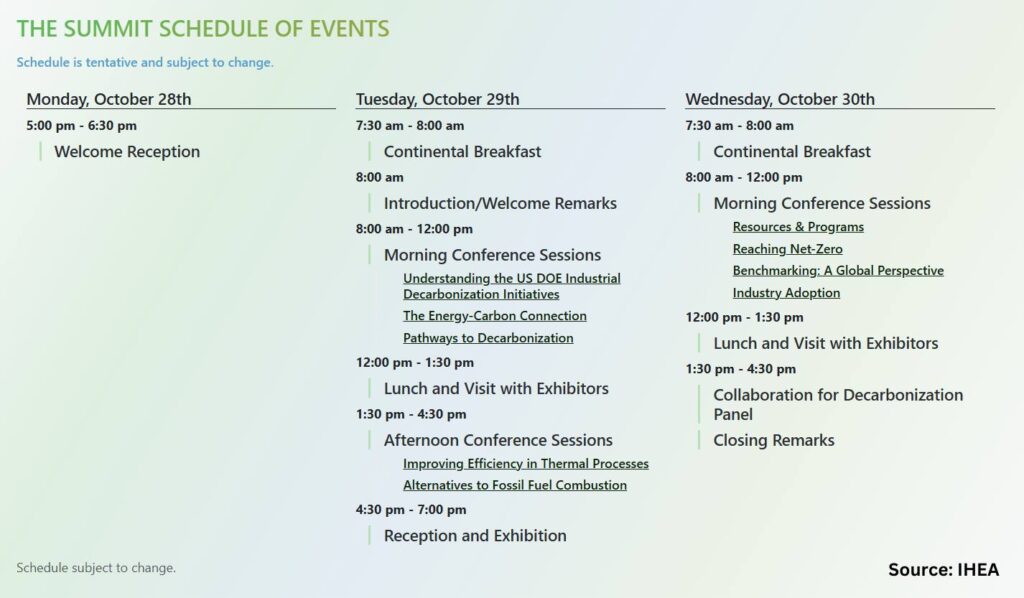
Agenda for IHEA Decarburization Summitt, Monday – Wednesday, October 28-30, 2024, in Indianapolis, Indiana
Doug Glenn: How much fun have you had putting this summit together?
Jeff Rafter: I would happily report it has been a tremendous team effort.
I am very proud to say that a lot of IHEA member companies and third parties have stepped up to help us construct this event. We are really looking forward to it being a valuable event that provides a lot of information and important takeaways for participants.
Doug Glenn: I know you have put a lot of work into it. I have watched you do this over the last year and a half, and you have done a great job coordinating it.
Closing Remarks (12:34)
Jeff Rafter: I would just like to say in closing, for anyone who is thinking about coming to the IHEA Decarbonization Summit, please do. This is a very important topic for manufacturers, and you really need to take the approach of not waiting. It is time to get in front of changes in our energy infrastructure and the need to decarbonize some manufacturing processes. This is a great way to get educated and start your plan.
Doug Glenn: And I did remember one other motivation: If you are looking to stay at the hotel where the summit is held, the cutoff date for the hotel (you can still get into the summit even if you do not hit this cutoff date) is October 7th. So anyhow, appreciate it. Jeff, thanks very much for your time.
About The Guest
Jeff Rafter Vice President of Sales and Marketing Selas Heat Technology Company, LLC Source: Selas Heat Technology
Jeff Rafter is vice president of sales and marketing for Selas Heat Technology in Streetsboro, Ohio, and has a rich history in the combustion industry, including Maxon Corporation. Jeff has 31 years of industrial experience in sales, research and development, and marketing; combustion application expertise in process heating, metals, refining, and power generation; and 13 years of service on NFPA 86 committee. He holds patents for ultra-low NOx burner design. Additionally, his company, Selas, is an IHEA member, and Jeff is the current president of IHEA as well as one of the driving forces/coordinators behind the upcoming Decarbonization Summit at the Conrad Hotel in Indianapolis, October 28-30.
The Industrial Heating Equipment Association (IHEA) recently announced the opening of registration for its annual fall seminar series.
IHEA Fall Seminar 1: Attendees receive valuable technical information at IHEA’s Fall Seminar Series.
IHEA, a voluntary trade association representing segments of the industrial heat processing equipment industry, opened registration for the IHEA Fall Seminar Series, to be held from September 24-25, 2019, in Cleveland, Ohio.
This annual series will be comprised of three seminars addressing combustion, safety standards and codes, and process heating, respectively. Attendees from all three seminars may also attend IHEA’s Tabletop Exhibition & Reception on Tuesday, September 24, to network with suppliers of thermal processing products and services.
The Combustion and Safety Standards and Codes Seminars, as well as the Tabletop Exhibition & Reception, will be held at the InterContinental Hotel Cleveland, while the Process Heating Seminar will be held at Selas Heat Technology.
IHEA’s 50th Combustion Seminar will span two full days, featuring 16 sessions designed to give round exposure to combustion technology and led by industry professionals in a non-commercial environment.
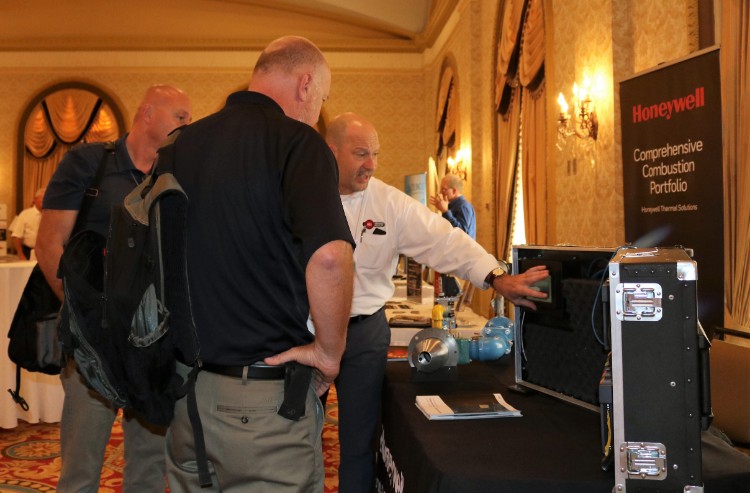
IHEA Fall Seminar 2: IHEA Fall Seminar attendee takes advantage of visiting with tabletop exhibitors during the networking reception.
The Safety Standards and Codes Seminar will also follow the two-day format. This class will be led by instructors involved with the 2019 revision of NFPA 86 – Standards for Ovens & Furnaces. The agenda will include discussion of these recent updates as well as several safety topics.
New this year, the one-day Process Heating Seminar will be held at Selas Heat Technology, a member company of IHEA. Besides live demonstrations and a facility tour, this seminar will present information about infrared and induction technologies and the industrial applications that use these heating processes.