Heat Treat Today offers News Chatter, a feature highlighting representative moves, transactions, and kudos from around the industry.
Personnel Chatter
Isaiah Arnold joins Schneider Electric as a services sales engineer.
Vacuum & Atmosphere Services Ltd. has new heads of departments: Aaron Long, head of Vacuum Products; Greg Walker, head of Atmosphere Products; Adam Greenway, head of Fabrications; and Mike Oldham, head of New Business.
Hubbard-Hall Inc. has hired Jodie Menze as customer service manager. In this newly-made position, Menze will take a hands-on approach to enhancing the customer experience.
Hubbard-Hall has transformed its Sales & Technical Departments and promoted several key staff: Larry Ensley, director of Technical Applications, is assuming company-wide responsibility for technical service teams and lab operations, overseeing ten technical experts. These individuals include Robin Deal and Faith Mierzejewski. Secondly, Mike Valenti is expanding his role as the director of Cleaning Technology. Lastly, Ted Saltzman, newly named Specialty Sales manager & Business Development, will direct the Specialty Sales group’s field account team and oversee the inside account management team. All three individuals will report to Scott Papst, vice president of Specialty Sales and Business Development.
Isaiah Arnold, Services Sales Engineer, Schneider Electric (Source: LinkedIn)
Aaron Long, Head of Vacuum Products; Greg Walker, Head of Atmosphere Products; Adam Greenway, Head of Fabrications; and Mike Oldham, Head of New Business at Vacuum & Atmosphere Services Ltd.
Jodie Menze, Customer Service Manager, Hubbard-Hall Inc. // NA
Company Chatter
Ramco Steels Pvt. Ltd. in India has installed its first SCADA-controlled quenching & tempering furnace in-house. Now, they offer spherodised annealing, normalising, isothermal annealing, through hardening and tempering, induction hardening/tempering, and soft carburising operations in-house.
Service Heat Treating announced the completion of a multi-year plant expansion, expanding their space by 40,000 sq.ft. and adding heat treat capacity.
Solar Manufacturing Inc., Sellersville, Pa. announced the receipt of U.S. Patent No. 11053560 issue date July 6, 2021.
Kanthal launches a second generation flow heater control system, developed to assist customers to run the flow heater safely and efficiently.
Advanced Heat Treat Corp. announced a new black oxide option which offers a darker black color oxidation than their original offering. The additional option will be available as a standalone black oxide treatment and as part of the UltraOx® heat treatment (referred to as UltraOx Hyper).
Solar Manufacturing Inc.’s U.S. Patent No. 11053560
Flow heater control system from Kanthal
New black oxide option at Advanced Heat Treat Corp.
Kudos Chatter
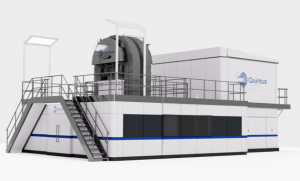
China’s Tiangong International Company Limited acquired a Quintus Technologies hot isostatic press (HIP).
Bodycote Greenville is now certified by GE for the heat treatment of both titanium and aluminum.
On SECO/WARWICK’s 30th Anniversary, they introduced a new website – www.secowarwick.com — and a new book — the DNA Book.
Quintus Technologies’ HIP to Tiangong International Company Ltd.
Bodycote Greenville now certified by GE
SECO/WARWICK’s 30th Anniversary announcement
Heat Treat Today is pleased to join in the announcements of growth and achievement throughout the industry by highlighting them here on our News Chatter page. Please send any information you feel may be of interest to manufacturers with in-house heat treat departments especially in the aerospace, automotive, medical, and energy sectors to bethany@heattreattoday.com.
"The success of most heat treating processes comes down to the battle between time v. temperature..." In this Heat Treat Today Technical Tuesday article, Jerry Dwyer of Hubbard-Hall describes innovative heat treating practices with organic polymer quenchants.
If you are interested in learning about what these polymer quenchants can do, and want to know specifically how a high-performing polymer reacts in the quenching process, read on for the details from a specific case study. Between time and temperature, you may just get the best of both worlds.
The success of most heat treating processes comes down to the battle between time vs. temperature, better known as isothermal transformation. The delicate balance between how long to quench a part and at what temperature often comes down to which media is being used to do the quenching.
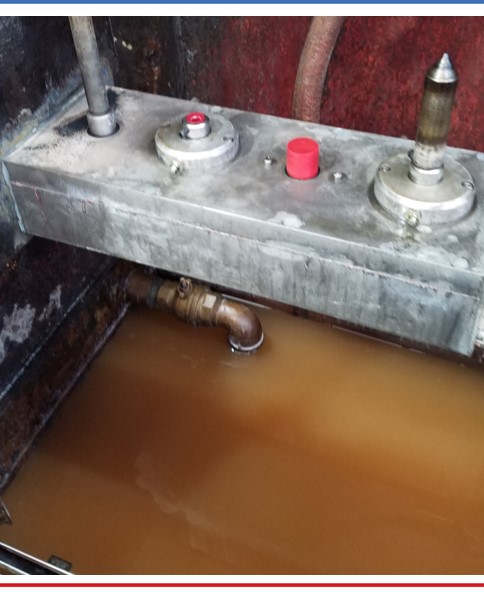
Image of a clean machine
For decades, water and oil have been the go-to solution for quenching heat-treated parts in order to harden them to proper specifications. Of the two, water has the highest cooling rates (between 2,000°F/sec to 10,000°F/sec), which often leads to high distortion rates in parts and more cracking because of the high residual stresses. Oil-based solutions have been used extensively in the metalworking industry on larger, thicker parts because it has basically three cooling speeds: slow for lower hardness and less distortion, medium for when moderate to high hardenability is needed, and high for carburized and carbo-nitriding part applications.
But with increasing concern for both environmental disposal and safety issues, many heat treaters have been searching for an alternative quenching technology that meets their needs. With water and oil so prevalent, industry researchers developed a hybrid of the two in order to come up with a series of polymer quenchants that serve numerous functions and also reduce some concerns.
Development of Polymer Quenchants
Image of polymer
The polymer quenchants contain organic inhibitors and other additives that produce concentrates, which are diluted for use. The advantage of polymer solutions is that they have widely variant properties, which give a heat treater flexibility in how they use the product compared to just water or oil. They are also non-flammable, which eliminates the need for operators to install needed fire suppressant equipment that might be needed with other quenching methods.
There are several different types of organic polymer quenchants, including polyalkylene glycol (PAG), sodium polyacrylate (ACR), polyvinyl pyrrolidone (PVP), and polyethyl oxazoline (PEO).
The polyalkylene glycol (PAG) polymer is one of the most widely used in the heat treating industry and provides an ideal uniform cooling for minimizing distortion and preventing crack formation during hardening machine components and tools. Scott Papst, vice president of specialty sales and business development at Hubbard-Hall, says that many of their customers have inquired about adding a polymer quenching alternative to their process.
“The technology of the polymer process has grown tremendously over the years, and we wanted to make sure we had that technology in their hands,” Papst says.
Partnership with Idemitsu Grows Offerings
Hubbard-Hall, which has a line of several heat-transfer and heat-treat salts for annealing, martempering, isothermal quenching and other applications, began to look for a partner company to supply its customers with polymer quenchants and set their sights on Idemitsu Kosan Co., a Japanese energy company that owns and operates oil platforms and refineries, and manufactures numerous petroleum, oils and petrochemical products.
“We found Idemitsu to be a wonderful partner which has a tremendous focus on advanced technology, especially when it came to heat treating,” Papst says. “We were very happy when we could put together a partnership to offer their polymer quenches to the U.S. market.”
Polymer quenches are used primarily in what is called an “induction hardening operation.” An electric current is put through a copper coil to create a magnetic flux that heats up the target section of the part. Induction hardening uses a shorter time to harden the targeted section of the part instead of using an atmosphere furnace to heat treat the entire part.
Where salt quenches are used to heat treat an entire part, the polymer quenches can be targeted to certain areas of a parts, such as gear teeth. Greg Steiger, a senior key account manager for quench products at Idemitsu, says polymer quenches work great on parts like gears because it treats the most vital sections of the part.
“A gear has to be hardened because it needs to withstand a lot of wear-and-tear; but the teeth take the brunt of the load when the part is in use,” Steiger says. “The teeth of the gear have to be harder than the rest of the part; if the entire gear was as a hard as just the teeth, then that part would fracture and shatter.”
Benefits of Inverse Solubility
Polyalkylene glycols utilize inverse solubility in water; while they are completely soluble at room temperature, they become insoluble at higher temperatures from 140°F to 195°F, depending upon chemical structure. Inverse solubility controls the cooling and quenching mechanism. The ability to vary the concentration of a polymer quench provides great flexibility of the cooling rate. The polymer separates from water as an insoluble phase, and the ensuing deposited layer becomes as an insulator that determines the rate of heat extraction from the quenched part.
“The polymer slows the cooling compared to water, and controls the heat treating process” Steiger says. “The transformation rate is much more controllable, which makes the heat treating more tailorable to the part.”
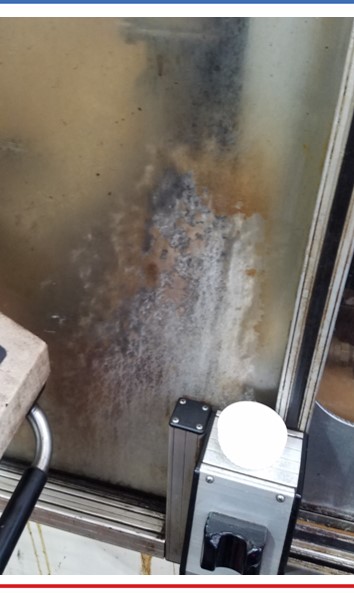
Image with the door closed
Image of a door before process
Idemitsu’s high-performance polymer quenchant is its Daphne Plastic Quench HF, which has excellent oxidation stability performance that protects the integrity of the quenchant even after contamination by metalworking fluids. Steiger says Daphne Plastic Quench HF virtually eliminates the formation of sticky films common in most quenching polymers, which reducing the amount of drag out and thus reducing consumption.
“It is formulated to provide superior biocidal protection, preventing bacterial contamination in the recirculating induction hardening systems,” he says. “It also offers outstanding rust and corrosion prevention to better protect quenched parts. It is highly resistant to degradation.”
Lower Viscosity, Improved Efficiency
The Daphne Plastic Quench HF has a viscosity (at 104°F/40°C) of 29.5 mm2/s, which bests its two top competitors at 536.1 and 301.7. The lower viscosity improves handling and production efficiency, and also reduces or eliminates sticky build-up on machines, gauges, fixtures and parts.
The product also has excellent rust preventative properties and is thermally stable. In fact, Steiger says, testing with a Tier I parts supplier who was having rust issues with a competitor’s product showed that Daphne Plastic Quench HF has stable cooling performance after six months of use, and they only recharged their system twice in a year, reducing consumption by over 66%.
Further, when a global automotive OEM switched to Daphne Plastic Quench HF from a competitor, the result was better separation from tramp oils. The previous product was causing unstable cooling performance that resulted in cracks on the parts; it turns out the OEM was dumping machines and recharging every three months because tramp oil contamination become more than 5%.
“The actual quench oil usage by the OEM was reduced by up to 75% after just four months, and their sump life was much longer at more than six months,” Steiger says. “Lower concentrate usage and a significant reduction in residue directly correlates to improved productivity, reduced maintenance costs and lower disposal costs.”
About the Author: Jerry Dwyer is Hubbard-Hall’s market manager for product groups pertaining to heat treating, phosphates and black oxide. To learn more or get in touch, please visit Hubbard-Hall's website.





 Heat Treat Today offers News Chatter, a feature highlighting representative moves, transactions, and kudos from around the industry.