




Refractory

Avoid Costly Refractory Repairs with Proper Maintenance 

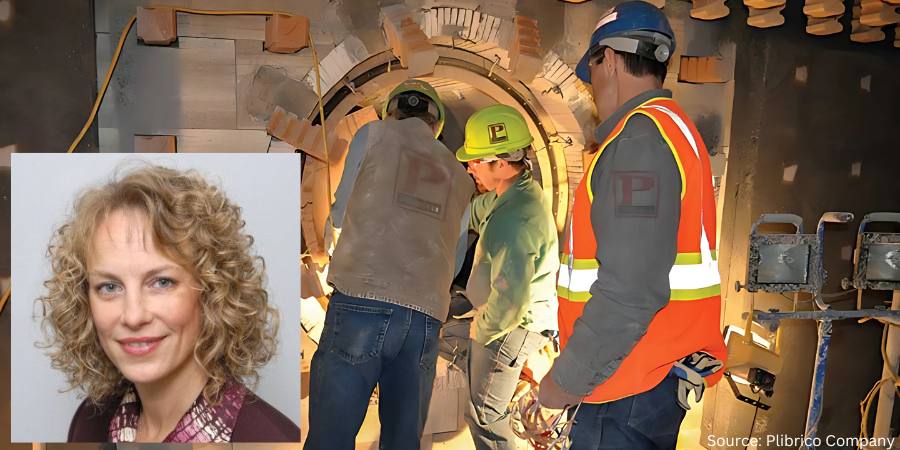
Refractories, “the unsung hero of the manufacturing process,” can’t measure up to that moniker if their superpowers are worn down and not getting due maintenance. Guest columnist Pamela Gaul, director of marketing at Plibrico Company, LLC, examines the critical role the refractory lining plays in the success of manufacturing aluminum, why a refractory is susceptible to cracking under extreme conditions, and how to select and prepare refractory linings to achieve a longer service life.

Read more Maintenance columns in previous Heat Treat Today’s issues here.


As the old saying goes, “An ounce of prevention is worth a pound of cure.” This is certainly true when it comes to your refractories. 

Manufacturers around the world rely on refractories to safeguard their multi-million dollar industrial-grade boilers, incinerators and furnaces from thermal damage and corrosion brought on by operating temperatures that can reach 3000°F (1650°C). 

Without refractories — the unsung hero of the manufacturing process — it would be impossible to process the raw materials that go into automobiles, chemicals, power-generation equipment, buildings, roads and much more. As such, it only makes good financial and business sense to provide basic refractory maintenance for your machinery. By protecting your critical heat-processing equipment, you can minimize costly downtime, reduce energy losses, prevent employee injuries and, more importantly, avert a catastrophic equipment failure. 

Given refractories’ importance to operations, it is important to remember that they are consumables and will wear out. This is significant because without proper maintenance your processing equipment may fail at the most inopportune time, and downtime for a furnace or dryer — even one day — can cost a company hundreds or thousands of dollars. The rewards of proper maintenance far outweigh the expense. 

It is also important to remember that refractories are not commodities. Even within the general classification of refractories, there are significant variances in chemical compositions. As a result, refractories will have different maintenance schedules and repair practices. 

Refractory maintenance has a cost. That is why maintenance needs must be factored in when evaluating which refractories to install in your application. For example, the upfront costs of engineered shapes may be 20-30% more than monolithic refractories. However, they require little to no dryout, are easy to install and in some cases last longer than some traditional castables. Also, if there are high-wear areas that may be difficult to reach due to their location or geometry, financially it is well worth going with the precast shapes to minimize future maintenance expense. 

The Wear Factor 

What causes refractories to wear? Time, temperature, corrosive gases, slag and operational practices will all take their toll, as will the overall engineering of the heat-processing equipment. Other culprits leading to the degradation of a refractory lining can be incorrect combustion controls, improper flame set-up, anchor failure or thermal shock resulting from severe temperature fluctuations. More times than not it is a combination of these or other factors that lead to refractory damage — not a single cause. 

Not following the manufacturer’s recommended curing and dryout schedule can also lead to degradation. If an end-user is looking to accelerate the process due to production demands, quick dryout products might be a good option. 

Some manufacturers offer refractory materials that provide reductions in dryout time and may offer nearly the same properties as their traditional, non-fast dryout counterparts. The benefit to these quick-cure/dryout products are that dryout times are cut about in half, which can represent a time savings of up to 40-50 hours. While they offer an easy, time-saving solution, however, there are limitations to their material properties as well as cautions on dryout. 

It is a good idea to use the dryout time to check items such as the vessel pressurization, exhaust system, temperature monitor, thermocouple position and moisture wicking. 

How You Can Help with Refractory Longevity 

The goal of periodic inspection, maintenance and repair is to ensure the longevity and performance of refractories (Fig. 1). During maintenance, worn parts and areas of excessive wear are repaired before turning into bigger issues. 

Figure 1. During the inspection process, the refractory team will provide a comprehensive condition assessment to help determine the need for repair.  Source: Plibrico Company

Depending on operational make-up, skills and budget, employing a permanent staff to perform these services might not make financial sense. Instead, working with an outside professional refractory contractor with extensive industry expertise who can provide maintenance services, emergency response and repair operations might be far more cost-efficient for the end-user. 

Under either service structure, there are precautionary steps that can be taken in-house to extend refractory operation and increase longevity. 

  • Furnace heat up and cool down: Follow procedures established by the furnace manufacturer. Proper heating creates positive pressure in a furnace, ensuring an equal distribution of temperature. Expansion or contraction control is vital to avoid damage to the refractory. 
  • Dust removal: Keep the dust off the steel in roofs that have an exposed anchoring structure. This simple step keeps the stainless steel hardware from becoming too hot and fatiguing. 
  • “Good” cracks vs. “bad” cracks: Understand the important differences between good cracks and bad cracks. Good cracks in the refractory are created and visible as part of the natural cool-down process. These should be left alone because they will disappear during the heat-up process. If the end-user fills “good” cracks, they will have problems down the road with shell bulge because the refractory will naturally expand during heat-up and production. 

An Ounce of Prevention 

Contact us with your Reader Feedback!

Develop a relationship with a reliable, knowledgeable and nimble professional refractory expert who has your best interests at heart. During the inspection process, your expert and their refractory team should provide you with a comprehensive condition assessment to help determine the need for repair. Assessments allow the refractory contractor to analyze the state of the refractory and select the proper solution to ensure durable repair. 

Often, the first indication that there might be a problem with the refractory lining is the appearance of a “hot spot” on the shell. A hot spot is where an area of the shell is found to be operating at a higher temperature than the surrounding area. This can be due to cracking, spalling or other issues that result in deterioration of the refractory lining. 

When hot spots are identified, the refractory professional will typically pack, grout, caulk or “stuff” the area if it is accessible from the outside. They may also “hot gun” from the inside. 

The number and severity of hot spots, usually found using an infrared camera and heat-flow analysis, can help the refractory professional or engineer determine the integrity of the refractory lining. Depending on the results, the manager/engineer should perform a full cost-benefit analysis to help evaluate which is the best option — repair or complete lining replacement (Fig. 2). 

Figure 2. Depending on the inspection results, the plant manager should perform a full cost-benefit analysis to help evaluate which is the best option: repair or a complete lining replacement. Source: Plibrico Company

When faced with any type of refractory repair, best practice will come down to scope and timetable. A quick repair may be addressed using a gunning (cold/hot) or shotcrete refractory technique. Another possibility might be ramming plastic refractory just to fill a hole/spall or resurface the lining. 

A more time-consuming and sometimes better option would be a full lining repair. These repairs are done to a more thorough degree, which allows for proper cure, dryout and anchoring. 

A Pound of Cure – Premature Failure 

Without proper refractory maintenance, you run the risk of premature failure of the refractory lining. The funny, or not so funny, thing about refractory failures is that you will usually not receive a notice on that day telling you that one of your critical systems will be failing. And once a failure occurs, it is all-hands-on-deck to address the issue and bring your operation back online as quickly as possible. 

During the process, you or your refractory expert should collect samples of the existing refractory material to help identify the causes of failure. For example, glazing and excessive shrinking indicate exposure to excessive temperatures. Shearing away of the top refractory service can be evidence of thermal shock. 

In addition, calculating a base-to-acid ratio will show if the type of refractory installed should have been selected in the first place. Refractory materials are manufactured to operate in different environments. A properly selected and installed refractory lasts longer, helps minimize shutdowns and leads to better fuel efficiency. 

Lastly, fuel should be checked to determine if it is contributing to the degradation of the refractories. For instance, moisture content in fuel may be too high or contain chemicals that damage the lining. 

Financial Implications of Non-Compliance 

Compliance with CMMC 2.0 can be financially burdensome. Implementing measures such as multi-factor authentication, encryption and continuous monitoring can be costly, especially for businesses with limited resources. The lack of in-house cybersecurity expertise compounds this issue, requiring companies to hire or train specialized personnel, further increasing costs. 

Failing to comply with CMMC 2.0 could result in losing valuable DoD contracts, which can be a significant portion of SMB revenue. Such losses could lead to layoffs, revenue declines or even business closures. 

Drama-Free Refractory Removal and Replacement 

In some cases, the maintenance needed for heat-processing equipment is more than repairs can handle. This leaves complete refractory lining replacement as the only option. This is highly specialized work requiring the skills of an experienced refractory installer. 

To ensure drama-free refractory removal and replacement, follow these five key tips: 

  • Enlist the support of a seasoned, knowledgeable and professional refractory contractor. Not all contractors are experts in refractory work. Make sure the contractor has quick access to refractory material. 
  • Obtain a complete scope of work (SOW) and a solid plan. Some of the items that should appear in a good SOW include: 
    • Amount of material needed and on hand 
    • List of equipment supplied 
    • Schedule and details for the tear-out plan 
    • Proper curing/dryout plan 
  • Prepare for the unforeseen. Often, problems do not reveal themselves until the unit has cooled and the tear-out begins. This reality necessitates contingency plans to be in place. Further, it underscores the importance of working with a fully stocked professional refractory contractor who has access to a refractory manufacturer that uses just-in-time manufacturing principles. 
  • Where applicable, install and use precast shapes. These shapes are ready to install and require little to no dryout. 
  • Discuss with your refractory expert if fast-dryout refractory material may be an option for you. Incorporating quick-dryout materials like Plibrico’s FastTrack® can cut traditional dryout time in half. 

When working with your refractory installer, it is important to focus on your specific application to drive refractory material requirements. It is easy to get caught up in flashy new refractory compositions and features. The application should determine the refractory material, not the other way around. 

Good for Your Equipment, Good for Your Wallet 

Proper refractory maintenance is not only good for your critical heat-processing equipment, but also for your wallet. The reality is that the life of your refractory can be reduced by as much as 50% (or more) without proper maintenance. In fact, failing to provide basic refractory maintenance for an aluminum furnace, for example, can leave the end-user with an unbudgeted and unexpected bill for $150,000 or more to fully replace the roof. This is an expense that might have been put off many years with properly maintained refractory. It could then have been scheduled, budgeted and drama-free. 

Worse yet, in the event of catastrophic refractory failure where the anchor tile system or full wall is snapped, the repair bill can easily top $200,000. Keep in mind these figures only address repairs. Add on the large cost of lost production and the total skyrockets quickly! 

As Benjamin Franklin would agree, take care of your refractory — the unsung hero of the manufacturing process — and it will take care of you with a safe and efficient work environment, minimized downtime, reductions in energy losses and, more importantly, avoidance of catastrophic critical heat-processing equipment failure. 

About the Author

Pamela Gaul
Director of Marketing
Plibrico Company

Pamela Gaul is the director of marketing at Plibrico Company LLC.

For more information: Visit www.plibrico.com. 

This article was initially published in Industrial Heating. All content here presented is original from the author.


Find Heat Treating Products And Services When You Search On Heat Treat Buyers Guide.Com


Avoid Costly Refractory Repairs with Proper Maintenance  Read More »

Plibrico Opens New Refractory Production Facility

Plibrico, a manufacturer and installer of superior aluminosilicate and high alumina monolithic refractories, has expanded its footprint with the grand opening and dedication of its new state-of-the-art production facility in Oak Hill, Ohio. The company’s refractories are used in a variety of heat treating applications, and the new plant will enhance technology and production capacity.

Brad Taylor
President & CEO
Plibrico

Plibrico celebrated the occasion with a two-day GO LIVE Showcase, which included in attendance Shane Wilkin, Ohio State Senator; Samuel Brady, president and CEO of Economic Development Partnership of Jackson County; and Paul McNeal, mayor of Oak Hill. In addition to the dedication ceremony and training sessions, attendees received a behind-the-scenes tour of the company’s new refractory production facility. The event also featured discussions on innovation, growth, and development in the refractory industry.

“This facility represents more than just bricks and mortar,” said Brad Taylor, president and CEO of Plibrico, in his welcome address. “It symbolizes our dedication to innovation, growth, and a higher standard of excellence that we bring to our industry every day.”

Main photo: Brad Taylor, President and CEO of Plibrico, ribbon cutting to celebrate opening of new refractory production facility in Oak Hill, Ohio / Source: Plibrico

The press release is available in its original form here.


Plibrico Opens New Refractory Production Facility Read More »

Allied Mineral Products Jobs

Refractory Manufacturer’s $23.5M Expansion To Create Jobs in Alabama

Thirteen new manufacturing jobs will open up with the $23.5 million expansion of an Alabama heat containment refractory production facility. The Ohio-based company supplies products used in a variety of industrial applications, including heat treating operations.

headshot Paul Jamieson
Paul Jamieson
President & CEO
Allied Mineral Products

Allied Mineral Products, an Ohio-based producer of monolithic refractory ceramics, recently broke ground on the major expansion at its Pell City, Alabama, location.  The growth project will add a 200,000-square-foot production facility on the company’s current site and expand the workforce with thirteen new manufacturing jobs added to the company’s current workforce of 81 full-time employees. The project is expected to be completed in late 2025, increasing the facility’s production capacity and improve efficiency. State and local officials joined executives and employees of Allied Mineral Products, LLC (Allied) at the groundbreaking ceremonies marking the investment.

“Our partnership with Alabama is strengthened yet again with the expansion of this plant which we originally built in 2019,” said Paul Jamieson, president and CEO of Allied Mineral Products. “Locating our facility in Alabama was part of a long-term strategy to expand our manufacturing presence in the south to be closer to our customers. Because of the quality of this workforce and the local support here, our growth in Alabama has been faster than we planned. We are excited to be expanding our facility so soon and are confident this will help us to continue that growth.”  


The press release is available in its original form here.


Find Heat Treating Products And Services When You Search On Heat Treat Buyers Guide.Com


Refractory Manufacturer’s $23.5M Expansion To Create Jobs in Alabama Read More »

RHI, Magnesita Combine Creating a Leading Refractory Company

RHI and the controlling shareholders of Magnesita, GP and Rhône (“Magnesita’s Controlling Shareholders”), have reached an agreement to combine the operations of RHI and Magnesita to create a leading refractory company. The combined company, to be named RHI Magnesita, will be established in the Netherlands and listed in London.

Accordingly, RHI’s Management Board has agreed to sign a share purchase agreement with Magnesita’s Controlling Shareholders regarding the acquisition of a controlling stake of at least 46%, but no more than 50% plus one share of the entire share capital in Magnesita, pending RHI’s Supervisory Board approval.

The consideration for the 46% stake will consist of cash amounting to € 118 million and 4.6 million new shares to be issued by RHI Magnesita.

A subsequent mandatory tender offer will be launched as a result of which a maximum number of 5.4 million RHI Magnesita shares will be issued, bringing the total number of newly issued RHI Magnesita shares to up to 10.0 million. The offer will also include a cash-only alternative amounting to € 8.19 per Magnesita share.

As a result of the transaction, GP, Magnesita’s largest shareholder, will become a relevant shareholder of RHI Magnesita and will be represented on its board of directors.

Following registration of the corporate restructurings, RHI’s shares will cease to be listed on the Vienna Stock Exchange. RHI’s migration from Austria and listing in London are subject to approval by RHI’s shareholders’ meeting. The transaction is also subject to approvals by relevant competition authorities. The place of effective management will be Austria.

The transaction is expected to complete in 2017. Both companies will remain completely separate and independent until then RHI Magnesita will be a leading refractory company with an enhanced growth profile due to improved regional presence and complementary asset portfolios. RHI, based in Austria, is a global supplier of high-grade refractory products, with 2015 revenues of € 1,753 million Brazil-based Magnesita is a global provider of integrated refractory solutions, services and industrial minerals, with revenues of US$ 1,013 million (€ 914 million) in 2015

Transaction Overview
RHI AG (“RHI”) and the controlling shareholders of Magnesita Refratários S.A. (“Magnesita”), investment vehicles affiliated with GP Investments (“GP”) and Rhône Capital (“Rhône”, and together with GP, “Magnesita’s Controlling Shareholders”), announce that they have reached an agreement to combine the operations of RHI and Magnesita to create a leading refractory company to be named RHI Magnesita.

Accordingly, RHI’s Management Board has agreed to sign a share purchase agreement (“SPA”) with Magnesita’s Controlling Shareholders regarding the acquisition of a controlling stake of at least 46%, but no more than 50% plus one share of the total share capital in Magnesita (the “Transaction”), pending RHI’s Supervisory Board approval. The purchase price for the 46% stake will be paid in cash amounting to € 118 million and 4.6 million new shares to be issued by RHI Magnesita, a new RHI entity to be established in the Netherlands and listed in London. Based on RHI’s six-month volume-weighted average price (“VWAP”) of € 19.52, the implied value of the 46% stake amounts to € 208 million.

As a result of the transaction, GP will become a relevant shareholder of RHI Magnesita. The combined company’s corporate governance will be constituted on a one-tier board structure while GP will be represented on the board of directors. All RHI Magnesita shares issued as a result of the Transaction and subsequent mandatory tender offer will be subject to a minimum 12-month lock-up period.

The resulting combination will be a leading refractory company. Refractories are materials that retain their strength at high temperatures and are used in various industrial processes in the steel, cement, nonferrous metals, glass and chemicals industries. The combination will bring under one roof two complementary businesses, both in terms of products and geographical footprint. RHI, based in Austria, is a global supplier of high-grade refractory products, with 2015 revenues of € 1,753 million and adjusted EBITDA of € 198 million. Brazil-based Magnesita is a global provider of integrated refractory solutions, services and industrial minerals, with revenues of US$ 1,013 million (€ 914 million) and adjusted EBITDA of US$ 145 million (€ 131 million) in 2015.1

The completion of the transaction is amongst others subject to

(i) approvals by the relevant competition authorities,

(ii) the migration of RHI to the Netherlands,

(iii) the listing of RHI Magnesita’s shares in the premium segment of the Official List on the Main Market of the London Stock Exchange and

(iv) RHI’s shareholders not having exceeded statutory withdrawal rights in an amount of more than € 70 million in connection with organizational changes preceding RHI’s migration from Austria.

The migration and the preceding organizational changes in Austria require qualified approval by RHI’s shareholders’ meeting. If the transaction is terminated for reasons not under the control of Magnesita’s Controlling Shareholders, an aggregate break fee of up to € 20 million is payable by RHI to Magnesita’s Controlling Shareholders.

The migration of RHI to the Netherlands and the subsequent listing on the London Stock Exchange have the objective of reinforcing and underlining the truly international scope of the enlarged combined company, enhancing its capital markets presence and maximizing value potential for the company’s shareholders. The migration of RHI will be effected by RHI Magnesita becoming the ultimate holding company of RHI Group and the shareholders of RHI will cease to hold shares in RHI and instead hold RHI Magnesita shares. Following registration of the corporate restructurings, RHI’s shares cease to be listed on the Vienna Stock Exchange. The place of effective management of RHI Magnesita will be Austria.

The transaction is expected to complete in 2017. Until then, the two companies will remain completely separate and independent. Therefore customers, suppliers, employees and other stakeholders should expect no change in management teams, commercial relationships, supply chains and product offerings during this period.

Mandatory Tender Offer
Following completion of the transaction, a mandatory tender offer will be launched by RHI Magnesita or one of its affiliates (“Offer”) for the remaining shares in Magnesita. As part of the Offer, a maximum number of 5.4 million RHI Magnesita shares will be issued, resulting in an aggregate number of no more than 10.0 million newly issued shares to finance the acquisition. The Offer will include the option to sell shares on the same payment terms as the transaction as well as a cash-only alternative amounting to € 8.19 per Magnesita share (subject to certain adjustments according to the SPA). If some or all of Magnesita’s other shareholders elect not to receive RHI Magnesita shares in the Offer, Magnesita’s Controlling Shareholders have committed to purchase additionally at least 1.9 million and at most 3.4 million of the remaining new RHI Magnesita shares, thereby increasing their total number of RHI Magnesita shares to a maximum of 8.0 million. RHI may decide to combine the Offer with a delisting offer and/or a voluntary offer to exit Magnesita from the “Novo Mercado” listing segment. The Offer will follow applicable Brazilian laws and regulations. Any RHI Magnesita shares that are not taken up in the Offer by Magnesita’s shareholders may be either placed into the market or with institutional investors.

Financial Terms of the Transaction
Based on RHI’s six-month VWAP of € 19.52, the implied value for the entire share capital of Magnesita will be € 451 million, 45% above Magnesita’s market capitalization as of October 4, 2016.2 The transaction will be financed by additional debt and the issuance of 4.6 million RHI Magnesita shares to Magnesita’s Controlling Shareholders. The transaction will increase RHI’s current financial leverage, measured as net debt to EBITDA, to 4.0x at closing of the transaction when assuming an acquisition of Magnesita’s entire share capital. RHI expects, however, that leverage will decline to below 2.0x by 2020 as a result of the strong cash generation profile of the newly combined company. Magnesita will continue to finance itself on a standalone basis without credit support from RHI Group. Before or at completion of the transaction, Magnesita is expected to adopt RHI’s accounting practices, which, according to RHI, could lead to significant, however substantially non-cash adjustments in Magnesita’s book equity value.

Enhanced Growth Profile and Global Footprint
The combination of RHI and Magnesita represents a unique opportunity to accelerate growth in certain regions, resulting from the high complementary of the businesses both in terms of geographic footprint and products.

Magnesita’s presence in South America and the United States fits well with RHI’s presence in Europe and Asia. It results in strengthened geographic clusters of the combined company by adding production facilities in several markets in which RHI and Magnesita are lacking capacity on their own. This combination will also strengthen the competitive position against the Chinese refractory industry, which is expected to consolidate in the coming years as announced by the Chinese government. Moreover, Magnesita’s position in dolomite-based products is highly complementary to RHI’s asset portfolio, which traditionally has a strong focus and an excellent market reputation for high-quality magnesite products.

The combination of RHI and Magnesita will enable the combined company to offer its customers an even broader product and service portfolio thereby delivering enhanced value-add. Additional potential for value creation will be realized through synergies and the implementation of common proven standards of operational and commercial excellence.

Significant Value Creation and Synergy Potential
The Transaction will result in meaningful synergies in the following key areas, amongst others:

(i)      a highly complementary offering of value-added products and services as a result of the combination of both product portfolios;

(ii)     a more efficient cost structure, benefitting from economies of scale in important operational areas such as raw materials supply, freight, marketing and administration, as well as an optimized operational set-up leading to enhanced flexibility in production and an improved cost basis;

(iii)    an optimized working capital structure, especially given Magnesita’s presence in the Americas, by means of improved inventory management and related costs, resulting from the complementary regional footprint of RHI and Magnesita’s operations and customer base; and

(iv)   a relevant reduction in capital expenditure requirements and maintenance costs.

As a result of the transaction, RHI expects minimum net run-rate synergies on EBIT level of approx. € 36 million by 2020. However, RHI is optimistic that as a result of the Offer, RHI Magnesita’s stake in Magnesita will significantly exceed 46%. In this case, RHI expects substantially higher synergies of approx. € 72 million, especially in the areas of enhanced production efficiency and cost benefits in research and development, marketing and administrative functions. In addition, capital expenditure synergies are expected to amount to between € 2 million and € 7 million annually, while aggregate working capital savings of € 40 million are expected in the coming years.

Cash integration costs as a result of the transaction are expected by RHI to be of the magnitude of € 50 million to € 90 million, while non-cash integration costs, effectively write-offs, should vary between € 20 million and € 35 million, depending on the amount of Magnesita shares acquired pursuant to the Transaction and subsequent Offer. Both cash and non-cash integration costs will mainly crystallize in 2017 and 2018.

Increased Financial Targets
As a result of the transaction, RHI’s mid-term financial targets will surpass RHI’s current targets. RHI expects the combined company to generate fully consolidated revenues of € 2.6 billion to € 2.8 billion (previously € 2.0 to € 2.2 billion) with an operating EBIT margin of more than 12% (previously more than 10%) by 2020. It projects a cumulative operating cash flow of approx. € 1.1 billion for the period from 2017 to 2020 for the combined business, assuming an acquisition of Magnesita’s entire share capital.

RHI expects RHI Magnesita to pay stable dividends in 2017 and 2018, in line with RHI’s previous years’ payment levels. In the mid- to long-term, however, RHI Magnesita aims to increase its dividend payments, as a result of stronger cash flow generation resulting from synergies, organic growth and de-leveraging of the company’s capital structure.

RHI, Magnesita Combine Creating a Leading Refractory Company Read More »

Skip to content