

eaf

News from Abroad: Growth Via Innovation

The growth we’re reporting on in today’s News from Abroad installment is not just about expansions but also modernization and innovation. Read about a continuous galvanizing and annealing line for a Turkish automaker, a new 190-ton EAF set to be one of the largest installations in the world, a next-generation anode furnace to meet sustainability targets, and for reducing CO2 emissions, improving impurity removal capabilities and bringing flexibility in treating secondary materials, and the installation and commissioning of new hot edge inductors for its cold mill rolling line (S5) to address the tight edge issues in aluminum strip that occurred during high-speed rolling.

Heat Treat Today partners with two international publications to deliver the latest news, tech tips, and cutting-edge articles that will serve our audience — manufacturers with in-house heat treat. Furnaces International, a Quartz Business Media publication, primarily serves the English-speaking globe, and heat processing. a Vulkan-Verlag GmbHa publication, serves mostly the European and Asian heat treat markets.


Turkish Auto Maker Expands with Continuous Galvanizing/Annealing Line

View of the Borçelik site

“Turkish steel manufacturer Borçelik has selected international technology group ANDRITZ to supply a combi-line furnace for a new continuous galvanizing and annealing line to produce automotive material. The line will be part of a new cold strip mill complex to be built in Bursa, Gemlik, region. It will supply hot-dip galvanized strip for automotive exposed panels as well as uncoated strip. Start-up at Borçelik is scheduled for the third quarter of 2026. The ANDRITZ scope of supply includes a radiant-tube furnace with annealing and soaking sections and a mixed soaking/slow cooling section followed by ANDRITZ Differential Rapid Jet Cooling.”

READ MORE: ANDRITZ To Supply Combi-line Furnace to Borçelik, Türkiye” – at heat-processing.com.

Next-Gen Anode Furnace Targets Reduction in CO2 Emissions

Metso’s modernized Anode Furnace

Metso is launching a next-generation Anode Furnace for reducing CO2 emissions, improving impurity removal capabilities and bringing flexibility in treating secondary materials. The upgraded Anode Furnace features the latest design, advances in process safety, and ease of maintenance. Furthermore, it presents two exciting methods for reducing CO2 emissions. The Anode Furnace delivery scope consists of all key equipment required for operating the furnace. Metso’s holistic competence in smelter process optimization and integration of automation systems ensures that the furnace will be seamlessly integrated into the processing chain in both brownfield and greenfield applications. When combined with services and on-site support, a smooth commissioning and start-up is ensured.”

READ MORE: Metso Launches Modernized Anode Furnace With Improved Impurity Removal and Innovative Reductant Options To Reduce Emissions” at heatprocessing.com. 

190-Ton EAF Under Construction at SSAB

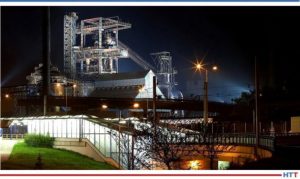
Oxelösund, where SSAB’s new 190-ton EAF will be installed

“Swedish steelmaker SSAB has chosen plant supplier SMS group for the construction of a new 190-ton EAF, which is set to be one of the largest installations in the world with an upper shell diameter of 9.3 metres. The new EAF, located in Oxelösund, has its first heat scheduled for the fourth quarter of 2026 and will lower total CO2 emissions in Sweden by 3%, say the companies. Powered by a 280 MVA transformer, the EAF will also utilize technology to meet the limitations imposed by the grid authority in terms of flicker, power factor, and harmonic distortion. SSAB has also entrusted SMS group with the integration of a direct feed (DF) system from GE Vernova to be fitted in the new furnace at Oxelösund. The technology aims to ensure the new EAF operates smoothly and efficiently without disrupting the grid, thereby contributing to the reduction of CO2 emissions.”

READ MORE: SSAB contracts SMS group to build 190-ton EAF at furnaces-international.com.

Hot Edge Inductors for Cold Mill Rolling Line Installed

Hot edge inductors installed by Primetals Technologies at Hulamin’s cold mill rolling line (S5) in Pietermaritzburg, South Africa

Primetals Technologies have signed the final acceptance certificate (FAC) with aluminum producer Hulamin following the installation and commissioning of new hot edge inductors for its cold mill rolling line (S5) in Pietermaritzburg, South Africa. This upgrade aims to address the tight edge issues in aluminum strip that occurred during high-speed rolling, leading to improved product quality. The moving induction heating head assembly has been installed on the exit side of the mill, below the exit delivery table. These assemblies are positioned close to the roll surface, just outside of the strip width, effectively counteracting the thermal camber that causes tight edge issues during high-speed rolling. The hot edge inductors have resolved the tight edge issues by providing additional heat to the work roll at the strip edge, expanding the roll and alleviating tight edges. This has led to better control of the strip edge shape. The aluminum producer has observed noticeable improvements in the on-line strip shape performance and continue to further optimise and refine the use of these actuators in its rolling programme.”

READ MORE: Implemented Hot-Edge Inductors at Hulamin” at furnaces-international. 


Find Heat Treating Products And Services When You Search On Heat Treat Buyers Guide.Com

News from Abroad: Growth Via Innovation Read More »
News from Abroad: A New Technique, Equipment, and Celebrations

Heat Treat Today is partnering with two international publications: heat processing, a Vulkan-Verlag GmbH publication that serves mostly the European and Asian heat treat markets, and Furnaces International, a Quartz Business Media publication that primarily serves the English-speaking globe. Through these partnerships, we are sharing the latest news, tech tips, and cutting-edge articles that will serve our audience — manufacturers with in-house heat treat.

In this article, originally published in Heat Treat Today's March 2023 Aerospace Heat Treating print edition, we look at new tech in Japan, a low emission material in Germany, an alliance of specialists in Mexico, and an executive move in a global industrial gas company.


ArcelorMittal Low Carbon Emission Wire Rod for C.D. Wälzholz GmbH & Co. KG

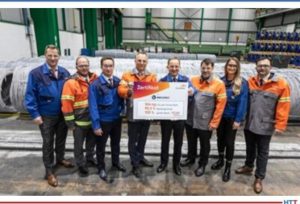
Delivery of the first low-carbon emissions wire rod coils at Wälzholz in Hagen, Germany
Source: ArcelorMittal

"As part of their business partnership, ArcelorMittal will supply C.D. Wälzholz GmbH & Co. KG with low carbon emissions wire rod from the Hamburg plant in the future. These steels are produced on the basis of scrap and renewable electricity (100 percent). The low carbon footprint of 504 kg CO2/t of steel is confirmed with an official Environmental Product Declaration (EPD). The delivery of the first 20 tons took place . . . at the cold rolling company’s site in Hagen, Germany. uses the material to manufacture heat treated profiles for industrial applications."

Read More: "Waelzholz purchases low carbon emissions wire rod from ArcelorMittal" at heat-processing.com

Hugh Grant, New Director for Linde

Hugh Grant, Director, Linde
Source: gasworld.com

"Linde plc announced that its Board of Directors has elected Hugh Grant as a new director of Linde plc, effective January 23, 2023. Grant will serve on the Nomination and Governance and the Human Capital committees. Grant, a Scottish national, is a highly regarded former executive and director who brings substantial global experience to the Linde plc Board of Directors. He served as Chairman, President, and Chief Executive Officer of Monsanto Company, a global provider of technology-based solutions and agricultural products that improve farm productivity and food quality, from 2003 until 2018, when he led the sale of Monsanto to Bayer AG. "

Read More: "Linde Board Elects Hugh Grant as New Director"at  heat-processing.com


New Tech for Shinkansai Steel Co., Ltd.'s -ton Electric Arc Furnace

New tech for Shinkansai Steel Co., Ltd. plant
Source: Furnaces International

"Designed by Danieli Automation, Q-One uses the latest digital power electronics technology to maintain the EAF power-factor values close to unity. The power-feeding system that will be installed at Sakai will have a five-unit configuration with a total maximum power of 54,6 MVA."

Read More: "Danieli to supply patented tech to Japanese EAF" at furnaces-international.com


Search for heat treat solution providers and suppliers on Heat Treat Buyers Guide.com


News from Abroad: A New Technique, Equipment, and Celebrations Read More »

Going Carbon Free: An Interview with H2 Green Steel

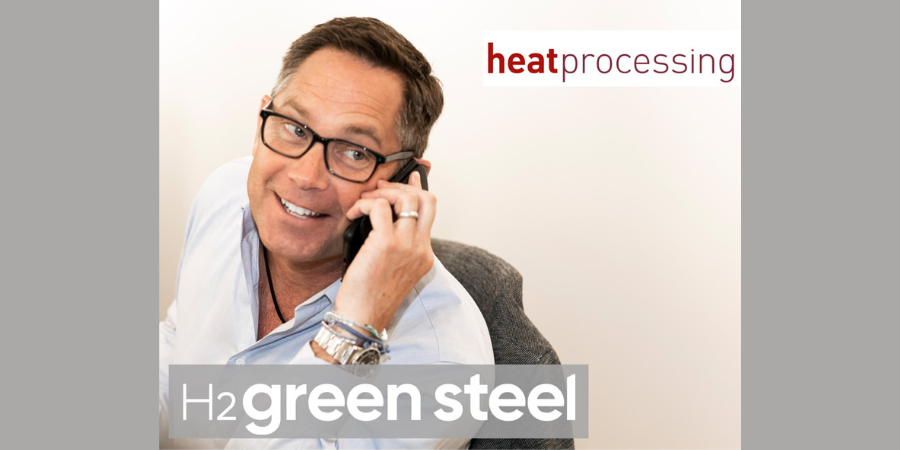
Hydrogen will be the future of steel making. But how do we put the technology into place and make it work? H2 Green Steel has picked up the task and wants to prove that a carbon neutral production with hydrogen is possible. heat processing spoke with Mark Bula, CCO of H2 Green Steel, about the technological potential of hydrogen, challenges, and the role of digitalization within the overall process.

This article is provided by Heat Treat Today's European information partner heat processing.


heat processing: Could you give us a brief overview on H2 Green Steel and the actual status of the project?

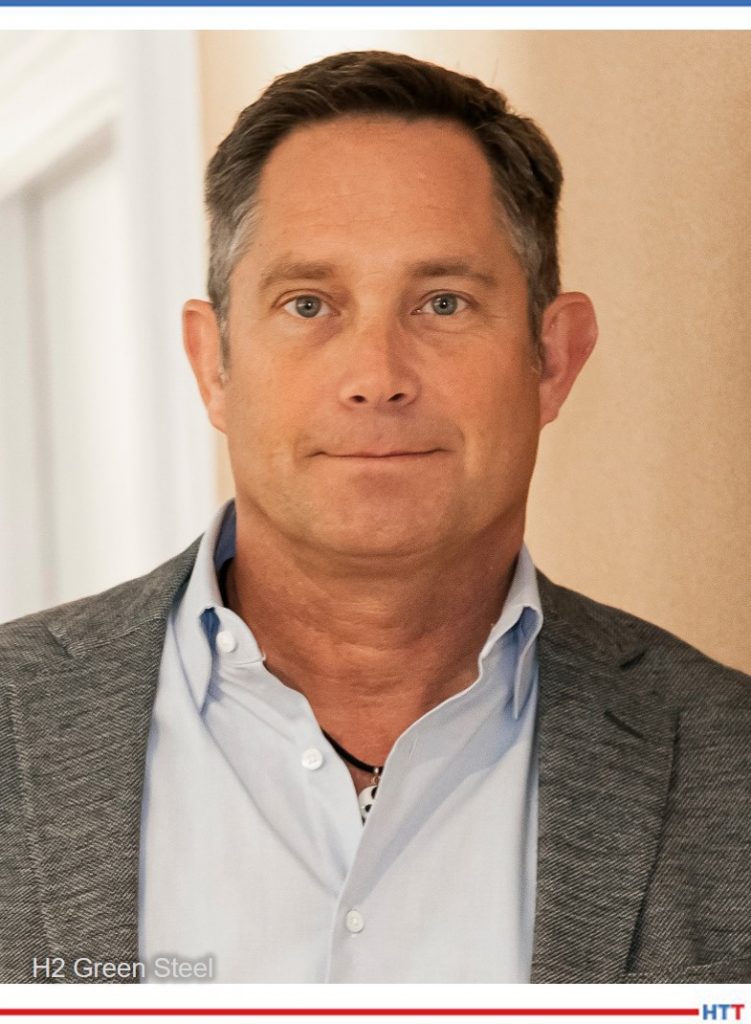
Mark Bula
CCO
H2 Green Steel

Mark Bula: Our company was formed in 2020The series A financing was us. When I was hired in January of last year, we talked about raising €30–35 million raise. We tripled that figure. In fact, we are turning away series A investors. There is no doubt that there is interest in the project from commercial, customer, and investor point of views.

Our project started with equity founders of another company. They stored electric energy at the base of mobile towers and realized that there is a technological opportunity in batteries of electric vehicles. Those founders wondered what to do about the big CO2 issue in the production of steel. That is how it all started. Now, we have our financing put in place. We filed for permits in December 2021 — a big milestone. There are always concerns, but with support we can overcome these challenges. So far, the feedback has been phenomenal — people are excited about our project.

Our company moves fast. We want to have our financing completed by the end of the year. We brought in external expertise from the U.S. and assume there will be a three-year building cycle. There is official interest from equity investors. They are now doing their due diligence. Banks are interested as well. We also have a large team for the project at this stage — about 80 people are working on it. In general, we see an opportunity in hydrogen to abate heavy industry. Hydrogen is a critical component there. Furthermore, we have pre-sold agreements with potential customers. This is essential to help secure financing for this greenfield project.

heat processing: Talk about technology. On your website, you state that you want to undertake the industry's technological shift. How do you define that?

Mark Bula: There are a few shifts that need to happen. We must move away from blast furnace steel making. Every product based on that will create huge amounts of CO2. Electric arc furnace (EAF) mills are running the world. These mills must use certain levels of virgin iron product to make more than a basic grade of steel. In blast furnaces, you end up making pig iron, and we must move away from that since It requires more hot-briquetted iron (HBI) and direct-reduced iron (DRI). Putting a hydrogen unit in front of a DRI unit certainly is a technological shift from gray to green iron. There are not many steel mills with a DRI tower connected directly to an EAF, however we will directly hot feed our EAF furnaces with green iron or DRI. That creates efficiencies and significantly lowers the CO2 footprint and decreases the electricity being used.

In a next step, many mills must look to change exposed applications. We believe this will be our phase 2 focus. We also will be working on a non-grain-oriented steel for the EV motors. Think about 195 kg CO2 per ton of steel produced. With that figure you could cover everything from the battery over the panels to the support structure of an electric vehicle. In the long run the industry must get rid of the blast furnaces. The only way to do so is to develop a virgin iron product that works with a low CO2 footprint. The only way we at H2 Green Steel know, so far, is the hydrogen process. With natural gas, there is still a high CO2 footprint.

heat processing: There is the possibility to produce 5 million tons of steel annually. How could you (technologically) scale that figure up?

Mark Bula: We plan to produce 5 million tons of steel in phase 1 and phase 2, ending in 2030. With phase 1 we include a 2.5 million ton capacity mill. We start planning the product and customer mix and will add another 2.5 million tons in the later phase. In phase 1 we will have three electrical furnaces and one caster, and in phase 2 we will add a second caster and at least one EAF.

heat processing: How does digital leadership influence H2 Green Steels´ processes?

Mark Bula: A bank analyst said H2 Green Steel should offer more than just green steel as our unique selling proposition. So, we will also place a heavy emphasis on providing a B2C experience in a B2B industry. We will utilize digitalization strategies to provide a customer experience above our competition. We believe that there are three different hydrogen processes out there, each with advantages and disadvantages. If they are managed properly, they can create an efficient process. We have an algorithmic model and a digital lab. It allows us to test these three different types of hydrolysis. We have filed a patent on it.

Intellectual property will be key to design these hydrogen facilities. This is how digitalization affects our front end. The back end is machine learning technology. It is all about intelligence and big data. The question is: how we can crunch big data information faster to make better decisions? If we miss a in the furnace or the caster, we can reapply that with our algorithm before it hits the end of the caster. It is not only about efficiency, but about energy usage. The last pain point would be the traceability of the CO2 footprint. The figures must be justified. For instance, if someone says, I have 125 kg CO2 in this coil, he needs to prove it. Our team focuses on that. Those who are best in traceability will be rewarded.

heat processing: What will Germany's role be within H2 Green Steels' transformation towards green steel?

Mark Bula: Germany is a critical component of the global steel industry. The country has the largest market for green steel. It must be the epicenter of how green steel will be accepted in Europe. The interest of customers and the will to understand the market lie in Germany. Central and Northern Europe are ahead of the curve, compared to Southern Europe.

But the call for green steel came from the German auto industry. In the past, many mills have been built here. We believe green steel will start where the raw materials and renewable energy are readily available at the lowest cost. Central Europe may not have these valuable resources but must figure that out to have a viable green steel industry.

The Nordics are right now a good location for new steel mills. Regarding brownfield sites: I applaud everyone who wants to pull a blast furnace down and put an EAF up. This will help improve our industry's CO2 footprint, but there are significant challenges and costs to do so. Tradeoffs exist, but available low-cost fossil-free energy will be the driver and will likely impact the locations of new supply chains in the future. For now, that is in the Nordics.

Our company is Swedish, and we found a good home here. The site selection went on for three quarters of a year. Our are logistics, energy, raw materials supply, and knowledge.

heat processing: Where do you get your green hydrogen?

Mark Bula: We will make it ourselves. We will need fossil free energy to power it. 800 megawatts is a huge amount of electricity at the moment. In Boden, Sweden there is access to hydro capacity. The issues are the grid systems and the trunk lines. Until now much of the excess electricity was shipped to Finland, but this country has started a nuclear plant recently. They will not need as much power anymore. Now we have access to generation in the Nordics. All the power we need to make hydrogen is wind and water. We use 99% renewable energy.

heat processing: You are starting off in the European market. What are your perspectives for the Chinese market?

Mark Bula: We see a great need for green steel in Europe. When materials get to be shipped too far, carbon footprint is added automatically. We must identify markets that want our product that we can sustainably ship to. There will be opportunities to sell overseas, but now we are very focused on the German and European automobile market. The demand is much broader than that. It is about white goods, furniture, construction, and covers all industry segments.

The market does not stop in the all make science-based target promises. They have plants not only in Europe, but elsewhere. Our market probably is global, but we must be respectful of our carbon footprint. We have a high ambition about circularity and try to be as carbon neutral as possible in anything we do. We want to start with the lowest CO2-footprint we can, to make steel in scope 1, 2, and upstream 3. Ultimately getting to net zero, we will look at our downstream. One of our investors is in the shipping business. It will be interesting to work with this company, to develop shipping on a hydrogen base.

heat processing: Does the conflict in the Ukraine affect your company in any way?

Mark Bula: It is unbelievable that this is happening in Europe. The whole company feels for Ukraine and the horrible situation they are in. It is way too early to tell right now what will happen. The Ukraine has a lot of steel-related minerals. The supply chains must be rewritten. The amount of Russian steel that comes into Europe is significant.

For our company, this is a long play: No one will build a steel mill for the next 10 years. It is rather a 100-year horizon. I would rather build in a downturn because steel and concrete are cheaper. We may have the inverse here. On a long term you can see more demand for fossil free products in this region, and we are in the business for the long term. Right now, the market is still in shock and has an irrational pattern. Pertaining to resources, we are all affected and need to talk about it. We haven’t seen the end of it yet.


Find heat treating products and services when you search on Heat Treat Buyers Guide.com


Going Carbon Free: An Interview with H2 Green Steel Read More »

Skip to content