Automotive Heat Treating

Mobile Heat Treatment Launch Targets Aerospace, Motorsports Customers

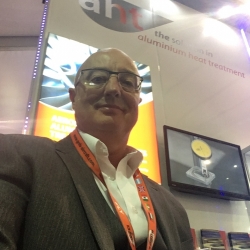
Ian Perks, Sales Director, Alloy Heat Treatment

Alloy Heat Treatment (AHT), a specialist in the heat treatment of aluminum alloy, has developed and is set to launch an innovative mobile heat treatment service.

The Dudley-based (UK) firm, a member of the manufacturing alliance Made in the Midlands, is targeting the new service in support of the additive layer manufacturing market in the UK and Europe, especially in the aerospace and motorsport (F1 and MotoGP) sectors.

“The proposed service is currently being designed to be transported on the back of a fix-bed lorry,” said sales director Ian Perks. “We aim to fill a gap in the AM market, as we feel that this innovation will provide a great benefit to aerospace, F1 and Moto GP organisations; and with the global AM market predicted to be worth more than $6.6 billion by 2026, we are hopeful that the service will attract plenty of interest.”

AHT would load the service onto a truck and then drive to a customer’s designated location to enable them to offer rapid heat treatment processes within tight schedules.


Mobile Heat Treatment Launch Targets Aerospace, Motorsports Customers Read More »

VW to Revive the Microbus as an All-Electric Van


Source: Today’s Motor Vehicles

In a throwback to the 1960s, Volkswagen has announced plans to bring back a version of their iconic micro bus retrofitted as an I.D. electric van. In 2022, the I.D. Buzz concept vehicle will go into production, looking a bit like the ’60s vehicle favored by hippies and surfers, it will be built off of the same platform as the I.D. electric car, a four-door compact vehicle. The last time a VW van was on the market was in 2003.

Read more: “VW to resume Microbus production in 2022, as an all-electric car”

VW to Revive the Microbus as an All-Electric Van Read More »

Auto Bearing Manufacturer Adds Mesh Belt Furnace System

A global automotive corporation’s American-based bearing division placed an order for a mesh belt furnace system for heat treating thrust races, retainer/cages, and washers. The new, CQI-9 compliant production line features built-in flexibility that allows for both neutral hardening and carburizing. Included with the system are an atmosphere controlled hardening furnace, salt quench, two-stage post-quench washing system, salt reclamation unit, temper furnace salt holding tank, and Level 2 SCADA system. The electrically heated system utilizes loading combinations on its belt to meet production requirements while achieving the customer’s required low residence times for the system’s hardener and quench.

Can-Eng Furnaces’ continuous mesh belt heat treatment systems are capable of treating three separate part types, multiple heat treating processes, unique temperature operating ranges, and diverse residence times for each piece of equipment


Auto Bearing Manufacturer Adds Mesh Belt Furnace System Read More »

Latest ArcelorMittal Expansion Includes $27 Million Finishing Line at Longueuil, Québec

Sujit Sanyal, Chief Executive Officer, ArcelorMittal Long Products Canada, Caroline St-Hilaire, Mayor of Longueuil, and Guy Gaudette, Regional Representative for Syndicat des Métallos, cut the official ribbon at the June 7 inauguration event in Longueuil.

ArcelorMittal Long Products Canada, a part of ArcelorMittal, the world’s leading integrated steel and mining company, recently completed an 18-month long installation of a new finishing line at its bar mill in Longueuil, Québec. The $27 million (CAD) project is forecast to boost the facility’s annual rolling capacity from 400,000 to 500,000 metric tonnes per year; in addition, it will be able to make new value-added steel products available to local and international markets.

“Our new finishing line has been built to better respond to the needs of our clients and support the company’s development over the next few years. The project is part of our growth strategy to maximize the profitability of our steel,” said Sujit Sanyal, President and CEO, ArcelorMittal Long Products Canada. “We are reaffirming our leadership in the steel and mining industry in North America as an integrated company: from mining to steel to customers.”

The Longueuil bar mill converts steel billets cast from recycled scrap iron and iron ore extracted on Québec’s North Shore into special grade and merchant bars, reinforcing steel (rebar), and other semi-finished products for customers in North America and Mexico. The bar mill is the world’s largest supplier of steel used by the world’s automotive manufacturers in leaf springs for light and heavy trucks. The new finishing line will secure additional outlets for billets from the two ArcelorMittal Montreal steelworks in Contrecoeur and will increase the bar mill’s capacity by 100,000 tonnes per year.

Since 2008, ArcelorMittal Montreal has undergone several upgrades and expansions in an effort to improve the mill’s performance and reduce energy consumption and greenhouse emissions, including the installation of a new reheat furnace in 2013. In operation since 1974, the Longueuil plant is one of the cornerstones of the company’s rolling capacity expansion plan to be executed between now and 2020.

Source: ArcelorMittal


Latest ArcelorMittal Expansion Includes $27 Million Finishing Line at Longueuil, Québec Read More »

European Auto Supplier Purchases Nitriding System

A European automotive components supplier has contracted for a turnkey nitriding system which will nitride a variety of H11 and H13 aluminum extrusion dies for manufacturing automotive structural components supplied to most major vehicle manufacturers.

The project involves the replacement of an old gas nitriding furnace with a modern system that will improve gas and energy consumption and meet environmental objectives. Other priorities for the customer were conservation of resources, environmental compliance, and noise reduction. Entirely custom and tested recipes based on potential-controlled Nitreg® technology were developed by Nitrex Metal Inc., of St. Laurent, Quebec, for the application, enabling consistent uniformity and repeatability of results.  In contrast to the previous nitrider, the system is programmed to work with a low consumption of gasses and electricity. Auxiliary hardware such as the effluent neutralizer helps comply with environmental regulations, while a silencer fitted on the cooling blower controls noise exposure for better working conditions.

European Auto Supplier Purchases Nitriding System Read More »

Neutrons Point the Way to Optimized Crash-Tolerant Automotives

  Source:  Phys.org

Press-hardened boron steel is an ultra high-strength steel used across a variety of industries, with a particularly important application in the automotive industry. A large proportion of car manufacturers use boron steel for structural components and anti-intrusion systems in automobiles, as it provides high strength and weight-saving potential, allowing for stronger yet lighter cars, with increased passenger safety.

Read more: Neutrons Point the Way to Optimized Crash-Tolerant Automotives

Neutrons Point the Way to Optimized Crash-Tolerant Automotives Read More »

Ford Will Invest $900M in Kentucky Plant

Source: Courier-Journal

Ford Motor Co. revealed plans to re-tool and upgrade their Louisville truck plant, which include the ongoing construction of an aluminum alloy-specific body shop, shifting away from heavier steel material.

Read more: Ford Will Sink $900 Million in Kentucky Truck Plant for New Lincoln Navigator, Expedition by Grace Schneider


Ford Will Invest $900M in Kentucky Plant Read More »

Automotive Aluminum Sheet Line Starts in Germany

Carmakers all over the world are looking for lighter materials so that their cars pollute less. As a consequence of this industry megatrend, Hydro has made several strategic investments in Norway and Germany over the last few years to meet this demand and at the same time secure the viability of high competence industrial jobs in both countries.

The EUR 130 million automotive line in Germany is the biggest in a series of investments Hydro has made recently to meet the increasing demand from carmakers.

German Chancellor Angela Merkel and Norwegian Prime Minister Erna Solberg are attending the grand opening at the Grevenbroich plant. Both officials will speak before Hydro employees, customers and other guests from politics and industry, before unveiling the state-of-the-art facility.

The metal of the future

Aluminium is a preferred metal for automotive applications for several reasons: its density is only one-third that of steel, it has excellent corrosion properties, leads heat and electricity effectively, and not least – it is infinitely recyclable. In addition, aluminium – when alloyed and manufactured in a smart way – absorbs energy very effectively, making the cars safer.

“While global demand for aluminium is growing by 2 to 3 percent per year, we expect demand from the automotive industry to accelerate by 14 percent every year. This is due to rules and regulations, incentivizing car makers to build lighter cars that are more environmentally friendly. A car part in aluminium weighs about half of steel. In an uncertain world, one thing is certain – the world needs more aluminium,” says Hydro President & CEO Svein Richard Brandtzæg.

Made in Europe

The automotive line investment is closely linked to investments Hydro has made further upstream in the value chain in Norway. Over the past couple of years, Hydro’s casthouses in Sunndal, Høyanger, Årdal and Karmøy in Norway have been upgraded with new innovations and equipment, specifically designed to meet the requirements of car makers. Altogether, these investments are worth close to NOK 150 million. Since 2012, Hydro has invested around NOK 7.5 billion in Norwegian primary aluminium and power production. New casting technology is under implementation in Høyanger and Årdal, where Hydro produces sheet ingot which at our plants in Germany can be rolled into plates and used in so-called hang-on car parts such as doors, hoods, roofs, and trunk lids.

At Karmøy, Hydro is investing in the world’s most climate- and energy-efficient production technology for primary aluminium – the Karmøy Technology Pilot – and also upgrading one of two casthouses to become a specialty products casthouse, mainly targeting the automotive industry. Metal from Karmøy is used in extruded car parts such as bumpers, piping systems and posts.

In Sunndal, Hydro has recently invested in so-called electromagnetic stirring equipment in one of the furnaces. The intention is to secure higher-quality aluminium ingots, a large part of which ultimately ending up as metal for cast car components such as engine parts and wheels.

Germany most important market

Germany is Hydro’s main market, with an overall turnover of about 1.4 billion Euro in 2016 and more than 6,000 employees in Hamburg, Rackwitz close to Leipzig, Neuss and Grevenbroich.

In the Neuss area, Hydro is running the biggest and most powerful aluminum network in Europe consisting of the aluminum and recycling smelter in Rheinwerk, the rolling mill Alunorf joint venture and the finishing mill in Grevenbroich. All activities are supported by the largest central research and development center in the European aluminum industry, based in Bonn, and the sorting center for used aluminum in Dormagen.

The main businesses for Hydro in Germany are Automotive, Foil, Cans, General Engineering and aluminum for lithographic applications.


Automotive Aluminum Sheet Line Starts in Germany Read More »

Automotive Manufacturing Corridor Expands

A contract to design and build a 1,500 lb/hr mesh belt furnace system for the austenitizing and molten salt quenching of unique components used in the manufacture of drivetrain systems has been awarded to Can-Eng Furnaces International Ltd.  Incorporating several technological advancements for continuous atmosphere processing of products requiring carbon diffusion and quenching via a molten salt system, known as austempering, the new system includes: automated bin-dumping loading, mesh belt atmosphere hardening, salt quenching, post quench washing and rinsing systems, mesh belt tempering oven, and an endothermic gas generator.

This was a custom engineering project integrating the customer’s focused needs with CAN-ENG’s continuous mesh belt heat treatment system technology. The project is scheduled to be commissioned early 2018 in Mexico’s centralized automotive manufacturing corridor. CAN-ENG’s mesh belt heat treatment design team continues to focus globally on the design and development of mesh helt teat treatment technology, servicing the increasingly stringent and demanding Global Automotive Industry.

Automotive Manufacturing Corridor Expands Read More »

Skip to content