W.H. Kay Company is celebrating 90 years in the heat treating industry. Third-generation owner, Michael Kay, joins publisher, Doug Glenn, on this episode of Heat Treat Radio to look back at nine decades of family ownership, the company’s evolution from a manufacturer’s representative to a major source for used heat treat equipment, and the relationships and persistence that have kept the business moving since 1936.
For a closer look at W.H. Kay’s nine decades in the industry and the business philosophy behind its longevity, read Heat Treat Today’s company profile, “W.H. Kay Marks 90 Years by Staying in the Flow.”
Below, you can watch the video, listen to the podcast by clicking on the audio play button, or read an edited transcript.






The following transcript has been edited for your reading enjoyment.
90 Years of W.H. Kay
Doug Glenn: Welcome to another episode of Heat Treat Radio. I’m here with Mike Kay from W.H. Kay Company celebrating their 90th anniversary. I just want to say you look pretty good for 90.
Michael Kay: Thank you very much. That’s called clean living.
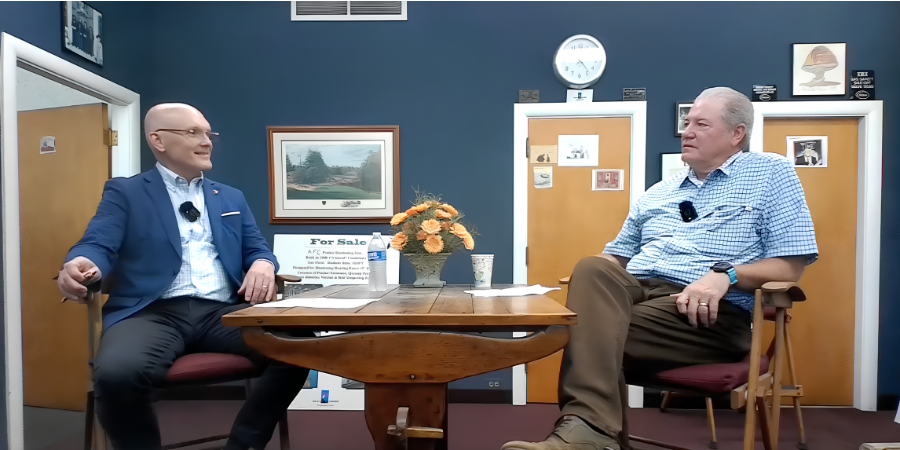
Doug Glenn: It is. I just want to run down a variety of different questions and get a sense of the company and go from there. So, 90 years means the company started in what year?
Michael Kay: 1936.
Doug Glenn: 1936. Historically, just to give those of us who are not history buffs, 1936 was kind of in the midst of the Great Depression.
Michael Kay: Or right before World War II, which kind of ramped up production of industries, so it was good timing.
Doug Glenn: Do you think that was part of it?
Michael Kay: I’m sure it didn’t hurt them in the first year or two, getting established.
Doug Glenn: Who actually founded the company?
Michael Kay: W.H. Kay is William Henry Kay. That’s my grandfather. He passed away in 1972 of heart failure. Back then, there were no stents or anything like that. He went to Yale. I don’t know what he was doing out east, but Eclipse Combustion at the time gave him the Cleveland territory, so he moved his family to Cleveland.
Doug Glenn: Where was he moving from?
Michael Kay: I believe from Connecticut. He got married, and I had a child at that point, which was my uncle. He took the Eclipse line, and at that time they were selling both heat treat furnaces and burners. In the older heat treat shops you’ll still stub your toe on an Eclipse furnace, a pit temper, or a box furnace. Then they primarily got out of the furnace business around the 1960s.
Doug Glenn: Very interesting. Your grandfather probably would have been a contemporary and friends with Cam Perks, right?
Michael Kay: For sure. There’s a sales meeting picture of them on our wall here from around 1948.
Doug Glenn: Cam was the father of Doug and Lock Perks. Of course, during our growing years, our industry years, they were running Eclipse at that time in Rockford.
Michael Kay: Correct, in the ’80s, ’90s, and 2000s.
Doug Glenn: Right. I find the connections really interesting. It was your grandfather that started it in 1936. He moved to Cleveland, and Eclipse gave him the Cleveland territory. That’s when the company was established, The W.H. Kay Company?
Michael Kay: In 1936, correct. All he had was an office. He might have started out of his house. I’m not even sure of that. But he moved to a little office, with no warehouse or anything.
Doug Glenn: And he was just basically working with Eclipse.
Michael Kay: Yes, as the manufacturer’s rep. Back then, you’d get an order, write it up by hand, and put it in the mail.
Doug Glenn: Can you imagine? A week later, the company would find out they had sold something.
Michael Kay: That’s right. We still have invoices from the ’30s.
Doug Glenn: Is that right?
Michael Kay: Yes, an entire heat treat furnace for $700.
Doug Glenn: Wow. $700 for a heat treat furnace. That’s amazing. How long did your grandfather work by himself, or did he grow relatively quickly after that?
Michael Kay: I think he worked by himself until my Uncle Bill came into the business in, I’d say, the late ’50s. So, it was 20 years by himself. Then my father started in the late ’50s. They took it over in the late ’50s, early ’60s.
Doug Glenn: Your grandfather basically ran it for 20 years, and then your uncle and your dad, Frank, started. I’ve met your dad. I’ve never met your uncle.
Michael Kay: I worked with him for 10 years before he passed away in ’95, unfortunately.
Doug Glenn: At the time that your uncle and your dad got involved, was it still primarily just a rep firm?
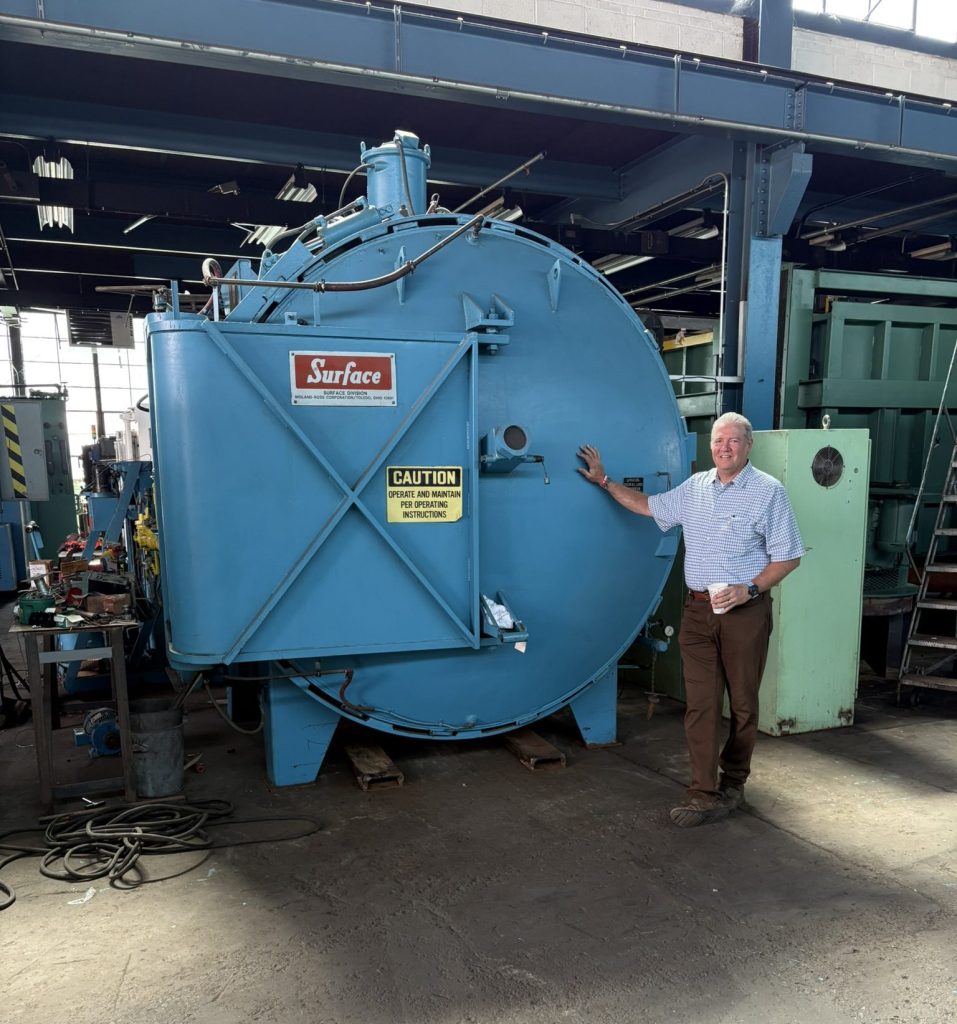
Michael Kay: They kept Eclipse, and then they repped for a couple more companies, like Upton Furnace in Detroit and Surface Combustion. They repped Surface for 10–12 years, maybe longer, in the late ’70s and early ’80s. Then they eventually started repping for SBS, the oil cooler guys.
Doug Glenn: Jeff Smith.
Michael Kay: Right, Jeff Smith.
Doug Glenn: His son George still owns the company.
Michael Kay: I think they’re in Florida.
Doug Glenn: Correct; they moved down to Florida.
Michael Kay: So, it was all around process heating. You had to be careful. You couldn’t represent companies that competed against one another.
Doug Glenn: Still happens to this day, where the reps need to be careful.
Michael Kay: That’s right.
Doug Glenn: Do you consider yourself now to be a rep firm?
Michael Kay: Yes, we’re still repping. Honeywell bought Maxon and Eclipse. They call us a distributor, but we still design burner systems. I think if you’re just taking orders, you’re kind of in trouble. You have to be proactive.
Doug Glenn: Be able to provide other services.
Michael Kay: You have to apply the product.
Doug Glenn: Are you repping any furnace manufacturers?
Michael Kay: We represent an oven manufacturer, JPW Oven Design out of PA, up to 1400 degrees, which covers most tempering and aluminum. I think we kind of found a niche of aluminum heat treat, so we’ve sold a bunch of those.
Doug Glenn: I know them, north of Williamsport.
Michael Kay: Now they’ve expanded towards Williamsport with a bigger facility.
Doug Glenn: So at the time your dad and uncle took over, though, it was still pretty much just Eclipse.
Michael Kay: Manufacturer’s rep and several furnace manufacturers. Upton with salt.
Doug Glenn: Yes, salt baths.
Michael Kay: And Surface’s IQs. We competed against Lindberg, who was manufacturing IQs and other similar equipment.
Doug Glenn: Upton is now owned by Kolene Corporation.
Michael Kay: That’s correct. They’re still around, I think, in the Detroit area.
Doug Glenn: Ken Minoletti, I assume he’s still working with Kolene now.
Michael Kay: I think so. I’ve seen Dennis McCardle at the shows.
Doug Glenn: Good people and good company. It was your grandfather, then your uncle, and your dad joined in, let’s say, late ’50s-ish. Did anybody else join before you joined, or were you basically the next heir apparent?
Michael Kay: I think they had a sales rep for a time, a retired guy they took on just to help. But pretty much, that was only for two or three years.
From Manufacturer’s Rep to Used Equipment
Michael Kay: Eclipse phased out of furnaces. They still had customers that wanted these furnaces. They took the prints and had furnaces built, and they needed a warehouse, so they built a place to actually build furnaces for a time.
Doug Glenn: When you say “they”, you’re talking about your family.
Michael Kay: Right. My father and uncle. This is in the ’60s. They would redo a print and do a pit draw, a standard pit temper. Then they would have someone fab it in a shop. So, they built a little shop, and then, just in the course of sales, you’d sell a new one and the customer would say, “What am I going to do with the old one?” So, we’d take it in on trade, and that’s how we got our toes in the water on used equipment.
We would get the equipment in, sell the customer something new, and then take the trade. That’s how they got into it in the ’60s.
Doug Glenn: That’s kind of interesting. When Eclipse stopped making furnaces, you still had customers that wanted furnaces, so your family actually started building a few new ones based on the designs of the Eclipse one.
Michael Kay: Yes, just with existing customers. They weren’t marketing it. They weren’t going to be a new furnace maker. But if a customer had 12 Eclipse and he wanted 15, you could easily build it.
Doug Glenn: Then he would have used equipment that he wanted to get rid of, which was a service you could provide.
Michael Kay: Right.
Doug Glenn: So that’s how you got into it.
Michael Kay: Then they stopped making new ones.
Doug Glenn: When did they stop that?
Michael Kay: I’d say in the ’60s.
Doug Glenn: So primarily the ’60s is when the company basically evolved to what it is now. It’s mostly used equipment.
Michael Kay: We got more into the used equipment in the ’80s. In the ’70s, we had to be careful because we repped Surface. So, we didn’t want to sell used to nix a sale on a new one. It was always kind of on the back burner.
Doug Glenn: I wanted to ask you about your relationship currently with a lot of new equipment manufacturers. I could see there could be potential synergies there with them. I could also see where they could what you guys are doing and why you are helping them. I’m assuming if you need to rebuild or if your customers need to rebuild, obviously they’re going to be potentially going back to those manufacturers and asking for parts. How is your relationship with those equipment manufacturers?
Michael Kay: Yeah, in the course of 40 years, I’ve never seen a used take over a new account. If people are buying new, they’re buying new. If they’re buying used, they’re buying used. Generally. Now, Surface used to be a little nervous when we had IQs here, but when Midland-Ross bought Surface, they got rid of all the reps anyhow. Back in ’77 or something like that.
Doug Glenn: In the ’70s, I believe.
Michael Kay: Right. In general, it goes along with new sales. If a customer calls and says, ” I need an oven, like tomorrow,” I could quote him a new one in 16 weeks, or we could have a used one in 4 days.
Doug Glenn: Yeah, exactly.
Michael Kay: It helps the customer out, and then we’ll lease it to the customer. We might sell him a new one, buy the used one back, the one we rented him. It helps get the customer what they need. It’s more of a service than a detriment to the new manufacturers. That’s what we found.
Doug Glenn: Currently, do you have any established or closer relationship with any one furnace company than another?
Michael Kay: Only JPW, The Oven Guys.
Doug Glenn: We don’t hear much of them in the higher temperature heat treating. Although 1400 degrees, that’s relatively high. Like you said, aluminum.
Michael Kay: We’ve done some big ovens. When I say big, I mean 12 x 20 x 12 tempering furnaces.
Doug Glenn: I want to jump back to the founders for a little bit. Is there anything that you can recall, or any interesting stories about either your grandfather or your father when he was doing business?
Michael Kay: They were all kind of straight shooters. They had funny customers who would call. We had a couple of heat treaters that would just show up, look on our shelves, and they’d find some valve. “You know, I’ve been looking for this.” Then they’d say, “Just bill us for it.” There were those kinds of guys.
Doug Glenn: Back in the day, you had a Cleveland territory for Eclipse, and so I’m guessing most of your business was relatively regional, like in the Midwest?
Michael Kay: The Northern Ohio area. It went through Toledo all the way to Youngstown and Warren. Youngstown and Warren were big into steel.
Doug Glenn: Absolutely.
Michael Kay: And automotive as well. So down through Mansfield.
Doug Glenn: What about today?
Michael Kay: It’s about the same.
Doug Glenn: What about your used equipment?
Michael Kay: Used equipment can go anywhere.
Doug Glenn: I thought you were all over the country, or maybe even out of the country, for used equipment.
Michael Kay: Out of the country. We’ve shipped stuff to Mexico occasionally. I think the furthest one we’ve ever shipped was to Korea. Not North Korea, South Korea. And I think we shipped stuff somewhere to Europe. We shipped a vacuum furnace to Ireland like 8 years ago.
Doug Glenn: But the bulk of the equipment is going to be North America. Canada, U.S., Mexico.
Michael Kay: That’s correct.
Doug Glenn: Are there any other historical milestones that you can think of?
Michael Kay: In the last 15 years, when Honeywell bought Eclipse, that kind of changed things. We’ve always been a rep for Eclipse since 1936, and still rep Eclipse, which is amazing. 90 years with one company.
Doug Glenn: Exactly. I was going to say, I think you’re probably the only one.
Michael Kay: We’re the oldest rep, for sure. And then what changed things was that we would compete with Maxon. So, then Honeywell bought Maxon first. And then four or five years later, round numbers, I don’t remember, then they bought Eclipse too, so now we sell both.
Doug Glenn: They bought Maxon, Kromschröder, Hauck.
Michael Kay: Right. So, we sell all that stuff.
Doug Glenn: Interesting. So that was a milestone, a pretty significant change for this organization.
Michael Kay: That was a milestone. And then the other one was when we moved into this building, which was in 2000. My father and uncle built a 5,500-square-foot office warehouse, which had a crappy dock. It was not the right size, so trucks would pull up and we’d have to ramp them up, ramp them down, in the snow. We had wooden ramps.
Doug Glenn: Accident waiting to happen.
Michael Kay: Yes. And this old lift truck didn’t start half the time. Then we moved here in 2000, and we still call this the new building, which is kind of funny, 26 years later.
Doug Glenn: 26 years, and it’s still the new building. And we took a quick walk through this building, which is in Solon, Ohio, in the Cleveland area. How many pieces of used equipment do you have?
Michael Kay: I’d say a couple hundred, give or take.
Doug Glenn: Primarily made up of what type of equipment?
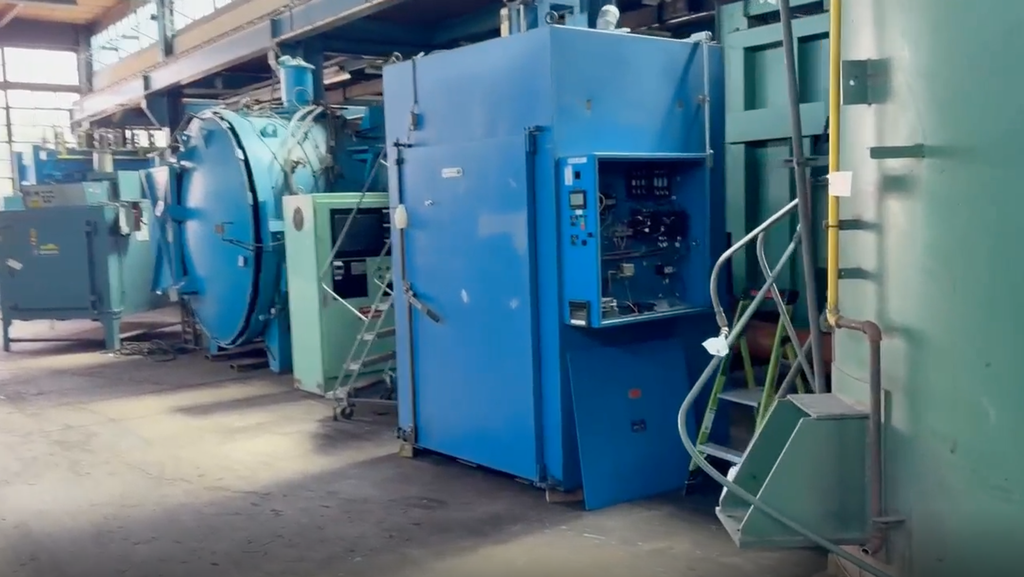
Michael Kay: Mostly ovens, some vacuum, some internal quench, and a lot of pit furnaces.
Doug Glenn: A lot of pit, okay.
Michael Kay: Tempering, those types of processes. We do get into kilns occasionally. Belt furnaces and ovens.
Doug Glenn: When I hear “ovens,” I think lower temperature. Is that what’s primarily out there? Although we also saw a pusher.
Michael Kay: We have a pusher furnace, which is mostly for gears that fed a quench press. They’re running at 1600 degrees.
Doug Glenn: You also have some IQs out there and some generators.
Michael Kay: Yes, Endo generators.
Doug Glenn: All different types of equipment, which are listed on your website for those who want to find out.
A Family Business Through the Generations
Doug Glenn: The company’s been in the Kay family since the beginning, right?
Michael Kay: Right.
Doug Glenn: Family-owned business. How’s that been?
Michael Kay: It’s been good. Working with my father and uncle was fine.
Doug Glenn: No problems?
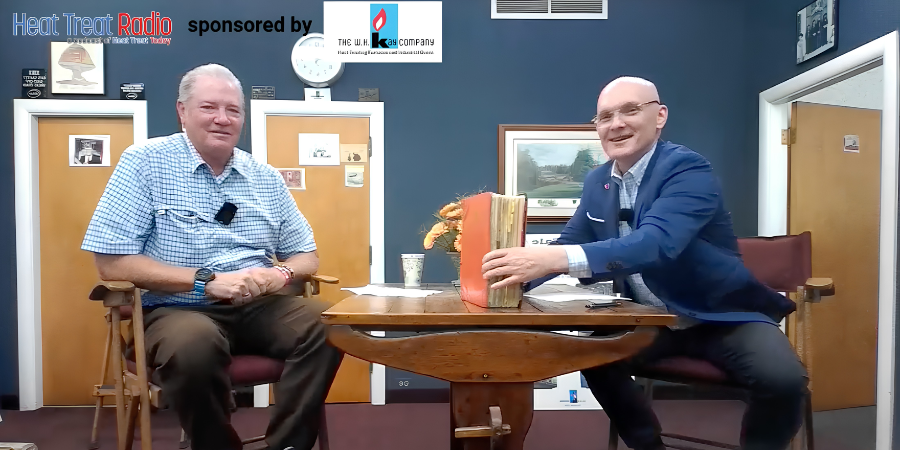
Michael Kay: When I started in ’85, this is what I was given. It weighs about 15 pounds. You would haul that catalog out and make sales calls.
Doug Glenn: I remember seeing these on shelves in furnace companies.
Michael Kay: This is all the Eclipse burner information.
Doug Glenn: Wow. So, this is how you sold back in the day.
Michael Kay: Back in the ’80s. Before faxing.
Doug Glenn: Before fax, exactly right. That was a big deal when the fax came out.
Michael Kay: Fax was huge to get an order. Fax the order in.
Doug Glenn: Now you don’t see it, except unless you’re in a medical office, for security.
Michael Kay: That saved at least a week.
Doug Glenn: You could fax the order to the manufacturer instead of mailing it.
Michael Kay: And then they’d fax the acknowledgement back. Back in the day, you’d mail it in, and then you’d get an acknowledgement a month later that they got it. How did they get anything done back then?
Doug Glenn: So as far as transitions, obviously you mentioned your grandfather passed away, so passing it on to the next generation was not a problem. You guys all got along fairly well.
Michael Kay: Yeah, we got along. My brother-in-law came in 25 years ago.
Doug Glenn: Talking about Roger Hird.
Michael Kay: Roger, right. And then we hired another sales rep who’s still here.
Doug Glenn: That’s good. You’re into the third generation. Do you have succession plans or sales plans?
Doug Glenn: Let’s talk a bit about your dad, because we were talking about him when we walked in. You don’t need a succession plan, at least for another 30 years, right? Because your dad’s still going at it. Tell us a bit about him.
Michael Kay: Right. He just turned 93. And he comes to the office three days a week. It keeps him active.
Doug Glenn: That gives you another 30 years before you have to worry about it.
Michael Kay: Exactly.
Doug Glenn: That’s crazy.
The Business of Used Heat Treat Equipment
Doug Glenn: Would you be comfortable laying out what the ballpark percentage is between used equipment sales versus burner sales versus burner design?
Michael Kay: It’s probably 50/50. It gets more active some days, some months than others. We’ve had ovens and furnaces here for 15 years. It’s always a chess match at what’s selling and what’s not. If we put something in the corner, for sure it’ll sell, because then I’ve got to move nine furnaces to get it out. It’s always an active chess match.
Doug Glenn: You’re saying the oldest furnace that you’ve got here has been here 15 years, waiting for an owner.
Michael Kay: Right.
Doug Glenn: It must be a bit of a challenge knowing what to buy and what not to buy just based on what you think is going to be resellable.
Michael Kay: Right. I’d say it’s more of a question of what the condition is. We kind of go on the theory of good equipment. If you have something that you’re not exactly familiar with, like, for example, a blaster, if it looks nice, then we might buy that with a couple of furnaces.
Doug Glenn: Even though it’s not a thermal piece.
Michael Kay: Yeah, we don’t know much about blasters. But we know people.
Doug Glenn: You’re talking about like shot peen type stuff?
Michael Kay: Shot peeners, something like that. So, we might buy that if it’s nice, because we know people who know blasters. And then a lot of heat treaters use blasters anyhow.
Doug Glenn: Yes, for deburring.
Michael Kay: Right. So, it’s more the condition of the piece. You try and get different size ovens and not load up on little lab equipment.
Doug Glenn: I noticed you didn’t have much on the desktop or tabletop.
Michael Kay: We do. They’re on the other side, though. You couldn’t see them. We have probably 30 or 40 of that type of equipment. But we could have 300 of them. They’re kind of a dime a dozen. Most people throw them in the dumpster anyhow.
Doug Glenn: I’m curious how you go about finding the equipment. Do you have to proactively go out, or do you find most people are asking you to buy equipment?
Michael Kay: We used to buy equipment at auctions. Now, since it’s on the internet, it’s tougher to buy at an auction. It’s mostly with existing customers that have equipment they don’t need anymore that reach out asking what equipment we have that they can trade with. We got a call the other day, a customer we sold a furnace to seven years ago. He’s done with it, so he asked if we buy it back. That is helpful for our customers, to know that we’re around.
Doug Glenn: You’re not obliged to do that, right? But I assume with established customers you would try, just to keep them happy.
Michael Kay: As long as they didn’t blow it up. Which happens.
Doug Glenn: “We’ve got this furnace. We’d like to return it to you, and we’ve got it in three pieces now.”
Michael Kay: Exactly.
Doug Glenn: That would make it a bit rough.
Michael Kay: But mostly from established people we know. Now, there are people that call in and say they have an oven that they don’t want.
Doug Glenn: Are the people that you’re doing business with predominantly manufacturers who want to do their own heat treat, or are they commercial heat treaters?
Michael Kay: I’d say they’re both. I would say commercial heat treaters are a big part. We know most of them, being around for 90 years and all. They know us; we know them. But there are guys getting into it, just starting out. They need a tempering furnace to stress relieve welds, or they’re doing aluminum aging type of processes. So, I would say it’s both.

Doug Glenn: Tell me a bit more. I am seeing a bit of an uptick in the aluminum world as well. What are you comfortable saying about that? Because you mentioned that you’re doing more in that area.
Michael Kay: Since we’ve done ovens, we have customers who request aging, because that’s more of a longer process, so you see more aging ovens. And since we have partnered with JPW Oven, they build drop bottom furnaces, horizontal quench, and aging ovens. If we don’t have a used unit, then we say, “Well, we can sell you a new one,” because it’s hard to find a used drop bottom on the market. So, we found a little niche. We have sold five or six of them in the last four years.
Doug Glenn: Any sense of why that market is picking up at all?
Michael Kay: I think it’s perhaps that they’re trying to make products lighter, like vehicles. They’re trying to make them more fuel efficient as well. There are also composite components that need to be cured out. We do a lot of that.
Doug Glenn: You’re just talking about composite materials.
Michael Kay: Plastic composites, resins, and curing. It must be a Class A, solvent-rated product. All sorts of different processes use some sort of heat. It’s amazing. From Frito-Lay to Alcoa.
Doug Glenn: I’m curious what percentage of your equipment is going into metals or ceramics, as opposed to the lower temperature?
Michael Kay: That’s hard to say. All the new stuff we sell is going into low temperature ovens. But we sold a couple of car bottoms this year that are doing 1500 to 1600 degree annealing.
Doug Glenn: What’s the one or two pieces of equipment out there you’d really like to get rid of? Maybe there’s more than two.
Michael Kay: The electric car bottom would be nice to sell.
Doug Glenn: Tell me about it a little bit.
Michael Kay: Well, it’s a 1400-degree electric car bottom that kind of comes up like this.
Doug Glenn: Oh, long ways.
Michael Kay: Long ways. Like you’re trapping a squirrel. It’s designed for tempering stainless steel 30-foot-long bars. It’s a pretty good sized car bottom, but most people want gas-fired car bottoms.
Doug Glenn: And this is electric.
Michael Kay: This is electric. You could convert it, but that would be…
Doug Glenn: That’d be an expense. You might as well buy a new one.
Michael Kay: Yeah. The pieces of equipment that take up a lot of floor space, we want to keep moving in our warehouse.
Doug Glenn: I think it’s an interesting business, because you want to turn your inventory, just like most.
Stories & Lessons Learned
Doug Glenn: Do you have any memorable customers, projects, or situations?
Michael Kay: Eclipse always tried to sell against the North American Tempest burner. So, we finally came out with a ThermJet back in, I’d say, the late ’80s, early ’90s.
Doug Glenn: I remember them advertising it. I think it was the early ’90s.
Michael Kay: It’s still a great burner. But we were the first ones to sell the burner on a big roller hearth in Mansfield.
Doug Glenn: Is that right?
Michael Kay: And literally there were 56 burners, and it was my job, and we had no idea whether they were going to work or not. On the startup, amazingly we had two or three engineers from Eclipse making sure it was right, and they all lit up the first time. And they work, like, amazingly well.
Doug Glenn: No kidding. Well, that’s sweet when that goes well.
Michael Kay: Yeah. That was a little nerve-wracking though.
Doug Glenn: Those types of experiences are fun though.
Great successes or moments when you thought things were going to fall apart in the history of the company?
Michael Kay: That was one of them.
Doug Glenn: Whether or not these burners would work?
Michael Kay: Right. That was a big job back in the ’90s. Because you had the valves, you know, it was a big job.
Doug Glenn: Whole gas trains and whatnot.
Michael Kay: And this was their main furnace.
Doug Glenn: Well, that one went well.
Michael Kay: Yeah, that was good.
Doug Glenn: I assume you had difficult times just business-wise at some point in time, right? Were the 2008 to 2010 years rough times?
Michael Kay: Well, Detroit wasn’t that great in the ’80s, you know?
Doug Glenn: Right. I remember, because you and I are roughly the same age, getting out of college didn’t feel like a great job market.
Michael Kay: Right. It wasn’t good at all. So, this one job in particular, we bought some furnaces from this guy in Indiana. I think it was either an auction or something. We bought four furnaces, and the riggers in Indiana loaded them up, and the furnaces never showed up.
Doug Glenn: You bought them, but they never got here?
Michael Kay: Right. And we tracked it down, and these guys were like gypsies, and they took our furnaces right to the scrapyard and scrapped them. So, it was like, “Who are these guys?”
Doug Glenn: Did you ever find them?
Michael Kay: No. Never found them. The police in Indiana knew about them, and they were like, “You don’t want to chase these guys.” So, I’m like, “Fair enough.” Our bad.
Doug Glenn: But how would you know? I mean…
Michael Kay: They were at the auction, giving out cards. But you didn’t know. That was one job in 40 years. It’s unusual for someone to take your furnaces and just scrap them.
Doug Glenn: They’re not exactly easy to move around or hide.
Michael Kay: No, they were something, those guys.
Getting in the Flow
Doug Glenn: You guys have been in business for 90 years, and I’m kind of curious if there’s something in your mind at least that says, “You know, the reason this company is successful is because we’re committed to X or Y or Z.” I’m curious what that thing might be. And also, we were talking earlier about difficult times and how you get through the difficult times. Any comments on either of those, getting through, or how it is you’ve lasted 90 years, which is no small task?
Michael Kay: Well, just going out with my uncle and father: sales are all about getting in the flow. That means making an effort to be proactive. You just can’t wait for orders to come in. When you’re proactive, you also have to listen a lot, because what you initially get called in for, they might not be looking for that at all.

Doug Glenn: They may think that’s what they want.
Michael Kay: Right. We’ll get inquiries about a furnace that a guy’s interested in. We’ll go out and he’s like, “It’s a 1600-degree furnace, but…” I said, “Well, when you get right down to it, what temperature are you running? 900 degrees. Well, then this is the wrong furnace.” So, recommending and being able to find solutions for people has been key. Also, you have to appear well in any company. In other words, you could be talking to the guy on the floor who’s covered in oil, or the CEO of Alcoa, and anyone in between. So, you’ve got to appear well in anyone’s company.
Doug Glenn: When you say appear well, you mean make a good impression?
Michael Kay: Yes, just be comfortable and not dismiss people. You’ve got to find out who’s really making the decision. It might not be the president at all.
Doug Glenn: And you just kind of assume anybody you talk to is going to be involved in the decision.
Michael Kay: It might be the guy covered in oil who’s really wanting the solution, so you’ve got to know what you’re doing there. And it’s establishing a rapport. That’s the most important thing. If you know what they need, then you can quote what’s going to help them out, as opposed to quoting something that’s not going to work for them.
Doug Glenn: When you said get in the flow, it made me think about something I believe relatively strongly, and that is you’ve got to be out with the customers. Now, you would think that wasn’t the case here, because I’ve known you for 30-plus years and I’ve never been here. But in spite of that little piece of evidence that suggests otherwise, I assume that you personally have spent a good bit of time out and about. Are you still getting out and seeing them?
Michael Kay: You have to. Go see a furnace you sold two years ago. See how it’s running. People appreciate that. And you might stop there and do that, and then you will find something else. “Well, you know, that furnace over there, I’m not using.”
Doug Glenn: You would’ve never known it if you weren’t there.
Michael Kay: Exactly. Or they mention something, like, “My neighbor was looking for an oven.” “Who’s that?” Well, that turns out to be they’re setting up a whole heat treat operation. You never know. But you won’t know unless you’re in and out and about.
My father used to say you can waste a lot of time coming into the office every day. You can always make yourself busy.
Doug Glenn: There you go. Good point. Need to be out with the customers.
Michael Kay: You need to. It’s pretty interesting because we still have outside sales. A lot of people don’t anymore. The number of people has been reduced.
Doug Glenn: You have outside sales. Tell me about this now. You had mentioned the one gentleman who’s doing mostly phone work.
Michael Kay: Roger and I are outside sales.
Doug Glenn: I tend to be a big believer in that. Are you finding it more difficult these days to get into places, or is it still doable for you?
Michael Kay: It’s still doable. I mean, I think the number of salespeople that show up is one-tenth of what it was.
Doug Glenn: Way down.
Michael Kay: Way down. So, in some cases they’re like, “I haven’t seen a sales guy in six months.” So that way you have an advantage by getting out. In my opinion.
Doug Glenn: I think so. There’s a lot to be said about it. I think the whole email and text thing has also made it more difficult. Did you know Kelvin Spain? He was the president over there, general manager of Radyne, which is an Inductotherm company, and he passed away years ago. But I remember sitting with him at lunch, and it was probably during that ’08 to ’10 era when the economy was really down, and we were talking with him, and he was always such a positive, optimistic person. And I made some mention about how it seemed like people were finding it very difficult these days. And he just said, “No. You just need to work harder. That’s all. You just need to get out there and keep doing the fundamentals,” which is basically getting out and seeing people and whatnot.
Michael Kay: Yeah.
Doug Glenn: It’s difficult, but sometimes you just need to do it.
Michael Kay: Some things never change.
Doug Glenn: Meaning what? I was going to tell you what I thought that meant, but I’m curious what you mean.
Michael Kay: Well, you know who the good sales guys are. You create your own good luck. Why does this guy always get lucky with a sale? Because he’s in the flow. Sooner or later, you’re going to stub your toe on something good.
Doug Glenn: I forget who said it. I’m thinking Abraham Lincoln, but I don’t know. He says, “The harder I work, the luckier I get.”
Michael Kay: Exactly right. I think you do create your own good luck, for sure, in some respects.

Doug Glenn: Do you have a lot of interaction with AI here?
Michael Kay: I think AI is going to help people find us and our products. I haven’t tapped into that yet, but I think of AI as, what are the products that are going to come out of it? Drone technology, you see that. We have a couple of ovens going to people building drones. Because they’re all composite. They have to be light to fly.
Doug Glenn: Lightweight and strong.
Michael Kay: So yes, it’s probably going to diminish some aspects, but it’s going to create other industries too. Like anything.
Doug Glenn: Pretty optimistic about it, not too worried about it?
Michael Kay: Not too worried about it. It seems like no matter what year it is, process heating is going to come into play in whatever, computer chips, drone manufacturing, or aerospace. It’s not going away.
Doug Glenn: Another industry legend like yourself, who you would know if I mentioned his name, has said, “Nobody really wants to heat treat. Nobody really wants to thermal process.” If they could build whatever they’re building without doing it, they would.
Michael Kay: Oh, 100%. They would.
Doug Glenn: Some people think that with AI, we’re going to find ways to build products and eliminate unnecessary processes, like heat treating. I don’t know. We’ll see.
Michael Kay: I don’t think so.
Doug Glenn: We’ll see.
Michael Kay: 3D printing is interesting. You see some of these parts being made, but I think they still have to stress relieve them.
Doug Glenn: At this point, they do need to stress relieve, and I don’t know how it would work.
Michael Kay: It’s always going to be something.
Doug Glenn: So, you guys have been around 90 years. You’re kind of like the granddads of the industry, right? Because you’ve had a lot of experience. Any sage advice that you’d give to companies who are out there trying to be successful?
Michael Kay: I like the one that you can create your own good luck. You keep at it and get in the flow. Get out of the office. That’s what we’ve been doing. Well, I’ve been doing it for 41 years. Maybe not when I started. I had to haul this massive catalog around.
Doug Glenn: Right. Well, that’s why you’re in such good shape.
Michael Kay: I remember he’s like, “Just go out and make some sales calls.” I’m like, “With what?”
Doug Glenn: “What is that?”
Michael Kay: So that’s so funny.
Doug Glenn: Just a little bit of diligence is what keeps…
Michael Kay: Diligence, yeah. Exactly right.
Doug Glenn: Keep after it. So, next 90 years for you guys?
Michael Kay: Someone’ll be selling furnaces. Whether it’s us, I think I’ve got another 10 years probably. That’s my goal.
Doug Glenn: Well, you got inspired by your dad. I think I’m saying you’ve got 30 years.
Michael Kay: He’s the exception. But you never know. It’s nice to have an office to come to.
Doug Glenn: Yeah, it is. Purpose in life.
Michael Kay: Right. Whether you do anything or not. My father comes in; he’s 93. He comes three days a week, and then he plays bridge the other two.
Doug Glenn: Is that right?
Michael Kay: It keeps him occupied. You need to be pretty smart to play bridge.
Doug Glenn: You need to keep your mind and your body going.
Michael Kay: Keep your mind sharp.
Doug Glenn: And he’s in good physical shape?
Michael Kay: He’s pretty good.
Doug Glenn: For 93?
Michael Kay: He still drives.
Doug Glenn: That’s good.
Michael Kay: But yeah, he’s in pretty good shape. Oh, one other thing.
Michael Kay: When I first started it was always, “When is Eclipse going to can us?” So, it was always explained to me, just make yourself hard to get rid of. If you’re selling, it’s hard to get rid of someone who’s always selling.
Doug Glenn: It’s like the guy on the basketball team. It’s hard to get rid of your top scorer. You can have a guy that’s really good at assists, and he’s probably going to go before the guy that’s putting the ball in.
Michael Kay: They can yell at you but then send in an order. So, make yourself less expendable.
Doug Glenn: Less expendable. Fair enough. Very good.
About the Guest

President and Owner
W.H. Kay Company
Michael J. Kay is President and third-generation owner of The W.H. Kay Company, a Cleveland-area company that has served the industrial heat treating and process heating industry since 1936. A graduate of Furman University, Michael earned degrees in business and U.S. history in 1984 and began his career the following year selling Eclipse burner systems and heat treating furnaces. He now brings more than 40 years of experience in industrial thermal processing to the business.
Under Michael’s leadership, W.H. Kay continues the work begun by his grandfather, William Henry Kay, providing combustion systems, heat treating furnaces, industrial ovens, controls, and practical process heating solutions to manufacturers and commercial heat treaters. The company also buys, sells, and trades used heat treating equipment, maintaining an extensive inventory of furnaces, ovens, atmosphere generators, vacuum furnaces, and related equipment at its Solon, Ohio, facility. W.H. Kay’s relationship with Eclipse dates back to the company’s founding and today includes combustion technologies from Eclipse, Maxon, and Kromschroder.
For more information: Contact Michael Kay at sales@whkay.com.