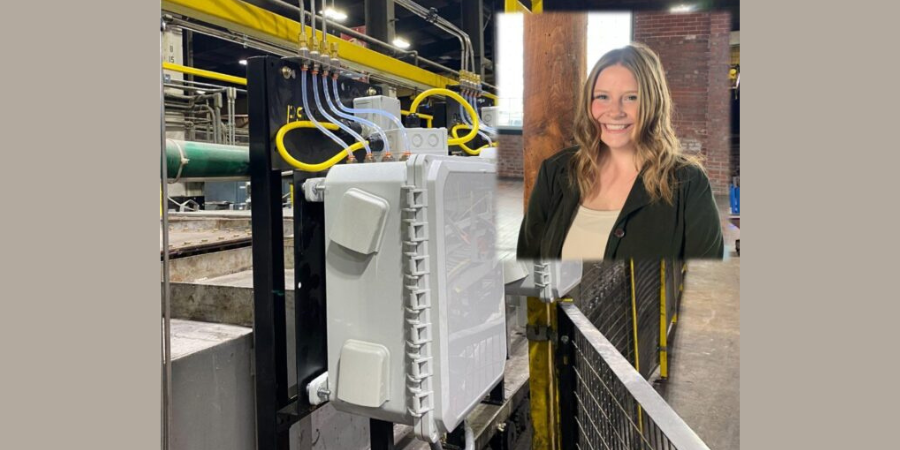
With energy costs soaring and environmental commitments expanding across the industry, is it enough to just tune your industrial combustion burners, or can IIoT devices provide greater insight to achieve burner energy efficiency?
This Technical Tuesday article, written by Taylor Smith, technical sales and marketing specialist, PSNERGY, LLC, was first published in Heat Treat Today's February 2023 Air & Atmosphere Furnace Systems print edition.
Introduction
Taylor Smith Specialist of Technical Sales and Marketing at PSNERGY Source: PSNERGY
Industrial furnaces are inherently inefficient and constantly degrading due to high operating temperatures. In most cases, less than 50% of the energy generated through combustion goes to heating the load, while most energy is lost through the exhaust stack or is used to heat the atmosphere, fixtures, and walls of the furnace. An improperly tuned furnace loses 10-30% efficiency on top of the energy losses previously mentioned. This is why keeping industrial furnace combustion systems in tune is critical to performance. This was recently highlighted in John Clarke’s featured article, “How To Make $17,792.00 in a Couple of Hours.”
Continuous Monitoring Is Key
Contact us with your Reader Feedback!
Built on years of experience and field data, combustion engineers at PSNERGY know that only tuning combustion systems annually, or semi-annually, is a good start, but it is not enough. Customer case studies led the team to recognize the importance of frequent combustion monitoring to achieve optimal performance, and ultimately drove the design of their proprietary IIoT monitoring system: Combustion Monitoring and Alerting (CMA).
To get the most BTUs to the load per unit of natural gas purchased, tuning must be combined with continuous combustion monitoring. Tuning without continuously monitoring combustion increases the risk of losing energy to the load, decreasing efficiency, and creating excessive carbon emissions.
Case Studies: Data-Driven Furnace Efficiency
The following case studies represent two examples of data collected throughout the country on furnaces of all sizes and configurations. One thing remains consistent: simply checking combustion once or twice per year does not ensure optimal furnace performance.
These figures show before and after measurements taken on the same forty-four burner radiant tube roller hearth furnace, six months apart. The red points on the graphs represent excess oxygen in each burner’s exhaust when the team arrived on site, while the blue points represent excess oxygen in each burner’s exhaust after tuning the furnace. A significant variance in combustion performance can be observed in the six months between tunings, which means a large portion of the natural gas purchased is being wasted out the stack and creating carbon emissions.
To ensure maximum energy is being applied to the load for every BTU burned, combustion should be tuned to the ratio of 11.5:1. This 11.5:1 ratio of air to gas results in an ideal excess oxygen measurement of 3%. When PSNERGY engineers perform combustion tuning on an industrial furnace, they set the excess oxygen at the burner between 2.8% and 3.2%. This optimal range is marked by the green dashed lines on the graphs.
You may be questioning, “Does too little or too much excess oxygen really affect combustion performance?” Yes! Burners operating above 4% or below 1.5% are considered outside of the control limit range, marked by the red dashed lines on the graphs. With less than 1.5% excess oxygen at the burner, furnaces produce carbon monoxide and soot, which can clog burners, making them even more inefficient. These carbon emissions can also create an unsafe work environment for plant employees. When operating at 5% excess oxygen, 8% of energy to the load is lost. When operating at 7% excess oxygen, 21% of energy to the load is lost. Imagine buying the same amount of natural gas and only getting 79% of the energy!
Figure 1 Source: PSNERGY
A few things to notice on these graphs: burners are rarely, if ever, found in the ideal performance zone after six months. There is no way to know when each burner drifted out, because continuous monitoring was not yet implemented. Therefore, this drift in combustion performance, which significantly decreases furnace efficiency, could have happened anytime during the six month period between combustion tunings. Tunings may be scheduled, but combustion does not operate on a fixed schedule. You cannot know when the burners drift out of tune without monitoring. Another point to note is that the burners do not always move in the same direction as they go out of tune. In Figure 1, thirty one out of the forty four burners were burning under 1.5% excess oxygen, which means they were burning rich and creating carbon emissions and soot. The PSNERGY service team tuned all of those burners back into the optimal performance range. As you can see in Figure 2 data, taken six months later, out of the same forty four burners, seven burners were burning rich, while thirty one of the burners were operating lean with over 4% excess oxygen, which significantly decreases the amount of energy to the load. These figures demonstrate why it is crucial to continuously monitor and tune your combustion system as needed based on the data, not the calendar.
Figure 2 Source: PRNERGY
Combustion Monitoring and Alerting (CMA)
Circling back to our initial question of, “Can IIoT devices provide greater insight to achieve burner energy efficiency?” the data presented here answers with a resounding YES! In fact, various companies across steel, aluminum, and heat treating industries have already successfully implemented this solution.
Not only does continuous monitoring help achieve burner efficiency, but it also helps bridge the gap in combustion knowledge and manufacturing by making combustion performance easy to see and maintain. With manufacturing leaders facing fourteen-year high natural gas prices and a generational gap in manufacturing expertise, systems like CMA are proving to be crucial to business success. Delivering 10-20% improvement in furnace efficiency, less waste, reduced carbon emissions, and ensured quality, takes your furnaces from being a necessary expense to a strategic asset.
Now the question is: Are you performing combustion maintenance on a fixed schedule or are you trusting real time data?
About the Author: Taylor Smith is a specialist of Technical Sales and Marketing at PSNERGY, located in Erie, Pennsylvania. Her tenacity and competitiveness as a Division I athlete have helped her quickly gain knowledge and hands-on experience in the heat treating industry. Taylor has a deep passion for manufacturing and works hard to build the next generation of leaders, serving on the board of directors for Women in Manufacturing WPA. For more information: contact Taylor at tsmith@psnergy.com
Find heat treating products and services when you search on Heat Treat Buyers Guide.com
The monthly Industrial Heating Equipment Association (IHEA) Executive Economic Summary released in February shows that 2023 has already been forecasted in very different ways by expert analysts. Some are claiming that 2023 is just going to be terrible with rampant recession, pointing to the Purchase Manager's Index (PMI) as the true marker for what to expect. Then, there are the more moderate studies. The automotive and aerospace industries are looking up. The split forecasts might leave one spinning in confusion.
By taking a closer look at some of the specific industries, the economic summary shows that, "We don't quite know what to do with 2023 yet." The report reiterates this balance of highs and lows, with several bright spots for heat treaters, "In the more detailed breakdowns we see some significant variations – booms in automotive and aerospace but declines in machinery. Less volatility in fabricated metal and more volatility as far as primary metal is concerned."
The 10 economic indices show the aforementioned balance with almost half showing some increase, and the other sectors have a drop. A closer look below will show that even within the indices that are dropping, heat treat related markets are holding steady. Global events continue to impact metal prices. Indices that are down include: New Automobile and Light Truck Sales, New Home Starts, Industrial Capacity Utilization, and the Transportation Activity Index. The up indices are Steel Consumption, Metal Pricing, PMI, Capital Expenditure, and Durable Goods.
High interest rates and high new vehicle prices are driving these sales down. Heat treaters, keep in mind that older vehicles are still on the road needing parts and eventually replaced.
"There is a threat of continued low demand." Source: IHEA
With a look at new home starts, yes the index is down. There is a bit of a surprise within this big picture. Multi-family unit construction is actually up by 11%! This means heat treating is needed for construction components as well as appliances that go into these units. There is a relationship here with the durable goods pictured a few charts further down. Demand is high for these manufactured items.
"New homes are expensive, and loans to buy them are expensive as well." Source: IHEA
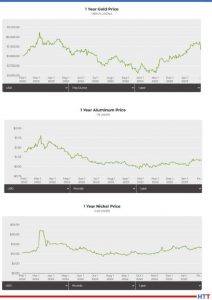
Metal pricing reflects political events around the world - places like China and Peru where industrial metals and copper are sourced. Supply chain problems are correcting, but government conflicts continue. Currently the numbers are up, but quite a bit of uncertainty swirls.
“The sense is that prices are settling into a predictable pattern — for now.” Source: IHEA
Durable goods are things that are supposed to last years. Appliances for the multi-family housing units shown above would be something in this category.
"A bigger demand for U.S. exports and most of these are high-value manufactured goods." Source: IHEA
Robotics industry is booming too as is the automation sector. Durable goods also includes U.S. exports, and those are in high demand.
Anne Goyer, Executive Director of IHEA
2023, it would seem, is a year to "Keep calm, and carry on". The incredible lows due to the pandemic, and then some major highs coming out of that time are in the past. With some rising indices balanced with some low economic markers means, "companies are facing a year of unknowns after a couple of years of predictability."
Check out the full report to see specific index growth and analysis which is available to IHEA member companies. For membership information, and a full copy of the 11-page report, contact Anne Goyer, executive director of IHEA. Email Anne by clicking here.
Find heat treating products and services when you search on Heat Treat Buyers Guide.com
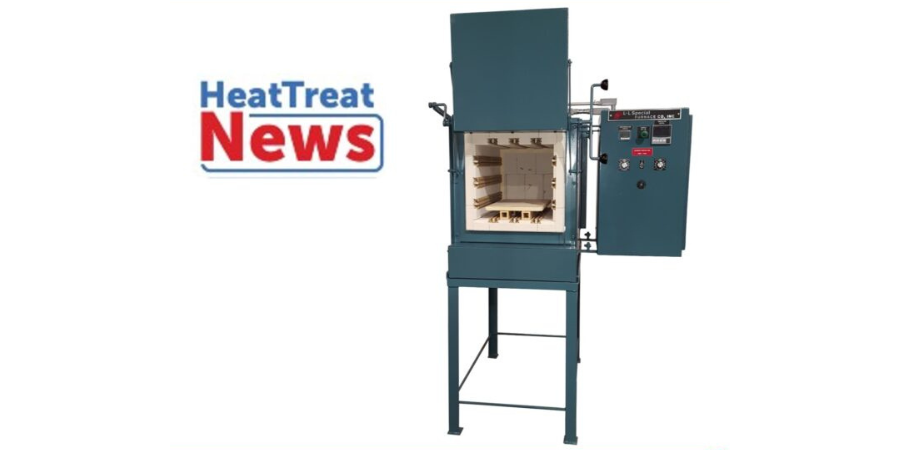
A highly uniform box furnace was sent to a distributor of equipment to maintenance repair and overhaul (MRO) facilities located throughout the world. The furnace manufacturer is based in Pennsylvania and supplies this equipment for lab samples and general manufacturing.
The L&L Special FurnaceModel XLB124 has working dimensions of 11” wide by 10” high by 22” deep. The furnace is capable of heat treating and tempering. It is equipped with a sealed case for inert atmosphere capability, as well as a fully functional atmosphere control panel with pressure regulator, flowmeter and manual shut-off valve. Two-zone, long-lasting solid-state contactors control the power, and the furnace hearth is a rugged cordierite plate with ceramic support.
Find heat treating products and services when you search on Heat Treat Buyers Guide.com
Twin convection furnace systems were recently supplied to Winston Heat Treating. The furnaces replaced two older tempering systems. The new systems are for ferrous alloys and aging PH stainless steels.
David Reger President at Winston Heat Treating Source: LinkedIn
The SCAHT®-HD (Heavy Duty) Series furnaces, from DELTA H®, are set up with Instrumentation Type B and have two load thermocouples. The furnaces have a certified TUS volume of 2 feet wide, 1.5 feet high and 2 feet deep with a maximum continuous operating temperature of 1,200°F. Both are designed to receive baskets of parts from many nearby heat treating operations for secondary heat treatments. Temperature control and data acquisition are provided by Super Systems and feature the SSi 9130 controller/programmer. ATP qualified them as Class 2 (+/- 10°F) from 300°F to 1200°F.
“We were looking for a partner to replace existing tempering furnaces that had become too costly to maintain and could no longer meet required pyrometry standards. Our goal was to install reliable and modern furnaces that were specialized for our small batch/job shop work," said David Reger, president at Winston Heat Treating and aHeat TreatToday's 40 Under 40 recipient.
Find heat treating products and services when you search on Heat Treat Buyers Guide.com
Castheon, Inc. anADDMANGroup company, has expanded its operational and engineering infrastructure in southern California. Castheon specializes in materials for extreme environments like rocket propulsion and hypersonics, prints refractory alloys such as Niobium C103 and Super C103, and develops metallic alternatives for legacy composite hypersonic thermal protection systems.
Castheon is moving into a new facility with over 40,000 square feet of production, R&D, and engineering space. The square footage makes room for additional machines (more than 10 of them) and manufacturing processes, including large format printers, heat treatments, precision machining, and inspection for aerospace & defense applications.
Dr. Yaoping Gao Source: castheon.com
“When we 3D print the refractory alloys using our unique approach to metallurgy, we are seeing the intrinsic material properties that far exceed that of wrought equivalent," shares Dr. Youping Gao, an accomplished aerospace manufacturing veteran. "The magnitude improvement in strength, oxidation resistance, and creep resistance are all derived from the additive process’ ability in controlling the microscopic level of metallic grains”
The company is actively recruiting engineers, quality inspectors, and other functions. Interested parties are encouraged to visit the ADDMAN career board.
Find heat treating products and services when you search on Heat Treat Buyers Guide.com
No better time to turn up the heat than Valentine’s Day! Of course, we at Heat TreatToday are talking about the heat treatment kind of heat!
Looking into history, the work of blacksmithing was one of necessity for every day life. Tools for man and horseshoes for the workhorses were some of the things required from the smithy’s forge. Take a step back in time to read this poem by Henry Wadsworth Longfellow about the way things used to be.
The Village Blacksmith
Under a spreading chestnut-tree
The village smithy stands;
The smith, a mighty man is he,
With large and sinewy hands,
And the muscles of his brawny arms
Are strong as iron bands.
His hair is crisp, and black, and long;
His face is like the tan;
His brow is wet with honest sweat,
He earns whate’er he can,
And looks the whole world in the face,
For he owes not any man.
Week in, week out, from morn till night,
You can hear his bellows blow;
You can hear him swing his heavy sledge,
With measured beat and slow,
Like a sexton ringing the village bell,
When the evening sun is low.
And children coming home from school
Look in at the open door;
They love to see the flaming forge,
And hear the bellows roar,
And catch the burning sparks that fly
Like chaff from a threshing-floor.
He goes on Sunday to the church,
And sits among his boys;
He hears the parson pray and preach,
He hears his daughter’s voice
Singing in the village choir,
And it makes his heart rejoice.
It sounds to him like her mother’s voice
Singing in Paradise!
He needs must think of her once more,
How in the grave she lies;
And with his hard, rough hand he wipes
A tear out of his eyes.
Toiling,—rejoicing,—sorrowing,
Onward through life he goes;
Each morning sees some task begin,
Each evening sees it close;
Something attempted, something done,
Has earned a night’s repose.
Thanks, thanks to thee, my worthy friend,
For the lesson thou hast taught!
Thus at the flaming forge of life
Our fortunes must be wrought;
Thus on its sounding anvil shaped
Each burning deed and thought.
What process holds a soft spot in your heart? Tempering or annealing? For Valentine's Day, turn up the heat -- errr heat treatments -- with this look at the differences in tempering and annealing! Heat TreatToday has resources for you to spark some thought and learning on these processes.
Sentiments and strong feelings can certainly be heightened this Valentine's Day. While tempering and annealing may not lend themselves easily to the holiday, we hope you enjoy a bit of a nod to the day in our headings below. Make use of the Reader Feedback button, too, and keep us in the loop with questions and comments on what heat treatment you love.
Problem with Annealing? Get to the Heart of the Issue
An automotive parts manufacturer was running into problems with cracking parts. The variable valve timing plates were returning from heat treatment with this problem. To determine why those parts were cracking after the annealing process, an investigation was launched by metallurgists at Paulo.
The presence of nitrogen combining with the aluminum already present in the particular steel being used was forming aluminum nitrides. What could be done? Read more in the case study article below to find out a workable solution that allowed the annealing to create a crack-free product.
Induction, Rapid Air, Oven and Furnace Tempering: Which One do You Love?
Contact us with your Reader Feedback!
This article gives some perspectives, from experts in the field, on what kinds of tempering are available and for what the processes are used.
Hear from Bill Stuehr of Induction Tooling, Mike Zaharof of Inductoheat, and Mike Grande of Wisconsin Oven with some basics and background information on tempering. Those reasons alone make this resource helpful with information like this: "tempering at higher temperatures results in lower hardness and increased ductility," says Mike Grande, vice president of sales at Wisconsin Oven. "Tempering at lower temperatures provides a harder steel that is less ductile."
More specific in-depth study is presented as well. The Larson-Miller equation is considered, and the importance of temperature uniformity is emphasized. Read more of the perspectives: "Tempering: 4 Perspectives — Which makes sense for you?"
Cast or Wrought Radiant Tubes in Annealing Furnaces - is Cheaper Really What to Fall For?
Marc Glasser, director of Metallurgical Services at Rolled Alloys, takes a look at radiant tubes. He particularly discusses the cast tubes and wrought tubes. For use in continuous annealing furnaces, there are several factors contributing to choice of radiant tube type.
Marc says, "Justification for the higher cost wrought alloy needs to take into consideration initial fabricated tube cost, actual tube life, AND the lost production of each anticipated downtime cycle as these downtime costs are often much more than material costs." He probes into areas that may not be considered when thinking of all the costs involved. Read more of his article "Radiant Tubes: Exploring Your Options."
Tempering Furnaces: Improvements are Thrilling
The expert behind this piece shows the importance of tempering, particularly in automotive fastener production. Tim Donofrio, vice president of sales at CAN-ENG Furnaces International Limited examines what's working in the tempering furnaces. The products are meeting and exceeding expectations.
To wrap up this Technical Tuesday post on tempering and annealing, head over to this additional resource to round out the scope of each process. "What is the Difference: Tempering VS. Annealing" gives a summary perspective on the heat treatments discussed above.
Find heat treating products and services when you search on Heat Treat Buyers Guide.com
Nordic Traction Group, a manufacturer of traction chains and tracks for forestry and agricultural machinery, recently upgraded their heat treatment operations by installing a new endothermic gas generator system.
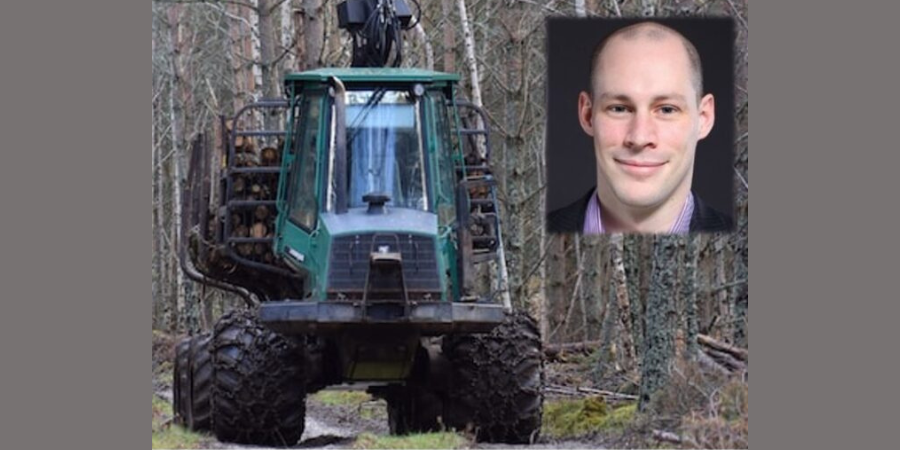
Daniel Panny Head of Sales UPC-Marathon in Germany Source: LinkedIn
To carburize its traction chains, Nordic Traction Group, with manufacturing locations in Finland and Scotland, added the EndoFlex™ S system. The system, from UPC-Marathon, a Nitrex company with North American locations, replaces an outdated generator. The new system improves process reliability and product quality and requires less preventative maintenance.
“Since the EndoFlex™ S produces only the amount of gas required by the carburizing furnace, there is zero waste in endogas production. This also allows Nordic Traction to save big by maximizing energy usage and gas consumption,” said DanielPanny, Head of Sales at UPC-Marathon.
Find heat treating products and services when you search on Heat Treat Buyers Guide.com
Aniket Maske, chief metallurgist and laboratory manager at Automatic Spring Products Corporation, brings new life to the world of heat treat and metallurgy in this special “Metallurgical Posterchild” podcast episode with Doug Glenn, publisher and founder of Heat Treat Today. Enjoy this personal interest piece about Aniket as we learn about his background, how he became a part of the metallurgical industry, and several exciting interests that fuel his days.
Below, you can watch the video, listen to the podcast by clicking on the audio play button, or read an edited transcript.
The following transcript has been edited for your reading enjoyment.
Doug Glenn: Welcome everyone, to a renewed episode series: the metallurgical poster child.
I want to introduce you all to Aniket Maske, who is a one of Heat TreatToday’s 40 Under 40 Class of 2022 award recipients. Congratulations, Aniket, on that award.
Contact us with your Reader Feedback
Aniket Maske Source: LinkedIn
Aniket Maske: Thank you. Thank you so much. It’s a privilege and it’s an honor.
Doug Glenn: You’re welcome. It’s our privilege to do it. I actually have sitting right here beside me our magazine open to your page. I see that you have a book published by Springer Publications.
Aniket Maske: Yes!
Doug Glenn: Thermal Electrics: Fundamentals, Material Selection, Properties and Performance. There are not many people we talk to who can say they’re an author of a book. Congratulations on that too!
Aniket Maske: It’s an honor.
Source: Amazon.com
Doug Glenn: We want to get a sense of the person you are but also what attracted you into metallurgy, heat treating and that type of stuff.
Aniket Maske: I’d like to thank you and Heat TreatToday for this opportunity to share my background, work experience, and something about myself.
My name is Aniket Maske. I was born in Ratnagiri which is a coastal area in Maharashtra in India. I was raised in Aurangabad, which is a very historic city because the world-famous Ajanta Ellora caves, a replica of Taj Mahal and one of the Panchakki which is like a turning wheel with respect to the water. So, I come from that kind of background from the city where I was raised. I love that.
Doug Glenn: Interesting. You went to high school and undergraduate in India? Tell us about that, briefly.
Aniket Maske: I went to high school at Little Flower High School in Aurangabad.
I did my Bachelors in College of Engineering, Pune, which was established in 1854. It is the second oldest engineering college in India and third in Asia. A couple of renowned personalities are from that school like Mokshagundam Visvesvaraya, who is the first civil engineer in India. For his honor, September 15th is called Engineer’s Day back in India, Sri Lanka, and Tanzania. Mr. C. Kumar Patel, the inventor of CO2 laser and a National Medal of Science honoree in 1996, also comes from the same school.
Little Flower School Source: Facebook.com
Doug Glenn: Very interesting. How about graduate school?
Aniket Maske: I went to graduate school in 2013 at New Jersey Institute of Technology on the east coast. I did my research over there for thermal electrics and tried to understand the different characterizations.
Doug Glenn: Before we started recording, you were mentioning to us that you had a group of guys with whom you were in the same undergraduate school in India.
Aniket Maske: They were my very good friends: Shlok and Vishal. They are from the College of Engineering, Pune. Me and Vishal are from New Jersey Institute of Technology, so we share that bond.
Doug Glenn: Very nice! So, you’ve got friends here. You’ve been in the States since 2013.
Aniket Maske: Yes.
Doug Glenn: I’m always curious about this: what it is that first attracted you to metallurgy and/or heat treating? At one point in time, you probably didn’t even know what metallurgy was, right? What was it that brought you into the industry?
Aniket Maske: I would say curiosity.
[blockquote author="" style="2"]In the early 2000’s we went to Delhi, the capital of India, and I saw the Iron Pillar. I didn’t even know the meaning of rust at that moment in time. I only knew what my parents used to say, “If something is red on the metal, don’t touch it, because it might be itchy.”[/blockquote] We went to the Iron Pillar. It was tall, and the Iron Pillar doesn’t even rust. It was built around 480 AD, which is about 1600 years ago. It is around 13,000 pounds, roughly 24 feet by 16 inches in diameter, and it doesn’t rust! That was my first interaction with respect to metals.
Another curiosity is (and it might sound really different) but: why are cars made of metal and not with plastic? I used to call it plastic, not polymer, in that time. That was really interesting: why is everything made differently?
One of the major things I remember is 20 years ago on February 1, 2003, the Columbia space shuttle disaster occurred. And the first Indian-born astronaut, Kalpana Chawla (the first woman) was on the shuttle.
I heard about the disaster on the radio, and then I started reading: What is the thermal soaking, what is the protective layer, what is the thermal protection system, how is it 3000°F outside but the steam temperature inside should be 350°F? That curiosity got me into the metal industry.
Doug Glenn: When was it, specifically, that you decided to go into metallurgy?
Aniket Maske: Yes. I did my engineering specifically in metallurgical engineering.
Doug Glenn: You’re one of the few and the proud. Way to go! That’s excellent. We’ve talked to a variety of people in the United States who say now the more common thing to study material science. There are very, very few schools that use just metallurgy.
What did your family think when you decided to study metallurgy? Did they ask, “What are you doing, Aniket?”
Aniket Maske: We don’t want to go there because I’m the black sheep of my family.
I’ll say why: I’m the only engineer in all of my family. The rest of them are all doctors. That’s why I call myself the black sheep of the family. They really see me differently. My mom and dad are doctors. My wife is a doctor, Dr. Sonal Mandale. She also has a master’s degree and is just now graduating in public health and epidemiology.
Doug Glenn: Epidemiology, that’s a hot topic, these days.
Aniket Maske: Oh, yes. And she graduated right during Covid. But my family was really supportive. One of my uncles, a professor, Dr. Vilas Kharat , is a renowned mathematician. He helped me to explore my curiosity. My family helped me a lot too, “Okay, you want to do it? You give it a try.”
Doug Glenn: A supportive family makes such a difference!
When you got to graduate school in New Jersey, what was your focus of study there?
Aniket Maske: When I came over here, I was focused on how the world is facing a major problem with respect to green energy. We needed to find an alternative source. Energy consumption was increasing, and we wanted to protect the environment at the same time.
I was working with my professor, and we talked about something called “thermal electrics.” What is thermal electrics? What is the Baker-Nathan effect, what is the Seebeck effect? This word sounds very big, but the simple definition is: if something is converting from electrical energy into temperature (or thermal energy to a temperature gradient into electricity).
You’ve got thermal electric models. It is a newer kind of concept with respect to silicon-germanium, but it is also used in radioisotope thermal generators for space. Even in the Mars Rover, it was used in the RDP. That got to me, with what I need to do with respect to the research and everything in my grad school.
Doug Glenn: Who is your current employer?
Aniket Maske: Automatic Springs Products Corp.
Source: Automatic Spring Products Corporation
Doug Glenn: What are you doing at Automatic Springs Products Corp., metallurgically-wise?
Aniket Maske: I just want to give a brief introduction about the company: Automatic Springs Products is a tier 1 and tier 2 automotive company shipping to 33 countries on six continents. The company was founded in 1950. Automatic Springs is technology focused, high-volume manufacturing for customers for the compression, extension, and torsion spring, as the name says. But we also do wire form, flat ring stamping, Belleville washers, and washers and assembly.
We are vertically integrated and have full spectrum providers of superior quality metal products. We do assemblies, we have a tooling department, we do heat treating in-house, and we have four austemper lines which were installed in the 1980’s. We have done heat treatments since 1960, we have 52 inline stress relieving ovens, we do coating (parts coating), and all that sort of thing in-house, and we also do manual heat set. We are one of the pioneers. We have a COBOT which does a heat set on each individual part to make a Belleville washer and only we do it.
There is a lot of heat treatment going on around here, and I am a resident expert for the automotive heat treatment and coating management for CQI-9 and CQI-12. That is a key requirement for the heat treat supplier. Currently, I am the director of quality and the chief metallurgist for the company. Ironically, the president of the company is also a metallurgist.
Doug Glenn: That is a little unusual, yes! He’ll know what you say when you mention austenite or martensite or whatever.
Aniket Maske: That’s a relief, having that kind of experience. He was the president of Spring Manufacturing Institute, so he had tremendous knowledge about the process.
We do all the kind of different processing, and we have a lot of heat treatment in-house.
Doug Glenn: All good. We’ve got a good sense of where you came from, why you got into the industry and what you’re doing now.
I want to ask you something that’s just a little bit more personal: When you think about your current work now and your grad work, what is the most enjoyable? What really puts a smile on your face about your work?
Aniket Maske: Working together as a team. We say to serve and bless our customer, team members, community, and a suppliers. [blockquote author="" style="1"]The problem solving is the key for me. I love problem solving.[/blockquote] That is one of the key aspects for me. If I don’t have problem solving to do, I shouldn’t be saying this, but sometimes I’ll get bored. Problem solving is the spice in my life.
Doug Glenn: That’s good! You’re looking for a challenge. Unfortunately, to be a problem solver, you’ve got to have problems.
Aniket Maske: We’ve got a lot of those.
Doug Glenn: I find it fascinating, as much as we know about metallurgy and things of that sort, there is still so much we don’t know.
Aniket Maske: I think we only know, I’ll say, a very minimum amount of metallurgy, right now. There are so many aspects which are still undefined.
Doug Glenn: Yes. With big data, cloud computing, and things of that sort, we are going to see some amazing changes over the next decades. Right now, we’re on a kind of slow growth.
You’re out of school now, but you seem like the type of guy that’s going to keep himself well informed. Do you have any recommendations to other people in the industry about resources to keep current on metallurgy knowledge?
Aniket Maske: I definitely use ASM. Doug, I really want to thank you and Heat Treat Today for the information in the magazines. They keeps us on the edge, they give us information. Even Heat Treat Daily is really good!
I look into Industrial Heating, and I keep in touch through LinkedIn, but Heat Treat Todayhelps me a lot. I’ve been following it for a long time.
Doug Glenn: Thank you, I appreciate that! Consistently across the board, people also speak very highly of ASM, so I want to give them a plug, as well. They’ve got some excellent courses.
Now for the “rapid round”. Are you a MAC or a PC guy?
Aniket Maske: 100% PC.
"100% PC. . . I like to be a PC person" Source: Pexels.com/Max DeRoin
Doug Glenn: I’m not even going to ask why on that one!
Aniket Maske: I can answer that. It’s because I like to be a PC person. MAC is too cosmetic for me and too aesthetic for me. That’s why I stuck to PC.
Doug Glenn: When you consume your media: digital or print?
Aniket Maske: I would say I like it to be printed because I have a habit of writing notes on it, marking it all the time. But, at the same time, I like to keep an electronic copy with me. You can just glance it through and read it. It’s easily accessible. But I prefer both print and digital copies.
Doug Glenn: It’s not an unusual answer. There are advantages to each.
I think you’re happy in your work . If you had to change jobs, would you be looking for a job that was very flexible as far as work schedule, or would you go for high pay?
Aniket Maske: I will always go for the flexible job. Keeping that balance in life with respect to getting things done, being productive. I think a flexible work schedule is really good, because you need to balance your professional and personal life. If you have skill and you have a flexible work schedule, I think pay will follow. It’s the kind of industry and the kind of world that we’re living in. Flexible schedules work.
Doug Glenn: Good! Three more quick questions: Dream job? I’m sure the people at Automatic Spring know that you’re happy in your work, but let’s say you didn’t have to worry about money. What would you do? What would be your dream job?
Aniket Maske: I would like to get into innovating a better future for our next generation. And that’s something we do in our day to day lives, even with the small things like looking at the environment.
That’s what I want to do. I want to encourage people. That might be in the teaching field. I like to interact with the kids. I used to teach in the IT world. I want to ask the kids in physics: Why does the water look so blue? That’s what I love. I do the same thing in my company.
Doug Glenn: So, you might be a teacher. I mean, maybe that’s what you’d love to do.
Aniket Maske: Yes. An academic person with industrial experience.
Doug Glenn: What do you do with your free time? When you’re not working, what’s your favorite thing?
Aniket Maske: I like to spend time with my wife. We go on long drives. And my Zen moment is when I cook food. The best thing is, I like to read. And it’s not just about technical things. I can pick up any newspaper and start reading. I love reading; it’s my peace.
Doug Glenn: What is a recent book you’ve read?
Aniket Maske: Harvard Business School just published a book. I follow the Harvard Business Journal because I did Organizational Leadership from them. They had a book which has 100 influential articles from the last century all published there.
So, I’m reading through that to see how the goals are being achieved. A goal is one thing, and getting into the right trend is another thing.
Source: store.hbr.org
Doug Glenn: Tell me your favorite app, movie, or magazine. (And Heat Treat Today can’t be the answer!)
Aniket Maske: Well, that was my first choice, so now I need to think!
I like movies a lot. Lakshya is one of my favorite movies. Lakshya is a movie which is very good in India. It is a motivational movie about a person that goes into the army when all his fellow friends of his feel like he is not a goal-oriented person. He’s very much focused to achieve it. He’s saying, “If you decide, you’ll achieve it.”
Source: Imbd.com
With respect to apps, I like to read the newspaper apps all the time — The Wall Street Journal and I try to stay connected with Times of India, too.
As for magazines, I glance through technical magazines or sometimes I go around at the airport and find something interesting. If it’s a gossipy kind of thing, I will read that too. I’m not that critical.
Doug Glenn: You’re a reader, I can tell.
Doug Glenn: Aniket, thank you so much. It was really good to get to know you a little bit.
Aniket Maske: Once again, it’s a privilege and honor to be here.
About the expert: Aniket Maske is chief metallurgist and laboratory manager at Automatic Spring Products Corporation. He previously worked as a manager running eight in-line double temper ovens for a blade manufacturing company in New Jersey. A leader with an expansive knowledge, Aniket is able to train team members to become more knowledgeable in the heat treat processes and to gain a basic understanding of machine operation.
Richard G. Kyle President and Chief Executive Officer The Timken Company Source: The Timken Company
The Timken Company, a producer of engineered bearings and industrial motion products, has acquired the assets of American Roller Bearing Company (ARB), a North Carolina-based manufacturer of industrial bearings.
ARB employs approximately 190 people and operates manufacturing facilities in Hiddenite and Morganton, N.C. Prior to this transaction, three generations of the Succop family owned and operated ARB since its founding in 1911.
The Timken Company designs a growing portfolio of engineered bearings and industrial motion products. "ARB's end-market mix, customer base and aftermarket position fit our Timken business model extremely well," said Richard G. Kyle, president and chief executive officer at Timken.
Find heat treating products and services when you search on Heat Treat Buyers Guide.com





 With energy costs soaring and environmental commitments expanding across the industry, is it enough to just tune your industrial combustion burners, or can IIoT devices provide greater insight to achieve burner energy efficiency?


 Find heat treating products and services when you search on Heat Treat Buyers Guide.com